


I wonder if resurgent interest in compact digicams aside, camera sales have plateaued – or, worse still, flatlined – simply because we’ve already reached the pinnacle of their capabilities.
While there was steady, noticeable improvement in each successive generation of digital cameras from when I started writing about them late 90s until, ooh, the 2010s, nowadays it’s more about subtle tweaks between iterations than major jumps. But, as we strive and strain for perfection, maybe I’ve been missing the point all along.
We’ve heard talk that digital photography has ‘peaked’ before. When my wedding day was captured on a 6MP Fujifilm S2 Pro DSLR in 2005, the industry view was ‘we’ve arrived at six megapixels and we’ll never need more than that’. And if printed at 8×10-inches, results were sufficiently photo realistic to satisfy everyone. Even me. There was even a time when Nikon were proudly saying that 12MP was all that you’d ever need, until that is, they released a newer camera with a higher resolution sensor.
Any unsharp shots got converted to B&W, which simply made them appear deliberately ‘arty’ or classic.
Truth is, while camera companies and camera reviewers seek perfection, our actual shots don’t always need it. An all-time favourite image is Pennie Smith’s cover for The Clash’s London Calling LP – which she famously initially vetoed because it’s out of focus. It works so well, however, because it’s never purely about what an image portrays, but what it *conveys*. Especially when we’re talking iconography.
As things have played out, it’s been increasingly clear that it was never about reaching a pinnacle or achieving perfection in photo technology but rather arriving at the point where it was – for most of us – ‘good enough’.
We’ve been there for a while. Hence why people started ditching digicams and relying on camera phones as the smaller, lighter, perfectly acceptable alternative. These have got so good that we now have respected filmmakers and photographers raving about *preferring* the unique quality of the iPhone.
Twin peaks
So, if image quality and resolution have peaked, how have camera companies fought back? By improving AF, ramping up capture and processing speed, while routinely sprinkling functionality and performance with AI magic.
But photo professionals and enthusiasts aside, do most consumers care?
I reckon camera companies are opaquely admitting they’ve hit a brick wall when it comes to innovation, by action as well as deed. Gaps between new releases have increased from six months to four or five years in some cases. Canon’s compact IXUS 285 HS A / PowerShot ELPH 360 HS A recently resurfaced after a ten-year gap, with the only real talking point swapping out SD media for microSD. Seemingly embarrassed, the manufacturer downplayed the release. Which was ironic and unnecessary, as an old-school point and shoot is precisely what the market’s demanding right now.
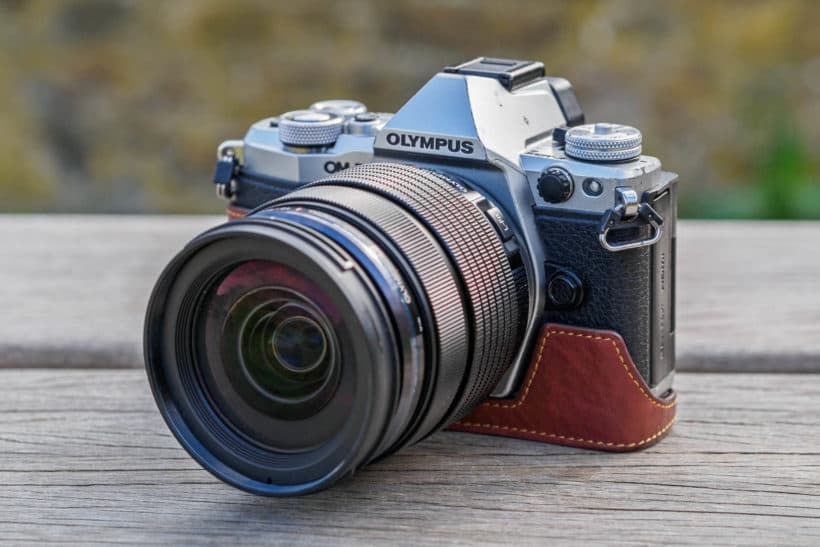
For more advanced users, truth is, a camera from 10 or 15 years ago, such as the 16MP mirrorless Olympus OM-D E-M5 will more than do the job, even in an age of 24MP/26MP starter models. It’s still going to deliver a print of sufficient detail to be hung in the National Portrait Gallery. And if it’s good enough for the NPG, it’s good enough for me.
Related reading
- How much resolution do you actually NEED?
- Forget megapixels: The one spec that actually matters in a camera
- Quality photography is dead, says Instagram chief
The views expressed in this column are not necessarily those of Amateur Photographer magazine or Kelsey Media Limited. If you have an opinion you’d like to share on this topic, or any other photography related subject, email: ap.ed@kelsey.co.uk.