

Amateur Photographer verdict
The RF 75-300 is ideal for novices prioritising affordability, compact size and weight. It’s capable of delivering pleasing results if you can look past its AF speed and lack of stabilisation
- Incredibly affordable
- Lightweight and compact for a telezoom
- 75–300mm (110–480mm on APS-C) covers a variety of shooting scenarios
- No image stabilisation
- Sluggish autofocus
- Colour fringing
Canon RF 75-300mm F4-5.6 at a glance:
- Price: $239/£289
- Min. focus: 1.5m
- Filter thread:58mm
- Weight: 507g
- Dimensions: 146.1 x 71.2mm
- Lens Mount: Canon RF (full-frame)
Newcomers to photography may well outgrow their basic kit zooms rather quickly, especially if they are interested in sports or wildlife photography, with both genres lending themselves more towards longer focal lengths. Typically, telezooms can cost a sizeable amount of cash, but there are more budget-friendly alternatives out there. In Canon’s lens offering for wildlife one of the most affordable is the Canon RF 75-300mm F4-5.6.
Launched back in April 2025, this optic offers a versatile focal length range with a 4.3x zoom, yet it retails for less than £300. It’s clearly intended to be paired with the firm’s more affordable APS-C cameras such as the EOS R50. On these models, the equivalent focal length switches up to 110-480mm thanks to the 1.6x crop, further enhancing this optic’s credentials as a value-for-money wildlife photography lens. So, what are the positives, and where are the compromises?
Canon RF 75-300mm F4-5.6 – Features
Optically, the lens employs 13 elements in 9 groups. That’s the same set-up as the older EF version of this lens, which dates right back to 1991. So it’s far from a cutting-edge design.
That may sound like a lot of glass, but in reality, this is a compact optic, measuring just 164mm in length and tipping the scales at only 507g. When paired with a smaller Canon mirrorless like the Canon EOS R50, it delivers a combo that comes in at less than 1kg. That will make for a burden-free set-up that will appeal to newcomers to photography or those looking to lighten their load.

There really aren’t many bells and whistles to talk about, although the 75-300mm does feature a 7-bladed aperture design, with the aim of delivering pleasant background blur – something that can be enhanced thanks to the compressed field of view offered by the 300mm maximum focal length. The lens offers a minimum focusing distance of 1.5m at 300mm, which is decent and will allow users to make more of smaller subjects in the frame.
Thanks to the relatively small filter thread of 58mm, UV filters or circular polarisers will be affordable. The lens accepts Canon’s ET-60 lens hood, but this is an accessory you’ll need to fork out an extra £20 for, as it isn’t included in the box.

Despite the budget-friendly price and the featherlike weight, the 75-300mm benefits from Canon’s Super Spectra Coating, which aims to enhance image quality by reducing ghosting and flare. On the flip side, the lens doesn’t have Fluorine coating to protect the front element against water or fingerprints. Be aware, too, that this lens won’t offer the same levels of weather protection or durability as those from Canon’s pro-oriented L-series lineup.
More importantly, given its longer focal reach, there is no image stabilisation, either, which is an important feature for getting sharp images with a lens this long. This will be mitigated to a degree if you are using a camera body with in-body stabilisation, but that’s only found in more expensive models like the Canon EOS R7.

Wildlife photographers may bemoan the absence of a tripod collar, so this is not a lens you can pair up with a monopod. But in truth, the lightweight and compact build means you really don’t need a support to share the payload. However, I often pack a small beanbag cushion to rest between the ledge in a wildlife hide and the lens to protect the lens barrel.
Canon RF 75-300mm F4-5.6 – Build and Handling
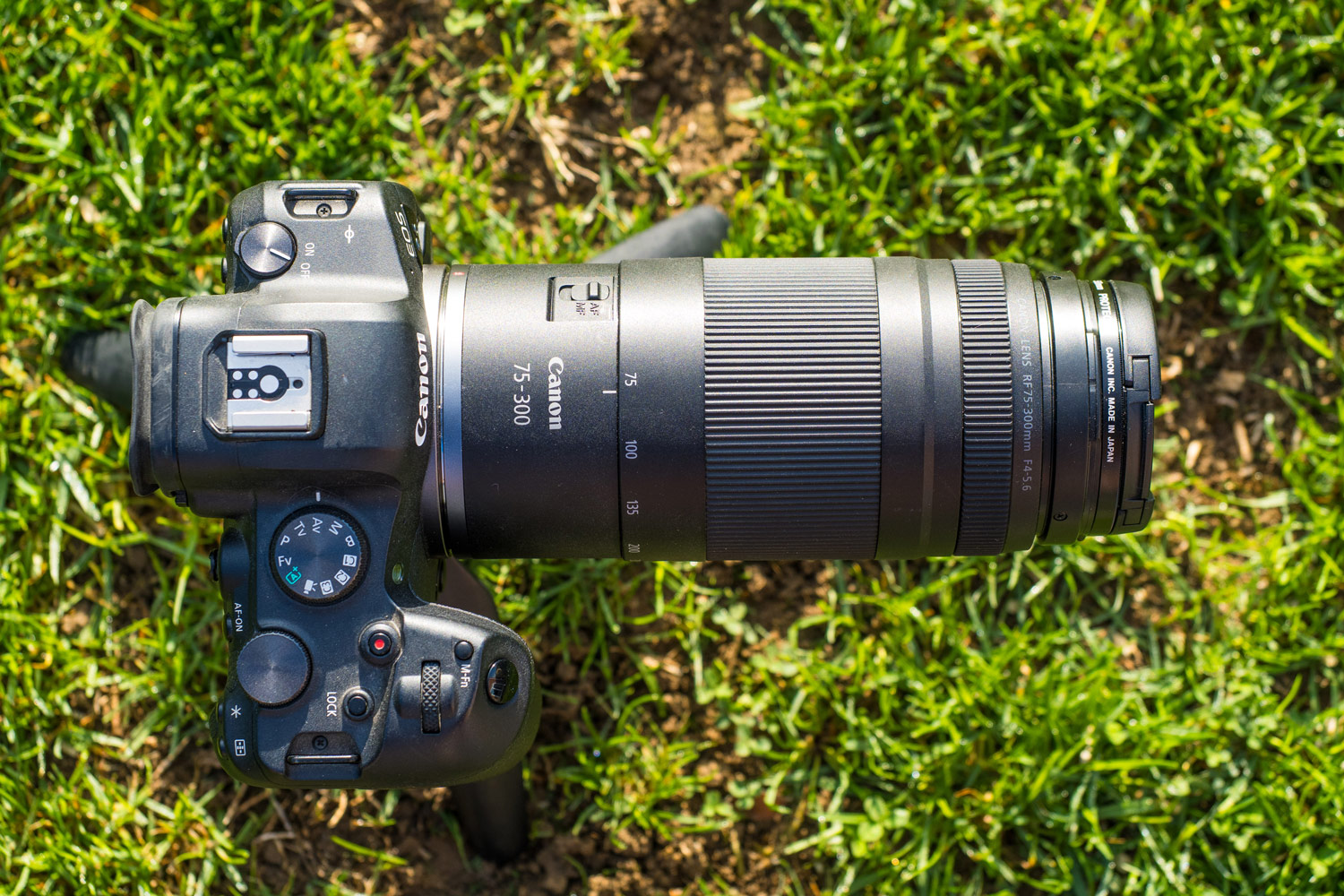
Many compare the RF 75-300mm F4-5.6 to its older Canon EF counterpart, and there’s more than an element of fairness to that. The build reflects the budget-friendly price: the barrel is mostly polycarbonate, with a distinctly plasticky feel to it. However, the mount is metal and feels robust enough for whatever the user would demand from this optic. The flip side of such materials is that it makes for a super lightweight build, and this can be welcome when moving around out in the field.

The zoom ring is plenty wide enough, with a textured feel, giving good purchase even if the user is wearing winter gloves. However, the AF/MF switch found on the upper side of the barrel is fairly small. The Manual Focus ring at the front of the lens is significantly smaller than the Zoom ring, too. Users should be aware that the zooming isn’t internal, so the lens does extend when you twist and zoom in. This isn’t an issue in general handling, though, as because the lens is so light, it doesn’t suddenly become front-heavy.
Little more than a quarter of a turn of the zoom ring is required to run through the entire range, and this means you can adjust to wildlife situations more quickly. Additionally, while there is no ‘Lock’ function, the barrel doesn’t slip forward due to the zoom mechanism. So you won’t have to worry about the barrel moving either during transit, or when the lens is tilted down towards the floor.
Canon RF 75-300mm F4-5.6 – Autofocus
Another compromise due to that low price tag is the focus motor, which is of the slower DC type, rather than the faster STM or USM alternatives found in many other Canon telezooms. Even in bright light, photographers may find the AF operation a little sluggish for everyday wildlife photography, and in lower light, the performance drops off further. When it locks on, the autofocus can deliver sharp imagery of static subjects, but the AF performance is not ideal for fast-moving subjects, especially those moving toward or away from the lens.

Another compromise is that the operation is significantly audible. The noise of the motor would make using this lens for recording video pretty tricky, as the hum would likely be picked by the camera’s microphones.
Canon RF 75-300mm F4-5.6 – Performance
I tested the RF 75-300mm F4-5.6 with my Canon EOS R6 – a 20MP full-frame mirrorless camera with a 5-axis In-Body Image Stabilisation (IBIS) system, which is important given the lack of stabilisation in the lens. I captured imagery and video under a mix of lighting conditions – from overcast to sunny to reflect the environments a typical photographer would encounter when using this lens.


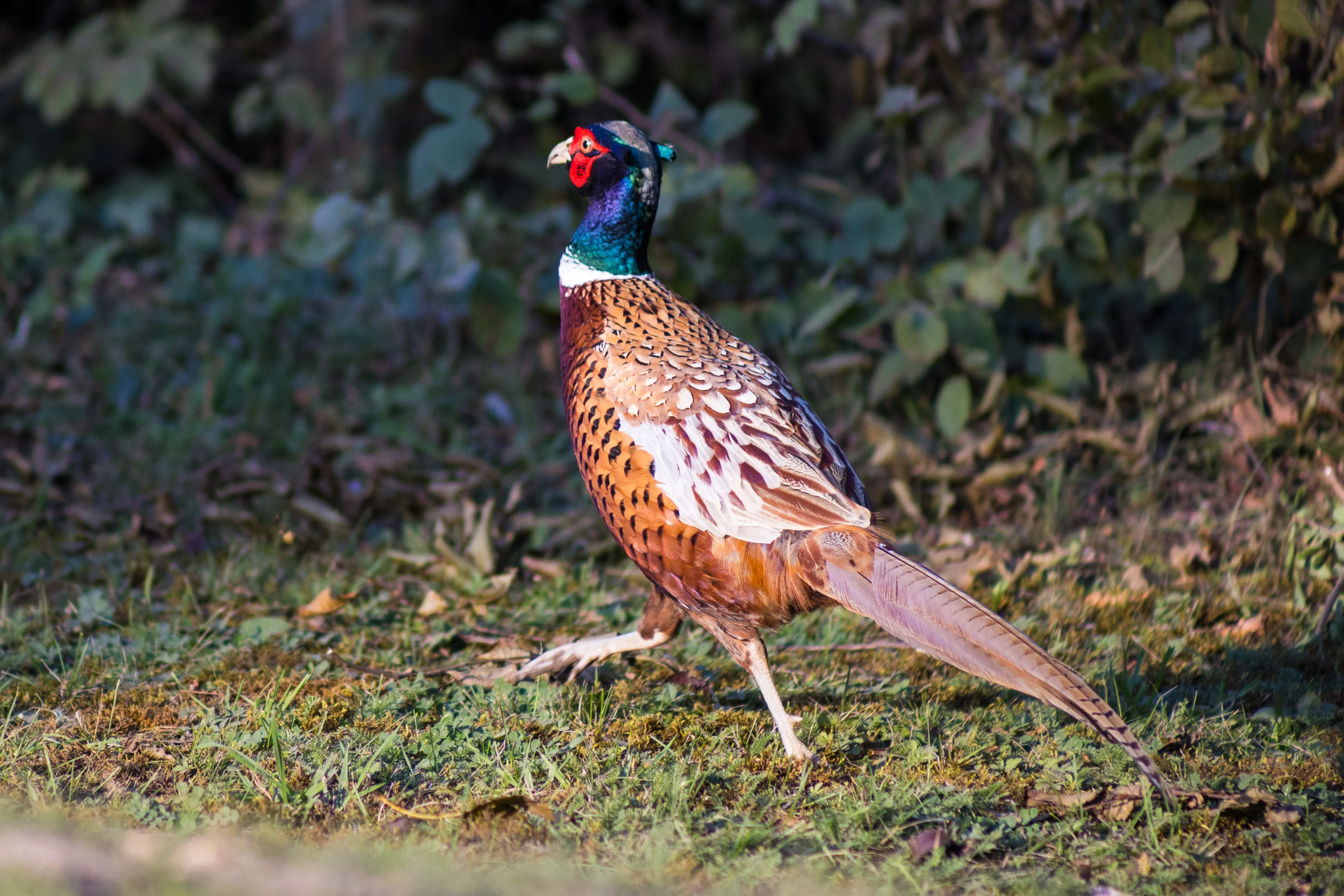
I reviewed images up close through the viewfinder, zooming in to check the results. Back at the computer, loading up the files and editing them in Adobe Lightroom confirmed that the 75-300mm is more than capable of delivering pleasing results. While it can be tempting to stick with using the largest aperture (f/4 at 75mm rising to f/5.6 at 300mm), the best optical results come at more mid-range apertures of between f/8 and f/11. However, this could mean you needing to raise the ISO levels if you are shooting in lower light conditions.
One area where the design shows its age, though is with colour fringing, where purple outlining can be clearly visible around high contrast edges. But there was better news with vignetting which, while visible, isn’t a huge issue that can’t be corrected in post-processing software such as Adobe Lightroom. While it is possible to capture sharp images, the files do of course lack the same sort of clarity you’d expect from more expensive Canon telezooms.
Canon RF 75-300mm F4-5.6 – Verdict
The Canon RF 75-300mm F4-5.6 is best seen as an entry point into longer lens photography, affording newcomers the ability to test the waters of wildlife or travel photography without stretching their bank balances. While it’s true the performance, autofocus operation and general build of the lens are reflective of the price, the 75-300mm is still capable of delivering pleasing images that punch slightly above its weight.
Those seeking a higher standard of build or who need quicker (and quieter) autofocus will need to reach deeper into their pockets and seek an alternative. In fact, one option many may well also weigh up purchasing is the Canon RF 100-400mm F5.6-8 IS USM, which offers a longer range, and built-in Image Stabilisation, but also costs twice the price. However, if you are a weekend photographer and your priorities are price and lightweight, compact dimensions, then you could well find a friend in the RF 75-300mm.

Full Specifications

| Price | $239/£289 |
| Filter Diameter | 58mm |
| Lens Elements | 13 |
| Groups | 9 |
| Diaphragm blades | 7 |
| Aperture | f/4-5.6 |
| Minimum focus | 1.5m |
| Length | 146.1mm |
| Diameter | 71.2mm |
| Weight | 507g |
| Lens Mount | Canon RF (full-frame) |
| Included accessories | Front and rear caps) |