

Bridge cameras are fully featured cameras and having all that technology on hand to tackle almost every subject in a single package gives them an obvious appeal to image makers who like to travel light without compromising their creativity. On the flipside, their popularity with the people who actually make them seems to be on the wane, so perhaps it’s time to take stock and take a closer look at their pros and cons.
Before we explore bridge cameras, here’s some background
Bridge or superzoom cameras have been around for years and started with film models such as the Ricoh Mirai and half-frame Yashica Samurai which, uniquely, was available in right- and left-handed variants. They reached peak popularity in the early 21st century when most camera makers had at least one bridge product in their line-ups but that’s not the case now.
Basically, bridge cameras combine convenience and portability with key photography features taken from system cameras and wrapped around a fixed wide-raging zoom lens. The power of that lens could range from a modest 3x zoom to something incredibly potent such as the 125x zoom of the Nikon Coolpix P1100, which we’ll discuss shortly.

Bridge camera options
Looking through the current product line-up of the camera brands and you’ll see bridge cameras are conspicuous by their absence compared with the wealth of mirrorless models. Scour photo retailer websites and you’ll find bridge cameras listed but many are shown as being out of stock, temporarily or permanently, or only available to special order.
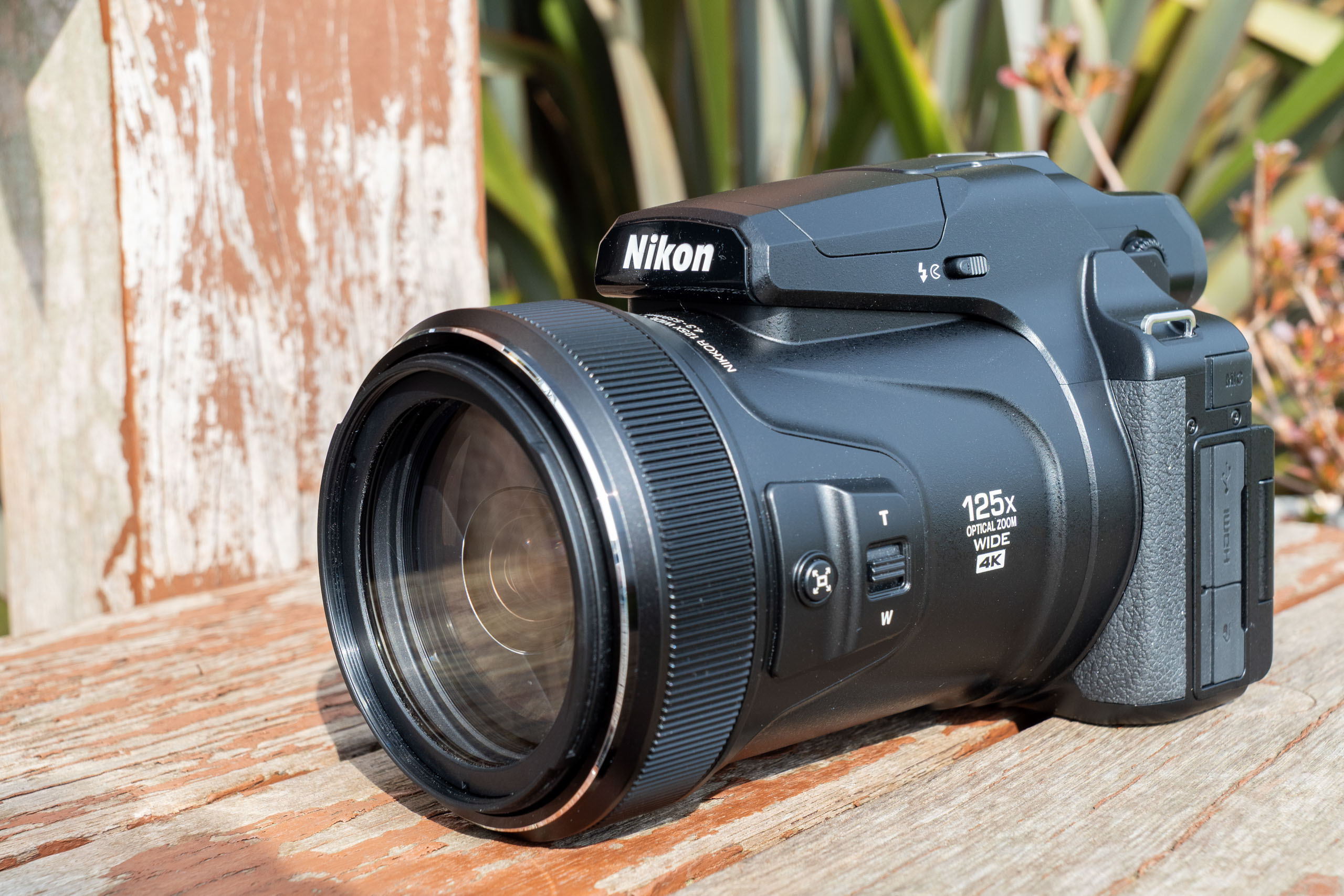
The Nikon Coolpix P1100 the most powerful superzoom model currently in the shops. It’s a fully featured 16-megapixel camera, which is modest in today’s market where interchangeable lens cameras start from 20 megapixels and reach 61 megapixels in the case of full-frame Sony models.
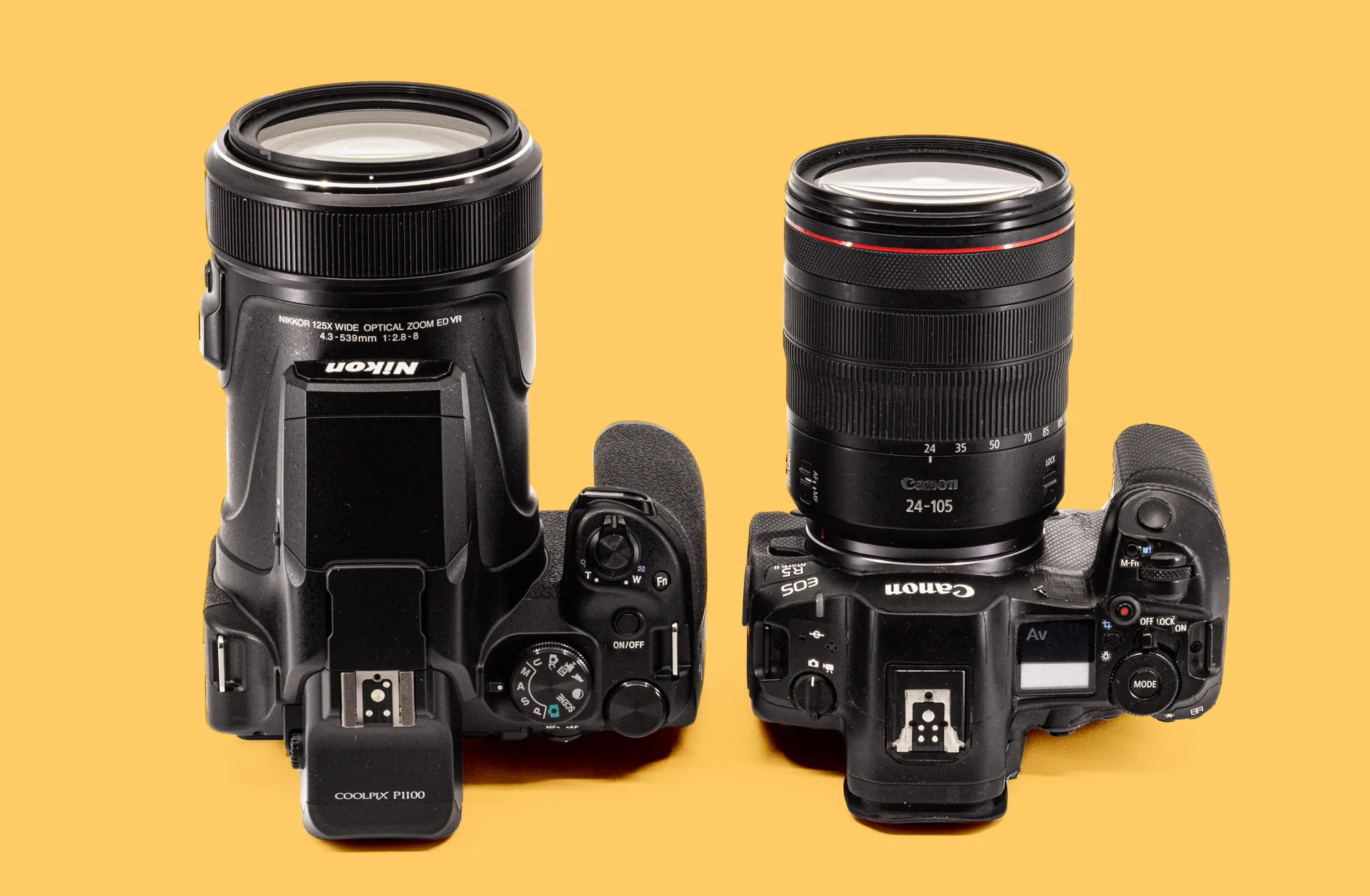
The Coolpix P1100’s killer feature is its 125x optical zoom, which increases to 250x with the digital zoom. Speaking in full-frame terms the Coolpix P1100’s 4.3 to 539mm f/2.8-8 zoom lens equates to a 24 to 3000mm focal length range. Yes, you read it right, 3000mm.
Make no mistake, this is a serious camera and you only have to pick it up to appreciate that in size it more than rivals a full-frame camera. It’s not something that you can slip into the pocket and take out for some discreet street photography. It’s not cheap either and sells at £1043 / $1146 although, to be fair, while that sounds expensive, you get a great deal of camera for your cash. Actually, that’s not strictly speaking correct: you get a lot of lens for your money.

The pulling power of the Coolpix P1100’s superzoom is extraordinary with the ability to pull in very distant subjects and isolate interesting detail. The Big Ben shot shown later on is amazing. It is fair to say, however, that you have to work at making the most of the lens at its longer settings.
Bridge cameras in practice
Shooting lovely pictures at the zoom’s shorter focal lengths is relatively straightforward but the camera’s size make it very obvious so not ideal for discreet street shooting. Its shutter lag doesn’t help either. It’s as you venture into the telephoto region that good camera technique is absolutely crucial, but there are factors that you have absolutely no control over. Shoot when there’s atmospheric haze and the results will be potentially very disappointing.

To help sharp shooting there’s Nikon’s Vibration Reduction (VR) system with a 4EV benefit to help counter camera shake It’s an important feature bearing in mind the 4.3-539mm motorised zoom has a variable f/2.8-8 maximum aperture and the camera’s maximum ISO is 6400. The downside of the VR, especially at long settings, is that the composition can leap around a bit when it kicks in.
Read our full Nikon Coolpix P1100 review.

Very little gets close to the Coolpix P1100’s telephoto power in the world of interchangeable lens cameras. For the very, very well-heeled shooters (lottery winners!) the Canon RF 1200mm f/8L IS USM costs £22,449 / $22,699. Add a 1.4x teleconverter to this lens and fix the combination to a Canon APS-C format camera and you have optical combination that has an effective focal length of just under 2700mm.
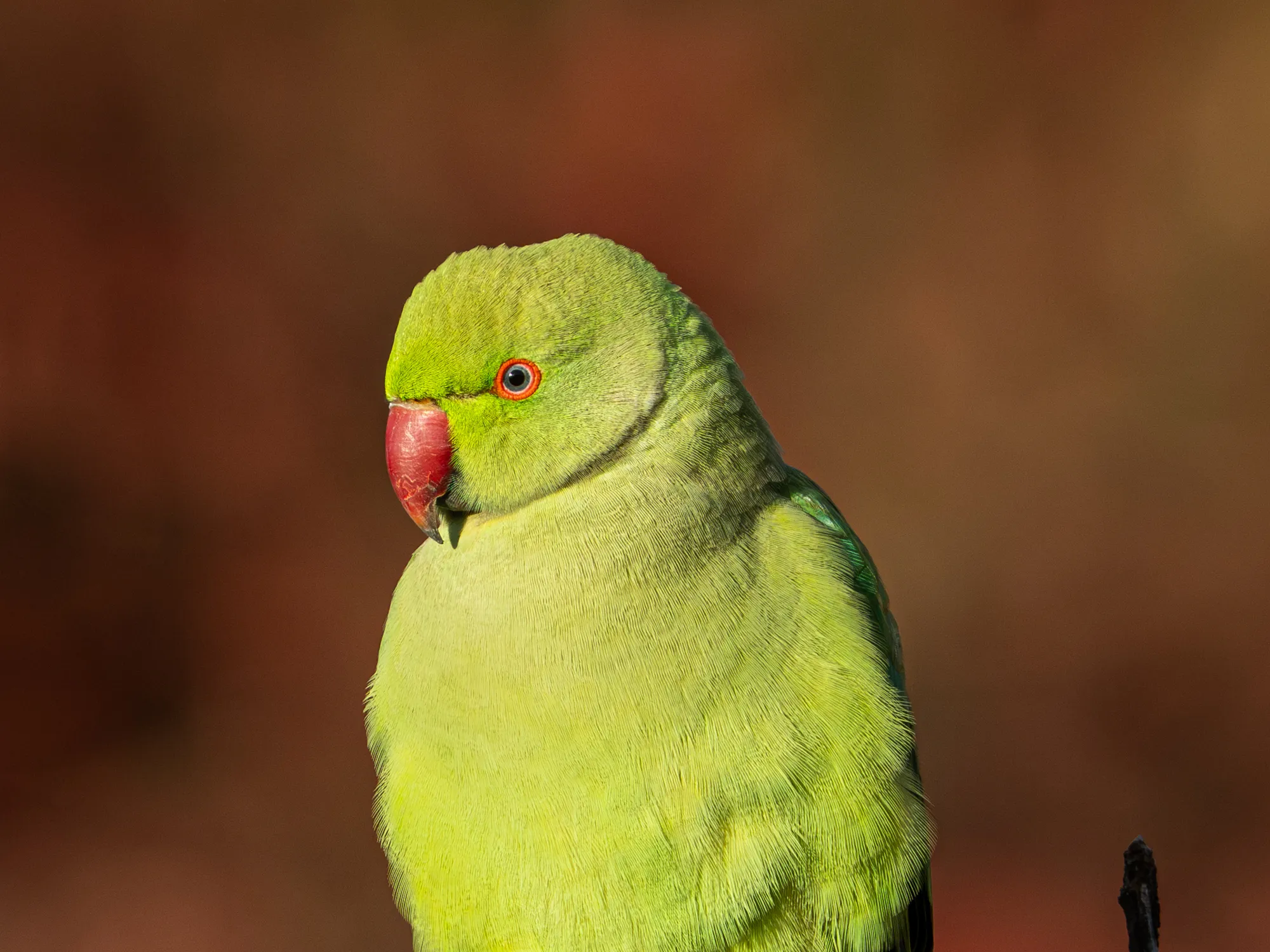
Sony A1 II f/11 1/1250s 800mm ISO800. Image credit: Will Cheung
Getting the super-long telephoto effect with full-frame
The parakeet stayed long enough for some comparison images using the Nikon Coolpix with its 3000mm lens and the Sony A1 II with the 400-800mm zoom lens at 800mm. This is not a comparison of image quality but to show what’s needed to achieve the field of view of a 3000mm lens with a full-frame camera using a long telephoto and software cropping.
The size of the original 50 megapixel image from the Sony was 8640×5760 pixels and this dropped down to 2283×1712 pixels or 3.9 megapixels after cropping.
On the Nikon Coolpix P1100, the Raw image was uncropped and measures 4608×3456 pixels or 15.9 megapixels. Both images was treated with Adobe Lightroom Denoise.
The cropped full-frame image shows better detail and is remarkably good. The downside is that it’s small file so needs good interpolation for a decent size while Coolpix P1100 is an out of camera full resolution file and the Raw can be improved further in editing.
From this, there is potential to take a high resolution full-frame file shot with a long lens and crop it severely for a super-long telephoto look.

Coolpix P1100 f/8 1/500s 539mm (3000mm equivalent) ISO800. Image credit: Will Cheung
Budgeting for long lenses
For those with more realistic budgets, a long lens perhaps fitted with a teleconverter can get you close to super long focal lengths. For example, the OM System ED 150-600mm f/5-6.3 IS (£2499 / $3000) is a 300-1200mm full-frame equivalent while the Fujifilm XF 150-600mm f/5.6-8 zoom R LM OIS WR (£1799 / $2400) is 229-914mm. These lenses still mean you need to crop seriously and that means a drop in quality and significantly smaller files.

Coolpix P1100 f/8 1/50s 54mm (300mm equivalent) ISO800. Image credit: Will Cheung
For the parakeet comparison shots shown here, we used a Sony A1 II and the Sony FE 400-800mm f/6.3-8 G OSS lens, a combination that weighs 3kg and costs £8837 / $10,296. As you can see from our example, using this long lens and cropping to emulate the power of a 3000mm lens resulted in a file of just 3.9 megapixels although image quality is decent.
Of course there are cheaper, more portable alternatives, such as the Canon EOS R7 with Canon RF 100-400mm f/5.6-8 IS USM which works out at £1706 / $2298 and weighs in at 1165g.

Coolpix P1100 f/8 1/30s 26mm (144mm equivalent) ISO400. Image credit: Will Cheung
The thing is a bridge camera gives serious telephoto power with ease. The Coolpix P1100 gives 3000mm at the touch of a finger and weighs just 1410g and there are smaller, less powerful options out there, although it is fair to say that there isn’t glut of products to choose from.
Options include the Panasonic Lumix FZ82D (FZ80D in the US) which sells for £379 / $575. It’s an 18 megapixel camera with a 60x f/2.8-5.9 optical zoom giving the full-frame equivalent of 20-1200mm. Having a less powerful lens is a pay-off but an 1200mm equivalent is still very useful and the benefit comes in portability and this camera weighs in at 596g, close to half the weight of the Nikon. Read out review here.

Coolpix P1100 f/71/30s 4.3mm (24mm equivalent) ISO250. Image credit: Will Cheung
Kodak has several, affordable bridge cameras in its range. The Kodak Pixpro AZ255 sells at £179 / $170 and this is a 16 megapixel camera with an integral 25x optical zoom giving the equivalent of 24-600mm. Slightly more pricey is the 20 megapixel Kodak Pixpro AZ405 which is priced at £199 / $200 but the benefit is a 20 megapixel resolution and a 24-960mm equivalent zoom.
Having so much lens power under your forefinger is creatively very liberating and that is one big plus point in favour of bridge cameras. Being able to shoot tight compositions and pull in small detail without the bulk of a powerful zoom or the need to swap lenses is great fun and helps you see the world afresh.

Coolpix P1100 f/8 1/60s 19mm (105mm equivalent) ISO100. Image credit: Will Cheung
Image Quality
Having focused our attention on the power of bridge camera zooms, perhaps we should end with picture quality.
Not all bridge cameras have the option of Raw and JPEGs, but if there’s the option and you if you have access to editing software shoot Raw format. Some editing and treating files with denoising is advised and there is potential in this camera type, as you can see from our shots taken on the Nikon Coolpix P1100. However, bridge cameras use small sensors crammed with pixels and this results in greater noise and less critical detail at high ISOs and even at medium ISO speeds images lack clarity and crispness, but they are good enough for web and decent prints.
Enjoying the telephoto power of a bridge camera
As the crow flies, according to the measure tool in Google Maps, it’s 655m from Big Ben to the western end of the Golden Jubilee bridge where these shots were taken. For context, the 24mm shot was taken from the same spot and you can see the Elizabeth Tower in the far distance.

Incredibly, the fully extended Nikon zoom fills the frame with Big Ben’s clockface and the image here is shown full-frame. The Raw was processed in Adobe Lightroom Classic with denoise applied but with no extra sharpening. The shot is impressively sharp which is made even remarkable because the camera was used handheld while leaning on the bridge’s handrail using a shutter speed of 1/500s. With people crossing the bridge and using the handrail there were constant vibrations plus with the camera’s VR kicking in, the viewfinder image was constantly jiggling around.

Summary
As a concept, bridge cameras should have mass appeal and huge sales potential but the reality is very different. Essentially, if bridge cameras were that attractive we would all be using and interchangeable lens cameras would be an endangered species, but if anything it’s the other way round.

Coolpix P1100 f/8 1/125s 78mm (433mm equivalent) ISO400. Image credit: Will Cheung
In terms of performance, bridge cameras deliver respectably good images, but ultimately you’re going to get more from interchangeable lens cameras. There are also aspects of bridge camera handling that fall short too. Their autofocusing, for example, is not as responsive, tenacious or as slick as you would get from a DSLR or mirrorless camera and it can be a tad twitchy especially at long focal lengths.
When all is said and done, however, bridge cameras have their place even though there’s not much choice. They offer convenience and user simplicity, so have a special appeal to those image creators who prefer not to get wrapped up in the technical side of photography.