

What sort of camera bag do you prefer to carry your camera kit around in? Broadly, there are two choices: a backpack or a shoulder bag. You might claim there are also slings, but these are just shoulder bags for the unkempt. And there are roller bags, but they’re just backpacks for the lazy. So, shoulder bags versus backpacks it is. Let’s look at the pros and cons.
Access
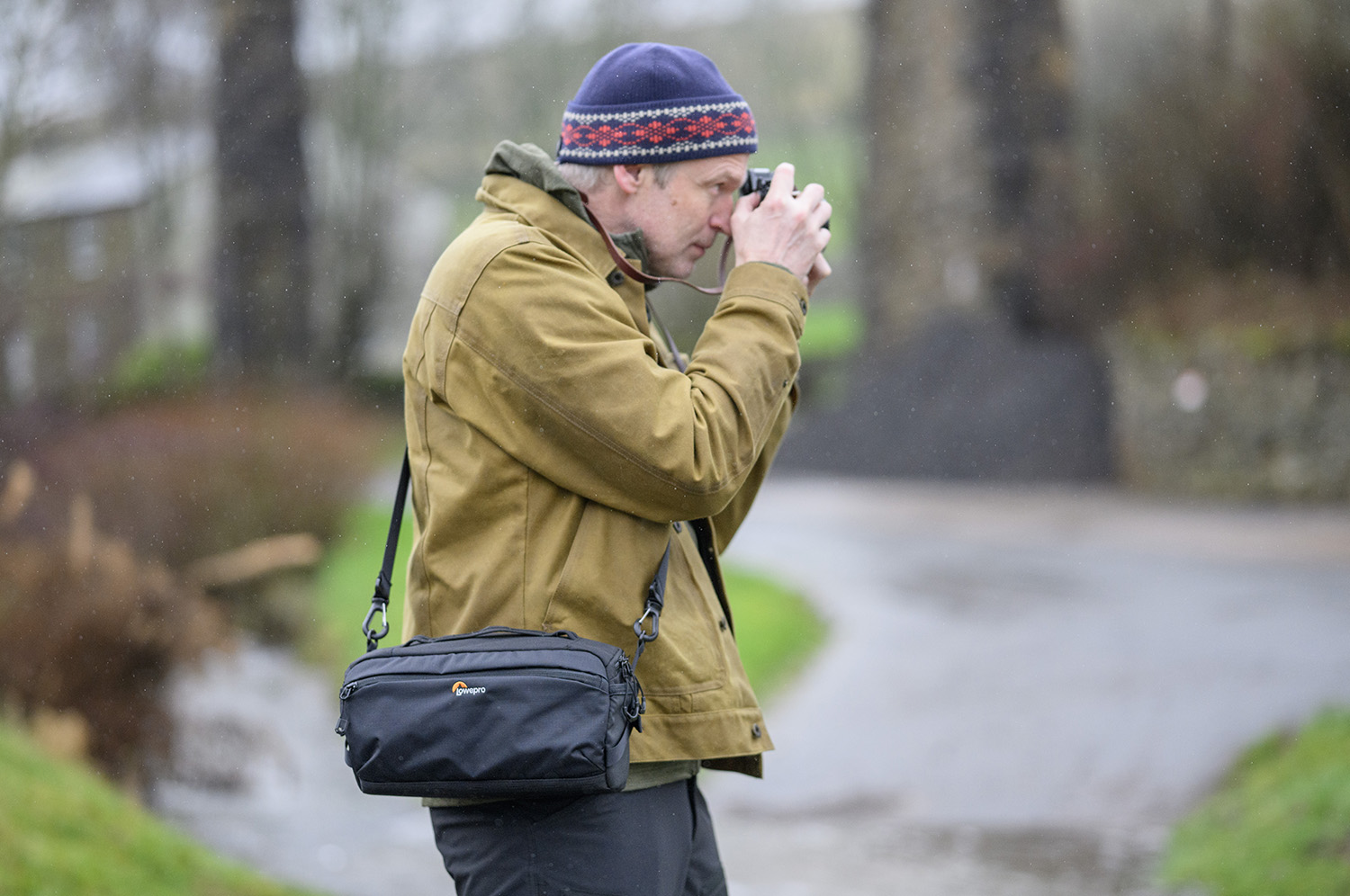
Looking at cameras is great, but the main reason to own one is to use it. Therefore getting it out of your bag should be a smooth and speedy experience. There’s no doubt that shoulder bags have the edge here. That’s what they’re designed for, and why reportage, street and events photographers tend to prefer them if they need to use more than a couple of bodies at a time. Shoulder bags also have the advantage of operating like a mobile workbench, for instance letting you swap lenses, batteries, or filters while standing.

That said, many backpacks are designed with features like side-doors which allow you to get to your camera without even taking them off. You could also argue that, for a lot of subjects, fast access isn’t required. Mountains, for instance, will still be there after you’ve taken your backpack off, retrieved your camera, had a cigarette and disposed of it safely. But overall, sure, shoulder bags have the edge in speed if you need it.

Capacity
Obviously you only need a bag with enough capacity for the kit you want to carry, not everything you own. Even so, there’s not really any contest here. Unless you’re talking about th 15cm wide, Pikachu-themed mini-packs used by cosplay enthusiasts to transport their Olympus PENs around Akihabara, backpacks will always be the right choice for transporting more than a single camera and a couple of small lenses.
Backpacks can take more, larger, and heavier gear, giving you greater options in terms of lenses, extra bodies, flashes or even drones. Models with a ‘day sack’ style that includes a separate compartment mean that a jacket, provisions or other general accessories can be carried too.While you can technically attach a tripod to a shoulder bag, it’s a lot easier to do it on a backpack, and you’re likely to pack a laptop more easily, too.

Stealth and safety
A tough one to call. A camera bag looks like a camera bag, unless it’s designed not to and that goes for shoulder bags as much as it does backpacks. You’re more likely to be let into areas like museums and galleries with a shoulder bag, while you could argue that, with their ability to slide around in front of your body in tight spaces, they’re also a smarter choice in crowds.
But if you don’t mind looking like you’re carrying a baby in papoose you can do the same with a backpack. What’s more, while front-opening backpacks are essentially a free camera-and-lens vending machine for thieves, many models offer back-panel access, wherein the main flap is against the wearer’s spine, stopping someone from unzipping your bag in a crowd or when you’re distracted by a sunset, or a nudist.

Protection
All things being equal, does a photography backpack provide greater protection for your kit than a shoulder bag? I’m tempted to say yes, but only just and there are so many variables involved that it’s impossible to say. Certainly, you might expect a backpack to include a greater number of rigid dividers as well as deep and more lavishly cushioned compartments, which should better protect large or expensive items. Due to the way it opens and with no requirement for the sort of softness that lets a shoulder bag mold to your hip, backpacks are arguably more rigid, too. They can also be used more efficiently to store gear when not in use.

Comfort
Another area where things get complicated is in comfort. If you put the same weight in both contenders, broadly, a backpack’s design should make it more comfortable to carry, as its two straps distribute weight evenly, while a shoulder bag is worn in an inherently lopsided fashion. Backpacks will also likely include sternum straps which join the straps across the chest, further distributing the load, and waist belts that stop the pack from twisting.

Conversely, shoulder bags just hang there and will eventually get uncomfortable no matter how well padded or cushioned the strap is. But if you pack them appropriately, it’s less of an issue.

Stability
When moving about, backpacks are a better solution because they can be cinched more tightly and sit closer to your centre of gravity. The aforementioned straps and belts also stop them from swinging about if you have to break into a run to catch the light or escape a bear.
A very small number of shoulder bags can be attached to a waist belt or used with a strap around the top of the thigh to stop the bag swinging. The only downside of this is that it looks ridiculous. Of course, there’s nothing to stop you from stabilising your shoulder bag with a hand while fleeing Palermo mafiosos who you’ve enraged with your candid street photography, but it will leave you with one less limb to defend yourself with.

Conclusion
If you’ve made it this far, well done. You’ve possibly gained some insight, but also scrolled past multiple adverts, so everyone’s happy.
But really, what have we learned? Mainly that the question of whether photography shoulder bags or backpacks in general are better is somewhat redundant. The adoption of each design grew from a particular need. For shoulder bags, it’s speed of access; for backpacks it’s the ability to carry more kit in comfort.
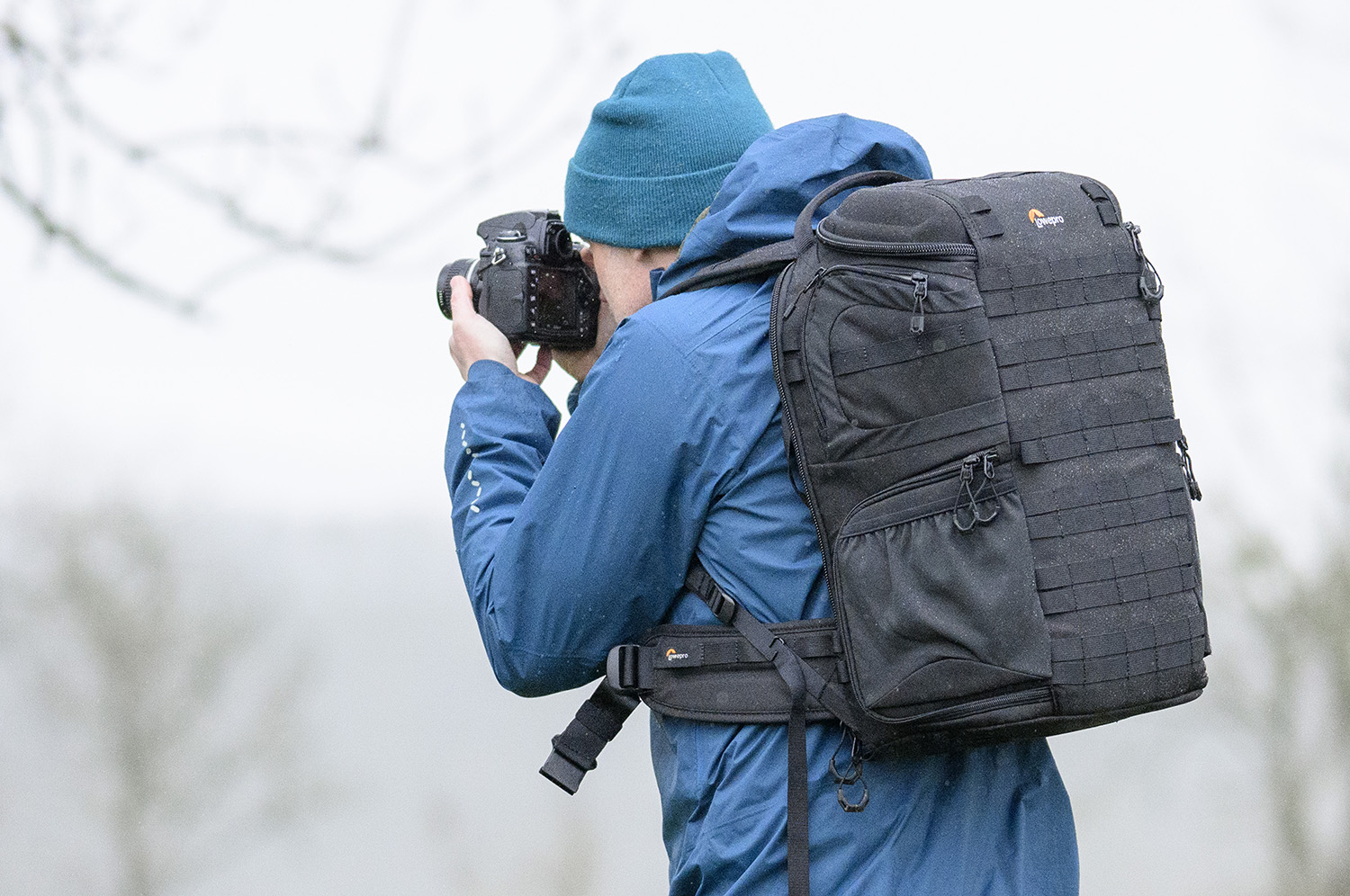
So the choice depends almost entirely on what sort of photographer you are. It’s ideological. Despite all the admiration I have for Indiana Jones and the British Army Mark VII gas mask bag he wears, I’ve never managed to get on with a shoulder bag. That’s almost entirely down to the type of kit I use – larger camera bodies and lenses from which I’m seeking the highest quality – but I also tend to take too much stuff, never knowing when I might need some filter, an extra battery or a comically underused tilt-shift lens.
Most of my photography is landscape or nature, outdoors on hikes, often using tripods, so the ability to carry the latter, as well as a coat, flask, several Mars bars and/or dog treats is helpful. I can’t do this with a shoulder bag, and it I tried I would almost certainly fall over.
But if I was wafting about in Soho with a retro-inspired compact, doing reportage photography of people clutching steaming coffee cups with both hands, a backpack would clearly be less of a requirement and I might want something that was more discrete, and which went with my shoes.
Final thought. Once, hiking back from shooting a sunset on the Isle of Skye, I fell into a bog. As I sank, I removed the large backpack I was wearing and used it for ballast to stop me from going under, then inched it to the side of the morass, helping me crawl out, too. If I’d have had a shoulder bag on, I might very well be dead now. But that would also mean you wouldn’t have had to read this article, so it’s swings and roundabouts, really.
Related reading: