

Having body parts splattered across your camera isn’t an issue most portrait photographers have to contend with. But if you’re working with a wedge-tailed eagle, the largest eagle in Australia, normal studio etiquette isn’t guaranteed. ‘I’ve worked with birds of prey and sometimes they try to fly off,’ says Australian photographer Leila Jeffreys. ‘They’ll be feeding on treats throughout a shoot – it might be a bit of mouse – and they manage to flick it all over my equipment. With a wedge-tailed eagle I photographed, suddenly it was all over the camera. It can get pretty messy.’

Working with local zoos and rescue centres to photograph a wide range of birds (Moluccan cockatoo, Eastern grass owl…), there’s rarely a dull day for Jeffreys. ‘One time that was really fun was with 20 penguins,’ she recalls. ‘Penguins are little gremlins. I was trying to set up, and they were pulling on my jacket, pulling on my trousers, having a go at my tripod. They’re so inquisitive. They’re good fun but they’re absolute chaos on set.’
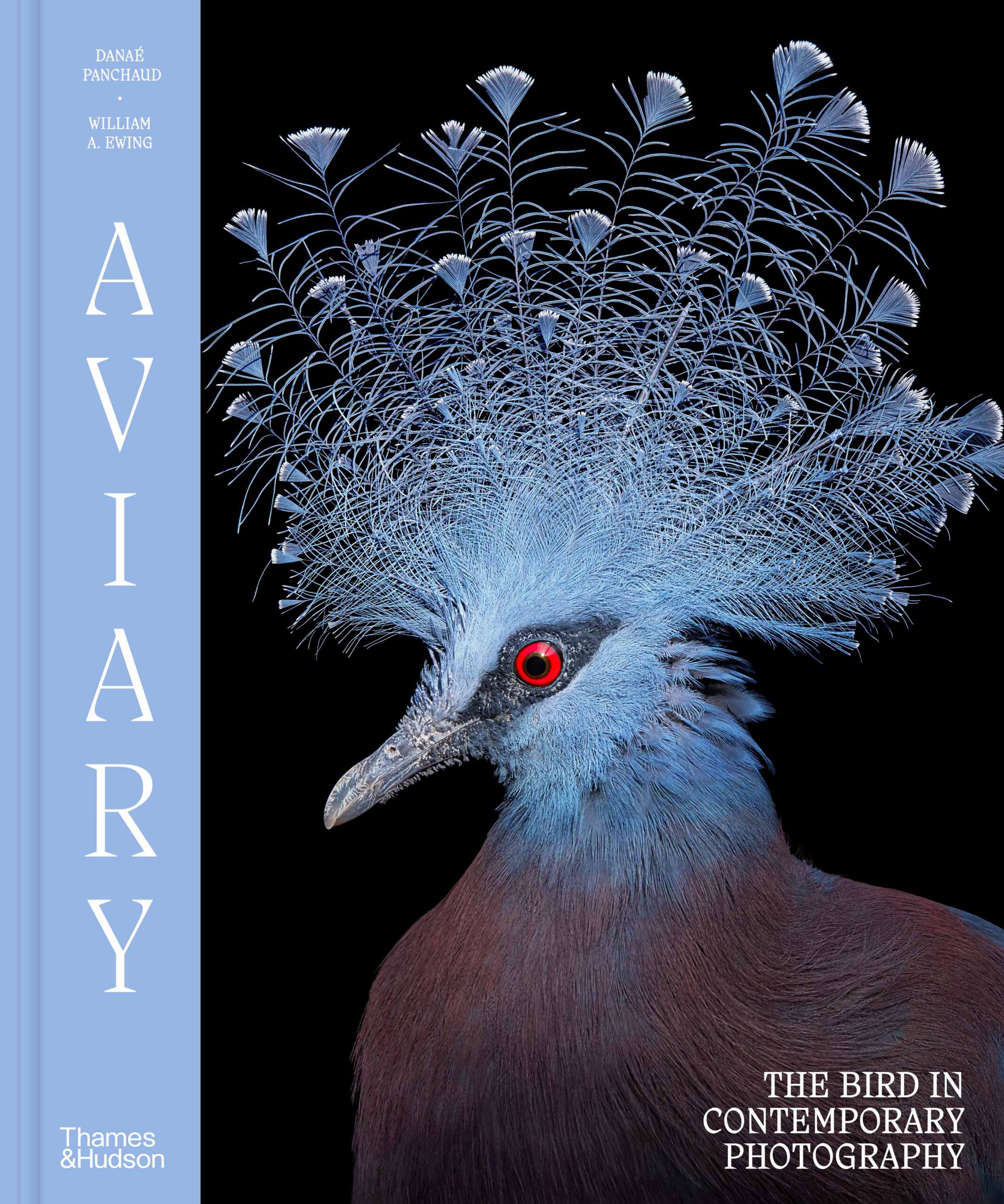
Jeffreys is one of more than 50 global photographers whose work is featured in Aviary, a new book containing a wide range of contemporary bird photography, including traditional wildlife photography, carefully staged studio productions and arresting abstracts. ‘We wanted to pay homage to the boundless creativity of photographers and artists when it comes to representing birds, and also to be able to combine wildlife photography with other genres: staged photography, fashion and so on,’ says Danáe Panchaud, the book’s co-editor.
Looking back through photographic history, the authors found surprisingly few early bird images compared to, say, flowers, landscapes or humans, which they attribute to negative perceptions. ‘Birds were dismissed as dumb – we speak of an idiot as a “bird-brain”,’ says fellow co-editor William Ewing. ‘Something of no consequence was “for the birds”. But slowly it’s dawned on us humans that birds are smart. Almost every week, there’s a scientific study with a marvellous new discovery about birds. We believe these ideas have filtered into the consciousness of society, including photographers, who are more motivated than ever to take birds on as a subject.’

Changes in technology have also opened up the world of bird photography. ‘It’s only with the coming of colour and fast shutter speeds do you have the field really taking off, no pun intended,’ he says.
Today, birds are a popular photographic subject. But there’s a lingering sense that they’re a little under-appreciated by the wider public. ‘Certainly, large wild animals, and especially endangered species, occupy a larger space in our collective imagination,’ Panchaud says. ‘But I vividly remember the birds-of-paradise in the Natural History Museum from when I was a child. It seemed so extraordinary that such animals could be real. Birds play roles in many myths, legends, stories and cartoons. With so many of our ecosystems changing fast and facing multiple threats, from pollution to climate change to increased human activity, we’re developing a new appreciation for the fauna and flora around us. Many photographers in Aviary are celebrating birds that aren’t typically considered exotic, rare or particularly photogenic, such as pigeons or chickens.’
Early technological advances in bird photography

From the series In Flight
‘Technology plays an important part in the type of images that can be created, though some technical innovations came earlier than we thought,’ explains Danáe Panchaud. ‘The German photographer Ottomar Anschütz was, remarkably enough, able to capture birds in flight in the 1880s with shutter speeds of 1/1000, though such technology was certainly not widely available at the time. But in addition to good equipment and a strong command of their camera, and a keen eye for composition, key skills of wildlife photographers are knowing an environment and the behaviour of animals, and a lot of patience. All these are necessary to make stunning images. But the improvement of technology certainly makes parts of the process easier or possible.’

Simplicity and chaos
Spain’s Xavi Bou, featured in the book, often works with common bird species, such as starlings, swifts and seagulls. His original work, making use of cutting-edge technology, explores invisible patterns birds make as they move across the sky. ‘For me, it’s important to show nature in ways that haven’t been shown before,’ Bou explains. ‘When you take a photo of a bird flying, you freeze them in the air. But I don’t want to capture birds in flight – I want to capture flight. Sometimes I look for simplicity and sometimes I look for chaos. This movement is there and I just make it visible.’

#101
One of Bou’s standout images shows a strange whirlwind of jagged feathers in Jökulsárlón, Iceland. It looks more like an AI creation but it’s an authentic representation of bird movement, as Arctic terns fished for herrings and parasitic jaegers (also known as Arctic skuas) tried to steal their food. Bou uses high-resolution cinematic cameras (Red Raven, Blackmagic URSA…), filming in raw and in slow motion. ‘I see the action, set up the tripod and film, usually for less than a minute. I choose perhaps the most interesting 20-40 seconds, but consecutive, so it’s real action, rather than a collage. I stitch that 20-40 seconds together on the computer to create a formation, but the background stays the same. It’s photo-stacking. The average image has between 300 and 3,000 images stacked.’ filming in raw and in slow motion. ‘I see the action, set up the tripod and film, usually for less than a minute. I choose perhaps the most interesting 20-40 seconds, but consecutive, so it’s real action, rather than a collage. I stitch that 20-40 seconds together on the computer to create a formation, but the background stays the same. It’s photo-stacking. The average image has between 300 and 3,000 images stacked.’

The process requires patience, with plenty of trial and error. ‘You have to work a lot to have something that you can use,’ Bou chuckles. ‘If I’m working with vultures or storks, I know they fly in a tornado formation, or swifts and swallows fly in an erratic way. But the end result’s impossible to know. I take the film and do the post-processing – sometimes it takes weeks to know what I’ve shot. It’s the same feeling I got in the beginning, when I started working with film.

‘But the most frustrating thing is when nothing happens,’ he adds. ‘With flamingos, say, you go to a spot but they don’t fly. There’s no action, nothing happening…’
Technological advances have made Bou’s work possible. ‘My work developed in parallel to the technology. My idea for this project began 12 years ago, but for the first two years I couldn’t do it because I had no access to a proper 4K slow motion camera. It was super-expensive. When I could afford to rent a camera for a weekend, I could begin work. Over time, I could get access to an affordable high-resolution camera. I’m doing a new project now, where I’m filming at 500 frames per second. I can do it because the company Freeflight let me use their amazing EMBER S5K but two to three years ago to do a project like this, you’d need a Phantom camera, which costs, like, an apartment, so that wasn’t an option. Every time technology advances, it unlocks creativity options. I’m excited every time I do something new.’
Based in Barcelona, Bou’s worked in Poland, Iceland, Scotland and the United States but the majority of his work is done in Catalonia, including photos of mass gatherings of starlings, known as murmurations. What looks like a graceful ballet is actually a life and death clash between hordes of starlings and an attacking hawk. Catalonia’s murmurations only happen in winter and only in two locations. Sometimes, Bou drives for two hours for a ‘no show’ – no hawk, no spectacle. When the murmurations do occur, the action’s short-lived. ‘It can be over in minutes,’ he tells me. ‘It’s super-stressful. It’s beautiful but it’s a unique opportunity to take pictures, so I need to be very focused.’

Pollen I, 2021
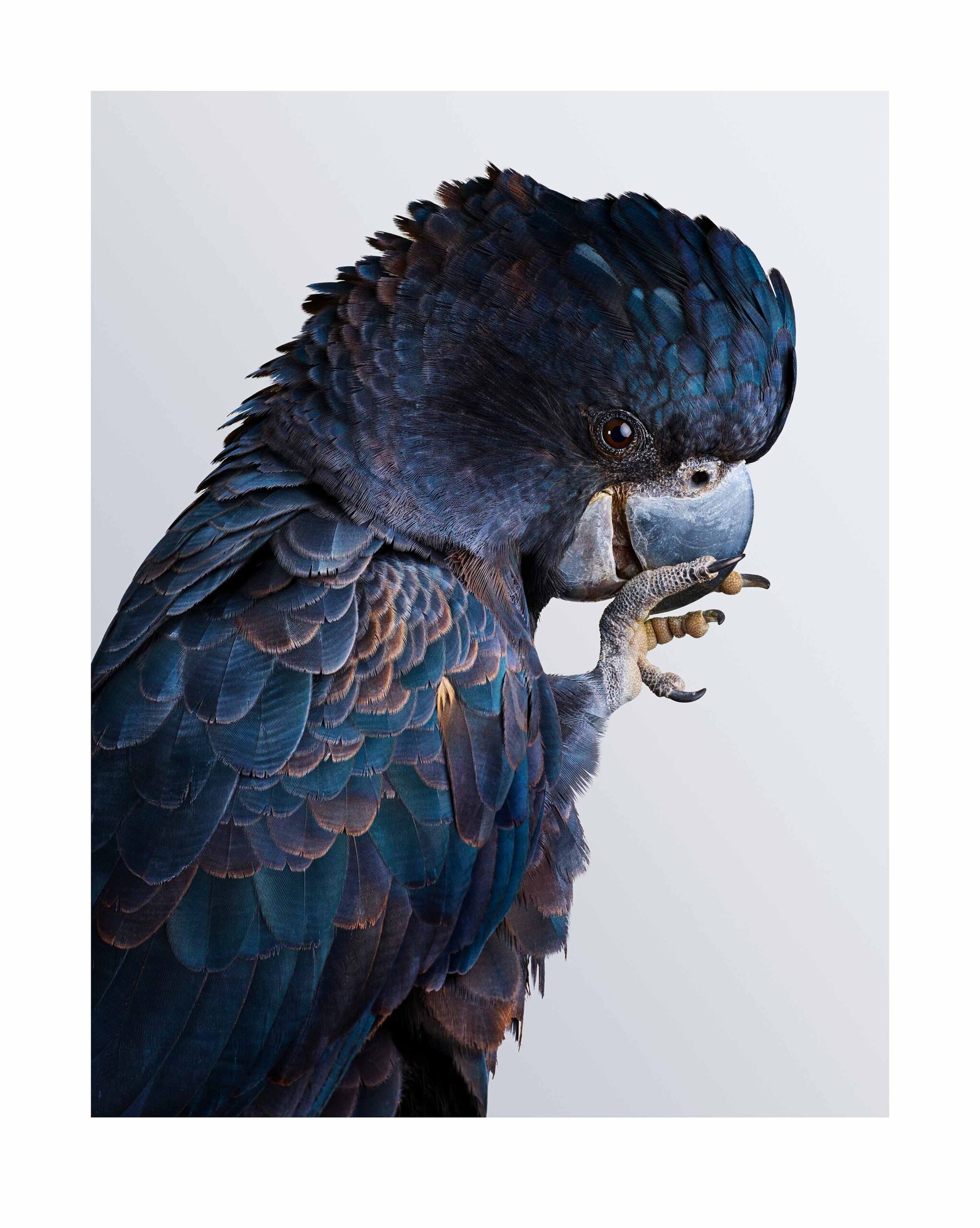
Working with animals is always unpredictable. In the case of Leila Jeffreys’ work, her main issue is making sure the birds are calm, rather than a lack of exciting action to capture. Based in Sydney, she usually transports her mobile studio to the birds, collaborating with organisations such as the Sealife Aquarium and Taronga Zoo. ‘It’s a slow, slow process,’ she says. ‘Sometimes, I’ll build my set in a wildlife rescue place and leave it there for a few weeks. The birds get fed in it, so they associate it as a lovely place, where they get nice treats. It’s also about light, noise, what I wear – lots of considerations to make sure the birds are comfortable. The only way to get a good portrait is if they’re really relaxed, to the point where they’re interacting with me, which is often where expression and character come out.’
Jeffreys works with Phase-One medium format cameras (currently the IQ150) and produces prints that are human-sized for see these portraits on the wall and the birds are a relative size to us, so it’s like you see each other as equals,’ she explains. Her hope is she can show people ‘these other majestic beings that share this planet with us’ and prompt contemplation about the damage humans are causing to the natural world.
‘What looks like a graceful ballet is actually a life and death clash between hordes of starlings and an attacking hawk’

Personality
Working in a controlled studio environment has ‘huge advantages’, Jeffreys suggests. ‘I can control my lighting. If these birds are out in the wild, they move fast, and there’s foliage and changing light. You can’t get up-close and see the extraordinary detail. My idea is to strip away the environment, so you’re left with the actual bird. There’s a huge focus on character and personality. With cockatoos, you’ll see a cheekiness – it’s in their eyes. But if you work with rainforest species of pigeon, like the Nicobar pigeon, it’s a completely different energy they give off. Certain species have character traits, and within that there are individuals with very different personality traits. The studio enables me to capture their little souls.’
While Jeffreys is in the warmth of her mobile studio, German photographer Stefan Christmann is toughing it out in the icy wilderness of Antarctica. His images of Emperor penguins are drawn from extended expeditions to Atka Bay, including time spent working on the BBC’s Dynasties natural history series.

‘Dealing with the cold and bad weather is part of everyday life in Antarctica,’ he says. ‘Working with thick gloves is awkward at first but using a camera’s like using a musical instrument – once you’ve mastered finger placement, you can focus on the artistic part. Since snowstorms and bad weather create wonderful moods and simplified backgrounds, this helps with the aesthetics of images and the simplicity of storytelling.’
For Christmann, working in the wild has clear benefits over studio sessions. ‘I can have a much more realistic and intimate experience with the subject I photograph if I immerse myself in its natural habitat,’ he says. ‘The habitat will teach me quickly what the essential aspects of a bird’s life are. With Emperor penguins, it’s easy to understand that cold, wind and scarcity of food are the main obstacles these marvellous creatures have to overcome. By being part of their everyday life, their ups and their downs, it was easy for me to fall in love with them and to understand the core of their success: community.’
Though the work of each photographer is markedly different, each, in their own way, highlights the remarkable beauty and wonder found in the world of birds. ‘The more you look at birds, the more it blows your mind,’ says Jeffreys. ‘The diversity is extreme: the colours, the feathers, the eggs…. I’m trying to capture that magic and help people notice. Humans are busy and get caught up in our heads. We go through daily life and don’t always notice that up on a branch nearby there could be something quite extraordinary.’
Related reading
- The best cameras for bird photography
- How to Capture Fast Moving Birds
- Great Shots of Winter Birds
- Birds of India with David Tipling