

If you’re considering going analog, you’re not alone. Faced with our all-digital lives of 2026 – algorithm-governed and screen-oriented – plenty of people are looking for ways to rediscover the joys of a more tactile hobby, and that’s especially true for photography. Whilst film photography hasn’t reached the heights of its heyday, it’s more popular than it has been in years.
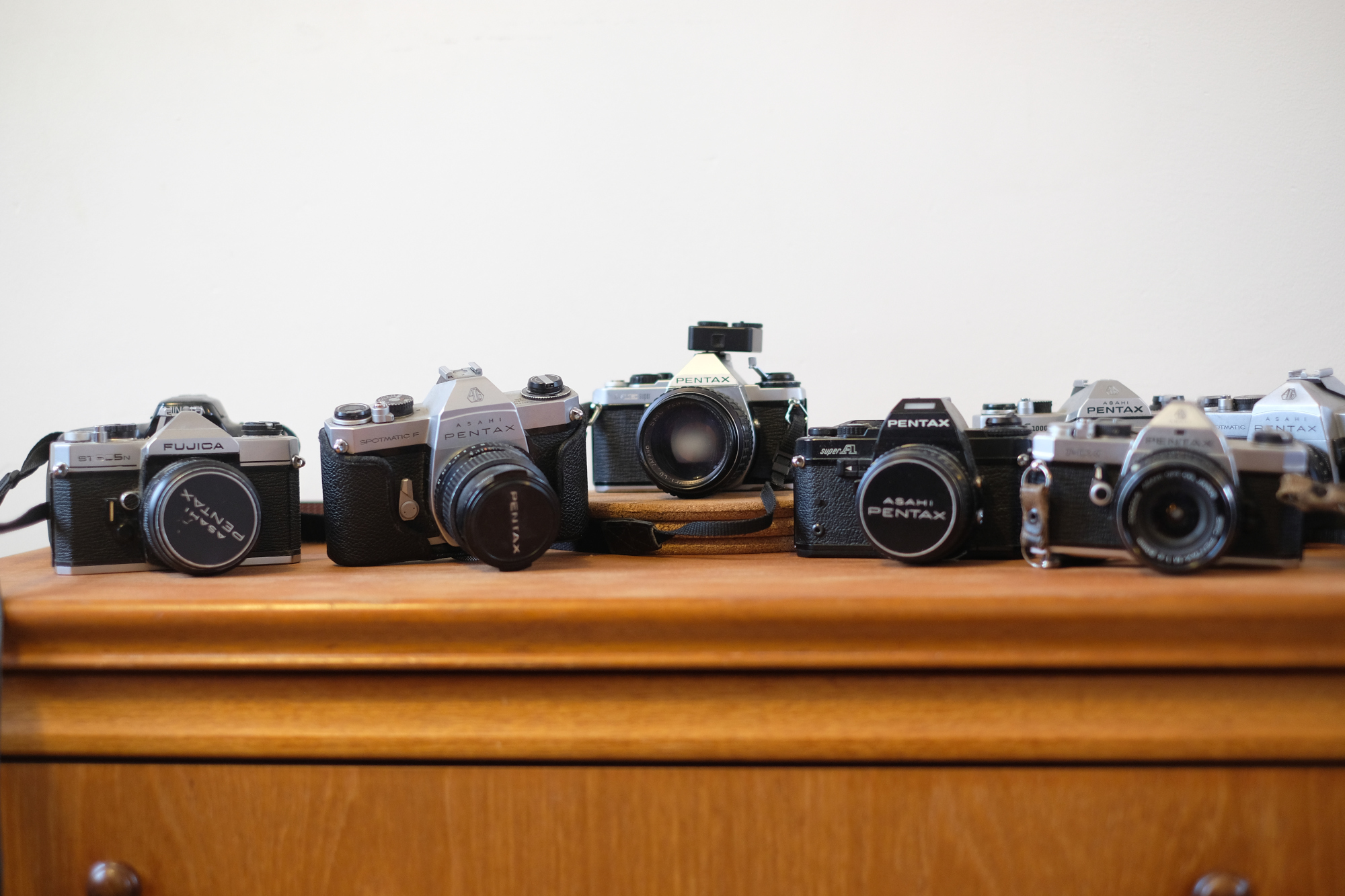
A few years ago, I was in a rut photographically, feeling like I wasn’t progressing at all, and not really enjoying my time with the camera. So, I did something drastic, and sold some of my gear to buy a Pentax SLR and a few rolls and colour and B&W film.
Since then, I’ve not looked back. It’s not just a nostalgia thing (I’m far too young, thank you)… I’m much happier having ditched digital photography for film, and while I still use digital cameras for work, all of my personal and recreational photography is on film. If you’re thinking about trying out analogue photography for yourself, as a break from the digital rat race, here are some of the reasons why I love it so much – and, to be fair, a few reasons why you might want to think twice.

Why I’m happy I went analog
First up, let’s enjoy ourselves. Having shot hundreds of rolls of film over the past few years, here are the key reasons why it’s one of my favourite things to do…
Film makes me a more considered photographer
I don’t think digital photographers can really disagree when I say that you guys are spoiled. If it’s not 40fps burst rates, it’s AI-powered autofocus – a lot of modern cameras feel essentially like cheat codes. Sure, modern photography still isn’t easy. But come on… it’s easier.
With my film camera, I have no modern comforts – and a finite number of shots in a roll. This makes me slow all the way down, take my time, pick my moments. Before I capture a shot, a little voice in my head always asks me if it’s worth it. Is this really the best angle you can spend this frame on – or is there a better one?
I’m a firm believer that great art springs from limitations. You make more considered decisions when you’re restricted to a certain number of frames, and this helps prevent you from settling for mediocrity. Many photographers will advocate a prime lens over a zoom, because the limitations of the single focal length force you to move your feet and engage with the scene in front of you. Well, I think the same is true of a camera with a limited shot count.

No screens!
I spend my life looking at screens. I wake up, look at small screen. Shamble over to my desk, look at medium screen. Finish work, collapse on sofa, stare at big screen until bed. Look at small screen in bed. Sleep, repeat. It’s not always that edifying.
When I’m out with my film camera, there are no screens. Not even a hint of a screen. I see the world through my beautiful optical viewfinder, and when I think I have a shot, I freeze it in resolutely analogue chemicals, and later I turn it into a negative I can hold in my hand. And if it’s good enough, perhaps even a print on a wall.
Excitement of trying new stocks
As hobbyists, we can admit there’s a part of us that gets excited about new toys. There’s no shame in it! New cameras are cool, new lenses are cool. But digital cameras by their nature are infrequent purchases, so generally my enjoyment of new digital toys is confined to admiring them from afar.
But as the analogue resurgence gathers pace, more and more film stocks are coming out! In the past half-year alone, we’ve seen the introduction of Harman Phoenix II, Kentmere 200, Kodacolor 100 and 200, and probably some others I’m forgetting about. Whenever a new one drops, the first thing I do is buy a couple of rolls and try it out, and it’s exciting every time.

Also, the rich history of film means it’s eminently possible to find old stocks you’ve never heard of and try them out. I’ve found Jessops-branded film in bins at flea markets, €2 rolls of Tudor-branded film in gift shops in Porto, old discontinued Fujifilm emulsions in batches on eBay. There’s a true sense of discovery to it, and it can be genuinely thrilling. And that leads onto…
The unexpected alchemy
Film is unpredictable! It doesn’t always behave the way you expect it to, and this means that the anticipation of seeing how your shots have turned out – the agonising wait between capture and development – never, ever diminishes. I’ve had loads of analogue shots over the years that have done things I didn’t expect and couldn’t quite explain, and would never have happened if I’d just fired off a snap on my phone.

As you can see in the upper quadrant of the above image, I managed to achieve a partial double-exposure. The Olympus XA2 does not have a double-exposure setting. How did I do this? No idea! Could I reliably do it again? No! And that’s what’s fun about film photography.
Downsides of going analogue
Of course, there are two sides to every coin. While I have immensely enjoyed taking my photography in a more analogue direction, and won’t be giving it up anytime soon, there are a few downsides that I would be remiss in not making you consider before you sell your sleek Canon EOS R mirrorless for a rusty old Pentax K1000.
Ongoing cost
This is the big one. There’s no getting around it – when you’re shooting film, every shot costs. Film is more expensive than it used to be. Development is more expensive than it used to be – gone are the days when you could pick up a random colour roll in a bargain bin at the supermarket, rattle through it at the park, get it developed at the local chemist’s and still have change for lunch.
While there are plenty of cheap film stocks out there, and various ways you can shoot film on the cheap, it’s not the world’s most economical hobby. Prices are high, and they are staying high for the foreseeable.
Difficulty honing craft
This can especially be a problem for those who let their completed rolls of film languish in a drawer for months before getting around to developing them (guilty). It can be more difficult to improve your practice as a film photographer when there is a significant gap between process and result.
In digital photography, when you take a shot, it’s instantly there for you to review. If you’ve mis-focused, poorly exposed, or have otherwise made an error, it’ll be immediately obvious, and you’ll be able to understand what you did wrong and correct it. Even if you’re someone who avoids chimping, you’ll probably still review your images very soon after they were shot – and you’ll also have the advantage of being able to review your settings using metadata. If you take a long time to develop your film, which many of us do, that direct link between cause and effect is severed.

Things break, and are hard to fix
While there are more new film cameras than there used to be, with recent offerings including the point-and-shoot Kodak Snapic A1, the half-frame Pentax 17 and the premium compact Lomo MC-A, most film shooters are likely still using old cameras (a new analog SLR system is not on the cards at the moment).
The thing about old cameras is… they break. Parts wear away, electronics stop working. It’s a fact of life, and often repairing them simply isn’t economical, costing more than it would to source a second-hand replacement. There are ways to solve problems creatively – I’ve found that a cheap light meter has radically extended the life of a my cameras. But the fact remains that if you’re going to shoot film, you do have to make peace with the fact that your equipment will likely break down on you, without the cushion of an extended warranty.
But even with these little annoyances, I know I’m an analogue photographer for life now, and I wouldn’t have it any other way!
Related content:
- Film photography and scanning tips
- You need to see these beautiful vintage art deco cameras from the 1920s and 30s
- Film stars – how roll film makers tried to fight 35mm and lost