

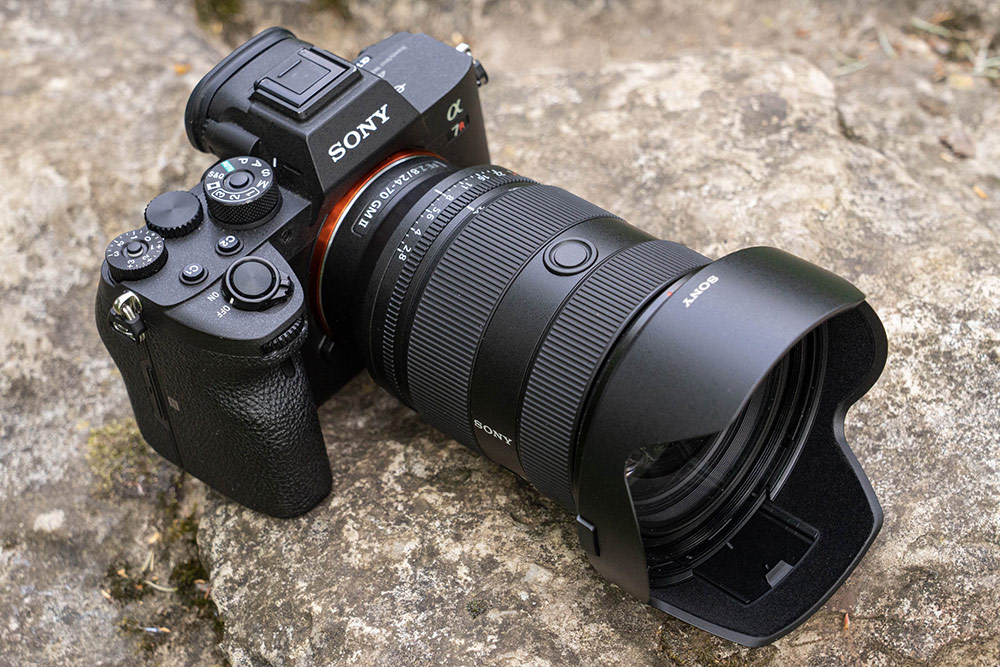
The best Sony lenses allow you to truly make the most of your Sony mirrorless camera, whether you’re shooting photos, videos or a mix of both. Sony’s lens range is big, sprtawling and can be a little confusing, so I’ve whittled this list down to include only the absolute standout Sony lenses that we’ve reviewed. If it hasn’t earned a high score from our expert technical team, it doesn’t make it onto this list.
I’ve factored in value for money and have made sure to include options for all budgets, with a few dedicated APS-C options for those who are using Sony’s smaller and more affordable crop-sensor cameras. I’ve also included a section of the truly top-tier money-no-object premium lenses, for those who are looking fro the best of the best
Scroll to the bottom of this page for some buying advice on how to choose the right lens for your Sony camera, as well as answering a few of the most common questions we get from readers – and check out our guide to the best Sony cameras if you’re looking for a camera as well as a lens.
The best Sony lenses: our quick list
Looking for the best deal on Sony E-mount lenses? Not only will you find the best Sony lenses, but you’ll also find some of the best Sony lens deals, as our ‘Buy now’ buttons are set up to automatically take you to the best prices from trusted retailers, you’ll also find a list of other retailers below each lens, so you can find the right deal for you.
Here’s our quick, cut-to-the-chase list of the best lenses for full-frame Sony E-mount cameras:
- Best standard zoom: Sony FE 24-70mm F2.8 GM II – Buy now
- Best lightweight standard zoom: Sony FE 20-70mm F4 G – Buy now
- Best all-round standard zoom: Sony FE 24-105mm F4 G OSS – Buy now
- Best ultra-wide zoom: Sony FE 16-25mm F2.8 G – Buy now
- Best multi-purpose tele-zoom: Sony FE 70-200mm F2.8 GM OSS II – Buy now
- Best macro zoom lens: Sony FE 70-200mm F4 Macro G OSS II – Buy now
- Best ultra-telephoto zoom: Sony FE 400-800mm F6.3-8 G OSS – Buy now
- Best wide angle prime: Sony FE 20mm F1.8 G – Buy now
- Best standard prime: Sony FE 50mm F1.4 GM – Buy now
- Best macro lens: Sony FE 100mm F2.8 Macro GM OSS – Buy now
- Best portrait lens: Sony FE 85mm F1.4 GM II – Buy now
The very best – but at a price!
- Best premium standard zoom: Sony FE 28-70mm F2 GM – Buy now
- Best premium telephoto zoom: Sony FE 50-150mm F2 GM
- Best 50mm Sony lens: Sony FE 50mm F1.2 GM – Buy now
And here are the lenses we rate for Sony E-mount APS-C cameras only:
- Best APS-C standard prime: Sigma 30mm F1.4 DC DN Contemporary – Buy now
- Best ultra-wide zoom for APS-C: Sony E PZ 10-20mm F4 G – Buy now
- Best APS-C lens for vlogging: Sony E 11mm F1.8 – Buy now
Read on for more details about these lenses, including details from our full review of each one…
Why you can trust Amateur Photographer
We spend many hours testing every product we recommend, in detail, in a variety of situations and shooting scenarios, and only use experts for our reviews, so you can be sure that you’re getting the best products. Find out more about our expert writers.
Best Sony FE-Mount Lenses for full-frame and APS-C
The following lenses are designed for Sony’s full-frame Sony Alpha cameras, on which they will deliver their stated focal length; i.e. a 50mm lens will deliver a 50mm effective focal length. If you’re using an APS-C Sony mirrorless camera, such as the Sony Alpha A6600, or Sony ZV-E10, these lenses will also work, but with a 1.5x crop factor.
This means they will have a narrower effective focal length than the one listed on the box, e.g. a 50mm lens will behave like a 75mm lens. See our guide to APS-C vs Full-Frame for more on how this works. Some of them may also feel large on the smaller camera bodies.
Best standard zoom
Best standard zoom: Sony FE 24-70mm F2.8 GM II
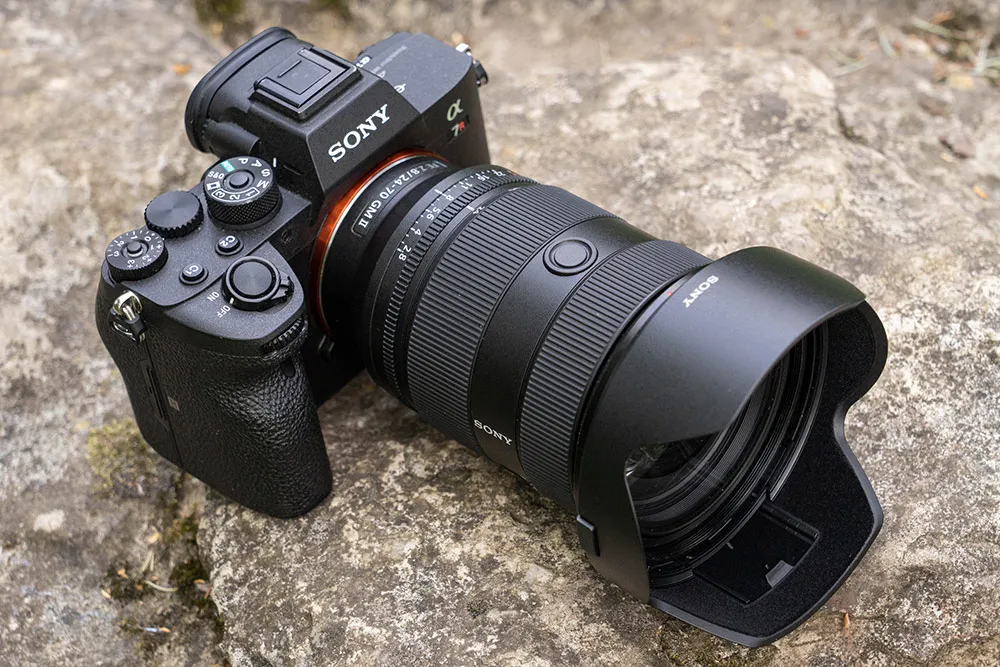
Amateur Photographer verdict
Good in detail resolution, in both the centre and the edges. If size and weight matter to you, it is worth consideration over its predecessor.
- Premium design and build
- Small and lightweight for a 24-70mm
- Super detail resolution
- Some distortion in raw files (easily corrected in post)
At a glance:
| New price: | $2,298 / £2,099 |
| Used price: | $1,149-2,099 / £1,739-1,789 |
| Filter thread: | 82mm |
| Minimum focus distance: | 0.21-0.3m |
| Weight: | 695g |
The Sony FE 24-70mm F2.8 GM II lens is relatively small and lightweight, with an aperture ring, making it a great match if you’re looking for a small(er) lens without compromising on image quality. While testing I’ve found the lens’ sharpness to be absolutely outstanding – I would have been happy shooting all day at f/2.8, and things got even crisper as I stopped down.
Elsewhere, there’s an 82mm filter thread, and the lens has a relatively close focus distance of 21-30cm. Thanks to its weather-sealing it’s a perfect match for Sony’s weather sealed mirrorless cameras.
Read our Sony FE 24-70mm F2.8 GM II review
Lightweight standard zoom
Best lightweight standard zoom: Sony FE 20-70mm F4 G
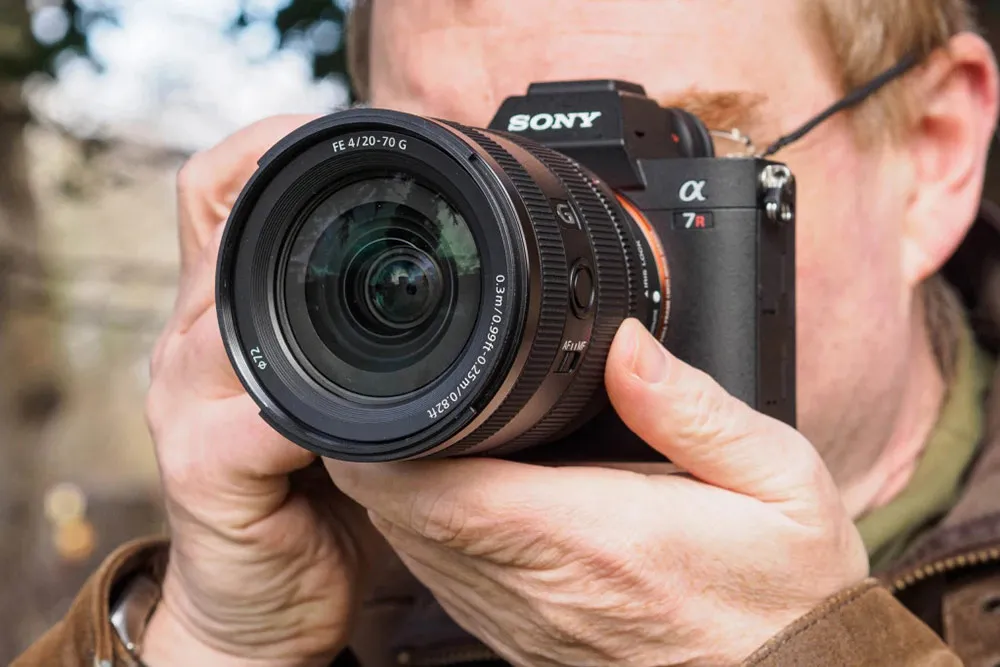
Amateur Photographer verdict
A fine optic that delivers sharp, detailed images, with its extended wideangle range and impressive close-up capability it provides useful extra creative scope compared to a conventional 24-70mm zoom
- Extended wideangle range
- Very good close up
- Edge-to-edge sharpness
- Very expensive
- And there are plenty of cheaper options for this range
At a glance:
| New price: | $998 / £1,259 |
| Used price: | $900 / £1,125 |
| Filter thread: | 72mm |
| Minimum focus distance: | 0.3-0.25m |
| Weight: | 488g |
The Sony FE 20-70mm F4 G is a standard zoom with an unusually wide field of view at its widest end, giving the user a little more range than they’d get from a standard 24-70mm. Sony touts it as a good choice for vloggers and videographers – a label they slap on pretty much everything they produce nowadays – and also suggests it as a lightweight, portable choice for landscape photography who don’t want to carry too much. With excellent sharpness and a weatherproof build, it certainly makes a good case for itself in this area. Close-up performance is also first-rate.
The only real stumbling block is the cost – at almost $1,098 / £1,399, this is an ambitiously priced lens to say the least, especially when it’s covering a focal range most photographers will already have options for. Still, if you can justify the expense, this is an all-around excellent lens.
Best for: landscape photography
Read our Sony FE 20-70mm F4 G review
Best all-purpose zoom
Best all-round standard zoom: Sony FE 24-105mm F4 G OSS
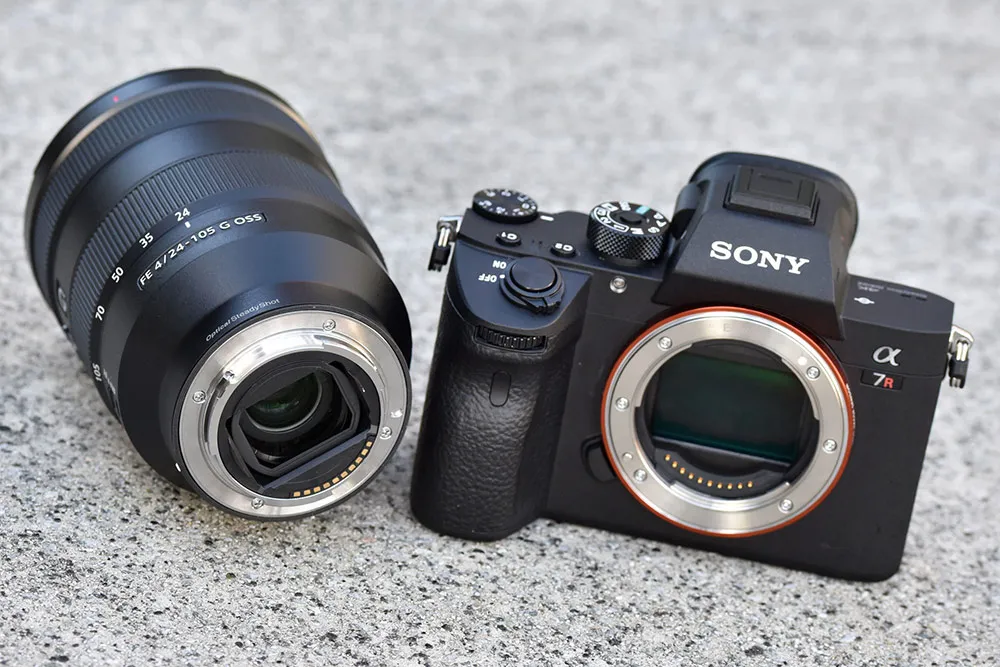
Amateur Photographer verdict
Impressively sharp, not too bulky, weather-resistant and with a really useful zoom range. A superb general purpose lens for full-frame Sony mirrorless users
- Do-everything zoom range
- Built-in stabilisation
- Excellent sharpness
- f/4 won’t be for everyone
At a glance:
| New price: | $1,198 / £999 |
| Used price: | $749 / £734-769 |
| Filter thread: | 77mm |
| Minimum focus distance: | 0.38m |
| Weight: | 663g |
This lens offers a useful zoom range from 24mm to 105mm, with the f/4 aperture helping to keep the size down. Optical steady shot (OSS) means you can use it with E-Mount cameras that don’t feature in-body image stabilisation, and still benefit from optical image stabilisation. When we reviewed this lens we found that it was consistently sharp at all focal lengths, with fast and silent autofocus. The Sony FE 24-105mm F4 G OSS lens is also relatively compact and lightweight, with an impressive resistance to flare. For an all-in-one zoom lens, this one certainly delivers above expectations.
Read our Sony FE 24-105mm F4 G OSS review
Best ultra-wide zoom
Best ultra-wide zoom: Sony FE 16-25mm F2.8 G

Amateur Photographer verdict
While the zoom range is an undeniable compromise, there’s a lot to like about. this wide-angle zoom. Landscape shooters in particular will appreciate its weather-sealed build
- Sharp throughout zoom range
- Compact, lightweight and weather-sealed
- Aperture ring
- Limited zoom range
- Cheaper third-party rivals
At a glance:
| Price: | $1200 / £1250 |
| Used price: | $1200 / £774 |
| Filter thread: | 67mm |
| Minimum focus distance: | 0.18-0.24m |
| Weight: | 409g |
There are a few wide-angle zooms jostling for your attention in E-mount, including the the Sigma 16-28mm F2.8 DG DN and the Tamron 17-28mm F/2.8 Di-III RXD. Both are cheaper than this Sony-made version, as well as offering more zoom range. However, the Sony FE 16-25mm F2.8 G has a lot to recommend it, including full weather-sealing, a lovely aperture ring and a pleasingly lightweight build. Image quality is sublime, that much is a given, but for landscape shooters, it’s that weather-sealed build that gives the Sony-made lens the edge. For outdoor shooting, this is a superb pick, and it impressed us greatly in our review.
Best for: landscape, architecture and interiors.
Read our full Sony FE 16-25mm F2.8 G review.
Best telezoom
Best multi-purpose tele-zoom: Sony FE 70-200mm F2.8 GM OSS II
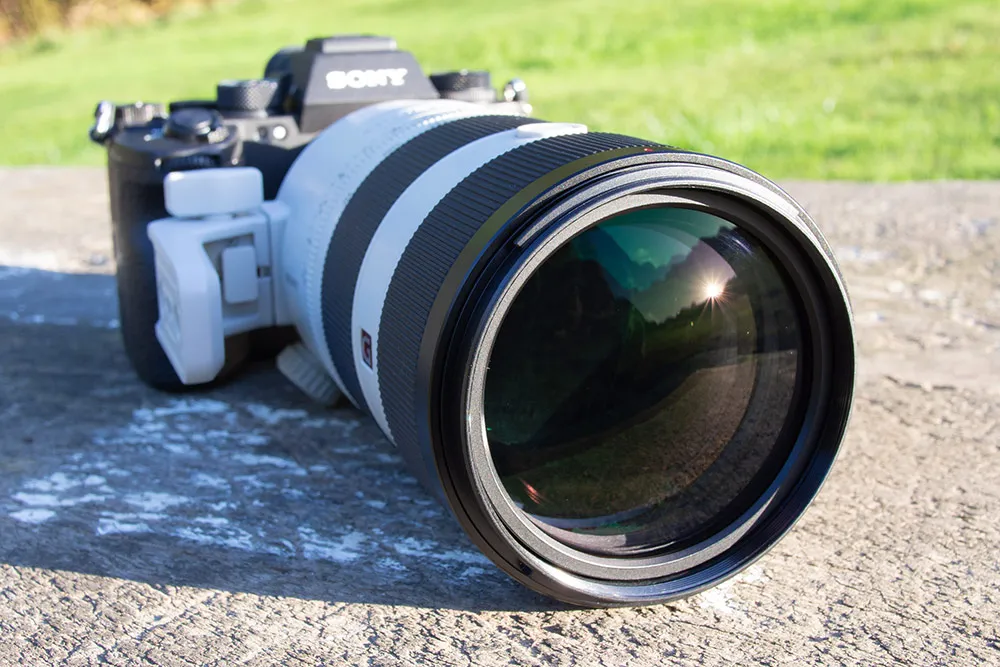
Amateur Photographer verdict
There’s beautiful bokeh and background blur on offer, as well as crisp detail and sharpness, and combined with a fast and reliable focus system, you get impressive shots time and time again.
- Very light for a 70-200mm
- Excellent sharpness
- Fast, reliable autofocus
- Some corner softness at 200mm
At a glance:
| New price: | $2,798 / £2,479 |
| Used price: | $2,479 / £2,234 |
| Filter thread: | 77mm |
| Minimum focus distance: | 0.4-0.82m |
| Weight: | 1,045g |
The Sony FE 70-200mm F2.8 GM OSS II is the 2nd generation of the 70-200 f/2.8 lens from Sony, and this new model offers the lightest 70-200mm f/2.8 lens for any system, weighing just 1,045g. It also delivers excellent levels of sharpness throughout the zoom range, making it a great choice for anyone looking for a versatile zoom lens. There’s rapid focus, and direct aperture control on the lens, making it easy to use, with great results time after time.
How well this lens performed in testing blew me away. There’s a tiny bit of corner softness when you zoom all the way in to 200mm, but not enough to seriously worry about. As a G Master lens, it is unavoidably expensive, so if it’s out of your budget, you may want to scroll down and consider the excellent Sony FE 70-200mm F4 Macro G OSS II, a relatively recent release.
Best for: portrait and close range sports and wildlife scenarios
Read our Sony FE 70-200mm F2.8 GM OSS II review
Best macro zoom
Best macro zoom lens: Sony FE 70-200mm F4 Macro G OSS II

Amateur Photographer verdict
Delivers sharp and detailed images throughout the zoom range, with it’s versatile, and the compact size and light weight it is a joy to use
- Excellent sharpness throughout zoom range
- Close, fast focusing
- Teleconverter compatibility
- No aperture ring
- Price hike over previous version
At a glance:
| New price: | $1,698 / £1,549 |
| Used price: | $1,459 / £1,389 |
| Filter thread: | 72mm |
| Minimum focus distance: | 0.26m-0.42m |
| Weight: | 794g |
An extremely well-made lens, inside and out, the Sony FE 70-200mm F4 Macro GM OSS II is a highly versatile telephoto zoom with close-up capabilities. If you don’t quite have the budget for an f/2.8 zoom but still want a highly flexible workhorse, this is a tremendous buy. It delivers excellent sharpness, and can throw the background out beautifully even with its relatively narrow maximum aperture of f/4. If you’re looking for a solid lens for product shots, the FE 70-200mm F4 Macro GM OSS II may well be your best bet.
As the name implies, this is a Mark II version of a previous lens, the old faithful FE 70-200mm F4 G OSS that is getting onto a decade on the market. It comes with a price hike, but offers features like 0.5x magnification throughout the zoom range (which isn’t “true” macro, but is still pretty handy) and teleconverter compatibility for pushing the zoom further. The lens is weather-sealed, and the Optical SteadyShot (OSS) stabilisation helps keep images sharp at slower shutter speeds.
Some may bemoan the lack of an aperture ring; for that, you have to fork out for the pricier f/2.8 version. Otherwise, this is a capable, sharp-shooting lens that is definitely worth picking over the previous FE 70-200mm F4 G OSS – though if you already have that lens, it may not quite be worth the price of upgrading.
Best for: macro photography
Read our Sony FE 70-200mm F4 Macro G OSS II review
Best ultra-telephoto
Best ultra-telephoto zoom: Sony FE 400-800mm F6.3-8 G OSS

Amateur Photographer verdict
While the ultra-long focal range makes it quite a situational lens, this superb super-telephoto zoom delivers sumptuous image quality and fast focusing – perfect for wildlife.
- Fast, silent, accurate focusing
- Excellent optical performance
- Highly effective stabilisation
- Fairly large and heavy
- Aperture drops significantly at telephoto end
At a glance:
| New price: | $2,899 / £2,550 |
| Used price: | $2,600 / £2,099 |
| Filter thread: | 105mm |
| Minimum focus distance: | 1.7-3.5m |
| Weight: | 2,475g |
This is not one of those all-purpose lenses you strap on your camera for a day’s pleasant photography wandering the streets of Paris. The Sony FE 400-800mm F6.3-8 is a beefy, powerful telephoto designed for a specific purpose – photographing fast-moving subjects at distance. If you don’t need to do that, move on. If you do, then you’ve found a hell of a lens.
With an optical design comprising 27 elements in 19 groups, including 6 elements made from extra-low dispersion (ED) glass, this is a hefty lens, pushing almost to 2.5kg, but the image quality it provides is hugely impressive – even at the higher ISOs necessitated by the narrow aperture and fast shutter speeds you’ll likely be using.
The autofocusing, powered by dual linear motors, is fast, accurate and silent. In our testing, we found that it kept up swimmingly with the camera’s subject-recognition system and we were able to get sharp shot after sharp shot – any misfires were more likely the fault of the camera than the lens.
Stabilisation too is excellent – we were able to consistently get sharp shots handheld at 1/60sec, fully zoomed in to 800mm, which is ridiculously slow for such a focal length. Just be aware that the weight of the lens means it won’t be for everyone, and having a minimum focal length of 400mm can be pretty limiting – there’s no pulling out for a wider perspective.
Best for: wildlife photography, sports and action
Read our Sony FE 400-800mm F6.3-8 G OSS
Best wide prime
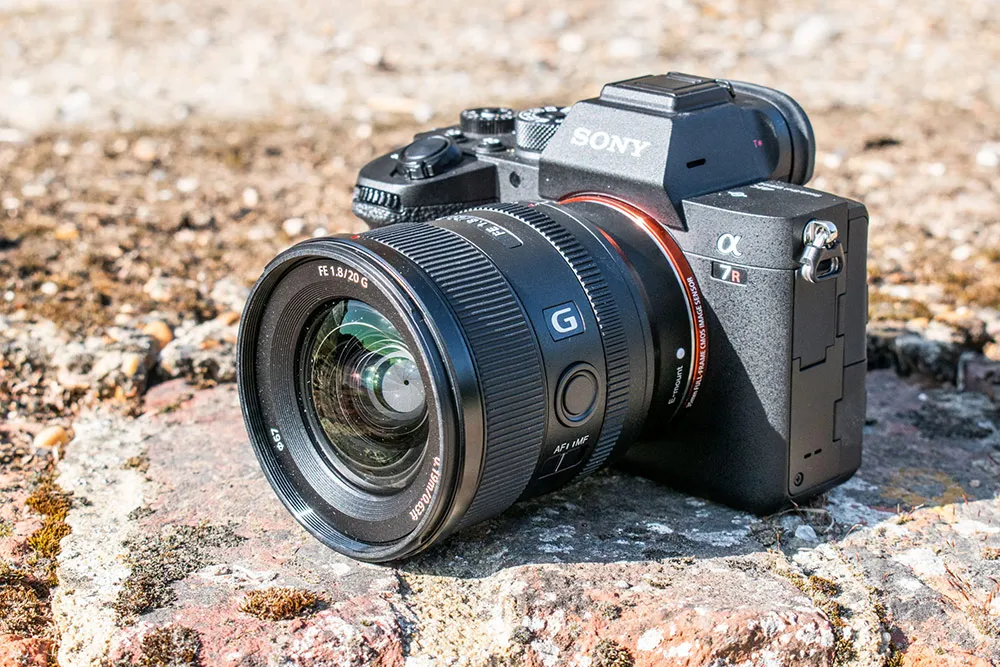
Best wide angle prime: Sony FE 20mm F1.8 G
Amateur Photographer verdict
It excels in all the key areas a wide-angle prime lens should, providing fast and quiet focusing, mesmerising sharpness at wide apertures in challenging low-light conditions
- Great close focusing distance
- Very sharp, even when wide open
- Pricier than the Sigma 20mm
At a glance:
| New price: | $798 / £949 |
| Used price: | $559-619 / £494-659 |
| Filter thread: | 67mm |
| Minimum focus distance: | 0.18m |
| Weight: | 373g |
The Sony FE 20mm F1.8 G is an ultra wide-angle prime lens, with a relatively bright aperture of f/1.8, as well as a relatively compact size. The lens has a close focus distance of 18/19cm (MF/AF), and there’s a 67mm filter thread on the front of the lens. There’s direct access to the aperture, with the aperture ring on the lens, as well as the option to use the aperture ring ‘clickless’ meaning that Sony has also considered videographers when making this lens. I found that it performs extremely well, capable of delivering sharp images, even when shooting wide-open at f/1.8.
Best for: landscape, astrophotography, travel, and street photography
Read our Sony FE 20mm F1.8 G review
Best standard prime
Best standard prime: Sony FE 50mm F1.4 GM

Amateur Photographer verdict
A really fine lens whose all-round excellence goes a long way towards justifying its asking price
- Super-sharp even wide open
- Focuses fast and silently
- Pleasingly lightweight
- Price means it’s for serious shooters only
- Some focus breathing
At a glance:
| New price: | $1,198 / £1,499 |
| Used price: | $1,100 / £1,050 |
| Filter thread: | 67mm |
| Minimum focus distance: | 0.41m (AF), 0.38m (MF) |
| Weight: | 516g |
Sony has quite a few 50mm lenses on its roster, including the FE 50mm F1.4 ZA, the FE 50mm F1.8, FE 50mm F2.8 Macro, FE 50mm F2.5 G and the FE 50mm F1.2 GM. As such, the FE 50mm F1.4 GM is faced with a considerable task in distinguishing itself from the pack, and as you can see from our full review, it accomplishes this admirably.
It’s a successor to the Zeiss-badged FE 50mm F1.4 ZA, and if you were to hold the two side by side, one of the first things you’d notice is that the G Master version is about 200g lighter. As I discovered in testing, it’s also optically superior, delivering absolutely superb results even when you’re shooting wide open. This is a truly useful f/1.4 lens, as you can really open it up and make the most of that aperture without compromising on image quality. It’s fast-focusing too, with dual XD linear motors that also acquire focus silently. This makes it useful for video – though videographers should be aware that we did encounter noticeable focus breathing in the course of our testing.
This aside, the only real downside to this lens is something that any photographer wanting to use G Master glass has to contend with – the price. While I’d say it’s definitely worth its price tag for those who can afford it, not everyone is in such a fortunate position. If this lens is too much for you, try the Sigma 50mm f/1.4 DG DN | Art, a cracking lens delivering the same combination of focal length and aperture at around half the price of this G Master version. Alternatively, if you have a little extra to spend and want something that’s a cut above, you can scroll a little further down this list to meet the fabulous FE 50mm F1.2 GM…
Best for: a general purpose optic, that is useful for a wide range of subjects
Read our full Sony FE 50mm F1.4 GM review
Best macro
Best macro lens: Sony FE 100mm F2.8 Macro GM OSS

Amateur Photographer verdict
Sony’s best macro lens, and one of the best macros across all systems, the Sony FE 100mm F2.8 Macro GM OSS delivers class-leading 1.4x magnification and pairs it with sublime image quality.
- 1.4x magnification for extreme close-ups
- Fast, decisive autofocus system
- Excellent optical quality and bokeh
- Pricey (but it’s a G master)
- Closest focusing distance is only around 55mm from the end of the lens hood
At a glance:
| wjhaNew price: | $1498 / £1399 |
| Used price | $1357 / £1259 |
| Filter thread: | 67mm |
| Minimum focus distance: | 0.26m |
| Weight: | 646g |
This absolutely stunning lens builds on the success of the FE 90mm Macro G OSS to become the new must-have optic for Sony macro shooters. The Sony FE 100mm F2.8 Macro GM OSS offers class-leading 1.4x magnification, redefining what’s possible in terms of close-up capabilities. You can absolutely fill the frame with stunningly close detail, benefiting from the lens’ edge-to-edge sharpness (as we’ve come to expect from G Master). Its autofocus has also received a major upgrade, benefiting from four XD (extreme dynamic) to deliver quick, confident and reliable subject acquisition.
Rounding off a formidable feature-set, the OSS II (Optical SteadyShot) stabilisation system has been specifically tailored to the needs of macro shooters, with 6-axis compensation that covers front-to-back movement. All in all, this lens is a stunner for close-ups.
Read our full Sony FE 100mm F2.8 Macro GM OSS review
Best portrait prime
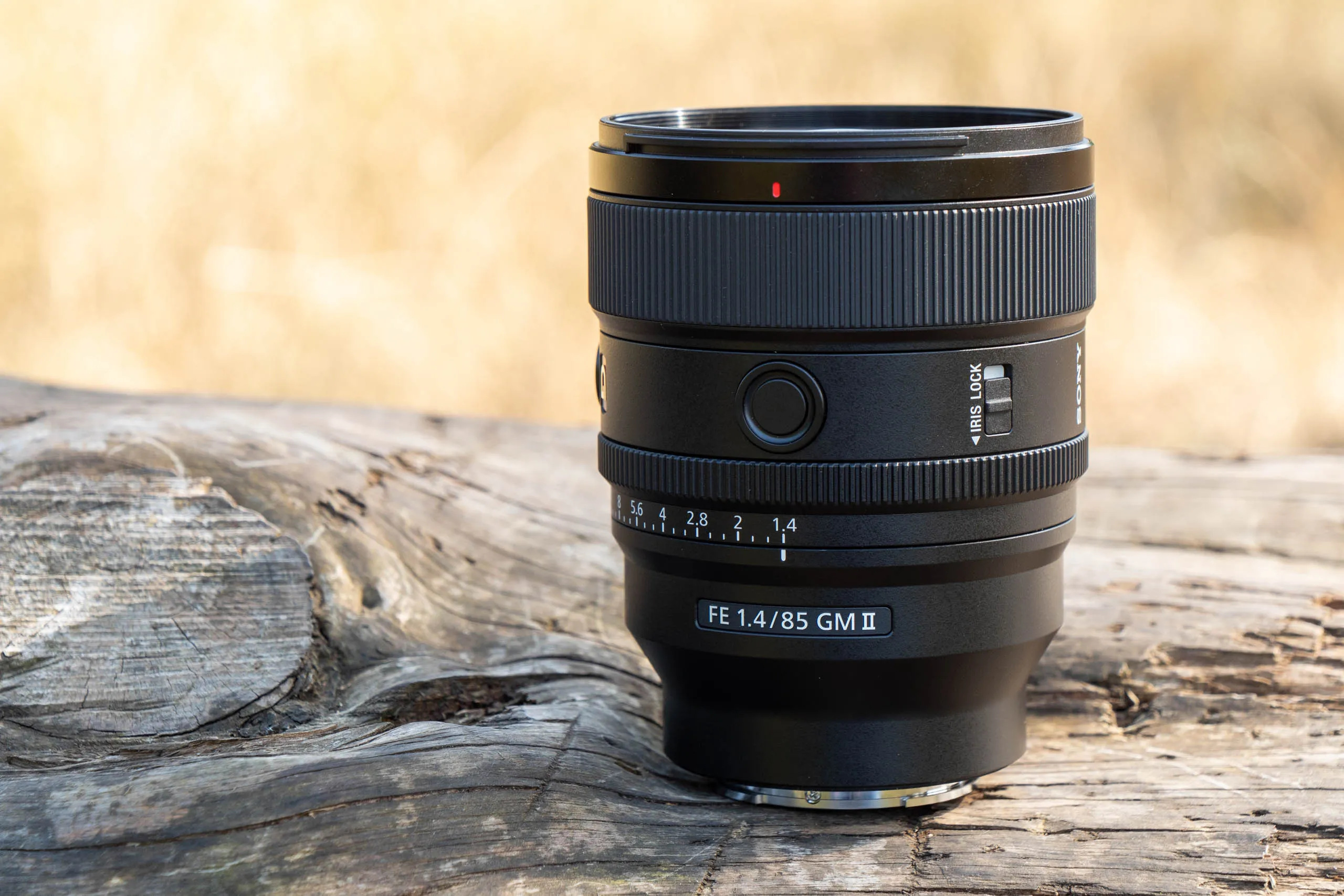
Best prime portrait lens: Sony FE 85mm F1.4 GM II
Amateur Photographer verdict
Though it comes with a very high price tag, the Sony FE 85mm F1.4 GM II is an outstandingly well-featured lens for portrait shooters.
- Very sharp
- Customisable function buttons
- Switchable clicked/clickless aperture ring
- Quite pricey
At a glance:
| New price: | $1,698 / £1,499 |
| Used price: | $1,059-1110 / £1,300 |
| Filter thread: | 77mm |
| Minimum focus distance: | 0.8m |
| Weight: | 820g |
The Sony FE 85mm F1.4 GM II lens is pretty much a no-brainer if you’re a serious portrait shooter using Sony kit. Yes, it’s expensive – but its image quality is absolutely exceptional, able to keep up with the demands of ultra-high resolution cameras like the Sony A7R V. As we found in our testing, sharpness is absolutely outstanding across the frame, and bokeh in the defocused areas of images is as smoothly rounded as you could ask for. Chromatic aberration appears to be pretty much non-existent, and we couldn’t get flare in our shots even when we were trying for it deliberately. There’s also a reduction in size and weight from the previous Sony FE 85mm F1.4 GM, making it a more practically useable lens.
Read our full Sony FE 85mm F1.4 GM II review
The very best – but at a price!
Here are the best Sony lenses we’ve ever reviewed, money no object. These undoubtedly won’t be for everyone, but if you’ve got the budget and need the ultimate in performance, these are the Sony lenses that will deliver it.
Best standard zoom
Best premium standard zoom: Sony FE 28-70mm F2 GM

Amateur Photographer verdict
Sony’s new G Master standard zoom is a dream to use, it is snappy, bright and delivers fantastic sharpness, but its pretty large and expensive
- Excellent optics
- Fast and silent autofocus
- Pro controls
- Quite heavy
- Hugely expensive
At a glance:
| New price: | $3348 / £3049 |
| Used price: | $2979 / £2219 |
| Filter thread: | 86mm |
| Minimum focus distance: | 38cm |
| Weight: | 918g |
Sony’s widest aperture zoom lens comes at an eye-watering price, but it delivers high-quality optics and pro-level handling. The 20 elements in 14 groups with special aspherical elements capture extra sharp images with a very attractive bokeh and virtually no colour fringing. Autofocus is lightning fast and incredibly silent even when shooting stills and video at 120 fps, and thanks to its bright aperture, the AF performs well in low light scenarios too.
At 918g it is 223g heavier than Sony’s previous benchmark standard zoom the 24-70mm F2.8 GM II, but still manageable compared to similar lenses from other manufacturers, especially when paired with a larger camera body with a decent sized hand grip. Overall, it is a superb lens with exceptional optics, a great option for wedding and event shooters who want stunning bokeh and snappy autofocus.
Best for: portrait, wedding and event photography
Read our five star full review of the Sony FE 28-70mm F2 GM.
Best premium telezoom
Best premium telephoto zoom: Sony FE 50-150mm F2 GM

Amateur Photographer verdict
It’s a big boy, and expensive, but this lens might just be a game-changer for pros looking to combine a flexible zoom range with a large maximum aperture.
- Bright constant f/2 aperture
- Superb image quality
- Fast autofocus
- Expensive
- Can’t use teleconverters
- Uses large 95mm front filters
- Relatively heavy and bulky
At a glance:
| New price: | $3,899 / £3,799 |
| Used price: | $3,558 / £3,299 |
| Filter thread: | 95mm |
| Minimum focus distance: | 0.4-0.74m |
| Weight: | 1340g |
Let nobody accuse Sony of not innovating – the FE 50-150mm F2 GM is a genuine first. Spanning a focal range from standard to telephoto with a fast constant aperture of f/2, this is lens designed to tempt pros who shoot weddings and events, allowing them to carry a single lens instead of a 70-200mm f/2.8 and several primes. In our testing, we found it to deliver superb image quality, razor-sharp in the centre and impressive in the corners. Bokeh was absolutely delicious, and autofocus lock-on was rapid. The potential sticking points are the weight and the price, both of which are considerable. Whether it’s worth it is up to you – but this really is an exceptional lens.
Read our full Sony FE 50-150mm F2 GM review
Best nifty fifty
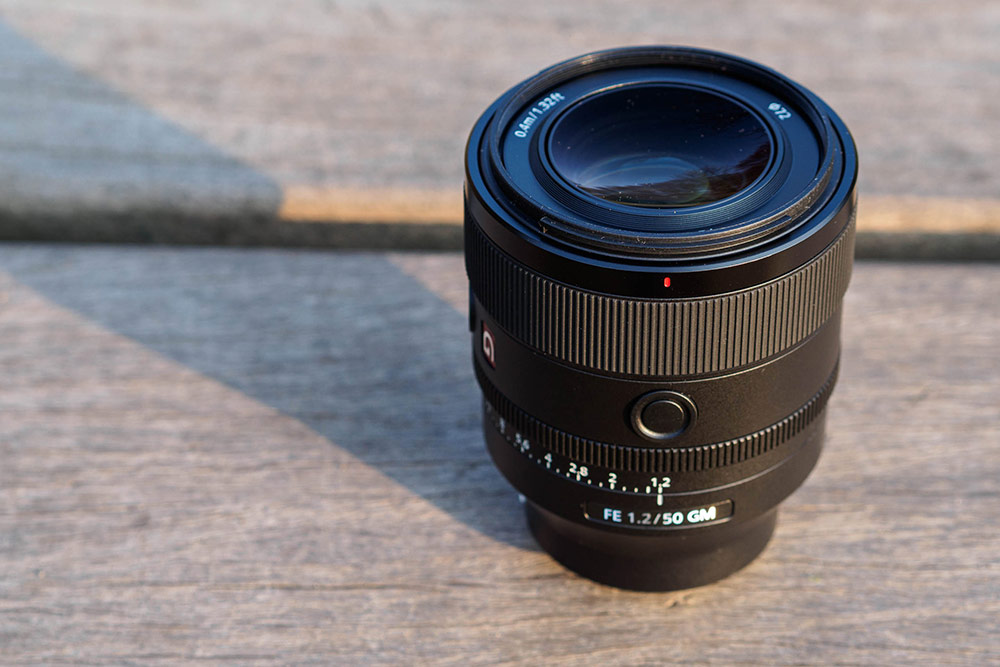
Best premium standard prime: Sony FE 50mm F1.2 GM
Amateur Photographer verdict
It is a serious investment, but if you love low light street shooting or want to shoot portraits with a very shallow depth of field and beautifully blurred backgrounds, this could be your dream lens.
- Top-flight sharpness, even wide open
- Weather-sealed
- Rapid, silent autofocus
- Very expensive
At a glance:
- New price: $1,898 / £2,099
- Used price: $1,599 / £1,449-1,529
- Filter thread: 72mm
- Minimum focus distance: 0.4m
- Weight: 778g
The Sony FE 50mm F1.2 GM is the largest aperture prime lens for Sony E-Mount cameras, and has answered the calls of Sony fans who have been asking for a lens brighter than f/1.4. The lens offers superb sharpness even wide-open at f/1.2, and has minimal chromatic aberration. There’s also fast and silent autofocus, an aperture ring (that can be set to clickless), customisable function buttons, as well as excellent build and handling that you would expect from a G Master lens. I loved the bokeh and background blur, it is definitely a great option for portrait photography. It’s also barely bigger than the 50mm f/1.4.
Best for: portrait photography, travel
Read our Sony FE 50mm F1.2 GM review
Best Sony E-mount lenses for APS-C only
If you’re using an APS-C Sony camera, you may want to consider an E-mount lens designed specifically for these APS-C models. They tend to be lighter than the full-frame optics, meaning they balance better with the lighter APS-C cameras, which can be particularly useful if you’re using something like the Sony ZV-E10 for run-and-gun vlogging. Below are a few of our favourite E-mount lenses for APS-C.
Best all-purpose APS-C lens
Best APS-C standard prime: Sigma 30mm F1.4 DC DN Contemporary

Amateur Photographer verdict
With its reasonable size and weight, large f/1.4 aperture, superior build quality and a good price all mean that the Sigma 30mm f/1.4 DC DN C is worthy of serious consideration
- Full of bokeh-licious character
- Very lightweight
- Premium metal build quality
- Some noise when focusing
At a glance:
| New price: | $419 / £289 |
| Used price: | $295 / £269 |
| Filter thread: | 52mm |
| Minimum focus distance: | 0.3m |
| Weight: | 265g |
Built from the ground up for cameras with smaller sensors, the Sigma 30mm F1.4 DC DN Contemporary produces an equivalent focal length of 45mm when combined with a Sony E-mount camera, making it an excellent choice of walk-around lens. Even though it weighs just 265g, the lens has a relatively sophisticated construction of nine elements in seven groups, including two rear aspherical elements, and treatment with Sigma’s Super Multi-Layer coating.
In use, the lens impressed me. Its nine aperture blades deliver soft, rounded bokeh in shallow depth of field, and our testing found it reasonably quick to focus on a Sony A6300 – not as snappy as Sony’s own lenses, but certainly fast enough. It’s quiet, but there is an audible clunk when it engages focus, meaning it’s probably not the best choice for video.
Sharpness, when you nail the focus, really is excellent. This is a lens that’s begging to be used wide open, and your reward for doing so will be crisp and punchy images, with great central sharpness and beautifully blurred backgrounds.
Best for: portraits, travel and documentary
Read our Sigma 30mm F1.4 DC DN Contemporary review
Best APS-C wide zoom
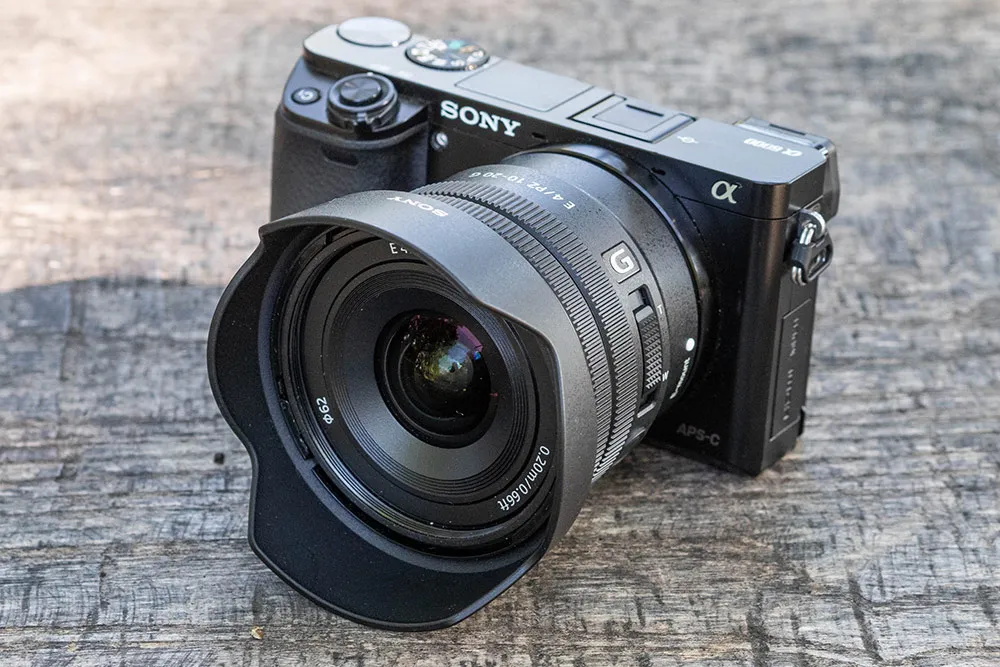
Best ultra-wide zoom for APS-C: Sony E PZ 10-20mm F4 G
Amateur Photographer verdict
Produces impressively sharp and clean images consistently across it’s focal range.
- Responsive power zoom
- Resistant to dust and moisture
- Good sharpness
- No stabilisation
- Zoom and focus rings hard to distinguish when using viewfinder
At a glance:
| New price: | $948 / £749 |
| Used price: | $660 / £454 |
| Filter thread: | 55mm |
| Minimum focus distance: | 0.4m |
| Weight: | 219g |
Equipped with a powered zoom mechanism, the Sony E PZ 10-20mm F4 G is well-suited for video shooters using Sony’s APS-C cameras. The electronic mechanism near-eliminates focus breathing, and its mechanics are entirely internal, meaning it doesn’t extend or retract when zooming. This makes it easier to balance on a gimbal – another boon for video shooters.
It holds focus on the subject when zooming, and in a welcome bonus for outdoor shooters, it also boasts comprehensive weather-sealing. While this is a video lens foremost, as we noted in our review, photographers should find a lot to like in its equivalent 15-30mm focal range as well.
Best for: video, vlogging and landscape
Read our Sony E PZ 10-20mm F4 G review
Best for vlogging
Best APS-C lens for vlogging: Sony E 11mm F1.8
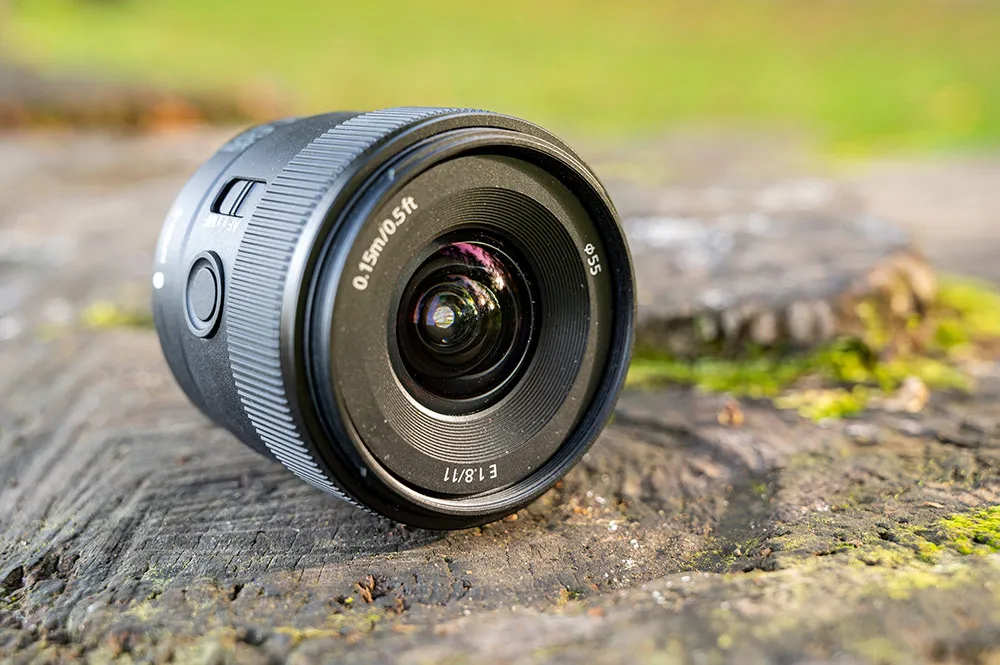
Amateur Photographer verdict
Small and lightweight, and compared to other prime lenses in Sony’s line-up, is reasonably priced.
- Good close focusing
- Fast, quiet, reliable AF
- Solid image quality
- Maybe priced a little high
- No stabilisation
At a glance:
| New price: | $698 / £499 |
| Used price: | $613 / £394 |
| Filter thread: | 55mm |
| Minimum focus distance: | 0.12m |
| Weight: | 181g |
Suited to stills and video alike, the Sony E 11mm F1.8 is maybe priced a little high to be a take-everywhere lens, but it is a nice option to throw in the kit bag if you don’t mind the cash outlay. The crop factor gives it an equivalent focal length of 16.5mm, and the close focusing distance of 0.15m with AF or 0.12m with manual focus makes it a solid choice for close-up shooting.
This also means you can make the most of the generous f/1.8 aperture, and in our testing we found that the lens delivered consistently good sharpness in a host of different shooting situations. Can you ask for much more than that?
Best for: vlogging, video, architecture and landscape
Read our Sony E 11mm F1.8 review
How to choose the best Sony E-mount lenses
All the different lens options can be overwhelming, especially to a newcomer to the system. Here are some of the key things to look out for when choosing a Sony lens.
Focal length: This is probably the first consideration on your list when selecting a lens, as the focal length of a lens will radically transform the look of an image. The focal length of a lens is expressed in millimetres (mm), and it governs both the angle of view and the magnification of a scene. Short lenses (8-35mm) produce a wide field of view, and are popular for big expansive scenes such as in landscape photography or group photos at weddings. Long lenses (generally 85mm or more) produce a narrow, zoomed-in view, which brings distant subjects closer and is popular in wildlife photography. Standard lenses (around 40mm-75mm) produce a more naturalistic view, and are often used in street photography.
Zoom or prime? Ah, the age-old question. More ink has been spilled on this than we have space for here, so check out our dedicated guide to zoom vs prime lenses for a rundown on the pros and cons of each type.
Image Stabilisation: The majority of recent Sony E-Mount mirrorless cameras have built-in image stabilisation, or IBIS (In-body image stabilisation), which Sony call “SteadyShot INSIDE” which helps keep your shots sharp and blur free. If you’re looking for additional stabilisation, look for a lens with “OSS” – Optical SteadyShot – as this will work in combination with the in-camera stabilisation to give an even more powerful stabilising effect. If your camera doesn’t feature SteadyShot INSIDE, then you’ll doubly want to look for a lens with OSS, otherwise you’ll have no stabilisation at all.
Aperture ring: While aperture settings can be controlled in camera, many photographers prefer having a physical ring on the lens to change the setting. You may also see references to an aperture ring being “clickless” – this means it doesn’t make any noise when changing settings, which is very handy for video.
Another thing to pay attention to is the crop factor. Sony E-mount lenses come in two varieties – full-frame (Sony FE) and APS-C (Sony E). Full-frame lenses can be used with both the full-frame mirrorless cameras like the A7 series, and APS-C cameras like the A6000 series. The ZV series of vlogging cameras come in both varieties, with the mirrorless ZV-E10 being an APS-C model, while the newer ZV-E1 sports a full-frame sensor.
(For details of the key differences between the two sensor sizes, take a look at our guide to full-frame vs APS-C: which sensor size is best?)
The best Sony E-mount lenses – frequently asked questions
Confused by all the initials and numbers being banded about? Here’s our regularly updated FAQ section where we answer some of the most common questions we get asked about Sony lenses…
What are Sony FE lenses?
While the Sony lens system is officially referred to as ‘E-mount’, you may have noticed that a lot of the lenses are labelled ‘Sony FE’. It has to do with sensor size – ‘FE’ stands for ‘Full E-mount’, and denotes lenses that are specifically designed to work with full-frame Sony mirrorless cameras. These are the A7 and A9 cameras, as well as the A1 and the newer ZV-E1.
This doesn’t mean that FE cameras won’t work on APS-C cameras like the A6500, they can and do. The key thing to remember is that mounting an FE lens on an APS-C camera will incur a 1.5x crop factor, meaning the effective focal length of the lens will be 1x longer due to the narrower field of view (so, a 50mm lens will effectively behave like a 75mm lens). Also, because they have designed these lenses expressly for the larger and heavier full-frame models, Sony hasn’t worried too much about balancing the lenses with its lighter APS-C cameras. So while you can mount an FE 50mm F1.2 lens on the A6000, you may find that the setup feels very front-heavy.
Which Sony lenses are weather-sealed?
As a rule of thumb, all of the top-end Sony GM (G Master) lenses are weather-sealed, as befitting their status as professional lenses for working photographers. Beyond that, it’s more of a case by case basis – Sony doesn’t have a handy acronym it uses to denote lenses with weather-sealing, so if this is a priority then it’s worth doing a quick Google before you buy a lens. In general, the full-frame FE lenses are more likely to be weather-sealed than the APS-C lenses, but this isn’t a hard-and-fast rule.
Which Sony lens is best for wildlife photography?
As lens choice is so critical in wildlife photography, this is a question we get asked quite frequently. Many of the lenses on the list above would make for excellent wildlife lenses. Our pick for the majority of users would be the FE 200-600mm F5.6-6.3 G OSS, which provides excellent telephoto reach without the staggering cost of premium lenses like the FE 600mm F4 GM OSS lens (currently retailing at $12,998 / £11,999). Other good choices could potentially be the Sony FE 70-200mm F2.8 GM OSS II or the FE 135mm F1.8 GM.
Are Sony A-mount lenses compatible with E-mount?
Not natively, as the lens mount from Sony’s abandoned DSLT system is a different size from the E-mount. There are adapters available that allow A-mount lenses to be connected to E-mount cameras, including Sony’s LA-EA5, which also enables the functionality of autofocus. Bear in mind that this doesn’t work the other way around – E-mount lenses can’t be adapted to A-mount bodies.
How we test Sony E-mount lenses
We review lenses from the perspective of choosing one for its photography and video performance, so we test every lens for all aspects of image quality: sharpness, contrast, background blur and bokeh, as well as other image qualities pertinent to assessing a lens type. We look for optical flaws such as chromatic aberration and distortion. We test focus performance for both accuracy and speed (in different lighting conditions), as well as how the lens delivers or renders images. This is tested in a range of shooting scenarios designed to expose lens characteristics, but we also examine how it performs in real world use in diverse shooting situations.
Beyond the pure optical performance of the lens, we assess the lens’ physical qualities, such as its design, build quality, ease of handling, and whether it offers any unique or interesting features worth mention. Beyond image quality certain lenses can be assessed for how they make you feel, or how they may affect a camera system set-up for portability, compactness, weight etc.
Recent updates
- March 2026: Added the latest impressive Sony lenses we have reviewed, including the Sony FE 100mm F2.8 Macro GM OSS (replacing the 90mm macro), Sony FE 85mm F1.4 GM II (replacing the previous version) and Sony FE 50-150mm F2 GM. Removed a number of lenses no longer deemed relevant or necessary, including: Tamron 50-300mm F/4.5-6.3 Di III VC VXD, Samyang AF 35mm F1.4 FE II, Sony FE 35mm F1.4 GM, Sigma 20mm F2 DG DN Contemporary, Sony FE 40mm F2.5 G, Sony E 15mm F1.4 G, Sony FE 135mm F1.8 GM.
Text by Joshua Waller, with contributions from Jon Stapley.
Have a look at more buying guides, especially if you’re looking for the best Sony cameras, or have a look at our latest lens reviews.
Follow AP on Facebook, Twitter, Instagram, YouTube and TikTok.