

For many, the mention of Gordon Parks brings to mind his image of Ella Watson, standing before the American flag with broom in one hand and mop in the other. One of his first projects after joining the FSA (Farm Security Administration) saw him tasked to gather evidence of the FSA’s work on alleviating the effects of the Depression and passing the images on to the press for publicity. Parks created the portrait of Ella, packed with symbolism and echoing Grant Wood’s iconic painting, American Gothic.
Despite having no formal training in photography, with an impressive submission to the prestigious Julius Rosenwald fellowship, Parks secured the position at the FSA. He covered the everyday life of African American communities for the FSA and captured the resilience and joy, juxtaposed with the stark differences of segregated life after the Great Depression. One of his commissioned works was to document the Frederick Douglass Housing Project in Anacostia, Washington D.C.
Despite some efforts of revitalisation, the area today faces a high crime rate and struggles with poverty and underinvestment.
A Language We Share
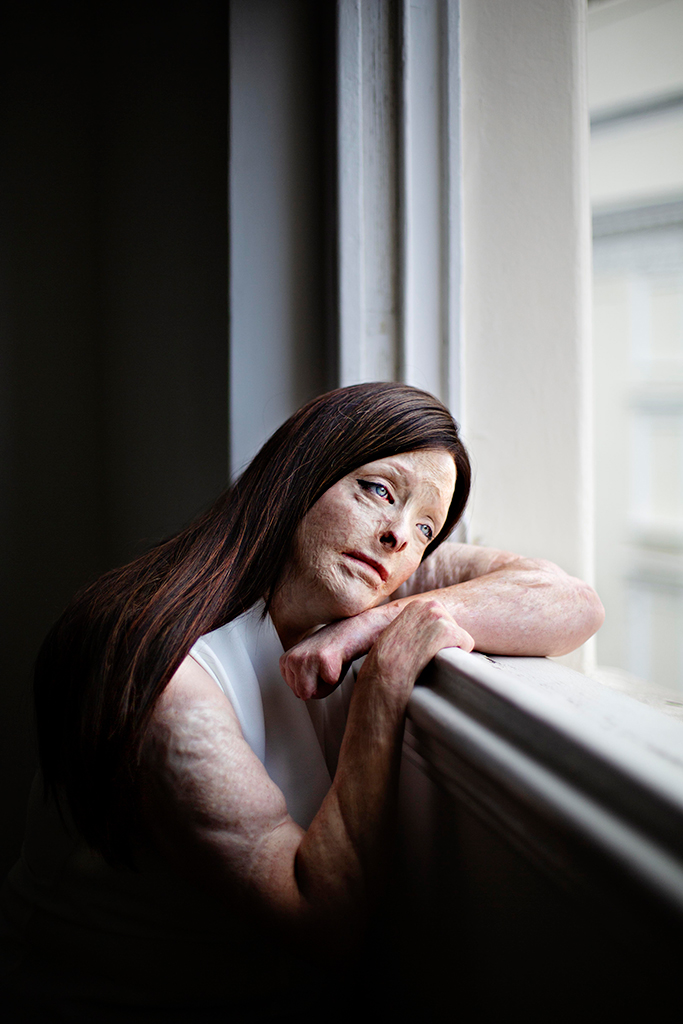
Starting on March 20, 2026, The Center for Art and Advocacy will open a two-person exhibition in Brooklyn featuring the works of Gordon Parks alongside contemporary documentary photographer Beverly Price. By placing the two together, visitors are invited to consider how, in the images of the two artists, regardless of living and creating decades apart, the same themes emerge.
Beverly Price’s entry into photography was rooted in a sense of place. She began her practice in 2016, a decade after returning home from incarceration. During her imprisonment, she could see Anacostia Park from her window. Ten years later, she decided to document the streets of that same neighbourhood. By focusing on children at play, Price captures and protects a sense of childhood that is often overshadowed for those growing up in communities affected by violence.
Both Parks and Price portray the same community, focusing on ordinary moments rather than spectacles, and not emphasising hardship. Instead they reframe stereotypical narratives and help shift the representation of Black communities.
Rather than presenting their work linearly, and as something that lives in past and present, the exhibition emphasises the continuity of themes between the artists, such as dignity, truth and social responsibility. Their photographs form a conversation about history, memory, and the ongoing struggle for social justice.
A Language We Share: Beverly Price and Gordon Parks runs at the Center for Art and Advocacy in Brooklyn until June 19. Entry is free.

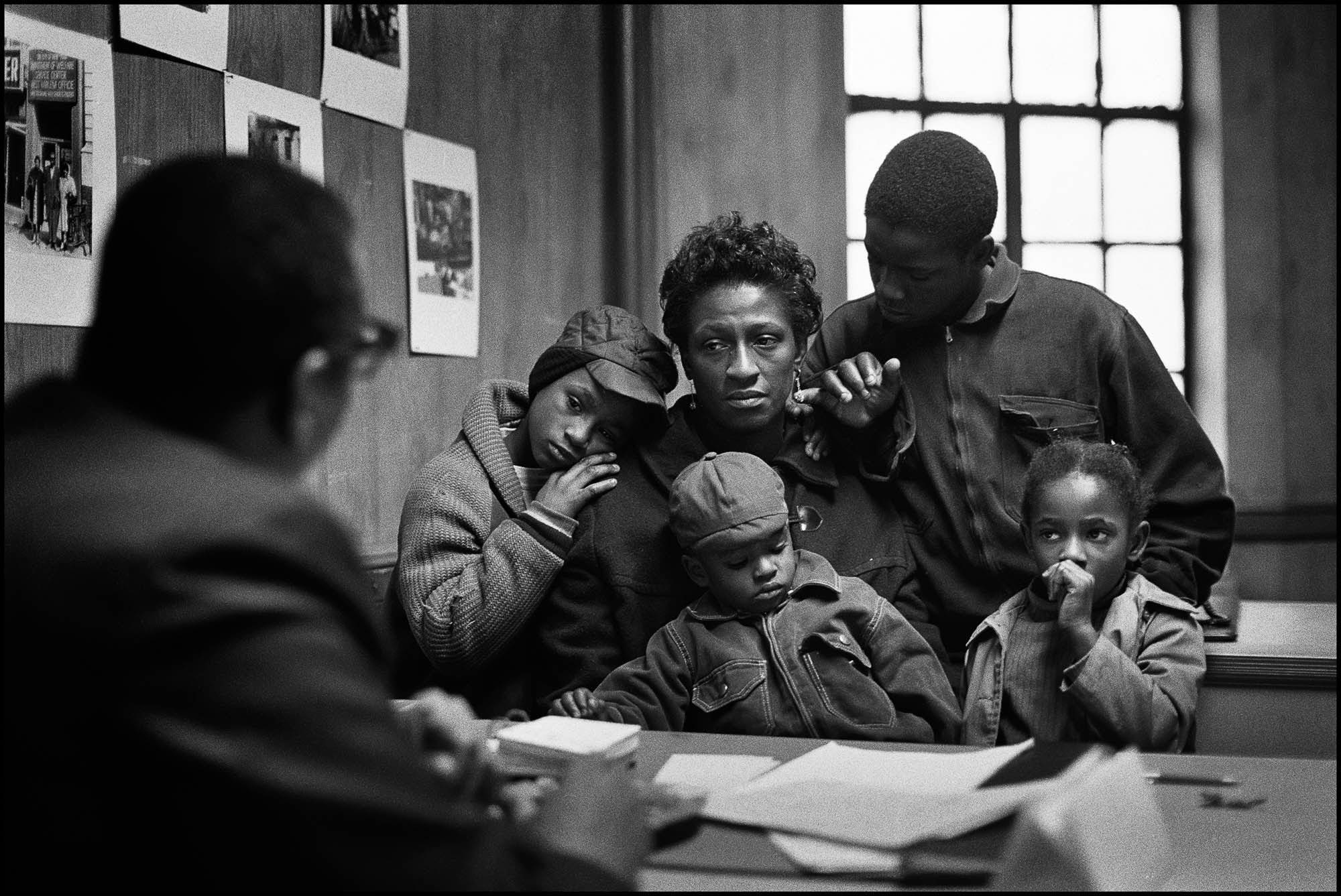
The Fontenelles at the Poverty Board, Harlem, New York, 1967
Courtesy of and copyright The Gordon Parks Foundation

Black Panther Headquarters, San Francisco, California, 1970
Courtesy of and copyright The Gordon Parks Foundation

Untitled, 1963
Courtesy of and copyright The Gordon Parks Foundation

Untitled, Harlem, New York, 1963
Courtesy of and copyright The Gordon Parks Foundation

Untitled, Harlem, New York, 1963
Courtesy of and copyright The Gordon Parks Foundation

Untitled, New York, 1963
Courtesy of and copyright The Gordon Parks Foundation

Untitled, Chicago, Illinois, 1957
Courtesy of and copyright The Gordon Parks Foundation

Untitled, Mobile, Alabama, 1956
Courtesy of and copyright The Gordon Parks Foundation

Untitled, Shady Grove, Alabama, 1956
Courtesy of and copyright The Gordon Parks Foundation

Untitled, Harlem, New York, 1948
Courtesy of and copyright The Gordon Parks Foundation

Boys Looking in a Car Window, Harlem, New York, August 1943
Courtesy of and copyright The Gordon Parks Foundation

Untitled, Anacostia, D.C., 1942. Courtesy LOC
Courtesy of and copyright The Gordon Parks Foundation
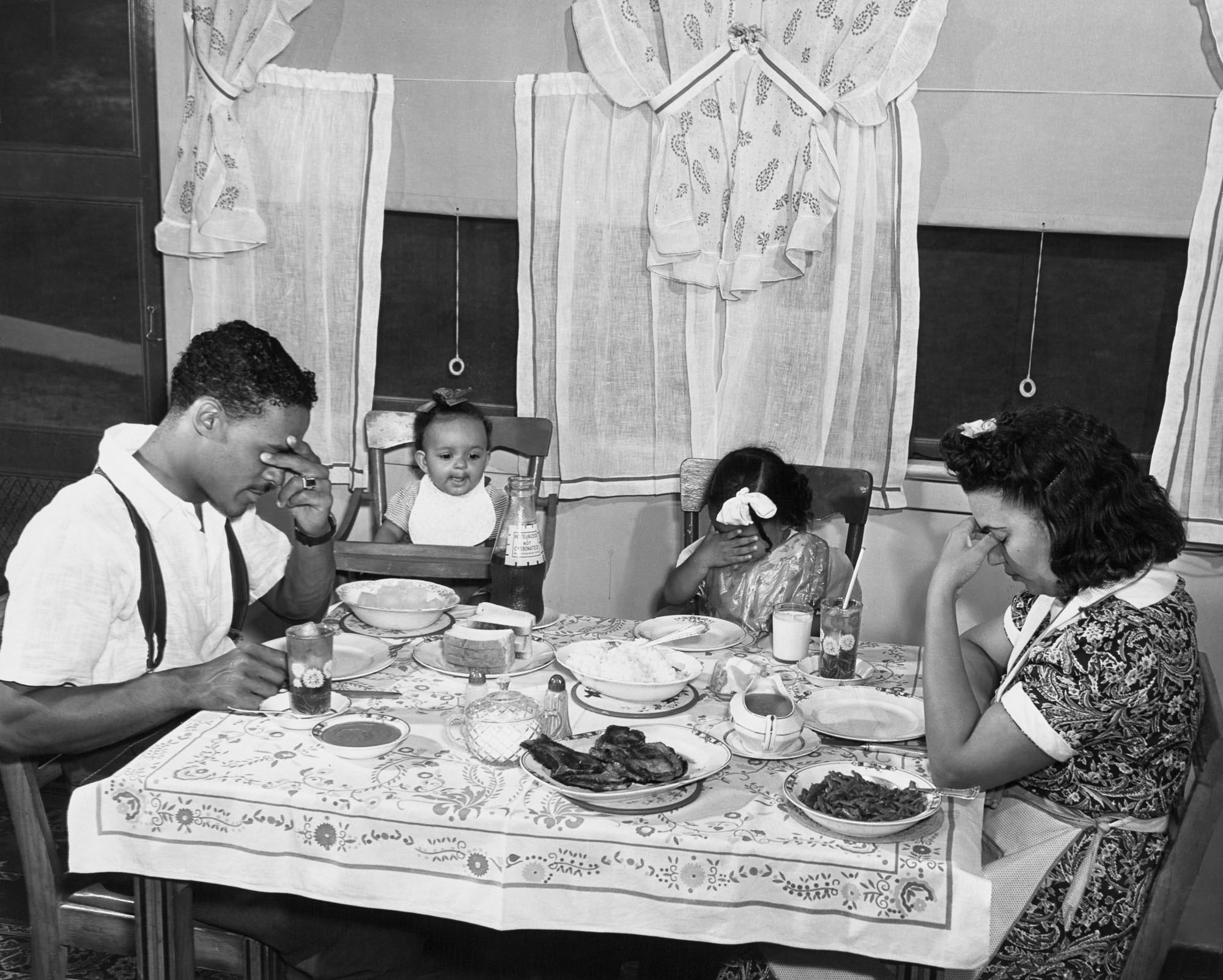
Anacostia, D.C. Frederick Douglass Housing Project. A family says grace
before the evening meal. June 1942
Courtesy of and copyright The Gordon Parks Foundation
Related reading:
- These striking portraits by American photographer Catherine Opie are bold and beautiful
- Eugene Atget’s surreal and enigmatic street photos of Paris – old-fashioned, yet pioneering