


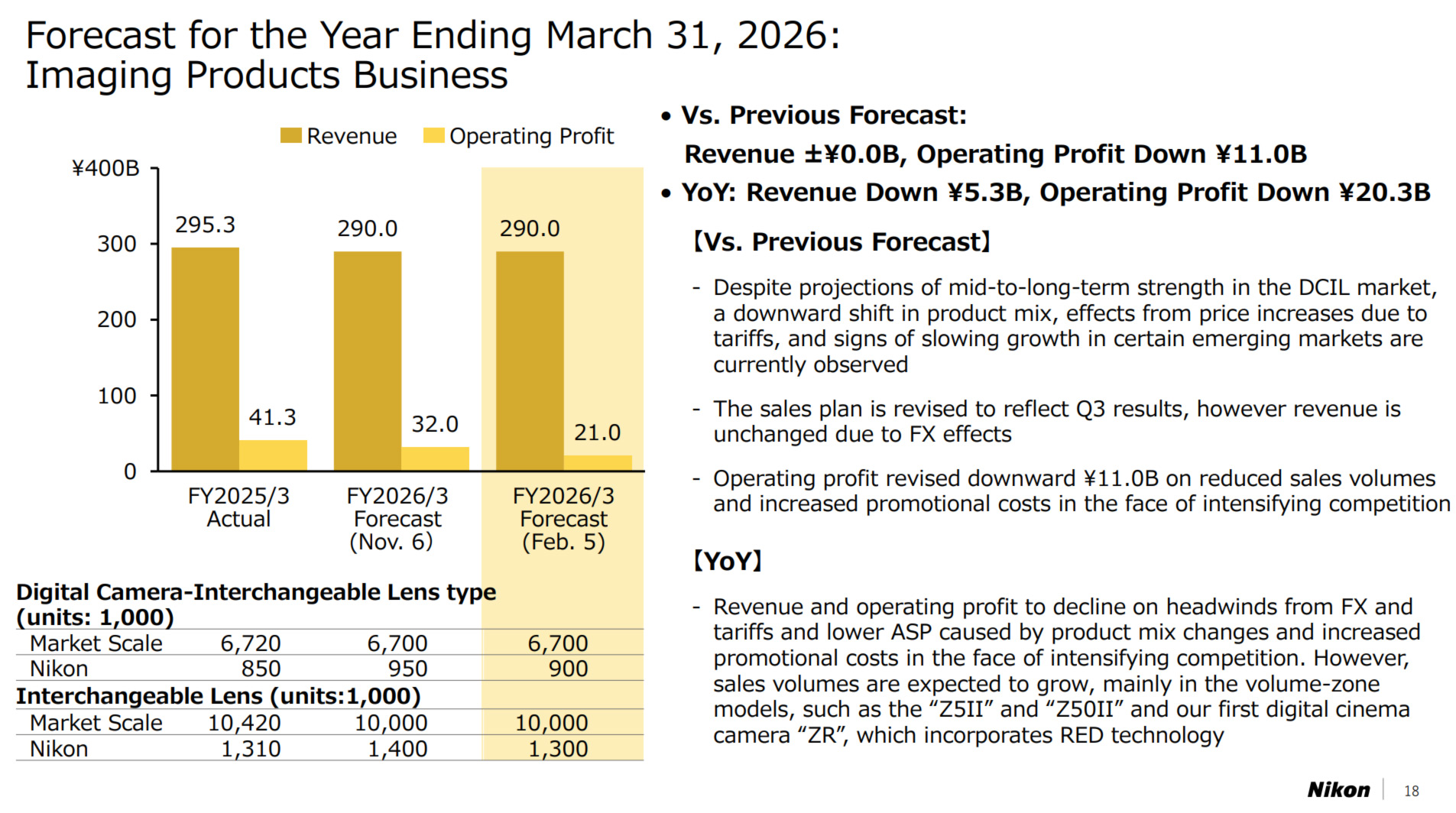
Nikon has released third quarter financial results, and in it they show losses of ¥103 million ($660 million US). In addition they have reduced their forecast for expected Nikon camera and lens sales for the following year. Whilst these numbers seem huge, the losses of note are in the Digital Manufacturing Business, rather than the imaging business, which shows a profit, with a slight decline over previous periods.
Nikon’s forecast of imaging sales has been adjusted from 950,000 cameras to 900,000 cameras, and reduced from 1.4million lenses to 1.3million lenses. So still in the millions of units, and alongside Canon and Sony, Nikon account for a large percentage of the camera market.
With a range of cameras and lenses that are better than ever, could there be another reason why Nikon are selling less than they used to?
Canon, Nikon and Sony all offer a full range of cameras and lenses that should suit every user. But if you already own a full-frame mirrorless camera from recent years, is there any reason to buy a newer model?
It’s a problem that is likely to be affecting all brands, as smartphones continually improve, giving the majority of people what they need. The other elephant in the room, is regarding US tariffs which have seen camera prices, particularly in the US, rise quite significantly. The report also notes issues in other markets as well.
There don’t seem to be many additional leaps to be made in the camera market – we already have 60 megapixel full-frame sensors, more than most people need, high-speed shooting, and more.
So, if you’ve already got everything you need, why would you need more, and why would you need to buy a new one? What are the pain points of modern cameras, and are any manufacturers trying to solve it? Nikon has a range of 45.7MP cameras but have not joined other brands by offering a camera with over 50 megapixels.
Another area that has been seeing growth is in the compact camera market, where Nikon offer ultra-zoom bridge cameras, but nothing that is particularly pocketable. Nikon’s imaging business accounts for a larger percentage of the company than other brands such as Canon and Fujifilm, who both have large business and medical divisions.
Related reading
- Best Z Mount lenses for Nikon: high-quality mirrorless lenses for all budgets
- Compact cameras are officially back with 30% growth in 2025, the real numbers could be MUCH higher
- Sony dominates Canon and Nikon in the mirrorless camera market for the third year running
- Canon continue to dominate DSLR market, but things are changing
Nikon financial results (pdf). Via Petapixel.
Follow AP on Facebook, Instagram, YouTube and TikTok.