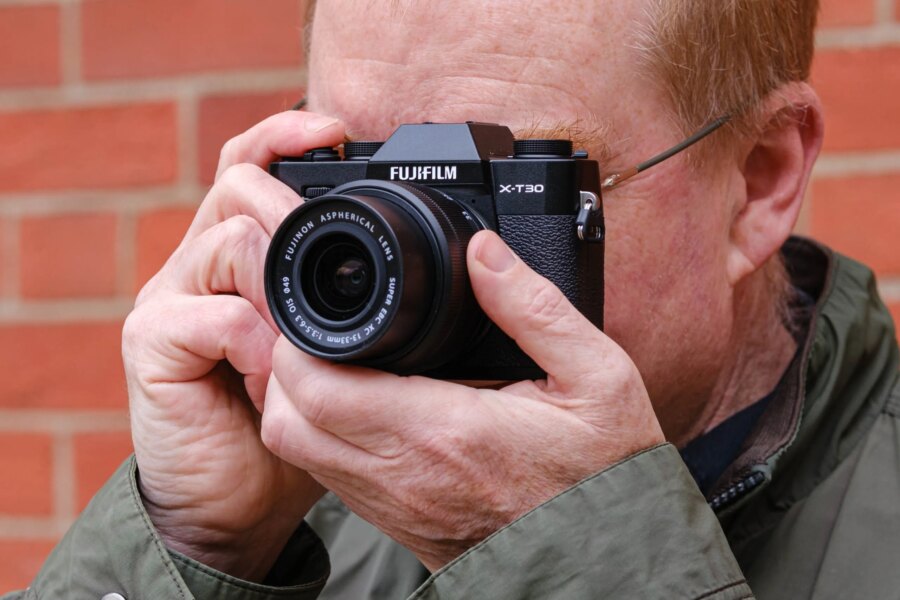
In this guide, we’re counting off the best cameras under $500 / £500,and that can be a trickier ask than you might expect. Cheap cameras aren’t as common as they used to be, the market having been somewhat decimated by the rise of the smartphone, and people’s expectations for a camera at this price have changed accordingly. Now, in order for a camera to justify a cost of $500 / £500, it has to offer something a smartphone doesn’t, whether that’s superior image quality, a broad lens range, or extra physical features like waterproofing. And no, these features are not just reserved for the top cameras for photography. As such, we’re not just counting off cheapo bargain cameras here – we’re looking at some of the best compact cameras you can buy, and even a few excellent interchangeable-lens models.
Generally, the trick to getting a great camera for a low price is to look on the second-hand market, and many of the models we’ve included on this list are a good few years old and mostly available used. We’ve taken our extensive testing and reviewing experience and applied it to this list to determine which cameras are actually worth your money.
Best cameras under $500 / £500: the quick list
So, here is a quick rundown of the cameras we’ve included, along with links to get the best prices:
Panasonic Lumix DMC-G7 with 14-42mm lens – Buy now
Canon EOS 2000D / Rebel T7 with 18-55mm lens – Buy now
Looking for the best deal on cameras under $500 / £500? Not only will you find the best cameras under that mark, but you’ll also find some of the best camera deals, as our ‘Buy now’ buttons are set to automatically take you to the best prices, from trusted retailers, plus you’ll also find a list of other retailers below each camera, so you can find the right deal for you.
Our guide includes cameras that are available in the US and the UK, with $500 / £500 as our rough guide. Bear in mind that prices and exchange rates do fluctuate in both territories and while we keep this guide regularly up to date, sometimes a camera will nudge over the $500 / £500 mark in one territory or another. In general, it won’t be too significant.
Why you can trust Amateur Photographer
We spend many hours testing every product we recommend, in detail, in a variety of situations and shooting scenarios, and only use experts for our reviews, so you can be sure that you’re getting the best products. Find out more about our expert writers.
Panasonic Lumix DMC-G7 with 14-42mm lens
Lumix DMC G7
Amateur Photographer verdict
It’s fairly dated at this point, but the Lumix G7 still has a lot going for it, not least the extremely tempting price tag. An ideal on-ramp for Micro Four Thirds.
Pros
Electronic shutter runs fast and silently
Useful control dials
High-res EVF
Cons
4K Photo modes are laggy (early days)
Somewhat plasticky build
Camera type
Micro Four Thirds mirrorless camera
Sensor
16MP Live MOS
Viewfinder
2.36M dot OLED EVF
Screen
3in, 1.04-million-dot free-angle touchscreen
Continuous shooting
8fps
ISO
ISO 200-25,600 (expandable to 100)
Video
4K 25p
This Micro Four Thirds mirrorless camera from Panasonic may date back to 2015, but it’s still available new with a 14-42mm lens for less than $500 / £500 all-in. This makes it one of the best-value buys for those who prefer to avoid the second-hand market, and you get a hell of a lot of camera for your money. The Lumix G7 was released in the early days of Panasonic’s exploration of 4K (in our review in the AP magazine at the time, we adorably referred to 4K as a new ‘buzzword’), and it also included 4K Photo modes. These allow for the extraction of 8MP stills from 4K footage, effectively giving you a 30fps burst mode – which even now is hardly something to turn your nose up at.
The Lumix G7 is a fairly dinky little camera by modern mirrorless standards, but it manages to fit on some control dials for aperture and shutter speed control, as well as a free-angle rear display. This makes it a satisfying camera to use and control, and we also especially like the 2.36-million-dot electronic viewfinder, which is an excellent example of its type.
Capable of producing both high-end 4K video and technically impressive still images, the Lumix G7 is a compelling package for hybrid content creators, and with a bargain price that continues to impress.
Canon EOS 2000D with lens. Image: Audley Jarvis / AP
Amateur Photographer verdict
A quintessential beginner’s camera, the EOS 250D continues to be a mainstay of college photography courses, and it’ll serve beginner photographers very well indeed.
One of Canon’s cheapest entry-level DSLRs, the EOS 2000D does more to justify itself than its bare-bones stablemate, the EOS 4000D. Thanks to its 24.1MP APS-C sensor, it’s capable of producing images of impressive quality and depth, and a selection of Picture Styles can be applied to give your images a specific ‘look’ in-camera. Handling-wise, the EOS 2000D is everything you’d expect from a DSLR, with a solid pentamirror viewfinder that provides an immediate view of your shooting area. The LCD screen is fixed and not touch-sensitive, but you can’t have everything.
The EOS 2000D isn’t the speediest camera, but it manages a burst rate of 3fps and can do so for a decent amount of time. We tested this functionality out in our full review and found we could get 40 consecutive full-size JPEGs before the camera started to to stutter – not bad. In RAW format, this fell to a rather stingier 10, though, in all honesty, the EOS 2000D is more designed for the kind of photographer who’s going to be using JPEGs anyway.
As a Canon EF DSLR, the EOS 2000D gives you a huge range of lenses to choose from. This configuration comes with an 18-55mm lens bundled in while keeping comfortably under our $500 / £500 spending limit. This lens isn’t going to blow anyone away, but it’s perfectly serviceable and provides a solid foundation to work on. If you wanted, you could probably pick up a Canon EF 50mm f1.8 STM lens as well for something a bit more interesting, and still stay more or less within your budget.
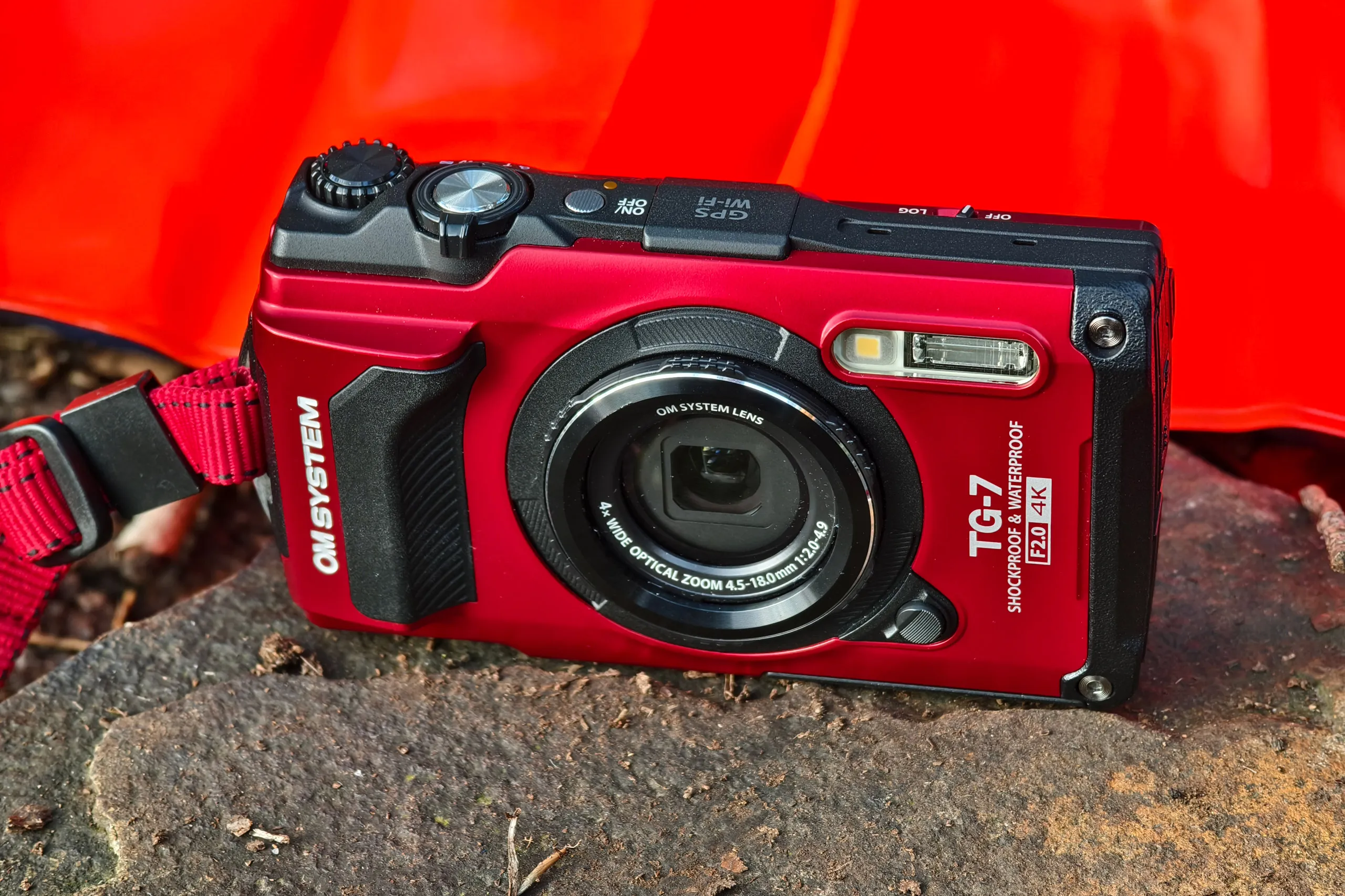
The refresh of Olympus’ longstanding Tough TG line under the OM System banner doesn’t change very much, which makes it still one of the best waterproof cameras you can buy.
Pros
Compact, tough, waterproof
GPS, Wi-Fi, Bluetooth built-in
Great macro performance (even underwater)
Optical zoom lens
Cons
Small sensor
RAW needed for best results
Camera type
Compact camera with a 25 – 100mm (35mm equiv.) f/2.0 – 4.9 lens with 4x optical zoom
Sensor
12.7MP 1/2.33” CMOS
Viewfinder
N/A
Screen
3″ 1040K dots LCD screen
Continuous shooting
20fps/5fps
ISO
ISO 100 – 12800
Video
4K 30p
The waterproof compact camera market isn’t nearly as well populated as it used to be – so it was nice to see the relatively recent arrival of the OM System Tough TG-7, a continuation of the Olympus Tough range before the Olympus imaging division was sold to OM Digital Solutions. It’s not much of a change from what came before, but it didn’t need to be – the Tough TG cameras were already regarded as pretty much the best tough compacts you could buy.
Sporting a 25-100mm equivalent optical zoom lens with an f/2 maximum aperture, the TG-7 provides real versatility for waterborne and extreme sports shooting. Its tough credentials are impeccable – you can drop it, drown it, kick it, jump on it, and it’ll keep on working. It also offers a number of specialised shooting modes for different shooting situations. The Underwater Macro modes are great for getting close-up images of subjects from your dives, and there’s also the option to shoot in RAW to exercise greater control over the look of your images.
All this has come with a bit of a price hike, and the TG-7 only just makes the cut for this guide. If your budget stretches to it, however, it really is the best waterproof camera on the market – see our guide to the best waterproof cameras to get an overview of the competition.
A great mid-range choice that has undergone some tempting price drops. Ergonomics are great, and there are plenty of clever shooting features.
Pros
Great ergonomics and handling
Clever 4K burst features
Price has come down
Cons
No mic socket for video
Camera type
Mirrorless camera
Sensor
16MP Four Thirds sensor (no optical low-pass filter)
Viewfinder
2.76M-dot EVF (16:9 aspect ratio)
Screen
3-inch 1.04M-dot tilting touchscreen
Continuous shooting
8fps
ISO
ISO 100-25,600 (extended)
Video
4K 25p video
The Lumix GX80 hails from the time when it seemed like Panasonic was bringing out a new enthusiast-focused camera every other day. Those days are certainly over now, but they produced some excellent mid-range choices that are still highly credible today, especially with prices having come down in the intervening years.
The GX80 sports the one-two punch of effective 5-axis stabilisation and high-quality 4K video, making it as fearsome for video as it is for stills. It also offers 4K Photo modes that allow for high-quality stills to be extracted from 4K footage, meaning you effectively have a 30fps burst mode – as has been completely standard on Panasonic cameras for a long time. This was also one of the first cameras to offer Post-focus, Panasonic’s clever feature that allows for an image’s focal point to be selected post-capture (it basically whips through a series of frames at every focal distance, then lets you pick the keeper).
Design-wise, the rangefinder feel of the Lumix GX80 won big with us in our review at the time, and still does today; it’s a comfortable, satisfying camera to hold. The shutter is also quiet, which is handy for street shooting, and we were generally impressed with image quality across the board. That is, until you get to the top ISO settings, which we wouldn’t recommend using unless absolutely necessary.
A throwback of a camera in multiple ways, the Lumix GX80 makes for a superb sub-£500 buy.
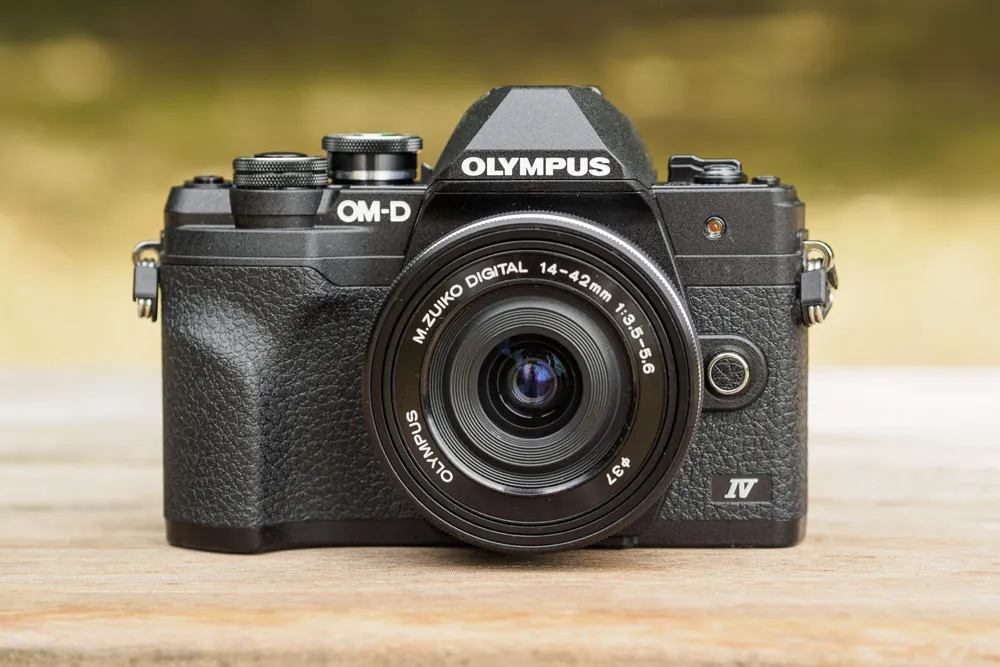
A terrific entry level camera at great value. The Olympus OM-D E-M10 Mark IV’s in-body stabilisation, twin-dial design, looks, feel and handling will inspire budding photographers.
Pros
Excellent JPEG image quality with highly attractive colours
A pleasure to use for its stylish design and well laid-out, tactile controls
Supported by fine range of small, affordable lenses
Cons
Raw image quality lags behind APS-C peers
No microphone socket for video or vlogging
Below-camera selfie screen incompatible with tripod use
Camera type
Micro Four Thirds Mirrorless
Sensor
20.3MP CMOS, 17.4 x 13mm
Viewfinder
2.36m-dot, 0.62x magnification
Screen
3in tilting touchscreen
Continuous shooting
15fps
ISO
ISO 200-6400, ISO 80-25,600 (extended)
Video
4K 30p
The Olympus OM-D E-M10 Mark IV is an excellent choice for smartphone users who want to upgrade to a “proper” camera. With an interface designed with novices in mind, it’s easy to navigate if you are used to a phone interface. Inheriting its eye-catching retro looks from earlier film SLRs, it offers just as tactile handling with dedicated control dials.
It includes an advanced Photography mode on the top plate dial for easy access to double-exposure, HDR shooting, silent mode, and auto exposure bracketing or other Olympus-only features like Keystone Correction and Live Composite modes for long-exposure shots at night.
The 20MP Micro Four Thirds sensor offers a significant jump in resolution compared to smartphones. While the 4K30p video on board is supported by 5-axis in-body image stabilisation and a flip-down touchscreen for vlogging.
Equipped with a contrast-detection autofocus, it is best suited to more static objects, but with a lower burst rate and some persistance you can get usable wildlife shots too. Its compact size makes it an excellent “walk-around” camera for street and travel photography, and the petite body pairs well with a wide range of affordable Micro Four Thirds lenses. Available for around $400/£400 second-hand, it’s an excellent choice if you’re looking to upgrade to the mirrorless system.
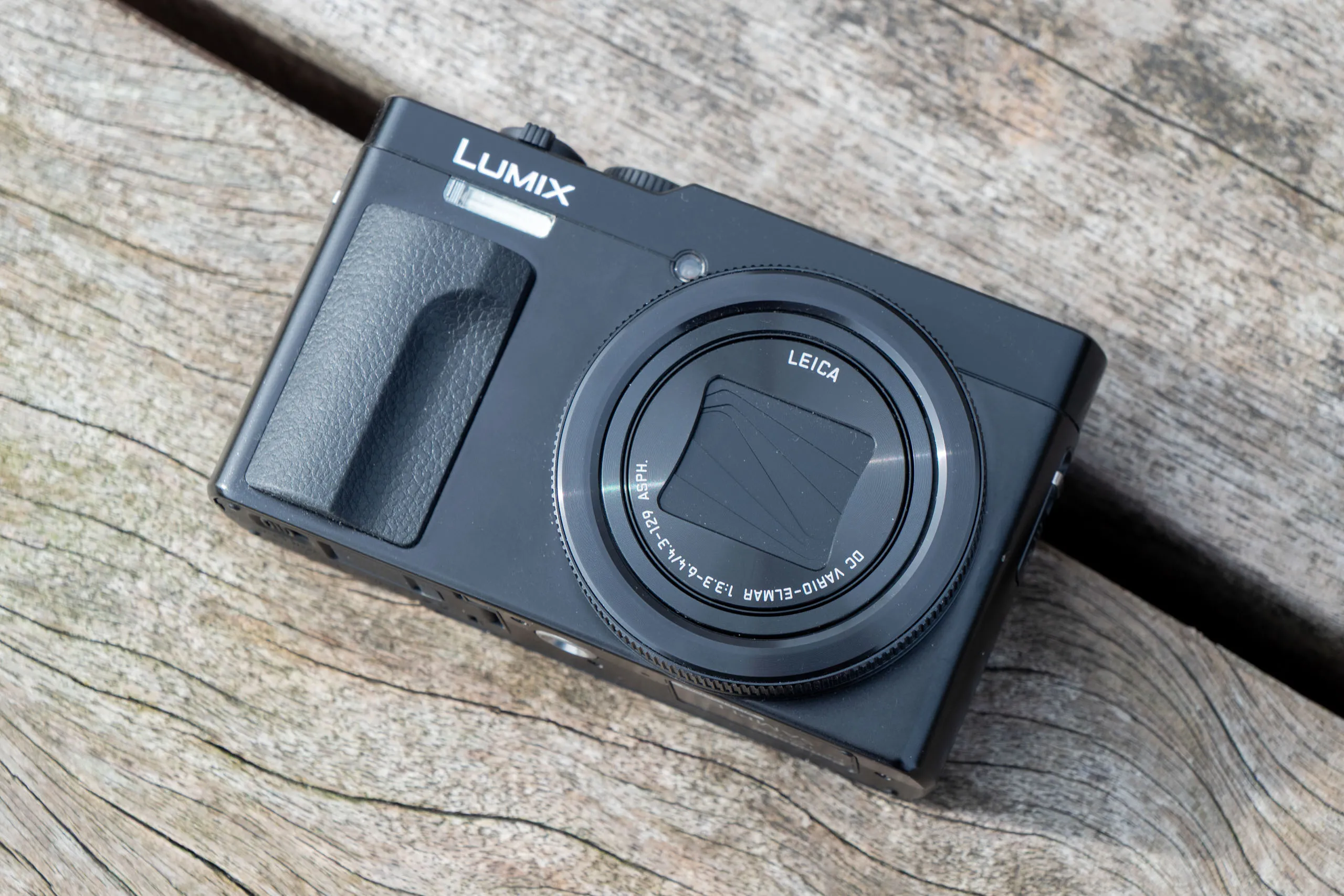
The Panasonic Lumix ZS99 / TZ99 switched off and the lens fully retracted into the body. Image: Amy Davies
Amateur Photographer verdict
A 30x zoom compact that will fit in your pocket – this is a great performer in the right conditions. The USB-C charging port means you can use the same charger as your phone and laptop.
Pros
A 30x optical zoom
Front-facing touchscreen
In-camera USB-C charging
Cons
Poor low light performance
No viewfinder
Camera type
Compact camera with 24-720mm f/3.3-6.4 (35mm equiv.) lens
Sensor
20.3MP 1/2.3-inch MOS sensor
Viewfinder
N/A
Screen
3-inch, 1840k-dot, touch-sensitive TFT LCD
Continuous shooting
10fps
ISO
ISO 80–3200 (expandable to 6400)
Video
4K 30p
The TZ99 has a 30x optical zoom capability that is significantly better than any current smartphone can deliver, making a camera like this appealing for a number of genres, such as travel and wildlife. Video recording is available at 4K 30fps and you can use a front-facing screen for selfies and recording pieces to camera – with recording time of up to 90 minutes in 4K and 100 minutes if recording in Full HD.
Other specifications of note include USB-C charging, built-in Wi-Fi and Bluetooth, and the ability to record in raw format.
You can get some good shots in good light that’s not too bright or contrasted. You’ll get the best results holding the camera quite still and photographing things that don’t move too rapidly.
A great choice for those looking for something to take on their travels; however, be aware that in low light, it suffers by comparison to its larger sensor rivals. If you’re mainly going to be using it on your sunny holidays, you shouldn’t worry too much about that. The TZ99 remains excellent value for money at under £500.
The Sony A6000 can use a range of E-mount lenses, here it’s shown with a Sigma 18-50mm lens.
Amateur Photographer verdict
One of the most enduringly popular beginner mirrorless cameras around, the Sony A6000 has aged beautifully since 2014, with fast autofocus and excellent image quality.
Pros
Super-fast burst and AF
Generous shot buffer
APS-C sensor
Cons
No 4K or mic socket
Camera type
Mirrorless
Sensor
24.3MP Exmor APS HD CMOS sensor
Viewfinder
1.44M-dot OLED EVF
Screen
3-inch 921,600 dots tilting LCD screen
Continuous shooting
11fps
ISO
ISO 100-12,800 (expandable to ISO 25,600)
Video
FullHD video at 60/50/25/24p
Despite being launched back in the spring of 2014, there is still a lot to like about this mirrorless veteran, especially at this price. It features a 24.3MP Exmor APS HD CMOS sensor that delivers reasonably high-resolution images, backed up by an improved Bionz X image processing engine.
This is still a pretty nippy camera too, offering a fast 0.06sec autofocus time and a 179-point hybrid AF system, covering almost 100% of the frame. The Alpha 6000 has 25 precision contrast-detection AF points. The hybrid autofocus system not only makes it easier for the camera to recognise scenes, but it also boosts the ability of the Alpha 6000 to lock onto the correct subjects and track them tenaciously.
In addition, the A6000 can shoot 11fps of RAW+JPEG for 21 frames or 49fps of fine JPEG before it begins buffering. There is also a tilting LCD, a pop up electronic viewfinder with 1.44-million dot resolution providing 100% frame coverage, and Full HD video recording (but not 4K, unfortunately).
Most of the camera’s weight sits in the grip, which houses the battery and memory card, but this is countered by the weight of the lens, making the Alpha 6000 well balanced. It’s comfortable to operate one-handed. Top-spec technology and a host of cutting-edge features have given the Alpha 6000 longevity and keeps it competitive even today.
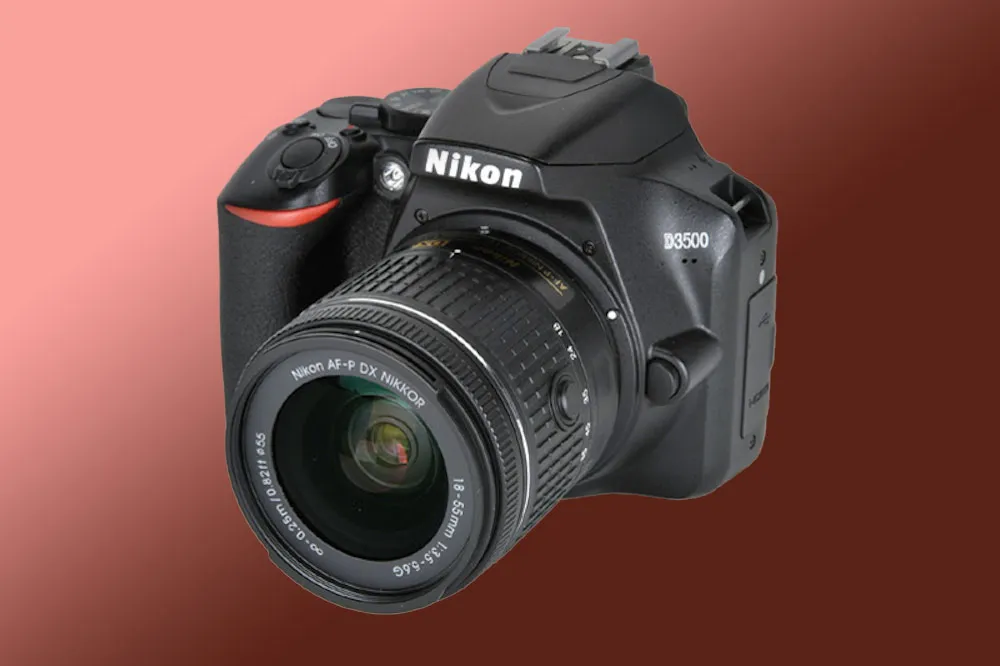
The Nikon D3500: a beginner’s DSLR. Shown with Nikon’s 18-55mm kit lens attached. Photo credit: Nikon/AP
Amateur Photographer verdict
Another one of the last great beginner DSLRs, the Nikon D3500 is still going to provide a superb learning platform for any budding photographer.
Pros
Great for beginners
Huge F-mount lens range
Solid image quality
Cons
Fairly basic AF system
Camera type
DSLR
Sensor
24.2MP APS-C CMOS sensor
Viewfinder
Optical viewfinder, 0.85x mag
Screen
3.0-inch, 921,000-dot fixed LCD screen
Continuous shooting
5fps
ISO
ISO 100–25600
Video
Full HD video at 60p
Now we move on to budget DSLRs, and this is certainly one of the best options for beginners. While the market momentum is with mirrorless cameras at the moment, DSLRs remain great value and can take a very wide choice of affordable lenses. The D3500 is an APS-C (DX) format DSLR that features a still-very-capable 24.2MP sensor, a decent sensitivity range up to ISO 25,600, and the ability to shoot at up to 5 frames per second.
It also comes with a Guide Mode that helps beginners figure out the essential functions in order to take better pictures. There is also full manual control for more confident photographers. For a DSLR, the D3500 is relatively compact and lightweight at 365g, and it can record full HD video.
Although the sensor has the same effective 24.2MP resolution as Nikon’s earlier Nikon D3400 and Nikon D5600 cameras, the sensor in the D3500 is an updated version. It does away with an optical low-pass filter to help maximise the sensor’s ability to resolve fine detail images.
The D3500 is also notable for its a great body design, deep grip and an intuitive layout of controls that make it straightforward to use. You’ll also find a great selection of Nikon F-mount lenses available, with Nikon ‘DX’ lenses being specifically designed for the the camera’s APS-C sensor. The D3500 remains not only a great Nikon DSLR but a great Nikon DSLR full stop.
If you’re not sure where to start with choosing your cheap camera, don’t worry. There are a few questions you can ask yourself before you start looking that will make things easier.
To start, one of the first things worth ticking off is figuring out whether you want an interchangeable-lens camera (i.e. a DSLR or a mirrorless camera) or a fixed-lens compact? Interchangeable-lens cameras, as the name implies, allow you to change lenses. If you have another lens of the same mount (e.g. Nikon F, Canon RF, Micro Four Thirds, etc) you can swap it out at will. This gives you a great deal of versatility – but naturally, extra lenses will cost more money.
Compact cameras have a fixed lens that cannot be changed. Sometimes it’s a prime lens, more commonly it’s a zoom. This gives you an all-in-one package that tends to be very affordable, with the downside being restrictiveness. If you buy a compact with a 24-72mm lens, you’ll be never be able to go wider or longer than that focal range.
What’s also worth thinking about is sensor size. Cameras have sensors of different physical sizes – larger sensors give you better, richer images, with more detail and better dynamic range (see our guide to APS-C vs full-frame for a detailed rundown). However, as you might have guessed, these cost more, and require physically larger camera bodies to house. And on that subject – how portable do you need your camera to be? Do you want to slip it into a pocket, or is a little extra weight not too much of a concern?
You should look at the resolution of your sensor, which is measured in megapixels (MP). You might think you want as many of these as possible, but this is only the case if you’re planning to print images. If you only want to share images on social media, then all those pixels will only clog up your cards and hard drives.
Planning to shoot video? Check the video resolution and frame rate of each camera on this list, as well as whether they have videographer-friendly features like a mic input socket for clean audio.
How we test cameras
While testing each camera, we take hundreds of photos in a wide variety of conditions to assess their control layout, ergonomics and handling, as well as screen and viewfinder size, response time and brightness.
Each genre demands a unique set of features and performance standards for a camera to excel within it. So we look at autofocus performance, continuous subject tracking, and burst shooting as well as image quality, low-light performance, and take into consideration portability too.
We also assess the image stabilisation system and test how well it supports hand-held and low-light shooting. Last but by no means least, we critically evaluate image quality, in both JPEG and raw, including resolution, high-ISO noise, and dynamic range.
Finally, we take all these factors into account along with lens compatibility and overall handling when giving our final conclusion and scores. You’ll find a full breakdown of how each camera performs in our full reviews.
Recent updates
January 2026: The Panasonic Lumix TZ100 and Lumix GX880 were removed due to limited availability. At the same time, the Olympus OM-D E-M10 Mark IV was added, as it represents a great-value second-hand entry to the mirrorless system.
I am the deputy editor of Amateur Photographer, working closely with the team to make the website and magazine as good as possible. I've been working on magazines since 1995 and am also a keen travel and portrait photographer when time allows, reaching the finals of the Pink Lady Food Photographer of the Year contest in 2015 and achieving my Licentiate from the Royal Photographic Society the year before. I also keep my wedding-photography hand in by shooting a few ceremonies a year. I am particularly interested in how photography can help people express their creativity more effectively, or deal with mental health issues and other challenges.