

Amateur Photographer verdict
It may be compact and affordable, but the Viltrox AF 14mm f/4 Air is also really sharp. It could be great for photographers who occasionally need an ultra-wide for landscapes or architecture
- Super small and lightweight
- Extremely affordable for a 14mm autofocus lens
- Impressively sharp
- Essentially no chromatic aberration
- Complex “moustache” distortion that isn’t fully corrected in-camera
- Strong vignetting (but fixable in software)
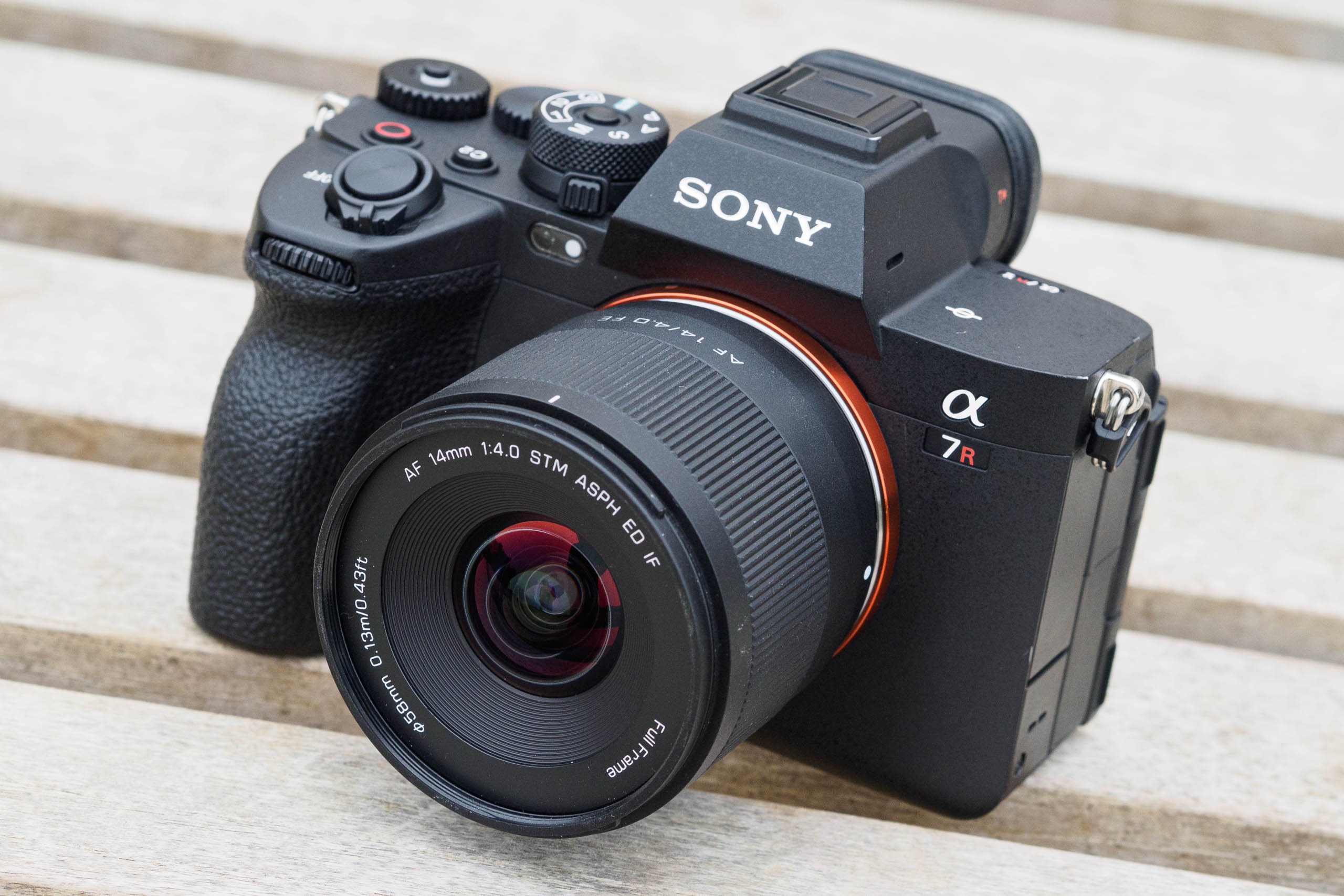
The Viltrox AF 14mm f/4 Air is an ultra-wideangle lens for full-frame cameras that’s available in Nikon Z and Sony E mounts. It’s surely the smallest, lightest and cheapest full-frame 14mm autofocus prime ever made, costing just $199 / £190. This makes it a really interesting option for photographers who like the idea of stretching their field of view that bit further, but who don’t want to spend a lot of money or carry a big, bulky lens.
Viltrox AF 14mm f/4 Air at a glance:
- $199 / £190
- Ultra-wideangle lens for full-frame cameras
- For Sony and Nikon Z mounts
- Takes 58mm filters
- Weighs just 170g
To understand just how much of a bargain this lens is, we just have to look at the alternatives. Manual-focus 14mm f/2.8 lenses are available from TTArtisan and 7 Artisans, which cost $199 / £219 and $299 /£285 respectively. Meanwhile, Venus Optics makes a high-quality manual-focus Laowa 14mm F4 Zero-D for $449 / £519. But if we want autofocus, our options are the Rokinon/Samyang AF 14mm F2.8 FE for $599 / £579, the Sony FE 14mm F1.8 G for $1749 / £1,199, or the massive and exotic Sigma 14mm F1.4 DG DN, which costs $1839 / £1,399. Clearly, the Viltrox is very much one of a kind.
Like its full-frame companions in the Air range, the 14mm achieves its compact size by offering a relatively small aperture and a very simple, no frills physical design. That could be real concern for those who’d like to dabble in astrophotography, but it’s less of a problem if your interests centre on interiors, architecture or landscapes. But do the small size and low price impose too many compromises elsewhere?
Features
Looking first at the optics, Viltrox has built the 14mm f/4 using 12 elements in 9 groups. This includes 4 extra-low dispersion (ED), 2 high refractive-index (HRI), and 2 aspherical elements to maintain corner sharpness and suppress chromatic aberrations. That’s an impressively complex design for the price.
Autofocus is driven by a stepper motor, promising silent operation. Viltrox claims the lens exhibits minimal focus breathing, which is always good news for video work. The minimum focus distance is just 13cm, with a working distance of less than 6cm from the lens to the subject. This corresponds to a maximum magnification of 0.23x.
While Viltrox says the lens boasts a “sealed body” for outdoor shooting, it’s worth noting that there’s no rubber gasket around the lens mount. A water and dust resistant coating is applied to the front element to help keep the glass clean.
Impressively for such a wide lens, not only is there a filter thread, but it’s also relatively small at 58mm. This allows you to use screw-in neutral density filters, rather than rely on such things as rear gels or a bulky square filter system on the front. A bayonet-fitting, petal-shaped lens hood is included to combat flare and provide some protection to the front element.
While this lens is designed for full-frame, it can also be used on APS-C cameras, giving a 21mm-equivalent view. However, photographers who only use the smaller format would be better off buying the Viltrox AF 15mm f/1.7 Air instead, with its considerably brighter aperture. This lens costs $239 / £229 and is available for E, Z and Fujifilm X mounts.
Firmware updates
One feature of note that’s shared with Viltrox’s other lenses is a USB-C port embedded into the mount. This allows the firmware to be updated simply by wiring the lens to a computer and running Viltrox’s update program.
Despite this lens only being a few months old at the time of writing, this feature has already proven its worth. I’ve installed an update that adds full compatibility with Sony’s latest model, the Sony Alpha A7 V. Without this update, the lens only works properly in AF-C and MF modes on the A7 V, like many other third-party optics.
Build and handling
Design-wise, the Viltrox AF 14mm f/4 Air is very simple indeed. At 65mm in diameter and 56.4mm in length, it’s the same size as the other Air lenses, and it weighs just 170g. This means you can easily carry it in your bag all day without noticing, which is good news given that you might only use a lens this wide very occasionally. I tested it mainly on the SLR-style Sony A7R V, and it’s so light I barely even noticed it was there.
Physically, the 14mm looks almost exactly the same as its siblings (once you’ve seen one Air lens, you’ve seen them all). The design is distinctly minimalist, with the sole control being the wide manual focus ring. As usual this operates electronically, with no hard stops to demarcate the extremes of the focus range.
Despite its light weight, though, the lens still feels pretty well built. Of course it’s made of plastic, but the quality feels just fine, and unlikely to break in normal use. This impression is reinforced by the metal mount; at this price point, some other makers use plastic mounts instead.
Autofocus
With a lens this wide, the focus group doesn’t have to travel very far to cover its full distance range. As a result, the 14mm f/4 is usually impressively quick to autofocus, and pretty much silent too. However, that relatively small aperture does mean that it can struggle a bit in low light. Videographers will be pleased to hear that there’s no perceptible focus breathing.
It’s worth noting, though, that when the lens is used on first or second-generation A7, A7R or A7S bodies, it’s limited to contrast detection autofocus only. This means it’ll be very much slower than on newer models, so that’s something you should keep in mind if you plan to use it on any of these cameras. I tried it on the Sony A7 II from 2014, and the autofocus works accurately but is painfully slow.
If at any point you need to use manual focus, the lens is well behaved. The focus ring is pretty smooth and well-damped, and rotating it can bring up magnified view for critical focusing, just like a native Sony lens. This means that it’s easy to achieve precise focus.
Performance
When it comes to optical quality, the Viltrox 14mm f/4 Air punches well above its weight and price point. I tested it on the 60MP Sony Alpha A7R V, which is a stern test for any lens, let alone one costing less than £200. And I was amazed at how well it performed.
Thanks, presumably, to its modest maximum aperture, the lens resolves impressive levels of fine detail right across the frame. If I’m nit-picking, then some radial smearing is evident in the extreme corners at f/4, but it’s really not a problem. Sharpest results overall are obtained at f/5.6, beyond which diffraction gradually softens pixel-level detail. However you may still wish to stop down further to guarantee front-to-back focus, and even f/16 is entirely usable. Overall, there’s no great reason to pick any aperture over another, purely in terms of sharpness.
I also saw only the merest hint of colour fringing towards the corners of the frame due to lateral chromatic aberration. That’s pretty remarkable for such a wide lens.
If, however, you disable in-camera vignetting correction via the Lens Compensation menu, you’ll see significant darkening towards the corners of the image. What’s more, this doesn’t clear up on stopping down to smaller apertures. Thankfully, Sony cameras can correct for this, in both JPEG and raw files, if you set Shading Comp to Auto. I’d recommend doing this as a matter of course, although it can result in increased noise at those corners.
The lens also exhibits some complex distortion, and this is trickier to deal with. It’s mostly of the barrel type, but with pincushion re-correction towards the corners. As a result, lines that should be straight along the edge of the frame end up looking wavy. This can be problematic for subjects with long straight lines such as architecture, or landscapes/seascapes with flat horizons.
Setting Distortion Comp to Auto in your camera’s menu reduces the effect, but doesn’t fix it entirely. Likewise, simple barrel or pincushion correction sliders in imaging software will always leave some residual distortion. This means you’ll need profiled corrections to get perfectly straight lines. At the time of writing, no such profile was available in Adobe Camera Raw, although presumably one will appear in due course.
On the whole, the lens is pretty well-behaved when shooting into the light. Multi-coloured flare patterns can sometimes appear when the sun is within the frame, but there’s no great overall loss in contest. You can also induce well-defined 14-way sunstars at apertures as large as f/8, which some landscape and night-cityscape photographers value.
Despite the lens’s impressive minimum focus distance, though, one thing I’d generally steer clear of is close-ups. Sharpness is still absolutely fine, but the ultra-wide angle of view inevitably results in messy, distorted backgrounds. Aesthetically, it’s often just a bit of a disaster.
One aspect of this lens that I enjoyed is the ability to shoot with screw-in neutral density (ND) filters. I used it for some long exposures with a 58mm Hoya ProND 1000, with generally good results. However, I did see a little vignetting in the extreme corners of the images from the filter, which has a conventional 5mm-thick frame, particularly when using small apertures (f/11 to f/16). But this can usually be fixed by cropping or cloning when necessary; for example I’d normally crop the shot above to a wide panorama, anyway.
Viltrox AF 14mm f/4 Air: Our Verdict
I’ve been really impressed by the Viltrox AF 14mm f/4 Air. It’s incredibly small and lightweight for a full-frame 14mm prime, and remarkably affordable, too. And yet, it’s sharp enough to give good results on the highest resolution full-frame sensor around. I’m really not sure how Viltrox manages it.
There are a few caveats, of course. Vignetting and distortion are both pretty strong, and while the former can be compensated in-camera, it’s more of a struggle to get straight lines looking right. But that problem will be solved once matched correction profiles become available from the likes of Adobe.
The lens’s relatively small aperture also limits its usefulness for certain applications such as astrophotography. Instead, it’s much better suited to such things as landscapes and architecture. If that’s where your main interests lie, though, the Viltrox 14mm f/4 is easy to recommend.
Follow AP on Facebook, Instagram, YouTube and TikTok
Viltrox AF 14mm f/4 Air full specifications
| Price | $199 / £190 |
| Filter Diameter | 58mm |
| Lens Elements | 12 (4 ED, 2 HRI, 2 aspherical) |
| Groups | 9 |
| Diaphragm blades | 7 |
| Aperture | f/4 – f/16 |
| Minimum focus | 13cm (0.23x magnification) |
| Length | 56.4mm |
| Diameter | 65mm |
| Weight | 170g |
| Lens Mount | Sony E, Nikon Z |
| Included accessories | Caps, hood, pouch |