

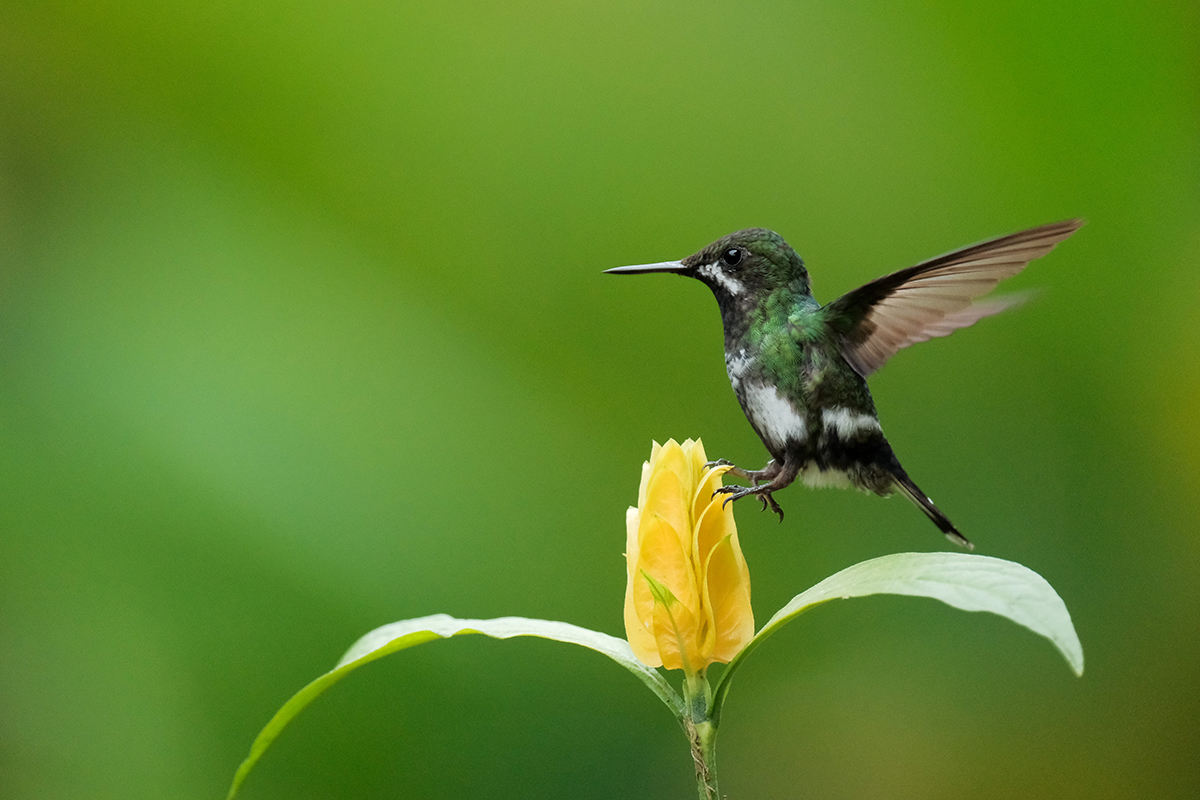
Nora Elsässer is a 17 year old nature and wildlife photographer based in Istanbul, Turkey. Having had a self-taught introduction to photography, an exchange year abroad led her to documenting the beauty and importance of natural life in fragile ecosystems such as the Ecuadorian cloud forest and the biodiversity of the Amazon rainforest. Below, she tells me more about her work…
Our emerging photographer series aims to shed a light on up-and-coming talent. Photographers are offered a platform to share their work with a wider audience through the AP channels, with the scope of furthering their careers. We also get an insight into their inspirations, the camera gear used and future aspirations, as well as the journey taken into photography – which doesn’t have to be the most traditional route!
We’ll be sharing the work of photographers on our website and social media and even in the magazine. If you have recently started your photography journey or are a student / graduate, share your work with us at ap.ed@kelsey.co.uk
When and why did you start taking photographs?
My photography journey started relatively early. Since my family loves to travel and capture these memories through photos, I already received a small digital camera from my parents early in my childhood. A few years later, I began to wish for a better camera so that I could express more clearly what I wanted to document.

My entire family has always been very interested in nature, and photography was also part of that. I was especially fascinated by wildlife and exploring natural places. At some point, my camera simply became a constant companion in my backpack as I explored the outdoors.
The decisive moment when I realised I wanted to do more than just take random photos, came after my family and I moved from a small village in Germany to Istanbul. Because while everything around me started changing, photography stayed as a quiet consistency and gradually became my main passion. I started observing the world around me more carefully and began searching for my own way of capturing those moments through images.

Which genre do you tend to work mostly in?
Nature and wildlife photography has always been my biggest passion. I was always curious about the wildlife around me and spent hours sitting quietly outside with my camera, trying to photograph insects and spiders, or walking around in the forest with my dad to capture the tiny birds swirling through the bushes.
Over time I experimented with different genres – from street photography to portraits and travel photography – but I always found myself coming back to wildlife photography. There is something deeply fascinating about observing animals in their natural environment and trying to document those fleeting moments.

What draws you towards your favoured genre?
For me it’s that feeling when I’m out in the field and suddenly discover something new or notice something I had overlooked before. At the same time, what makes wildlife photography so fascinating to me is also what makes it difficult: its unpredictability. In many other genres you can influence at least one aspect of the scene – the lighting, the subject or the setup. In wildlife photography, however, you have to work with what nature gives you. You can adjust your perspective, but you cannot change the situation itself.
Another important aspect for me is the possibility to show people the beauty of nature that usually remains hidden from everyday life. Generally people only care about what they know. I believe that one key element of conservation is helping people see the beauty of what we need to protect.
My work in the Ecuadorian cloud forest made this feeling even stronger for me. Every morning in the misty forest revealed new species and small moments that reminded me how incredibly rich and fragile these ecosystems are.
When I experience those quiet moments in the field – just me, my camera and a wild animal – it feels incredibly special. Through photography I hope I can give these animals a voice and help tell their story.

Tell us a little bit more about your photographic training (if any)?
For me, photography has always been a process of learning by doing. Over the last few years most of my improvement has come from reflecting on my own work. I often look at images from photographers whose work I admire and ask myself what makes those images so powerful and what I could learn from them.
I never tried to copy their work, but I always found it helpful to take inspiration from experienced wildlife photographers. I also learned a lot through YouTube tutorials, photography articles and magazines, and by analysing other photographers’ work. However, the biggest improvement has always come from practice. Spending hours in the field observing wildlife, studying my subjects, editing my images afterwards and thinking about what I could improve next time has been the most valuable learning process.

Tell us more about your recent work?
Last year I spent an exchange year in Ecuador, and I was completely amazed by the country’s extraordinary biodiversity. During my time there I travelled with my camera to several different regions, including the Amazon rainforest, the Andes and the Galápagos Islands. Some of the most memorable experiences, however, came from my time in the western Andean cloud forest.
There was something almost magical about that place: the dense forest, the countless shades of green and the constant sound of birds singing in the early morning. There was always something new to discover.
In this project I tried to document not only the wildlife itself, but also the atmosphere of the cloud forest and the conservation work taking place there. The ecosystem is incredibly rich in biodiversity but also very fragile, and I wanted my photographs to reflect both its beauty and its importance.

What kind of reaction has it had?
So far I’ve received many positive reactions to my cloud forest work. People are often surprised by the incredible colours and diversity of species hidden within these forests. Some birds look almost unreal, and it is always rewarding when people realise that these animals truly exist. For me, one of the most meaningful reactions happens when people start noticing wildlife around them for the first time.
For example, when I stand in a city park in Istanbul with my camera and a large telephoto lens, people sometimes stop and ask what I’m looking at. Often they are surprised to discover animals they had never noticed before. I’ve had many moments where people encountered parakeets for the first time, even though they are actually quite common here.
Moments like that remind me how important it is to show people the hidden parts of nature that surround them every day.

What has been your biggest photographic obstacle to date?
One of the biggest challenges for me is actually not photography itself, but time and environment.
Since I am still in school and live in a megacity, it can sometimes be difficult to find enough time to go out and photograph wildlife. Between exams, schoolwork and daily responsibilities, there are periods when I cannot go out photographing for weeks. At the same time, creativity for me often appears when I’m somewhere quiet in nature. When the noise of the city disappears and I can fully focus on observing the environment around me.
Because of that, one of my biggest challenges is simply finding the time and space to reach that “flow state” where creativity comes naturally by observing.

Who are your biggest influences?
There are two main groups that have influenced my photography.
The first is my family. They encouraged my interest in nature from an early age and always supported my passion for photography. My father, who is also a hobby wildlife photographer, often gave me honest feedback and constructive criticism on my images. That support helped me develop my work significantly.
The second group is other photographers who have supported and inspired me along the way. One person who has played a particularly important role is Aztrid Novillo, who has been and still is a mentor to me. Her feedback and encouragement helped me develop my work and gain confidence in sharing my photography publicly.

What equipment do you use?
After several years of saving up, I was finally able to start working with my dream camera, the Fujifilm X-T5. I love its lightweight and compact design, as well as the beautiful colours it produces and the fast autofocus for wildlife photography.
My standard setup in the field is the 100–400mm f4.5–5.6 lens, which allows me to photograph animals from a respectful distance while also being flexible with experimenting with different focal lengths. I also carry a 35mm f1.4 lens for documenting my travels and surroundings, and a 60mm macro lens for photographing smaller animals.

What would be your dream equipment to work with?
Personally, I’m a big fan of Fujifilm cameras, especially because of their colours and relatively lightweight systems, which make them great for travelling and working in the field.
My dream setup would include a 300mm with a wide aperture. I really admire the combination of sharpness and soft background bokeh that this type of lens (for example the Canon 300mm f/2.8) can produce. At the same time, I would still want to keep a flexible zoom telephoto lens for situations where animals move unpredictably and I have to adapt quickly to the situation.

What has been the highlight of your photography career so far?
I’m currently just at the beginning of my photography career, but one of my personal highlights so far has definitely been my time photographing in the Ecuadorian cloud forest. Being able to document so many unique species in such a special environment – in the rain, in the fog and during the quiet hours of early morning – was an unforgettable experience that deeply shaped my perspective on wildlife photography.
What are your hopes for your photography career in the future?
My biggest hope is that my photography can inspire people to care more about the natural world. I would love to travel and show people the beauty and importance of protecting wildlife and their habitats. Ideally, my work would allow me to combine my passion for animals and nature with storytelling that gives these species a voice.
In the long term, I hope to collaborate with conservation organisations and contribute to projects that help protect fragile ecosystems like the Andean cloud forest. At the same time, it would be a dream to publish stories about these places in well-known magazines and platforms that reach a wide audience.
I hope to continue discovering new places and learning from every environment I encounter. If my work can inspire even a few people to connect more deeply with nature or to support conservation efforts, that would already mean a lot to me.
Do you have a dream assignment?
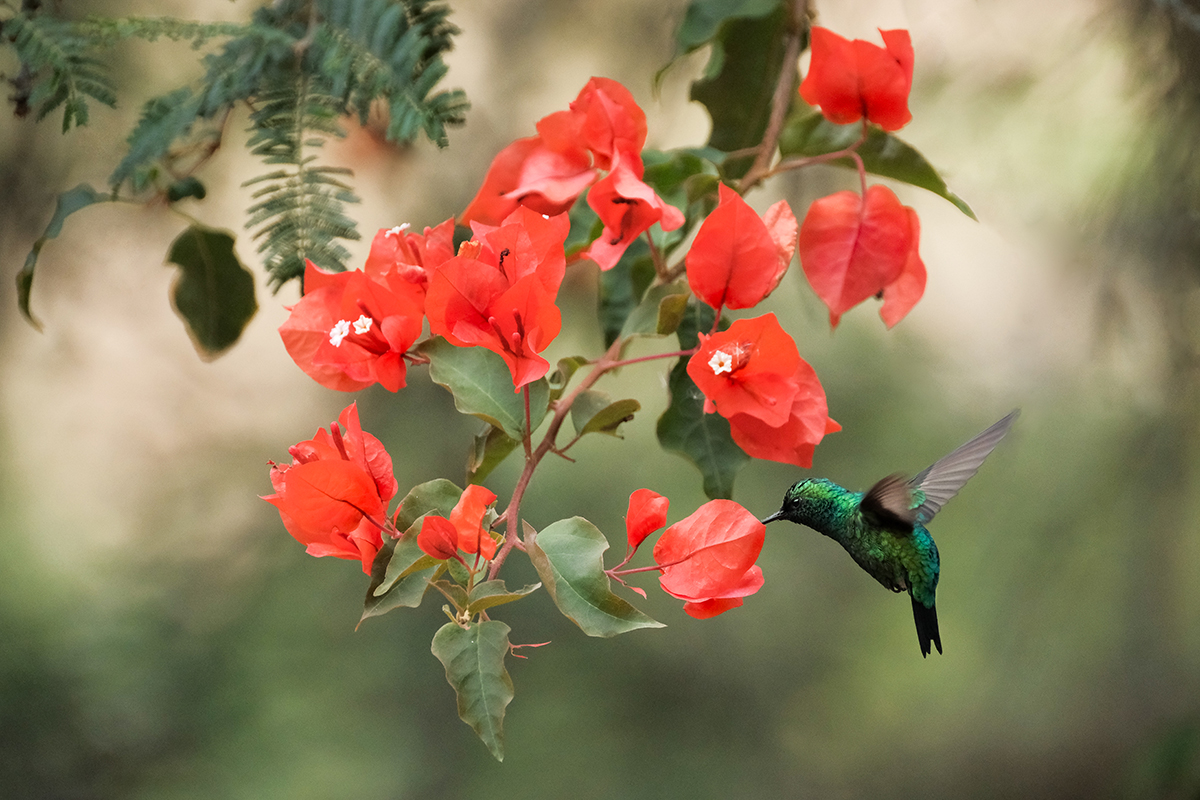
One of my biggest dreams would be to return to Latin America and spend more time documenting the incredible variety of ecosystems there. I would especially love to revisit the Ecuadorian cloud forest – walking through the misty forest in the early morning while the first rays of sunlight slowly illuminate the leaves and hummingbirds begin to move through the forest.
More broadly, my dream assignment would involve travelling the world, connecting with nature and the people working to protect it, and sharing those stories through photography.
What piece of advice would you give to other aspiring photographers?
One piece of advice that really helped me when I first became more serious about photography was simply to dedicate a little time to it every day. It doesn’t have to be much – sometimes even ten minutes is enough. You can observe the world around you, reflect on your images, watch a tutorial or simply go outside and explore with your camera.
It doesn’t have to be a special place, sometimes it might be enough to take a few steps out of your door. Here in Istanbul, we have thousands of cats, so I sometimes just grab my camera and spend some time outside, portraying the cats. The most important thing is to stay curious and keep practicing. If you are passionate about photography, keep going – whether you feel inspired, tired or excited that day.
Never stop, because this world always needs new voices and new perspectives.
Instagram: @mygeckopix
Success stories
At the 2026 AP Awards, Nick Teo was announced as our Emerging Talent winner for this documentary-fashion work. Previous emerging photographer award winners include Ethan Parker, Aliz Kovacs-Zoldi and Tariq Sadu. Si Jubb and Ethan Parker recently spoke at our Festival of Photography: Documentary event.
More reading:
- The life of a soldier told through photography
- Emerging photographer shining a light on the marginalised
- How I use photography to challenge the stigma of cancer
- Love cars? I think you should take a look at these awesome photos!
- How photography has helped me as a veteran