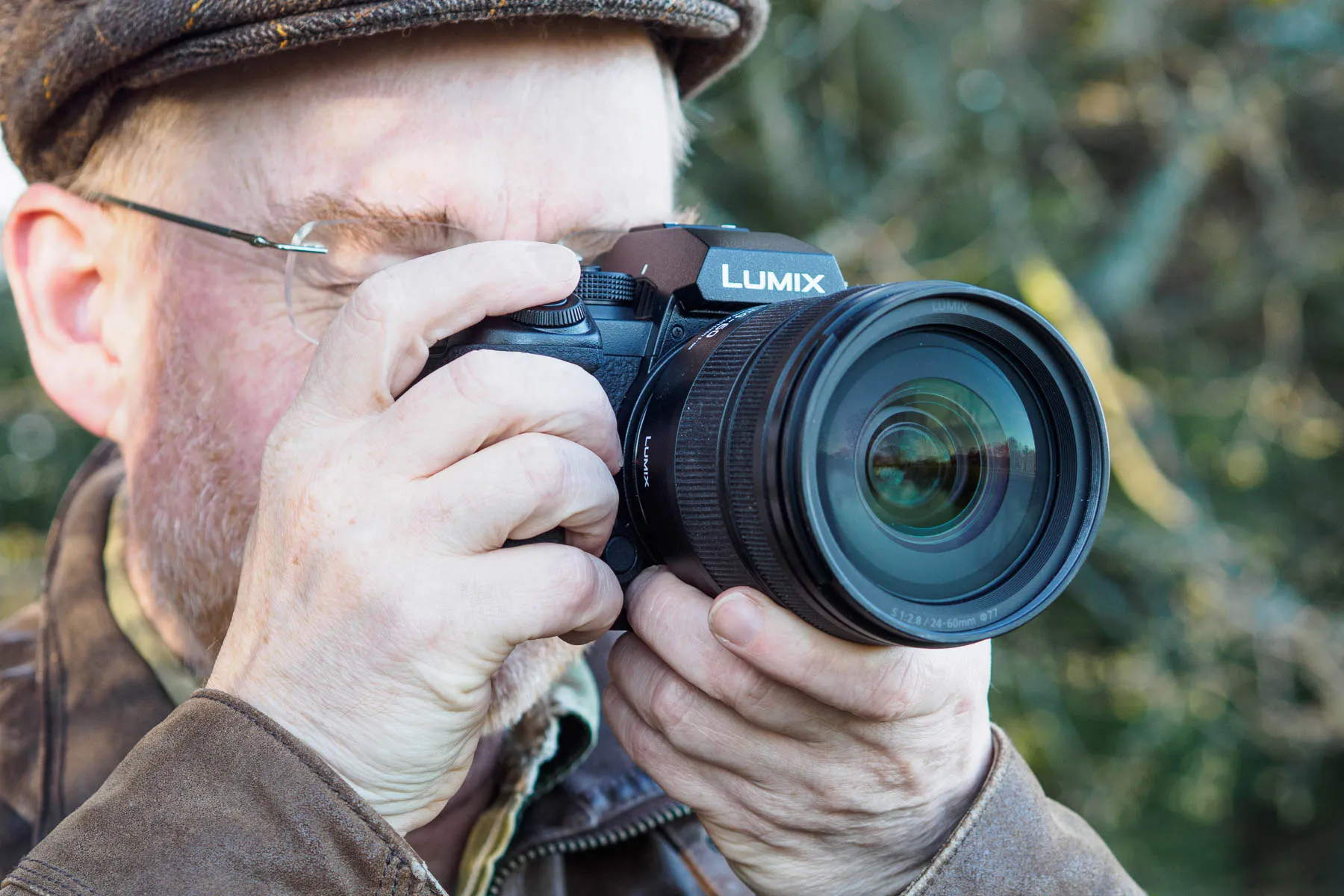
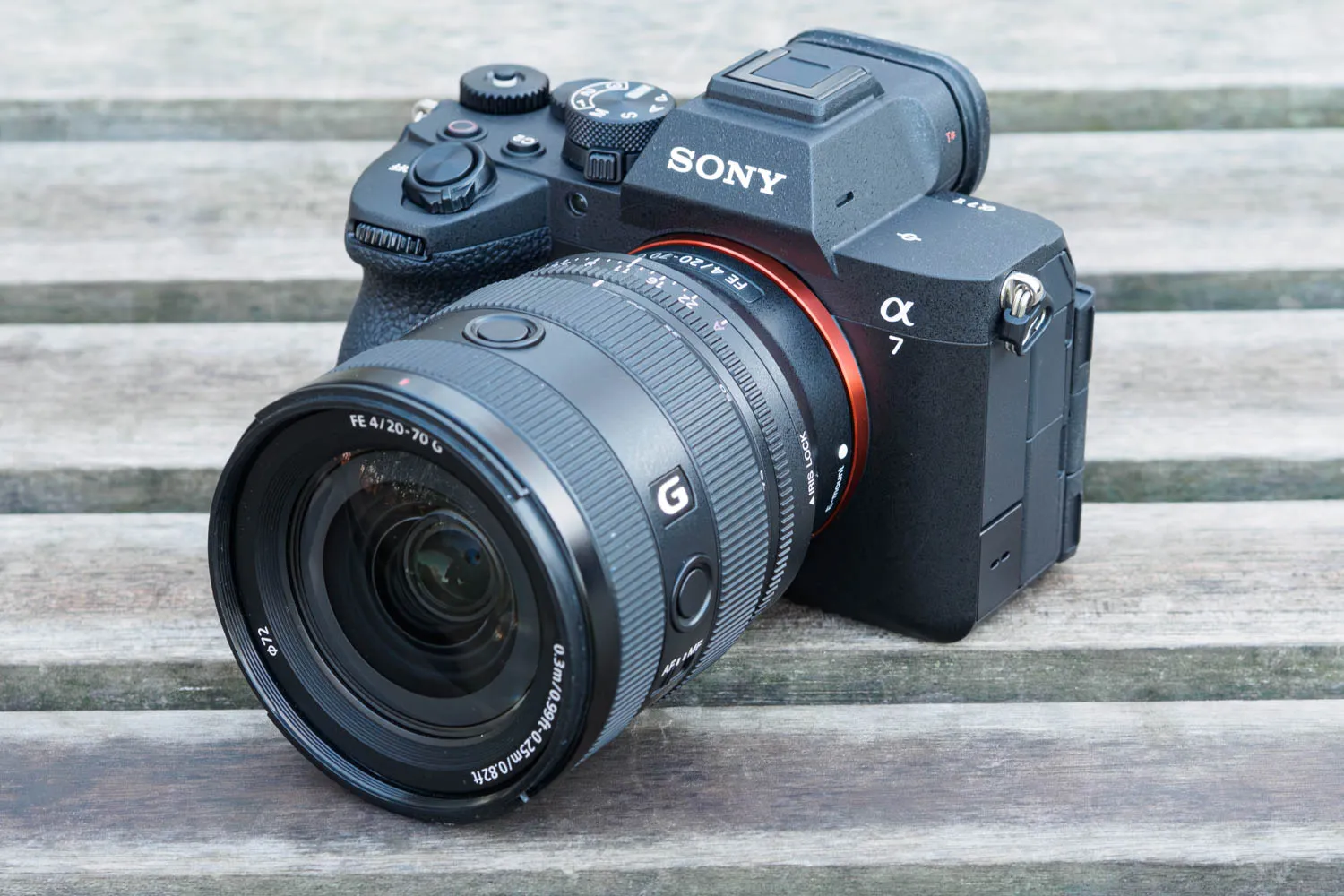
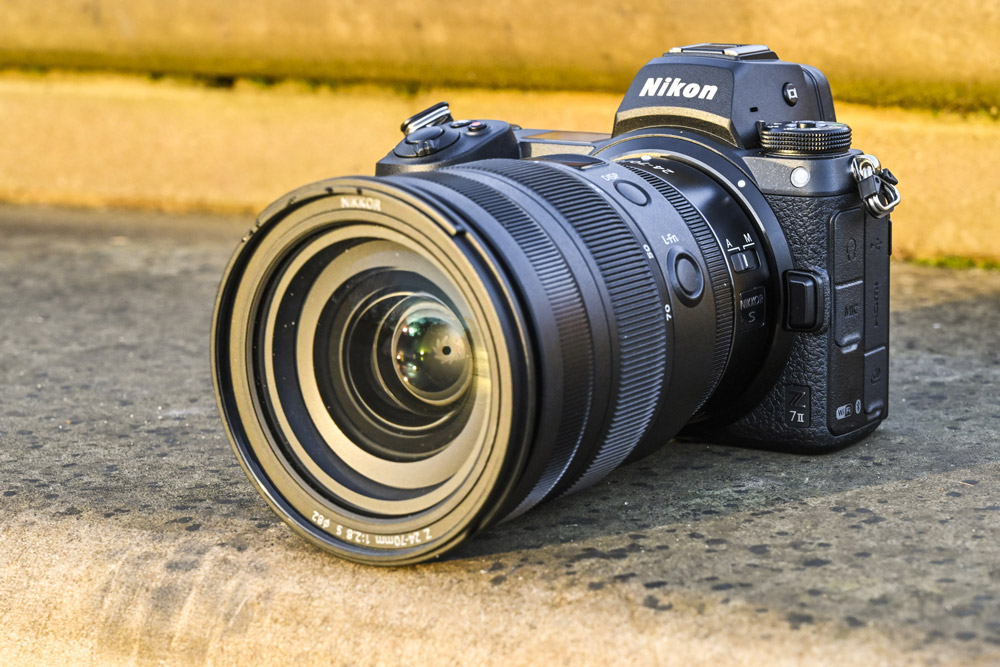
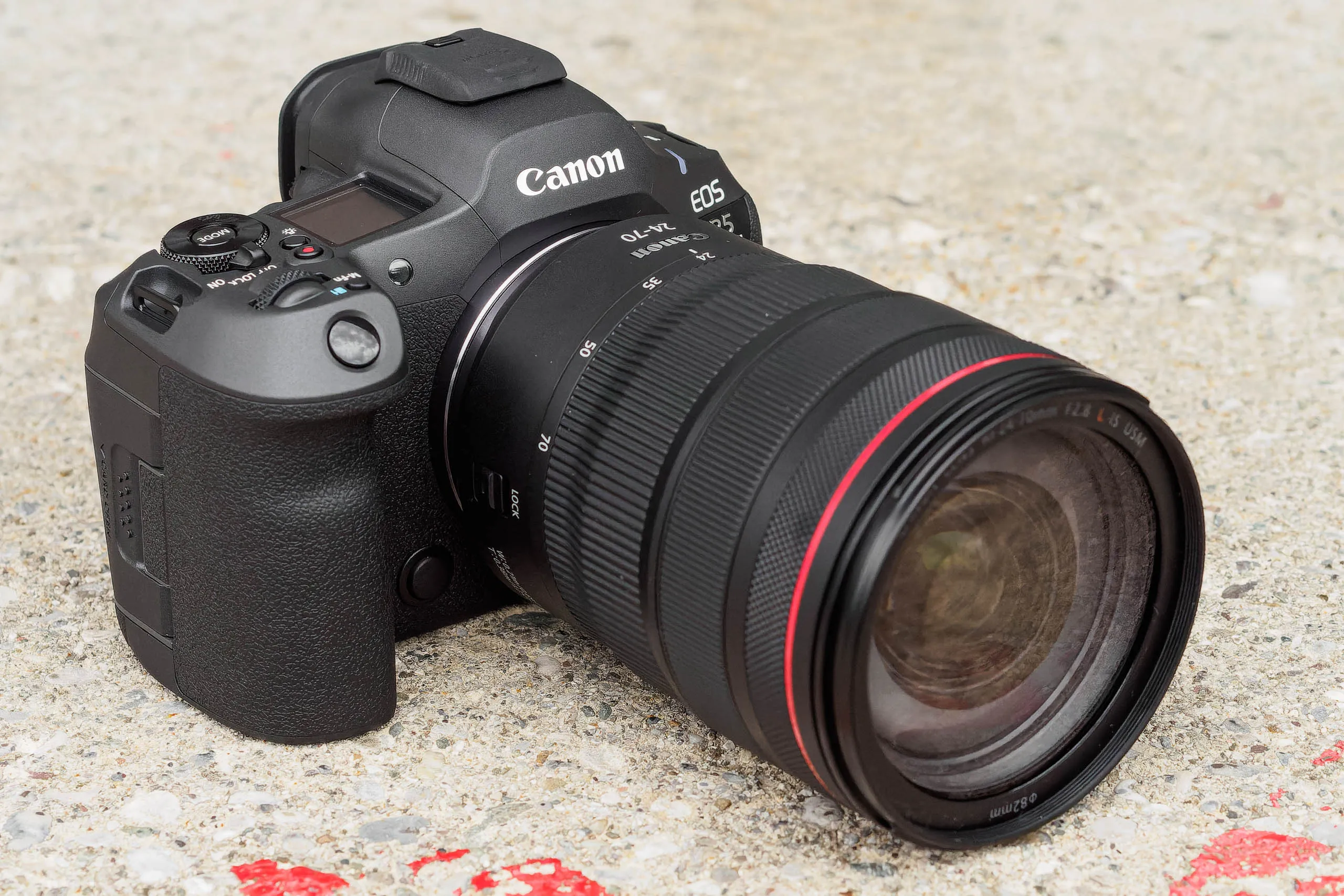
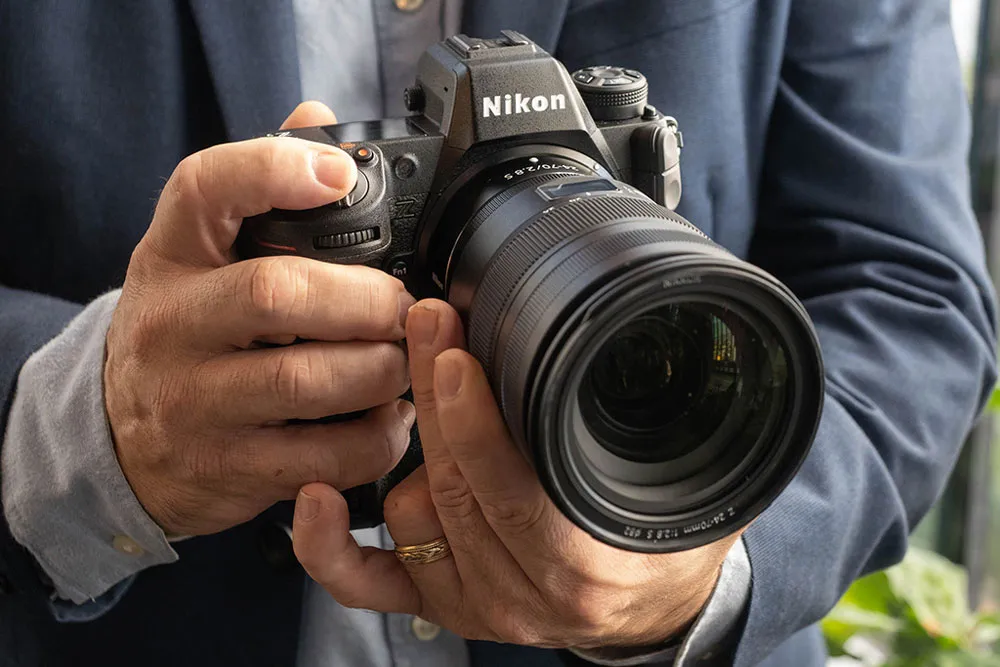
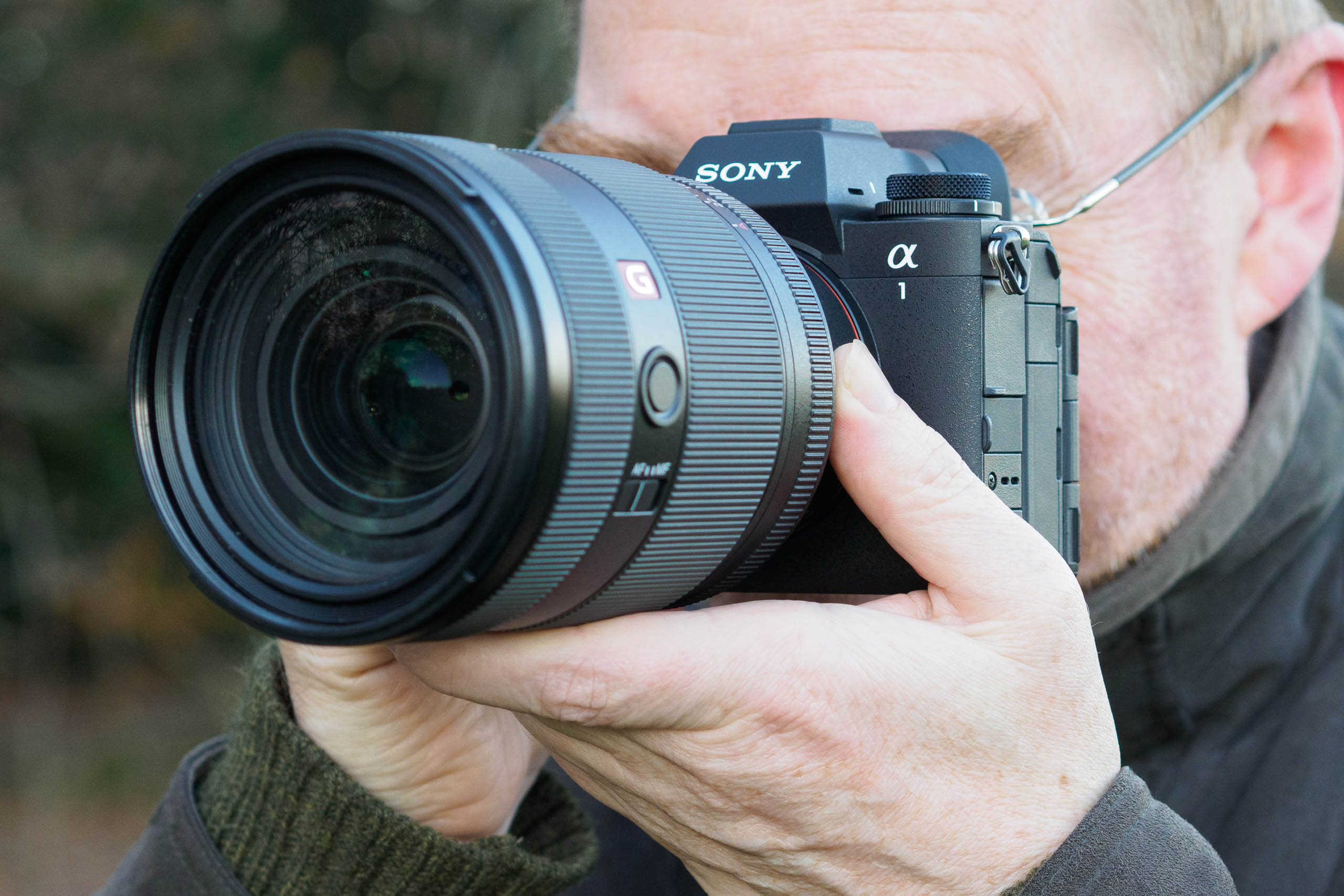
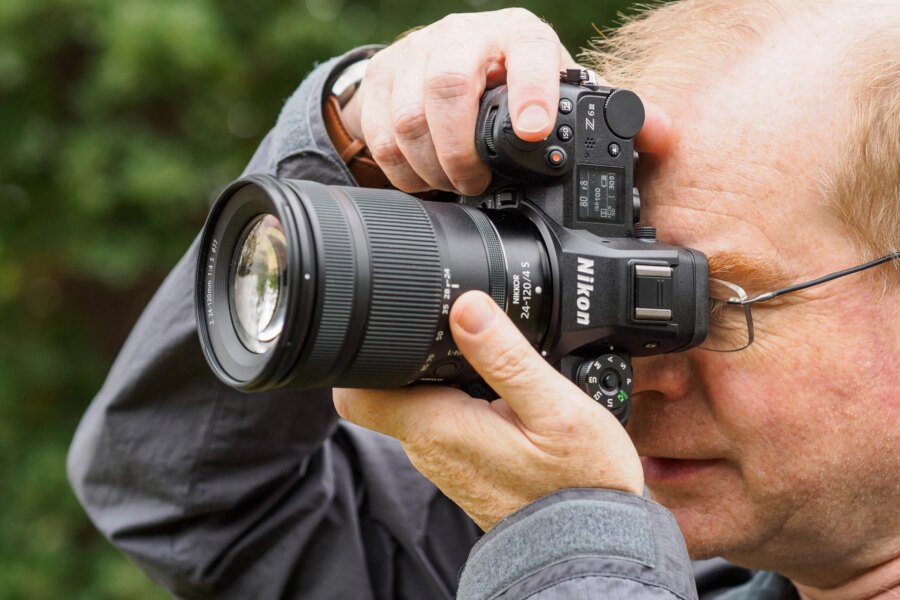
I enjoyed using the S1II – it’s a very capable camera. Image credit: Andy Westlake
It’s a fact that the best cameras these days are mirrorless cameras. All major manufacturers now invest their expertise and resources in the format. Photographers looking for the fastest burst speeds, highest resolutions or the most accurate autofocus buy mirrorless cameras. This guide summarises the best ones we’ve reviewed at all price points, from beginner to enthusiast to professional models, with recommendations for types of use they are best suited to.
In this guide you’ll find cameras from all brands, and all different sensor sizes. Not all mirrorless cameras are ultra-expensive professional models – Sony, Canon, Nikon, Fujifilm, Panasonic and OM System offer great beginner and enthusiast options as well as the top-end stuff. There are plenty of budget-friendly mirrorless cameras, too. We have a primer on how to choose the right camera for you at the bottom of this page.
The best mirrorless cameras – our quick list
Here are our picks of the best mirrorless cameras you can buy, from beginner options to top-end pro shooters…
The best mirrorless cameras for beginners:
Best beginner mirrorless overall: Olympus OM-D E-M10 Mark IV – Buy now
Best beginners’ hybrid for content creators: Nikon Z50II – Buy now
The best mirrorless cameras for enthusiasts:
Best all-rounder for enthusiasts: Nikon Z6 III – Buy now
Best value full-frame mirrorless camera: Nikon Z5 II – Buy now
Best for those who like an analogue-style experience: Fujifilm X-T5 – Buy now
Best enthusiast mirrorless for wildlife and action: Panasonic Lumix G9 II – Buy now
Best enthusiast mirrorless for travel and outdoors: OM System OM-5 II – Buy now
Best enthusiast mirrorless for filmmakers: Panasonic Lumix GH7 – Buy now
Best Sony all-rounder for enthusiasts: Sony A7 V – Buy now
Best full-frame high-res for weddings and events: Nikon Z7 II – Buy now
Best Canon all-rounder for enthusiasts: Canon EOS R6 Mark III – Buy now
Best Lumix all-rounder for enthusiasts: Panasonic Lumix S1II – Buy now
Best mirrorless cameras for professionals:
Best pro mirrorless overall: Canon EOS R5 II – Buy now
Best pro mirrorless for landscape shooters and print makers: Sony A7R V – Buy now
Best pro Nikon mirrorless for sports professionals: Nikon Z9 – Buy now
Best pro mirrorless for high-end professional users: Sony Alpha 1 II – Buy now
For the best deal on mirrorless cameras: Not only will you find the best mirrorless cameras, but also some of the best camera deals, as our ‘Buy now’ buttons are setup to automatically take you to the best prices from trusted retailers. Plus you’ll find a list of other retailers below each camera, so you can find the right deal for you.
Why you can trust Amateur Photographer
We spend many hours testing every product we recommend, in detail, in a variety of situations and shooting scenarios, and only use experts for our reviews, so you can be sure that you’re getting the best products. Find out more about our expert writers.
The best mirrorless cameras for beginners
If you’re just getting started with photography or videography, a mirrorless system is an excellent choice. This first section contains mirrorless cameras that offer a solid foundation for any beginner. They’re lightweight enough to take anywhere, affordable, and anybody could pick them up and learn how they work. They also offer an enticing upgrade path.
Best for beginners overall
Best beginner mirrorless overall: Olympus OM-D E-M10 Mark IV
Olympus OM-D E-M10 Mark IV in hand, with selfie screen. Photo credit: Andy Westlake
Amateur Photographer verdict
A camera that has gone the distance and earned a reputation as one of the best beginner options around. It’s fast, it’s smart and it’s portable – what more do you need?
Pros
Tidy, well-packed body
Excellent auto modes
Well-designed viewfinder
Cons
No mic socket
Raw quality lags behind APS-C peers
Specifications at a glance:
Sensor
20MP Four Thirds sensor
Lens mount
Micro Four Thirds lens mount
Autofocus
Contrast detection, 121 AF points
Continuous shooting
15fps
In-body Image stabilisation
4.5 stops
Video
4K30p
Based around a 20MP sensor, this attractive compact mirrorless model offers excellent JPEG image quality with extremely attractive colours. Paired with the TruePic VIII processor, it provides a sensitivity range of ISO 200-6400 as standard, with extended settings equivalent to ISO 80-25,600 available.
The design is stylish and the ergonomics are well laid-out, while extremely effective in-body stabilisation keeps pictures sharp. One of Olympus’s key technologies is its 5-axis in-body image stabilisation, which works with practically any lens you can fit onto the camera, aside perhaps from very long telephotos. The E-M10 IV promises 4.5 stops benefit when shooting hand-held. This allows you to keep your ISO setting down in low light, offsetting the noise disadvantage of the smaller sensor, or to use slow shutter speeds hand-held for creative motion-blur effects.
JPEG output
The camera’s automated systems work very well. Metering, auto white balance and colour rendition all come together here to give consistently attractive JPEG output. It’s also easy to judge in the viewfinder when you might want to lighten or darken an image for aesthetic effect, and apply the requisite level of exposure compensation.
You also get a good set of useful advanced features and the camera is supported by a fine set of small, affordable Micro Four Thirds lenses. You’ll also find the camera offers Wi-Fi and Bluetooth connectivity, as well as 4K video recording. With In-Body Image Stabilisation, it offers great value for money.
Best beginners’ hybrid for content creators: Nikon Z50 II
Here’s the Z50II with its 16-50mm kit zoom retracted, and the Z DX 24mm F1.7 prime. Image credit: Andy Westlake
Amateur Photographer verdict
Nikon’s first APS-C Z camera, and still the best option for beginner photographers (vloggers should look at the Z30). This portable shooter is ideal for travel.
Pros
Excellent RAW image quality
Good for stills and video
Fast, reliable autofocus
Fully articulated LCD screen
Cons
Few native DX-format lenses
Single card slot
No Af-area joystick
Specifications at a glance:
Sensor
20MP DX-format CMOS sensor
Lens mount
Nikon Z-mount
Autofocus
Subject detection and 3D tracking
Continuous shooting
11fps
In-body Image stabilisation
No
Video
4K 30p video; 4K 60p with 1.5x crop
Nikon’s updated entry-level mirrorless model produces fine images and is a delight to use. The original Z50 was Nikon’s first shot at creating a DX-format mirrorless camera with an APS-C sensor and, just like its predecessor, the Z50II uses DX-format Z mount lenses. It can also be used with Nikon’s ever-growing range of full-frame Z mount optics and Nikon F-mount lenses can also be paired via the FTZ mount adapter.
The Z50II shares the same Expeed 7 processor as the firm’s high-end Z8 and Z9 models, so offers identical autofocus options like subject detection and 3D tracking, and we found that it handles fast moving subjects well.
The LCD screen can be fully tilted out to shoot from unconventional angles thanks to the fully articulated design. This makes the Z50II ideal not just for stills but, for vlogging and shooting video too. It can record in 4K at 60 fps, albeit with a 1.5 crop, but if you are keen on using the full sensors width there is the 4K 30fps option too. It even supports Nikon’s 10-bit N-log output profile for colour grading.
The excellent electronic viewfinder is brightest in its class, making it easier to see what you are shooting even in really sunny conditions. There is a responsive touchscreen that enhances the shooting experience, and with 11fps continuous shooting and a speedy autofocus system, whether it’s used to capture stills or snippets of video, the Z50II produces great results.
The design is purposeful with a thoughtful control layout. Its excellent ergonomics and deep handgrip make for impressive handling, too – as we’d expect from Nikon. Overall, it’s a marvellous little APS-C format camera that offers great value for money, and you can’t fail to fall in love with it when using it. If you’re choosing within Nikon’s DX-format mirrorless system the Z50II is well worth a look.
This is where the fun begins. Here, we’ve compiled some of our favourite mirrorless cameras for enthusiasts, intermediate users; those with some experience and know-how. These cameras offer a level of depth and control exceeding that of most mirrorless models, without the huge price tags of the pro cameras (which follow). These cameras can be a great upgrade for anyone already invested in a particular system or brand, but some are good enough to tempt users to switch brands altogether.
Best overall for enthusiasts
Best all-rounder for enthusiasts: Nikon Z6 III
Nikon Z6 III with 35mm f/1.8 lens. Credit: Andy Westlake
Amateur Photographer verdict
An utterly superb all-rounder, the Nikon Z6 III is the best mirrorless camera right now for serious enthusiasts and those looking to turn pro. It’s not cheap, but it’s a hell of machine.
Pros
Super-fast continuous shooting and autofocus
Beautiful viewfinder and articulating screen
Solid build with excellent control layout
Cons
Price hike over Z6 II
Image quality isn’t much improved from previous generation
Specifications at a glance:
Sensor
24.5 MP partially-stacked full-frame CMOS sensor
Lens mount
Nikon Z-mount
Autofocus
Subject detection and 3D tracking
Continuous shooting
20fps
In-body Image stabilisation
8 stops
Video
6K 60p
Rather than the resolution-focused Z7 cameras, the speedster Z8 or the top-end Z9, the Nikon Z6 cameras are designed as mid-range (well, upper mid-range) full-frame mirrorless cameras that do a bit of everything. The Nikon Z6 III is the latest in the line, and the first thing you’ll notice is the increase in price compared to the Z6 II. That’s asking a lot — does the camera justify it?
Upon completing our review, we said that it does. The Z6 III currently outclasses pretty much everything else at the level, and boasts the kind of features you’d normally have to spend a lot more to get. With a partially stacked sensor design greatly improving readout speeds, the Z6 III boasts autofocus speeds that far outstrip those of its predecessor, and are even nipping at the heels of the speedy Nikon Z8.
The best viewfinder ever?
In our review, our technical editor Andy Westlake afforded special mention to the Z6 III’s electronic viewfinder. Nikon’s mirrorless cameras have consistently sported excellent EVFs, but the specimen on the Z6 III really is something. It’s ultra-bright at 4000 nits, offers high resolution and covers the full DCI-P3 colour gamut. Combine this with a fully articulating screen and you have a camera that’s an utter pleasure to use, regardless of how you like to shoot.
In terms of raw image quality, the Z6 III isn’t much of an upgrade over the Z6 II. What makes it so special is everything else – all the improvements in it that make it such a special camera to use. With impressive capabilities and no significant weaknesses, it’s the camera that’ll tackle anything.
Best value full-frame mirrorless camera: Nikon Z5II
The Nikon Z5II. Credit: Amy Davies
Amateur Photographer verdict
A great spec sheet and very little to dislike, plus a tempting price point makes the Z5 II a fantastic all-rounder for a variety of different photographers.
Pros
Fantastic value
Fully articulating touchscreen
Proven sensor
Multiple subject detection focusing
Cons
No top-plate LCD
4K60p top video resolution
Less portable than APS-C or MFT
Specifications at a glance:
Sensor
24.5MP full-frame (FX format) BSI CMOS sensor
Continuous shooting
15fps in raw, 30fps JPEG
Autofocus
273-selectable focus points
ISO
ISO 100-64000
Image stabilisation
7,5 stops IBIS
Video
4K 60fps internal video recording (cropped), 4K 30fps uncropped
Viewfinder
3.69m-dots, 0.8x, 3000nits, 60fps
Screen
3.2in, 2.1m-dot fully articulated
The Z5II tops our list of the best Nikon mirrorless cameras, as it provides professional performance but at an entry-level price point. It is extremely capable across a variety of situations thanks to the new Expeed 7 processor, same as flagship Z8 and Z9 and a back-illuminated sensor which performs better in low light and handles noise better even at high ISO settings.
The new auto-focus system is 68% faster than its predecessor and employs AI-based subject detection to recognise nine different subject types compared to only two on the previous Z5. With 3D tracking technology
14fps raw capture makes it ideal for fast-paced scenarios like wildlife and sports, while the built-in image stabilisation promises 7.5 stops of shake reduction, which will tempt you to ditch your tripod in favour of handheld shots.
A new fully articulating touch screen improves the odd tilting design and makes the Z5II better suited for video, as now we have 4K30p cropless video as well as 10-bit N-Log, and internal N-RAW recording on board for professional-level colour grading. It is a “no-brainer” for those wanting to upgrade to a full-frame or for DSLR veterans looking for a modern mirrorless upgrade that doesn’t break the bank.
Best for those who like an analogue-style experience: Fujifilm X-T5
Fujifilm X-T5 with XF 18-55mm F2.8-4 OIS lens. Image credit: Andy Westlake
Amateur Photographer verdict
One of the most satisfying and enjoyable cameras to use, the X-T5 is a marvel for enthusiast photographers. Image quality and handling are just superb.
With the X-T5, it felt like Fujifilm was returning to its roots after a succession of video-leaning hybrid cameras. Naturally, it came as a thrill to photographers when the firmly stills-oriented X-T5 made its debut in 2022, especially with the classic top-dial control system that has been wowing X-T enthusiasts since 2014. The real headline feature, though, was the sensor.
The X-T5 arrived with the same 40MP sensor as the Fujifilm X-H2, providing a serious resolution upgrade over the 26.1MP Fujifilm X-T4. Along with this, it gained sophisticated subject-detection autofocus, capable of picking out and locking onto specific subjects like humans, animals and vehicles.
A true enthusiast’s camera
Like many Fujifilm models, the X-T5 is just a downright enjoyable camera to use. Its 3-way tilting screen and high-quality viewfinder provide plenty of image composition options, and image quality is terrific both in raw and JPEG formats. Fuji’s excellent Film Simulation modes are all present and correct, allowing you to imbue images with the specific character of analogue stocks like Velvia and Astia. It’s a charm shared by the more compact Fujifilm X-T30 III, which brings this same colour science to a travel-friendly body. For producing great images straight out of camera – ready to share without much editing – no one does it better than Fujifilm.
More reasonably priced than either of the Fujifilm X-H2 cameras, the Fujifilm X-T5 is an exceptional enthusiast’s camera. It’s fully featured across the board, with fast burst rates, plenty of resolution and… well, we could go on. A resounding home run by Fujifilm.
Best enthusiast mirrorless for wildlife and action: Panasonic Lumix G9 II
Panasonic Lumix G9 II with 12-60mm lens. Photo credit: Andy Westlake
Amateur Photographer verdict
Reaffirming Panasonic’s commitment to Micro Four Thirds, this modern mirrorless marvel boasts phase-detection autofocus and state-of-the-art stabilisation.
Pros
Great design and control layout
Fast autofocus and 75fps burst
Extensive MFT lens range
Cons
Lack of cooling fan limits recording times
Full-frame Lumix S5 II isn’t much more expensive
Specifications at a glance:
Sensor
25.2MP Four Thirds sensor
Lens mount
Micro Four Thirds lens mount
Autofocus
Hybrid phase/contrast AF with 779 phase-detection points
Continuous shooting
Up to 75fps shooting (AFS + electronic shutter)
In-body Image stabilisation
8 stops
Video
5.7K 60p and 4K 120p video recording
One of Panasonic’s newest releases, the Lumix G9 II came as welcome assurance that the manufacturer is still committed to the Micro Four Thirds format, even with the increased focus on its newer line of full-frame Lumix S cameras. Indeed, it appears that some developments made in the full-frame line are finding their way into the Lumix G series. The Lumix G9 II inherits significant DNA from the Lumix S5 II, which debuted at the start of 2023.
First, there’s the body design; the Lumix G9 II looks a lot more like the Lumix S5 II than it does the previous Lumix G9. There’s no cooling fan, and the smaller mount allows the design to squeeze in an extra function button, but otherwise this model handles much like its full-frame sibling. The placement of the 8-way AF joystick is well-chosen, making for intuitive operation. There’s a lovely big 3.68m-dot OLED viewfinder, and a 3in, 1.84-dot vari-angle touchscreen for additional options for composition.
Phase-detection autofocus
Probably the most significant addition to the Lumix G9 II is the phase hybrid autofocus. It is the first Panasonic-made Micro Four Thirds camera to have this, finally replacing the ageing, contrast-based Depth from Defocus system the firm had stuck by for years.
Boasting 779 phase-detect focus points that cover the entire frame, this system promises to be faster and more accurate. It also benefits from AI-powered subject-detection system that’s able to recognise and lock onto specific subjects like humans, animals and vehicles.
The Lumix G9 II is a tremendous boost for Micro Four Thirds as a system for serious enthusiasts, and a compelling alternative to cameras like the OM-System OM-1. It’s built for speed, with 8-stop stabilisation and burst mode that can reach speeds of 75fps.
Best enthusiast mirrorless for travel and outdoors: OM System OM-5 II
OM System OM-5 Mark II Sand Beige. Image credit: Joshua Waller
Amateur Photographer verdict
The OM-5 Mark II adds sorely missed features. It’s a camera that gets out of your way and lets you shoot and more importantly enjoy photography. The best value weather-sealed camera ever made.
Pros
Beautiful colours straight from camera
Robust, IP53 weather sealing
New menus, grip and USB Type-C
Excellent stabilisation
Cons
Not optimised for video
AF system lacks subject detection
Specifications at a glance:
Sensor
20.4MP Four Thirds sensor
Lens mount
Micro Four Thirds lens mount
Autofocus
Face and eye detection, phase detection 121 AF points
Continuous shooting
30fps shooting (10fps with C-AF)
In-body Image stabilisation
6.5 stops, or 7.5 stops with Sync IS lenses
Video
4K 30p video
The latest in the OM-System’s mid-range offering, the OM-5 II fixes the OM-5’s shortcomings by adding a USB Type-C port and finally updating and making sense of the menus. With these small but significant updates, the new model is especially appealing as a lightweight and speedy travel camera.
Elsewhere, not much changed; you get the same 20.4MP Micro Four Thirds sensor that might sound low by modern standards but it delivers crisp, detailed images. So, unless you are making large prints or plan to crop your images excessively, it will be more than satisfactory. Furthermore, with JPEGs offering exceptionally pleasing colours straight out of the camera, the OM-5 II is perfect for those who prefer quick sharing on socials rather than spending hours adjusting sliders.
In his review Joshua dubbed it the “best value weather-sealed camera ever made” and for good reason. You also get IP53 weather sealing that is fast becoming ubiquitous on all OM-System cameras and lenses. This is some of the most comprehensive weather sealing of any camera in this class, and allows you to take the OM-5 II into basically any shooting situation with confidence.
With features like LiveND and 7.5 stops of image stabilisation, not to mention Starry Sky AF for night-time photography, as well as intuitive touchscreen AF-point selection and 10fps shooting with continuous autofocus, it proves adept in numerous situations.
A real all-rounder
The selection of Micro Four Thirds lenses is the most expansive in the business, and will allow you to kit yourself out for any situation. With excellent stabilisation, 4K video features and superb JPEG output straight out of camera, the OM-System OM-5 II is a camera for doing a bit of everything, and doing it well.
Best enthusiast mirrorless for filmmakers: Panasonic Lumix GH7
Panasonic Lumix GH7 with Leica DG 12-60mm F2.8-4 lens. Credit: Andy Westlake
Amateur Photographer verdict
A superb hybrid camera for both stills and video. With the same excellent handling and advanced video features as the GH6, it has significantly improved autofocus.
Pros
Vast range of video formats and high-end features
Transformed autofocus thanks to phase detection and updated subject recognition
Rumours of the death of Micro Four Thirds proved greatly exaggerated when Panasonic dropped the rip-roaring update to the video-focused GH series with the Lumix GH6. With the GH7, the company has further built on the legacy of the GH4 to produce one of the best vlogging and filmmaking cameras you can buy.
The GH7 finally gains the update that users have been requesting for ages – phase detection autofocus. This has had a transformational effect on the firm’s other recent cameras, so its inclusion in the GH7 is genuinely exciting and should make it one of the best Panasonic cameras yet.
Sony Alpha A7 V with FE 20-70mm F4 zoom. Image credit: Andy Westlake
Amateur Photographer verdict
With great image quality, excellent autofocus and rapid shooting, there’s barely anything it can’t do.
Pros
Superb raw image quality
Excellent autofocus
Impressively battery life
4-way articulated screen
Cons
No open gate recording
Speed boost issues with mechanical shutter
Cramped hand-grip
Specifications at a glance:
Sensor
33MP full-frame sensor
Lens mount
Sony FE lens mount
Autofocus
Subject recognition autofocus
Continuous shooting
10fps, 30fps with electronic shutter
In-body Image stabilisation
7.5 stops
Video
4K 60p
While many of Sony’s full-frame Alpha mirrorless cameras are specialists, the A7 models are good at most things. And the A7 V is really, really good at it. Its 33MP partially stacked sensor delivers faster readout speeds, captures a generous level of detail and boasts 16 stops of dynamic range.
With an improved 30fps burst rate using the electronic shutter, Pre-capture and a full set of AI subject recognition modes added over its predecessor, the A7 V can now cover faster and more erratic subjects. It can also recognise subjects in Auto mode, so you don’t have to choose subject type before shooting.
ISO performance is very good, even with images at 25,600 being usable with a bit of processing. Good work across the board. Even though the A7 V is a very capable video performer with 4K60p/120p with Super-35 1.5x crop, unfortunately, there’s no open gate recording, something that many of its rivals have.
There’s plenty more we could heap praise on here; it’s worth reading our full review for a detailed understanding of this camera, seeing how it comes together.
Really, our only bugbear with the A7 V is something that’s common to pretty much all Sony cameras – the convoluted, unintuitive menu systems that make it needlessly hard to navigate. It’s just something you’ll need to get used to.
Best full-frame high-res for weddings and events: Nikon Z7 II
Nikon Z7 II with 24-70mm f/2.8 lens. Photo credit: Michael Topham
Amateur Photographer verdict
Producing high-resolution images, the Nikon Z7 II is great for those who want a premium shooting experience without paying Z9 money.
Pros
Dual card slots
Well-designed body
Excellent stabilisation
Cons
Minor update from original Z7
4K 60p video is cropped
Specifications at a glance:
Sensor
45.7MP full-frame BSI CMOS sensor
Lens mount
Nikon Z lens mount
Autofocus
493 phase detection points, selectable AF detection modes
Continuous shooting
10fps shooting (Single AF)
In-body Image stabilisation
5 stops
Video
4K 60p
The Nikon Z7 II improves on the original Nikon Z7 in subtle but significant ways, making an already very good camera, even better. The camera features improved continuous shooting, dual card slots, and face/eye/animal detection AF.
There’s a 45.7MP full-frame sensor that provides stunning image quality, backed up by 5-axis in-body image stabilisation and fast, accurate autofocus. The viewfinder is superb, and F-mount SLR lenses can be used via the FTZ adapter. The high-resolution sensor and fast autofocus will be appealing to wedding photographers or anyone that craves speed paired with a serious amount of detail. It’s also useful for cropping if you want to shoot from a distance, too.
A sheer delight to use
You get up to 10fps shooting which, while not superb for action, isn’t too bad if it’s not something you shoot relatively often. But if you’re frequently shooting action, the Z6 II and certainly the Z9 cameras are probably better choices within Nikon’s mirrorless range. It can also shoot 4K video, albeit with a crop.
The Z7 II feels fantastic in the hand and is a delight to use. Then there’s its fabulous image quality, which is remarkably impressive and offers magnificent latitude when processing Raw files. This is a fantastic all-rounder, which works well for professionals and dedicated enthusiasts who perhaps don’t have the need or the budget for a Z9.
Best Canon all-rounder for enthusiasts: Canon EOS R6 Mark III
Just like its predecessors, the EOS R6 III handles very nicely. Image credit: Amateur Photographer
Amateur Photographer verdict
Canon’s best all-rounder with 32.5MP resolution, excellent autofocus and fast shooting, is right at the top of its class. A camera that produces terrific images in just about any situation
Pros
32.5MP sensor gives increased detail and flexibility
Superb autofocus
Impressive image quality
Cons
RF mount lacks third-party AF lenses
Doesn’t work with older LP-E6-type batteries
Specifications at a glance:
Sensor
32.5MP full-frame sensor
Lens mount
Canon RF lens mount
Autofocus
AI subject detection autofocus
Continuous shooting
40fps
In-body Image stabilisation
8.5 stops
Video
7K 60p, 4K 120p video recording
The original Canon EOS R6 was already a superb full-frame all-rounder, and scooped our Product of the Year award back in 2021. The Mark II upped the game with a 24.2MP full-frame chip, while this Mark III version received a resolution boost to a 32.5MP sensor first seen in the video-focused Canon EOS C50 hybrid.
The same unerringly efficient subject-detection autofocus system is on board, covering humans (eyes, face, head, and body); animals (dogs, cats, birds, and horses); and vehicles (racing cars or motorbikes, airplanes, and trains). This combines beautifully with the 40fps burst rate and pre-capture mode, able to buffer 20 frames while the button is half-pressed.
Other major photographic specifications remained much the same, but video gets a major overhaul from the previous 4K resolution the Mark III records raw video internally in 7K 60fps, and 30p in Open Gate mode that utilises the full sensor. There’s also 4K 120p, Full HD 180p available for slow motion footage.
It hasan almost indistinguishable design to its predecessor, with excellent handling, thanks to the large, deep handgrip and loads of external physical controls. The viewfinder is lively and responsive with a 120fps refresh rate, while the LCD screen can be set to face almost any angle.
Its ability to shoot, well, anything, means the EOS R6 Mark III won’t disappoint. It’s on the expensive side for an enthusiast’s camera, but at the same time, it’s difficult to think of another at this price point that’s this good at everything. Build up a solid set of RF lenses and you’ve get a setup for every situation.
Best Lumix all-rounder for enthusiasts – Panasonic Lumix S1II
The Panasonic S1II feels secure in your hand, and very robust. Image credit: Andy Westlake
Amateur Photographer verdict
In a market where all top-end cameras are incredibly good at capturing almost any kind of subject, the Panasonic Lumix S1II stands out for its sheer shooting speed and high-end video capabilities.
Pros
Excellent build and handling
Highly refined control layout
Large, detailed viewfinder and versatile articulated LCD
Very effective in-body image stabilisation
Super-fast stills shooting and video framerates
Cons
No auto subject-detection mode
No intermediate burst speed between 10fps and 30fps
Specifications at a glance:
Sensor
24MP full-frame sensor
Lens mount
L-mount
Autofocus
Subject detection
Continuous shooting
Up to 70fps shooting
In-body Image stabilisation
8 stops
Video
6K 60p, 4K 120p, Full HD 240p video recording
The S1II stands out in Panasonic’s flagship line-up with its impressive burst capability. Thanks to the 24MP partially stacked full-frame sensor it is able to shoot in raw up to 70 frames per second using the electronic shutter, with a 60fps and 30fps option available as well. While using the mechanical shutter gets you up to 10fps with a fixed focus point.
With what seems to be a similar sensor to Nikon’s new ZR cinema camera, you get an impressive aray of video specs, with 6K60p video and various resolutions and frame rates available, including C4K, 4K120p and open gate recording that supports cropping to various aspect ratios after recording at 6K resolution. Supported by 8 stops of image stabilisation and no hard limit to video recording time the S1II is a very powerful hybrid option.
Intriguingly, the S1II claims to have up to 15+ stops of dynamic range, allowing you to recover a lot of shadow detail in raw processing without introducing noise. With the high resolution multi-shot mode it can merge 24MP images in camera to create a 96MP composite with a choice between hand-held and tripod capture.
Panasonic’s phase detection autofocus is fast and accurate with human, animal, and various vehicle subject detection modes on board, however there’s no Auto mode that recognises what type of subject you’re looking at, so you’ll need to manually select this before capture.
It has a sturdy weather-sealed body with a comfortable and deep handgrip and vari-angle screen. Tactile and covered in buttons, but also highly costomisable, as you can reassign the function of any button. Complemented by an impressively large 5.76m-dot electronic viewfinder and a side-hinged vari-angle screen which can be twisted to any angle you please.
If you shoot a lot of video alongside stills that require high-speed, the S1II is an ideal all-rounder choice, however if you’re focused mostly on stills and don’t require top of the class burst speeds you should have a look at its cheaper Panasonic Lumix S1IIE sibling.
And at last, here are the best of the best. This section contains mirrorless cameras that command serious prices – as befit the professional photographers and videographers for whom they are made. Here you’ll find dazzlingly high megapixel counts, full-frame sensors (and larger), super-fast burst rate and AI-powered autofocus systems intelligent enough to recognise specific subjects.
Best pro mirrorless overall
Best pro mirrorless overall: Canon EOS R5 II
Canon EOS R5 Mark II with RF 24-105mm F4 L IS USM lens. Credit: Andy Westlake
Amateur Photographer verdict
The Canon EOS R5 Mark II stakes a strong claim to be the best professional high-resolution, high-speed all-rounder on the market. The addition of eye control focus elevates it from its rivals, too.
Pros
Excellent handling
Incredible subject detection AF
Eye Control Focus
Great image stabilization
Cons
Not compatible with some third-party LP-E6 batteries
Eye control may not work well for everyone
Specifications at a glance:
Sensor
45MP stacked CMOS sensor
Lens mount
Canon RF
Autofocus
Eye Control Focus
Continuous shooting
30 fps
In-body Image stabilisation
8.5 stops
Video
8K 60p
The R5 has been one of Canon’s best high-resolution full-frame mirrorless cameras. It boasted impressive specs but had some issues with overheating during high-res video recording. The EOS R5 II addressed this problem and further improved this otherwise stellar full-frame powerhouse’s video specs and overall performance.
The R5 II has the same megapixel count as its predecessor, but now it’s equipped with a new back-illuminated stacked-CMOS sensor that reduces rolling shutter by 60 %. It also received a new DIGIC X processor, enabling new autofocus features, faster video shooting, and more responsive operation.
The impressive Eye Control Focus technology, previously seen in the EOS R3 detects where you are looking in the viewfinder and then automatically focuses on that subject. Another new autofocus feature the ‘Action Priority’ autofocus has ball tracking and recognises ‘action poses’ in football, basketball, and volleyball. It also registers up to ten faces that it will prioritise focusing on, and even lets you arrange them in order of priority.
Now, for the video specs, Canon made sure to bulk up in this area, fixing the overheating issue by adding an internal heat dissipation channel. For those who plan to put it through even more demanding use there is an additional cooling fan grip. The R5 II records internally in 8K 60fps using Canon’s proprietary SRAW format. Another new feature is proxy recording where a low-resolution file can be simultaneously recorded to the second memory card for easier editing. There’s also a new dual still/video shooting function, in which it’s possible to record Full HD video to one memory card and still images to the other at the same time.
In our full review we’ve found that “for any photographers still using 5D-series DSLRs, the EOS R5 Mark II is a massive step forward. Even for existing EOS R5 users, there’s plenty here to make it worth considering upgrading.”
Best pro mirrorless for landscape shooters and print makers: Sony A7R V
The Sony A7R V with lens. Photo credit: Andy Westlake
Amateur Photographer verdict
It’s a pricey proposition, but the proven quality of Sony’s 61MP full-frame sensor simply blows the competition away. For landscapes, this is a top performer.
Pros
Highest-resolution full-frame camera
Subject-detection autofocus
Variable-resolution Raw recording
Cons
Sony menus still (still!) a mess
No in-camera Raw conversion
Specifications at a glance:
Sensor
61MP full-frame CMOS sensor
Lens mount
Sony FE-mount
Autofocus
Subject detection
Continuous shooting
10fps
In-body Image stabilisation
8 stops
Video
8K 24p
Sony’s A7R cameras have long led the way in resolution for full-frame mirrorless, and right now if you want megapixels, the A7R V is your port of call. It sports a full-frame chip with 61MP of resolution to play with – currently only the Sigma fp L matches it, and nobody in the world of full-frame beats it.
Of course, this was also true of the previous A7R IV / A7R IVA – the Mark V version uses the same sensor as its predecessor. So, as someone wincing at its price tag might reasonably ask, what exactly is new?
The short answer is everything else. Sony sensibly decided that 61 megapixels suffice for most people (for now, at least), and instead set about upgrading all other aspects of the camera. As such, the A7R V benefits from up-to-the-minute features as subject-detect autofocus (as already encountered in this guide). The A7R V isn’t exactly a speedster, but with this system and 10fps burst shooting, it does reasonably well with fast subjects.
What else is new?
There are external improvements too. The A7R V gets a nice big viewfinder with buckets of resolution, as well as a redesigned screen that combines an up/down tilting mechanism with a fully articulating side hinge. More? Sony also beefed up the in-body stabilisation, which is now rated up to eight effective stops, and can be used in a multi-shot composite mode to produce images up to 240MP in resolution.
The catch is, of course, the price. Sony’s line used to be made up of quite specialised models with different functions, but these days all its cameras seem to be good at everything – and come with a price tag that reflects that. Only time will tell whether this is a savvy strategy on Sony’s part – and only you can tell whether all the features of the A7R V are worth its intimidating price tag.
Best pro Nikon mirrorless for sports professionals: Nikon Z9
The Nikon Z9. Photo credit: Andy Westlake.
Amateur Photographer verdict
An outstanding achievement in professional mirrorless design, the Nikon Z9 is a true next-generation camera.
Pros
Integrated vertical grip
Up to 120fps at 11MP
And 20fps full-res RAW
Cons
Overkill for most people
More expensive than Z8
Specifications at a glance:
Sensor
45.7MP full-frame stacked CMOS sensor
Lens mount
Sony FE-mount
Autofocus
Subject detection
Continuous shooting
10fps
In-body Image stabilisation
8 stops
Video
8K 24p
The Z9 is Nikon’s new flagship professional full-frame mirrorless camera. It’s capable of shooting 45.7MP images at 20 frames per second in raw (for more than 1,000 frames in a row), or 30fps in JPEG, with continuous autofocus tracking. A new AI subject detection AF system is capable of recognising multiple kinds of subjects, and the camera can also record 8K video for several hours without overheating.
In fact, the Nikon Z9 offers a combination of high-end specifications and professional-level build that simply hasn’t been seen before. Drop the resolution to 11MP, and the Z9 will run at an astonishing 120fps. Crucially, it promises the pro-level control setup and extreme durability that’s essential for photographers who make a living from their cameras.
Low-distortion electronic shutter
Technically, the Z9 breaks new ground in being the first camera of its type to eliminate the mechanical shutter completely. Instead, it relies entirely on a high-speed, low-distortion electronic shutter that’s enabled by its use of a stacked CMOS sensor. Both the Sony Alpha 1 and Canon EOS R3 employ similar technology, but only Nikon has been brave enough to take it to its logical conclusion.
Previously, Nikon split its pro DSLR lines between high-speed sports and action models and high-resolution cameras for wedding, portrait and studio work. But with the Z9, Nikon has aimed to produce a single camera that can do anything a professional photographer might need. It is, arguably, the first mirrorless model to put itself forward as a complete replacement for any professional full-frame DSLR.
You could argue that the Z9 doesn’t actually do very much that the Sony Alpha 1 doesn’t already offer, but the big difference is its chunky, robust build, integrated vertical grip for shooting with large lenses, and the familiar design and handling for long-term Nikon users. It’ll also work with their F-mount DSLR lenses via the FTZ2 adapter. If its price forbids, consider the Nikon Z8, which offers a slightly compromised experience at a (slightly) more palatable price.
Best pro mirrorless for high-end professional users: Sony Alpha 1 II
Sony has made a camera that can do pretty much anything you might ask of it. Credit: Andy Westlake
Amateur Photographer verdict
There’s no doubt the Sony Alpha A1 II is one of the most capable cameras we’ve yet seen, with its high resolution, rapid shooting, and superb autofocus. It’s expensive, but can handle almost any task.
Pros
Next-generation autofocus
Amazing dynamic range
Superb shooting speeds
Auto subject detection
Cons
Price, obviously
Specifications at a glance:
Sensor
50.1MP full-frame stacked-CMOS sensor
Lens mount
Sony FE lens mount
Autofocus
Auto subject detection
Continuous shooting
30fps
In-body Image stabilisation
8.5 stops
Video
8K 30p / 4K 120p
Sony’s latest flagship model, the Alpha 1 II updates the original, ground-breaking A1, and delivers the same high-speed shooting and video performance, however, it’s now updated with an impressive focus system as well as pre-capture. In terms of pixel count, its 50.1MP full-frame sensor is surpassed in a similar price bracket only by the firm’s own 61MP Alpha 7R IV and Fujifilm’s 102MP medium-format GFX100S…
However, this is combined with the ability to shoot at a startling 30 frames per second, which can be matched by very few other cameras, and all at lower resolutions. The fact that the Alpha 1 can shoot at 50MP and 30fps while adjusting focus and exposure between frames is impressive. It records 8K video at 30fps and 4K video recording at 120fps as well.
Improvements made
The A1 II has Sony’s best ever in-body image stabilisation (IBIS), it’s rated for 8.5 stops of shake reduction in the centre of the image, (7.0 at the edge) compared to 5 stops for the original A1. The Sony Alpha A1 II is the best Sony camera ever made, the only issue being the high-price compared to Nikon and Canon rivals, which offer very similar speeds. The A1 II really can do pretty much anything – if you don’t get the shot, there’s no blaming the camera any more. For professional Sony shooters, it’s the obvious choice.
Weigh up specs with your shooting priorities. Having more resolution makes sense if you want to make high-quality prints, but if you’re only sharing images online, all those pixels will just slow down your process. To capture fast action, a fast burst rate is a must. For low-light work, a broad ISO range will help, as well as solid in-body image stabilisation (IBIS). It is also worth having a look at what lenses are available for a camera mount before committing, particularly as many full-frame lenses cost a lot of money.
What is the best sensor size for a mirrorless camera?
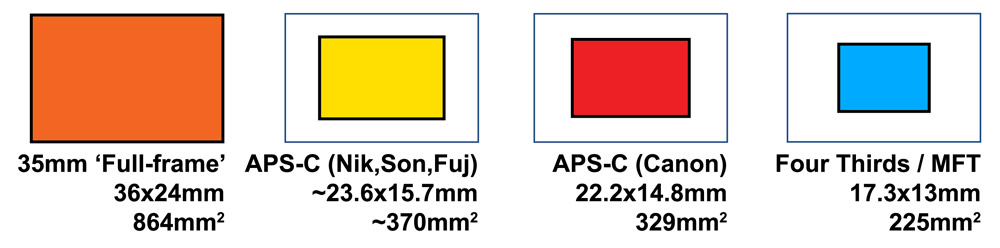
From the various sensor-sizes available from Four Thirds, APS-C, full-frame and medium format, larger sensors provide better image quality, but are bigger and cost more so have a think about how much weight you’re comfortable lugging around. If full-frame is what you want, then look at our guide to the best full-frame mirrorless cameras.
What is the difference between a mirrorless camera and a DSLR?
If you’re not sure whether you should buy a DSLR or a mirrorless camera, then have a look at our complete guide to DSLR vs Mirrorless cameras. It’s worth giving an honourable mention to some cheaper models that are too basic to make our list, but are viable options if money is tight. These include the vlogging focused Nikon Z30 and retro-styled Nikon Zfc, together with the new Canon EOS R100 and EOS R50 models. And if you’re keen to get started in content creation with a camera that has a solid lens line-up behind it, it’s hard to do better than the Sony ZV-E10 or the Panasonic Lumix G100.
Are mirrorless cameras replacing DSLRs?
In a nutshell, the future of photography is mirrorless. From all the different types of cameras available, mirrorless offers the latest tech, the newest sensors, and the fastest performance, as well as completely new lenses designed specifically for mirrorless cameras, and that gives them a range of benefits over older, slower DSLRs. Apart from Pentax who’s still making new DSLRs, all major brands are committing themselves to mirrorless cameras.
How we test mirrorless cameras
Testing mirrorless cameras isn’t just about lab charts and specs — it’s about seeing how they perform in the real world. Each model is put through its paces with hundreds of photos and video clips shot in a wide variety of conditions. We examine their control layout and handling as well as screen size and brightness also response time in case of touchscreens and the practicality of any articulating design. We test the electronic viewfinder with particular attention to brightness, colour accuracy and real-time exposure preview.
Autofocus performance is one of the key areas of testing. Continuous subject tracking, or special features like the Eye Control on the Canon EOS R5 Mark II or other advanced Subject Detection modes are all evaluated, whether capturing fast-moving action or more composed scenes.
Many models boast high fps continuous shooting capabilities and features like AI-assisted focus tracking, to test these features we use fast-moving subjects to reveal how well the system holds focus and how many frames truly hit the mark. We also assess their image stabilisation system and test how well they counter rolling shutter effects. Blackout-free shooting, buffer depth, and overall responsiveness at high speeds are also measured to see how each camera handles high burst rates.
Last but by no means least, we critically evaluate image quality, in both JPEG and raw, including resolution, high-ISO noise, and dynamic range – as well as video capabilities.
We then take all these factors into account, along with such things as portability and lens systems, when giving our final conclusion and score. You’ll find the full breakdown of how each mirrorless camera has performed in our full reviews.
Recent updates
March 2026: The Sony A7V replaced the previous Sony A7 IV as the best Sony all-rounder for enthusiasts, while the Panasonic Lumix S1II was added as the best Panasonic all-rounder for enthusiasts.
January 2026: The Nikon Z5 II was added as the best value full-frame mirrorless as it packs professional-level speed, autofocus and stabilisation packaged in a weather-sealed body, all the while setting a price point that beats its similarly specced competitors.
December 2025: We’ve simplified the list by removing various cameras in each category. The Canon R6 II was replaced by the Canon R6III.
November 2025: We’ve updated the OM System OM-5 to the latest OM System OM-5 II model as the best enthusiast mirrorless camera for travel, and removed the Fujifilm X-H2S as we felt that the Lumix G9 II is a more comprehensive option for action photography.
October 2025: Links to deals for the OM System OM-5 and Sony Alpha 1 II updated. Category headings clarified. Number of RF-S Canon lenses updated, link to Canon’s page listing all RF and RF-S lenses added. Descriptions of camera performance simplified throughout.
Text by Geoff Harris, with contributions from Joshua Waller, Jon Stapley & Michael Topham.
I am the deputy editor of Amateur Photographer, working closely with the team to make the website and magazine as good as possible. I've been working on magazines since 1995 and am also a keen travel and portrait photographer when time allows, reaching the finals of the Pink Lady Food Photographer of the Year contest in 2015 and achieving my Licentiate from the Royal Photographic Society the year before. I also keep my wedding-photography hand in by shooting a few ceremonies a year. I am particularly interested in how photography can help people express their creativity more effectively, or deal with mental health issues and other challenges.