


Best cameras for wildlife photography in 2026
Take your photos of wildlife to the next level with the best cameras for wildlife photography.


With a great camera for wildlife photography, you can capture pin-sharp, glorious, frame-filling images of wild animals. A smartphone generally won’t cut it in this field of photography: you need the speed, telephoto power and raw image resolution of a proper camera with a high-quality lens.
This guide contains the absolute best mirrorless cameras that have impressed our reviewers with their speed, quality and accuracy, earning them a hard-won spot on this list. The cameras here come at a range of prices, especially if you shop second-hand; wildlife photography can be done fairly cheaply for those with a limited budget.
What you need in a wildlife camera is reliable autofocus, a decent enough burst rate to keep up with fast movement, and a long lens, or the ability to field one. We go into more detail on this in our section on how to choose at the bottom of the page, so head there first if you need a primer.
Acquiring the right camera is an important first step for those who want to photograph wildlife. We expand on using autofocus, burst rates and long lenses in our complete guide to wildlife photography
Remember when you pick an interchangeable-lens camera (such as a mirrorless camera), you’ll need to factor in the cost of a suitable lens: see our guide to the best lenses for wildlife for suggestions. For now, here are the best cameras to use for wildlife photography.
Best cameras for wildlife photography: quick list
- Best Micro Four Thirds camera for wildlife: Panasonic Lumix G9 II – buy now
- Best Sony mirrorless for wildlife: Sony Alpha 1 II – buy now
- Best Nikon mirrorless for wildlife: Nikon Z8 – buy now
- Best cheap Canon mirrorless for wildlife: Canon EOS R7 – buy now
- Best Canon mirrorless for wildlife: Canon EOS R3 – buy now
- Best mid-range Fujifilm camera for wildlife photography: Fujifilm X-T50 – buy now
- Best Fujifilm camera for wildlife: Fujifilm X-H2S – buy now
- Best Olympus/OM System camera for wildlife photography: OM System OM-1 Mark II – buy now
Looking for the best deal on a camera for wildlife photography? Not only will you find the best wildlife cameras, but also the best cheap wildlife camera deals, as our ‘Buy now’ buttons are setup to automatically take you to the best prices, from trusted retailers, plus you’ll also find a list of other retailers below each camera, so you can find the right deal for you.
Read on to find out how we rated and reviewed each of these cameras – and why we believe they are the best cameras for wildlife photography right now. For further reading, we have a dedicated guide to the best cameras for bird photography.
Why you can trust Amateur Photographer…
We spend many hours testing every product we recommend, in detail, in a variety of situations and shooting scenarios, and only use experts for our reviews, so you can be sure that you’re getting the best products. Find out more about our expert writers.
Best Micro Four Thirds camera for wildlife
Panasonic Lumix G9 II

Amateur Photographer verdict
Panasonic’s flagship Micro Four Thirds camera offers a lightweight, portable setup that in many situations will deliver image quality you’ll probably struggle to distinguish from full-frame models
- Fast, effective, AI-powered autofocus system
- Huge range of lightweight lenses
- Class-leading stabilisation
- Controls are sensibly laid out
- Price jump from previous G9
- Default colour output is a little bland
At a glance:
- Mirrorless
- 25.2MP Four Thirds sensor
- Micro Four Thirds lens mount
- 779-point autofocus system
- 75fps continuous shooting (fixed focus); 60fps with continuous AF
- Price: $1,698 / £1,699 (body only)
Panasonic shows there’s life yet in its Micro Four Thirds offering with this spectacularly speedy shooter. The Lumix G9 II takes design cues from Panasonic’s full-frame S cameras, in particular the Lumix S5 II, and brings it to the smaller-sensor system. It also gains that camera’s most significant upgrade – phase-detection autofocus, something that Lumix G cameras had previously lacked. By itself, this super-fast system makes the Lumix G9 II one of the best Micro Four Thirds cameras for wildlife.
Like most new camera that have come out over the past couple of years, the Lumix G9 II also benefits from AI-powered subject detection. The animal mode on the G9 II is capable of recognising both mammals and birds – some systems require you to toggle between them – which is great for working in the wild where you’re never sure what you might see next.
The Micro Four Thirds ecosystem offers tons of terrific long lenses, the majority of which are both cheaper and lighter than their equivalents in APS-C or full-frame systems – such is the advantage of opting for a smaller sensor format. Also to be commended on the G9 II is the in-body stabilisation, which is one of the most effective such systems we’ve seen on recent cameras.
Read our Panasonic Lumix G9 II review
Best Sony mirrorless for wildlife
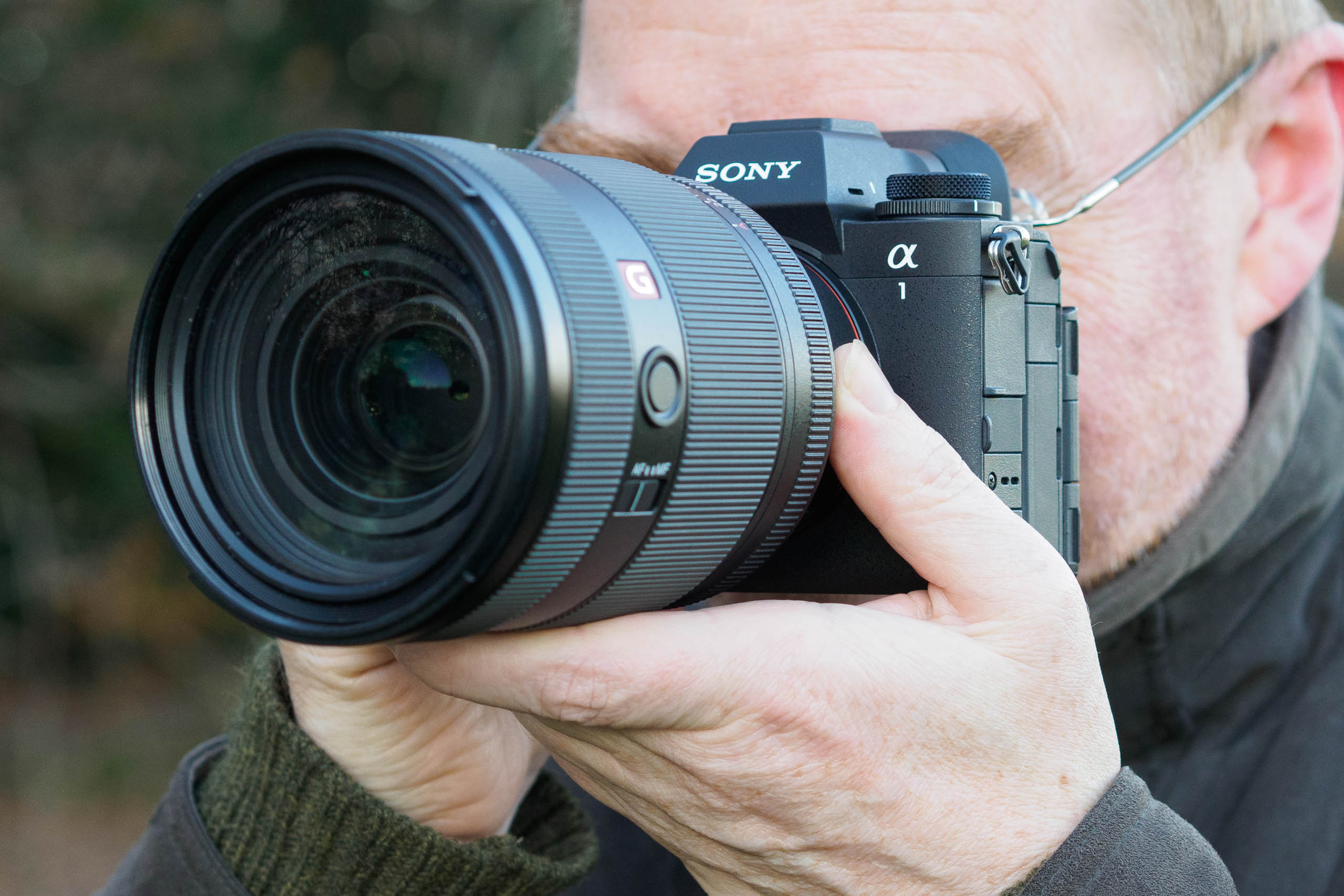
Sony Alpha A1 II
Amateur Photographer verdict
It offers higher resolution than almost anything else, combined with astonishing shooting speeds and an extraordinary subject detection autofocus system, and pre-capture.
- Exceptional image quality
- Best-ever autofocus system
- Enormous, high-res viewfinder
- Very, very expensive
- Probably overkill for most people
At a glance:
- Mirrorless
- 50.1MP full-frame stacked-CMOS sensor
- Sony E lens mount
- 759-point AF with subject detection (Auto mode added)
- 30fps continuous shooting
- Price: $6,998 / £6,300 (body only)
The Sony Alpha 1 II blends high resolution with super-fast continuous shooting to the tune of 30fps, complete with AF tracking. Wildlife photographers will also be pleased to hear that it gains Real-time Eye AF for birds, as well as animals and humans. In addition, there’s AI-based Real-time Tracking, with a subject detection algorithm that looks at colour, pattern, and subject distance data to keep up with fast-moving situations.
A pixel count of just over 50 million means the A1 II can capture a huge amount of detail, giving plenty of scope for cropping with distant subjects. Noise is still controlled very well up to around ISO 12,800, which is good news if you’re shooting early in the morning or late into the evening. Hybrid shooters are well served too, with 8K video available at 30fps, or 4K at up to 30fps.
The compact body handles well, and the huge, detailed viewfinder combines 9.4m-dot resolution with 0.9x magnification. Overall, the A1 II is a phenomenal camera that can handle almost any type of photography with aplomb. It’s no longer Sony’s fastest gun in the west, since the release of the astonishing Sony A9 III with its global shutter technology – a highly specialised camera for sports photographers, offering lower resolution than the A1 II and costing $6,000 / £5,200 body-only. We’ll stick with the Sony A1 II as a more balanced recommendation.
Best Nikon mirrorless for wildlife
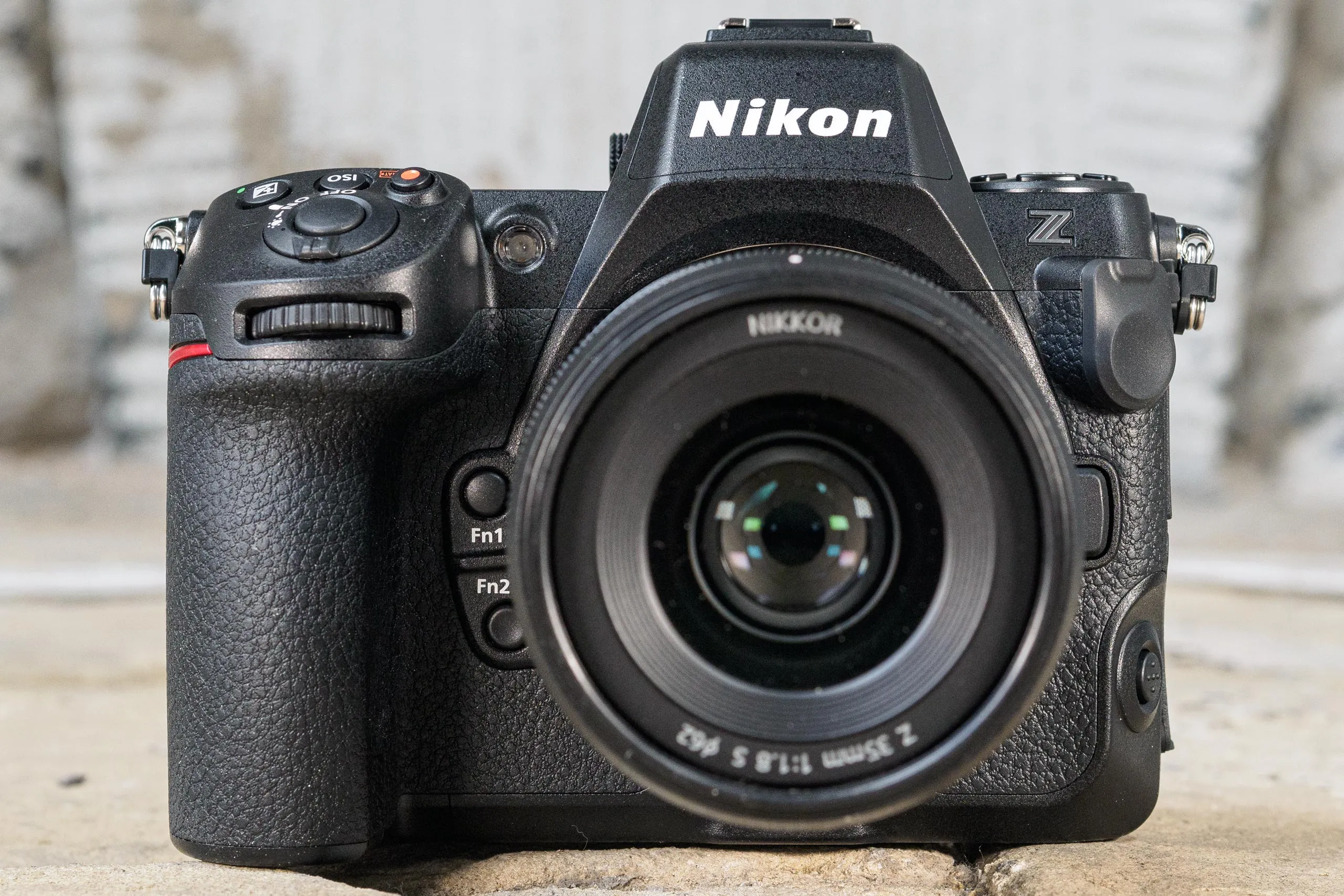
Nikon Z8
Amateur Photographer verdict
The Z8 is by all accounts a pro powerhouse ready to tackle any photographic task with ease.
- Exceptional subject-detection autofocus
- Smaller than most pro cameras
- Excellent raw image quality
- Shorter battery life than Z9
- Still not what you’d call cheap
At a glance:
- Mirrorless
- 45.7MP full-frame stacked-CMOS sensor
- Nikon Z lens mount
- 493-point AF with subject detection
- 20fps continuous shooting
- Price: $3,700 / £3,790
The Nikon Z8 is arguably a spiritual successor to two cameras at the same time. In form and function, it’s very similar to Nikon’s mirrorless flagship, the Nikon Z9, with essentially the same specifications in a smaller, cheaper body. However, Nikon likes to think of it as a ‘true successor’ to the Nikon D850, a DSLR that was (and still is) much loved by enthusiast and professional wildlife photographers for its ability to nail tough shots in tougher conditions.
Big shoes to fill, but the Nikon Z8 is up for the challenge. Just like the Z9, this is a camera that’s good at basically everything, with a whip-fast autofocus system that can pick out and lock onto specific subjects with its AI-powered algorithms – including wildlife. As we found in our review, your hit rate just goes through the roof with this thing. Image quality is of course first-rate, and the super-fast burst modes means you’ll never miss the moment.
Of course, you don’t get a smaller camera body without cutting something. The Nikon Z8 has a shorter-lasting battery than the Z9, its EN-EL15C battery rated for 340 shots per charge, as opposed to the 740 on the Z9. You’ll definitely want to pack spares for a day’s shoot on a wildlife location, but also remember the camera can be powered via USB-C.
Read our in-depth Nikon Z8 review