A lightweight, beginner-friendly MFT camera, with a retro design that’s simply a joy to use. Plus, it’s available for a budget price.
Pros
Huge lens catalogue
Excellent JPEG output with lovely colours
Stylish looks
Cons
Smaller sensor
RAW image quality inferior to APS-C
Scroll to see more →
Specifications
Olympus OM-D E-M10 Mark IV
Sensor
20MP Micro Four Thirds sensor
Continuous shooting
15 fps
ISO
80-25,600 (extended)
Image stabilisation
4.5 stops
Viewfinder
0.39in, 2.36m-dot OLED EVF
Screen
3.0in, 1.04m-dot, tilting LCD touchscreen
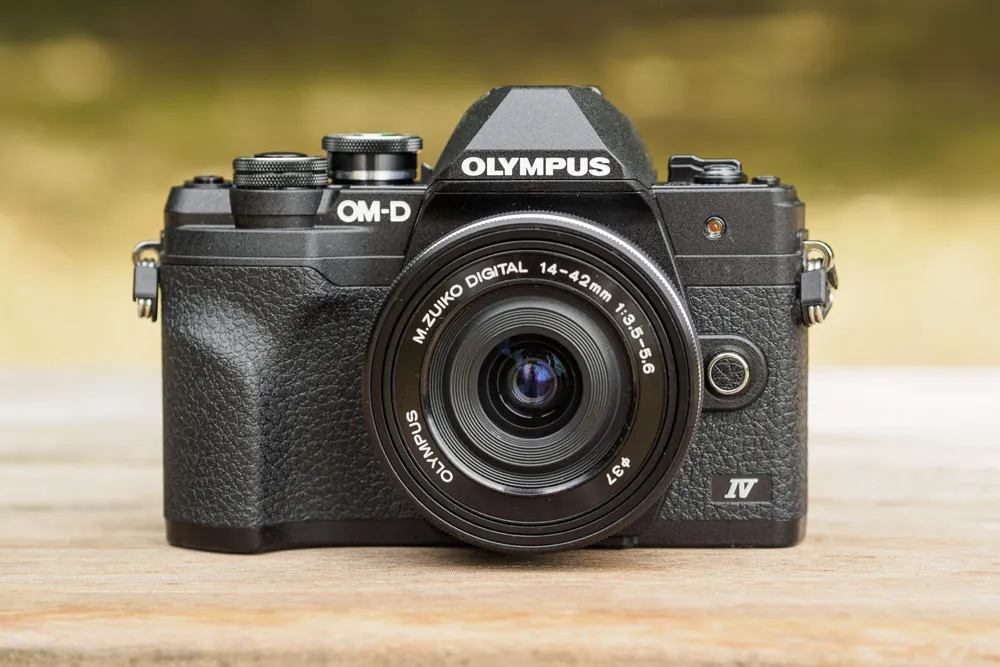
This tidy and tiny Micro Four Thirds camera is a fantastic beginner’s way in to mirrorless cameras, and comes at a bargain price, too. The Olympus OM-D E-M10 Mark IV is absolutely bursting with cool photography features, including a touchscreen interface, stylish Art Filters, and sophisticated Live Composite for long exposures. When we reviewed the camera, we almost ran out of time to try out all its features, there are so many to play with.
Using the Micro Four Thirds system means you’re working with a smaller sensor than APS-C cameras like the ones from Fujifilm. However, it does give you access to a huge catalogue of Micro Four Thirds lenses, those made by both Olympus and Panasonic (and others), and also the 2x crop factor gives you a good deal of extra reach, effectively transforming a 50mm lens into a 100mm one. One of my personal favourites is the affordable Olympus 45mm f/1.8 lens, as it makes an excellent lens for portraits with blurred backgrounds.
Stylish and likeable, the Olympus OM-D E-M10 Mark IV is an ideal mirrorless camera for beginner photographers on a budget, and those who just want a lovely little camera to use.
A successor to the legendary Nikon D850 DSLR, and a slimmed-down version of the flagship mirrorless Z9, the Nikon Z8 is a perfectly pitched package for wildlife photographers.
Pros
Superb for continuous autofocus
Superb autofocusing / subject detection
Robust build quality
Cons
Still fairly hefty
Cheaper than Z9, but still not cheap
Scroll to see more →
Specifications
Nikon Z8
Sensor
45.7MP stacked backside illuminated (BSI) sensor
Continuous shooting
20 fps RAW
ISO
32-102,400 (extended)
Image stabilisation
6 stops with Z VR lenses
Viewfinder
0.5in, 3.69m-dot OLED EVF
Screen
3.2in, 2.1m-dot tilting LCD touchscreen
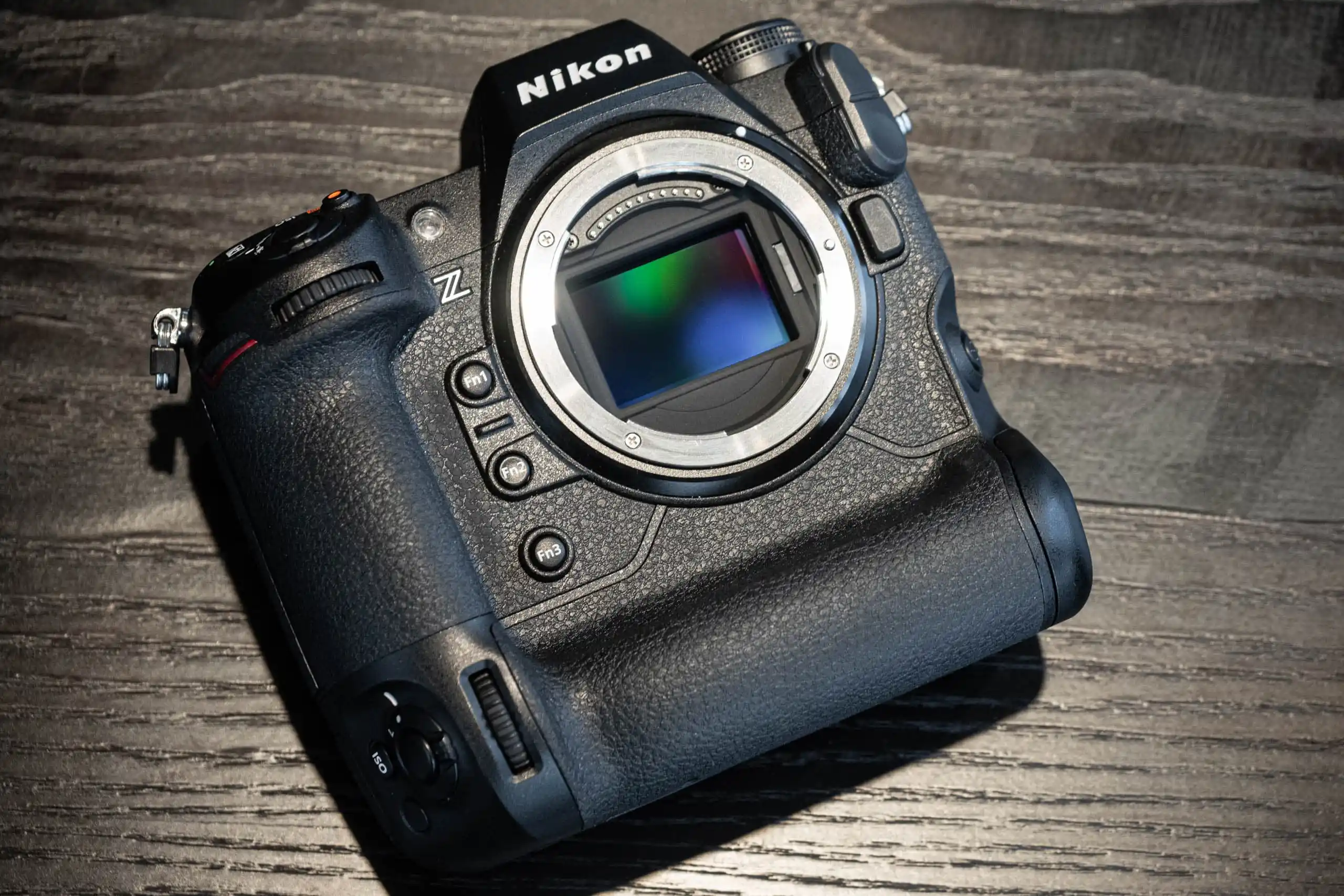
A slimmed-down cousin to the professional flagship Nikon Z9, the Nikon Z8 is right up there with the best cameras you can buy for wildlife photography. Priced a little more favourably for enthusiasts, the Nikon Z8 is still an expensive camera to be sure (look out for offers!), but is worth it for those who can afford it. Super-fast burst-shooting speeds can be achieved even when shooting at the full-resolution of the 45.7MP sensor, in RAW format, which is going to help when you want to capture wildlife in crisp detail at speed. You’ll need to invest in expensive CFexpress cards to truly benefit from these dizzying speeds, the Z8 is unlike the Z9 in that it least gives you the option to use a cheaper SD card if you prefer.
The camera’s build feels rugged in the hand, perfectly suited to those long days out in the field tracking elusive wildlife subjects, and the control layout is intuitively designed.
Naturally, the fast burst mode wouldn’t matter if the Z8 didn’t have everything else it needed to nail the shot, but its AI-powered subject-detect autofocus is essentially cheat mode for wildlife photography. The tracking on the AF is also eerily good, being able to identify the most important subject in any frame and follow it around no matter where it moves. Image quality is also absolutely gorgeous in both JPEG and RAW. As we found in our review, the Z8 delivers brilliant detail in punchy images all the way up to ISO 25,600.
The Nikon Z8 is not the only camera well-suited to nature, however. Be sure to check our guide to the best cameras for wildlife photography for more excellent suggestions. If you want a similar camera to the Z9 without the sky-high price tag, try the Nikon Z5 II, or the APS-C Nikon Z50
Best camera for portrait photography: Canon EOS R5 Mark ll
The EOS R5 Mark II feels great in your hand, with a secure grip and well-placed controls. Credit: Amateur Photographer
Amateur Photographer verdict
The Canon EOS R5 Mark II could be the best professional high-resolution, high-speed all-rounder on the market. The addition of eye control focus further elevates it above its rivals.
The Canon EOS R5 Mark II succeeds the four-year-old Canon EOS R5, with a huge array of updates and improvements. Launched in 2024 alongside the sports-focused Canon EOS R1, it’s designed to be a highly capable professional all-rounder, that can handle almost any task for either photography or video. It sports a 45MP sensor, can shoot at up to 30 frames per second, and record 8K video at 60fps.
Like the Canon EOS R1, it is based around a concept that Canon calls ‘Accelerated Capture’. This means that they combine a stacked, backside-illuminated sensor with a DIGIC X processor that’s boosted by a new DIGIC Accelerator processor. This enables new autofocus features, faster video shooting, and generally more responsive operation.
Other major updates include Canon’s unique Eye Control Focus technology, as previously seen on the Canon EOS R3, and a built-in heat-dissipation pathway. The latter promises to fix the original EOS R5’s Achilles’ heel of overheating, which limited it to short video recording times at high resolution, and long recovery times.
Check what lenses are available for the Canon EOS R5 Mark ll in our guide to the best Canon RF mount lenses
This is an utterly remarkable camera that you almost certainly do not need to own. The Canon EOS R1 is an astounding sports camera. It’s capable of shooting 40fps bursts for up to 300 frames, and it has a hyper-intelligent autofocus system equipped with Action Priority, meaning it can lock onto the area of the frame where the action is taking place. It’s built like a tank, with one of the best electronic viewfinders I’ve ever seen.
The EOS R1 provides a huge array of controls, giving you multiple means of accomplishing pretty much any adjustment or setting you need to make. It’s got highly effective in-body stabilisation, rated up to 8.5 stops, and it also boasts Canon’s unique and powerful Eye Control focus, which sets the focus point by determining what you’re looking at in the high resolution viewfinder.
Its relatively low-resolution 24MP sensor may sound disappointing when compared to some of the high resolution offerings here, but it helps to keep file sizes down and is more than enough for printing at fairly large sizes. Pair it with one of the best Canon RF lenses for sports and action photography and you’ve got one hell of a setup on your hands.
I could go on – and indeed, in our full review we lovingly detailed everything that’s great about this astonishing camera. However, with a price exceeding the $6,000 mark, the Canon EOS R1 is almost certainly beyond the budget of pretty much everyone reading this – and honestly beyond the needs. Unless you are photographing world-class sports events for top publications, you simply don’t need the level of power this camera is offering.
Sony FE 28-70mm F2 GM on the Sony Alpha A7R V. Credit: Andy Westlake
Amateur Photographer verdict
We love the Sony Alpha A7R V for its all round prowess. Its sensational viewfinder, superb screen design, and multitude of interface improvements are very impressive
Pros
Super high resolution sensor
Tilting screen and superb viewfinder
Reliable subject detection autofocus
Cons
Handling is a little awkward at times
Not an all-rounder
Scroll to see more →
Specifications
Sony A7R V
Sensor
61MP full-frame back-illuminated (BSI) Exmor R CMOS sensor
Continuous shooting
10 fps (compressed raw)
ISO
50-102,400 (extended)
Image stabilisation
8.0 stops
Viewfinder
0.64in, 9.44m-dot EVF
Screen
3.2in, 2.1m-dot 4-way articulated LCD touchscreen
This superb high-resolution camera is a fantastic choice for landscape. A key reason for this is its very high-resolution 61 megapixel sensor – the highest you’ll find on our list, and the highest you’ll find outside of medium format cameras. That super high resolution sensor is ideal for landscapes, and, being packed into the relatively small body of the Sony A7 series means you can carry it around to reach all sorts of photogenic locations without troubling your back too much (depending on the lens you choose).
Although you may want to use a tripod for landscapes, if you want to keep it light, you’ll also benefit from 5-axis image stabilisation. If you do pack that tripod, making use of Pixel-Shift Multi Shooting to create an even higher resolution composite image is likely to be tempting to serious landscape photographers.
If you like to photograph other subjects, as well as landscapes, the A7R V isn’t well suited to everything. While it does well at other static subjects – such as portraits and macro – with 10fps shooting, action and wildlife shooters would do better to look elsewhere. The updated 3.2inch screen with 2.1m dots, and super high-resolution electronic viewfinder, with 9.44m dots make this stand out when checking for detail.
There are other cameras which I’d recommend for this genre – make sure to take a look at our best camera for landscape photography guide to find out more.
Best camera for macro photography: OM System OM-1 Mark II
OM System OM-1 Mark II. Photo Andy Westlake
Amateur Photographer verdict
Pushing the envelope still further, the OM System OM-1 Mark II comes loaded with features that make it great for landscapes and astrophotography in particular.
Pros
Night Vision and Starry Sky AF
Digital ND grad filter
IP53 weatherproofing
Cons
Smaller sensor than most
Fairly minor upgrade from OM-1
Scroll to see more →
Specifications
OM System OM-1 Mark II
Sensor
20MP stacked MFT sensor
Continuous shooting
50fps with C-AF, 120fps fixed AF with extended buffer
ISO
80-102,400 (extended)
Image stabilisation
8.5 stops
Viewfinder
0.5in, 5.76m-dot, OLED EVF
Screen
3.0in, 1.62m-dot vari-angle LCD touchscreeen
This Micro Four Thirds mirrorless model offers a number of clever computational features that are unique among its peers, such as a digital Live Grad ND filter that’s fully adjustable makes it easy to control bright skies for balanced exposures when shooting outdoors. The autofocus system has also been upgraded compared to the previous OM-1, and a deeper buffer allows you to keep burst-shooting for longer – at the maximum rate of 120fps, the OM-1 Mark II can capture up to 213 RAWs.
While it’s not a huge departure from the previous model (which is still available, and cheaper), the OM-1 Mark II makes a lot of clever additions for specialised photography. Macro shooters can benefit from in-camera focus stacking and bracketing, and with a range of macro lenses to choose from, there’s a reason why this camera is so popular with macro photographers. The greater depth of field offered by Micro Four Thirds is also handy, as macro shooters tend to want all the depth of field they can get, in order to get as much of the subject in focus as possible!
You also gain access to a wide range of Micro Four Thirds lenses with this camera, making it a great choice for those looking for compact or budget lenses.
A slim, take-everywhere compact camera that’s addictively fun to use for street photography, the Ricoh GR IV contends with the mighty Fujifilm X100VI by being significantly more affordable.
Pros
True pocket-friendly dimensions
Excellent image quality
Fast start-up time
Discreet design
Cons
Fixed LCD and no viewfinder
Lower resolution than rivals
Micro SD card storage
Scroll to see more →
Specifications
Ricoh GR IV
Lens
28mm equivalent f/2.8 lens
Sensor
25.7MP APS-C BSI-CMOS sensor
Continuous shooting
4fps
ISO
100-204,800 (standard)
Image stabilisation
6 stops
Viewfinder
N/A
Screen
3.0in, 1.04m-dots fixed LCD touchscreen
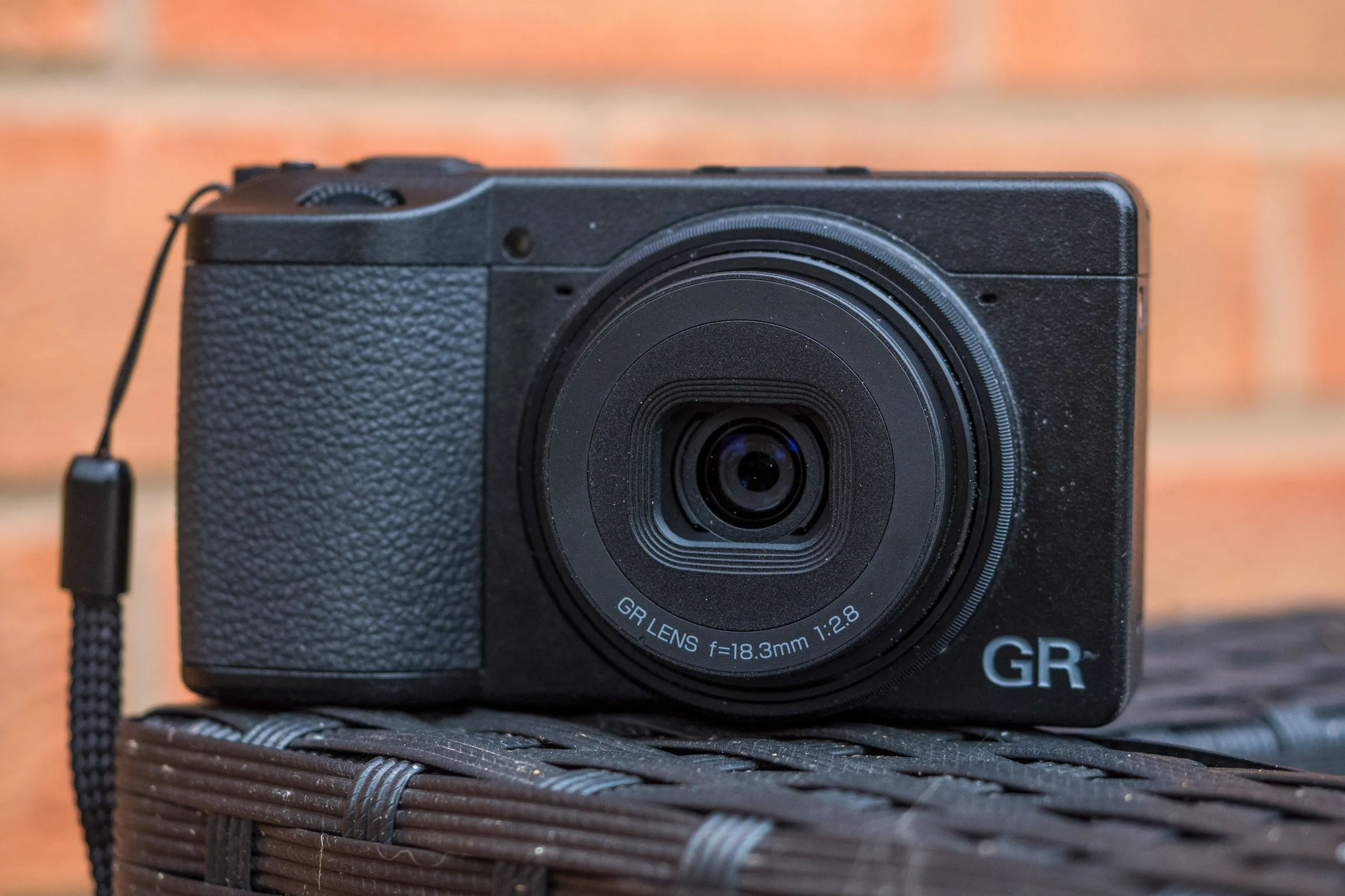
There’s been one camera that has dominated the imaginations of street photographers over the past few years – the Fujifilm X100VI. However, I reckon that the new Ricoh GR IV is going to be a better alternative for a lot of people. Both of these are lightweight, street-shooting compacts, pairing fixed prime lenses with APS-C sensors. However, the Ricoh GR IV is cheaper than the X100VI, with a starting RRP of $1,499 / £1,199 compared to $1,599 / £1,599, and continued stock shortages mean it may well also prove to be easier to get hold of.
The main thing that struck our reviewer, Matty Graham on testing out the GR IV is that it’s just an incredibly easy camera to pick up and use. Weighing just 262g, it’s light enough to slip in and out of a pocket and is designed expressly for one-handed shooting, with a well-designed grip that doesn’t protrude too much, and controls oriented towards the right-hand side. The new battery lasts well and charges up very quickly, making it practical to give the camera little top-ups between shooting sessions.
In terms of its image quality, the Ricoh GR IV impresses. If you want to produce JPEGs straight out of camera, they’ll look nice and natural with authentic colours, and if you prefer to dig into DNG raw files, you’ll have plenty of tonal data to play with. There’s also a dedicated Ricoh GR IV Monochrome version for black-and-white fans. Sharpness of the fixed 28mm lens holds up well, even when you bang the aperture wide open to f/2.8, and it’s likely many users will prefer to keep the aperture at this setting for shallow depth of field.
The Ricoh GR IV really is a ‘less is more’ kind of camera – one that gets out of the way and helps you focus on the fun bit of image-making. As such, it’s a brilliant pick for street photography.
Best camera for wedding photography: Canon EOS R6 Mark III
Just like its predecessors, the EOS R6 III handles very nicely. Image credit: Amateur Photographer
Amateur Photographer verdict
Canon’s best all-rounder, with 32.5MP resolution, excellent autofocus and fast shooting, is right at the top of its class. A camera that produces terrific images in just about any situation
Pros
32.5MP sensor gives increased detail and flexibility
Superb autofocus
Impressive image quality
Cons
RF mount lacks third-party AF lenses
Doesn’t work with older LP-E6-type batteries
Scroll to see more →
Specifications
Canon EOS R6 Mark III
Sensor
32.5MP full-frame sensor
Continuous shooting
40 fps
ISO
50-102,400 (extended)
Image stabilisation
8.5 stops
Viewfinder
0.5in, 3.69m-dot OLED EVF
Screen
3.0in, 1.62m-dot vari-angle LCD touchscreen
A good wedding camera needs to do a bit of everything, and do it well enough to dazzle some of the most demanding clients out there. Something that perfectly fits that bill is the Canon EOS R6 III, a full-frame all-rounder that’s more affordable than the headline-grabber EOS R3 or R5. The EOS R6 Mark III gets a substantial resolution bump from the original EOS R6 (32.5MP rather than the slightly stingy 20MP), and also benefits from subject-detection autofocus.
Capable of shooting at 12fps with the mechanical shutter or up to 40fps with the electronic, in full-resolution RAW, the EOS R6 Mark III is a tough camera to miss with. The deep buffer can go to 330 JPEG or 280 CRAW files in a single burst, too. Image stabilisation is rated at up to 8.5 stops of effective compensation, which is handy when light starts to get low.
It also received a major overhaul from the previous 4K resolution, and it now records raw video internally in 7K 60fps, and 30p in Open Gate mode that utilises the full sensor. There’s also 4K 120p, Full HD 180p available for slow motion footage.
Its ability to shoot, well, anything, means the EOS R6 Mark III won’t disappoint. It’s on the expensive side for an enthusiast’s camera, but at the same time, it’s difficult to think of another at this price point that’s this good of an all-rounder. Build up a solid set of RF lenses and you’ll get a setup for every situation.
Fujifilm X-E5 with 23mm f/2.8 lens. Image credit: Andy Westlake
Amateur Photographer verdict
Our favourite camera for travel, the Fujifilm X-E5 balances slim portability and a joyful shooting experience with exemplary image quality
Pros
Great JPEG output – less time editing!
Small body, but with enthusiast-friendly design
Custom Film Simulation recipes
Engaging analogue controls
Cons
Fairly small viewfinder
No weather-sealing
Scroll to see more →
Specifications
Fujifilm X-E5
Sensor
40.2MP APS-C X-Trans sensor
Continuous shooting
Up to 20fps with electronic shutter and 1.29x crop
ISO
64-51,200 (extended)
Image stabilisation
7 stops
Viewfinder
0.39in, 2.36m-dot rangefinder style EVF
Screen
3.0in, 1.04m-dot tilting touchscreen
The Fujifilm X-E5 is the best camera for serious travel photography. Some might prefer the ease and convenience of a compact, but I think if you’re serious about getting fantastic travel images, you need to go mirrorless and open yourself up to the flexibility of interchangeable lenses. The X-E5 is the perfect way to do it, blending the slimline charms of the X100VI with the ability to take full advantage of the fantastic X-mount lens selection.
It also has what I think is one of the most important and perhaps most under-discussed qualities of a good travel photography camera: it’s just enjoyable to shoot with. It’s a pleasing, aesthetic object, and it has those customary Fujifilm analogue-style controls, with physical buttons and dials that are so much more tactile and immediate than a touchscreen. There’s no weather-sealing, but it feels premium in the hand, and the grip has been intelligently thought out.
Where the X-E5 also shines is in one of Fujifilm’s well-known strengths: its JPEG output. When you’re travelling, you likely have neither the inclination nor the capacity to edit raw files, but you may want to share shots before getting home and processing them. Thanks to Fujifilm’s peerless colour science and fantastically addictive Film Simulation modes, the X-E5 is one of the best cameras in the business for producing punchy, shareable shots at the moment of capture.
While the X-E5 is our top travel pick, we have a full list of the best travel cameras with options for different needs and budgets.
While the Olympus (or OM-System) Tough TG-7 doesn’t quite fit the definition of an action camera, it performs many of the same functions and is a compelling alternative for anyone who prefers the idea of a more traditional camera format. The Tough TG-7 is a tough compact, meaning it can take an absolute pounding and a soaking – there are a few of these on the market, but the TG-7 is generally regarded as the best.
As well as a more comfortable, grippable form factor, the TG-7 has one key advantage over traditional action cameras – a 25-100mm f/2-4.9 equivalent zoom lens, giving you much more compositional flexibility and an ability to get in close to distant subjects. It’s also got a nice big 3-inch 1.04m-dot LCD screen, which provides a much more pleasant composing experience than any of the small screens on traditional action cameras. It allows you to capture stills in RAW format, and this is worth doing for the best results (with additional time spent on post-processing, of course).
Of course, the TG-7 is not nearly as wearable as a GoPro, DJI or Insta360 camera, and isn’t as good for capturing POV footage. There is some built-in stabilisation, though it’s not on the level of GoPro’s or DJI’s action cameras.
When you’re picking the best camera for photography, there are a number of key specifications and features worth honing in on. I would advise the main things to keep in mind when making your selection are as follows:
Camera type
Resolution & sensor size
Autofocus
Image stabilisation
Frame rate (and speed)
Handling
Screen and viewfinder
Card slots
Lens range
What are the main camera types?
There are three main types of digital cameras – mirrorless, DSLRs and compacts. Yes, there are other types with more specialist applications, such as action cameras, 360-degree cameras and medium format cameras; however, the majority of people who are looking for a camera for photography or videography are going to be choosing between one of the three main types. Let’s take a quick look.
Compact cameras
A term that doesn’t have anything to do with a camera’s size, compact cameras (or compacts) are a type of camera with a fixed lens that cannot be changed. This has natural advantages in terms of convenience, simplicity, ease of use and affordability. You pay the price on the box, and you get a complete camera-and-lens combo that has everything you need to start shooting.
The downside is, of course, versatility. Whatever lens the compact camera has is the lens you’re stuck with – if it doesn’t zoom far enough, or open up to a wide enough aperture for the kind of work you want to do, then there’s not much you can do short of buying another camera.
Then there’s also the fact that the convenience factor of compacts has been lessened by the fact that everyone carries a portable compact camera in their pocket these days (obligatory link to the best smartphones for photography). As such, the sun has pretty much set on the days of the cheap compact, and now the compact cameras that are still popular tend to be premium ones that offer a demonstrable image-quality advantage over a smartphone. The Fujifilm X100VI, featured above, is probably the most prominent example.
Mirrorless cameras
Mirrorless cameras used to be thought of as a slim and portable alternative to DSLRs (see below). However, they have since risen to become the dominant format of interchangeable-lens camera, with almost all manufacturers prioritising development of their mirrorless lines. Most of the cameras included in this guide are mirrorless, and that’s not something that’s going to change anytime soon.
Nikon’s pro full-frame mirrorless Z9 is based around a new 45.7MP stacked CMOS sensor
So, what is a mirrorless camera? The clue’s in the name – where a DSLR contains an internal mirror mechanism that allows it to field an optical viewfinder, a mirrorless camera does not. This in theory allows them to be made smaller and lighter. Instead of the optical viewfinder, mirrorless cameras generally offer an electronic viewfinder or EVF. This used to be viewed as a negative, as EVFs were laggy, low-quality and unpleasant to use. However, they have improved massively, to the point where electronic viewfinders offering 100% coverage and a completely accurate preview of what the camera is going to capture.
The top-end professional cameras released in recent years are exclusively mirrorless, and many manufacturers are also filling out their lines with beginner-friendly, mid-range and enthusiast options. If you want the latest imaging tech, mirrorless is the place to be.
Should I buy a DSLR camera?
Once considered an essential purchase for anyone who wanted to be thought of as a serious photography, these days, DSLRs are something of a retro choice. However, there is still a contingent of photographers who doggedly prefer DSLRs, citing things like the immediacy of the optical viewfinder or the satisfyingly chunky handling. DSLRs tend to be larger than mirrorless cameras (though there’s plenty of overlap), and professional models in particular tend to be built very tough. The Nikon D850, one of the most popular and well-regarded DSLRs of all time, is an absolute tank.
If you want to get started with an interchangeable-lens system camera, there’s a good case to be made for DSLRs as a more cost-effective choice. They still take brilliant photos, they’re often plentifully available on the second-hand market, and the fact that they’ve been on the market so long means that they have built up big rosters of lenses, including older and more affordable options.
Check out our guide to DSLR vs mirrorless if you want to learn more about the differences, and we also have a dedicated guide to the best DSLRs.
Resolution and sensor size
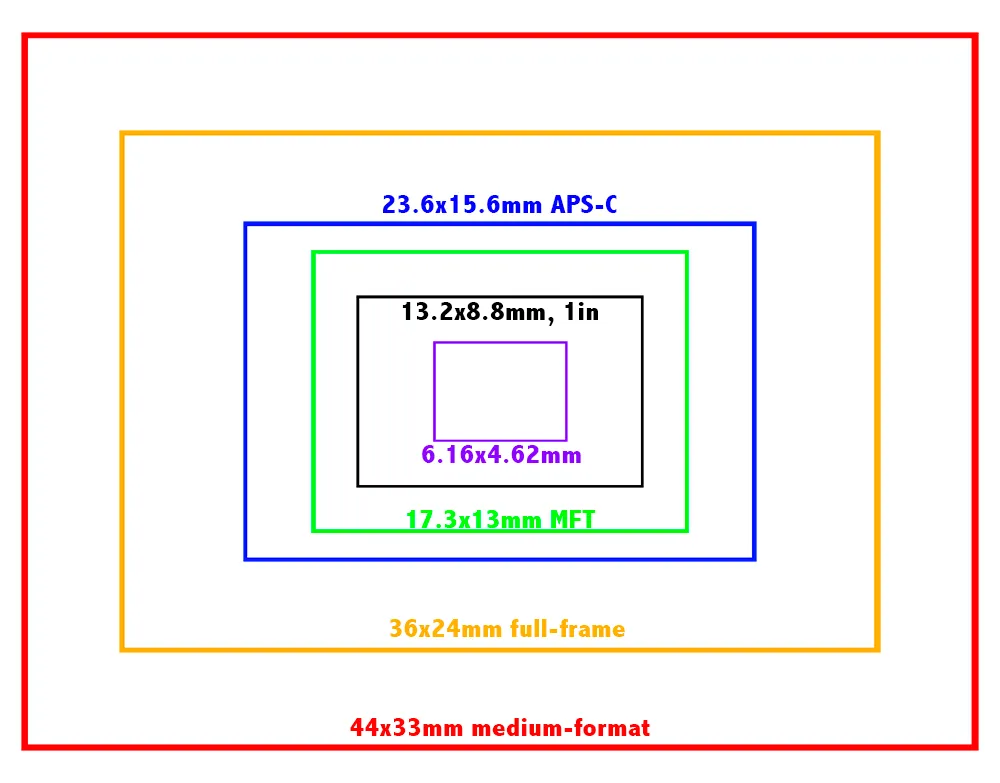
There’s a variety of sensor sizes on the market, from 1-inch type up to medium format. As a general rule, image quality is better from larger sensors, but they make for a larger and bulkier system to carry around; not to mention a more expensive one. The lenses tend to be bigger and more expensive, too. Therefore, consider the weight of kit that you will carry against its potential image quality.
A compromise on both sides of the debate lands you with a middle-sized sensor (APS-C or Full-Frame), while ultimate portability will leave you with the smallest (one-inch or 1/2.3-inch) and ultimate image quality leads to medium format (or even larger). Resolution is also a key concern – if you’re intending to make big prints, or photograph something with lots of fine detail, extra pixels make more sense. If you’re keen to keep file sizes down, shoot lots of action or in low light, a lower pixel count might be a better option.
Autofocus
Some of the current mirrorless flagship models have incredibly impressive autofocus systems. But they often come at a high price, being targeted mainly at working professionals who need high-speed and accuracy at all times. Most of us arguably don’t need that kind of power, and you especially don’t if you’re photographing mainly still/static subjects such as landscapes, macro or even portraits. Have a think about how advanced an autofocus system you need (and are willing to pay for), and this can be particularly important if your passion is sports, action or wildlife such as birds. If it’s more static subjects like landscapes or travel photography, you probably don’t need the latest AI subject recognition autofocus.
Image stabilisation (or IBIS)
This is another specification that matters hugely to some people, and less so for others. If you’re happy to cart around a tripod with you, or you’re only ever shooting at fast shutter speeds in bright daylight, you’ll be less concerned. However, if you’re into night photography, low-light photography, shooting slowly handheld, or using long lenses, for example, then you’ll want to pay closer attention to IS specs, and look out for In-Body Image Stabilisation (IBIS).
New Sony models have 5-axis in body image stabilisation. Image: Sony
Frame rate
Again, this is something that, for lots of photographers, is a bit of a redundant specification. If you’re shooting static objects, being able to shoot at 20fps is an expensive specification that might barely – or never – get used. Of course, if you’re shooting wildlife, action, sports and similar high-speed action, you might want a fast frame rate and use high-speed continuous shooting every day.
Handling
This is an important one, but it’s not a straightforward one to quantify. Knowing how a camera feels and operates in your hand is ideal – if not necessarily always possible in advance in a world of online shopping. Pay careful attention to camera reviews that tell you how easy (or otherwise) the camera is to operate, hold and navigate around if you’re not able to handle it yourself before purchase. The weight of the camera and lens(es) can play an important factor in how easy it is to take with you, and how much you’ll enjoy using the camera.
Screen & viewfinder
All of the cameras on our list here are mirrorless, and therefore feature electronic viewfinders (EVFs). Pay close attention to the resolution of electronic viewfinders – higher is better, but very high-resolution viewfinders tend to only be found on the most expensive cameras. If you’re happier with optical viewfinders, then a DSLR might well be the camera for you – but you lose a lot of the benefits of mirrorless.
A tilting touchscreen can be useful for each of use. Image: Andy Westlake
As for the screen, things to look out for are resolution, size, and whether it articulates or tilts. Having some movement is useful for composing from awkward angles, with articulating being the most flexible, but tilting perhaps being the quickest for reacting to certain scenarios, such as street shooting.
Card slots
Having more than one card slot is almost an essential for professional photographers who simply can’t afford to run the risk of not having a backup (especially for special occasions, such as weddings). For most other photographers, it’s a nice bonus to have, but perhaps not essential. That said, if you’re travelling and not able to easily back up your cards, they can also prove useful.
Lens range
If you’re looking at interchangeable lens cameras, it’s wise to pay attention to the accompanying lens ranges that go with them. Newer camera systems might have limited lenses, or they might not yet have specific or niche optics that you’re particularly keen on. Take a look at typical prices too, as again, newer systems might be pricier compared to longer, more-established systems.
Frequently asked questions (FAQ)
Do professionals use DSLRs or mirrorless cameras?
While DSLRs were once the kings of the photographic world, these days, most professional photographers use mirrorless cameras, as they provide superior speeds and resolutions, so many professionals are jumping ship. Most major manufacturers have also firmly moved their development over to their mirrorless ranges, so pretty much any professional camera or lens that comes out nowadays is going to be mirrorless.
Are DSLRs dead?
There are still many who prefer DSLRs for their long battery life and ability to field an optical viewfinder. It’s quite common for professionals who’ve upgraded to mirrorless to still keep their DSLRs on hand, allowing them to still take advantage of features or lenses they like from the older system. Overall, professional photographers are shifting toward mirrorless, and this is only going to increase over time.
What is the best camera for Instagram?
All the cameras listed in this guide will produce stunning images for Instagram. It’s also worth looking at your favourite photographers’ accounts to see what they shoot with. Although photo editing has a huge impact on how images appear on Instagram too. Some firm favourites are the Fujifilm X100VI and the Fujifilm X-E5 which is like a more advanced X100VI, letting you change lenses.
What is the best camera for vlogging?
If you’re primary aim is to produce video content, then you needs may be different again. If video is your main aim, have a look at our guide to the best cameras for video and vlogging.
How we test cameras
Choosing the best camera for photography is a very subjective question and will depend on the specific genre of photography you are into. But for each camera test we take hundreds of photos in a wide variety of conditions to assess their control layout, ergonomics and handling, as well as screen and viewfinder size, response time and brightness.
Each genre demands a unique set of features and performance standards for a camera to excel within it. For wildlife and sports photography, we focus on autofocus performance, continuous subject tracking, high-speed burst shooting, and AI-assisted tracking features. On the other hand for landscape and travel photography, you need cameras that excel in image quality, low-light performance, but also stay relatively portable.
We also assess the image stabilisation system and test how well it supports hand-held and low-light shooting. Last but by no means least, we critically evaluate image quality, in both JPEG and raw, including resolution, high-ISO noise, and dynamic range.
Finally, we take all these factors into account along with lens compatibility and overall handling when giving our final conclusion and scores. You’ll find a full breakdown of how each camera performs in our full reviews.
Latest updates
April 2026: Frequently asked questions and specifications table formats updated, prices checked. No new cameras added.
February 2026: Added additional information in the FAQ section, specifically answering the question as to what is the best camera for Instagram. Canon EOS R6 II updated to R6 III.
January 2026: Added the Nikon Z5II as the best full-frame camera for photographers, with the Fujifilm X-T5 retaining honourable second-place as the best APS-C option. Removed some cameras deemed no longer relevant or necessary, including the DJI Osmo Action 5, the Nikon Coolpix P1100 and the Nikon Z7II.
November 2025: Checked all prices. Clarified guide, highlighting key features of each camera, whilst making the guide more concise so you can find the right camera for you more quickly. Older Sony A7R IV updated to newer model, the Sony A7R V.
October 2025: Added the Ricoh GR IV as the best camera for street photography, replacing the brilliant but more expensive Fujifilm X100VI.
Amy is a highly experienced photography and technology journalist who has been working on AP since 2018, having been working in the industry since 2009. She is a graduate of the magazine journalism course at Cardiff University and has written for a wide range of publications and websites. As Features Editor, she is responsible for commissioning an eclectic mix of features connected to general photography, along with interviews. She is also a very experienced reviewer of cameras and associated technology, with her reviews featured on multiple sites including TechRadar, Digital Camera World, Trusted Reviews, ePhotozine, Stuff, Expert Reviews, T3, Photography Blog and more. She is also an expert on smartphone photography and smartphones generally.