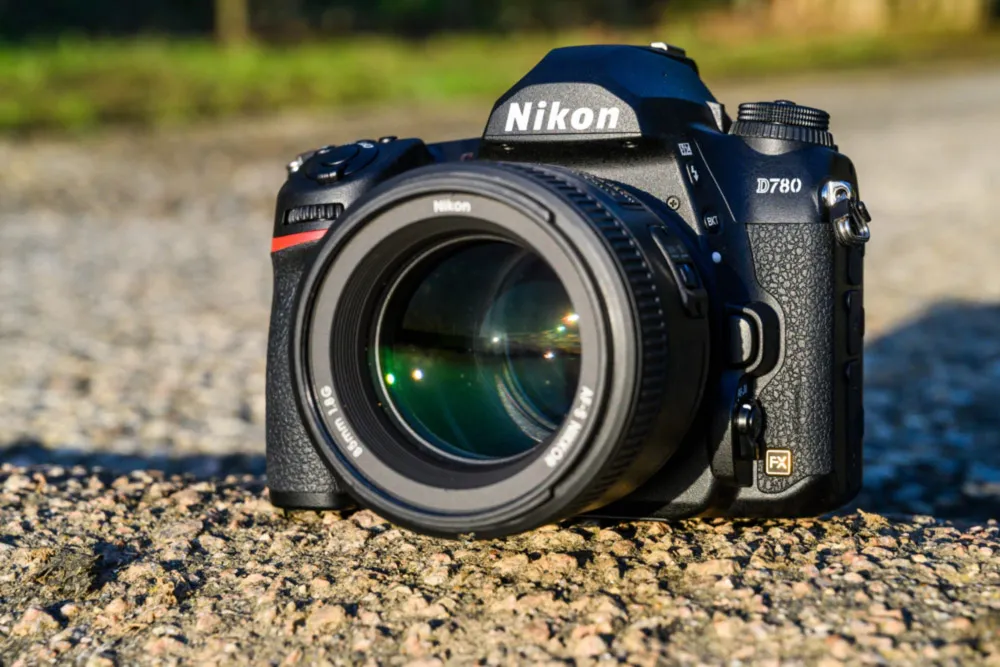
Launched in 2020, the Nikon D780 blended some of the best mirrorless technology with good-old DSLR handling. It took the sensor of the mirrorless Z6, and placed it in a rugged body well equipped to withstand the rigours of outdoor use.
The sensor has a low-pass filter to eliminate moiré and backside-illuminated structure, to maximise its light gathering capacity across its ISO range. And also 273 on-chip phase detection pixels to enhance its focusing performance in Live View. Again, this is said to be crossover technology from the Nikon mirrorless camera line-up.
The D780 also deploys Nikon’s EXPEED 6 image processor which, amongst other things, helps to shoot at 7fps via the viewfinder. A shutter speed range of 30-1/8000sec should cover nearly all subjects (arguably bar speeding bullets). The 180K-pixel RGB sensor inherited from the D850 helps to feed info to the ASF system for accurate and precise tracking of subjects.
For DSLR diehards the D780 offers a superb array of shooting options for capturing all manner of subjects. When AP tested the D780 we gave it a Test Bench GOLD award and said in our original review that it was, ‘a sensational camera that’s built to a professional standard and is a sheer delight to use’… it doesn’t get much better than that!
The Nikon D6 is a rugged, hard-wearing camera, suited to professionals. Photo: Michael Topham / AP
Amateur Photographer verdict
Designed for professional photographers who need the utmost speed and reliability
Pros
Does really well in low light
Fast shooting and reliable autofocus
Deep shot buffer
Cons
Still very expensive
Much lower res than Z9
At a glance
Sensor
20.8MP full-frame
Lens mount
Nikon F mount
Autofocus
105-point system
Continuous shooting
Up to 14fps
Video
4K UHD / 30fps, full HD / 60fps
ISO range
100-102,400 extendable to 3,280,000
Screen
touchscreen LCD
GPS
Built-in
New price: $6,497 / £6,799 body-only
Used price: $3,400-$4,000 / £2,700 body-only
Nikon’s flagship pro DSLR, and very likely its last, is the wallet-busting D6. A serious price to match the serious specs packed into it. The company describes the D6 as, ‘Nikon’s most powerful AF system yet’ and says it ‘will deliver incredible shots of defining moments… without fail.’
Professional photographers – especially those in news, documentary and sports – want reliable equipment that they can trust to get the shot every time. To secure this, the D6 has a new AF engine with 105 (all cross-type) AF points, Group-Area AF with more custom settings for subject tracking and an eye focusing priority setting in Auto-Area AF or 3D tracking. Later pro mirrorless cameras like the Nikon Z9 built on this with futuristic AI-powered Subject-Detection autofocus. The D6’s system may not have these latest bells and whistles, but is very impressive nonetheless.
Powerful ISO performance is another key selling point. The 20.8 MP full-frame sensor works with the Expeed 6 processor to offer ISO 100-102,400 – this is impressive enough, but can be expanded to an astronomical figure of 3,280,000. Other features include fast in-camera Wi-Fi image transfer (15% faster than the D5), Bluetooth connections, higher resolution displays for quick and easy viewing and a robust body.
The Nikon D610 is a full-frame DSLR that these days can be picked up very cheaply.
Amateur Photographer verdict
A well-made, well-thought-out and high-performing full frame DSLR at a very affordable price point
Pros
Tremendous value on the used market
Solid image quality
Lightweight build and sensible controls
Cons
Dated autofocus system
Focusing very sluggish in Live View
At a glance:
Sensor
24.3MP FX format
Lens mount
Nikon F mount
Autofocus
9-point system with nine cross-type points
Continuous shooting
6fps
Video
Full HD at 1920×1080 pixels at 30fps, 25fps and 24fps, or 1280×702 pixels at 60fps, 50fps, 30fps or 25fps
ISO range
100-6400 (extended to ISO 50-25,600)
Optical viewfinder with 0.7x magnification
Used price: around $450 / from £350 body-only
Launch price: $1,999 / £1,799 body-only
Nikon’s 2012 launch of its mid-range D600 DSLR seemed like a thumping success at first blush – until users started to complain of dust and oil accumulation on the sensor. Nikon offered refunds and servicing for these cameras without ever really explaining the cause of the problem. A year later, the D610 appeared – exactly the same camera except for a new shutter mechanism, and the dust/oil problem had disappeared.
Twelve years later, the Nikon D610 has proven a worthy camera: beautifully built, constructed from a blend of magnesium alloy and tough plastic, it handles well with logically laid-out controls. With used prices hovering at barely a quarter of the original asking, it offers terrific value for money, as one of the cheapest full-frame Nikon DSLRs available.
The 9-point autofocus is pretty dated by today’s standards, but images captured with the full-frame sensor still look great. The level of detail we managed to capture in raw files at low ISOs was impressive, and the camera generally acquitted itself well up to around ISO 6400 (we wouldn’t recommend pushing beyond that unless there’s really no alternative). Also, if you’ve started with an APS-C Nikon DSLR and have already acquired DX lenses, you can still use them on the full-frame D610 by engaging DX crop mode.
The Nikon D610 may have been born of the necessity to correct a flaw without admitting it, but all’s well that ends well – it’s still a great DSLR.
Read our full Nikon D610 review to find out what we thought of this camera on release.
Best for wildlife
Best Nikon DSLR for wildlife photography: Nikon D500
The Nikon D500 has a top ISO value of 1,640,000, which is still competitive today.
Amateur Photographer verdict
A pro camera with an APS-C sensor
Pros
Versatile, customisable autofocus system
Very reliable metering
APS-C sensor extends lens reach
Cons
Struggles in Live View
Relatively low resolution
At a glance
Sensor
20.9MP DX APS-C format
Lens mount
Nikon F mount
Autofocus
153-point
Continuous shooting
Up to 10fps
Video
4K at 24fps and 30fps
ISO range
50-1,640,000
Screen
3in, 2.36m-dot tilting rear LCD
Used price: $900 / from £700 body-only
Launch price: $1,999 / £1,729 body-only
The headline specs of the D500 are, at first glance, quite astonishing – an extended top ISO value of 1.64 million, a 153-point AF system and 10fps continuous shooting (up to 30 raw frames and 90+ JPEGs). That combination of AF possibilities, speed and low-light shooting mark it out as a great camera for shooting wildlife or sports.
The D500’s sturdy body is built from magnesium alloy and it has a variety of customisation options that let you assign certain functions to certain buttons – potentially very useful for shooting fast-moving wildlife or sport.
The 153-point AF system in the D500 was effectively inherited from the pro-spec D5 DSLR and it offers 55 user-selectable points with the rest devoted to help to assist with focus tracking on moving subjects. You can, however, switch to a 3D tracking mode that uses all 153 AF points and works in combination with a 180,000-pixel metering sensor that helps to track the main subject of your photographs.
When AP reviewed the D500 back in 2016 we said, “It’s difficult not to conclude that the D500 is the most accomplished crop-sensor camera yet made.” Although superseded since then, the high-spec and quality performance of the D500 has kept it relevant for many years after its launch.
The Nikon D5600 offers easy transfer of images via Nikon’s SnapBridge technology
Amateur Photographer verdict
A great upgrade from a beginner camera, yet very affordable
Pros
Autofocus fast, even in Live View
Small, but tough
Articulated touch screen
Cons
No 4K
Focus can struggle to track moving subjects
At a glance
Sensor
24.2MP APS-C format CMOS
Lens mount
Nikon F mount
Autofocus
39-point
Continuous shooting
(mode dependent)
Video
Full HD up to 60fps
ISO range
100-25,600
Screen
3.2-inch, 1.04million-dot LCD
Used price: around $500 with lens / £390 body only
Launch price: $799 / £799 with kit lens
The D5600 first catches the eye for its small design which, despite being polycarbonate, is robust enough and can be carried (with any accompanying lenses) quite easily. Indeed, handling is very good with buttons and controls that are well-spaced around the camera.
Dig a little deeper into its spec and you find the D5600 has a large, 3.2-inch vari-angle type LCD screen (with touchscreen control), a 39-point AF system (with a block of nine cross-type AF points in the centre) and a sensor that forgoes an optical low-pass filter – this helps to maximise sharpness and fine detail in images. For AF, the camera is notable for its impressively rapid Live View AF.
Also of note on the D5600 is the Nikon SnapBridge technology, which allows photographers to link the camera to their tablets or smartphones for instant wireless transfer of images. You can also use Snapbridge to remotely control the D5600 and use a Live View feed.
Overall the D5600 offers very good image quality, with punchy JPEGs delivering accurate colours. Higher-sensitivity performance is a notable strength, even right up to ISO 6400. On sale since 2016, the D5600 remains a more than capable option for enthusiast photographers.
Nikon’s D7500 is an affordable APS-C DSLR that’s great for video.
Amateur Photographer verdict
Combined with a VR lens Nikon’s Electronic Vibration Reduction system makes this crop sensor DSLR a reliable companion for stills and video
Pros
Impressive video options
Effective stabilisation
Reliable autofocus system
Cons
Only one SD slot
No touch focus point selection
At a glance
Sensor
20.9MP APS-C, 1.5x crop factor
Lens mount
Nikon F mount
Autofocus
51-point with 15 cross-type points
Continuous shooting
Up to 8fps
Video
4K UHD video up to 60 fps
ISO range
100-51,200
Screen
3.2-inch, tilting LCD
New price: $797 / £550 body-only
Used price: around $650 / from £520 body-only
Launch price: $1,249 / £1,299 body-only
The Nikon D7500’s impressive array of specs includes the 51-point autofocus system that’s perfect for locking on to moving subjects. It inherited its DX image quality from Nikon’s more expensive D500 camera, so you’re effectively getting the same image quality for less money.
As for video Nikon’s Electronic Vibration Reduction system will help to significantly reduce the possible effects of camera shake when shooting movies hand-held.
Also of note in the D7500 is the ability to connect the camera with a smart device using Snapbridge via Bluetooth low energy technology. You can sync photos to your device as you shoot and transfer movies manually via the camera’s built-in WiFi system.
The D7500 offers a superb combination of high-speed image capture, trusty AF and great metering to ensure superb pictures are produced. Add to that its use of the lightweight DX lenses and you have a DSLR system that’s versatile, easy to carry and reliable.
The Nikon D850 is still one of the most popular wildlife photography cameras.
Amateur Photographer verdict
A fast, high resolution full-frame with impressive low-light capabilities even at higher ISO settings
Pros
High-resolution shooting
Is great at basically everything
Hardy construction
Cons
Live View focusing is slower
Wireless connectivity can be clunky
At a glance
Sensor
45.7MP full-frame
Lens mount
Nikon F mount
Autofocus
153-point
Continuous shooting
Up to 7fps
Video
4K UHD video up to 30 fps
ISO range
ISO 64-25,600 (extendable to 32-102,400)
Screen
3.2-inch, 2.26million-dot LCD with touchscreen control
New price: $1,997 / £2,399 body-only
Used price: $1,150-1,500 / £1,250 body-only
Launch price: $3,300 / £3,499 body-only
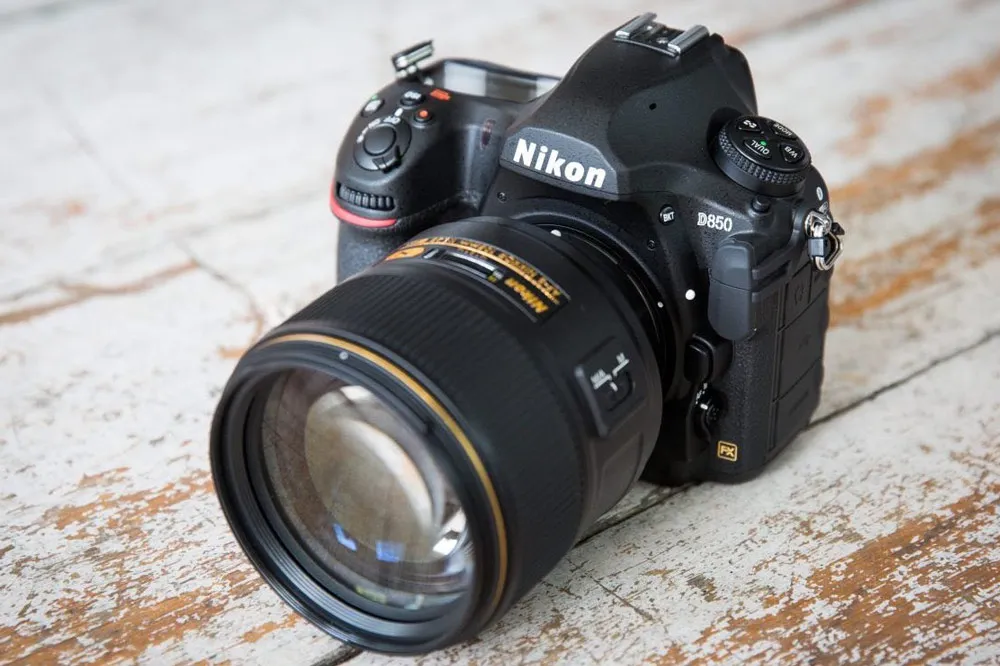
Since its arrival in late 2017 the Nikon D850 has been regarded by many as the company’s best camera and, for some, still is – despite the impressive slew of Nikon Z-series mirrorless cameras launched in its wake.
The D850’s headline specification is arguably its 45.7MP full frame sensor, which puts it close to medium format resolution territory, yet in a DSLR body.
The camera effectively inherited almost all of the AF features of the Nikon D5 DSLR which was primarily developed for sports photography; but the D850 is capable of capturing much more than just sports action. It uses a backside illuminated sensor, which helps to increase the efficiency of the sensor, (thus improving low light performance), and improves peripheral image quality at the edges of pictures. The D850 also has no anti-aliasing filter, which allows for finer detail capture in images.
The D850, still stands tall amongst the best Nikon cameras, despite the years that have elapsed since its launch. That Nikon put a lot of top-line technology into the D850 means it remains a great choice for photographers across several genres – wedding, sports, nature, fashion, portrait, landscape and more. For a full-frame DSLR, it is still difficult to beat.
The Nikon D810A is designed specifically for astrophotography.
Amateur Photographer verdict
A camera 4x more sensitive to the hydrogen-alpha wavelength, bringing out the true clarity and colours of the night sky.
Pros
Specialised astrophotography camera
Lots of resolution
Live View preview is great for astro
Cons
Can be challenging to find
And is expensive when you do
At a glance
Sensor
36.3MP full-frame
Lens mount
Nikon F mount
Video
Full HD (1080p) up to 60fps
ISO range
200-12,800 extendable up to 51,200
Screen
3.2-inch, 1229K-dot TFT LCD
Used price: $3,000 / £2,500 body-only
Modified infrared cut filter
3D noise reduction system
The clue is in the name – the A suffix of D810A hints at a DSLR suited to astrophotography. In fact, it’s specifically designed for astrophotography thanks to a modified infrared (IR) cut filter that sits in front of the D810A’s sensor – this is four times more sensitive to the H-alpha spectral line (a wavelength of approx. 656nm) than Nikon’s ‘normal’ D810 camera.
This enhanced sensitivity to Hydrogen-alpha long-wavelength light means the D810A delivers an improved capture of infrared phenomena in the sky, such as diffuse nebulae. You can, of course, shoot night skies with other cameras but almost all of them aren’t modified internally to help you to do so straight out of the box.
The Live View system, when in long exposure mode, allows you to preview an image equivalent to the one obtained at 30 seconds and also lets you zoom in by 23x to check focus and the scene in front of or above you. The camera’s intervalometer can shoot up to 9,999 images in a sequence – potentially very useful for shooting time-lapses and star trails.
The fact that the D810A also has a 36.3MP sensor also helps in ensuring you’re able to capture the night skies at high resolutions for high contrast images with minimised false colour. The D810A is a camera that opens up strange new worlds of picture-taking possibilities. Now discontinued, the Nikon D810A can be found second-hand – but tends to get snapped up very quickly.
Here is a selection of our favourite Nikon DSLRs throughout their entire history, from the very first days of digital SLR photography. These cameras may simply be too old for some users, lacking modern conveniences like stabilisation, subject-detect autofocus or even video. However, these are essential parts of DSLR history, and no list like this would be complete without them. Plus, at second-hand prices, the cameras in this section can be picked up very cheaply indeed – making some of them a credible option for users on a budget…
What about the Nikon DSLR shutter count?
However, be warned, it’s well-worth checking the shutter count on any second-hand DSLR you buy, as the shutter units do fail after enough time. So as well as checking the overall condition of the camera, be sure to ask the seller what the current shutter count is, as this will give you an indication as to how much life is left in the camera.
Nikon D1 (1999) – The first ever stand-alone Nikon DSLR
Nikon D1 DSLR. Image: AP
At a glance
2.7MP, APS-C sensor
ISO range of 200-1600
4.5fps continuous shooting (up to 21 shots)
Shutter speeds of 30-1/16,000sec
2-inch, 120,000-dot TFT LCD screen
Launched in 1999, the Nikon D1 seems somewhat quaint by the standards we hold cameras to today, with its 2.7P APS-C sensor, 4.5fps burst shooting and 2-inch LCD screen. However, at the time it had a number of clever advantages that saw it become a popular choice for pro photographers starting to make the jump to digital.
For a start, while the APS-C sensor meant taking a hit in image quality, the 1.5x crop factor it imposed upon lenses provides users with greater effective telephoto reach. On an APS-C camera, a 100mm lens behaves like a 150mm lens, and this can be hugely useful in the world of sports photography. Also, the legacy of F-mount meant that users had a huge range of lenses to choose from, and if they were already on board, all their old lenses would work.
That burst rate of 4.5fps might sound tame next to the blistering 120fps of the Nikon Z9, but it was pretty impressive for the time. The wide shutter speed of 30-1/16,000sec was also a welcome addition. It meant that sports photographers using the D1 could capture pretty much anything.
There were some unusual choices on the D1, like the decision to use the NTSC colour space. This is the system mostly used for American and Japanese TVs, rather than the conventional sRGB of Adobe RGB. It wouldn’t be long before Nikon switched up.
Nikon D3 (2007) – The first ever full-frame Nikon DSLR
The Nikon D3 heralded the dawn of a new era for Nikon DSLRs.
At a glance
Full-frame, 35mm equivalent 12MP CMOS sensor
Dual Compact Flash card slots
ISO 200-6400 (boost to 100-25,600)
9fps continuous shooting (11fps in DX mode without AF tracking)
3-inch, TFT LCD 922,000-dot screen
The Nikon D3 was a milestone all of its own – the first full-frame Nikon DSLR. Nikon called its new sensor ‘FX-format’, a name that would live on into its full-frame mirrorless Z-series cameras.
Pitched at professionals, the Nikon D3 featured the brand new EXPEED image processing engine, enabling such cutting-edge features as 9fps continuous shooting. Which is still pretty good even today, and helped cement the D3’s popularity among professional sports photographers. It also featured a 5:4 ratio mode, and even had an overlay in the viewfinder to help you see what the 5:4 ratio would look like.
Other firsts for the Nikon D3 included Live View mode, enabling photographers to see what the camera was seeing in real time via the rear LCD screen. A 51-point autofocus system rounded out a compelling package. Also, the D3’s magnesium-alloy body was rated for an impressive life of 300,000 shutter actuations, meaning professionals could get plenty of years’ happy use out of it. And they did!
These days, the Nikon D3 can be picked up second-hand for less than £400 or $600. For that price, it’s an absolute steal, especially for wildlife photographers. The camera would also later be upgraded to the D3S, which added among other things a video mode.
Read our full Nikon D3S review to see what we thought at the time. A typical used body-only price is around $200-300 / £100-334.
Nikon D90 (2008) – The world’s first DSLR with video shooting
The Nikon D90 was the first-ever DSLR camera to offer video shooting (it did so at 720p).
At a glance
D-Movie mode for 720p HD video recording
12.3MP DX-format sensor
ISO 200-3200 (expandable to 100-6400)
Up to 4.5fps continuous shooting
3-inch, 920,000-dot TFT LCD screen
While the Canon EOS 5D Mark II was the camera that kickstarted the DSLR video revolution, it was technically Nikon who got there first. Pipping the 5D Mark II to the post by a scant few weeks, the Nikon D90 was capable of shooting HD 720p videos at a cinematic frame rate of 24p. Solidly built and designed for the upper mid-range ‘prosumer’ demographic, the D90 was an impressive DSLR all-around.
With a built-in autofocus motor, the Nikon D90 could use virtually all Nikon F-mount AF lenses in its AF mode – something of a novelty at the time. It inherited plenty of its tech from the D300 and D3 cameras, such as a 12.3MP DX-format sensor, an EXPEED1 image processor, a high-res 920K-dot LCD screen and a viewfinder covering 96% of the frame.
Ultimately, the Full HD 1080p resolution of the EOS 5D Mark II meant that it won over filmmakers, and took its place in history for ushering in the DSLR video era. But the Nikon D90 was still a highly commendable achievement in its own right. A typical used price is around $72-154 / £60-77 body-only.
As with any camera-buying decision, picking the best Nikon DSLR is about weighing up two factors – your budget, and what you want to shoot. You aren’t going to get the best of all features in a budget camera, so it pays to prioritise the specs that will best suit you.
For instance, resolution is best for making large prints of your images, so if this is something you want to do, pick a DSLR with a high megapixel count. However, higher resolution cameras tend to be slower as all those pixels require more processing power. So if you want to shoot fast action or wildlife, it’s best to prioritise fast burst speeds.
DX vs FX sensor size – APS-C vs Full-frame
A big factor with Nikon DSLRs is sensor size. You have two choices here – DX-format (APS-C) and the larger FX-format (full-frame). Bigger sensors give you greater dynamic range in images, the ability to create shallower depth of field, and better low-light performance, with the main trade-off being that they are often more expensive, and require larger camera bodies. Nikon offers plenty of DSLRs in both sensor sizes – see our full guide to APS-C vs full-frame for a complete run-down of the pros and cons of each.
FAQ: Are Nikon DSLR lenses compatible with mirrorless?
Yes – provided you have the correct adapter. Nikon sells ‘FTZ’ adapters which allow F-mount DSLR lenses to be mounted on mirrorless Z-mount cameras. In most cases, this will be with full functionality of digital features like autofocus and stabilisation. Nikon has released a second version of the adapter, the FTZ II, though it’s basically the same, just with a few tweaks to the design that mean it doesn’t interfere with the battery grip when used with the Z9. If you already have the first FTZ, there’s no real need to upgrade.
FAQ: Which Nikon DSLR is best for low light?
Our pick would be the Nikon D500. With an impressive top ISO ceiling of 1,640,000, as well as generally excellent high-sensitivity performance, this DX-format DSLR does an excellent job in challenging light situations. If you have the budget, you may want to consider a full-frame DSLR like the D850, which also provides impressive quality in low light.
FAQ: Is Nikon discontinuing DSLR cameras?
Essentially yes. While Nikon DSLRs are currently still rolling off production lines, the firm hasn’t developed a new DSLR since 2020, and quite clearly has no plans to. Nikon’s focus is on its mirrorless Z-mount cameras, and this is where we’re going to see new models in the future. Nikon has said as recently as 2022 that it is not planning to withdraw from the SLR market – but none of these denials have ever been accompanied by the announcement of a new DSLR.
While you’ll likely still be able to buy a new Nikon DSLR off the shelf for a few years yet, there will come a time when that will no longer be the case.
How we test DSLR cameras
We test DSLR cameras primarily by using them to take photographs and video in a wide range of real-world situations. We evaluate their control layouts and handling, and the usability of their viewfinders and screens. We assess their autofocus across a range of different subjects and shooting scenarios and check their continuous shooting capabilities.
We also examine the effectiveness of their image stabilisation systems if they have them built-in to the body, as in Pentax DSLRs. Last but by no means least, we critically evaluate the image quality, in both JPEG and raw, including resolution, high-ISO noise, and dynamic range. We then take all these factors into account, along with such things as portability and lens systems, when giving our final conclusion and score. You’ll find the full breakdown of how each camera has performed in our full reviews.
Recent updates
October 2025: new and (approximate) used prices updated throughout. At a glance specifications converted to table format. Video specs added where omitted. Descriptive text of each camera abbreviated and updated as appropriate. Heading expanded.
Text by Steve Fairclough, with contributions from Jon Stapley.
Steve is a journalist, author and editor. He was news editor of AP from 1988 to 1999, edited What Camera? magazine from 1996-99 and is the former editor-in-chief of the pro imaging website Canon Professional Network (CPN). He has edited photo, hi-fi, football and philately magazines and has written about all aspects of photography since 1987. Steve has interviewed many of the world’s top photographers in print, online and on-camera.