





Read our in-depth review of the Ricoh GR IV Monochrome, a specialist version of the classic street camera that only shoots in black & white
Amateur Photographer verdict
The Ricoh GR IV Monochrome is a fine little camera that gives top-quality black & white image files. Its enthusiast-friendly controls make it a joy to use, too, if you can live with the fixed screen.
- Tiny, truly pocketable size
- Seriously impressive image quality
- Excellent control layout and handling
- Built-in switchable red filter for more dramatic shots
- Very effective in-body stabilisation
- Fixed screen can be difficult to see in bright light
- MicroSD storage is fiddly
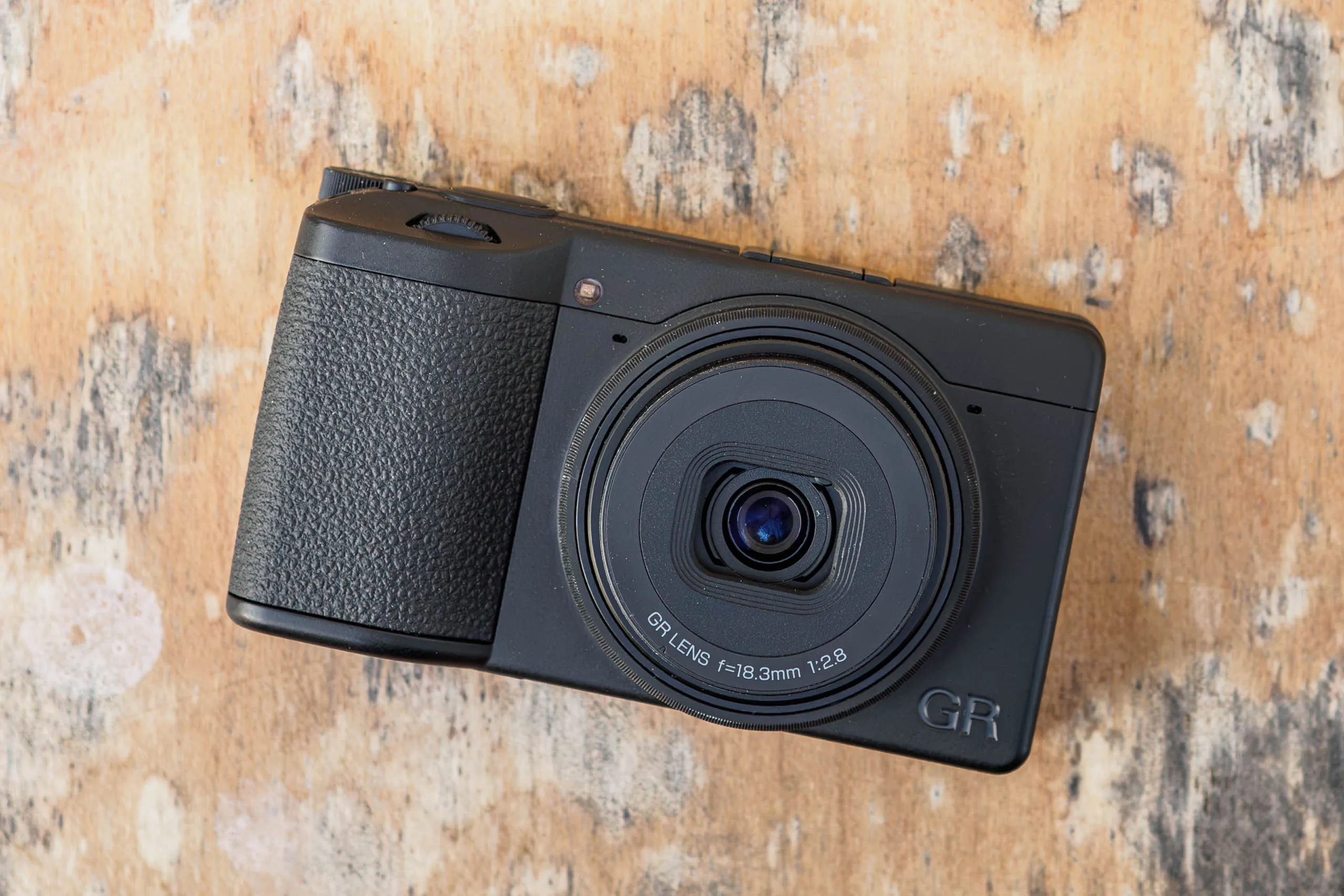
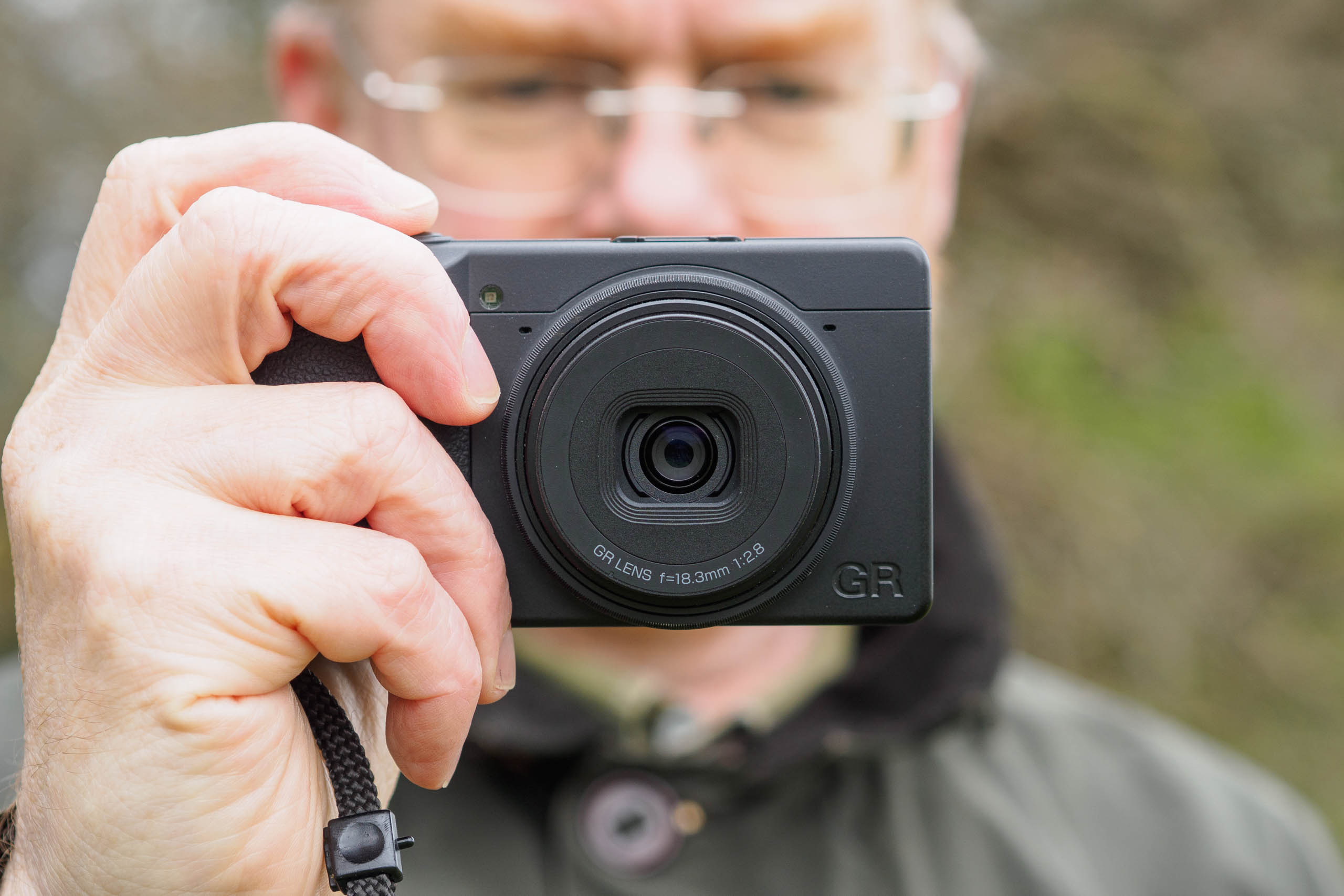
The Ricoh GR IV Monochrome is, as its name suggests, a specialist version of the firm’s cult-classic compact camera that can only shoot in black & white. Aside from its monochrome sensor and a few related tweaks, though, it’s the same camera as the stock GR IV. This means it places a 25.7MP APS-C sensor and 28mm equivalent f/2.8 lens into a remarkably small, pocketable body with enthusiast-friendly controls.
Ricoh GR IV Monochrome at a glance:
- $2200 / £1599
- 25.7MP APS-C monochrome sensor
- ISO 160-409,600
- 4fps continuous shooting
- 3in, 1.04m-dot fixed LCD touchscreen
- Optional matched optical viewfinder
Ricoh is only the second mainstream camera maker, after Leica, to offer a black-and-white only camera. This isn’t the firm’s first effort, though, as it follows on from the Pentax K-3 Mark III Monochrome DSLR from 2023, which used a similar (but not identical) 25.7MP APS-C sensor. But that camera turned out to be short-lived, presumably due to the general collapse in demand for new DSLRs.
In contrast, the GR IV Monochrome feels like a genuinely interesting proposition. As a black & white derivate of a camera that’s already very popular for street photography, it could nicely fill a well-defined niche. That 28mm equivalent lens means it’s also well suited to subjects such as landscape and architectural photography.
So why would you want a camera with a monochrome sensor? Technically, they bring some real image-quality advantages. Compared to creating black & white photos from a colour version of the same sensor, we can expect finer detail and lower noise – in theory at least.
However, there’s a more subtle psychological argument that could actually be more important. Sometimes, imposing limitations on your photography forces you to hone your technique and see images better. In this case, as you can’t fall back on colour to make your photos work, it means you have to think purely in terms of what makes black & white images successful – in other words light, shade, and tonality.
At $2200 / £1599, this is also the most affordable mono-only camera yet made. In comparison, the nearest thing it has to a competitor, the full-frame Leica Q3 Monochrom, costs $7950 / £5,800 (and is dramatically larger and heavier). The catch, though, is that the Monochrome is significantly more expensive than the regular, colour GR IV, which costs $1500 / £1199. So why spend more money on a camera that does less?
Features
Obviously, the camera’s most notable feature is its monochrome sensor. Normally, cameras detect colour by placing red, green and blue filters over the light-sensitive pixels, and then reconstructing the full-colour image via a process known as demosaicing. But these filters aren’t present on the GR IV Monochrome, which means each sensor pixel simply measures the intensity of the light falling upon it. This should bring sharper, more detailed images with reduced noise compared to the standard GR IV.
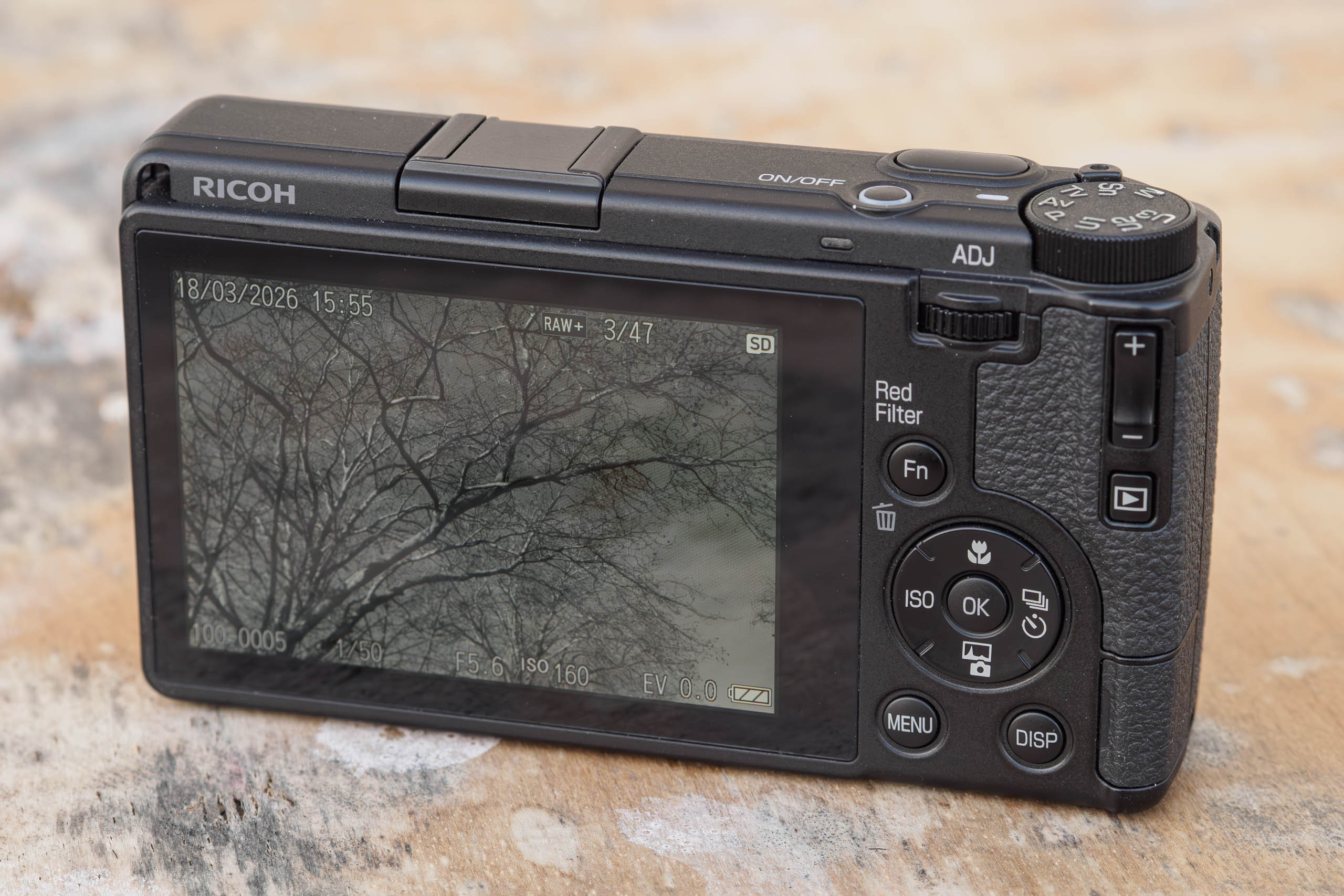
One knock-on effect of the mono sensor is that the sensitivity range has changed, with the Monochrome offering ISO 160-409,600 as standard, compared to ISO 100-204,800 on the GR IV. But in other respects, we’re looking at the same 25.7MP, APS-C format BSI-CMOS sensor. Almost all the other photographic specifications stay the same, too.
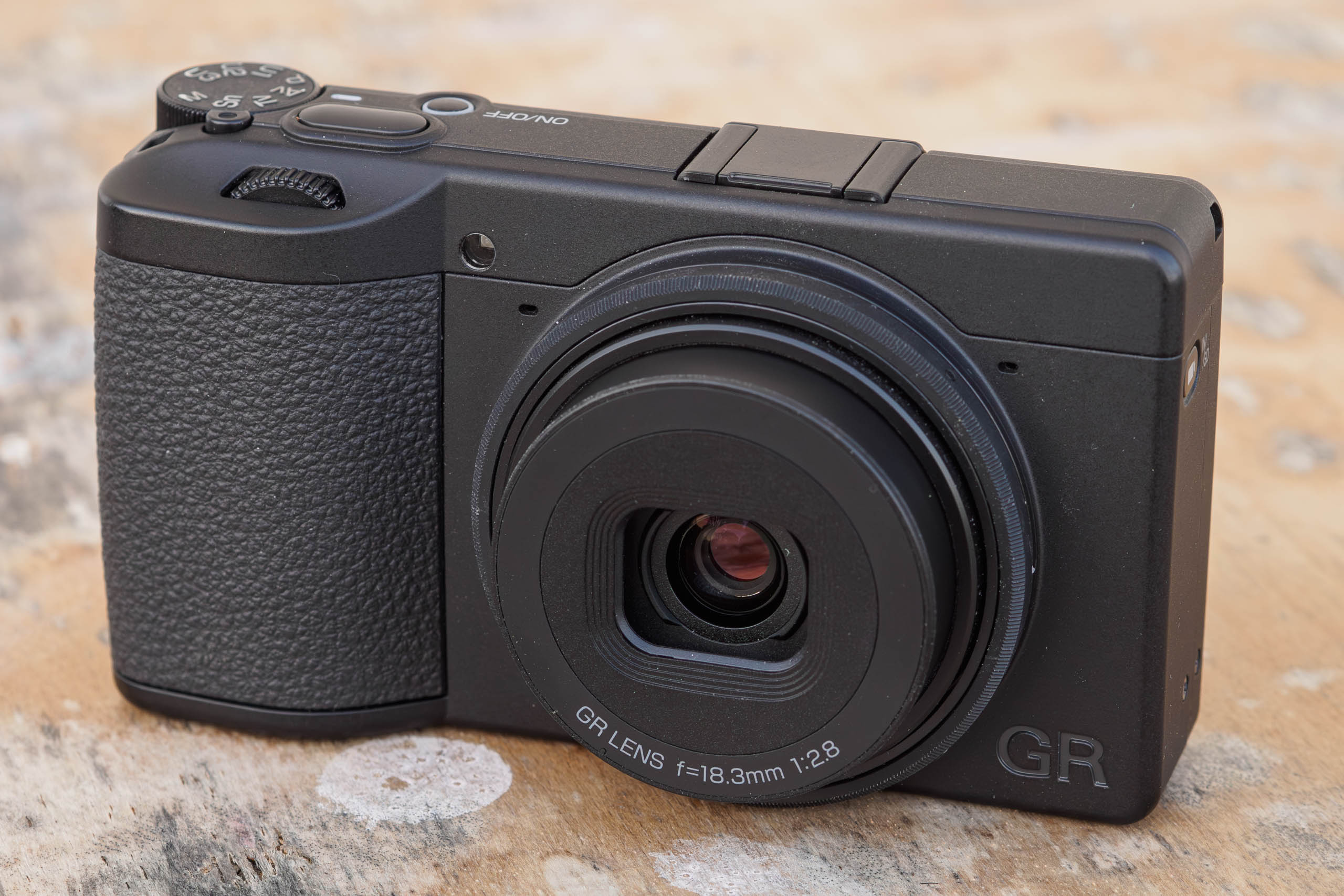
This means that the camera employs the same 18.3mm f/2.8 lens, which offers an angle of view equivalent to 28mm on full frame. It’s updated compared to previous GR generations, with 7 elements in 5 groups, including 3 aspherical elements. The minimum focus distance is just 10cm in normal mode, dropping further to 6cm when the macro setting is engaged.
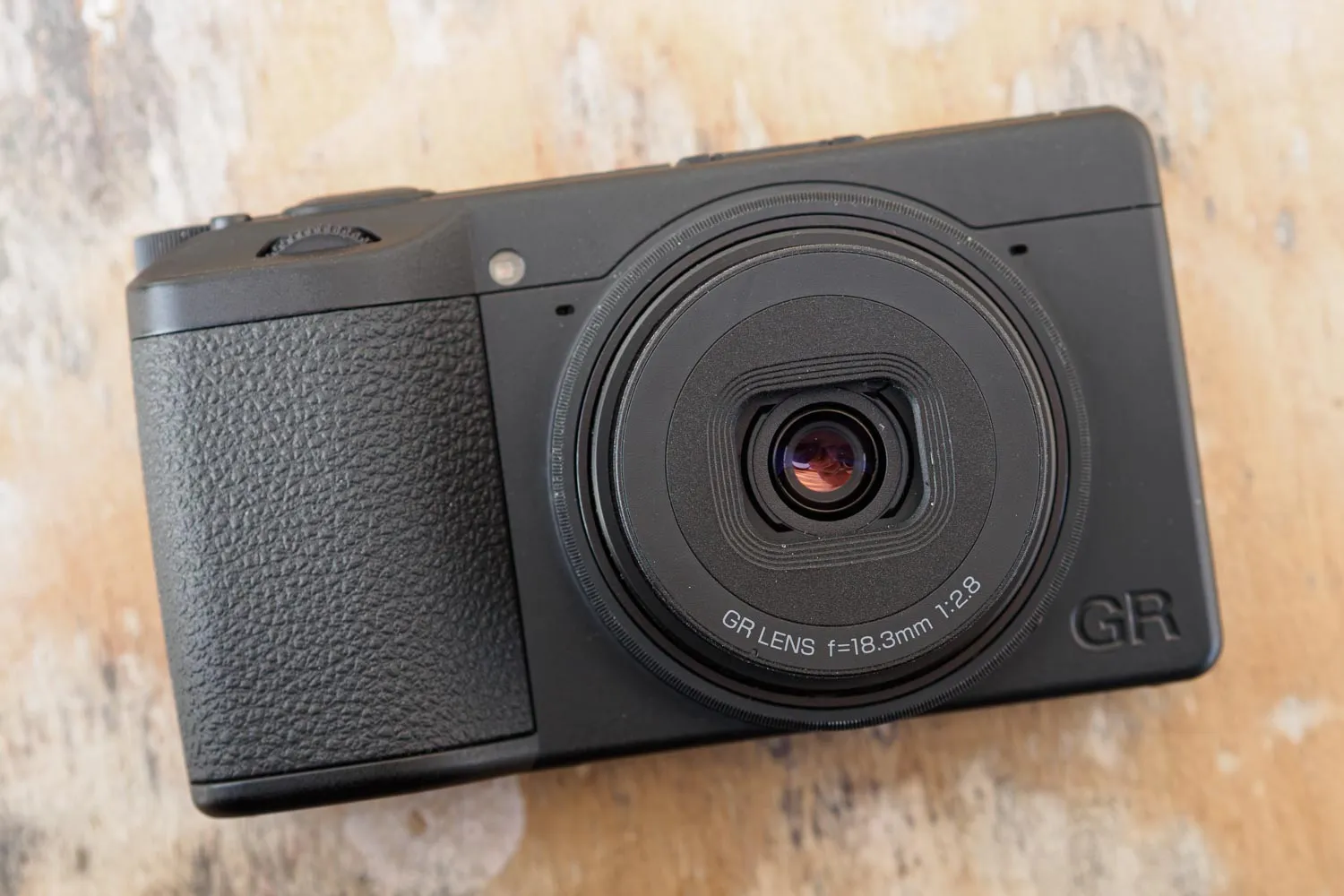
However, where the GR IV has a switchable 3-stop ND filter, the Monochrome swaps this out for a red filter. Photographers familiar with shooting black & white film will be aware of what this does – it darkens blue skies and increases the contrast against clouds, giving more dramatic images. This red filter has approximately the same 3-stop filter factor when faced with neutral subjects, which makes it similar to the classic Hoya R25A.
With the monochrome sensor comes a new set of image processing modes (which Ricoh calls “Image Controls”), giving a nice range of different looks. Alongside the Standard option, Solid gives higher contrast and richer backs, while Soft tilts things the other way for a more high-key effect. Meanwhile the High Contrast and Grainy modes give highly stylised film-like looks, which I found were extremely effective with the right choice of subject. There’s also an HDR Tone option, but I don’t really like it much. These looks can all be applied either at the time of shooting, or afterwards via a nicely implemented in-camera raw conversion option.
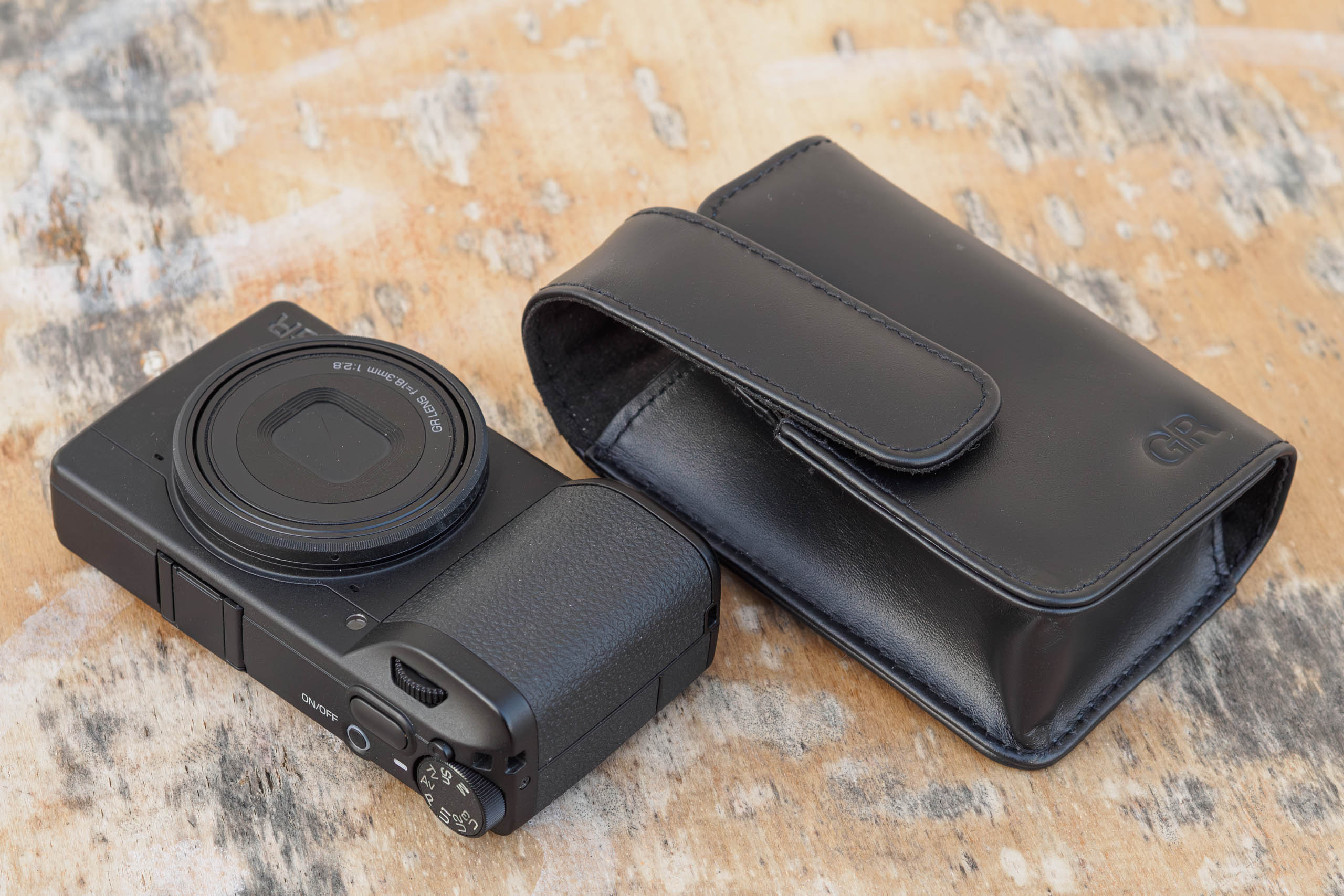
Shutter speeds range from 30 seconds to 1/400sec when using the mechanical shutter. However, as is typical of in-lens units, the shutter can’t open and close fast enough to completely uncover the aperture at speeds any faster than 1/2500sec. This can be a significant limitation if you want to shoot at f/2.8 in bright sunlight.
Cleverly, though, Ricoh has implemented an electronic shutter mode which automatically extends the fastest speed up to 1/16,000sec, regardless of aperture. But crucially, it can be set to engage only when required, via a “Use only at high speeds” menu option. You may sometimes get image distortion from rolling shutter effects, but I think that’s a lot better than not being able to get a shot at all (or a grossly overexposed one).
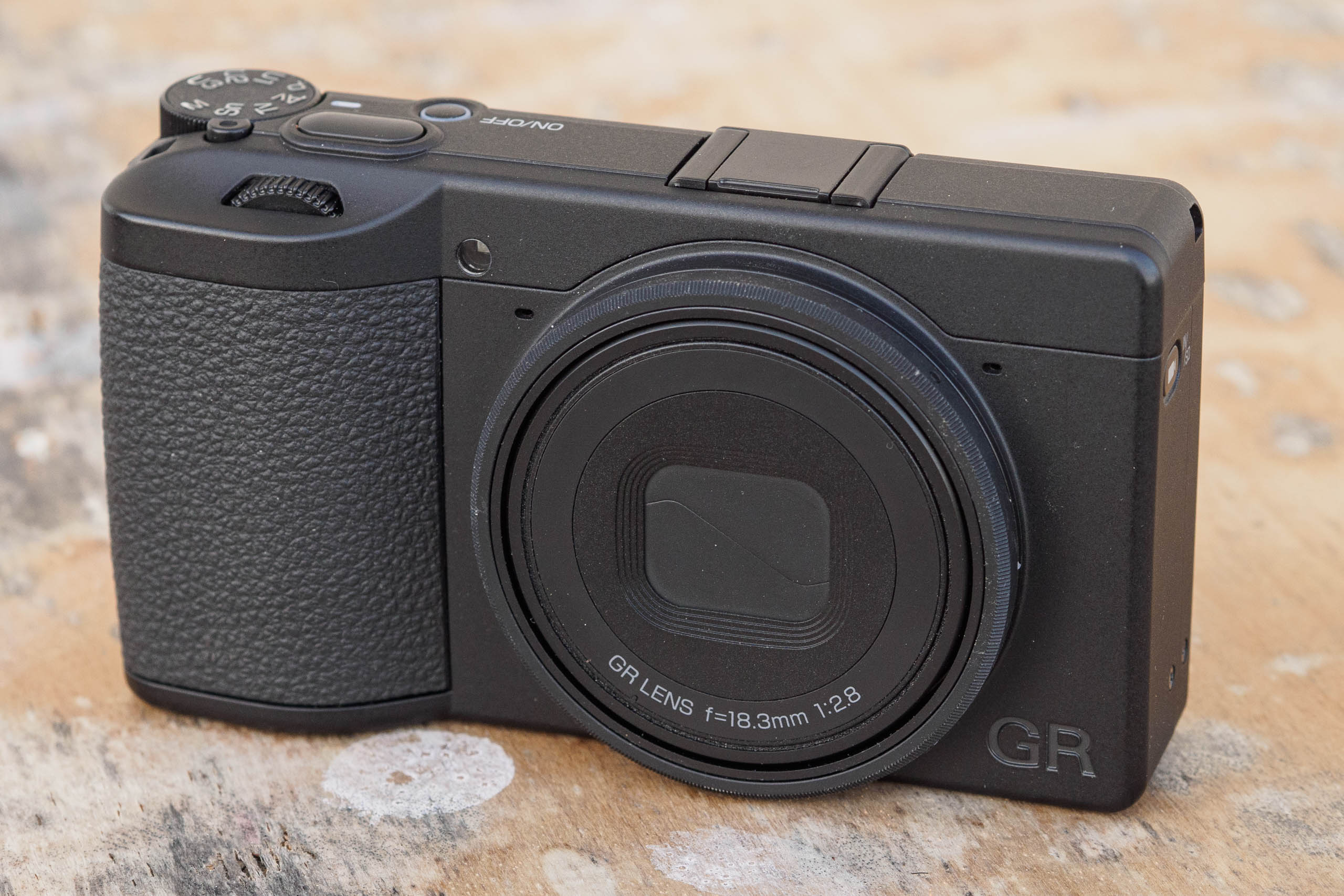
Continuous shooting is available at 4 frames per second, which sounds distinctly pedestrian by current standards. However, it’s likely to be plenty fast enough for street shooting. A camera with a fixed 28mm lens is never going to be my first choice for sports or action photography, for sure.
Autofocus employs a hybrid system, with on-sensor phase detection covering the entire image area. Face and eye detection is on board, but you don’t get any of the AI subject recognition modes that have become standard on other new models. Again, though, this simply isn’t the kind of camera that you’d use for shooting wildlife or motorsports, which is where these focus modes are most valuable. The GR IV monochrome also has a uniquely powerful set of manual-focus options via its “snap focus” modes – more on that later.
Remarkably given the camera’s petite dimensions, 5-axis in-body image stabilisation is built in. This brings some neat extra tricks, including a horizon correction mode, which rotates the sensor to compensate for when you’re not holding the camera quite straight. There’s also an anti-aliasing filter simulator that slightly blurs the image to suppress image sampling artefacts. But that feels more like a carry-over from the colour version than a useful tool.
As with a lot of other recent fixed-lens cameras, Ricoh has included a crop-zoom function. It offers settings for 35mm and 50mm equivalent views, giving 16.3MP and 8.2MP images respectively. There’s also the option to select various aspect ratios: 3:2, 4:3, 1:1, and 16:9. The camera records a cropped DNG raw file, rather than a full-size one with crop information in the metadata, so you can’t change your mind after shooting. But even the smallest file should be plenty good enough for a 12x8in / A4 print.
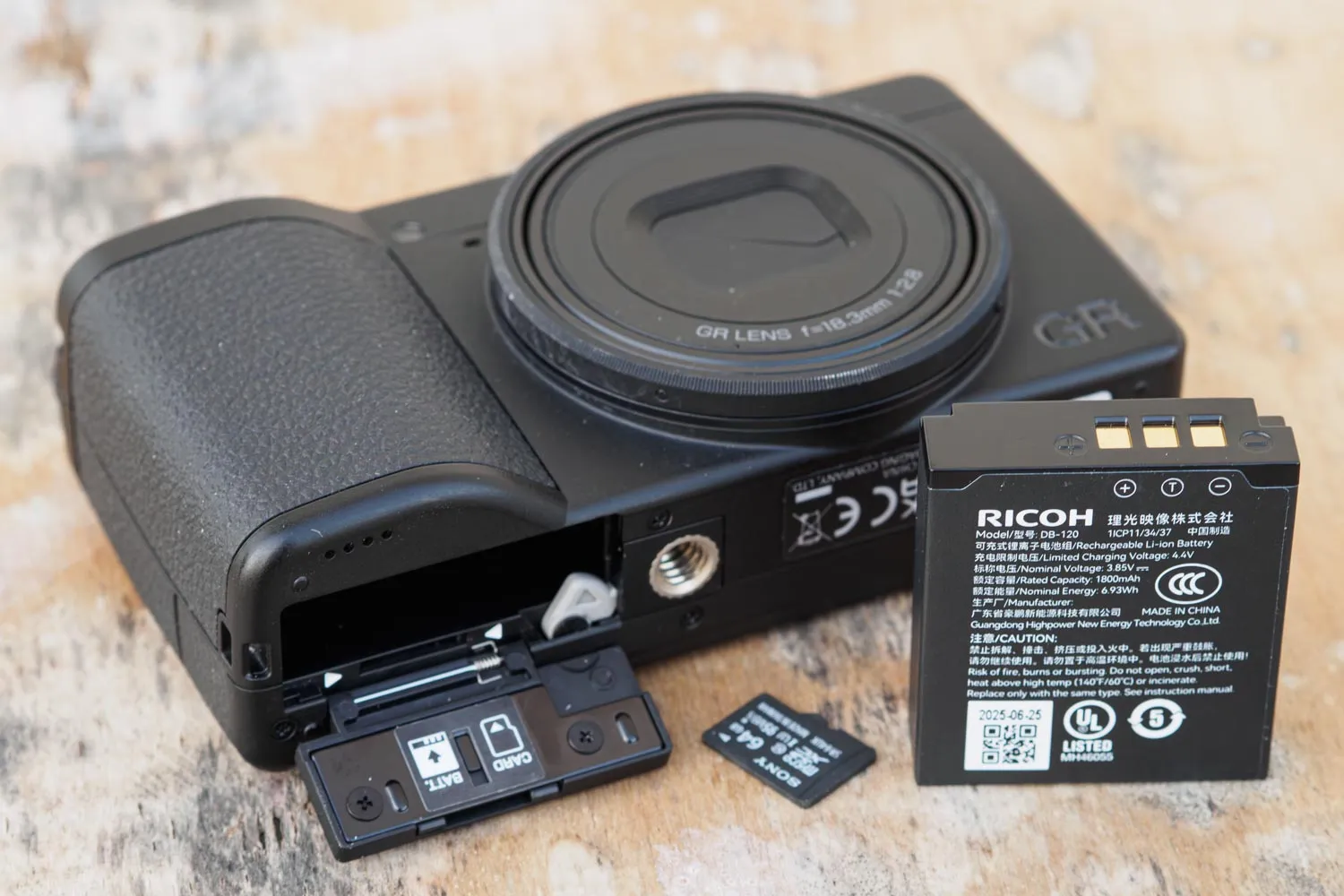
Unusually, the GR IV design employs a Micro-SD card slot for storage, in contrast to previous GR models which used conventional SDs. But in return, this has allowed the use of a higher-capacity battery. Personally I found that the positioning of the slot right beside the battery door made the card particularly fiddly to remove. However, you don’t necessarily even need to use a card for shooting, as the camera boasts 53GB of internal memory. If you choose to use this instead, it’s still possible to copy all your images to a micro-SD card for backup or transfer to your computer.
To provide smartphone connectivity, Bluetooth and Wi-Fi are built in. Using the GR World app, you can operate the camera remotely and import images to your phone for sharing. This is quick to set up and easy to use.
Video recording is available, but only in Full HD (1920 x 1080) resolution at up to 60fps. Stereo microphones are built-in, but there’s no option to attach an external unit for higher quality sound. For those interested in making movies, I’d say almost any other camera would be a better bet.
Ricoh GR IV Monochrome: Key features
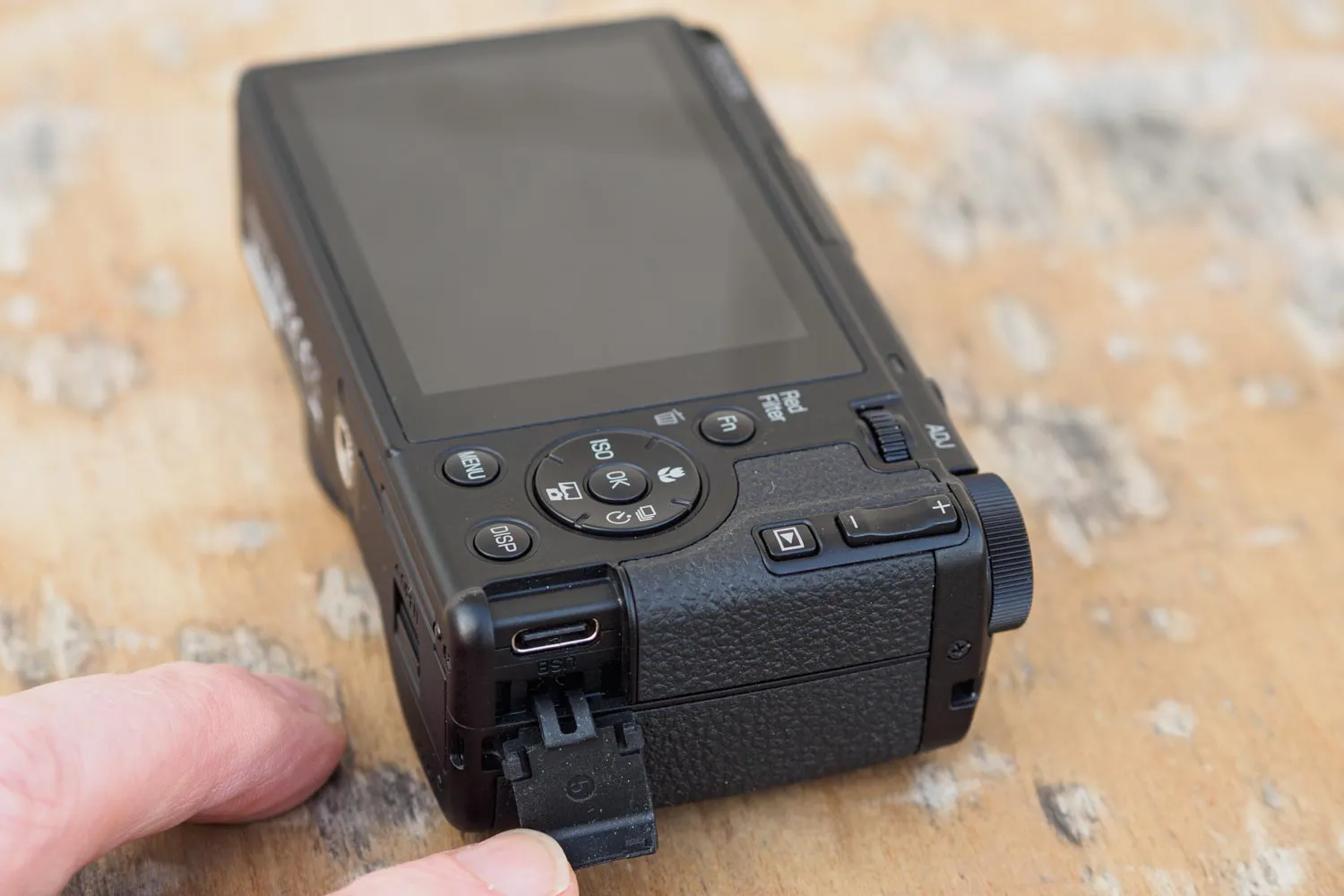
- Connectors: There’s only a single external connector, with the USB-C port protected by a chunky rubber cover on the handgrip.
- Power: The DB-120 rechargeable Li-ion battery is rated to deliver 250 shots per charge. It’s topped up via the USB-C port.
- Storage: Ricoh has switched to the small, fiddly micro-SD card format for storing your image files. The good news is that there’s also a generous 53GB of internal memory.
- Hot shoe: The hot shoe on top has contacts for the matched, low-profile External Flash GF-2 ($119 / £99). Alternatively the Godox iT20R mini flash offers TTL metering for about half the price.
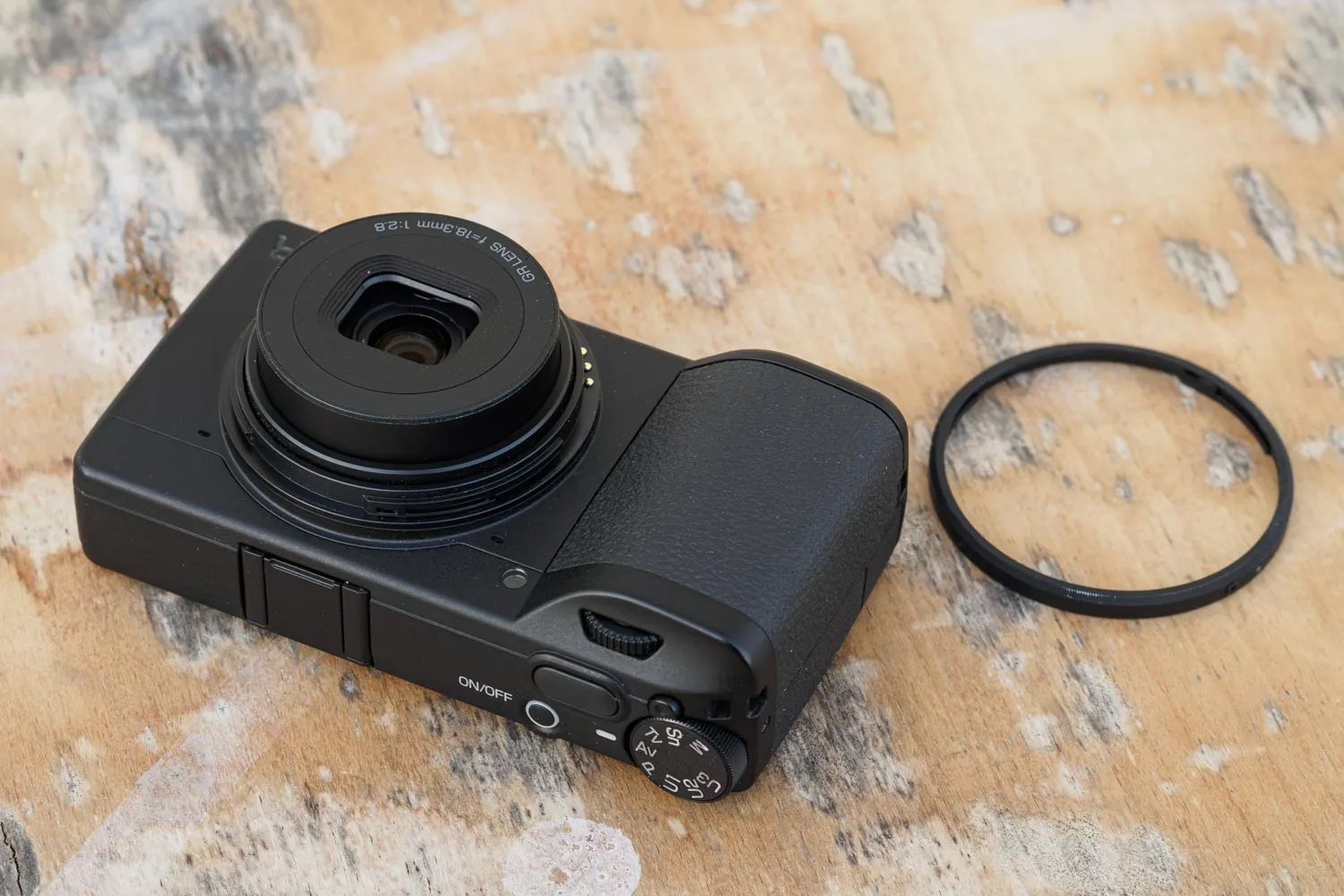
- Lens accessories: By removing a cosmetic ring around the lens and attaching the optional GA-3 lens adapter ($49 / £39), you can use 49mm filters or the GW-4 wide conversion lens ($249 / £224), which gives a 21mm equivalent view.
- Viewfinder: Ricoh offers two hot-shoe optical viewfinders, the GV-1 (£169) which has framelines for 21mm and 20mm, or the GV-2 ($249 / £299) which covers 28mm only.
Build and Handling
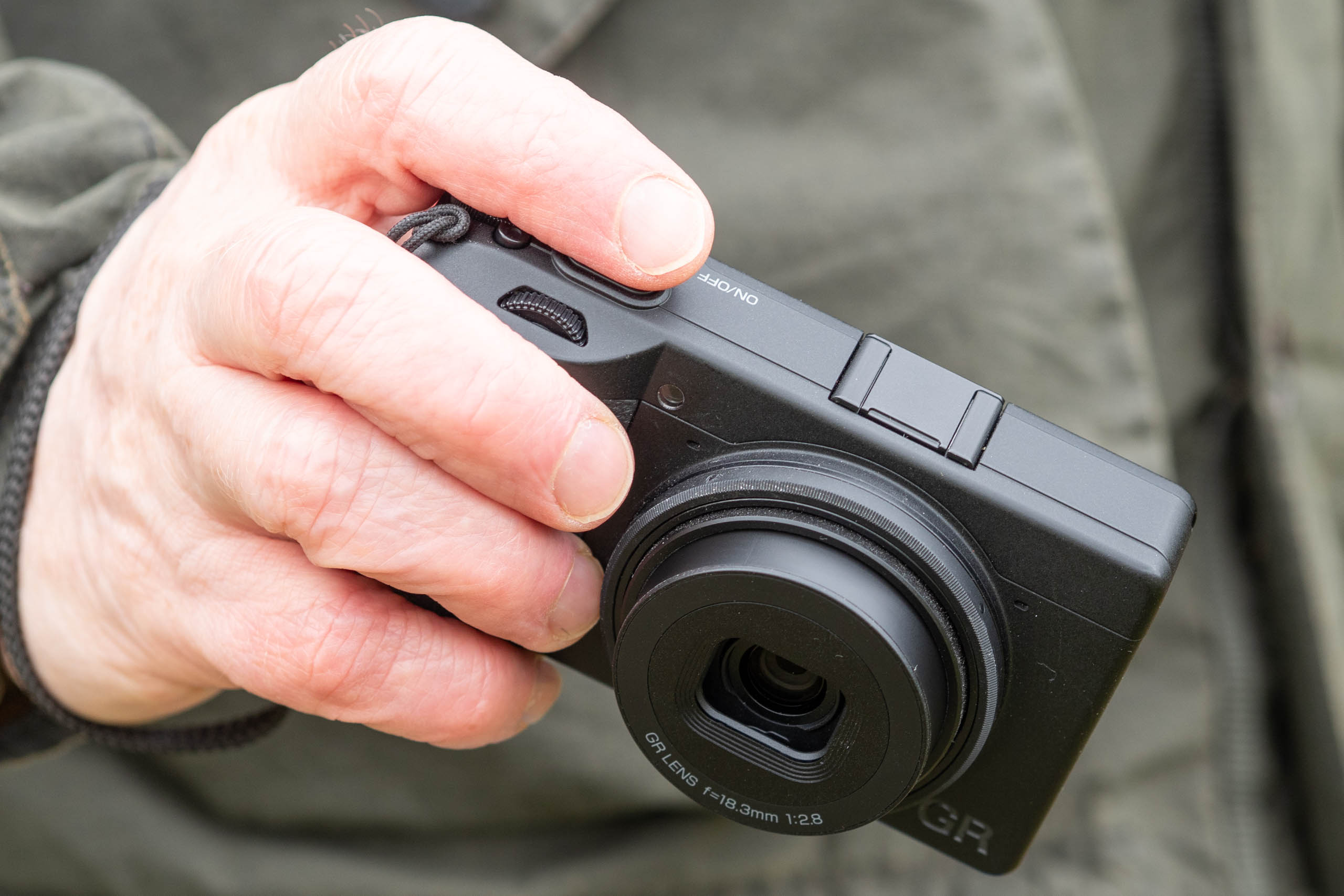
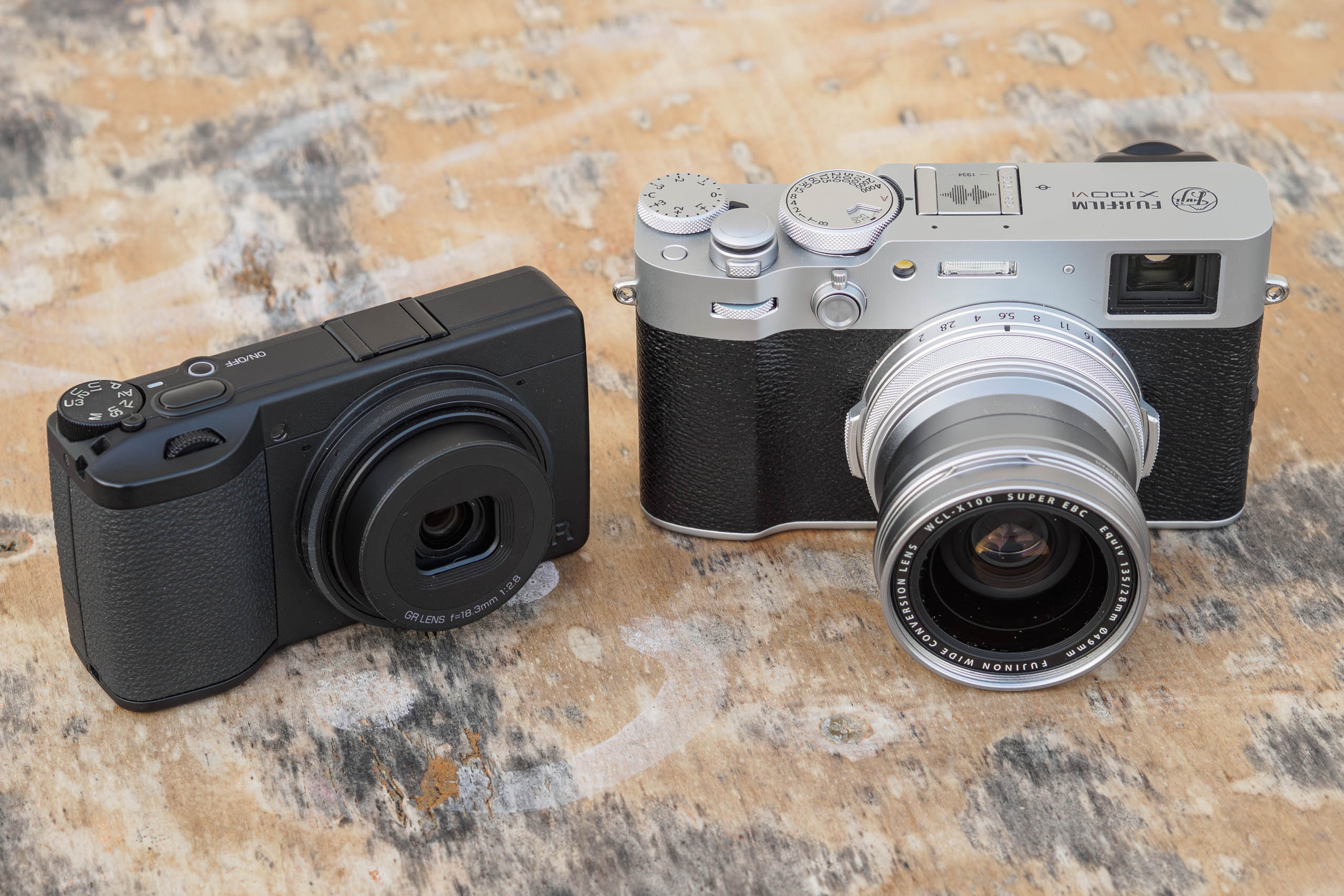
The first thing I noticed when I picked up the GR IV is just how small and well-built it is. At 109 x 61 x 33mm and just 262g, it’ll slip easily into a jacket pocket. It’s the same sort of size as 1-inch sensor zoom compacts like the Canon G7 X and Sony RX100 series, and dramatically smaller than Fujifilm X100 models. It’s amazing how Ricoh has managed to fit an APS-C sensor inside, let alone one with in-body stabilisation.
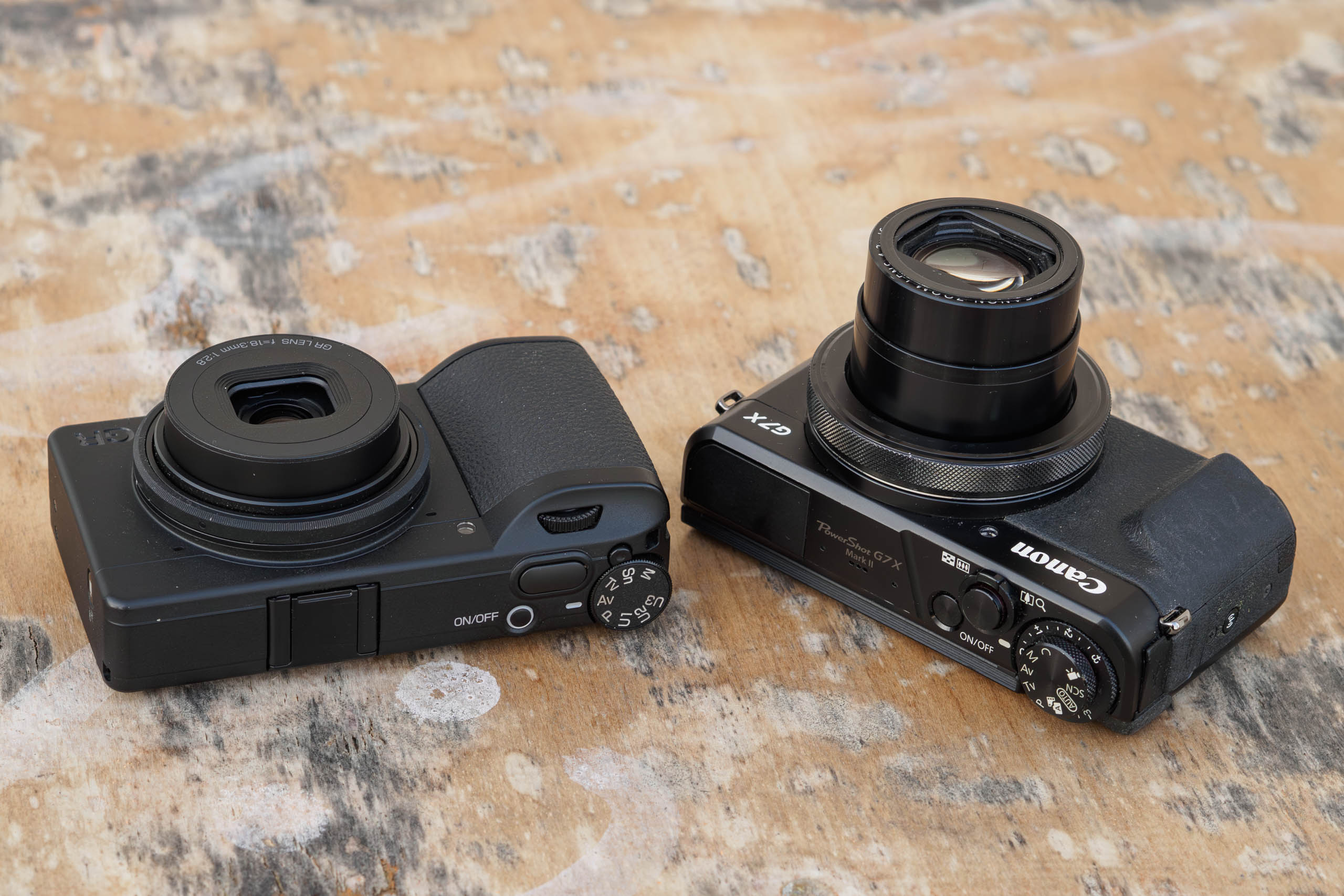
It feels good in your hand, too, thanks to its magnesium alloy shell. The handgrip has a nicely textured rubber coating, and is somehow large enough to provide a secure one-handed hold, which is uncommon with such a small body.
I also like the fact that Ricoh has provided three strap lugs, so you can hang the camera either horizontally or vertically from a neck or shoulder strap, which is a neat touch. Mostly, though, I preferred to use a wrist strap for security.
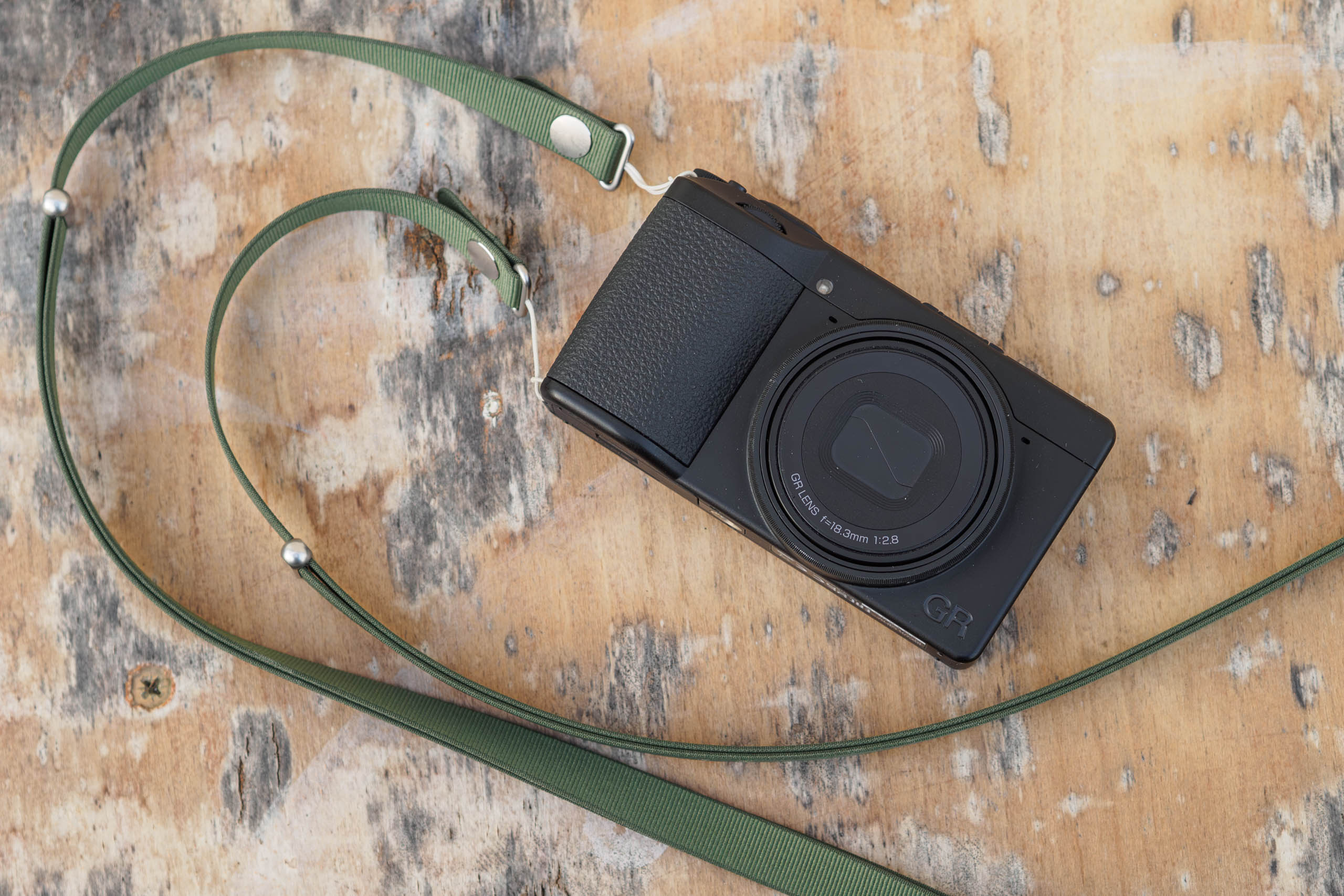
Ricoh has extended the camera’s monochrome aesthetic to the body design. The GR logo on the front is black not white, and the button markings are a muted grey, too. Even the power button light has been changed to white, rather than green. This results in a particularly discreet look, but I found those button markings could be really difficult to make out in dim light.
The second thing I noticed is just how well set up the control layout is for enthusiast photographers. The GR IV introduced a revised control scheme compared to its predecessors, and it works exceptionally well. Twin dials under your forefinger and thumb control shutter speed and aperture, while a small vertical +/- rocker beside your thumb sets exposure compensation. It also changes other key settings when used in conjunction with the d-pad on the back.
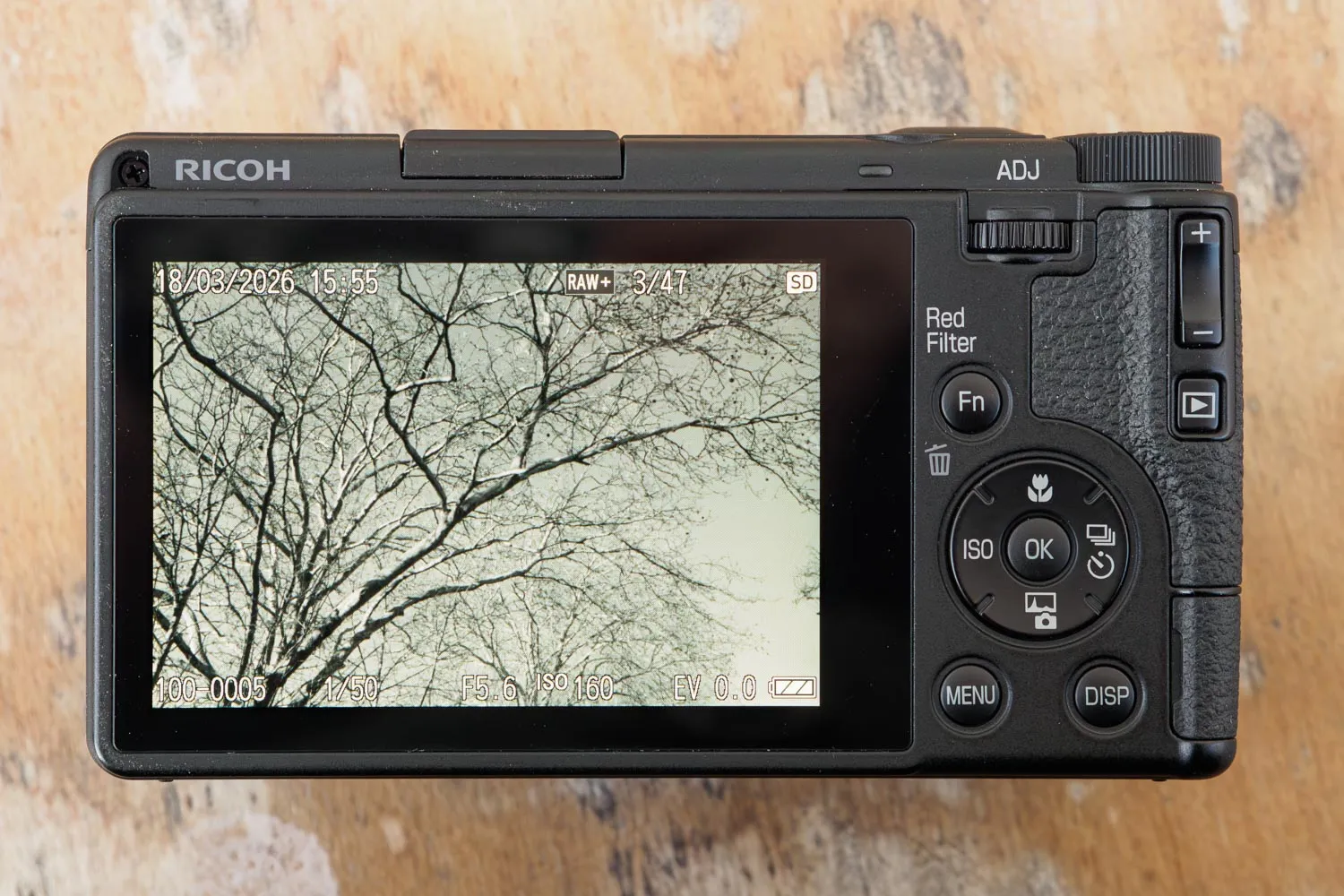
Pressing-in the rear dial provides quick and convenient access to five further settings, which are user-selectable so you can tailor them to your own requirements. Pressing a small button on the side engages video mode, while holding it down switches between the internal memory and the micro-SD card. But again, you can reconfigure this to do more useful things, and re-assign the d-pad buttons as needed, too.
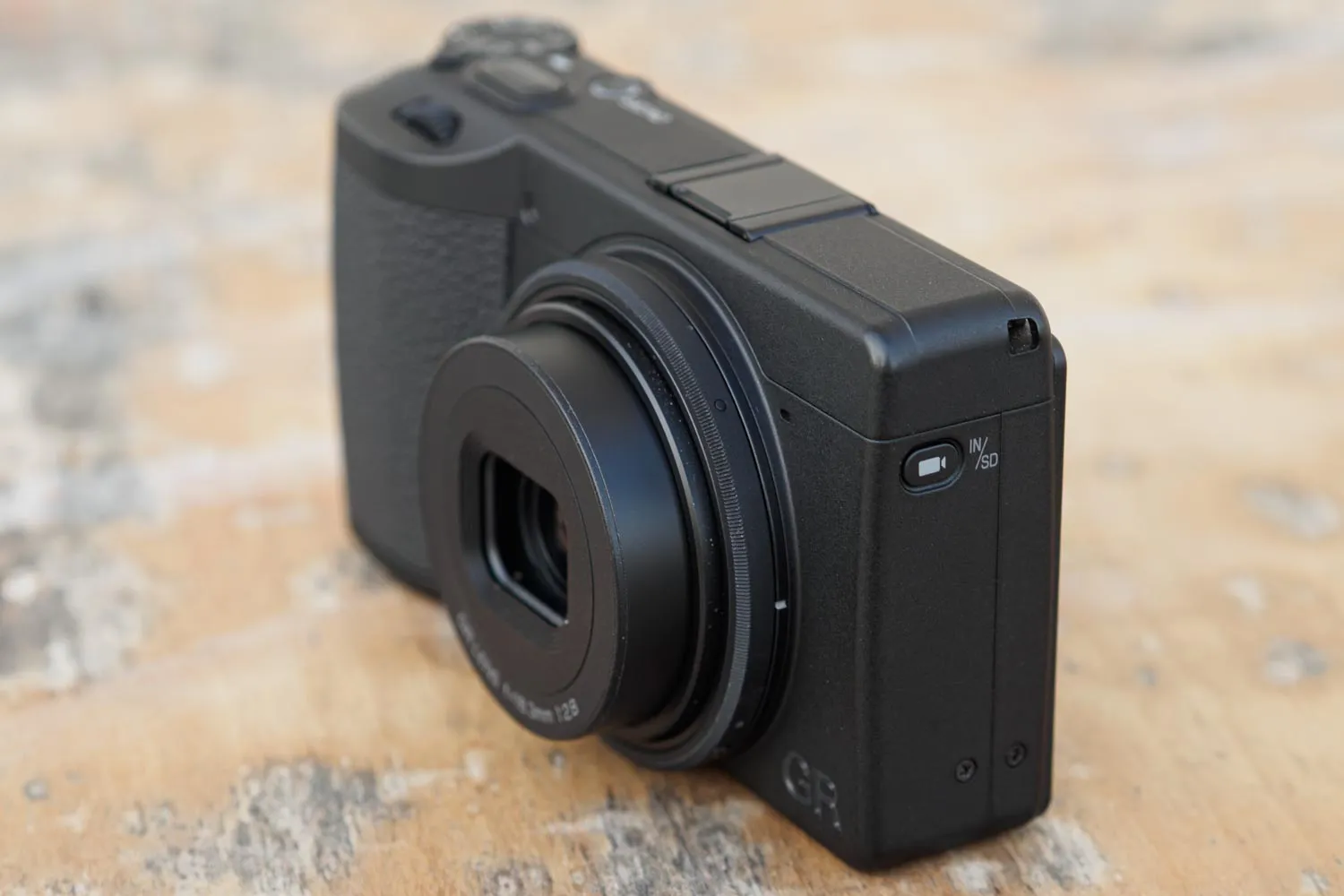
There’s a conventional mode dial on top, with a locking button to prevent accidental rotation (which I found slightly fiddly). You get a familiar-looking set of exposure modes, here marked P, Av, Tv and M, plus three user-configurable modes. However Ricoh has, in effect, borrowed the clever and useful ‘Hyper Program’ mode from Pentax DSLRs, where spinning the front dial temporarily shifts the camera into aperture priority, while the rear dial engages shutter priority. Pressing the dial lock button reverts to program settings.
Ricoh has also added a new Snap Focus Priority exposure mode. This allows you to set the focus distance with the front dial, and adjust the depth-of-field using the rear dial. The camera will then set the shutter speed and ISO accordingly. I think many street photographers will find this to be a uniquely useful way of shooting.
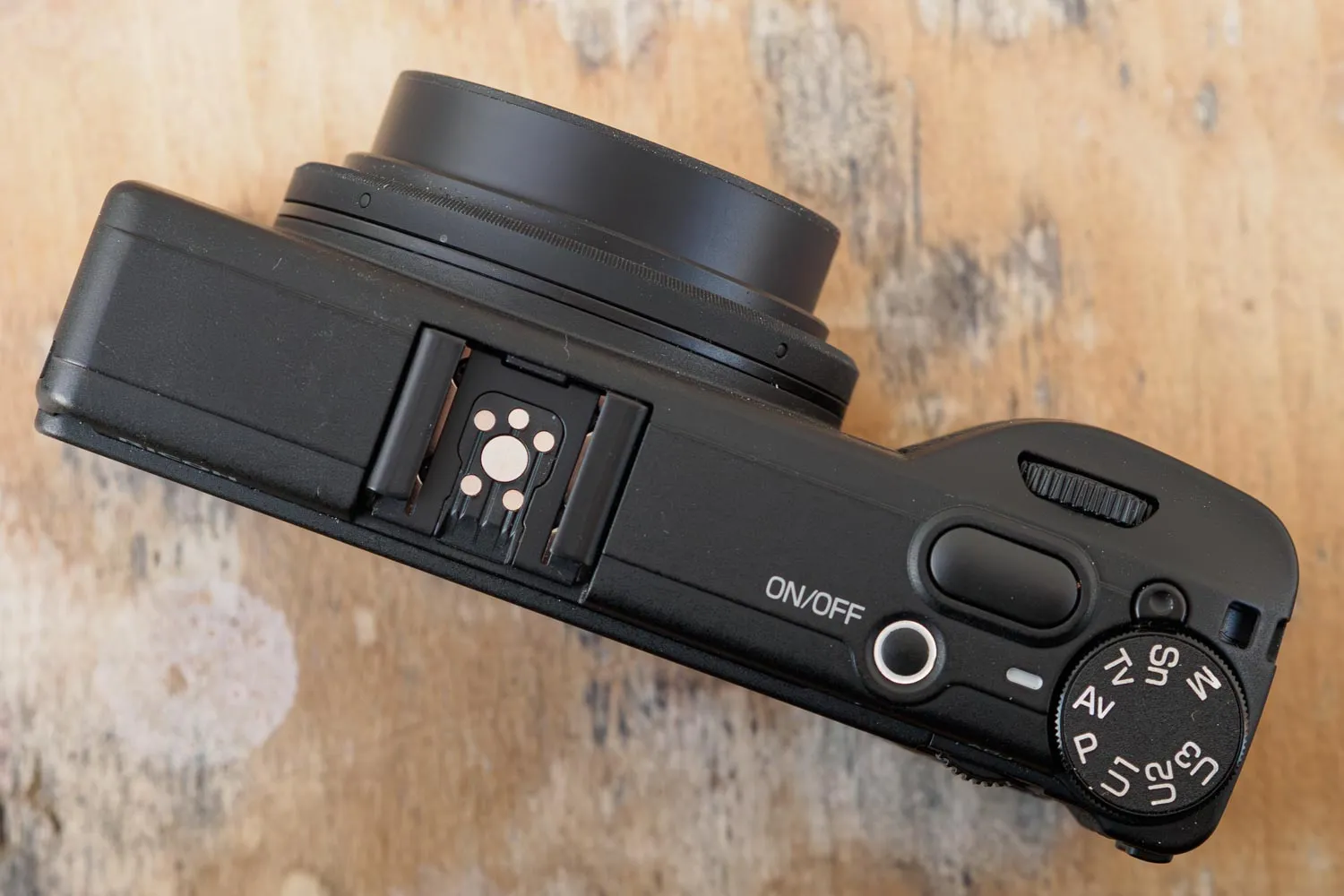
Another thing I really like is how Ricoh has made it extremely easy to engage the red filter, simply by pressing the Fn button on the back. But the catch is that it remains engaged when you turn the camera off and on again. I found it was all too easy to shoot with the red filter engaged during the day, then fire up the camera later in lower light, and find myself using unnecessarily high ISOs for a few shots, before I realised what was going on. Thankfully, there’s option to disengage the red filter automatically on shutdown, which I enabled as soon as I found it.
Viewfinder and screen
There is, of course, a trade-off for the GR IV Monochrome’s tiny size, and it comes with composing your images. There’s no space for an electronic viewfinder, and to keep the body as slim as possible, the rear screen is fixed and doesn’t tilt. This means that you need to hold the camera up in front of you to see what you’re shooting, and in bright light, I found it could be quite difficult to make out what’s going on.
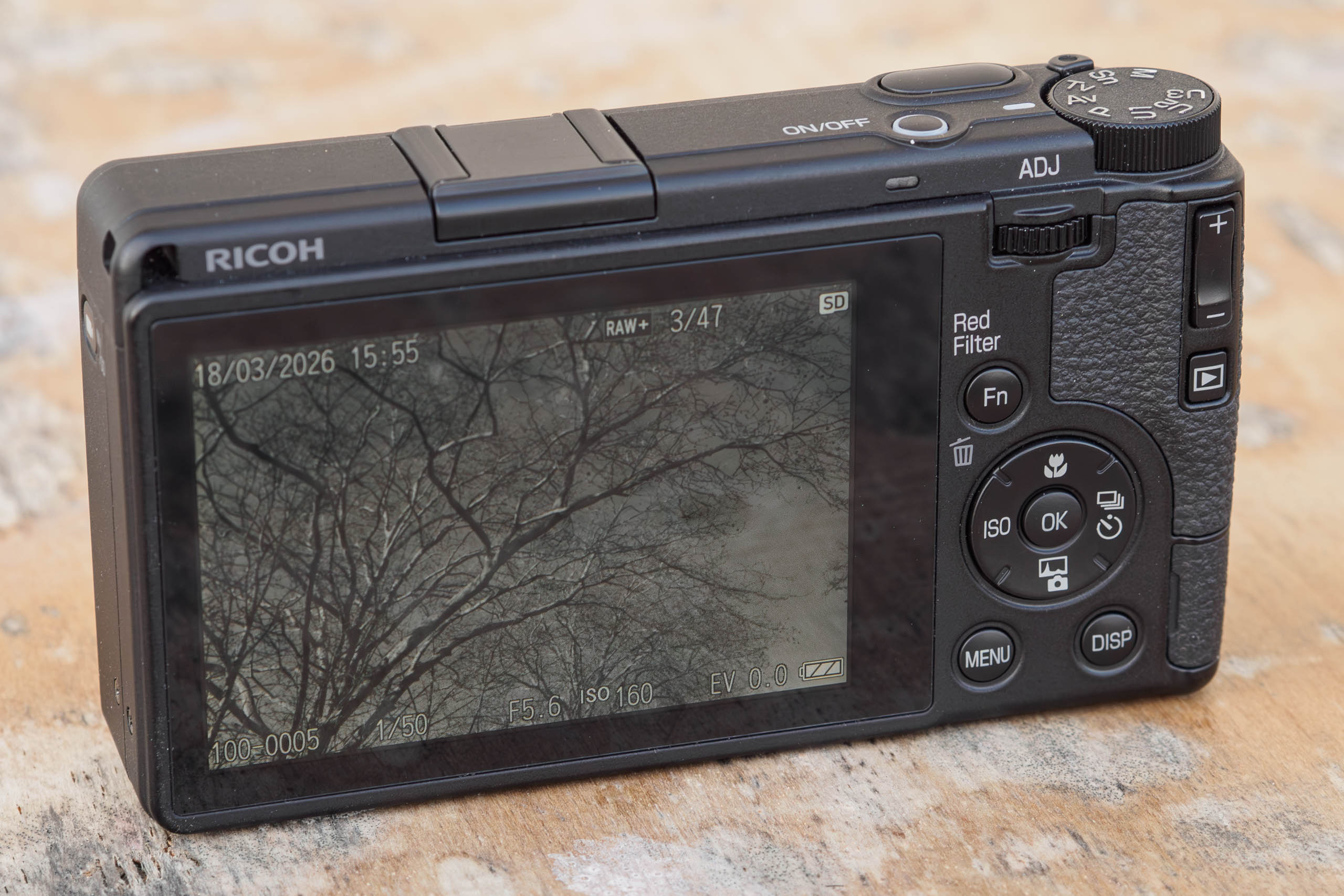
One possible alternative is to use an optical viewfinder fitted onto the hot shoe. Ricoh offers two options, the small GV-2 for 28mm only, and the larger GV-1 that also covers the 21mm ultra-wide lens converter. But you could use any other 28mm finder instead. There’s the option to switch off the rear screen entirely when you’re shooting this way, with a small LED on the back that lights up to confirm focus, although it’s a little distant from the hot shoe.
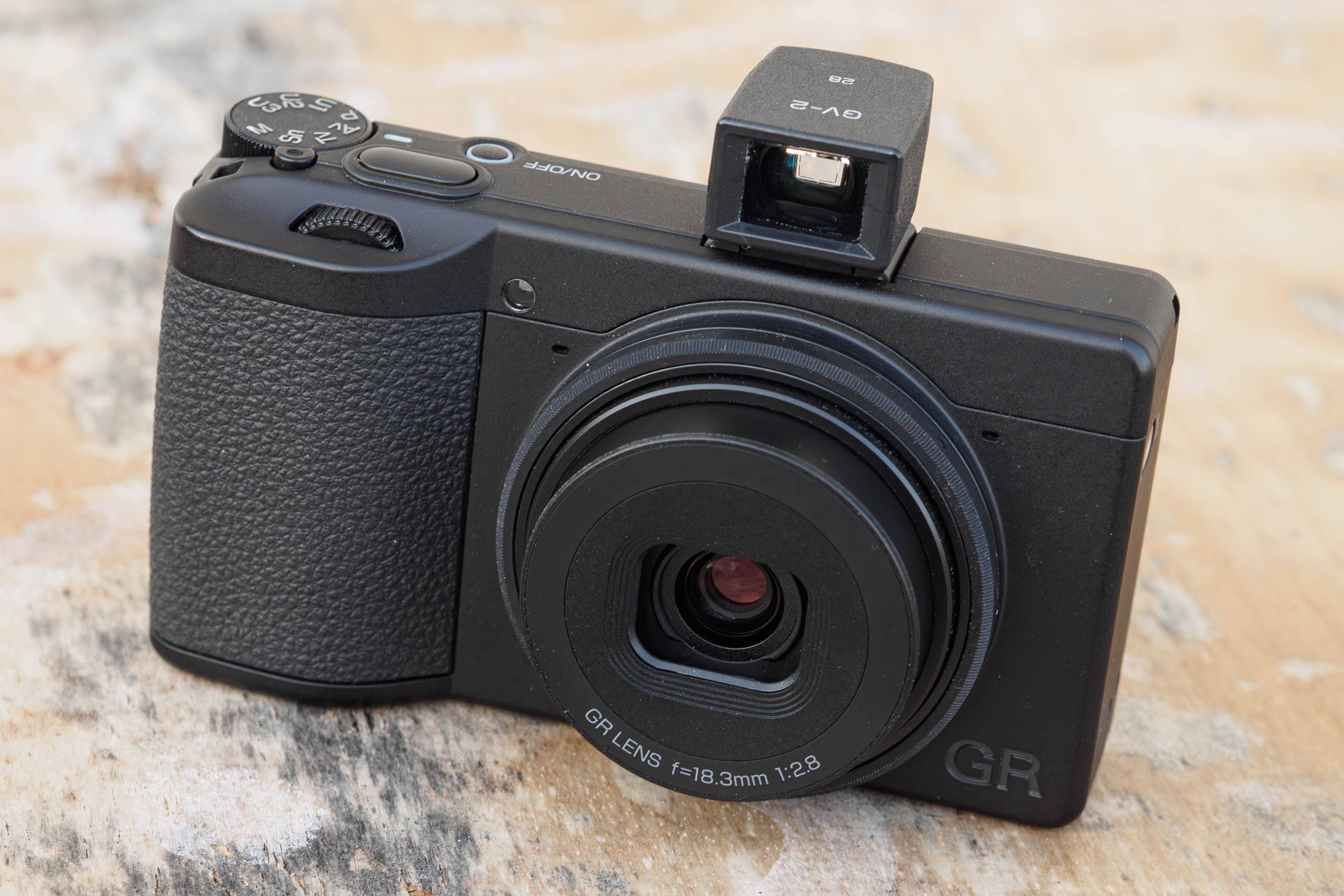
I tried this with Ricoh’s GV-2 viewfinder, and it’s certainly an option worth considering. However, shooting with a somewhat imprecise direct-vision viewfinder, and with no visible exposure information, feels to me like a step backwards, particularly when compared to a good electronic viewfinder.
For me personally, this is the most troublesome aspect of the whole GR design. I really wish the camera had a tilting rear screen, like my Canon G7 X Mark II. But of course, it would add size, weight, and cost.
Autofocus
By current standards, the GR IV Monochrome has a relatively unsophisticated autofocus system. It is, however, perfectly adequate for the kinds of subjects the camera is most likely to be used for. You can allow the camera to choose the focus point itself, from either the entire frame, or a user-specified zone. Or alternatively, you can specify the focus point by tapping the touchscreen, with a pinpoint mode available for really precise positioning.
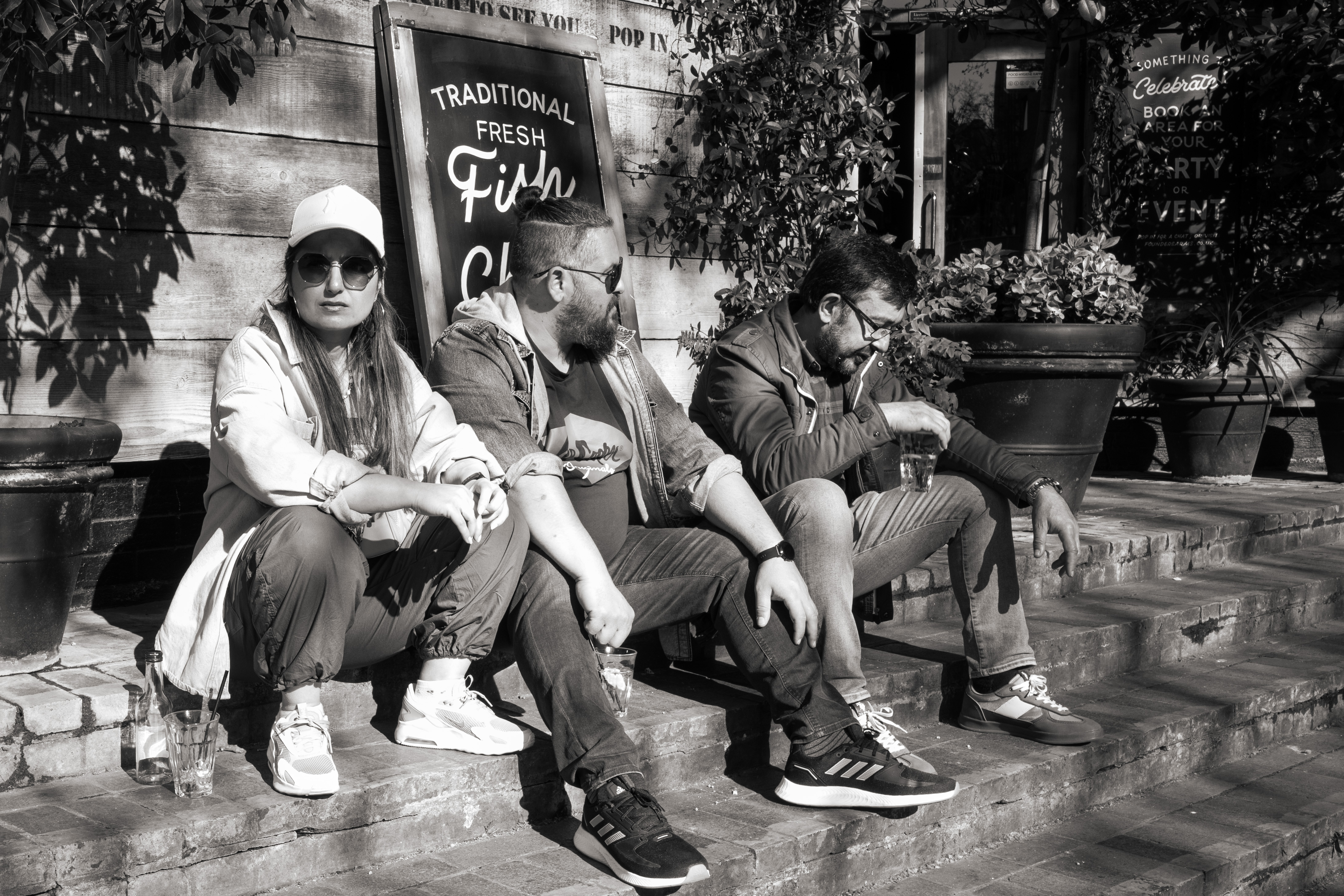
Face detection is available too, which does a good job of picking up people and tracking them around the frame. If the camera can’t find a face, it’ll just default to your chosen focus area. So you can leave face detection enabled all the time.
There are two continuous focusing modes, with the simpler AF-C option using a single, user-selected AF area. A tracking mode is also available, which attempts to follow your selected subject based on pattern. It works OK, but I found it less reliable than those on conventional cameras, which can feed colour information into the tracking algorithm.
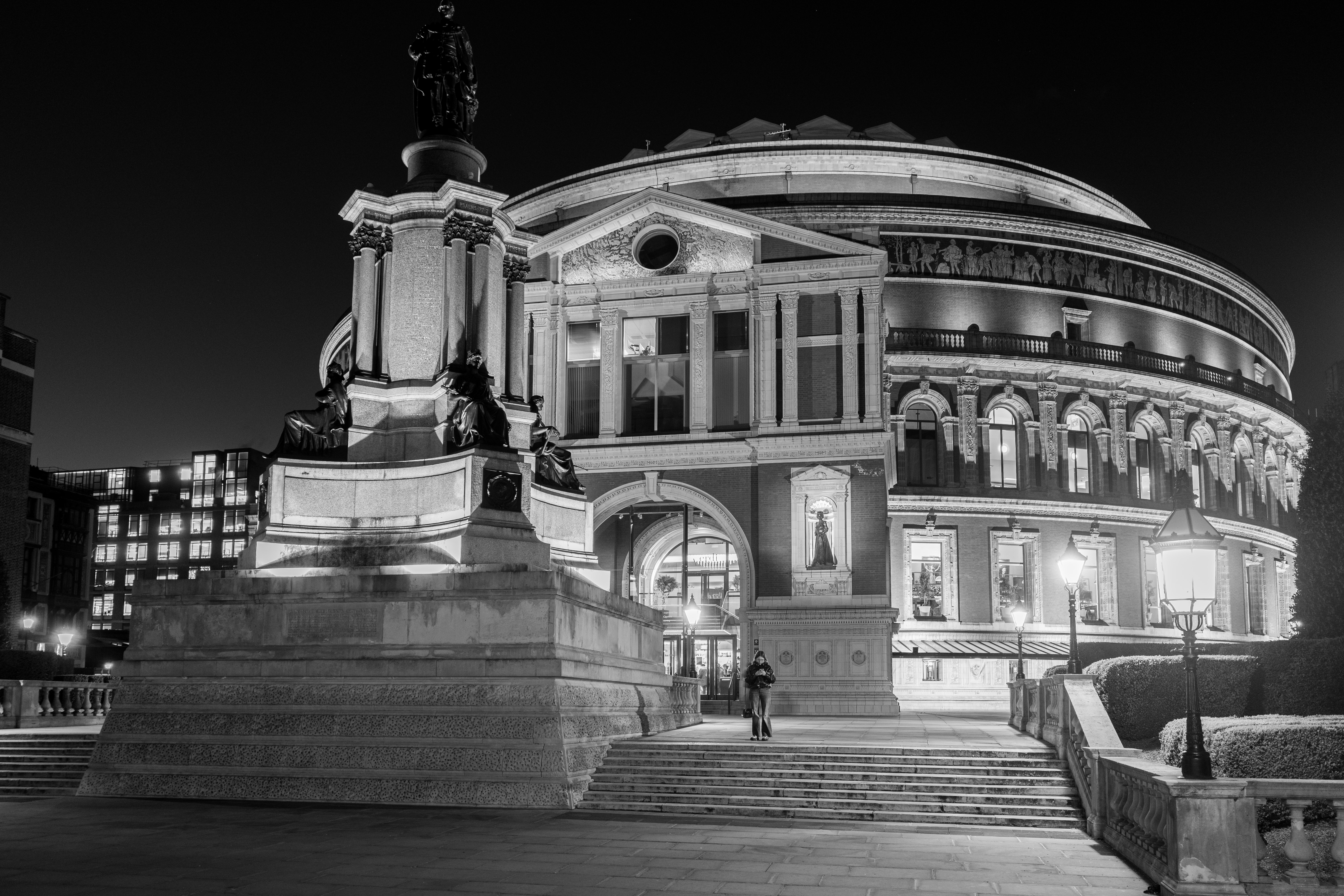
While the autofocus works reliably and effectively in daylight, in my experience it struggles in low light and at night time. Here, the camera clearly falls back on contrast detection rather than phase detection. It racks back and forth painfully, and sometimes doesn’t find focus at all. I often ended up pointing it at the highest-contrast edges I could see, and hoping for the best.
For street photographers, Ricoh has included its uniquely useful snap focus setting. This allows you to specify a focus distance, with the camera then pre-setting the lens to that position. This allows use of zone-focusing techniques, and eliminates any lag from the lens moving into focus before shooting.
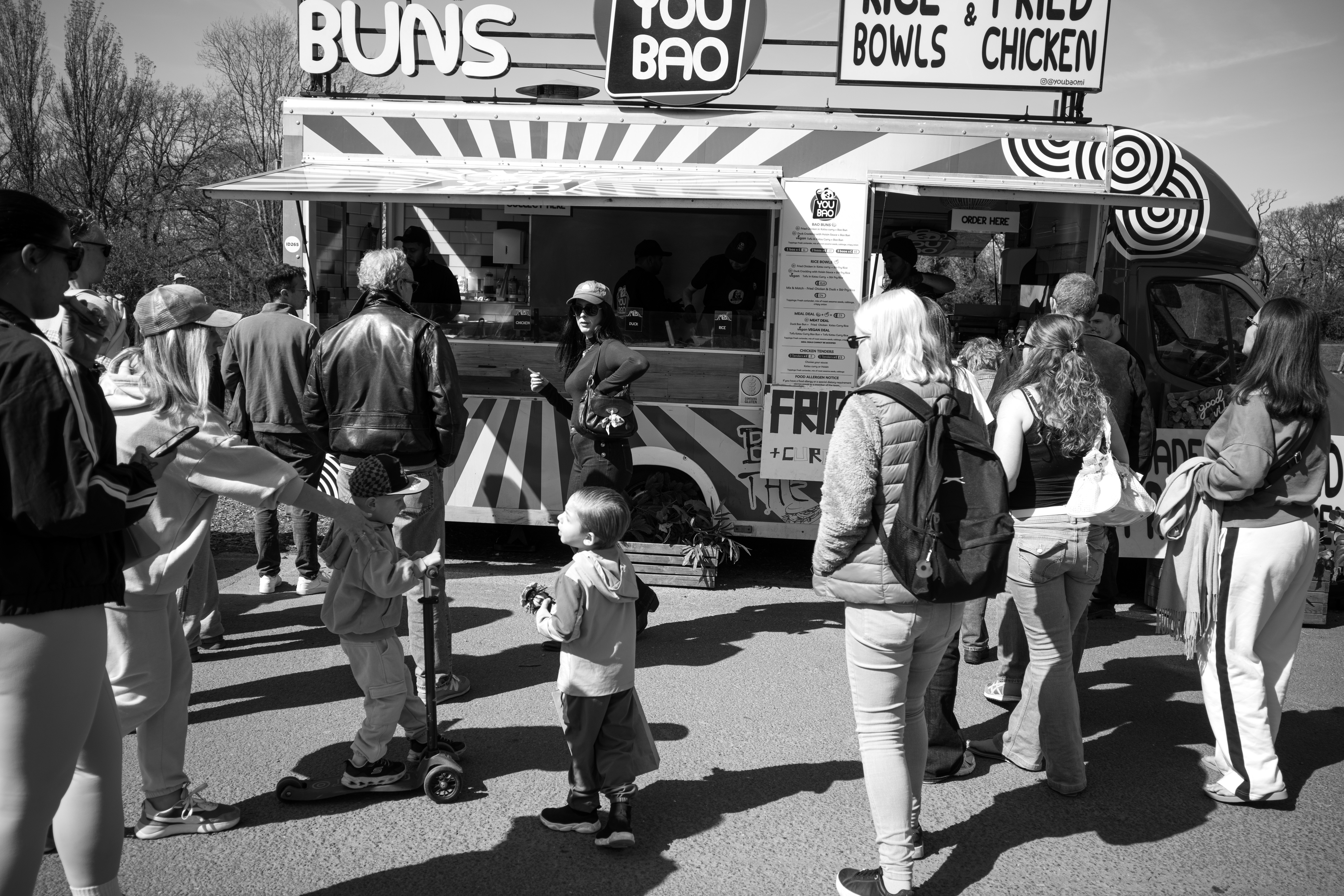
On the GR IV, Ricoh has expanded Snap Focus so it’s also available as an exposure mode, marked Sn on the top dial. Here, you can use the front dial to change the focus distance and the rear dial to set the aperture, with a small onscreen depth-of-field scale to indicate what should be within acceptable focus. Just bear in main that this doesn’t indicate pixel-level sharpness. I found this mode works best using Auto ISO, with the minimum shutter speed set for how you want to render motion (either fast to freeze it, slow to show blur, or anything in between). Once you get your head around how this works, it’s a uniquely powerful option to have available.
Performance
If there’s one thing you need of a camera for street photography, it’s snappy operation, and in this respect the Ricoh GR IV Monochrome excels. The lens extends and it’s ready to go a fraction of a second after you press the power button. Overall, it’s a camera that never gets in the way of you shooting.
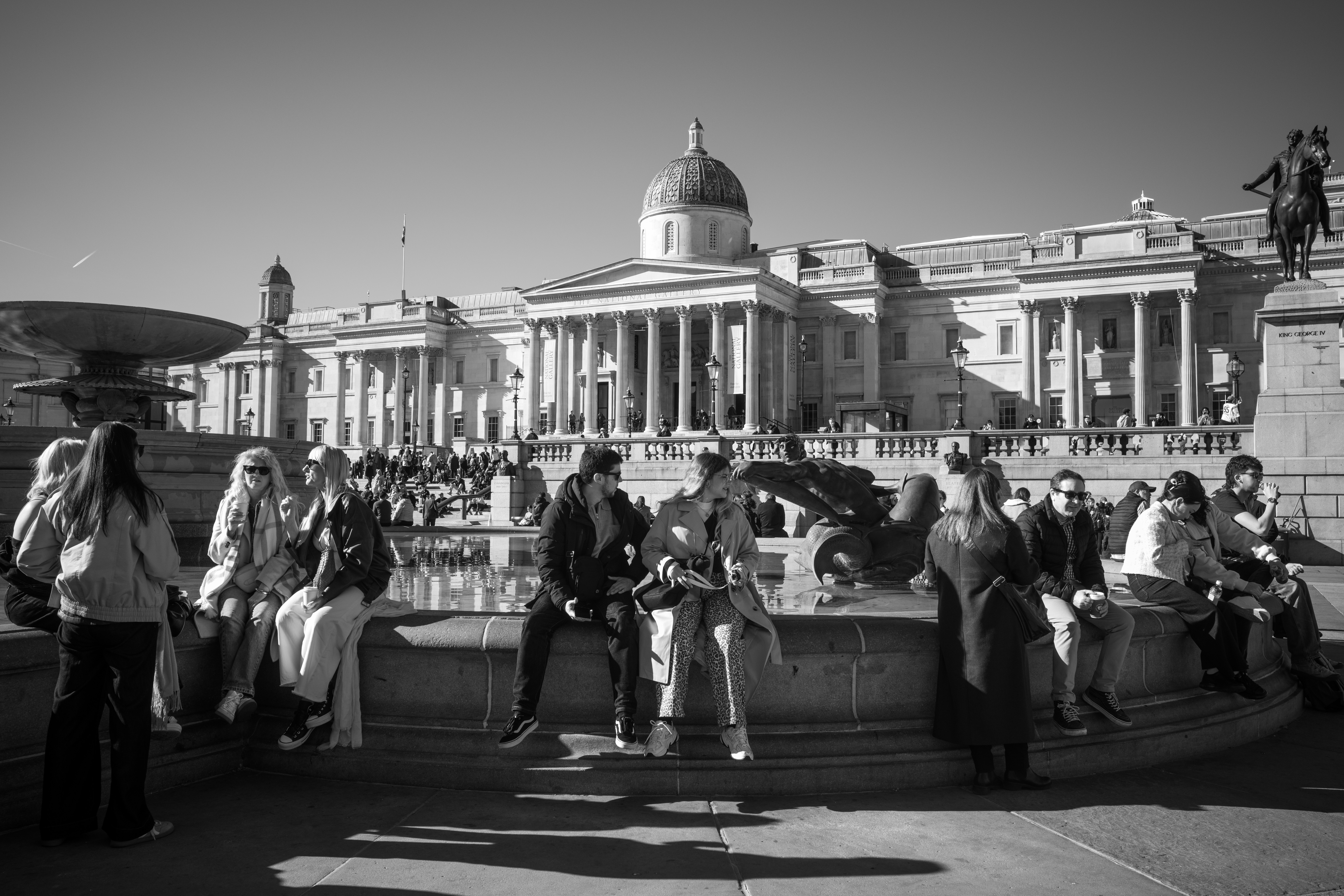
Thanks to the in-lens shutter, it’s extremely quiet too. Indeed once you’ve turned off the various electronic beeps, it can be practically silent. There could even be a case for leaving the fake shutter-sound enabled in some situations, just to provide you (and your subjects) with audible feedback that the camera is shooting.

Likewise, when you want to engage the red filter, to switches into place rapidly with just a quiet click. It’s so much easier than screwing-on a filter, or even engaging a filtered monochrome image processing mode on a colour camera.

Ricoh specifies the battery life as 250 shots per charge, and that seems reasonable to me, especially if you pay attention to turning off the camera when you’re not using it – which is made easy by the well-placed power button. The battery indicator goes through multiple, increasingly alarming displays along the way – including half white, yellow outline, and red outline – but even so, the camera keeps on going longer than you might think.
I got over 200 shots in one afternoon from a not-quite-fully charged battery, including some browsing in playback, and a few in-camera raw conversions. You can top-up the battery via USB-C during pauses in shooting, but I suspect most users will want a spare (which cost $60 / £50).
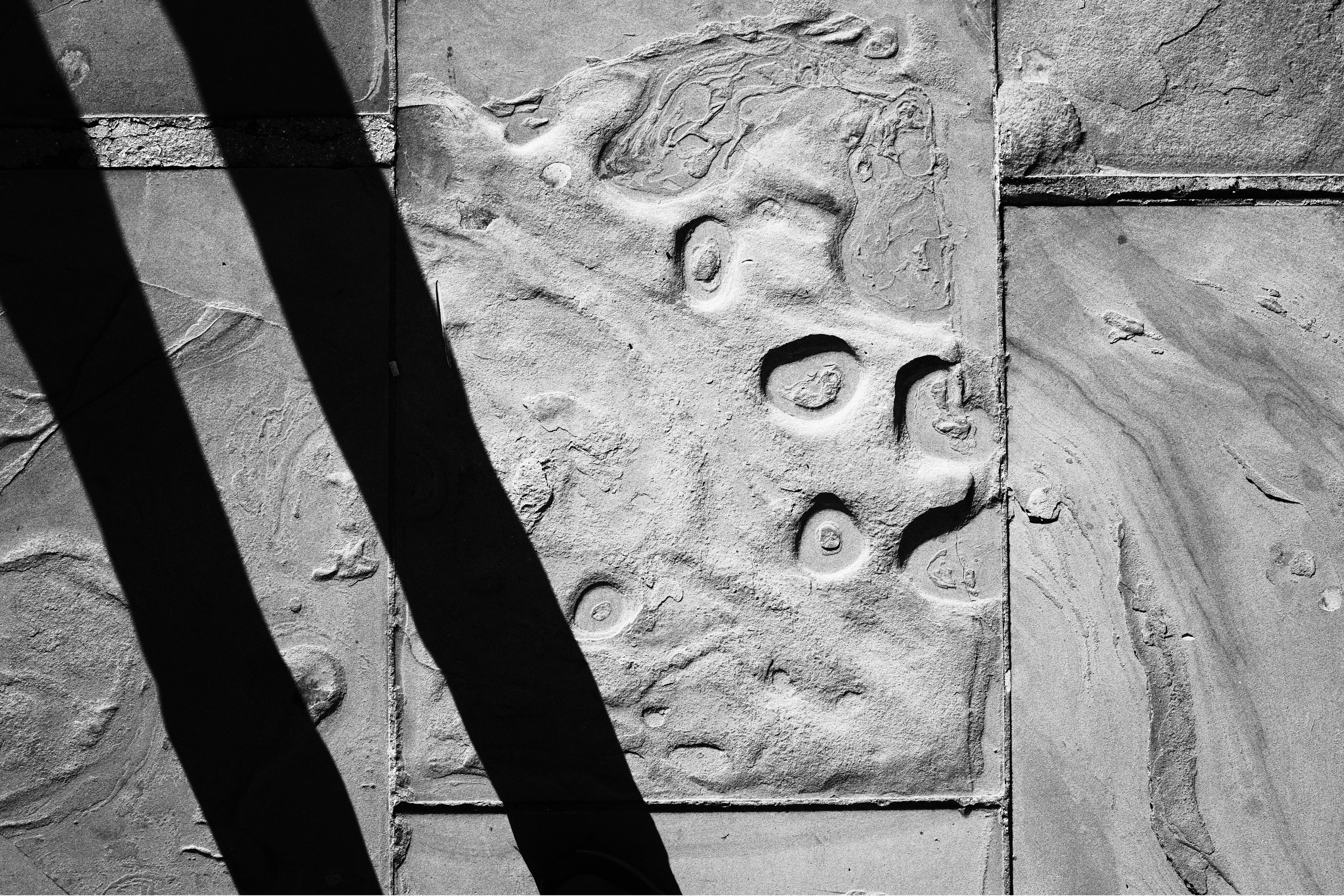
When it comes to burst shooting, the GR IV Monochrome is scarcely a speed demon. But 4fps is probably as fast as you need for a camera with a fixed 28mm equivalent lens. I discovered, though, that its burst performance is affected dramatically by whether you’re recording to a Micro SD card or the internal memory.
Shooting raw + JPEG, in my tests it recorded just 10 frames at 4fps to micro-SD before grinding to a halt. It contrast, when using internal memory it shot 23 frames to at 4fps, then reset itself to 3fps and kept shooting indefinitely. So if you plan on shooting bursts, the message is clear: use the internal memory.
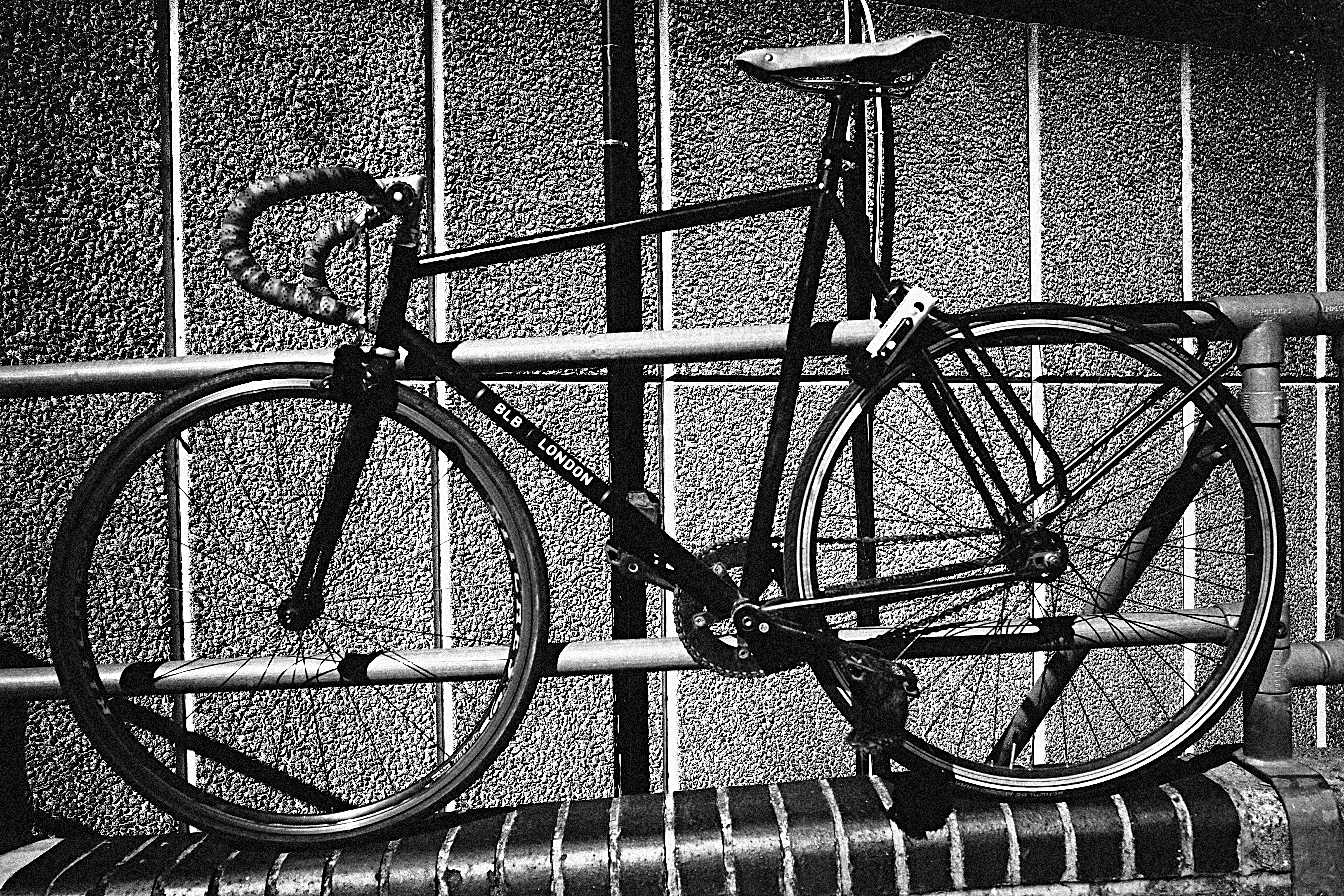
I’ve been really impressed by the in-body image stabilisation, which gave me perfectly usable images at shutter speeds as slow as 1.6 seconds. While that’s great for shooting static subjects in low light, what’s perhaps more important in practice is that it means all your shots should be free of blur from camera shake. Special mention must be made of the horizon correction function, too, which ensured all my shots were straight. I wish more cameras offered this.
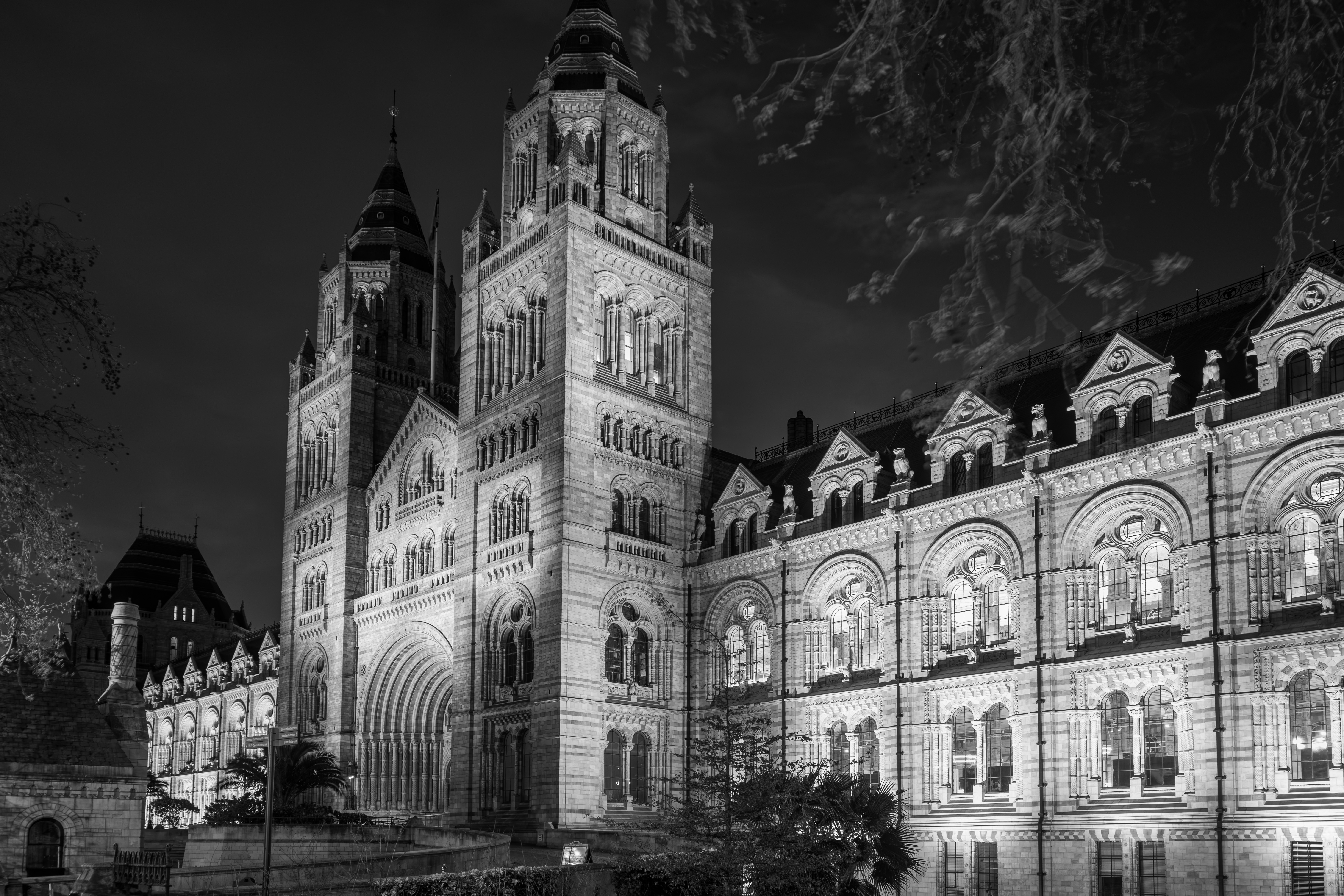
Metering is especially important with monochrome cameras, as unlike with colour cameras, there’s no way of recovering highlight detail from raw files when it gets lost. Unfortunately, I also found it quite difficult to judge whether the GR IV might be clipping highlights, simply from looking at the onscreen preview. So how well its metering works matters more than usual.
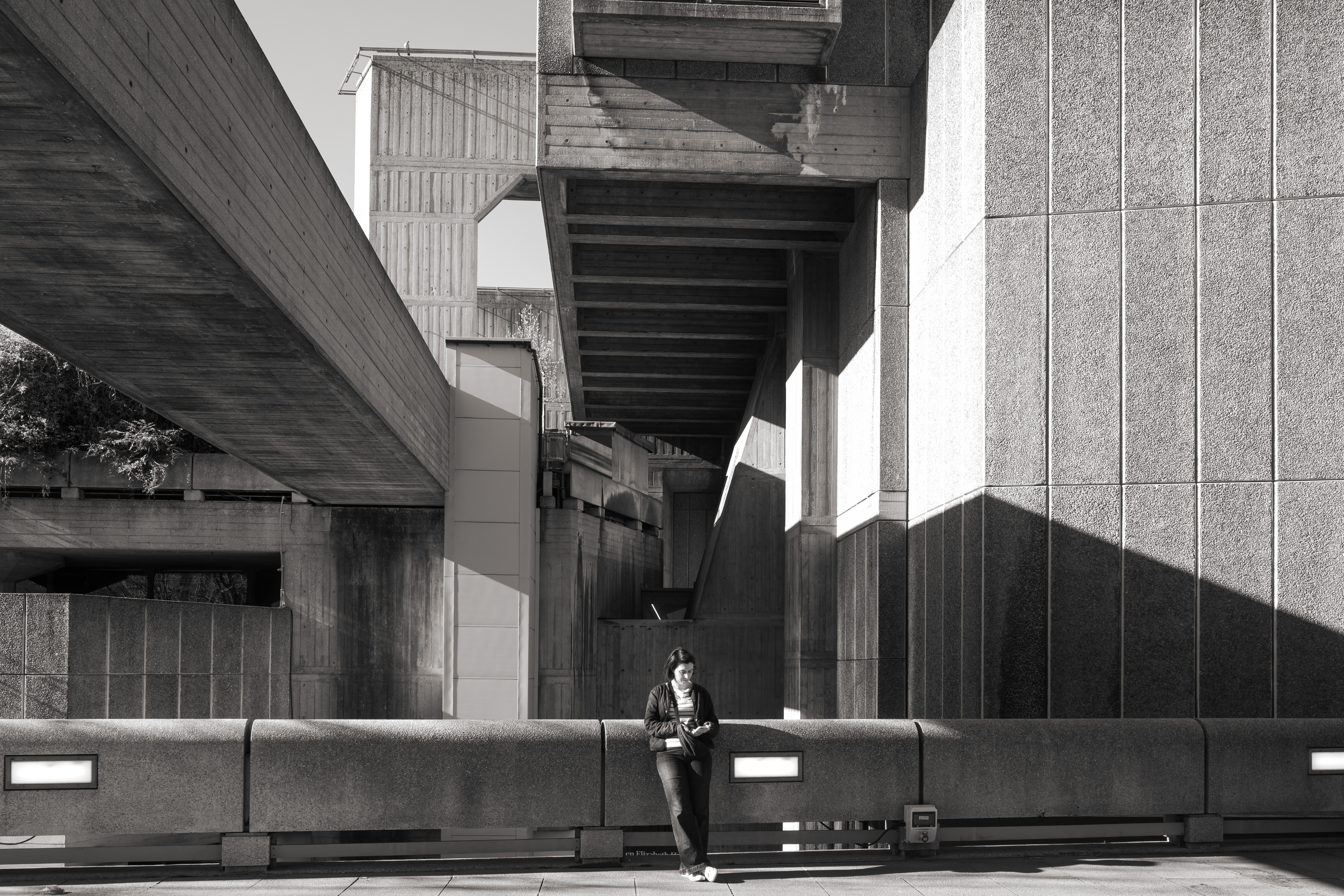
Thankfully, I found that in most situations, the metering performs well. It’s happy to clip small areas of extreme brightness, such as the sun or streetlights, but it rarely loses significant areas of important detail. However, I also observed that it’s strongly influenced by the focus point, which means it’s more likely to clip highlights if you focus on a dark area of the image. So it’s best either to focus on a bright area when possible, or to make a point of applying exposure compensation to tame any bright highlights.
Image quality
One thing you really can’t complain about with the Ricoh GR IV Monochrome is its image quality. As I’ve seen many times before from Leica’s Monochrom models, that black & white-only sensor really does deliver the goods. Pixel-level detail and texture is rendered with a crispness and precision that simply can’t be matched by any camera that has a colour filter array.
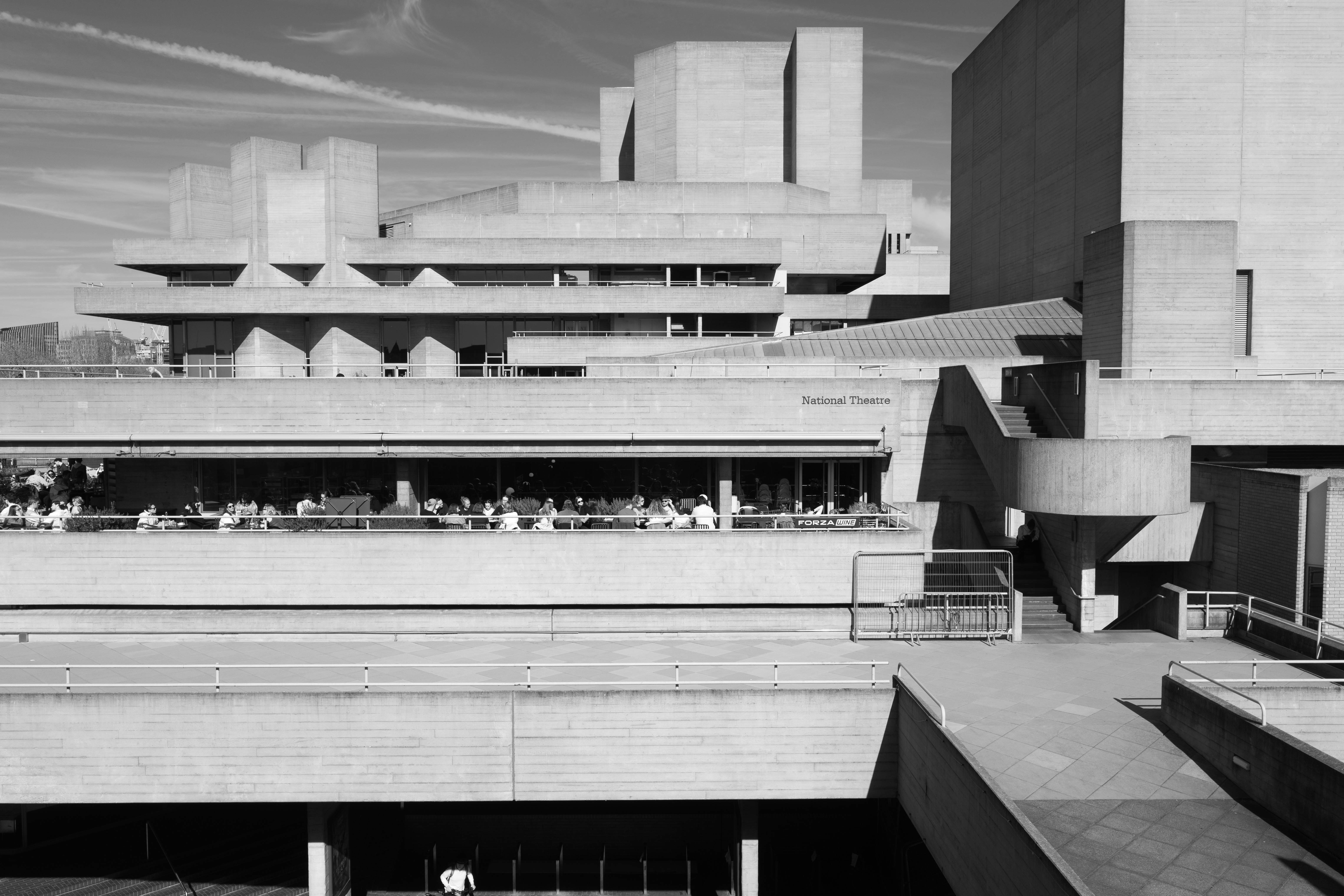
Indeed, compared side-by-side with the current APS-C resolution champion, Fujifilm’s 40MP X-Trans sensor (as used in the likes X100VI, X-T5 and other cameras), the GR IV Monochrome unquestionably captures at least as much real detail. The comparison below shows side-by-side crops from a GR IV Monochrome file up-sized to 40MP, and a Fujifilm X-T5, and detail rendition is pretty much the same between them. Click on the image for the full-size X-T5 file.
Likewise, noise performance is on a different level to cameras with conventional colour sensors. With no colour filters over the pixels, and no demosaicing going on, noise levels are lower and its appearance is extremely fine and granular. What’s more, it cleans up exceptionally well in the latest software such as Adobe Denoise.
This means you can work comfortably at extremely high settings of ISO 25,600 at least – which, for instance, could allow you to combine fast shutter speeds and small apertures for low-light street shooting. I couldn’t find a real-world situation where I’d need to shoot at an ISO higher than that.
That noise characteristic is also a great benefit when it comes to processing your raw files and pulling additional detail out of the shadows. It’s not necessarily that the dynamic range is unusually high – I’d rate it as similar to other APS-C cameras, and about a stop behind the best full-frame models. But you don’t really have to worry about how any noise is going to look.
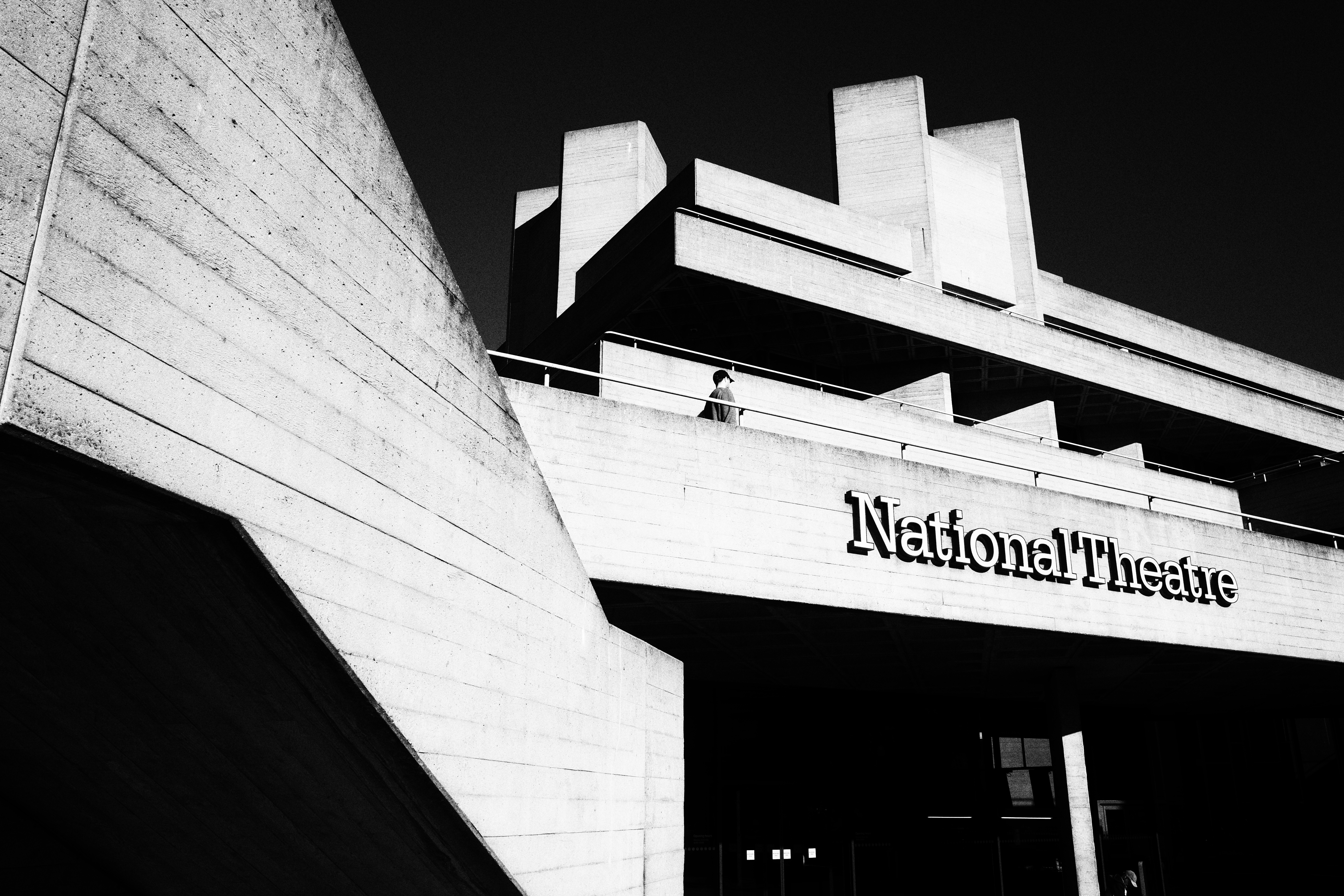
What this means is that the GR IV Monochrome’s DNG raw files give an excellent start point for creating your images. I do think, though, that you need to think rather differently about how you process black & white compared to colour. Personally, I tended to hike the contrast significantly, anchor the black point, and then boost the clarity and detail sliders, which is how the images in this review were treated. But each user will have their own preference.
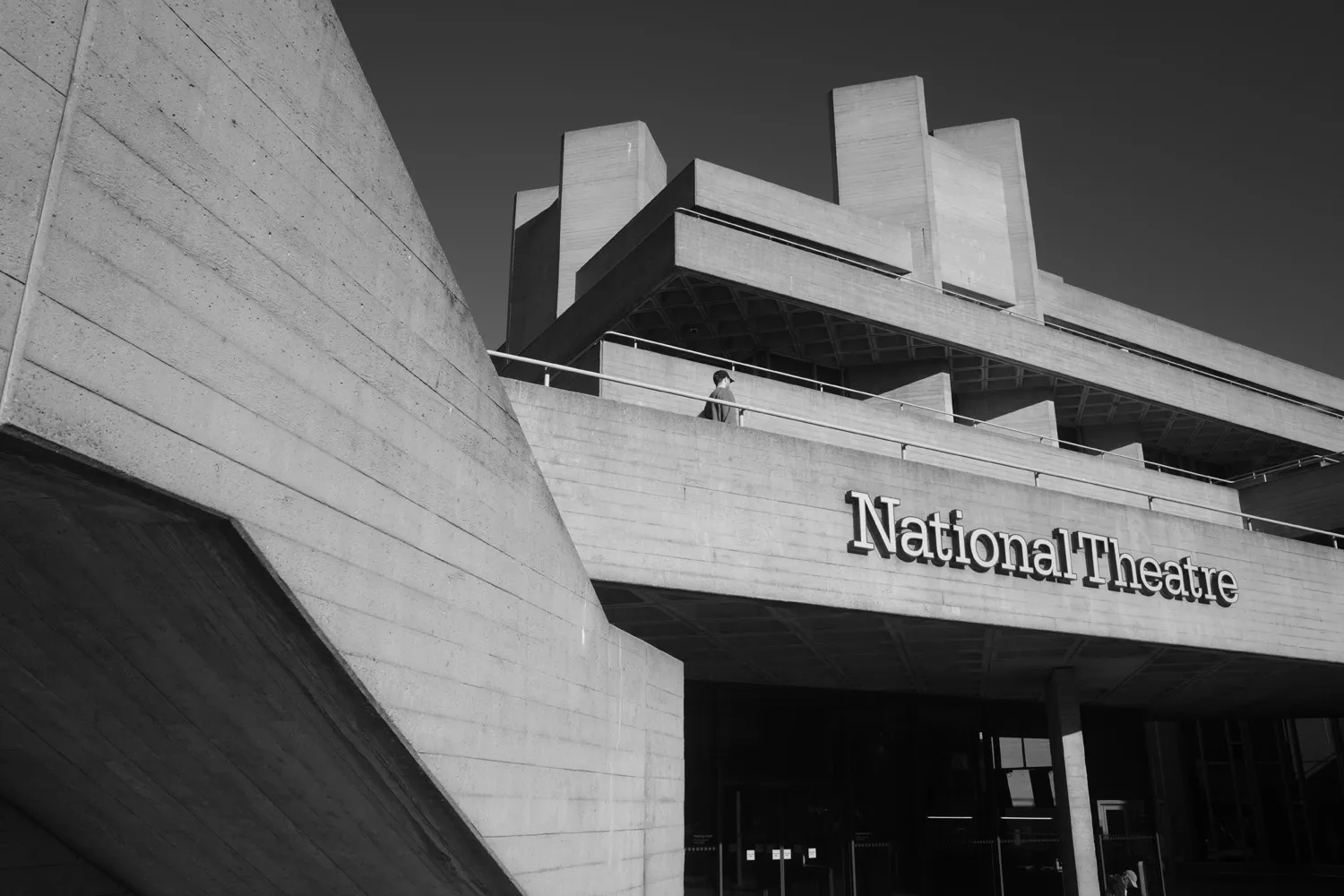
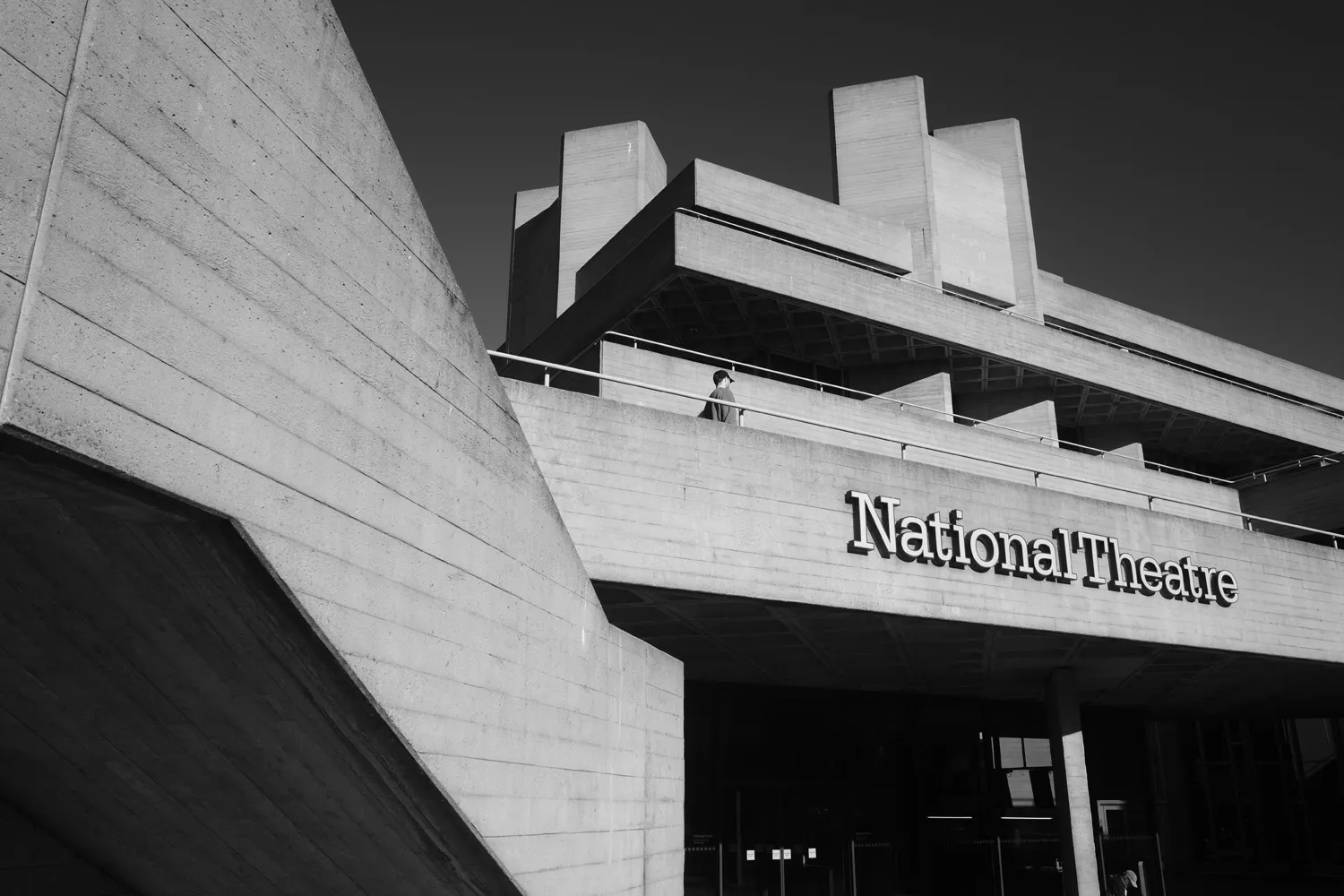
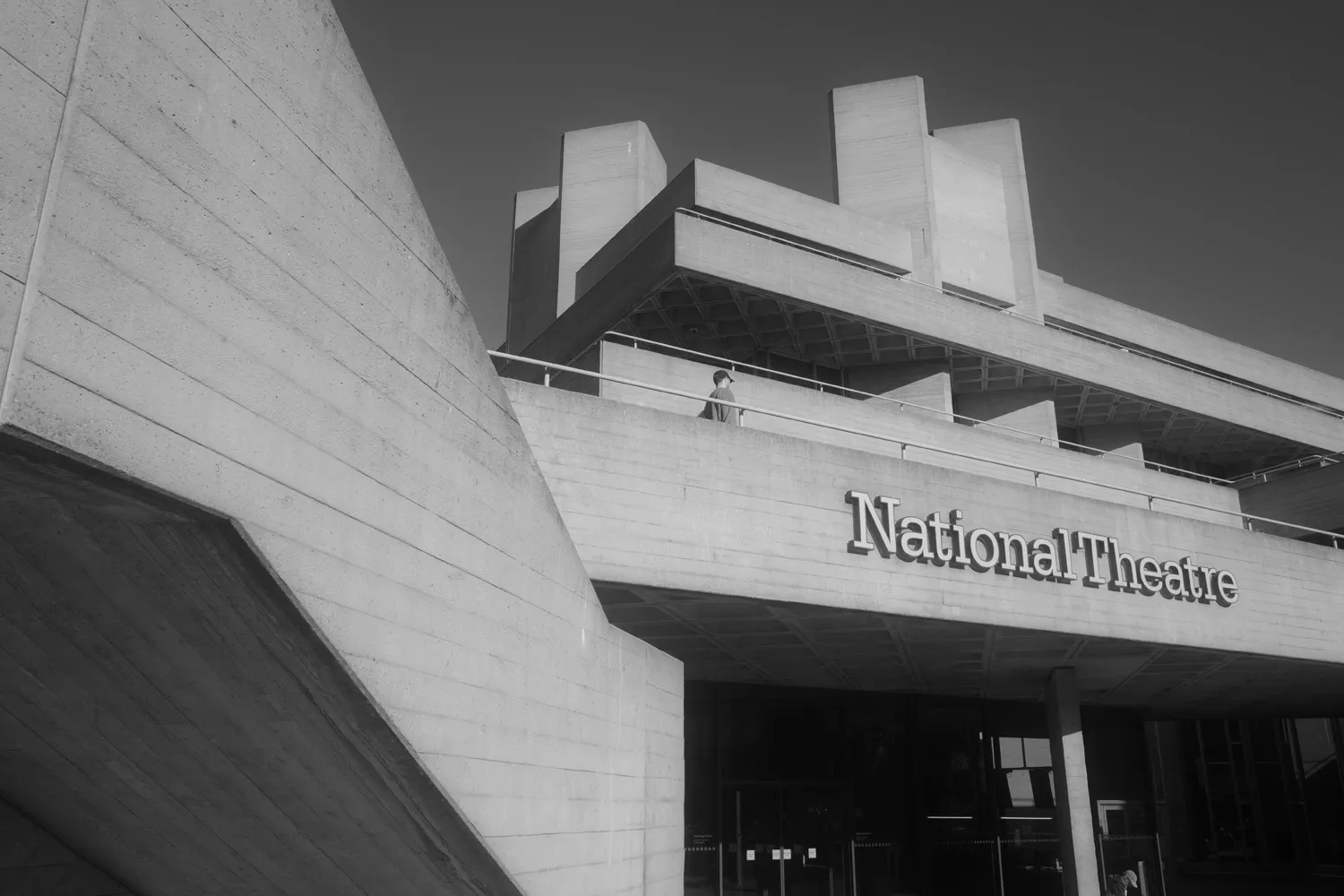
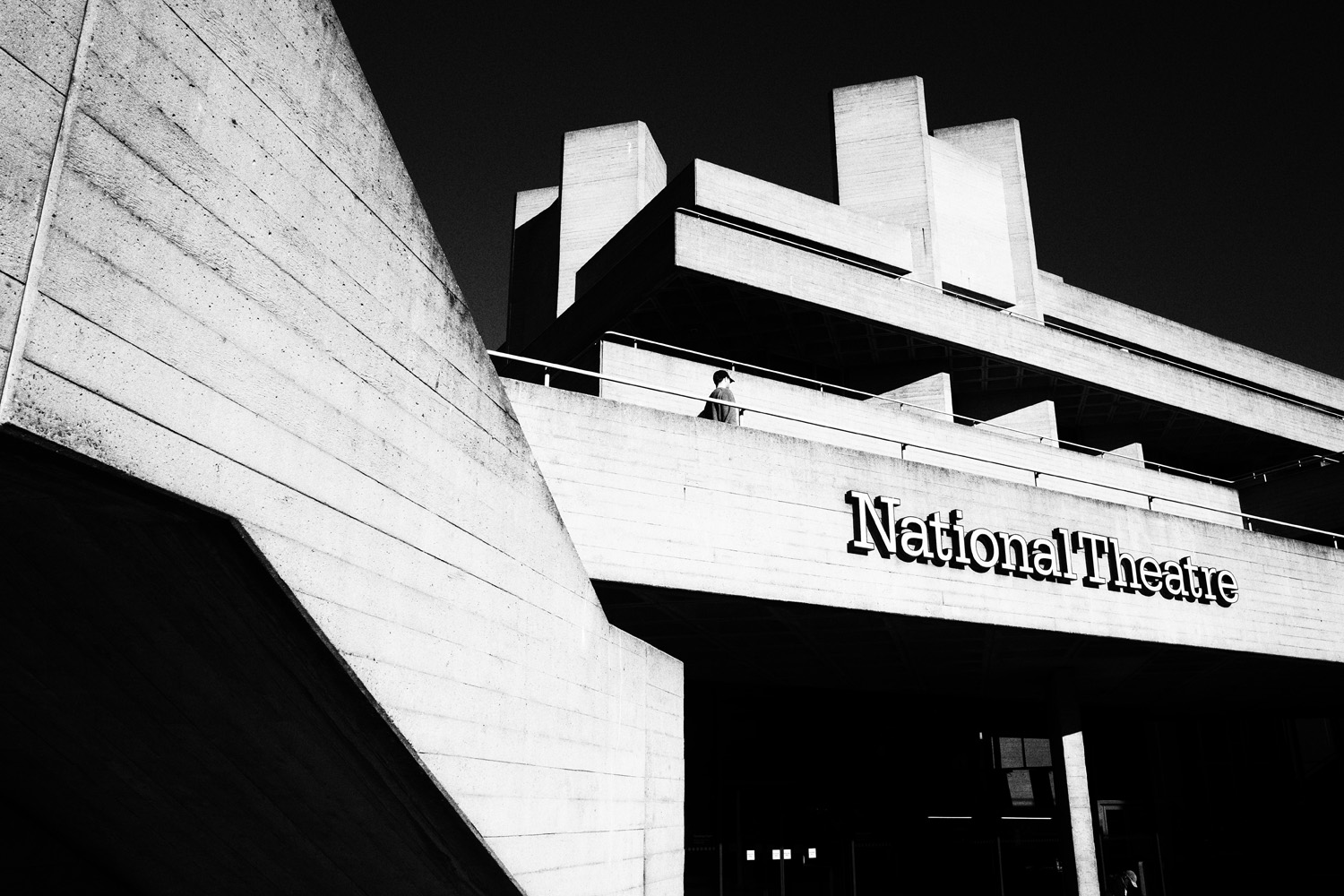
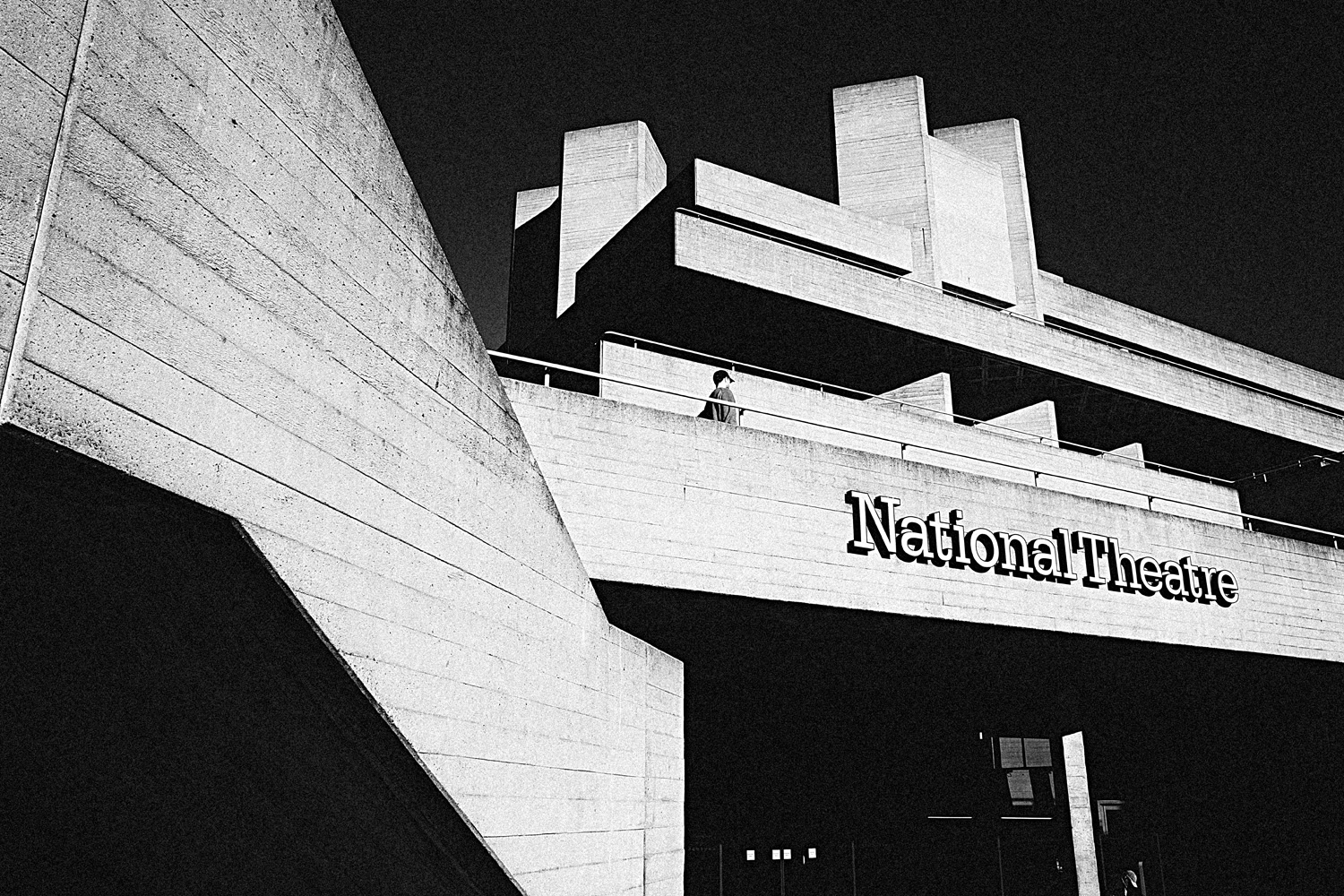
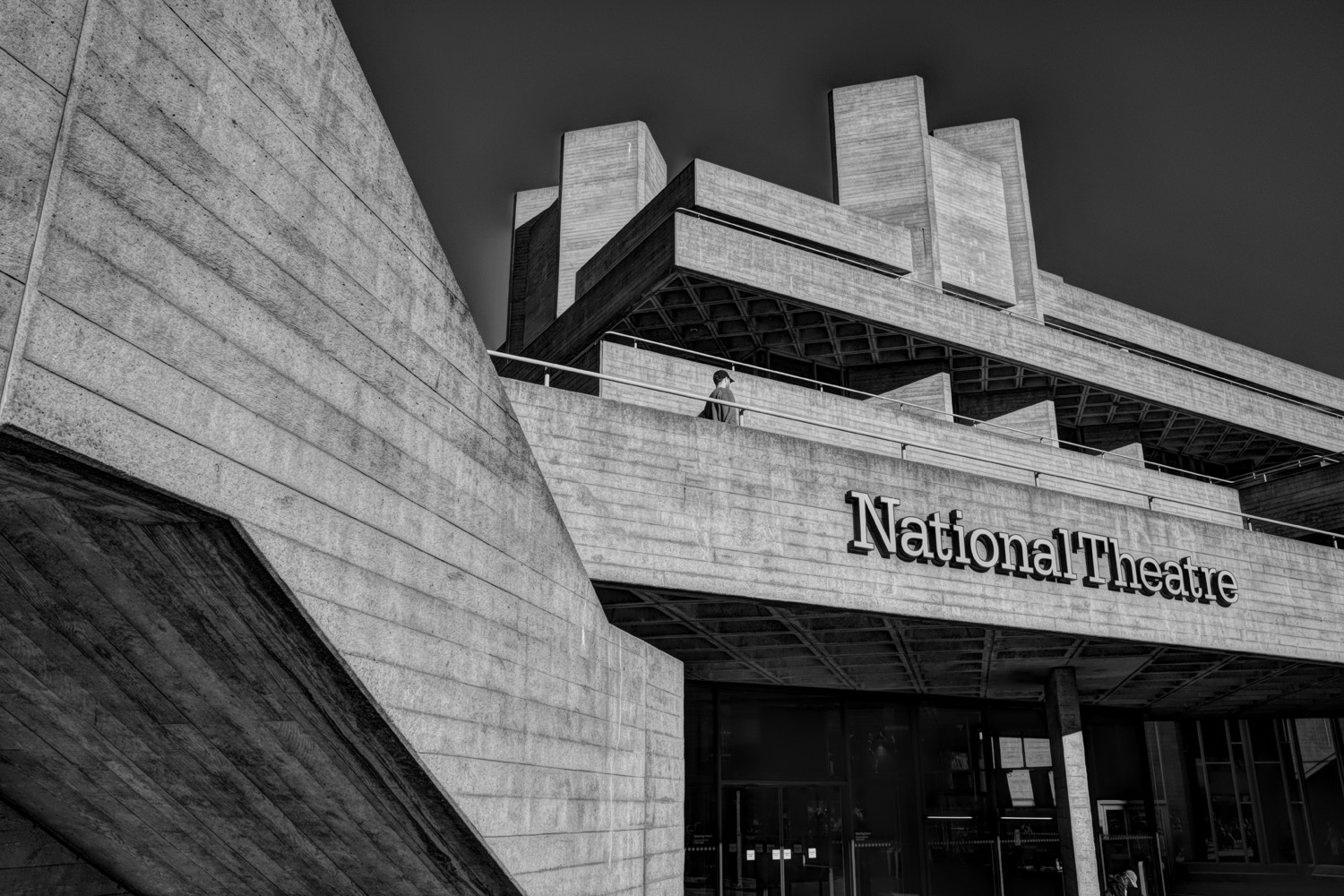
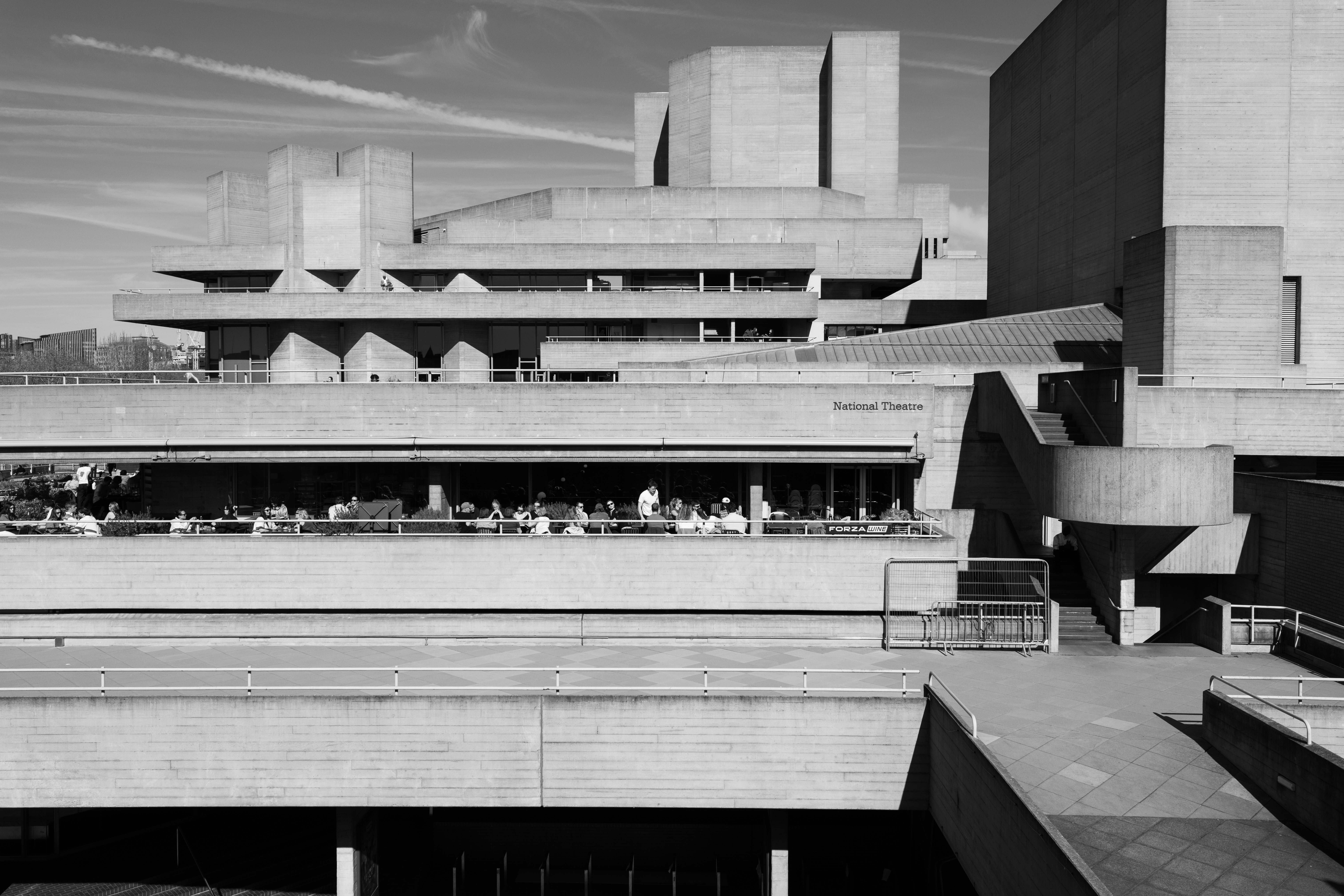
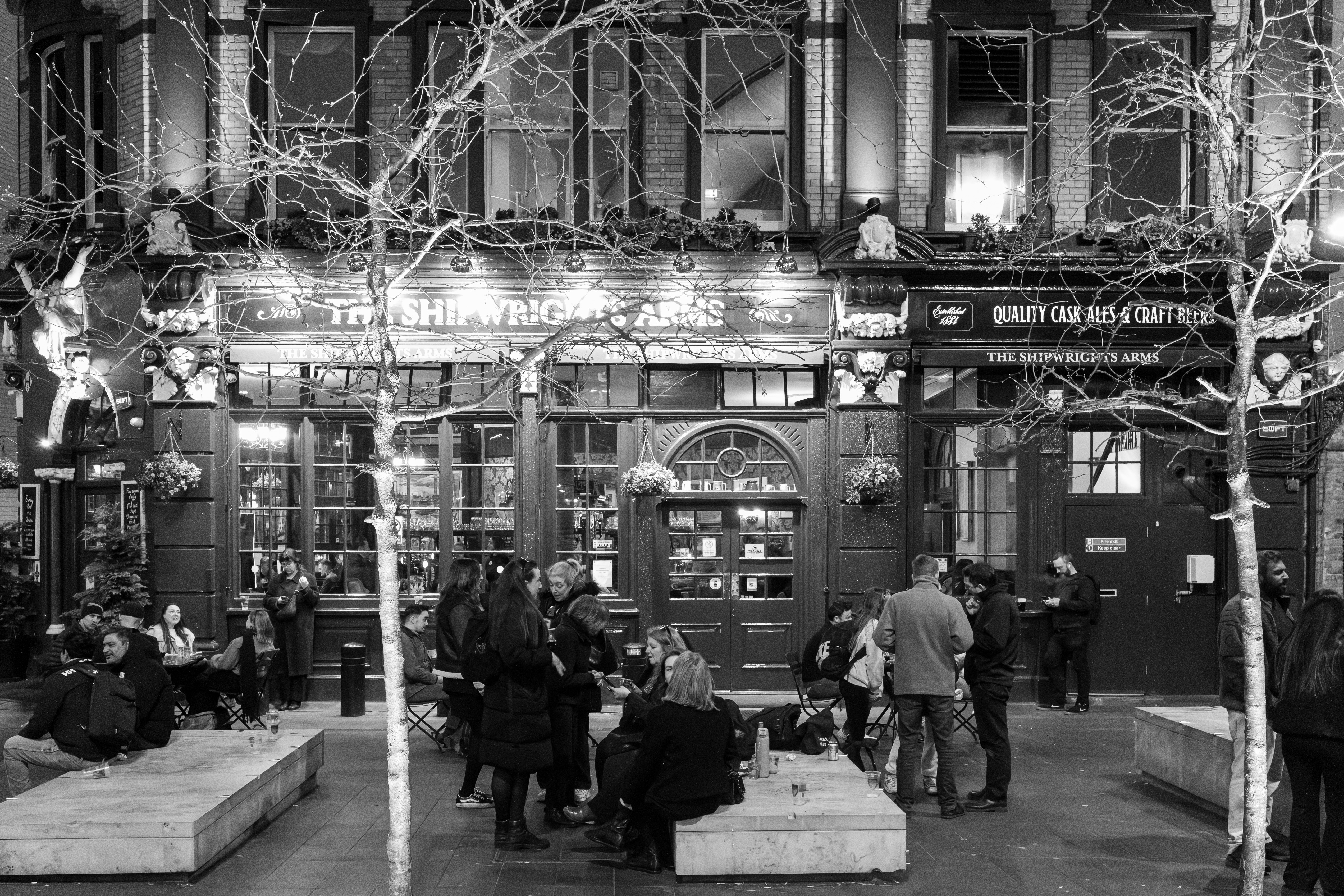
If you don’t want to shoot raw, the built-in Image Controls can give really nice JPEGs- flick through the slideshow above to see what they all look like. Personally, I gravitated towards ‘Solid’ for general-purpose shooting, and used High Contrast for more stylised, film-like effects. The latter can be particularly effective on dull, overcast days.
Lens quality
Of course, the sensor’s pixel-level sharpness would mean nothing if the lens weren’t up to scratch. However, what the Monochrome actually reveals is just how good the GR IV’s revised optical design really is.
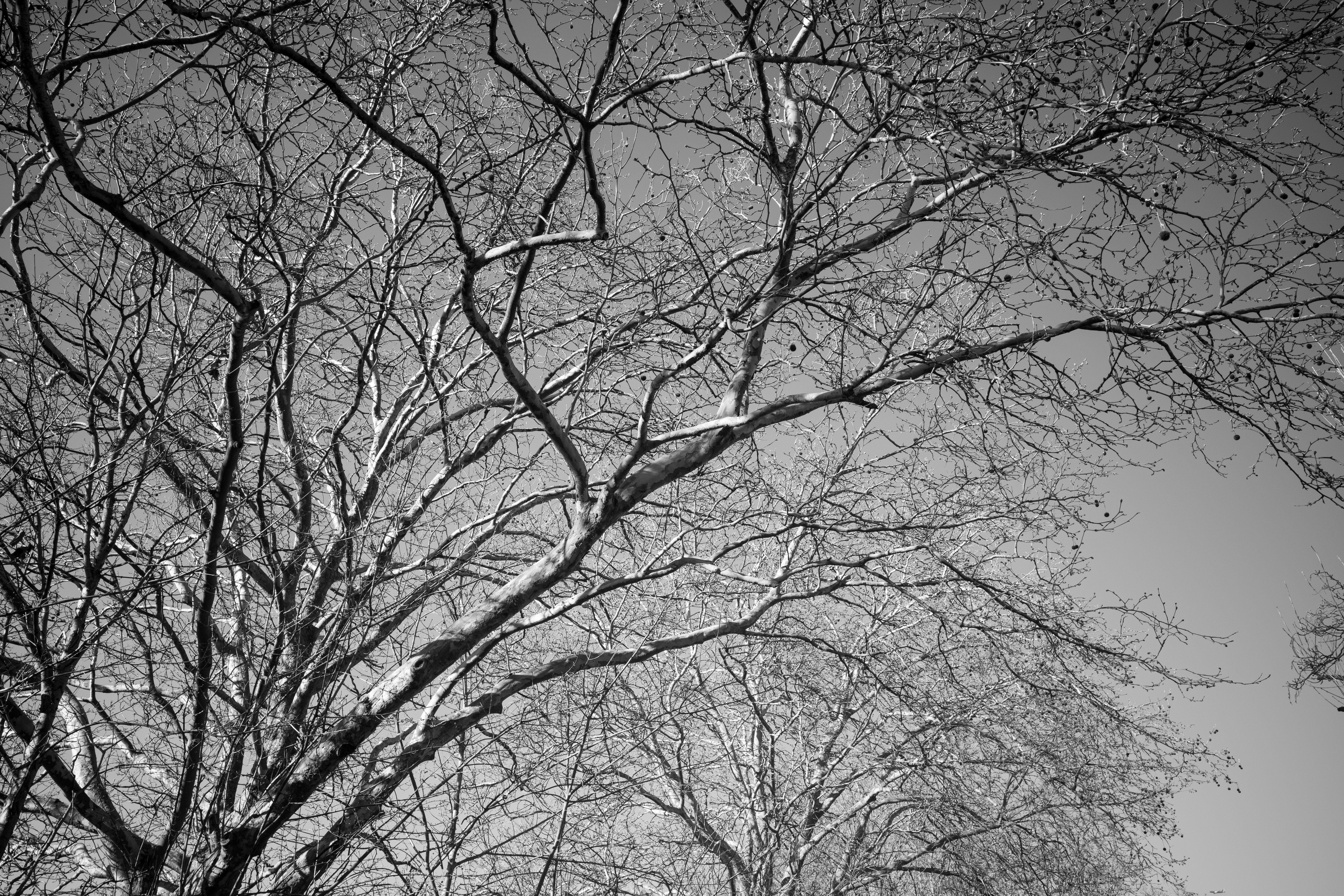
It’s super-sharp over the entire image area, especially at its optimum apertures of around f/4-5.6. The corners and edges are a little less crisp at f/2.8, but you’ll probably only notice that when pixel-peeping side-by-side comparisons. Diffraction blurring becomes clearly visible at f/11, and is quite obvious at f/16, but that could still be acceptable when front-to-back sharpness is more important than super-fine detail.
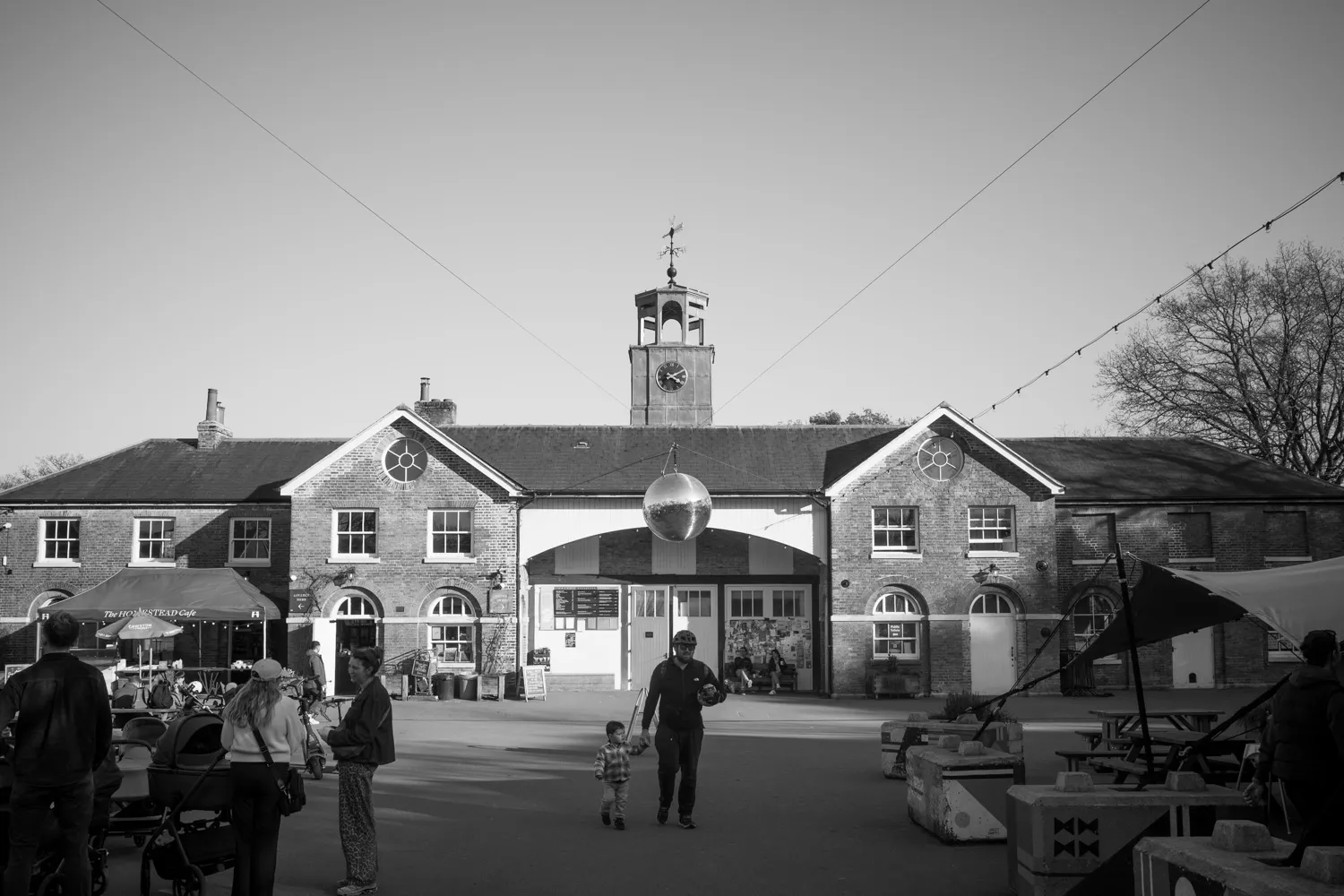
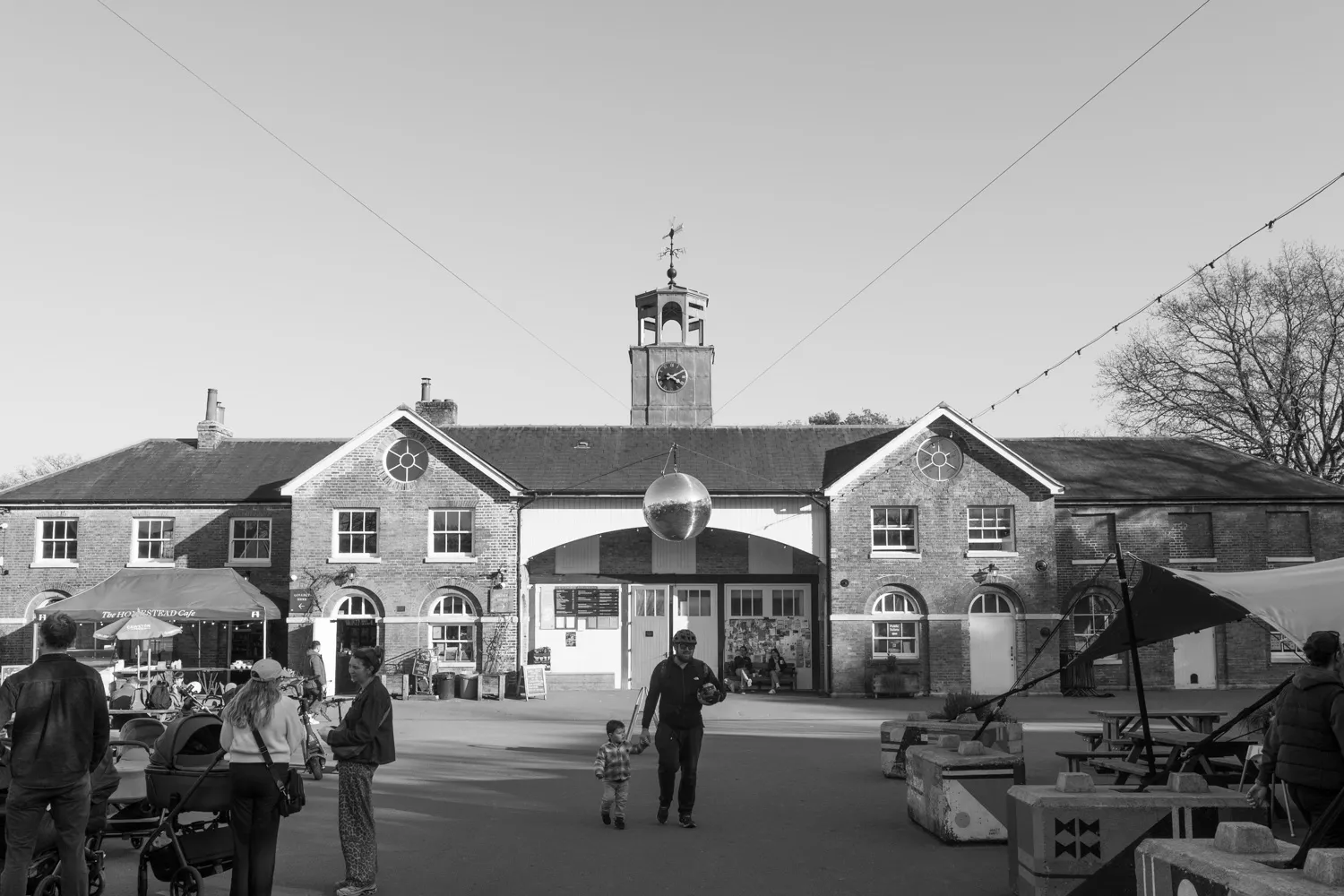
One very noticeable characteristic of the lens, though, is vignetting. While it’s corrected in the camera’s JPEG output, it’s clearly visible in raw files, regardless of aperture. You can, however, fix it by enabling profiled lens corrections in Adobe Camera Raw, which I think you’ll want to do for most shots (although sometimes, it can add character to an image). Adobe also tidies up the lens’s slight but noticeable barrel distortion. You can see this in the image comparison above and below.
Ricoh GR IV Monochrome: Our Verdict
I’ve been really impressed by the Ricoh GR IV Monochrome. It’s wonderfully small and pocketable, yet it delivers image quality that belies its size. The highly refined control layout makes it an absolute joy to shoot with too, once you’ve got used to it and set it up to suit your needs.
Arguably the biggest practical trade-off for that ultra-compact size, though, is the fixed rear screen and lack of any provision for an electronic viewfinder. This is something I struggled with, personally, and I really wish the camera had a tilting screen. But that would, of course, add to both the size and the price, and I totally understand Ricoh’s design choice here.
Of course, the biggest question is whether you actually need a black & white only camera? There’s no doubt you get technically better image quality, particularly in terms of pixel-level detail and high-ISO noise, aided by the excellent lens. Also, because it forces you to think purely in terms creating black & white images, your photography can only get better as a result.
Even if you’re a dedicated mono shooter, though, there’s a real question as to whether the Monochrome is worth the extra outlay over the standard GR IV. To me, the 25% premium in the UK is, perhaps, just about palatable. But for US buyers, paying almost half as much again feels like too much.
There’s also the question of whether you want a 28mm equivalent lens on a fixed-lens camera like this. That’s very much a matter of preference, and personally, it probably wouldn’t be my first choice. But if Ricoh were to make a GR IVx Monochrome with a 40mm equivalent lens, that would be a camera I’d find hard to resist.

Follow AP on Facebook, Instagram, YouTube and TikTok.
Ricoh GR IV Monochrome: Full Specifications
| Sensor | 25.7MP monochrome BSI-CMOS, 23.5 x 15.6mm |
| Output size | 6192 x 4128 |
| Focal length mag | 1.5x |
| Lens | 18.3mm f/2.8 (7 elements in 5 groups, 3 aspherical elements) |
| Shutter speeds | 30sec – 1/4000sec (mechanical); up to 1/16000sec (electronic) |
| Sensitivity | ISO 160 – 409,600 |
| Exposure modes | PASM, Snap Focus, 3x User |
| Metering | Multi, center-weighted, spot, highlight |
| Exposure comp | +/-5EV in 0.3EV steps |
| Continuous shooting | Approx 4fps |
| Screen | 3in, 1.04m-dot fixed touchscreen LCD |
| Viewfinder | Optional GV-2 optical viewfinder |
| AF points | Freely positionable |
| Video | Full HD up to 60fps |
| External mic | None |
| Memory card | 53GB internal memory, Micro SD |
| Power | DB-120 rechargeable Li-ion |
| Battery life | 250 shots |
| Dimensions | 109.4x 61.1 x 32.7mm |
| Weight | 262g (including battery and card) |