


OPPO Find X9 Pro review: the top Android alternative to the iPhone?


OPPO is back with their latest flagship, the OPPO Find X9 Pro. Jessica Miller puts this superb all-rounder to the test.
Amateur Photographer verdict
The upgrade camera system offers plenty of photo opportunities. Combined with a incredible battery, slick software and stunning design, this is a great phone.
- Great camera performance
- Fantastic battery
- Good value for money
- Unavailable in the US
- Additional teleconverter lens accessory difficult to buy
- Aggressive AI processing
OPPO has been on a roll in recent years with creating some of the best smartphones on the market for photographers. Having renewed their partnership with Hasselblad in 2025, the collaboration has ensured the production of some great cameras and this continues in the Find X9 series with the debut of a new-generation Hasselblad Master Camera System.
The OPPO Find X9 and Find X9 Pro make up the Find X9 series. The Find X9 Pro is offered in a 16GB and 512GB configuration available for £1,099 at the time of review, €1299 in Europe, and AU$2299 in Australia. Unfortunately, this series is unavailable in the US.
How I test phones
I review smartphones from the perspective of choosing one for its photography and camera performance. I look at what the OPPO Find X9 Pro offers, and the features included for photography and video, paying particular attention to the cameras on the phone and the output from each different lens.

OPPO Find X9 Pro at a glance:
- 50MP main camera, f/1.5, 23mm equiv, AF and OIS supported
- 50MP ultra-wide camera, f/2.0, 15mm equiv, AF supported
- 200MP telephoto, f/2.1, 70mm equiv, AF and OIS
- 2MP True Color Camera, f/2.4, 9-channel
- 50MP selfie camera, f/2.0, 21mm equiv, AF supported
- 4K 30/60/120fps, Dolby Vision
- 161.26mm x 76.46mm x 8.25mm, 224g,
- 6.78inch display, 120 Hz, Corning® Gorilla® Glass Victus® 2
- 7500mAh battery
- Silk White, Titanium Charcoal colourways
- Optional teleconverter accessory available in some markets

Features
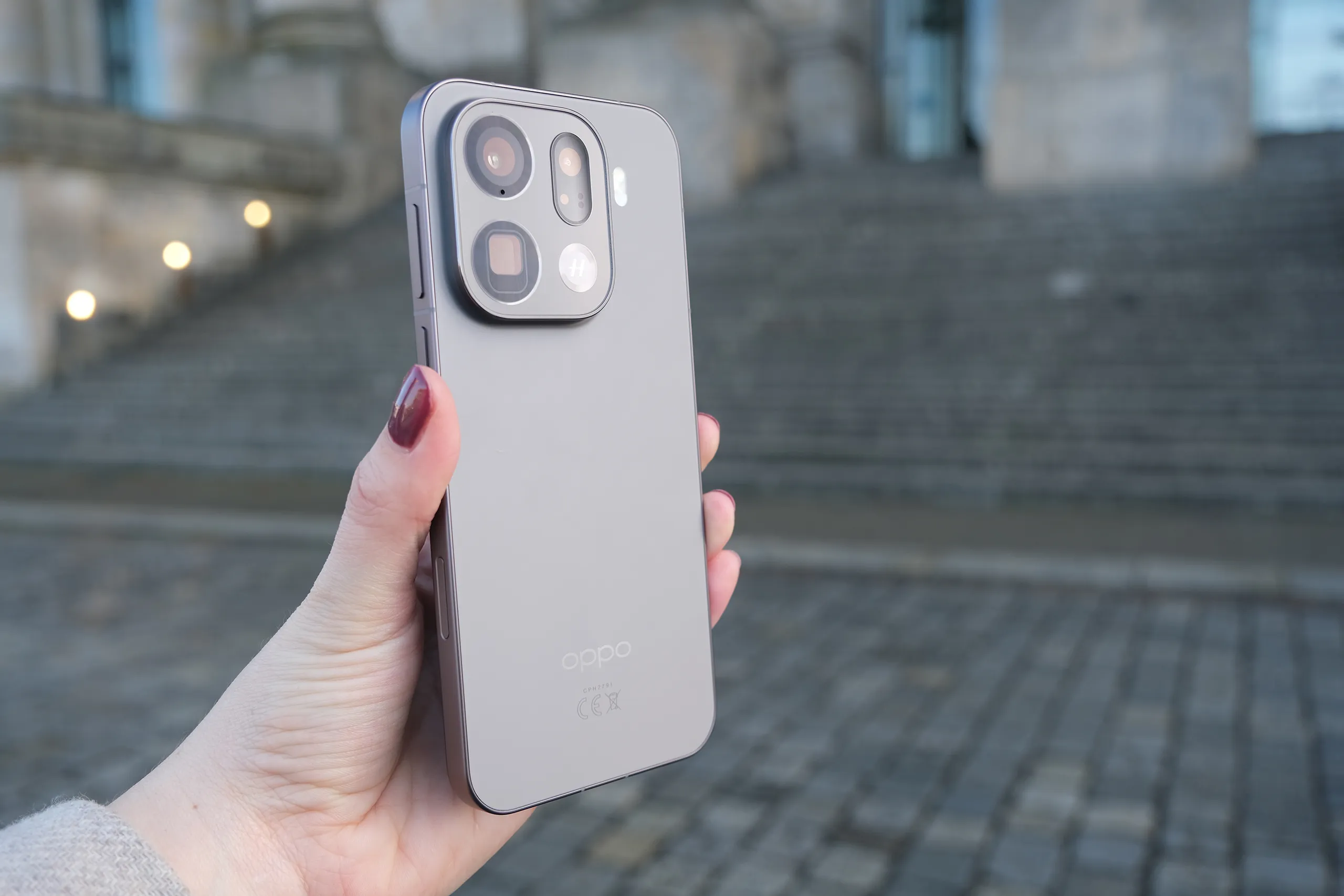
The Find X9 Pro features a powerful triple-lens set-up on the back, with an additional 2MP True Colour camera that helps to reproduce colour in challenging shooting situations. The two zoom lenses as seen on the Find X8 Pro have been replaced bythe 200MP 3x periscope Telephoto. Both the main and ultra-wide camera are 50MP, with the Ultra XDR main camera now containing a new larger Sony LYT 828 1/1.28-inch sensor with a wider f/1.5 aperture.
The new 3x telephoto camera features a massive 1/1.56-inch 200MP sensor and is the highest resolution ever in an OPPO device. It is paired with a Hasselblad-certified lens that has an ultra-fast f/2.1 aperture and a 10cm minimum focus distance for macro shots.
Powered by the groundbreaking LUMO Image Engine, Find X9 Series becomes the world’s first smartphone capable of capturing full-resolution 50-megapixel photos by default—delivering exceptional 8K-level clarity directly from the camera. All three rear cameras support this feature.
On the front of the camera we have a 50MP selfie camera, with autofocus, which is a step up from the X8 Pros 32MP sensor. I’ve found this selfie camera a great one to use and includes different crop options to help fit more subjects in.

Build and handling
The OPPO Find X9 Pro features a new modern and refined design from the Find X8 Pro, particularly noticeable changes have been made to the camera housing. Now a rounded square shape positioned in the top-left corner at the back of the phone – like many other designs seen by the likes of Apple – instead of a central circular design as seen in previous Find models. I personally prefer this style, but equally the design doesn’t make this phone stand out from the rest of the market.
At 8.25mm thick, the phone is compact in size and slim. Combined with a display of 6.78inch, it is almost as large as the iPhone 17 Pro Max and Samsung Galaxy S25 Ultra at 6.9-inch but feels comfortable to hold even with smaller hands. The display reaches 3600 nits peak brightness and 1 nit minimal brightness, making viewing comfortable in bright conditions as well as in low light and night environments.

The phone is available in two simple colours – Silk White and Titanium Charcoal – for this review I have been using the Titanium Charcoal design which has a subtle non-reflective texture. The colourway is incredibly elegant and has a lilac-mauve undertone.
The Quick Button on the side of the phone is still present and in the same position as the X8 Pro.
The Find X9 Pro packs an even more impressive 7500mAh silicon-carbon battery, which is the largest battery in any OPPO flagship device. The Oppo Find X8 Pro had a 5,910mAh, while the OnePlus 13 which I use as my main phone has a 6,000mAh battery. This is a massive increase and puts the Samsung Galaxy S25 Ultra’s 5000mAh and the iPhone 17 Pro Max’s 5,088mAh batteries to shame. It is capable of 80W super-fast charging and up to 50W wireless charging. The phone easily gets up to two days of battery life with general everyday use and is quick to charge.

Like most new flagships the OPPO Find X9 Pro is built to last and withstand more extreme conditions with IP66, IP68 and IP69 certification, which gives protection against dust, prolonged water submersion and high-pressure water jets – providing further confidence with everyday use. The Corning Gorilla Glass Victus 2 has held up really well despite being the victim of a few drops.

Native camera app
The phone’s native camera application looks just like other OPPO and Android phones; packed with features including different shooting modes. The Hasselblad Master Mode within the camera app offers full manual control of all parameters and by default the colour science is set to replicate the characteristics of the Hasselblad X2D camera. Various presets are also available, as they are on other OPPO phones, for more customisation.
Alongside the standard photo and video modes, there is also a Hasselblad Ultra-clear mode that enables high-resolution 50MP shots with the telephoto camera up to 3x zoom without pixel-binning. The 200MP full-resolution of the telephoto can also be activated in this mode to deliver 16K-level resolution at 3x optical zoom. Taking 200MP photos may feel like overkill but it allows for a 50MP crop at 6x and a 12MP crop at 13.2x zoom to be made, which can come in handy.

Image Quality and Performance
The Find X9 Pro captures brilliant photos which are naturally vibrant and rich in detail. Colour and quality are generally very consistent across all of the lenses, and also between the standard photo and Hasselblad high resolution modes. Even in scenes with different colours competing – e.g. blue sky and green grass – colours are natural looking without becoming oversaturated.
The main difference I have seen is between the 50MP ultrawide and the main camera, where colours like blue are more saturated in the 0.5x images than the 1x, but only slightly. There is also some distortion, but it is mostly well-controlled.


When it comes to zoom, the results are fantastic. It provides lossless zoom up to 13.2x and the phone captures impressive results at this zoom length. However, as soon as we start reaching 30x zoom, there is some good detail in some examples but generally gets smudgy; which is something I have found in other phones too. Zoom goes up to 120x, but AI processing in this phone creates some very obvious swirls and smudges. Despite the higher quality telephoto sensor over the OPPO Find X8 Pro and Find X8 Ultra phones, I think the processing takes over too much to say there is an improvement at this length.
To boost the zoom, supposedly without sacrificing quality, you can use OPPO’s Hasselblad Teleconverter – a dedicated lens that twists into place over the 200MP camera. I didn’t use this in my review, and it isn’t available in the UK. You will need a specific case and accessory to slide over the camera module to attach it.


I’ve really liked using the macro mode on each OPPO phones I’ve used, and this one is no different. I found the 3x telephoto zoom creates the best results, and it gives minimal focusing distance of just 10 centimetres. Really nice bokeh and detail has been captured.


During my time with the phone, I tried it in various low-light situations like Christmas markets and a light show. I am impressed with how dark the phone captured, whilst keeping the detail, light and colour of the subjects without the light bleeding into the darker surroundings. Really good detail has also been captured when indoors in lower light, such as in a cathedral.


Portrait mode is nice, with intricate details captured accurately – it even captured some of the detail of flyaway hairs that could’ve been blurred out.


The results from the selfie camera are good and clear. It’s great that autofocus is back on this sensor alongside a step-up in quality from the 32MP f/2.4 sensor on the OPPO Find X8 Pro to 50MP f/2 to produce more detail in the images.

Value for money
The “global launch” of the OPPO Find X9 Pro hasn’t quite reached the US, but the phone is available in the UK and Europe where it will be in direct competition with other pro-grade flagship phones.
At £1099, OPPO offers greater value for money over the likes of the iPhone 17 Pro Max and Samsung Galaxy S25 Ultra. It’s the same price at review as the iPhone 17 Pro, and £100 cheaper than the iPhone 17 Pro Max with double the storage. It’s also almost £300 cheaper than the Samsung S25 Ultra 512GB version.
OPPO may not be as established or well-known in the market to most phone users as other Android brands like Samsung and Google but the X9 Pro has all the great makings of a flagship device and perhaps more to offer.
With five years of Android updates and six years of security updates confirmed, if you’re looking to transition from Apple or upgrade from another Android this is a great option.

Verdict
The new design might in rather unoriginal, but the build of the OPPO Find X9 Pro is still superb. At a cheaper price than the main competition, it offers great value overall and specifically for photography.
The upgraded and high-quality camera system offers plenty of photo opportunities, and the 50MP selfie camera with autofocus is also a very welcome addition to the spec sheet. Results across all cameras are high quality, consistent and produce really nice natural colours. Though AI and processing particularly in zoom modes are unpredictable, the Find X9 Pro is a great all-rounder for photography.
Having the versatile camera set-up combined with a incredible battery that can easily go 2 days without charge and slick software, the OPPO Find X9 Pro is a tempting choice, giving the big guns in the market a run for their money.

Follow AP on Facebook, Instagram, YouTube and TikTok.