


Amateur Photographer verdict
A useful, versatile and lightweight lens for the Nikon DX format produces lovely images, pops into your bag easily and won’t break the bank – it’s a must-buy for APS-C users.
- Useful and versatile focal length
- Wide aperture
- Small and light
- Hood not supplied in box
- No in-built stabilisation
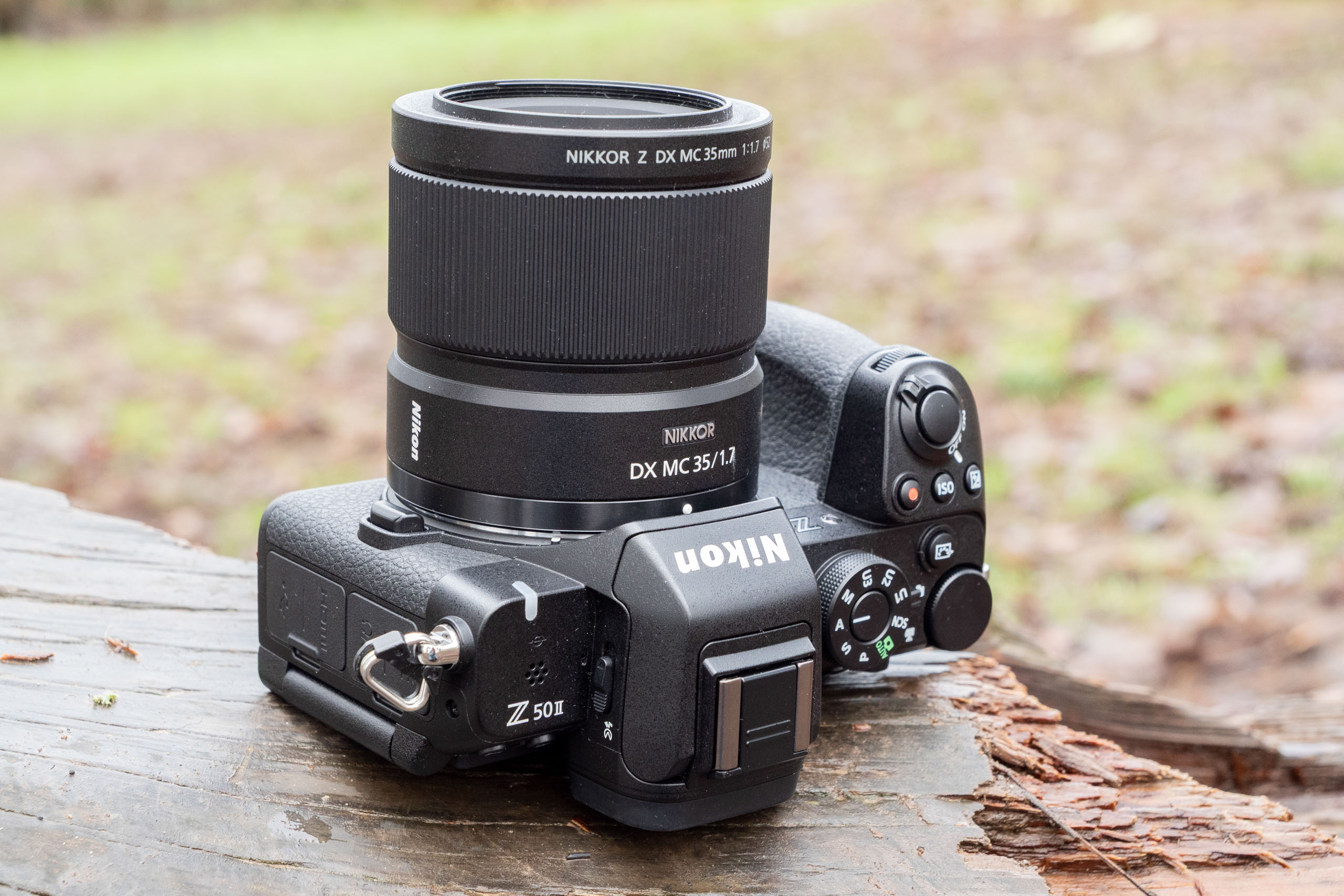
The first macro lens for the Nikon Z DX (APS-C) format, the Nikon Nikkor Z DX MC 35mm f/1.7 is also designed as a great everyday or walkaround lens, with a versatile focal length for a variety of subjects.
Its 35mm focal length gives a 52.5mm equivalent focal length as it is designed to be used on crop-sensored (APS-C/DX) cameras, such as the Nikon Z50 II or the Nikon Zfc. This makes it work well for street, portraits, events and even some aspects of things like landscape photography.
At roughly $450/£399, it’s not the cheapest lens you could possibly buy for a DX format Nikon Z camera, but it does offer you a good deal for your money.
Although it’s fairly highly priced for a DX-lens, being able to use it for such a broad range of subjects perhaps makes it better value than it might first appear. It would make a good complementary lens to one of the zoom lenses available for Nikon Z DX, particularly the new 16-50mm f/2.8 lens.
At A Glance
- $450/£399
- f/1.7 max aperture
- 0.67x magnification (equivalent to 1:1 in 35mm terms)
- 0.16m close focusing
- 220g
- Nikon Z Mount for DX format
Features
For its macro credentials, the MC 35mm f/1.7 lens boasts 0.67x magnification, making it equivalent to 1:1 life-size magnification in the 35mm (full-frame) format. It also has close-focusing ability of 0.16m, so you can get very close to a subject to fill the frame.
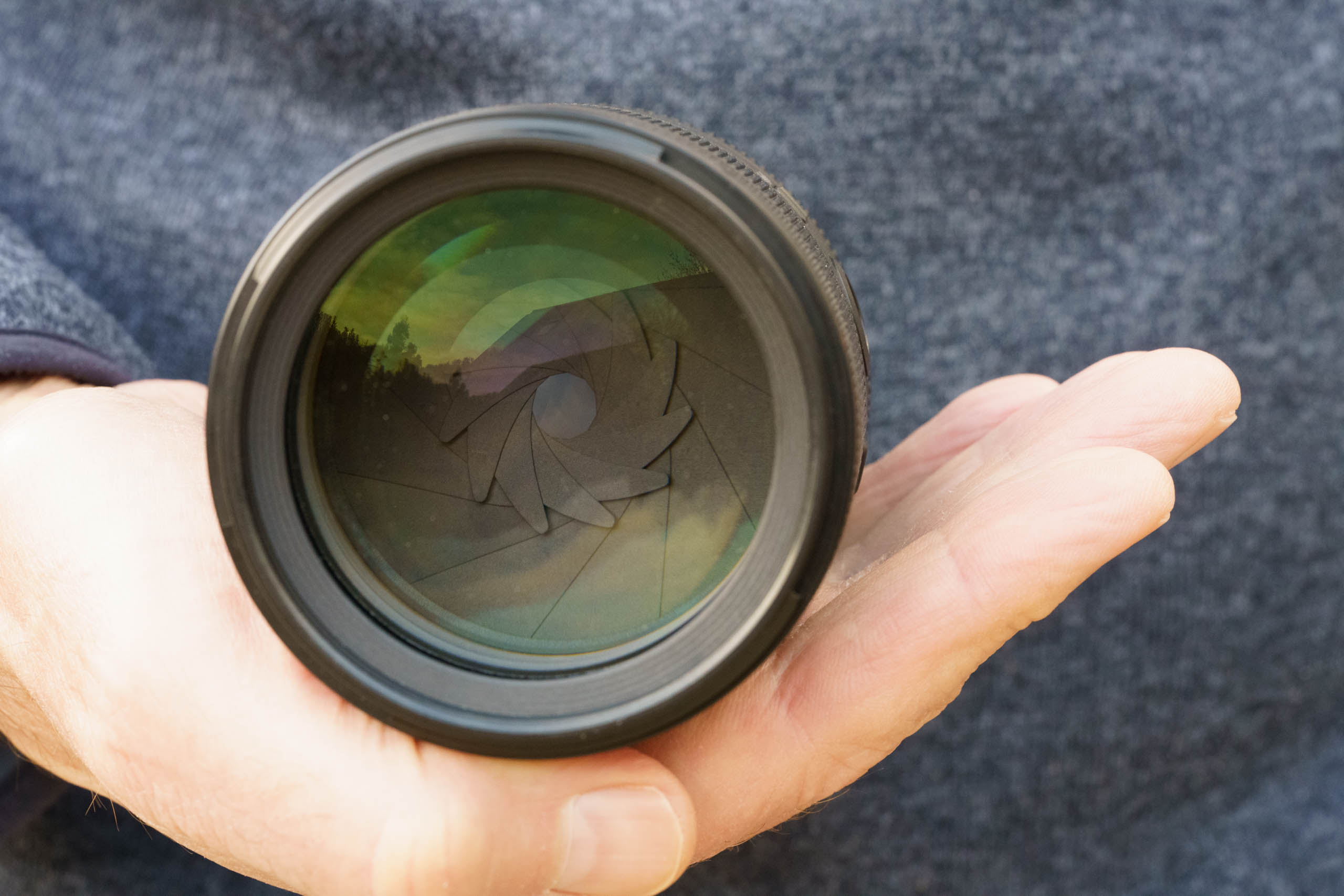
A wide aperture of f/1.7 along with 9 aperture blades promise beautiful background bokeh, while being able to shoot wide open is helpful when working in lower light conditions – especially considering that the lens does not have image stabilisation built-in, and all of Nikon’s DX-format cameras don’t have it in body, either. By being able to select a wide-aperture, you should be able to keep ISOs fairly low and the shutter speed reasonably fast.
The lens construction consists of 8 elements in 7 groups, including 1 aspherical ED element. This is a fairly simple internal design, but it’s what we’d expect at this price point and the small size of the lens.
Dust and drip resistance provides some reassurance that you can use the lens outdoors without worrying too much about inclement weather – which is always good news for macro lenses, where you might want to photograph flowers after a rain shower for example.
Of course, this being a modern lens, some thought has been given to how it will work during video work. As such, autofocus is promised to be fast and quiet, while there’s also suppressed focus breathing for more natural looking focus transitions, plus a silent control ring which can be used to adjust settings while filming.
Build and Handling
Weighing in at just 220g, this is an incredibly lightweight lens which pairs nicely with Nikon’s DX cameras for everyday usage. The focal length makes it an ideal “walkaround” lens so you could conceivably has it as your only lens for the day, but it’s also so small and light, that it’s a good lens to pop into your camera bag “just in case” while using other lenses, too.
The outward design is relatively minimal, with no buttons or switches included. Most settings changes will need to be made via the camera body itself, which is not surprising for a lens of this type and size. If I’m being picky, I would prefer to see a A/M focusing switch to be able to quickly flip between auto and manual focusing, but it’s not a major deal-breaker.
That said, the control ring, which takes up nearly 50% of the lens barrel, can be assigned to adjust something other than focus if you’re not one for manual focusing – the options you have instead are aperture, exposure compensation and ISO sensitivity. You could also set it to control absolutely nothing at all if you feel perhaps you’re prone to accidentally knocking it out of place.
Being contoured, the control ring is nice to handle, with its relative large size meaning it doesn’t feel awkward or fiddly to use. There are no hard stops at either end for focusing, but with mirrorless cameras it’s so easy to turn on things like focus peaking to help with manual focusing that this doesn’t feel like the drawback it might once have been. The ring feels nicely smooth to turn, with just the right amount of resistance, too.
The lens can be used with 52mm filters. It’s worth noting that no hood is supplied in the box, though it is compatible with the HN-43 hood if you would like to purchase one separately.
A metallic lens mount is a nice touch for a lens like this, though for the relatively high price, perhaps it’s fair enough. It helps to make the lens feel like it will withstand multiple mountings and dismountings with ease.
Autofocus
For the most part, focusing is quick and also impressively quiet. I’ve been using it with the Nikon Z50 II and found that it copes well across a range of situations without throwing up too many instances of false confirmations of focus.
You can just about hear some focusing noise if you hold the camera directly next to your ear in a silent room, but it’s otherwise very discreet. If you set the camera to silent mode it’s almost impossible to audibly tell it’s in use, making it useful for street work or in quiet places such as churches and museums.
When light is very low, it can take the lens a little longer to successfully lock onto focus, but it’s not disappointingly slow, and can be helped along by switching on the AF lamp where appropriate.
Image Quality
As you’d hope from a macro lens, the MC 35mm f/1.7 lens produces pleasingly sharp images – both in terms of the overall impression and when you zoom in closer to look at fine details.
Sharpness is maintained into the corner of the frame, making those close-up shots look great across the whole image. Being able to get nice and close to the subject also helps to create some impressive frame-filling images, too.
Being able to shoot at f/1.7 means you can get some lovely blurred background effects as well. The quality of the bokeh is lovely, being creamy and smooth – I like it for portraits for this reason, but it’s also useful for other subjects where you want to highlight the subject strongly.
With the standard lens profile corrections applied, vignetting isn’t an issue. If you switch those off and look at the raw files, you can see that there is some vignetting present when shooting at the very widest aperture, but it’s not especially obtrusive.
I wouldn’t really expect much of a problem with distortion with a lens like this. Again, with the standard correction profiles left on, there’s nothing to report. If you switch if off, you can see a very slight amount of pincushion distortion if you’re really looking for it.
Chromatic aberration or purple/blue fringing doesn’t seem to be apparent even when shooting in fairly bright circumstances, and even when zooming in closely to look for it.
Overall, this is a lens which is capable of taking some great images across a range of situations.
Verdict
If you’ve got a DX format camera and you’re looking for a fantastic, everyday prime lens for a range of situations, then this is perhaps the best one you can buy right now.
At 35mm, you get close to the classic 50mm equivalent, making it well-suited to many different applications – the fact that it can produce good quality macro images is arguably almost a bonus, rather than the main selling point.
This is a lens that I would happily have as my only lens for a trip or an outing if I felt so inclined – it’s great for portraits, street scenes, travel, close-ups, still-life and more besides. If you want more flexibility, it would be a great partner to a zoom lens if you wanted a dual-lens setup.
Arguably the lens is a little on the expensive side, especially for something which is relatively simple in construction. But I think considering the versatility it gives you is important – it’s great value even though it is fairly high priced.
My only gripe is perhaps some vibration reduction would have been welcome, especially considering Nikon DX cameras don’t have it in body – but being able to shoot wide open negates some of that problem.
On the whole, this is a lens which I’d recommend as a must-buy for almost anybody shooting with a Nikon Z APS-C camera today.
Full specification
| Filter diameter | 52mm |
| Lens elements | 8 |
| Groups | 7 |
| Diaphragm blades | 9 |
| Aperture | f/1.7-f/16 |
| Min focus | 0.16m |
| Length | 72mm |
| Diameter | 70mm |
| Weight | 220g |
| Lens Mount | Nikon Z |
| Included accessories | Front and rear caps |