

Amateur Photographer verdict
The Fujifilm X-T30 III maintains all the same attractions as its predecessors, while bringing some welcome updates and improvements. It’s small, enjoyable to use, and delivers excellent image quality.
- Small size and light weight make it easy to carry everywhere
- Stylish retro design
- Engaging analogue controls, including film dial
- Attractive JPEG colour output
- Excellent lens range available
- Small viewfinder, and screen only tilts up and down
- Front dial too easy to jog inwards and switch between setting aperture and ISO
- No in-body image stabilisation
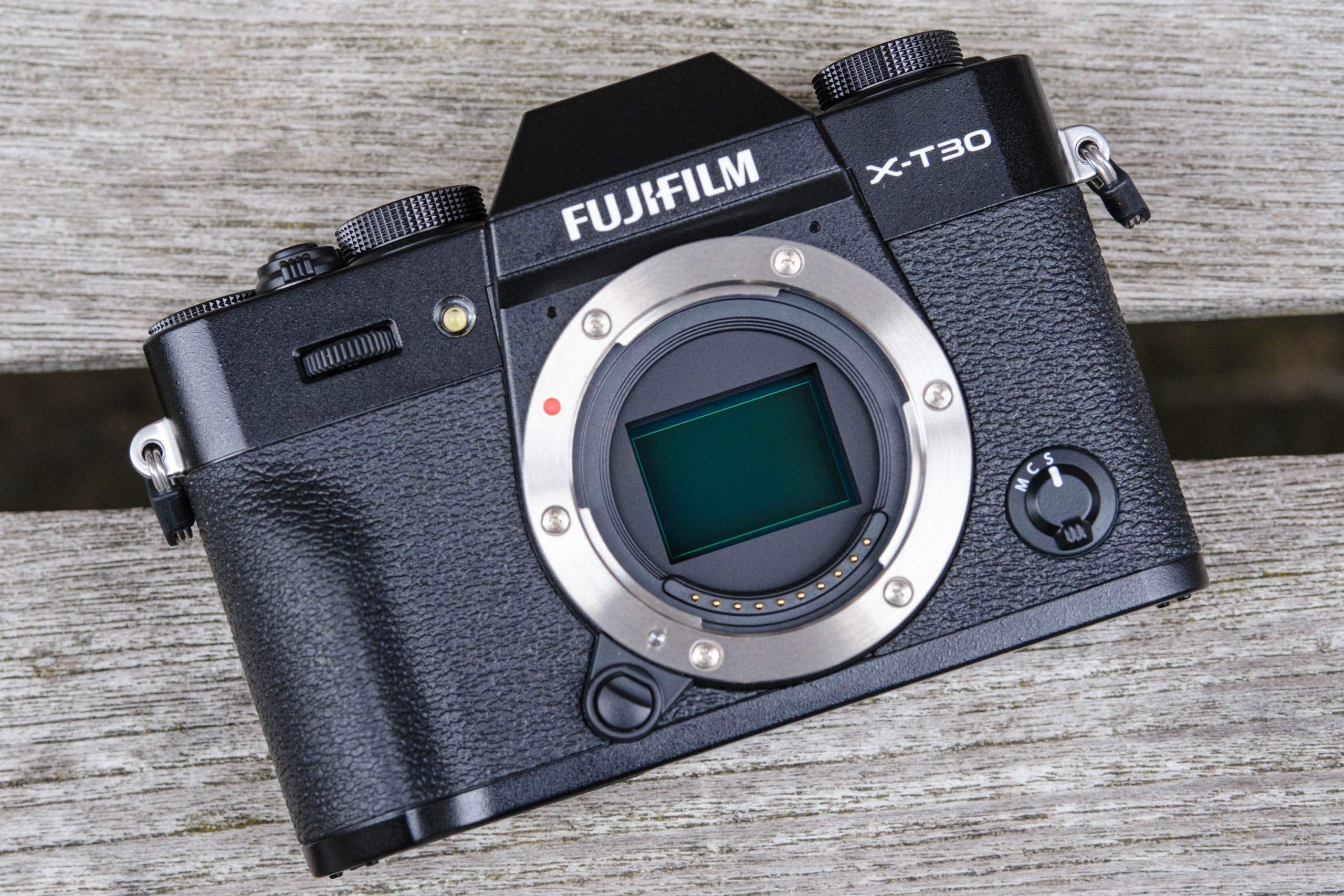
The Fujifilm X-T30 III is the latest version of the firm’s smallest and most affordable SLR-style mirrorless camera. It includes all the same features as the entry-level X-M5 and places them into an SLR-styled body that’s very similar to the previous X-T30 II, but now with a film dial on top. While this counts as a pretty predictable update, I don’t think that’s a bad thing at all, because it cements the X-T30’s position as the most likeable sub-$1000/£1000 camera on the market, and one of Fujifilm’s best cameras, too.
Fujifilm X-T30 III at a glance:
- $999 / £829 body-only
- $1149 / £999 with XC 13-33mm F3.5-6.3 lens
- 26.1MP APS-C X-Trans CMOS sensor
- ISO 160-12,800 (standard)
- Up to 30fps shooting
- 4K 60p video recording
- 2.36m-dot, 0.63x viewfinder
- 1.62m-dot tilting LCD touchscreen
At $999 / £829.99 body-only, and $1149 / £999 with a basic kit zoom, the X-T30 III goes squarely head-to-head with the likes of the Nikon Z50II and the Canon EOS R10. It’ll also be up against older models such as the Sony Alpha A6400, Olympus OM-D E-M10 Mark IV, and Panasonic Lumix G97, but these have less sophisticated autofocus systems.
In this company, the X-T30 III’s biggest attractions are its compact size, stylish retro design, and comprehensive lens range. Plus, of course, you get Fujifilm’s famous film simulation colour modes. So how does it measure up to its competitors in practical use?
Features
In essence, the X-T30 III follows on from its predecessors in being designed primarily for stills photography, with an attractive retro-style body that resembles an old film SLR. It uses the same 26MP APS-C format sensor as its predecessor, but that’s now paired up with the latest X-Processor 5. This enables subject detection autofocus, using the same system as the firm’s other current models. So you can tell the camera to focus selectively on animals, birds, cars, motorbikes, aeroplanes, or trains.
Most of the other photographic specs stay the same. But I don’t think that’s a problem, as the X-T30 III is still a well-spec’ed camera for the price. As before, the sensor offers a standard sensitivity range of ISO 160-12,800, with extended settings covering ISO 80-51,200 also available. You get timed shutter speeds from 15 minutes to 1/4000sec, with the electronic shutter further extending the top speed to 1/32,000sec. Continuous shooting runs at up to 8 frames per second with the mechanical shutter; 20fps with the electronic shutter; and 30fps with a 1.25x crop (which gives 16.6MP files).
Fujifilm has included the full set of its signature Film Simulation colour modes, accessed using the film dial on the top plate, with the X-T30 III gaining the attractive Reala Ace and Nostalgic Neg modes that weren’t on the II. It also has the same support for three custom ‘Recipes’ that debuted on the recent X-E5. This allows users to fine-tune the output to their tastes for quick recall via the FS positions on the film dial. Personally, I love Fujifilm’s colour science and see it as reason enough on its own to buy into the X system.
To cater for beginners, there’s a switch on the top-plate that puts the camera into full Auto mode. As well as setting the exposure, this can automatically recognise the subject type for autofocus, and even choose what it considers to be the most appropriate film mode. There’s no automatic subject detection option outside of this Auto mode, though; instead, you have to tell the camera what you want to shoot first. This is disappointing given that Nikon and Canon both offer auto subject-selection all the time.
As with other APS-C cameras at this price point, one feature you don’t get is in-body image stabilisation (IBIS). This means you have to rely on in-lens optical stabilisation instead. You’ll need to step up to the X-T50 got get IBIS in a Fujifilm camera.
As with Fujifilm’s other recent cameras, the X-T30 III can print directly to the firm’s Instax Link instant-film printers via a Bluetooth connection. New here, though, is the ability to select specifically matched aspect ratios from the onscreen quick menu, labelled Mini, SQ, and Wide. In effect, that adds a vertical 3:4 option for mini, and 16:10 for wide, on top of the existing options (Square is, of course, 1:1).
While the X-T30 III is primarily about stills, it has a respectable video spec too. This includes 4K recording at 60fps, and Full HD at up to 240fps for slow-motion effects. Like the X-M5, there’s also the option to shoot vertical 9:16 clips in Full HD for social media, without having to rotate the camera. It even offers 6.2K open gate recording using the full sensor area, which allows footage to be cropped to a variety of different aspect ratios. You can connect an external microphone for higher-quality audio, but only via the 2.5mm remote-release socket, which will most likely require a 3.5mm adapter.
Smartphone connectivity is provided via built-in Bluetooth and Wi-Fi, using Fujifilm’s Xapp. First-time setup is very straightforward, after which you can proceed to use your phone as either a simple remote shutter release, or full wireless remote control. Then you can transfer your images across to your phone for sharing on social media. It’s also possible to update the camera’s firmware using the app, if necessary.
Fujifilm X-T30 III key features:
- Built-in flash: A small pop-up flash is built into the viewfinder housing, and released by a switch alongside the film dial
- Power: The camera uses Fujifilm’s familiar NP-W126 battery, with a slightly improved stamina compared to its predecessor of 315 shots per charge, or 425 in Eco mode
- Connectors: Behind a door on the side, there aremicro-HDMI, USB-C, and microphone/remote release ports. With this being a stills-focused camera, the latter is 2.5mm rather than 3.5mm.
- Storage: There’s a single SD card slot in the battery compartment. It’s UHS-I, so can’t achieve faster file write speeds with UHS-II type cards.
- X-mount: This is the best and most comprehensive APS-C lens range available, with 40 lenses from Fujifilm covering 8mm ultra-wide to 500mm ultra-telephoto; 28 third-party AF lenses from Sigma, Tamron and Viltrox; plus plenty of manual-focus options, too.
- Colours: The camera will be available in three finishes: black, silver, and charcoal silver
Build and handling
As previously mentioned, the X-T30 III employs essentially the same body design as the X-T30 II (and, indeed, the original X-T30). At 118 x 83 x 47mm and 378g, it’s also exactly the same size and weight, which makes it one of the smallest and lightest cameras in its class. But while this may be an entry-level model, it really doesn’t feel cheap, thanks to a metal top-plate and the array of control dials. I like the way it feels secure in my hand, too, thanks to the prominent finger grip and a sizeable thumb hook on the grip.
There’s a small but carefully considered array of external controls, giving direct access to all the most important settings. You get top-plate dials for shutter speed and exposure compensation, with the film dial placed on the other side of the electronic viewfinder. A small joystick placed unusually low down on the back is used to select the focus area and navigate menus. Some people might find this fiddly, but I’ve found it easy enough to use.
There’s no longer a drive mode dial, but as this option is now readily accessed via the Delete button on the back, I’ve never really missed it. Personally, I’m a fan of having a film dial instead, as it encourages you to experiment with Fujifilm’s lovely colour modes.
Other settings are accessed by pressing the Q button that’s prominently placed on the camera’s thumb hook. Due to its exposed position, though, I found myself pressing this button accidentally all the time, and I can guarantee that you will too. But that’s more an irritation than anything else – it doesn’t do any harm, and a half-press of the shutter dismisses the menu.
While most of Fujifilm’s lenses have aperture rings, the 13-33mm kit zoom doesn’t. This is also the case with the firm’s other affordable XC lenses, and many third-party alternatives too. In this case, you have to use the small electronic dial on the front of the camera to set the aperture. However, this dial is also used for changing ISO, and to toggle between the two you click the dial inwards.
Unfortunately, I’ve found that it’s much too easy to click the dial by accident and end up changing the wrong setting, which rapidly gets infuriating. Personally, I ended up disabling ISO setting with this dial, and using the Q Menu instead. Another option is to allocate ISO to the Fn button beside the shutter release.
Without doubt, though, you get the best shooting experience using lenses with aperture rings. It’s a shame Fujifilm isn’t selling the X-T30 III in a kit with the much nicer (but still small) XF 16-50mm F2.8-4.8 R LM WR zoom. I think there’s a strong case to be made for buying the camera body-only and pairing it up with a nicer lens, such as a used XF 18-55mm F2.8-4R LM OIS, as these are plentiful and fairly cheap on the second-hand market.
Viewfinder and screen
Once again, the Fujifilm X-T30 III provides much the same electronic viewfinder as previous models in the line. It’s reasonably detailed, at 2.36m-dot resolution, but distinctly on the small side, offering just 0.62x magnification. That’s not unique at this price point, and it’s adequate for the job. However, I’d much rather have the larger, brighter viewfinder that’s on the Nikon Z50II.
On the back, you get a 3in LCD touchscreen with 1.62m-dot resolution – a step up from the X-T30 II’s 1.04m-dots. It tilts up and down for waist-level or high-angle shooting when you’re holding the camera horizontally, but is of limited use for vertical shooting. It also can’t be positioned facing forwards. This screen design is fine for photography, but for those who are interested in selfies or vlogging, a camera with a side-hinged fully articulated screen would make more sense.
Both the viewfinder and the screen give a good impression of how your images should work out. Fujifilm previews both colour and exposure, plus depth-of-field when you half-press the shutter button. All the usual compositional aids are available, including a choice of two types of electronic level, and a small live histogram for judging exposure. Helpfully, Fujifilm lets you select exactly what information you’d like to have displayed onscreen, without any artificial limitations.
Autofocus
On paper, the X-T30 III has Fujifilm’s most up-to-date autofocus system. When selecting a focus area manually, you have a choice of either 117 or 425 points in six different sizes, allowing extremely precise selection. For moving subjects, there are three ‘Zone’ options with different size square groups of AF points, plus three that are user-customisable in terms of height and width, alongside a Wide option that covers the entire frame.
Fujifilm makes it particularly easy to toggle face detection on and off, simply by tapping the small Fn button beside the shutter release. Meanwhile, subject detection modes are set using the Q menu. Face and subject detection are mutually exclusive – when you enable one, the camera turns the other off.
Fujifilm’s AF system has an unfortunate reputation for being less reliable than its competitors. Personally, I’ve found that you can’t simply engage face or subject-detection and expect it to work optimally, but will probably need to change other settings too. Most obviously, you need to ensure the focus switch on the front of the camera is set to C, and I’ve generally got best results by selecting a large ‘Zone’ focus area and making sure it covers where you subject is likely to be.
To get a higher proportion of in-focus shots when shooting moving subjects, you also need to change a couple of menu settings. Firstly, set AF-C Priority Selection to ‘Focus’ in the AF/MF menu, rather than ‘Release’. I also set Shutter AE mode to ‘Off’ in AF-C, as otherwise, the camera will lock the exposure settings after the first shot. This can result in your subject being dramatically under or over-exposed if it moves into darker or brighter lighting.
I tested the camera’s autofocus capability using the reasonably affordable Fujifilm XF 70-300mm F4-5.6 R LM OIS telephoto zoom to photograph birds in flight. This is a relatively tough test, and in its default setup, the X-T30 II doesn’t do particularly well. But with the settings tweaks I’ve outlined above, it’s much more successful. So the capability is there; it’s just that Fujifilm doesn’t necessarily set up the camera to make best use of it. But users who require subject recognition and continuous AF that works easily out of the box would probably be better off with a Canon EOS R10 or Nikon Z50II instead.
Performance
In everyday use, the Fujifilm X-T30 III is a well-behaved camera that generally gets out of your way and lets you concentrate on shooting. It’s ready to go a fraction of a second after you flick the power switch; indeed with the 13-33mm kit zoom, it’ll probably take you longer to extend the lens from its retracted state. This shutter is pretty quiet and unobtrusive too, although not quite as soft as the more expensive models in Fujifilm’s range.
I’ve noticed one small but annoying operational quirk, though. When you switch from using a lens that has an aperture ring to one that doesn’t, the camera usually reverts to providing manual aperture operation via the front dial. But occasionally, and apparently randomly, it sets the aperture to auto instead. In effect, this means that sometimes you can find yourself in program mode rather than aperture priority for no obvious reason.
Battery life is perfectly acceptable in my book. Fujifilm rates it for around 300 shots per charge, which feels about right if you’re generally shooting a frame or two at a time. You’ll get many more if you shoot a lot of bursts. The NP-W126 has been around for a long time now, too, so spares are cheap and easy to find. You can also top up the battery from a powerbank via the camera’s USB-C port.
Not surprisingly, the X-T30 III’s continuous shooting performance can’t match more expensive models. In my testing, it met its advertised speeds of 8 frames per second with the mechanical shutter, 20fps with the electronic shutter, and 30fps with a 1.25x crop. It’s important to understand, though, that if you want to track moving subjects most effectively, you’ll need to drop to a more pedestrian 5fps, which provides live view between frames.
Buffer depth is pretty respectable, with the camera able to keep going for at least four seconds at 8fps before slowing down, when shooting JPEG and compressed raw together. At 20fps or 30fps, though, the buffer drops to 30 frames, so you need to be quite selective in how you shoot. As the SD slot is limited to UHS-I speeds, it also takes 15-25 seconds to clear all the files to card, although the camera doesn’t lock you out of shooting during the process. If you’re going to be doing a lot of continuous shooting, though, the Nikon Z50II offers rather better performance.
One thing that’s easily to overlook is the built-in flash, which is really rather good. It does a fine job of adding just a little blip of fill-in light to portraits, balancing faces nicely against backgrounds in low light. It’s also capable of covering the full 20mm equivalent view of the 13-33mm kit zoom without any shadowing at wideangle, which allows you to shoot large groups.
Metering is usually very well judged, too, although it can be prone to overexposure if you place the focus point in a very dark area of the scene. But as you can see what’s going on in the viewfinder, it’s easy to correct this using exposure compensation. Auto white balance is also extremely reliable. I left it on the ‘ambience priority’ Auto A setting almost all the time, and got great results, both for the camera’s JPG output and as a start point when developing raw files.
Thanks to Fujifilm’s signature film simulations, the camera’s colour output is particularly attractive, to the extent that some users may well be happy using JPEG files as a matter of course. There are multiple modes, and they can all be tweaked and fine-tuned to your heart’s content. My personal favourites are Astia, Velvia, Nostalgic Neg and Acros for black & white, but the beauty is that there’s no right or wrong answer in this respect.
Image Quality
Fujifilm has used this sensor – or at least variants of it – in a lot of cameras now, going all the way back to the X-T3 in 2018, and including both previous generations of X-T30. Unsurprisingly, the latest model’s image quality follows on in a similar pattern to its predecessors, giving entirely usable results across its entire standard sensitivity range up to ISO 12,800. Personally I’d avoid going any higher than that, though; even with AI noise reduction, ISO 25,600 isn’t very pretty at all.
At low ISO settings, you can also expect to be able to pull up three or four extra stops of detail in the shadows, when processing raw files. This is perhaps a little more than I was able to get from the EOS R10, but maybe not quite as much as from the Z50III. However in real-world use, these differences will rarely matter all that much.
Likewise, while the X-T30 III’s 26MP sensor can record a little more detail than the either the 24MP Canon EOS R10 or the Nikon 20MP Z50II, the advantage isn’t very significant. All three cameras can make very nice, highly detailed prints up to 18 x 12in / A3+ at least.
Fujinon XC 13-33mm F3.5-6.3 OIS kit zoom
To go with the X-T30 III, Fujifilm introduced a new kit zoom, the Fujinon XC 13-33mm F3.5-6.3 OIS. This offers an unusually wideangle range that’s equivalent to 20-50mm in full-frame terms. Arguably, that’s in keeping with what buyers will have become accustomed to using on their. However, for every occasion when I’ve been glad to have that 20mm option, there have been plenty of others when I’ve felt restricted by the lack of any meaningful telephoto. To the extent that personally, I wouldn’t choose this as my main lens.
Measuring 62mm in diameter, 38mm in length when retracted, and weighing a mere 125g, the lens makes for a particularly small and lightweight combination when used with the X-T30 III. In a welcome change over the firm’s previous 15-45mm kit lens, the zoom employs a mechanical, rather than powered design, which makes it much easier to set a precise composition. There’s a 49mm thread for filters, which you’ll also need to use if you want to add a hood, as there’s no other mount. The minimum focus distance of 20cm equates to 0.25x magnification.
On the whole, I’ve been quite pleased with the images I’ve got from the 13-33mm – it’s decently sharp as kit zooms go. However on the X-T30 III, the lens does have a specific flaw. When it’s set to 33mm, images shot at shutter speeds around 1/100sec frequently show distinct blurring when viewed at the pixel level, which really shouldn’t be the case.
Unfortunately, the chances are that you’ll shoot a lot of pictures with this combination, as this is the minimum shutter speed that the camera will default to when set to Auto ISO. The effect isn’t large enough to spoil your photos at normal output sizes, but it does limit your options for cropping or making large prints.
This blurring has all the hallmarks of “shutter shock”, where small, lightweight lens elements, probably in the OIS group, can be affected by the vibration of the shutter. I didn’t see similar effects when testing the X-T30 III with different lenses at similar settings, including the lightweight Viltrox AF 35mm F1.7 Air and the Fujifilm XF 18-55mm F2.8-4 R LM OIS zoom. The 13-33mm also appears to be much less susceptible to this effect when used on the X-T5, presumably due to its softer, more refined shutter.
Fujifilm X-T30 III: Our Verdict
While the Fujifilm X-T30 III may not look all that different to previous generations, it gains some welcome updates and improvements that keep it right at the top of its competitive entry-level class. The addition of subject detection brings the autofocus more into line with its peers, and while the film dial will doubtless polarise opinions, it encourages users to experiment with colour modes as a means of creative expression.
All the other ingredients that made the previous models such a joy to use remain in place. You get the same compact, lightweight body, stylish retro design, and engaging analogue control dials. There’s also a huge range of matched APS-C lenses to choose from too, giving buyers plenty of scope to expand their horizons in the future.
At this price point, potential buyers will likely be putting the X-T30 III head-to-head with the Nikon Z50II, and perhaps the older but more expensive Canon EOS R10. In many respects, the Z50II is the more rational choice – its autofocus works better out of the box, and it has a larger, brighter, viewfinder plus a more flexible fully articulated screen. But the X-T30 III is more charismatic, and of course, you get Fujifilm’s famously attractive colour science.
Ultimately, while the X-T30 III may not bring anything particularly new to the table, I really do think it remains one of the compelling models in its class. It may not technically be the “best”, but it’s arguably the most enjoyable to use while delivering the most consistently attractive photos – and that’s got to count for something. For photographers looking for a camera that’s portable, capable and affordable, it should be right at the top of their wish-list.
Follow AP on Facebook, Instagram, YouTube and TikTok
Fujifilm X-T30 III full specifications
| Sensor | 26.1MP X-Trans CMOS 4, 23.5 x 15.6mm |
| Output size | 6240 x 4160 |
| Focal length mag | 1.5x |
| Lens mount | Fujifilm X |
| Shutter speeds | 15min – 1/4000sec (mechanical), 15min – 1/32,000sec (electronic) |
| Sensitivity | ISO 160-12,800 (standard), ISO 80-51,200 (extended) |
| Exposure modes | PASM |
| Metering | Multi, Spot, Average, Centre weighted |
| Exposure comp | +/-5 EV on 0.3EV steps |
| Continuous shooting | 8fps (mechanical), 20fps (electronic), 30fps (electronic, 1.25x crop) |
| Screen | 3in, 1.62m-dot tilting LCD touchscreen |
| Viewfinder | 2.36m-dot OLED, 0.62x magnification |
| AF points | 117 or 425 |
| Video | 6.2K open gate 30fps, 4K 60fps, Full HD 240 fps |
| External mic | 2.5mm stereo |
| Memory card | UHS-I SD |
| Power | NP-W126S Li-ion |
| Battery life | 315; 425 in Eco mode |
| Dimensions | 118.4 x 82.8 x 46.8mm |
| Weight | 378g |