

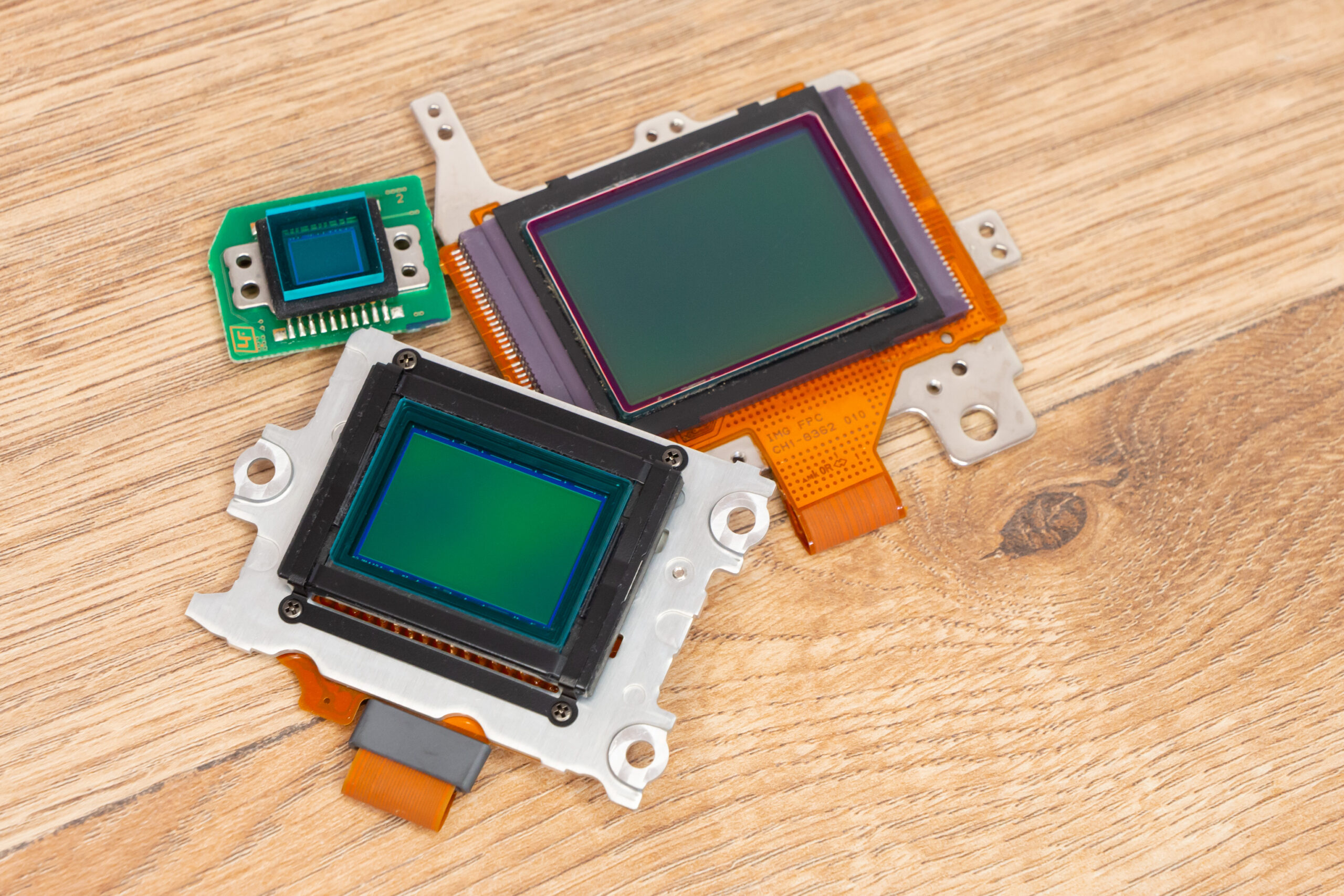
Is your bucket-list, a money-no-object camera like a medium format sensor Fujifilm, Phase One or Hasselblad? Or do you gaze enviously on the Vera C. Rubin Observatory’s LSST camera, with its 3.2-billion-pixel sensor made up of 189 smaller CCDs scanning the night sky? Good luck fitting that one in your camera bag.
Whenever I weigh up which camera will best suit my intended creative purpose as a photographer, it’s very easy to get sucked into the talk and debate about sensor size. As if selecting a body incorporating the ‘correct’ sensor dimensions – with the advice ‘the bigger the better’ ringing in my ears – will make me a better photographer. It won’t.
Sure, cramming an excessively high pixel count onto a comparably small surface area isn’t sensible if we want to avoid the appearance of image noise at higher ISOs, but, whatever the breadth of its chip or resolution provided, it’s once in a blue moon I’ll push a camera’s sensor to its limits, or beyond, to capture an image I wouldn’t otherwise be able to.
Taking leave of my sensors
While a medium format sensor sounds nice in theory, it’s overkill for my purposes in practice, and not just for the hit entailed to my bank balance. I could justify a full frame alternative, now that there are more affordable options, especially second-hand. But my regular go-to remains not even an APS-C chip incorporating mirrorless or DSLR. It’s a Four Thirds sensor toting Olympus.
Some may sneer – and sure, its small sensor can divide debate. But eight by ten-inch prints come out great, even for images shot with the bog-standard retractable 14-42mm kit lens. Plus, I’ve no room on my mantelpiece for anything bigger than 8×10’s. It’s further worth remembering that most photographers, amateur or otherwise, are happy these days with a smartphone averaging 12 megapixels, never mind a 16MP mirrorless.
So yes, the biggest misconception is that spending the most I can afford on the ‘best’ camera with the highest pixel count and largest sensor will automatically deliver the best results. In truth it’s as much about the craft as the kit. Training my eye to look for interesting compositional and framing ideas – and exploring differing angle once I’ve spotted a creative possibility – will reap bigger reward and make for a more memorable set of images.
We can all salivate over the latest gear. But really, it’s when I’ve had a flash of inspiration and a great idea that I truly feel satisfied.
Incidentally, for those wondering, ‘LSST’ stands for ‘Legacy Survey of Space and Time’, referring to a decade-long project to capture the most detailed images of the night sky ever produced. But most photographers don’t require the world’s largest digital camera – or sensor – to execute their ideas. Just a little space to think… and a little time to respond to those thoughts.
Related reading
- APS-C vs full-frame vs MFT – which sensor size is best, and why it matters
- Why are Olympus cameras so overlooked? It’s the best image quality possible for the size
- 3200 MEGAPIXEL DIY medium format camera invented by YouTuber!
The views expressed in this column are not necessarily those of Amateur Photographer magazine or Kelsey Media Limited. If you have an opinion you’d like to share on this topic, or any other photography related subject, email: ap.ed@kelsey.co.uk.