

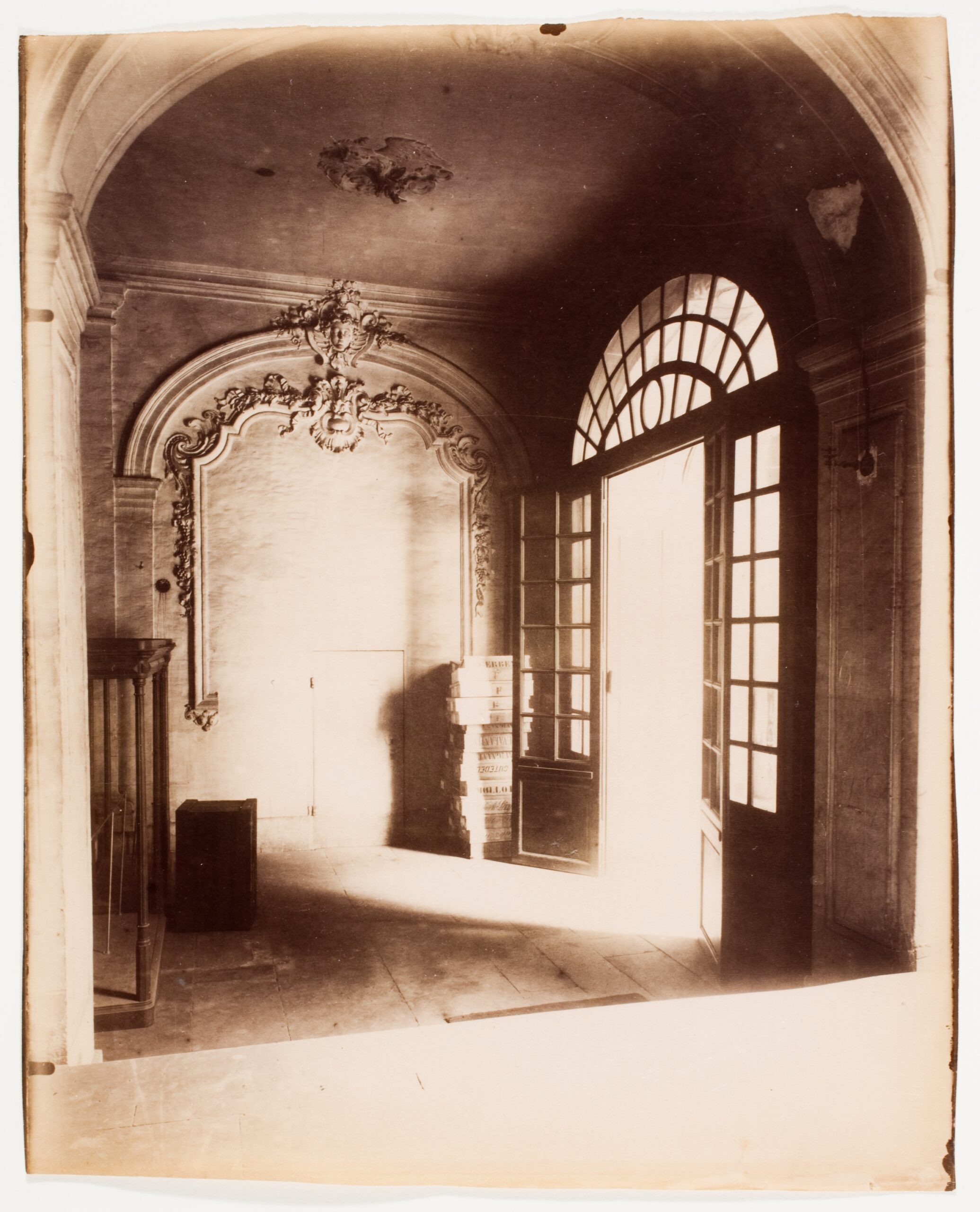
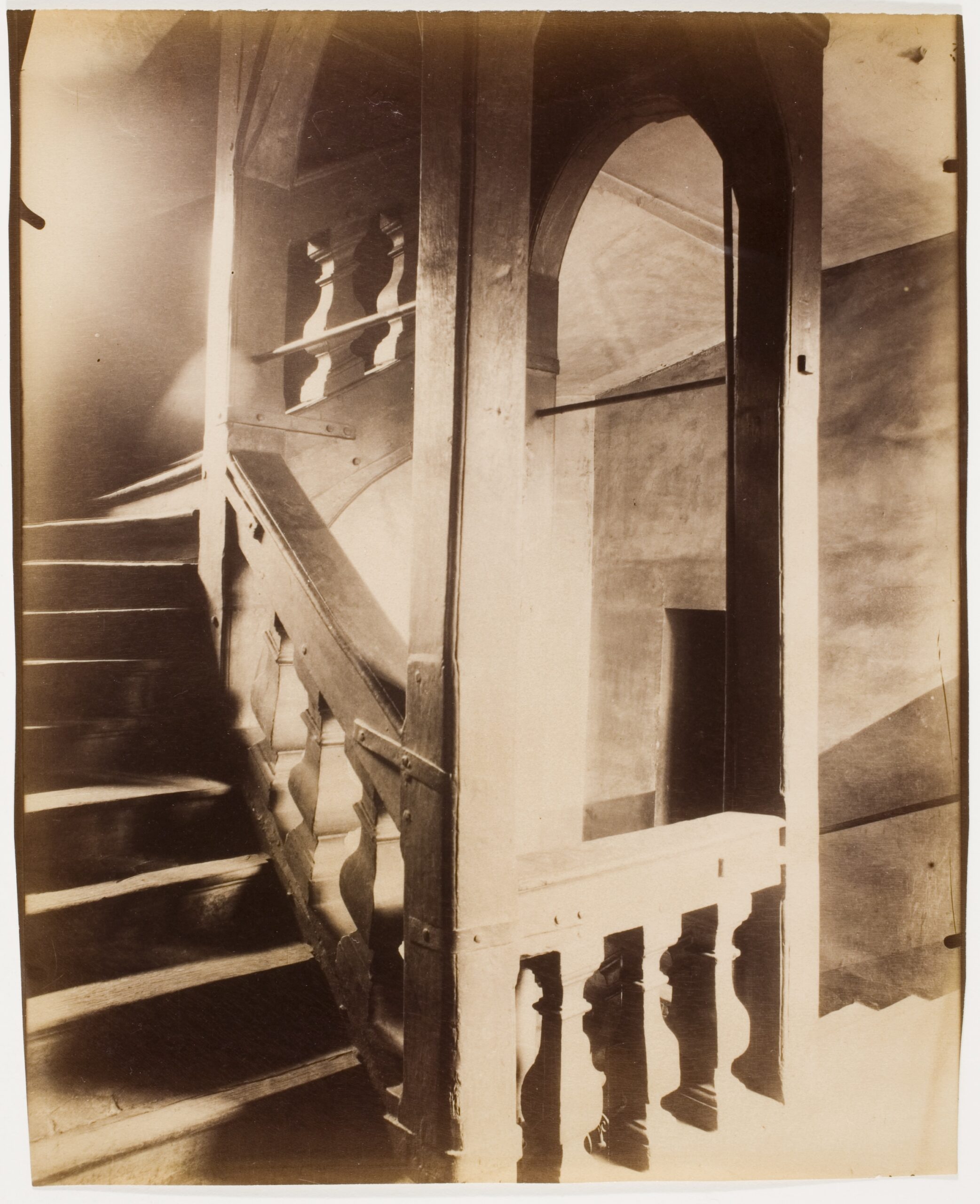
One of the forefathers of modern photography, Eugene Atget (1857–1927), should be of special interest to those fascinated by documentary and street photography. His images depict a cityscape destined for demolition, making way for the iconic avenues and parks of Paris we know today.
He was hailed as a surrealist photographer even during his time, but he protested that “these are simply documents I make” and didn’t associate his work with the movement, even though his abandoned street scenes do look rather surreal. The real reason behind that was his camera of choice, a rather cumbersome large-format device that required glass plates. Quite out of date by the end of the century, if you consider that the portable Kodak No.1 was released in 1888.
Nevertheless, he continued to use his old camera that demanded long exposure times, thus rendering any moving elements, like passers-by, invisible. Another reason for the deserted avenues was his preference to take photographs using the soft morning light, contributing to his unmistakable photographic style.
His images were not composed around the human presence, but more so around the architecture and the cityscape they create. Despite his relative success during his lifetime, selling his prints as references for other artists, most of his work was published after his death by American photographer Berenice Abbot, who bought his collection and preserved the great majority of his prints and glass plates.
Berenice Abbot, originally a sculptor, who later became Man Ray’s studio assistant and a photographer in her own right, met Atget shortly before he died in 1927. Enthralled by his work, she managed to secure almost all of his remaining prints and glass plates and started promoting his work. She’s overseen the creation of ATGET: Photographe de Paris, the first book of Atget’s photographs published posthumously in 1930.
Every photographer is passionate about their art, but most are also too shy to advocate for themselves, the “I just like to take photos” or “it’s not good enoughs” all need a person who will support them and champion their work.
David Campany, Creative Director at ICP and curator for the exhibition said “Every photographer needs a champion,” “Eugène Atget had Berenice Abbott and without her, his work would have been all but lost.”
Eugene Atget: The making of a reputation is on view until 4 May 2026 in The International Center of Photography, 84 Ludlow Street, New York.

International Center of Photography, Gift of Caryl and Israel Englander, 2008 (2008.111.20)

(printed 1908–27). International Center of Photography, Gift of Caryl and Israel Englander, 2009
(2009.79.38)

Englander, 2011 (2011.52.49)

Rohr, 2012 (2012.100.23)

Center of Photography, Gift of Caryl and Israel Englander, 2011 (2011.52.18)

Photography, Gift of Caryl and Israel Englander, 2008 (2008.111.46)

Gift of Caryl and Israel Englander, 2009 (2009.79.49)

Center of Photography, Gift of Caryl and Israel Englander, 2010 (2010.114.10)

International Center of Photography, Gift of Caryl and Israel Englander, 2011 (2011.52.2)

Photography, Gift of George Rohr, 2012 (2012.100.15)
Center of Photography, Gift of George Rohr, 2008 (2008.112.22)
Read more:
- See these rare Martin Parr black and white photos
- Gritty portraits of ordinary American workers as seen by fashion ace Richard Avedon
- Complete guide to street photography
- How I found confidence through photography