



We highlight alternative cameras that can emulate the qualities of the elusive Fujifilm X100V and X100VI
The Fujifilm X100V and X100VI aren’t just among the best Fujifilm cameras; they’re also two of the best retro-styled cameras and one of the most popular compact cameras around right now. Unfortunately, this also makes them hard to find, though availability has improved slightly at the time of publication. Availability can fluctuate, so buyers must be prepared to wait and check suppliers’ lead times where they offer them.
A surge of interest in the X100V began on TikTok in late 2022, with users promising that it was a digital camera capable of creating images that ‘feel like film’. Since then, it’s been incredibly hard to get hold of the X100V. Fujifilm introduced an even better camera with the X100VI (since April 2024 in the UK), and even though they increased production capacity, there can still be a wait.
We absolutely raved about the original Fujifilm X100V, and love the Fujifilm X100VI. The combination of stylish looks, a tactile control experience, responsive shooting and the famous Film Simulation modes all add up to a terrific camera for anyone. But, as not everyone can get one, we’ve assembled this list of readily available retro-styled cameras that deliver a similar package to the X100V and X100VI, based on our experience of testing and reviewing them. With inclusions from some of the best camera brands for JPEGs, these cameras suit those who like to shoot first and edit later.
Best Fujifilm X100V and X100VI alternatives – and the best retro styled cameras
Before we get to the list, it’s worth explaining our criteria for choosing. These are the key aspects that make the Fujifilm X100V and X100VI so appealing – and therefore, the qualities we’ve looked for when identifying our alternatives.
Classic retro vintage camera styling. This isn’t purely a matter of cosmetics – aping the look of classic film cameras means control dials on the top plate and an aperture ring on the lens. It makes for a much more tactile shooting experience than delving around in menus. While Fujifilm is the master of retro-styled cameras, there are a few chic alternatives from the likes of Nikon and Olympus, as we’ll see.
A large sensor and a bright lens is also key to the X100V’s appeal. The combination of APS-C sensor and f/2 lens means the camera delivers excellent images, even in lower light. The lens being a fixed 35mm equivalent prime may put some off initially – what, I can’t zoom?! However, many users of X100 cameras quickly embrace the act of moving one’s feet rather than the optics of the lens in order to reframe a shot. It does make for a more agile, involved photographer.
Film Simulations. These are specific JPEG shooting modes that simulate the looks of famous film stocks like Astia, Provia, Velvia and others, producing fantastically shareable images straight out of camera. Other camera brands like Olympus offer vintage filters of their own, but none quite on the same level.
So, here are our retro styled digital cameras that will give you some of these qualities, plus some additional useful features, such as interchangeable lenses and/or a zoom lens. For tips on how to get the most out of these cameras once you’ve chosen one, check out our essential street photography guide.
If you still want the Fujifilm X100V, but can’t decide between the X100VI and X100V, then have a look at our guide to the Fujifilm X100VI vs X100V.
The best retro styled cameras: our quick list
Looking for the best deal on retro-styled cameras? Not only will you find the best retro-looking cameras, but also some of the best deals, as our ‘Buy now’ buttons are set up to automatically take you to the best prices from trusted retailers. You’ll also find a list of other retailers below each camera, so you can find the right deal for you.
- Best second-hand X100F: Fujifilm X100F – buy now
- Best X100V alternative: Ricoh GR IIIx – buy now
- A mirrorless X100V alternative: Fujifilm X-S10 – buy now
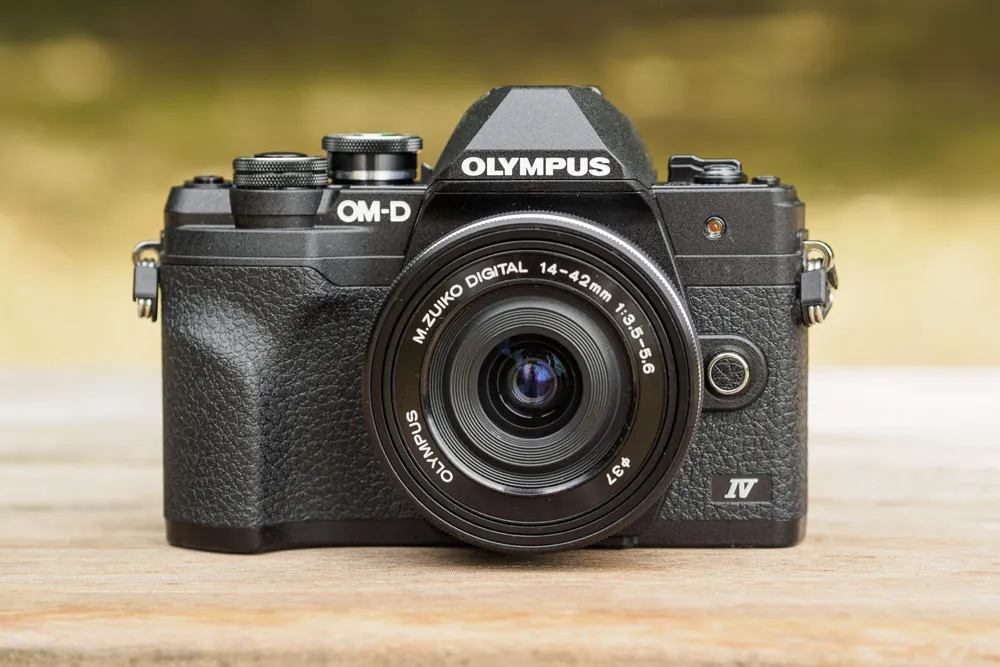
- Vintage style Olympus camera: Olympus OM-D E-M10 Mark IV – buy now
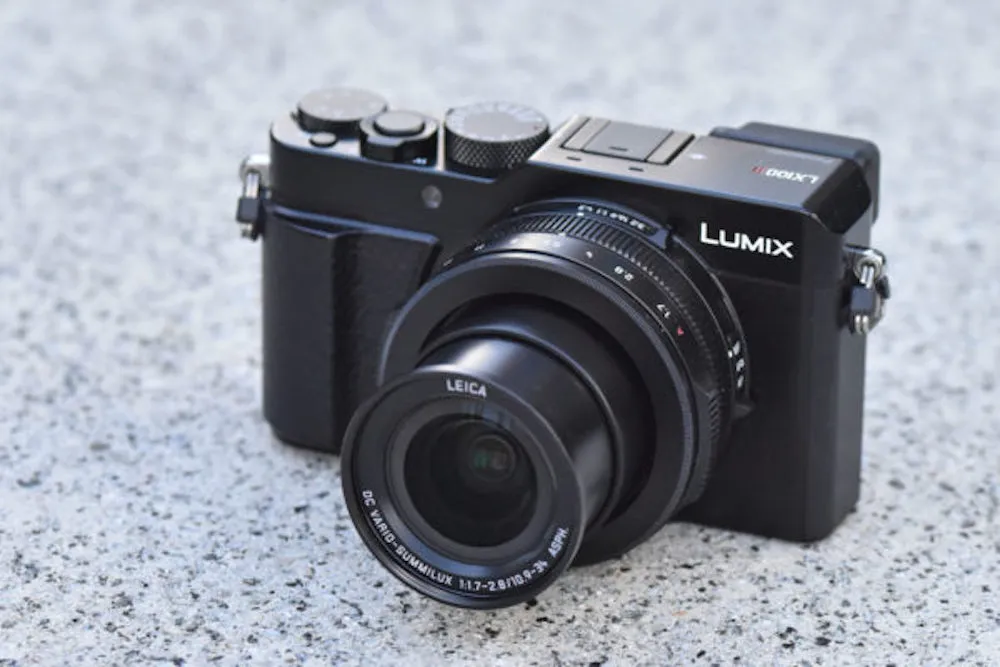
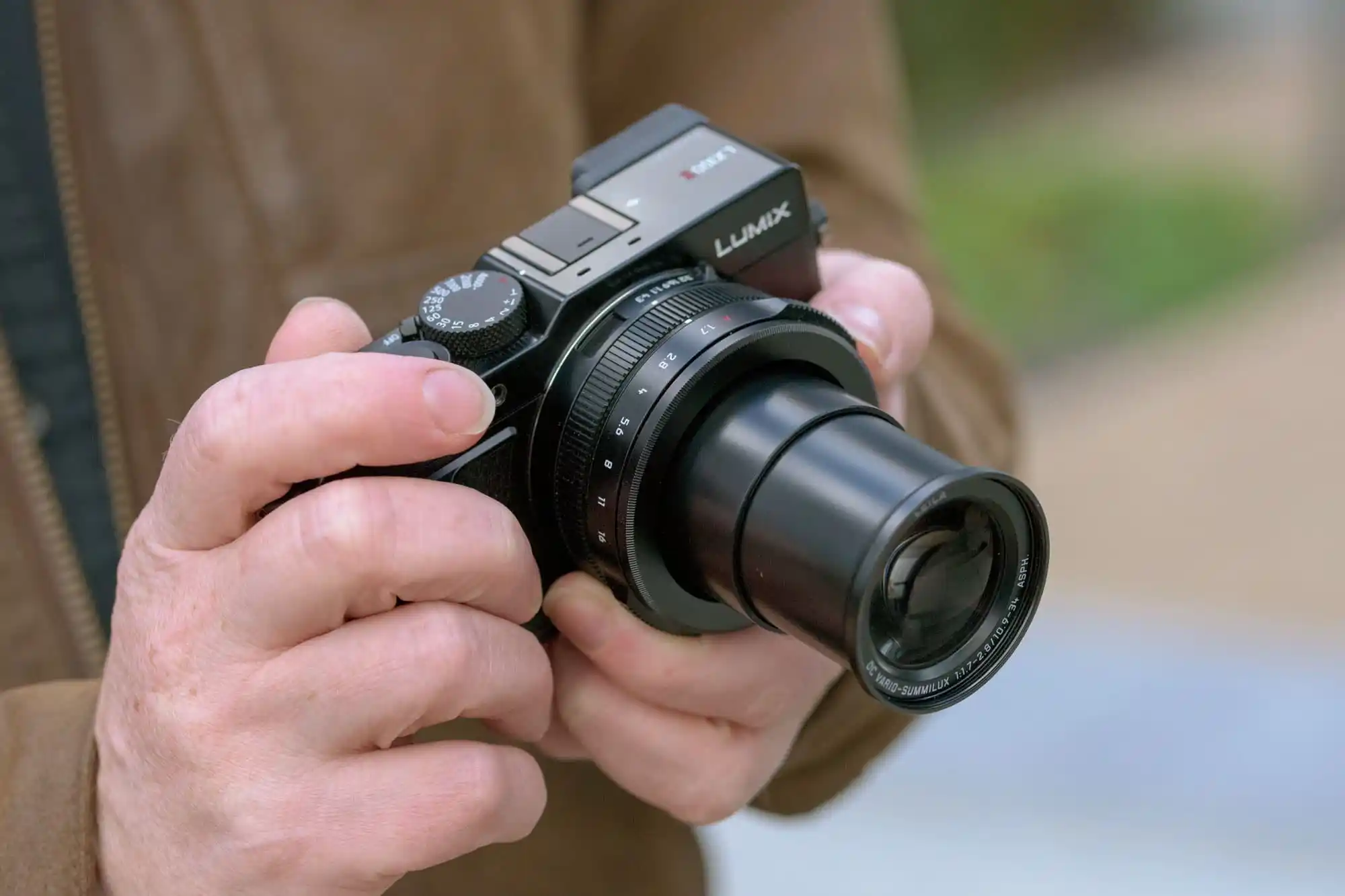
- Zoom-lens compact: Panasonic Lumix LX100 II – buy now
- Best Retro style Nikon: Nikon Z fc – buy now
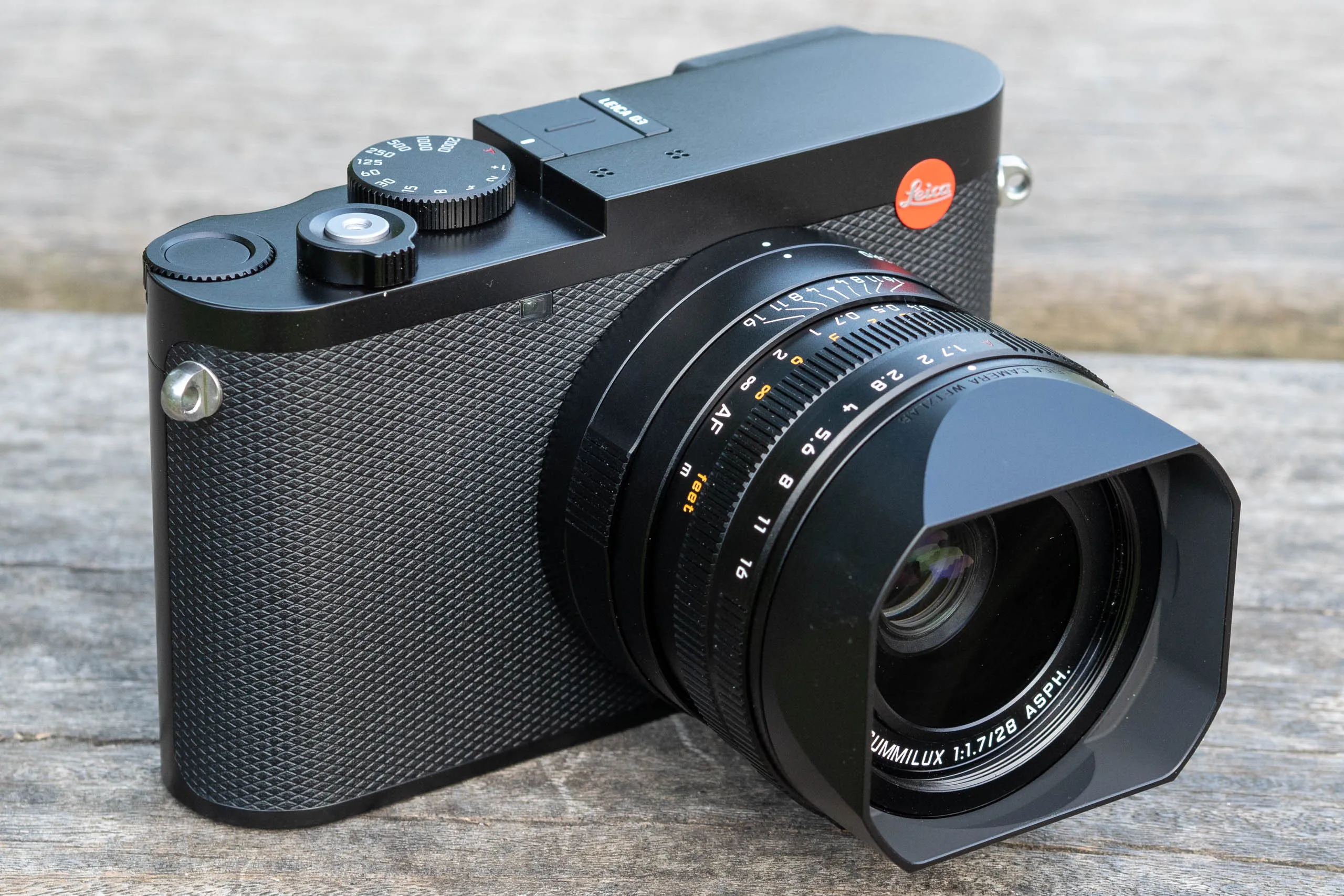
- The deluxe option: Leica Q3 – buy now
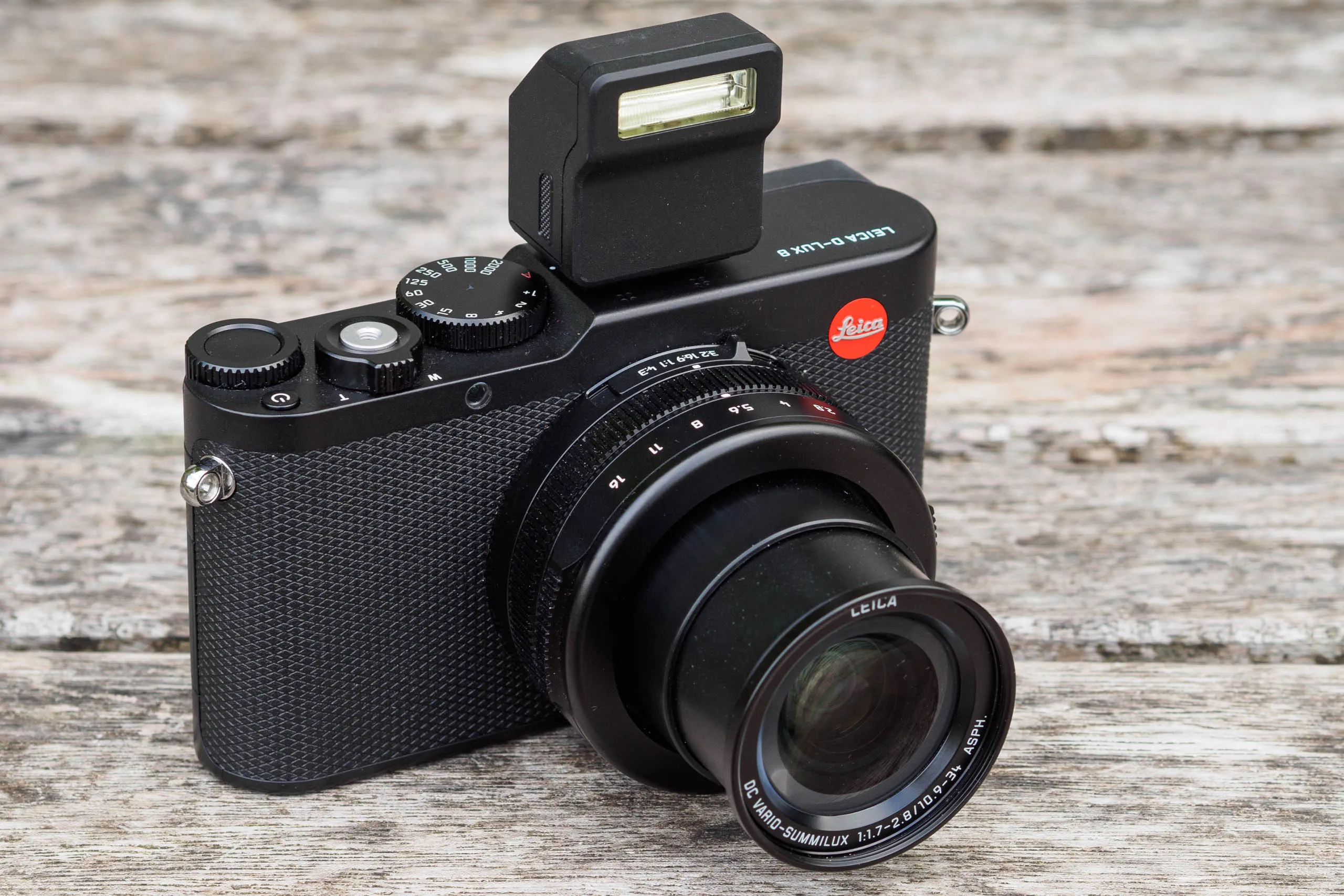
- Best compact zoom: Leica D-Lux 8 – buy now
Why you can trust Amateur Photographer
We spend many hours testing every product we recommend, in detail, in a variety of situations and shooting scenarios, and only use experts for our reviews, so you can be sure that you’re getting the best products. Find out more about our expert writers.
Read on to learn more about each pick, with details on why we chose them:
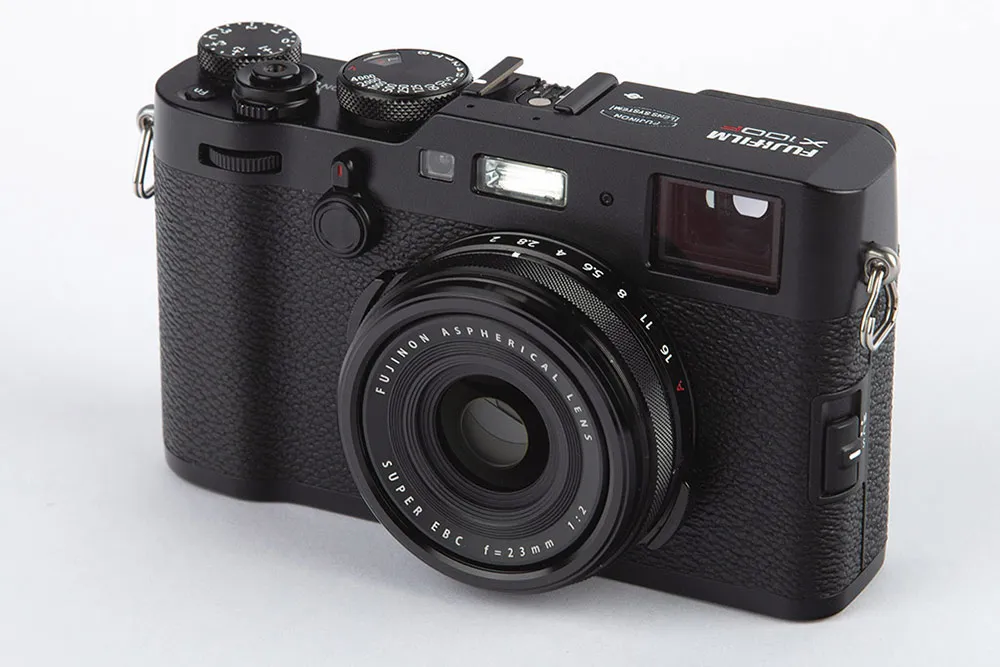
Fujifilm X100F
At a glance:
- Compact camera
- 24.2MP X-Trans CMOS III sensor; 35mm (equiv.) f/2 lens
- Film Simulation modes
- Hybrid optical/electronic viewfinder
- Price: around $1,350 / from around £870 (used)
If you can’t find the X100V, or the price has shot up, then the previous models in the X100 range offer the same sensor size, and similar, bright f/2 lens. The X100V has an updated lens, with improved image quality, and better macro performance, but if you want to save money, you still get great image quality from the X100F.
The X100F has a 24MP APS-C sensor, a 23mm f/2.0 lens, equivalent to 35mm in 35mm film terms, as well as a hybrid optical / electronic viewfinder that makes the Fujifilm X100 series unique.
If you want to branch out with the ability to change lenses, you could look at a camera like the Fujifilm X-T30 II. You may be able to find the Fujifilm X100F available for new, but it’s plentifully available on the second-hand market.
Pros:
- Same proposition as X100V
- Hybrid viewfinder
- Gorgeous image quality
Cons:
- Still quite hard to find
Ricoh GR IIIx

At a glance:
- Compact camera
- 24MP APS-C sensor, 40mm (equiv.) f/2.8 lens
- 0.12m close-focusing distance
- 3in, 1.04m-dot fixed LCD screen
- Price: $1,047 / £1,099
While it may not quite have the same retro looks, the Ricoh GR IIIx is the camera that probably best approximates what the Fujiilm X100V does. For that reason, it’s a solid alternative choice, and can be picked up a good deal cheaper.
The GR IIIx is also a fixed-lens compact built around an APS-C sensor. Small and snappy, it’s designed for street photography and everyday shooting. The lens is a 40mm equivalent, so a little longer than the X100V’s 35mm optic, and carries a maximum aperture of f/2.8 rather than f/2. This is still nice and bright, so you can achieve shallow depth of field and shoot in low light.
The GR IIIx is a subtly reworked version of the GR III, which is essentially identical except that it uses a wider 28mm equivalent lens. Feel free to choose either camera based on the kinds of images you think you’ll like to shoot – the GR IIIx will be better for naturalistic street shooting, while the GR III may be preferable for architecture and interiors. Whichever you go for, you’ll get a snappy, high-quality camera that consistently produces vivid, colourful images.
While there are some decent in-camera Raw processing options and Picture Styles, the GR IIIx doesn’t quite produce the same filmic look as an X100V. Also, as we found in our review, you may find yourself chafing against the limitations of composing on a fixed LCD screen – some tilting functionality really wouldn’t have gone amiss. Also, bear in mind that the GR IIIx doesn’t come with a viewfinder – Ricoh does sell an attachable one, though it adds a wince-inducing $250/£299 to the cost of the camera that’ll negate your cost-saving over the X100V (which has both a viewfinder and tilting screen built in).
With all that said, the Ricoh GR IIIx is a likeable, fun camera to use, and a credible alternative to the X100V experience.
Pros:
- Probably the closest X100 analogue out there
- 40mm equiv. lens is great for street
- Cheaper than X100V
Cons:
- No viewfinder (costly optional extra)
- Fixed LCD screen
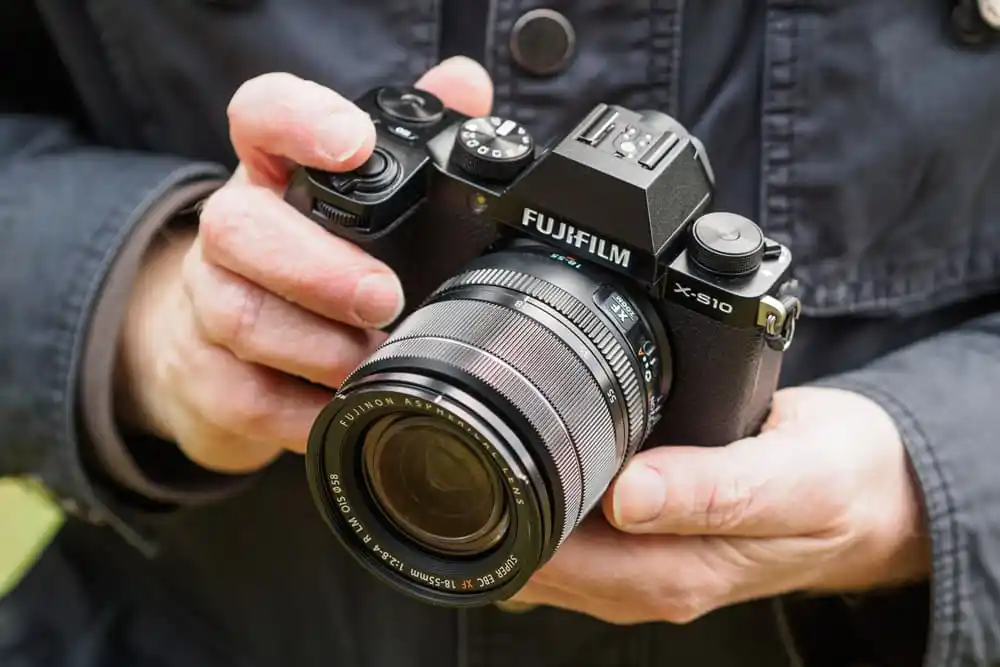
Fujifilm X-S10
At a glance:
- Mirrorless camera
- 26.1MP APS-C X-Trans CMOS sensor, Fujifilm X lens mount
- 30fps continuous shooting with 1.25x crop; 20fps electronic shutter; 8fps mechanical shutter
- 5-axis in-body stabilisation
- Price: $1,203 with 18-55mm lens / around £1,320 (with 18-55mm lens)
If you can’t get your hands on Fujifilm’s most famous compact, then you may want to consider plunging into its range of X-mount mirrorless cameras. We’d recommend a good place to start would be the X-S10, which isn’t the newest camera on the block, but delivers an excellent shooting experience for a reasonable price.
Buying an X-S10 with Fujifilm’s 18-55mm kit lens, will cost you around $1,299 / £1,199 assuming you buy new: about the same price as an X100V. There’s plenty of shared DNA between the two cameras, which were both announced in 2020 (the X100V at the start of the year, the X-S10 towards the end). They use the same 26.1MP APS-C X-Trans CMOS sensor for one, so pick up a Fujifilm XF 23mm f2 R WR lens for the X-S10 and you’ll effectively hack your way to a very similar shooting setup. If your budget stretches, though, the XF 23mm f1.4 R is a much better lens.
Despite this, there are quite a few differences between the two cameras worth weighing up. The X-S10 has 5-axis built-in stabilisation, while the X100V does not. However, the X100V’s built-in lens gives it a much slimmer form factor in use, and there’s a greater emphasis on physical control dials, which many photographers prefer.
The compact X100V also has that gorgeous hybrid optical viewfinder, while X-S10 users have to make do with a serviceable but unremarkable EVF. But then, there’s the whole raison d’être behind this article – the X-S10 is much easier to get your hands on, even after the arrival of its successor, the X-S20.
Pros:
- Flexibility of interchangeable lenses
- IBIS (in-body image stabilisation)
- Widely available for a good price
Cons:
- Fairly utilitarian, uninspiring design (by Fujifilm standards)
- Lacks the X100V’s gorgeous hybrid viewfinder
Read our full Fujifilm X-S10 review and our Fujifilm X-S10 field test in New Zealand.