

Any list of the best Panasonic cameras is going to include some serious heavyweights in several different categories. The Panasonic camera range is broad, encompassing high-quality full-frame mirrorless, smaller Micro Four Thirds (MFT) mirrorless, and various different types of fixed-lens compacts. Panasonic is known for its brilliant consumer video cameras, but many of its models are also in the conversation for the best cameras for photography. In short, there’s a great Panasonic camera for pretty much any type of user.
On this list, I’ve compiled the latest and greatest Panasonic cameras, coming up with what I think are the best options for a host of different use cases. Whether you shoot photos, videos or both, you’ll find an excellent Panasonic camera to tempt you on this list. I’ve included both full-frame and MFT mirrorless as well as some compacts, and have made sure there are plenty of budget-friendly options for those who need them. Remember that shopping used is always a great way to save some serious cash on cameras.
For more Micro Four Thirds options you may be interested in our guide to the best Olympus / OM System cameras, and we also have a dedicated rundown of the best full-frame mirrorless cameras that includes several Panasonic-made options.
The best Panasonic cameras: our quick list
Looking for the best deal on Panasonic cameras? Not only will you find the best Panasonic Lumix cameras, but also some of the best Panasonic camera deals, as our ‘Buy now’ buttons are set up to automatically take you to the best prices from trusted retailers. There is also a list of other retailers below each camera, so you can find the right deal for you.
Here are our picks of the best Panasonic cameras you can buy, with links to get the best prices…
- Best Panasonic camera overall: Panasonic Lumix S1RII – Buy now
- Best full-frame Panasonic for video and high-speed shooting: Panasonic Lumix S1 II – Buy now
- Best Micro Four Thirds Panasonic camera: Panasonic Lumix G9II – Buy now
- Best MFT Panasonic camera for video: Panasonic Lumix GH7 – Buy now
- Best mid-range Panasonic mirrorless camera: Panasonic Lumix G97 – Buy now
- Best MFT Panasonic camera to buy second-hand: Panasonic Lumix GH5 – Buy now
- Best entry-level Panasonic mirrorless camera: Panasonic Lumix G100D – Buy now
- Best Panasonic bridge camera: Panasonic Lumix FZ82D / FZ80D – Buy now
- Best entry-level Panasonic travel zoom: Panasonic Lumix TZ99 / ZS99 – Buy now
Read on for a detailed breakdown of each camera, including pros and cons and our recommendations for which model is suited to you…
Why you can trust Amateur Photographer…
We spend many hours testing every product we recommend, in detail, in a variety of situations and shooting scenarios, and only use experts for our reviews, so you can be sure that you’re getting the best products. Find out more about our expert writers.
Best overall
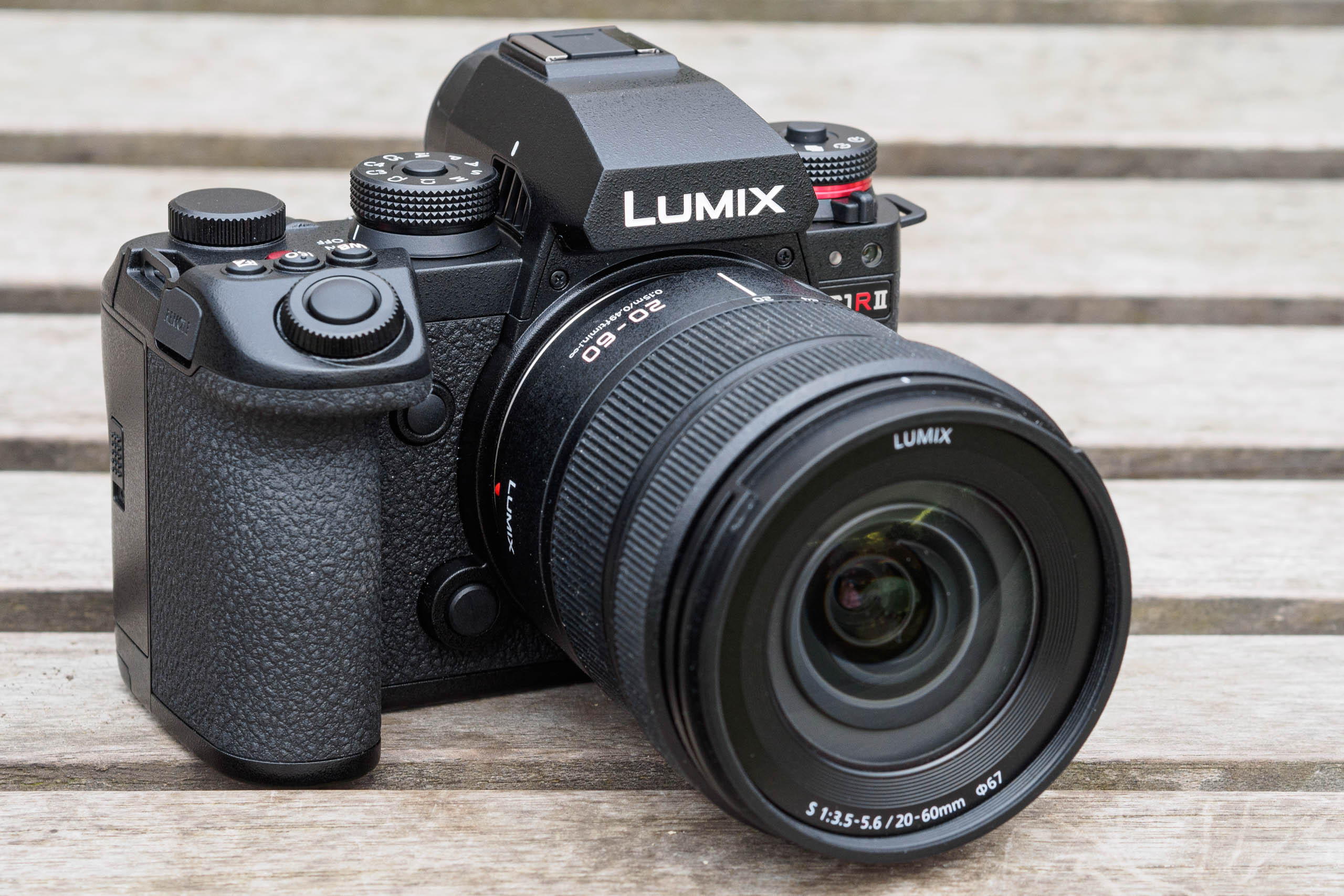
Best Panasonic camera overall: Panasonic Lumix S1RII

Amateur Photographer verdict
A stunning, high-resolution full-frame monster that undercuts many of its rivals on price, the Lumix S1R II is Panasonic’s best-ever stills camera, and isn’t bad for video, too.
- Excellent build and handling
- Highly refined control layout
- Very capable autofocus
- Excellent viewfinder and versatile articulated LCD
- Impressive image quality, especially in raw
- No automatic subject-detection option
- Battery life isn’t great
Specifications at a glance:
| Sensor | 44.3MP full-frame BSI-CMOS |
| Continuous shooting | Up to 40fps |
| Autofocus | 779-point phase detection |
| ISO | ISO 80-51,200 (standard), 40-102,400 (extended) |
| Image stabilisation | 8-stop 5-axis IBIS |
| Video | 8K 30p, 5.9K 60p, C4K 120p, Full HD 120p |
This high-resolution all-rounder isn’t just the best Panasonic camera, but is one of the best full-frame cameras for photographers full-stop, throwing down a serious gauntlet to competitors. Not only does it blend high resolution with fast shooting speeds, but it does so at a price point that considerably undercuts the likes of the Nikon Z9 and Canon EOS R5 Mark II. And since it’s a Panasonic camera, video features are comprehensive too, with 8K 30p as the headline resolution, and a host of frame rate options down the line. In short, this is a seriously well-specced camera.
It’s a pleasant camera to shoot with too, as we found in our full review. Panasonic has tuned the handling of its full-frame Lumix S range extremely finely at this point, and the deep handgrip feels comfortable and secure in the hand. There are plenty of control dials on the top plate, and a well-placed 8-way joystick makes navigation a breeze. Of course, if you prefer, you can also control pretty much everything via the touchscreen.
In use, the Lumix S1IIR ticks all the boxes we demand of high-performance modern camera. It starts up instantly, and is snappy and responsive to operate. Its autofocus is reliable, benefiting from phase-detection and intelligent subject recognition; its stabilisation system can compensate for up to eight stops of shake reduction. Image quality is superb at low ISOs, easily the match of any full-frame rivals, and quality maintains pretty well even as you push the ISO up. In short, this is a camera that just delivers on all fronts, and it’s an easy pick for the best Panasonic camera you can buy right now.
Read our full Panasonic Lumix S1RII review.
Best full-frame for video and high speed
Best full-frame Panasonic for video and high-speed shooting: Panasonic Lumix S1II

Amateur Photographer verdict
The S1II is ideal for people who have established themselves as creators and want a camera that will help them move further into the world of pro streaming and video.
- Unlimited recording up to 6K/30p video
- Super-fast stills shooting and video framerates
- Very effective in-body image stabilisation
- Large, detailed viewfinder and versatile articulated LCD
- No auto subject-detection mode
- No intermediate burst speed between 10fps and 30fps
Specifications at a glance:
| Sensor | 24.2MP full frame sensor |
| Continuous shooting | 70fps (electronic), 10fps (mechanical, AFS), 8fps (AFC) |
| Autofocus | 779-point Hybrid PDAF |
| ISO | ISO 100-51,200 (standard), ISO 50-204,800 (extended) |
| Image stabilisation | 5-axis IBIS |
| Video | 6K 60p |
The S1II has a ‘partially stacked’ 24MP sensor that enables high-speed shooting, can shoot full-resolution stills at a seriously impressive 70 frames per second, and when it comes to burst shooting, the S1II is very much top of its class, shooting at up to 70fps in raw using its electronic shutter.
One area where the S1II stands out relative to both the S1IIE and its other competitors lies with its comprehensive video specs. It offers a fantastic array of resolutions and framerates, including 6K at 60fps in 2.4:1, 16:9 or 17:9 aspect ratios; C4K and 4K at 120fps; and Full HD at 240fps. Open gate (3:2) recording is available in 6K at 30fps and 5.1K at 60fps, allowing footage to be cropped to different aspect ratios in after processing. The camera can also record Apples ProRes RAW and ProRes RAW HQ internally to a CFexpress Type B card.
Read our full review of the Panasonic Lumix S1II
Best Micro Four Thirds
Best Micro Four Thirds Panasonic camera: Panasonic Lumix G9II

Amateur Photographer verdict
Aimed at serious enthusiasts this camera packs a lightweight portable body with an impressive feature set and image quality that will be hard to tell apart from full-frame models.
- Impressive subject detection autofocus system
- Excellent control layout
- Highly effective IBIS
- Improved image quality over older 20MP MFT cameras
- Control dials are under-employed out of the box
- Uninspiring colour output at default settings
Specifications at a glance:
| Sensor | 25.2MP Micro Four Thirds sensor |
| Continuous shooting | 75 fps AFS, 6-fps AFC |
| Autofocus | 779 phase detection AF points |
| ISO | ISO 50-25,600 (extended) |
| Image stabilisation | 8-stop 5-axis IBIS |
| Video | 5.7K 60p and 4K 120p video |
Namely, a successor to the Lumix G9, but it is more like a completely new camera with notable features such as phase detection autofocus instead of the older DFD (dept-from-defocus) system and automatic Dynamic Range Boost function. As well as Panasonic’s latest subject detection technology under the hood, it is one of the firm’s best cameras yet.
With a standard sensitivity range covering ISO 100-25,600, the sensor promises improved image quality compared to older 20MP MFT models, which had a base ISO of 200. The top shutter speed is 1/8000sec, or 1/32,000sec with the electronic shutter.
The hybrid phase detection/ contrast autofocus system delivers fast and accurate focusing and helps during video recording. Another one of the latest technologies employed is the subject detection autofocus for cars and motorcycles, so if you are a keen automotive photographer, the G9 may just be the camera for you. This coupled with 75 fps continuous shooting using the electronic shutter with fixed focus (60 fps with continuous AF) and you can be certain you won’t miss that eye-catching moment.
Read our full Panasonic Lumix G9 II review.
Best MFT for video
Best MFT Panasonic camera for video: Panasonic Lumix GH7

Amateur Photographer verdict
A superb hybrid camera for both stills and video. It offers the same excellent handling and advanced video features as the GH6, but gains significantly improved autofocus.
- Transformed autofocus thanks to phase detection and updated subject recognition
- Excellent handling and control layout
- Superb in-body image stabilisation
- Vast range of video formats and high-end features
- Practically unlimited video recording times
- No automatic subject-type selection
- Lower dynamic range than larger-sensor cameras
- Slightly bulky body
Specifications at a glance:
| Sensor | 25.2MP BSI-CMOS Four Thirds-type sensor |
| Continuous shooting | 75fps |
| ISO | ISO 100-25,600 (standard) |
| Image stabilisation | 7.5 stops |
| Video | 5.7K 60p, C4K 120p, FHD 240p video |
With Panasonic’s S series range of full frame cameras hogging the limelight in recent years, some predicted that the company’s Lumix G series, which uses far smaller Micro Four Thirds sensors, would fade into irrelevance.
The Panasonic Lumix GH6 banished such notions as a hugely impressive hybrid offering professional-level cinema camera features and performance at a price no rival could match. Relatively compact, user-friendly and easy to handle, it’s a hugely powerful creative tool for filmmakers, and solid for still photography too.
The new GH7 is all this and more: crucially, with the addition of Panasonic’s phase detection autofocus. Furthermore, its subject recognition system gains the ability to recognise trains and planes, bringing it closer into line with other brands. For video there’s now ProRes support, plus enhanced audio recording via the new DMW-XLR2 mic adapter.
Read our Panasonic Lumix GH7 review
Best mid-range
Best mid-range Panasonic mirrorless camera: Panasonic Lumix G97

Amateur Photographer verdict
A good, solidly constructed mid-range Micro Four Thirds camera, the Panasonic Lumix G97 brings you into a well established system.
- Effective IBIS
- Weather-sealed construction
- Improved fully articulating screen
- Single card slot
- Minor update from G90
- Fairly big for MFT
Specifications at a glance:
| Sensor | 20.3MP Live CMOS Micro Four Thirds sensor |
| Continuous shooting | 9fps AFS, 6fps AFC |
| ISO | ISO 100-25,600 (extended) |
| Image stabilisation | 5 stops |
| Video | 4K 30p |
The hybrid Panasonic G97 represents an affordable all-rounder option for both stills and video as it delivers solid performance across photo and video. It’s a rugged, weatherproof camera with a DSLR-style shape and comfy handling that shares the same sensor as the higher-end Panasonic G9. It features IBS that adds up to 5 stops of compensation when shooting handheld, whether the lens you are using has its own stabilisation or not.
Able to record 4K video at up to 30fps (and output 8-bit 4:2:2 video to an external recorder via micro HDMI) and equipped with an updated 1.8m dots touchscreen that can be flipped and twisted to face fully forwards, it’s clear that the G97 has been made with vloggers in mind Image quality is solid across the board.
For those who like both stills and video, it’s a great all-rounder, while it’s (relative) lightweight and small it also has lots of compatible Micro Four Thirds lenses available which make it ideal for travel.
Read our Panasonic Lumix G97 review
Best used MFT
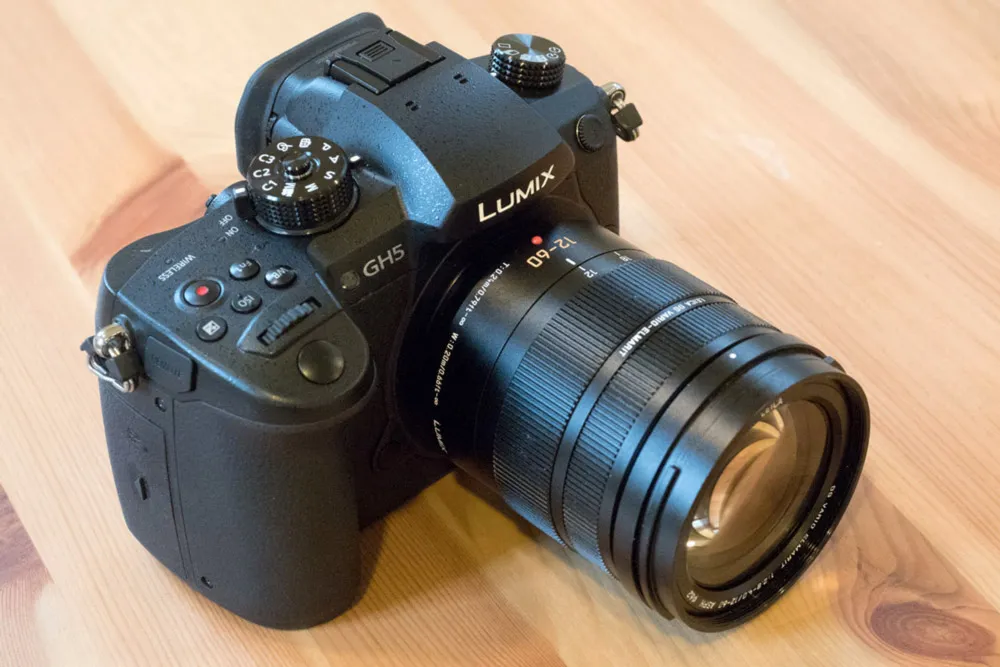
Best MFT Panasonic camera to buy second-hand: Panasonic Lumix GH5
Amateur Photographer verdict
An affordable choice if you are looking for good video quality, image stabilisation in an easy to handle package.
- Video performance still impressive today
- Superb handling and control layout
- Clear viewfinder
- 5-axis IBIS
- Noisy images at high ISO
- Heavy by Lumix G standards
- GH5 II and GH6 now better for video
Specifications at a glance:
| Sensor | 20.3MP Live MOS Micro Four Thirds sensor |
| Continuous shooting | 9fps AF-C |
| ISO | ISO 100-25,600 (extended) |
| Image stabilisation | 5 stops, 5-axis Dual IS 2 IBIS |
| Video | 10-bit 4:2:2 4K video recording |
When it comes to video-focused Lumix G series cameras, the Panasonic Lumix GH5 has now been superseded by both the GH5 II and the GH6. Panasonic has retained it as a current range model, however, and while we don’t think you should buy it brand-new over either of the aforementioned models, its age and popularity make it readily available and affordable as a second-hand purchase.
The GH5 is something of a modern classic, prized for being one of the first small mirrorless cameras to deliver a professional 4K video recording experience alongside strong still photography performance. With IBIS and a clear, detailed EVF on board, as well as excellent handling and a user-friendly control layout, it remains an impressive hybrid model today, particularly for multi-disciplinary content creators who want to dabble in both movies and photos without major compromise. If you can pick it up cheaply used or refurbished, it’s a fantastic camera with bags of creative potential.
Read our Panasonic Lumix GH5 review
Best entry-level
Best entry-level Panasonic mirrorless camera: Panasonic Lumix G100D

Amateur Photographer verdict
The G100 was a beginner friendly, affordable MFT hybrid shooting good-quality photos and video – this minor update adds a USB-C port and new viewfinder.
- Excellent value for money
- USB-C connectivity
- Good handling for its small size
- OLED viewfinder
- Heavy crop with electronic stabilisation
- 4K clips limited to 10 minutes
Specifications at a glance:
| Sensor | 20.3MP MOS Micro Four Thirds sensor |
| Continuous shooting | 6fps AFS, 5fps AFC |
| ISO | ISO 200-25,600 (expandable to ISO 100-25,600) |
| Image stabilisation | 5-axis HYBRID I.S. |
| Video | 4K 30p |
The original Panasonic Lumix G100 was the cheapest mirrorless model in the company’s entire range, aimed chiefly at younger photographers and vloggers upgrading from smartphones to dedicated camera gear. Small and lightweight (just 345g without a lens), the G100 boasted a number of vlogger-friendly features, and also a high-quality electronic viewfinder to appeal to photographers. One annoyance, however, was that its connectivity port used the ageing micro USB interface rather than the faster and more robust USB-C.
Panasonic has now corrected this with the release of the updated Lumix G100D, a camera that’s essentially identical, but adds USB-C connectivity. No doubt this was at least partly motivated by the EU common charger directive set to come into force at the end of 2024. However, the manufacturer also took the opportunity to improve the electronic viewfinder on the Lumix G100D. It’s now an OLED rather than an LCD. While the resolution is lower than it was – at 2.36 million dots rather than 3.68 million – the OLED upgrade makes for an overall better experience.
Otherwise, this is very similar to the original G100 that first impressed our reviewer. It’s easy to handle and use, with a large grip on the front and thumb rest at the rear. Buttons and dials are thoughtfully located, while the rear screen can be tilted and flipped to face forward, making the camera ideal for vlogging and selfies. The G100D can record 4K footage at up to 30fps, and stabilise it too – although it does this electronically rather than optically. This results in a severe 1.8x crop when shooting 4K. 4K clips are also limited to 10 minutes in length, but if you can work around these limits you’ll find this to be a solid all-rounder at a really competitive price.
Read our Panasonic Lumix G100 review
Best bridge camera
Best Panasonic bridge camera: Panasonic Lumix FZ82D / FZ80D

Amateur Photographer verdict
Long on zoom and short on price, the Panasonic Lumix FZ82D / FZ80D (name varies by territory) is an inexpensive all-in-one camera that’s well-suited to travel and holidays.
- 60x zoom lens
- Good-quality EVF
- 4K Photo modes
- Old-fashioned 18MP 1/2.3-inch sensor
- No built-in Wi-FI
Specifications at a glance:
| Sensor | 18.1MP 1/2.3-inch CMOS sensor bridge camera |
| Lens | 20-1200mm equivalent f/2.8-f/5.9 lens (60x optical zoom), OIS |
| ISO | ISO 80-6,400 (extended) |
| Image stabilisation | Power OIS |
| Video | 4K/30p |
Many photographers had assumed that Panasonic was just about done producing bridge cameras — long-zoom, SLR-styled compact cameras. However, July 2024 saw the release of the Lumix FZ82D (FZ80D in the US), a brand new bridge replacing the FZ80. Sure, the innards are mostly the same, with an 18.1MP 1/2.3-inch MOS sensor that looks dated compared even to modern smartphones. However, the FZ82D has one major thing going for it compared to other bridge cameras — availability. And you won’t catch many smartphones with a 60x optical zoom lens.
It’s fairly lightweight despite that big lens, making the Lumix FZ82D an excellent choice of camera for travel. You get that proper SLR-style “heft” without being weighed down too much, and it must be said that the experience of shooting on a proper camera with a grip and a physical shutter button remains infinitely better than that of a phone. Image quality is fine, if a little muted and drab in some situations. You’ll find that the lens does well in even daylight, and struggles in more challenging situations — bright sun, for instance, can cause some very unattractive flare.
The FZ82D requires some willingness to work within its limitations. However, its price point puts it much cheaper than not just cameras, but also most phones, and the versatility it gives you thanks to that big lens is undeniable.
Read our full Panasonic Lumix FZ82D / FZ80D review
Best travel zoom
Best entry-level Panasonic travel zoom: Panasonic Lumix TZ99 / ZS99

Amateur Photographer verdict
A pocket-sized compact camera with a decent sensor and super zoom reach, perfect for travel photography
- 30x optical zoom
- Front facing touchscreen
- In-camera USB-C charging
- Poor low light performance
- Viewfinder has been removed
Specifications at a glance:
| Sensor | Compact camera with 1-inch 20.3MP sensor |
| Lens | 24-720mm f/3.3-6.4 (35mm) equivalent 30x zoom LEICA DC Vario-Elmar lens |
| ISO | ISO 80-6400 (80-3200 for video) |
| Image stabilisation | Hybrid 5-axis optical/electronic image stabilisation |
| Video | 4K 30p |
Deservedly, the Panasonic Lumix TZ cameras (or Lumix ZS if you’re in the US) are some of the most popular travel zooms around. The ZS99/TZ99 has a 20MP 1/2.3-inch sensor with a 30x optical zoom lens which is equivalent to 24-720mm, with maximum apertures between f/3.3-f/6.4. For even further reach there’s digital zoom up to 60x (1440mm equivalent) – significantly better than any current smartphone can currently deliver, making a camera like this appealing for a number of genres, such as travel and wildlife.
Video recording is 4K 30fps and there’s a front-facing screen which you can use for selfies and recording pieces to camera. You can also record for up to 90 minutes at a time (in 4K), rather than 30 in predecessors. This goes up to 100 minutes if recording in Full HD.
The future of compact cameras is uncertain, and we may not get many – or any – more TZ cameras. Still, as long as the Lumix TZ99 is still available, new or used, we’ll keep recommending it to anyone who’s looking for a well-made travel zoom camera.
Read our Panasonic Lumix ZS99/TZ99 review
How to choose the best Panasonic camera
Before buying a Panasonic camera there are a number of features and functions to consider.
Firstly, what type of camera are you looking for? If it’s one with a smaller sensor, smaller body, smaller lenses and (typically) a smaller price tag, then a Lumix G series mirrorless camera or a premium Lumix compact camera will probably best suit your needs. Panasonic’s mirrorless cameras are part of the Micro Four Thirds system, and will take any of the best Micro Four Thirds lenses, as well as the best Micro Four Thirds zoom lenses.
If you have a larger budget and expect better image quality, particularly in challenging situations like low light, then a full-frame Lumix S series mirrorless camera might be more your speed. With larger sensors and high-quality lenses, Panasonic’s S series models are generally larger, heavier and more expensive than their G series cousins, pitched towards serious enthusiasts and professionals in both photo and video.
Other things to consider apply across all types of Panasonic cameras. ISO is a measure of light sensitivity (with higher ISO models generally working better in low light conditions), while autofocus and continuous shooting speed are important considerations for those looking to photograph fast-moving subjects like sport or wildlife.
Another thing to look out for is in-body image stabilisation, or IBIS. Many Panasonic cameras offer this, which ensures some measure of motion compensation, no matter which lens is attached – a key boon when shooting videos or photos handheld, or when using longer exposures in low light. Some cameras without IBIS still get the benefit of image stabilisation, but it might be digital-based (which results in a forced crop), or dependent on the lens attached.
Contemporary Panasonic cameras shoot 4K video as a matter of course, and also benefit from clever 4K Photo modes that allow you to extract high-quality stills from the footage. Pretty much whichever Panasonic camera you choose, you’re going to get a solid video shooter – however there are some particular models, like the Lumix GH series, that are particularly well-optimised for filmmakers.
If you’re still deciding on the type of camera you want to buy, check out our guide to DSLR vs mirrorless: which is best.
How we test Panasonic cameras
We test Panasonic cameras primarily by using them to take photographs and video in a wide range of real-world situations. We evaluate their control layouts and handling, and the usability of their viewfinders and screens. We assess their autofocus across a range of different subjects and shooting scenarios and check their continuous shooting capabilities.
We also examine the effectiveness of their image stabilisation systems. Last but by no means least, we critically evaluate the image quality, in both JPEG and raw, including resolution, high-ISO noise, and dynamic range. We then take all these factors into account, along with such things as portability and lens systems, when giving our final conclusion and score. You’ll find the full breakdown of how each camera has performed in our full reviews.
Original article by Sam Kieldsen, with contributions from AP staff.
Recent updates:
- March 2026: Panasonic Lumix TZ100 replaced by TZ99/ZS99 which is widely available, and S5IIX with S1II.
- January 2026: Panasonic Lumix GX9 and Panasonic Lumix TZ100 / ZS100 are now discontinued, so we have updated with second-hand prices.
If you’re going for a Micro Four Thirds camera, make sure you have a look at the best Micro Four Thirds lenses available. For more options, have a look at our latest buying guides, and reviews.
Follow AP on Facebook, Instagram, YouTube and TikTok.