The best professional all-rounder mirrorless camera on the market? Quite possibly – Canon has played a blinder here, fixing the overheating issues from the original R5 and adding next-gen features.
Pros
Exceptional autofocus – Eye Control AND Subject Detection
Excellent handling and control layout
Superb image quality in JPEG and RAW
Cons
Won’t use some third-party LP-E6 batteries
Eye control may not work well for everyone
Inevitably expensive
Scroll to see more →
Specifications
Canon EOS R5 Mark II
Sensor
45MP sensor
Continuous shooting
30fps burst mode shooting (electronic shutter)
Autofocus
Eye Control Focus technology
ISO
ISO 100 to 51,200
Image stabilisation
Up to 8.5 stops
Video
8K 60fps internal raw video recording
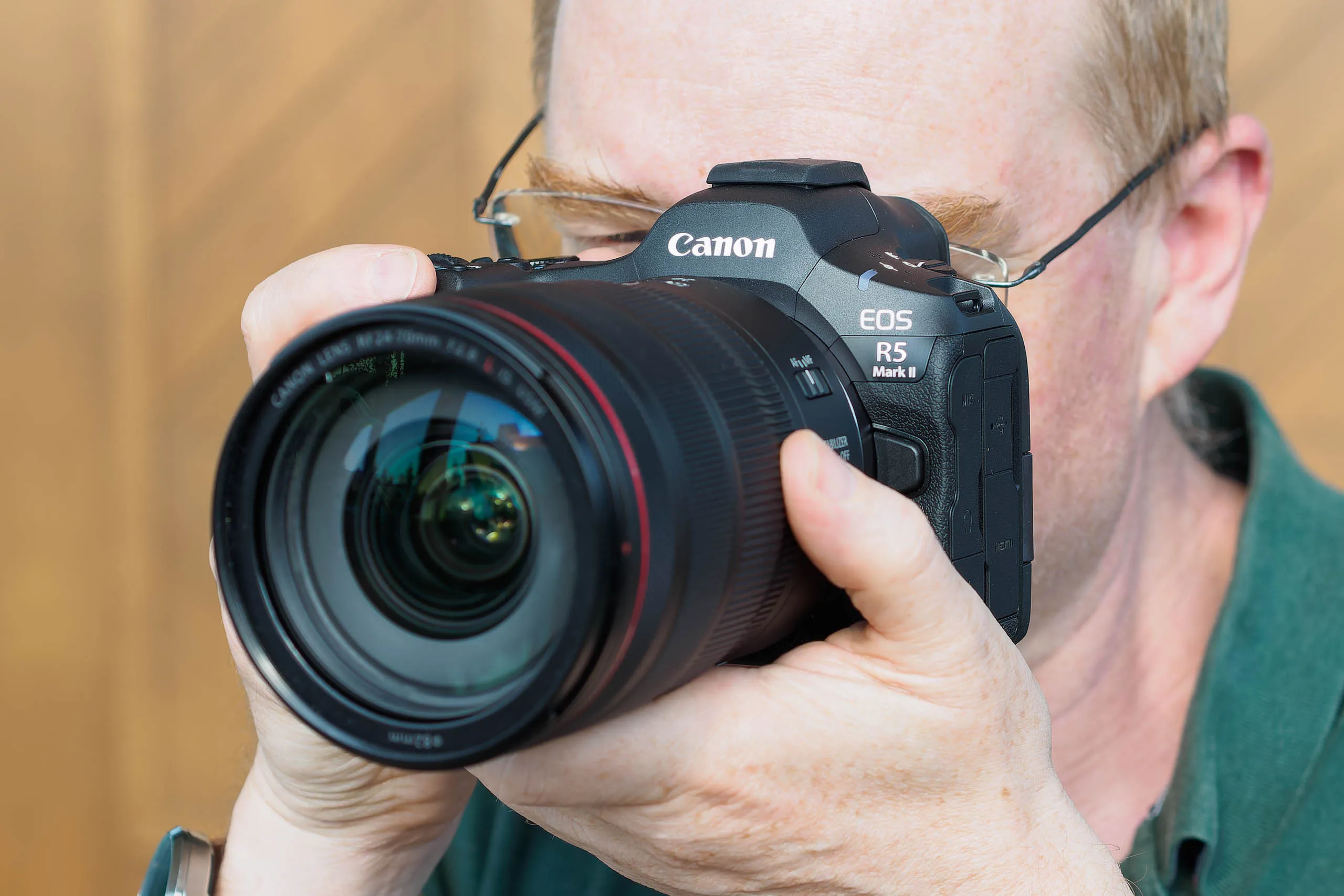
The top of the mirrorless camera market is a competitive place – but Canon may just reign supreme with the superb, intelligent, class-leading EOS R5 Mark II. It’s our favourite Canon, anyway, best for professionals, and best for portraits in our list of the best cameras for photography.
The original EOS R5 felt like a big step forward, offering world-class stills performance and high-res 8K video. However, it was hobbled by its much-publicised overheating issues, which curtailed recording times. Fixing this was obviously priority one, but Canon has also brought a lot more to the party with this go-around.
For instance, the EOS R5 Mark II has gained the Eye Control focus system from the sports-focused EOS R3. It’s just as it sounds, an autofocus system that is controlled by the movements of your eye in the viewfinder – and it really works! Of course, if you don’t feel for it, you can take advantage of the superbly capable subject detection autofocus, which automatically recognises different types of subject, with no need to specify which one it’s looking for.
In use, the Canon EOS R5 Mark II is slick, polished and highly capable – just as all pro mirrorless cameras are these days. Its 8K video capabilities also impress, and yes, the overheating problems of the original have been fixed. This camera is built like a tank, as they say, and should survice years of professional use, all whilst delivering professional quality images and video.
While it’s an expensive proposition, currently going for $3,899 / £4,399 body-only, the EOS R5 Mark II (like all EOS R cameras) works seamlessly with old EF DSLR lenses, which opens up plenty of possibilities for cheap glass. As we said in our review, it’s very difficult to think of a significant flaw with this camera. It does everything pros need it to, and more.
Best full frame mirrorless camera for all-round use: Canon EOS R6 Mark III
Canon EOS R6 Mark III with RF 45mm F1.2 STM lens. Image credit: Andy Westlake
Amateur Photographer verdict
A top-of-the-class all-rounder for shooters who want to do anything and everything, the Canon EOS R6 Mark III pairs 32.5MP resolution with excellent autofocus.
Pros
Absolutely superb AF system
Higher-res sensor improves detail and flexibility
Very fast burst shooting
Can use EF lenses via adapter
Cons
Doesn’t work with older LP-E6-type batteries
Relative lack of third-party RF lenses
Scroll to see more →
Specifications
Canon EOS R6 Mark III
Sensor
32.5MP CMOS sensor
Continuous shooting
40fps with electronic shutter
Autofocus
6097-point Dual Pixel CMOS AF II
ISO
ISO 50 to 102,400 (expanded)
Image stabilisation
Up to 8.5 stops
Video
7K 60p
The EOS R6 cameras have always been Canon’s full-frame all-rounders, and the EOS R6 Mark III is the most broadly capable model yet. At a price that’s going to put it firmly in the serious enthusiast and even semi-professional space, it’s a camera that’s very, very good at just about everything. While the full-frame mirrorless enthusiast market is a decidedly competitive one, the EOS R6 Mark III sports a number of next-gen features that nudge it ahead of the pack – and at $2,799 / £2,799, body-only, it’s not cheap, but is fairly competitively priced for an enthusiast’s camera.
Its top-line sensor resolution of 32.5MP isn’t the highest you can get, but is a touch higher than many comparable all-rounder cameras, which tend to sit around the 24MP mark. At a stroke, this gives you more shooting flexibility, allowing you to easily crop into images without losing detail to draw greater attention to your key subject. It’s also excellent for print-making.
Autofocus has seen a significant upgrade, and the EOS R6 Mark III boasts the latest version of the Dual Pixel CMOS AF II system, with a whopping 6097 selectable points positively blanketing the frame. The by-now obligatory subject-detection system is also, of course, present and correct, with the ability to detect humans, animals and vehicles, and offering an Auto mode so that you don’t have to select your subject type in advance.
The camera is also something of a speedster, with shutter speeds of up to 1/8000sec. The regular mechanical shutter can capture images at a robust 12fps, but switch to the electronic and you can take advantage of an altogether more blistering 40fps, with a top-flight speed of 1/16,000sec. Realistically, that is faster than anyone is ever going to need, and the pre-capture mode that continuously buffers 20 frames while the shutter button is half-pressed can make doubly sure you never miss the moment.
I’d say this is primarily a photographer’s camera, but if video is part of your repertoire too, it has a pretty muscular skill-set in this department. Recording raw video internally at 7K resolution and 60fps, or 30fps open-gate, is certainly nothing to sniff at. It can output ProRes RAW to external recorders at 7K30p, and offers Canon’s neutral C-Log2 and C-Log3 profiles.
It’s also worth noting that the full-frame all-rounder market is a competitive place, and there are quite a few cameras from different systems offering a similar feature-set to the EOS R6 Mark III. One that we cover further down this list is the superb Nikon Z6 III, but you may also want to consider the recently released Sony A7 V, which offers a 33MP partially stacked sensor and 30fps continuous shooting. I’ve come down on the side of the EOS R6 Mark III as my all-rounder pick as I prefer Canon’s handling and ergonomics, but really you can’t go wrong with any of these cameras if you’re looking for a full-frame option to do a bit of everything.
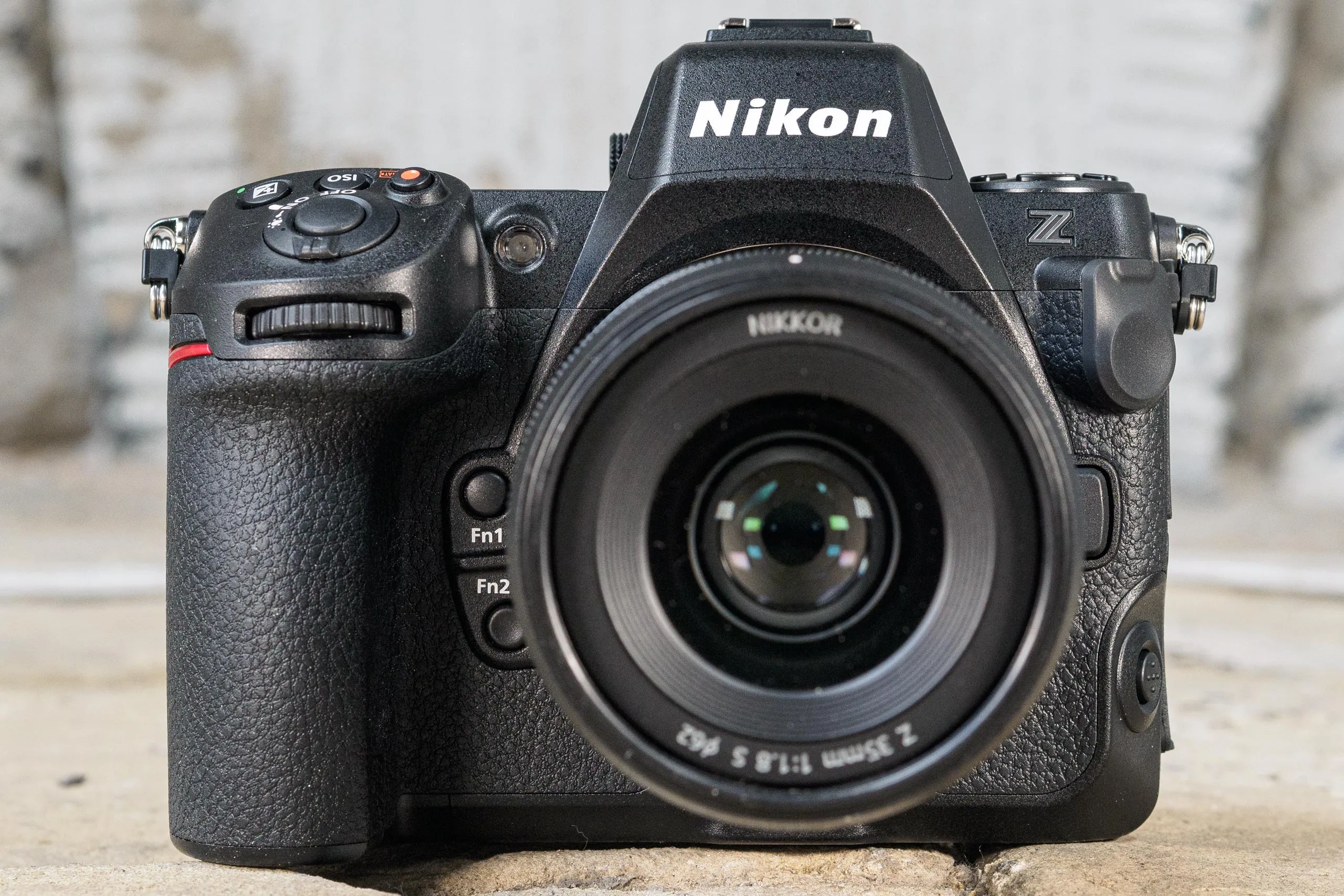
Best full frame mirrorless camera for wildlife: Nikon Z8
Nikon Z8 front view with 35mm f/1.8 lens. Credit: Andy Westlake
Amateur Photographer verdict
A slimmed-down cheaper Nikon Z9, the Nikon Z8 is perfect for wildlife photography thanks to super-fast, high-res shooting, and subject detection auto-focus, perfect for both photo and video.
Pros
Exceptional image quality
Subject-detection autofocus
Discreet silent operation
Professional handling and build quality
Cons
Expensive compared to Z7 II
Mixed memory card formats
Scroll to see more →
Specifications
Nikon Z8
Sensor
45.7MP full frame stacked CMOS sensor
Continuous shooting
20 fps raw
Autofocus
493 AF points, subject detection autofocus
ISO
ISO 64-25,600 (standard)
Image stabilisation
Up to 6 stops
Video
8K 30p, 4K 120p
The Nikon Z8 sits just below the flagship Z9 in the Nikon full frame mirrorless camera range; though the two cameras are technically, practically at the same level. Where the Z9 has an integrated battery grip – the Z8 has a classic, more compact design that is easier to pack and handle for more general photography, and with high-resolution, high-speed, and a weather sealed camera body it’s ideal for capture highly details photos and video of wildlife, in any weather.
The Nikon Z8 matches the Z9 in almost every respect in its smaller, less expensive body – it goes for $3,496 / £3,789, compared to $5,196 / £4,999 for the Z9. With fast shooting and high-speed subject detection auto-focus is can capture every animal you point the camera at for both photos and video, and almost everything else you can think of photographing.
So what do you get that makes this camera so great? First, there’s its 45.7MP sensor, which delivers excellent resolution. Then there its ability to shoot raw files continually at 20 frames per second – and then there is its 8K video recording, or 4K at up to 120fps. Normally cameras are built to specialize in one particular area, but this is a camera that excels everywhere.
Of course, this carries a high price tag, but then it is a rugged, professional camera designed for years of hard use. It also offers twin memory card slots, accepting either SD or CFexpress Type B cards. This makes it easy to use alongside other, older equipment that uses the SD format – though some videographers and sports shooters might prefer Nikon to offer matched CFexpress card slots and make a full transition to this new format.
A small point? Definitely, because the Nikon Z8 is a simply superb camera that’s instantly one of the best full frame mirrorless cameras you can buy. For more options have a look at the best cameras for wildlife.
Best full frame mirrorless camera for beginners: Nikon Z5 II
The Nikon Z5 II and 24-120mm f/4 lens. Image: Amy Davies
Amateur Photographer verdict
A fantastic all-rounder for a variety of photographers. With a fully-articulating touchscreen and a host of features, the price makes it ideal for those wanting their first full-frame camera.
Pros
Fantastic value
Fully articulating touchscreen
Proven sensor
Multiple subject detection focusing
Cons
No top-plate LCD for quick viewing of settings
4K 60fps video has a crop / no higher resolutions available
Less portable/travel-friendly than APS-C or MFT rivals
Scroll to see more →
Specifications
Nikon Z5 II
Sensor
24.5MP full-frame (FX format) BSI CMOS sensor
Continuous shooting
Up to 15 frames per second shooting in raw, 30fps JPEG only
Autofocus
273 AF points
ISO
ISO 100-64000 (extended)
Image stabilisation
7.5 stops
Video
4K 60fps internal video recording (cropped), 4K 30fps uncropped
Whether you’re making the jump from DSLR to mirrorless, or from crop-sensor to full frame, or both, a relatively affordable all-rounder like the Nikon Z5 II is an eminently sensible option, being both easy to use, and perhaps more importantly, affordable. At $1,596 / £1,599 body-only, it’s one of the most affordable options in the full-frame space if you’re buying new, and you get a heck of a lot of camera for that money.
When we put the Z5 II through our full testing and review process, we found the specs to be incredibly competent, especially for the price. Although it may be aimed at entry-level beginners, or hobbyists, it gives you great handling and excellent image quality. The Expeed 7 processor delivers fast operational speeds, particularly in autofocus performance. You can also achieve clean images at mid-range to high ISOs such as ISO 3200-6400.
The Z5 II boasts inbuilt image stabilisation that gives you up to 7.5-stops of shake reduction at the centre of the image, or 6 stops at the edges. Focus point VR is included to give sharper results when the subject is off-centre. The continuous shooting at full resolution up to 14fps (with the mechanical shutter) or 15fps (with the electronic shutter) is great for capturing the decisive moment. For additional options, have a look at the best cameras for beginners.
Best full frame mirrorless camera for weddings and events: Nikon Z6 III
The Z6III feels great in your hand, with well-placed controls. Credit: Andy Westlake
Amateur Photographer verdict
The Nikon Z6III matches or surpasses any other camera in its class. With a fabulous new viewfinder and superb autofocus system, it’s ideal for weddings, and everything else you might throw at it.
Pros
Generally good at everything
Superb viewfinder and fully articulated screen
Much improved autofocus – including in low light
Cons
Certain aspects of the user interface are starting to look dated
Big price leap over Z6II
Scroll to see more →
Specifications
Nikon Z6 III
Sensor
24.5MP partially-stacked CMOS sensor
Continuous shooting
14 fps
Autofocus
299 AF focus points
ISO
ISO 50-204,800 (extended)
Image stabilisation
Up to 8 stops
Video
6K 60fps video
In its third iteration of full frame mirrorless, Nikon went about improving on the Nikon Z6 II, with impressive results. The Nikon Z6 III comes with an exciting new high-speed sensor, a sensational viewfinder, and almost the same autofocus system as the Z8 and Z9, thanks to its Expeed 7 processor. The result is a great all-rounder camera capable of tackling almost anything you might ask of it.
For weddings and events, you need a versatile camera, and the Nikon Z6 III is that. Its 24.5MP resolution is big enough for printing without being unwieldy, and the 14fps burst rate is well capable of capturing anything that moves. The handling is lovely too, with a big and beautiful EVF, and one of our favourite oft-neglected features – a top LCD screen. Not only that, but the camera also has a fully articulating rear LCD.
With its fast and agile autofocus system, the Nikon Z6 III certainly should be in the mix for photographers looking for a capable all-rounder for event and wedding photography, and the good low-light performance certainly helps too. At a current price of $2,096 / £2,499, it sits at a similar level to other full-frame all-rounders like the EOS R6 Mark III. For more options have a look at the best cameras for weddings.
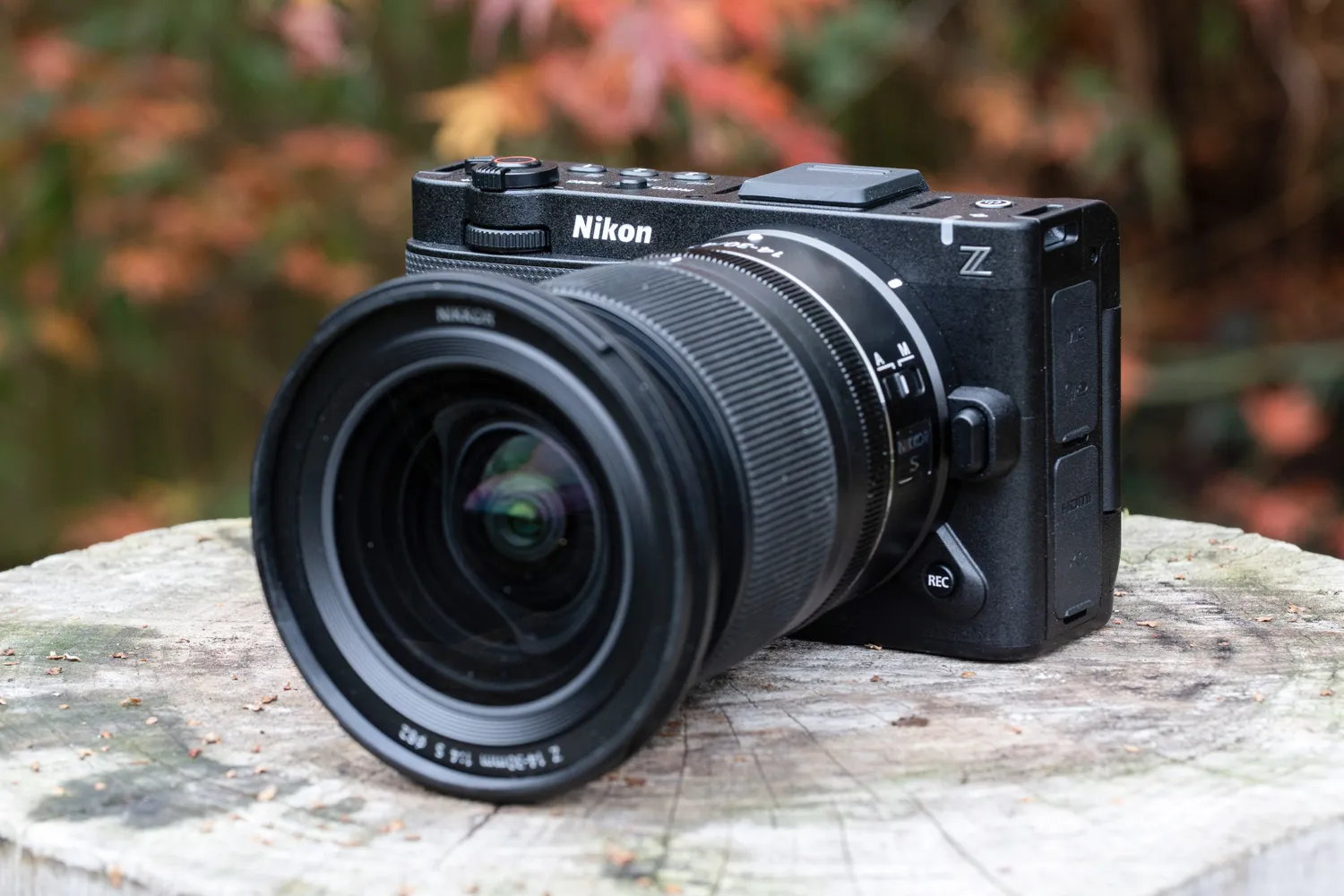
Best full frame mirrorless camera for video: Nikon ZR
Nikon ZR. Image credit: Richard Sibley
Amateur Photographer verdict
Offering 6K 60p RAW video at an incredible price, the Nikon ZR uses RED tech to deliver the new mirrorless benchmark for budding filmmakers.
Pros
Compact, gimbal-friendly design
6K 60p RAW at entry-level price
Internal 32-bit float audio
Excellent 4-inch 1000 nit screen
Cons
No electronic viewfinder
MicroSD backup slot can’t handle 6K RAW
Micro HDMI connector
Scroll to see more →
Specifications
Nikon ZR
Sensor
24.5MP CMOS sensor
Continuous shooting
Up to 120 fps
Autofocus
299-point hybrid AF (253-point in video)
ISO
ISO 50-204,800 extended
Image stabilisation
Up to 7.5 stops
Video
6K 60p RAW recording (R3D NE, N-Raw)
The first fruits of the merger between Nikon and cinema specialists RED, the Nikon ZR comes storming out of the gate. It’s indisputably the best entry-level cinema camera you can buy right now for video, in a full-frame mirrorless body that takes the best of the Nikon Z series to deliver something really quite special.
Let’s deal with the headline figures first. The Nikon ZR is capable of capturing 6K 60p footage in RED R3D NE raw format, and sports an intimidatingly enormous raft of alternative codecs and formats if that’s not to your liking. I’ll crib a little from Richard Sibley’s full review of the camera to give you an idea: data rates range from around 780Mbps for N-Raw Normal quality, up to 3780Mbps for R3D NE High quality. Apple ProRes RAW HQ is limited to 6K 30p but offers the highest data rate of up to 5000 Mbps. And for those who don’t need RAW, the ZR can capture great-looking 10-bit H.265 footage. At 6K, you’re looking at 370 Mbps for 60p, whilst 4K 60p is 300 Mbps. The camera can also shoot 4K at up to 120p (with a 1.5x crop), and Full HD at an impressive 240p for slow-motion work.
As is essential for a serious filmmaking tool, the Nikon ZR also has excellent audio capabilities. In a first for mirrorless cameras, it can record 32-bit float audio internally, and it also benefits from Nokia’s OZO spatial audio tech with a directional microphone system. Multiple patterns are available, from highly directional for recording dialogue to a studio surround mode that’s perfect for ambient sound. External mics can be connected via the 3.5mm port or the digital hotshoe.
With no viewfinder, the Nikon ZR is a video-first camera, and those who are more concerned with photography will undoubtedly get greater value elsewhere. Still, for filmmakers, the $2,199 / £2,199 body-only starting price is some of the best value for money you can get on the mirrorless market right now. For more options have a look at the best cameras for vlogging.
Best hybrid full frame mirrorless camera for photo and video: Panasonic Lumix S1II
Panasonic Lumix S1II. Image credit: Andy Westlake
Amateur Photographer verdict
In a market where all top-end cameras are incredibly good at capturing almost any kind of subject, the Panasonic Lumix S1II stands out for its sheer shooting speed and high-end video capabilities.
Pros
Great handling and control layout
6K video
Super-fast stills shooting and video framerates
Very effective in-body image stabilisation
Cons
No auto subject-detection mode
No intermediate burst speed between 10fps and 30fps
Scroll to see more →
Specifications
Panasonic Lumix S1 II
Sensor
24MP full-frame sensor
Continuous shooting
Up to 70fps shooting
Autofocus
779-point phase detection autofocus
ISO
ISO 100-51,200 (standard), ISO 50-204,800 (extended)
Image stabilisation
Up to 8 stops
Video
6K 60p video recording
The Panasonic Lumix S1II is almost the same camera as the Panasonic Lumix S1IIE but shoots faster and offers double the frame rates for video. This is our current pick for anyone who seriously shoots both photos and video, which is something modern content creators are increasingly expected to be able to do. Being able to quickly switch between shooting 24MP stills or 6K 60p video, as you can on the S1II, could be a real asset for any budding visual creative.
The differences between the S1IIE and the bigger S1II aren’t hugely significant. The E version costs about 80% of the price of its bigger brother, coming in at $2,498 / £2,399, and it consequently lacks faster frame rate features like 70fps burst shooting and 5.9K 60p open-gate video. If you’re looking for fast shooting and if you’re serious about video, the S1II is the superior choice.
In testing, the camera matched all its advertised burst rates: 70, 60, or 30 frames per second using the electronic shutter; 10fps using the mechanical shutter with focus fixed; and 8fps with C-AF, all with a buffer of 180 frames at least. I was able to get consistently sharp hand-held shots at shutter speeds up to about a second, with the occasional entirely usable shot at even longer exposure times. When recording video, you can get almost tripod-steady results hand-held using the Boost mode.
An impressively accomplished hybrid all-rounder superior to the S1IIE, I think many hybrid shooters will appreciate it. It’s a camera that’s good at everything, with a brilliantly designed body and accomplished control scheme.
Best full frame mirrorless camera for landscapes: Sony A7R V
The Sony Alpha A7R V or Mark V, mid-testing by the AP review team. Photo credit: Andy Westlake
Amateur Photographer verdict
The most megapixels you can get on a full frame camera, the Sony A7R V is untouched when it comes to detail for printing and landscapes. Still, the price might make you think twice.
Pros
Superb image quality
Reliable subject-detection AF
Superb viewfinder and screen
Robust build and fine handling
Cons
Sony menus still difficult and fiddly
No in-camera RAW conversion
Scroll to see more →
Specifications
Sony A7R V
Sensor
61MP EXMOR R CMOS sensor
Continuous shooting
Up to 10 fps
Autofocus
693 phase detect focus points
ISO
ISO 50-102,400 (extended)
Image stabilisation
Up to 8 stops
Video
8K 24p video
For making big, beautiful prints of your landscape images, or for cropping into the smallest detail, the Sony A7R V is the king of the hill. Indeed, this camera is so good that we named it the AP Product of the Year in our 2023 annual awards, as well as the best professional camera. And given that we’re now a few years down the line, the A7R V can be picked up for a decent discount on launch – it currently goes for around $3,498 / £2,999 body-only.
With a 61MP sensor that produces absolutely stunning images, the A7R V is set up to help you nail the shot every time. This translates to excellent colour rendition and near-unerring autoexposure. What’s more, the camera’s sophisticated in-body stabilisation system can be used to create pixel-shift multi-shot images. The most advanced mode is a 16-shot function that outputs enormous 240MP images. Considering landscape photographers are going to be using a tripod most of the time anyway, this is a feature tailor-made for the genre.
The full-frame sensor has a backlit design, meaning the A7R V does well at a range of ISO settings. It also inherits subject-detection autofocus from the more action-oriented Alpha cameras – not essential for landscapes, but nice to have. Its viewfinder is big, high-resolution and gorgeous as well, making for an all-around pleasing shooting experience. In fact, there’s not much the A7R V can’t do extremely well. For more options have a look at the best cameras for landscape photography.
Best full frame mirrorless camera for sports: Canon EOS R1
Canon’s EOS R1 is a brilliant pro sports camera, but makes little sense for almost anyone else. Image credit: Andy Westlake
Amateur Photographer verdict
The next generation of sports cameras, the Canon EOS R1 is a truly groundbreaking speed machine, equipped with AI smarts and Eye Control focus. Of course, it’s priced at a level that excludes most.
Pros
Super-fast shooting
Superb viewfinder
Prodigious battery life
Works seamlessly with EF-mount SLR lenses
Cons
Overkill for most people
Slightly compromised dynamic range
Scroll to see more →
Specifications
Canon EOS R1
Sensor
24MP stacked CMOS sensor
Continuous shooting
40fps with autofocus
Autofocus
1,053 phase-detection AF points
ISO
ISO 100-102,400 (standard), ISO 50-409,600 (extended)
Image stabilisation
Up to 8.5 stops
Video
6K raw video
Long-awaited, the Canon EOS R1 is an absolutely remarkable camera that has proven to be almost everything that professional sports photographers were hoping it would be. Built like a tank, it offers fantastic handling thanks to an abundance of physical buttons and controls. It also costs about as much as a tank, with a starting price of $6,799 / £6,799 body-only putting it firmly in the professional realm.
The 1053-point autofocus system locks onto targets with incredible accuracy and persistence, and it benefits from an AI-powered subject-detection system that doesn’t overcomplicate things the way cameras from some other brands do. Shooting speeds go to a blistering 40fps when you’re using the electronic shutter, with full autofocus, and frankly, if you can’t get at least one keeper with all that at your disposal, the problem probably isn’t with the camera. And I haven’t even talked about the next-generation Action Priority mode, which uses AI smarts to keep the focal point on where the main action is in a busy scene (on the ball in a football game, for instance).
In-body image stabilisation also works well on the EOS R1, providing up to 8.5 stops of effective compensation. When reviewing the camera, our technical editor Andy Westlake was able to shoot using wide-angle lenses with shutter speeds as long as a second, and still obtain images of acceptable sharpness. Granted it’s rare you’d need to do such things in a sports or wildlife context, but it’s still a nice feature to have for general-purpose photography.
The raw image quality is also excellent – Andy put the camera through its paces in a variety of situations, and found that images were consistently sharp at the pixel level, with no visible artefacts. It’s probably the highest-quality 24MP camera you can buy – though as we’ve seen on this list, if you do want more pixels and more detail, you have no shortage of options.
All in all, the Canon EOS R1 is practically everything that professional sports photographers could want – which is exactly why most people probably shouldn’t buy it. Given the price tag and bulk of the EOS R1, it is simply going to be overkill for the vast majority of photographers. Still, if you are looking for the best full-frame camera for sports – this is it. If your budget is different, have a look at the best cameras for sports and action.
Best for: Professional wildlife and sports photographers
Best full frame mirrorless Sony camera for professionals: Sony A1 II
Sony Alpha A1 II. Credit: Andy Westlake
Amateur Photographer verdict
The Sony A1 II is a truly top-class professional all-rounder in both stills and video. However, its sky-high price means it’s only worth it if you’re already invested in the system.
Pros
The best Sony camera you can buy
Superb viewfinder and screen
Excellent AF with auto subject-detection
Cons
Much more expensive than rivals
Over-complicated autofocus setup
Scroll to see more →
Specifications
Sony A1 II
Sensor
50MP full frame stacked-CMOS sensor
Continuous shooting
30fps
Autofocus
759 AF points
ISO
ISO 100 – 32,000 (expandable to 50-102,400)
Image stabilisation
Up to 8.5 stops
Video
8K 30p, 4K 120p
The original Sony A1 was something of a game-changer – a true do-everything camera for the demanding professional, equally at home with capturing high-res imagery of fast-moving subjects as it was with producing sublime 8K video. The Sony A1 II is all that once again – it’s the best Sony camera ever made, a much more capable all-rounder than the sports-focused A9 III. Its blend of speed and resolution allows you to capture “exactly the moment you want with relative ease, and with lots of leeway for cropping,” as we said in our full review.
The A1 II has gained plenty of new features, taking cues from both the original A1 and the A9 III. It has Sony’s best-ever image stabilisation, rated for up to 8.5 stops of compensation, which our reviewer found could be used to get sharp results at shutter speeds as low as 2.5 seconds provided he had something to lean on. The body has been widened with a greatly improved handgrip, and the subject-recognition autofocus has finally gained an Auto option – though our reviewer did encounter a few false positives, including an incident where it mistook an oak tree for an insect.
Unfortunately, we do have to talk about the price. The Sony A1 II stands head and shoulders above its rivals in price, costing $6,998 / £5,699. It costs almost 50% more than the Canon EOS R5 Mark II, depending on where you are, and in the US it’s double the price of the Nikon Z8. Is it twice as good as the Nikon Z8? No, it is not! That makes it difficult to recommend for anyone who’s investing in a new professional system.
For established professional Sony photographers, truly committed to the system, heavily invested in G Master lenses and the like, the Sony A1 II will do absolutely everything you need it to do extremely well. However, if you don’t fit that exact profile, then this is a tough camera to recommend, as you can spend a lot less in another system and get a camera that is just as excellent.
Why do people prefer full-frame mirrorless cameras, rather than DSLRs?
These days, most professional photographers use mirrorless cameras – though it’s not completely clear-cut. While DSLRs were once the kings of the photographic world, times have changed, and now the superior speeds and resolutions of the latest mirrorless cameras have seen many professionals jumping ship. It helps also that most major manufacturers have firmly moved their development over to their mirrorless ranges, and so pretty much any professional camera or lens that comes out nowadays is going to be mirrorless. So are DSLRs dead and buried? Many photographers prefer them for their long battery life and ability to field an optical viewfinder. Overall though, professional photographers are trending mirrorless, and this is only going to increase as the years go on.
Is DSLR focusing better than mirrorless?
Autofocusing works quite differently on DSLRs and mirrorless cameras. Mirrorless cameras have more focus points, which enables a better estimate of subject position, and powerful Subject Recognition systems that are becoming more and more common, allowing cameras to intelligently identify and lock onto specific subjects like humans, animals and vehicles (some can even use this in conjunction with face-detection to lock onto specific individuals). For more on the key differences, check out our in-depth rundown — Autofocus: DSLR vs Mirrorless.
What is a full-frame mirrorless camera?
The term ‘full frame mirrorless’ refers to: sensor size and camera type. Full frame is a sensor size of 36x24mm; the same as a single frame of 35mm film, hence the name. It’s one of the larger sensor formats available and is popular among professionals for its balance of image quality and portability. See our piece on APS-C vs full frame sensor sizes for more on sensor sizes.
Are mirrorless cameras the most advanced cameras you can buy?
Yes, mirrorless cameras are getting all the latest technological developments. These include powerful in-body stabilisation systems that make it easier to get sharp shots handheld. The more significant development, however, has been AI-powered subject-detection autofocus. This is a remarkable focusing system by which the camera is capable of recognising specific types of subjects such as humans, animals and vehicles, and can then lock onto and track them throughout the frame.
Can you change lenses on a mirrorless camera?
Yes, mirrorless cameras are interchangeable-lens cameras. They are the modern successor to the best DSLRs that were the professional standard digital camera throughout the 2000s and the 2010s. The key difference, if you hadn’t guessed, is the lack of a mirror – the reflex mirror system that is the lynchpin of a DSLR’s optical viewfinder. Instead, mirrorless cameras typically offer an Electronic Viewfinder (EVF); essentially a miniature LCD screen with an eyepiece. Our DSLR vs mirrorless guide explains in detail the key differences between the two types of camera.
Do lenses matter when buying a full-frame mirrorless camera?
Most definitely, you should seriously think about the lenses available. Each manufacturer’s system is different. If you are switching from a DSLR system and want to keep some or all your old lenses you’ll need to purchase a compatible adapter mount to ensure they fit. Canon and Nikon offer full-functionality mount adapters that allow you to use DSLR lenses on their mirrorless cameras and still enjoy the benefits of autofocus and stabilisation.
How to choose the best full frame mirrorless camera and the specifications that matter
When buying a new full frame mirrorless camera, there are a number of key specs (aka specifications) to pay attention to:
Sensor resolution: The more pixels a sensor has, the more detail you get in your images. This is great for printing, enabling you to produce fantastic images full of rich detail. However, high-resolution files take up a lot of storage space, necessitating expensive hard drives or cloud subscriptions, and also require powerful processors, which means a slower, pricier camera.
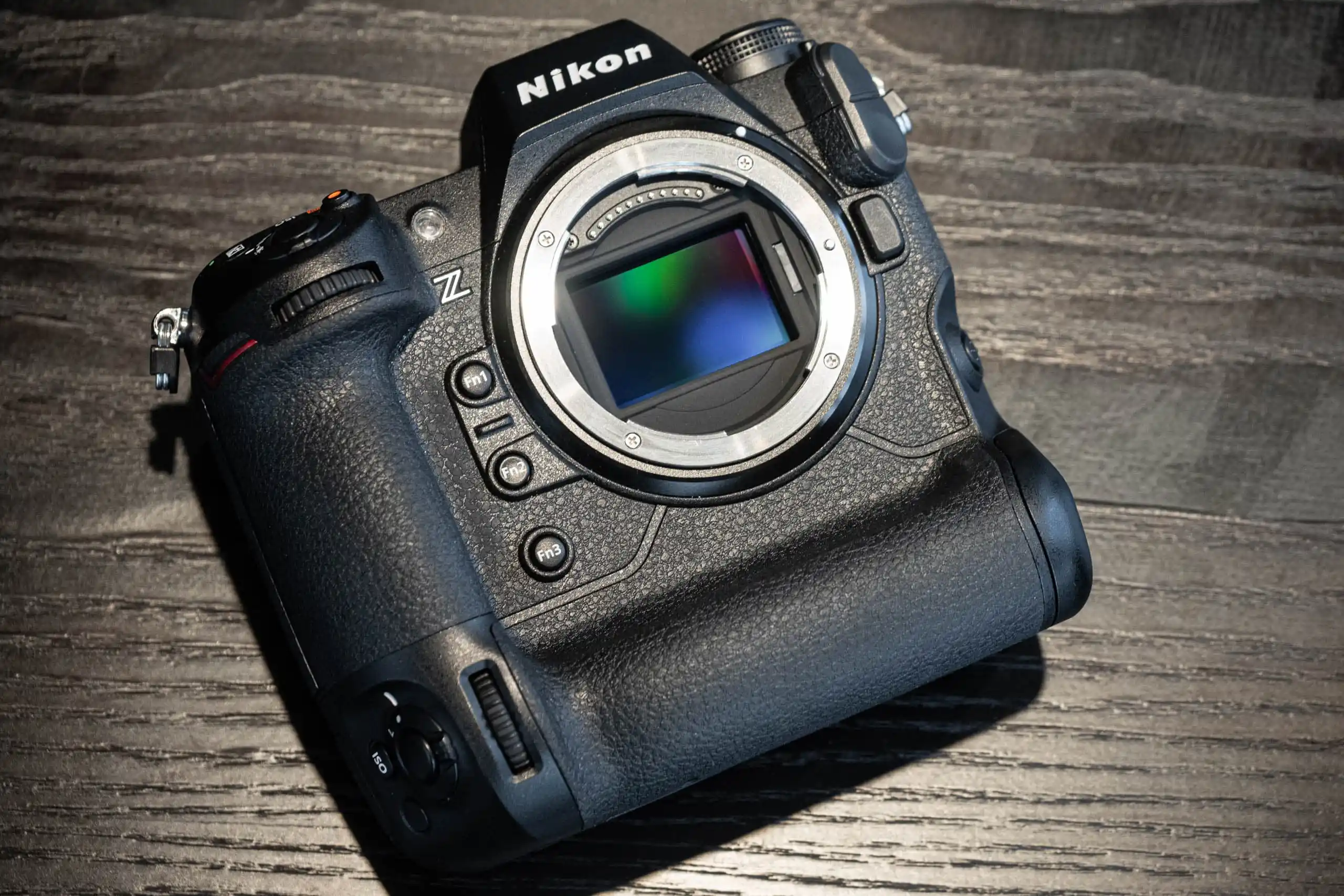
Nikon’s pro full frame mirrorless Z9 is based around a new 45.7MP stacked CMOS sensor
Image stabilisation: IBIS (which stands for in-body image stabilisation) is a key feature to help you produce shake-free shots. Most modern mirrorless cameras now include this technology; it will often be referred to as ‘5-axis in-camera image stabilisation’ or something similar.
ISO range: A camera’s ISO range determines how high you can turn up the sensitivity of its sensor. The higher the top number in a camera’s ISO range, the better it can perform in low light. Be warned though, just because a camera can shoot at ISO 102,400, that doesn’t mean you’ll get useable results at that setting, as high ISO settings incur a lot of image noise.
LCD screen and viewfinder: Mirrorless cameras don’t have optical viewfinders like DSLRs, so they have to either make do with electronic ones, or forgo them entirely. All the cameras on this list have electronic viewfinders (EVFs), but some are larger and more detailed than others.
The Sony A7S III features a fully articulated touchscreen. Image: Andy Westlake
Burst mode: The faster the burst mode (expressed in frames per second or fps) on a camera, the better it will be at keeping up with fast action. You’ll also want to pay attention to the buffer depth, which is the number of consecutive images the camera can shoot before the processor needs to cool off.
Video: If video is a high priority on your list then you’ll want to find a camera that supports 4K video resolution or higher. 4K is plenty big enough to produce high end video footage, however some of the cameras in our line up support 8K resolution. For most, 8K video is excessively big, so 4K should be more than enough.
How we test full frame mirrorless cameras
Testing mirrorless cameras isn’t just about lab charts and specs — it’s about seeing how they perform in the real world. Each model is put through its paces with hundreds of photos and video clips shot in a wide variety of conditions.
As full-frame mirrorless cameras are often larger and heavier, we examine their control layout, whether they have an adequate grip and how well they handle overall.
We take a look a screen size and brightness as well as response time in case of touchscreens and the practicality of any articulating design. We test the electronic viewfinder with particular attention to brightness, colour accuracy and real-time exposure preview.
Autofocus performance is one of the key areas of testing. Continuous subject tracking, or special features like the superb Eye Control in the Canon EOS R5 Mark II or other advanced Subject Detection modes are all evaluated, whether capturing fast-moving subjects like birds, motorsports like high-speed bike racing, or more composed scenes.
Many models boast high fps continuous shooting capabilities and features like AI-assisted focus tracking. To test these features, we use fast-moving subjects (like bikes, planes, trains, cars, motorbikes) to reveal how well the system holds focus and how many frames truly hit the mark. We also assess their image stabilisation system and test how well they counter rolling shutter effects. Blackout-free shooting, buffer depth, and overall responsiveness at high speeds are also measured to see how each camera handles high burst rates.
Last but by no means least, we critically evaluate image quality, in both JPEG and raw, including resolution, high-ISO noise, and dynamic range – as well as video capabilities.
We then take all these factors into account, along with such things as portability and lens systems, when giving our final conclusion and score. You’ll find the full breakdown of how each mirrorless camera has performed in our full reviews.
Recent updates:
Mar 2026: Specifications updated, comparison table at the top added to give quicker access to information. Frequently asked question section added. Panasonic Lumix S1IIE swapped for S1II. They are similar but the latter is faster and offers double the frame rates for video.
Feb 2026: Sony A7 II removed as it is no longer available to buy new, and Nikon Z7 II removed as it was deemed unnecessary to include as well as the excellent Z5 II. Prices checked and updated for all cameras.
Jan 2026: Canon EOS R6 Mark III added as the new best all-rounder, replacing the EOS R6 Mark II, and the Nikon ZR added as the best for video, replacing the Sony A7S III.
Nov 2025: Canon EOS R8 replaced by Nikon Z5 II as best for beginners
Oct 2025: Prices updated, no new cameras added.
Text by Claire Gillo, with contributions from Jon Stapley.
Claire Gillo is a creative brand, commercial product and event photographer based in South Devon. She shoots all types of genres from portraits, music, interior, product to food & drink. Claire has much experience in the publishing industry too, and has worked across many of the big photography magazine publication titles from Amateur Photographer to Digital Camera. Find out more about her at www.clairegillo.com and follow her on Instagram @clairegillophotography.