



Best cameras for portraits

Home / Buying advice / Best cameras for portraits and portrait photography in 2026

The best cameras for people photography, from top-end models to affordable cameras for beginners.


Claire Gillo

Nikon Z7 II Sample Image

Amateur Photographer verdict

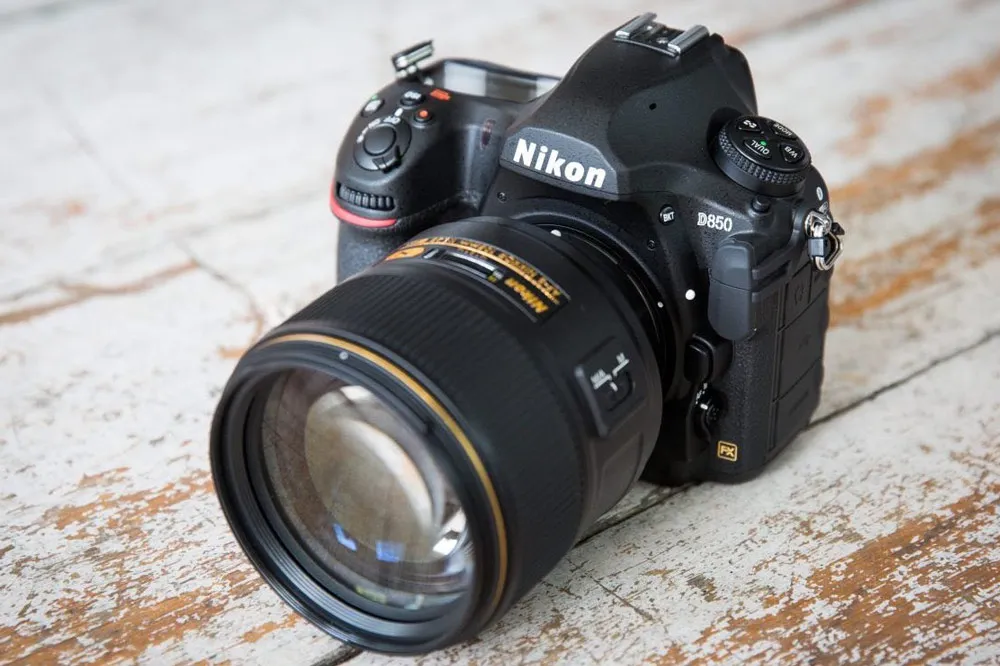
The Nikon D850 is the perfect blend of high-resolution, speed and performance. It is possibly the high-water mark of DSLR design – a classic in the making.

Pros

  • Sensor resolves exceptionally fine detail
  • Super-fast autofocus and silent shooting in Live View
  • Inherits AF toggle from the D500 for fast AF point positioning
  • Impressive battery life with EN-EL15a battery
Cons

  • Bulky and heavy
  • Lacks on-chip phase detection AF in Live View
  • Touchscreen doesn’t allow users to adjust key exposure settings

At a glance:

  • $2,397 / £2,399 body only
  • 45.7MP FX CMOS Image Sensor
  • ISO 64 to 25600 in steps of 1/3, 1/2, or 1 EV
  • Max output resolution: 8256×5504 pixels
  • Video 4K (3840×2160) up to 30p, Full HD (1920×1080) up to 60p
  • Weight 1005g with battery and card

Still a favourite amongst many DSLR shooters, the Nikon D850 is an amazing camera. Even as mirrorless continues to take over, this camera holds its own and is still used by many pros. Its massive 45.7MP full frame image sensor that captures outstanding images is the main reason; with other enticing features such as silent shooting in Liveview mode, a fast AF system and a wide ISO range.

Nikon 85mm f/1.4 G AF-S, 1/100sec at f/1.4, ISO 1600. Image credit: Michael Topham

This camera is ideal for any portrait shooter, from those going on location to those shooting in a studio. On the downside, the body is considerably heavier compared with most mirrorless models. On the plus side, the battery life lasts far longer, and the camera is considerably cheaper than the higher-end mirrorless cameras. For those on a budget, a second-hand model can be picked up for under $2,000 / £2,000, which is an absolute bargain!

Read our Nikon D850 review.



How to choose a camera and lenses for portrait photography

There are two aspects to take into account to achieve amazing portraits. The first is the type of lens you are using, and the effect this will have on your subject. To capture flattering facial features, use a lens with a longer focal length as it compresses a subject’s features rather than emphasise them like a wide-angle lens will do.

When it comes to purchasing a new camera for your portrait photography, look at the compatible lenses available as this will influence your final decision. Most portrait photographers aim to have something like a 50mm, 85mm or 100mm prime lens in their bag and possibly a 70-200mm zoom lens as well. Have a look at our guide to the best portrait lenses.

The second consideration is what image sensor type the camera supports. So, what is the best sensor size for portraits? Dreamy bokeh background blur that is desirable in portraiture photography is easier to achieve on a full frame image sensor. But that’s not to say APS-C and Micro Four Thirds models should be dismissed. These types of cameras are often cheaper, and with the right lens are quite capable of producing excellent results.

Background blur is also affected by other factors such as how far your subject is placed from the background and your lens choice so don’t be put off by an APS-C or MFT model. For more information on sensor size, have a look at our guide to APS-C vs Full-Frame (and MFT) sensors.


Once you’ve found the best cameras for portraits, have a look at our guides to great portrait photography:

Looking for portrait inspiration before you start clicking? Check out some amazing portrait photography below:

Recent updates:

February 2026: Updated to newer available models: Nikon Z7II to Nikon Z8,  Nikon Z50 to Z50II, Fujifilm X-T30 II to X-T30 III, Sony A7R IVA to Sony A7R V, Canon EOS R5 to R5 Mark II, and Panasonic S5 II to S1R II.


Follow AP on Facebook, X, Instagram, YouTube and TikTok.