


Every year, we review all the major cameras that get launched, and a good fraction of the lenses, alongside a wide variety of photographic accessories. Indeed this has been a significant part of Amateur Photographer‘s mission since the magazine first appeared in 1884. It’s been published every week ever since – so we have a long history of expertise!

Each year, we also give out awards for the best cameras, lenses and photographic accessories. This year’s prizes were handed out at a glittering event on 26th February at the beautiful Art Deco Bloomsbury Ballroom in London. Read on to find out the products that we chose as the best cameras and lenses you can buy.
Prime Lens of the Year – Sigma 135mm F1.4 DG Art

Why we like it:
- $1899 / £1649
- Great resolution even wide open
- Excellent subject isolation
- Comprehensive lens controls
- Good price
- sigmauk.com
Sigma’s 135mm F1.4 stands out as the largest aperture autofocus lens yet made at this focal length. It’s designed for use on full-frame cameras, and available in Sony E and L-mount versions. Compared to the f/1.8 offerings from other brands, it gathers two-thirds of a stop more light. However, this may well be less of a draw for many photographers than the reduced depth-of-field and enhanced subject isolation provided by the super-large aperture.
Design-wise the lens offers everything we’d expect, including dual AFL buttons and an aperture ring that can be declicked. It’s dust and splash-resistant and features an oil and water-repellent coating to help keep the front element clean. Inevitably it’s large and heavy, but a tripod ring is included, with an Arca-Swiss profile so it’ll clamp directly onto many heads.
As we’ve come to expect from Sigma’s Art-series lenses, image quality is absolutely stellar. You get excellent sharpness and detail rendition alongside aesthetically pleasing out-of-focus areas. Focus transitions are beautifully smooth, while highlights are clean, rounded and will not distract from the subject. There’s barely any hint of chromatic aberration, either. It’s a superb lens for portraiture in particular, but could also be useful for street, travel and general photography.
Read our review: Sigma 135mm F1.4 DG Art Review – the bokeh benchmark
Zoom Lens of the Year – Sony FE 50-150mm F2 GM

Why we like it:
- £3799
- Bright f/2 maximum aperture
- Superb image quality
- Fast autofocus
- Surprisingly compact size
- sony.co.uk
For many sports, weddings and events photographers, the 70-200mm f/2.8 has long been a staple of the kit bag. But Sony’s latest large aperture telezoom brings a whole new option, being an entire stop brighter. While that’s an advantage for shooting in low light, it also enables increased subject separation and greater background blur. Yet this comes in a lens that’s similar in size and weight to a 70-200mm f/2.8, at 20cm long and 1340g, although it’s noticeably larger in diameter.
Naturally Sony has included all the features we’d expect for one of its top-and G master optics. The weather-sealed barrel plays host to an aperture ring that offers clicked or clickless operation, plus three custom function buttons. Zooming is internal, so the balance of the lens doesn’t change. No fewer than four XD linear motors are employed to deliver fast and quiet autofocus.
Image quality is exceptional, with the lens delivering razor sharp images with no trace of chromatic aberration. That f/2 aperture means that it can easily diffuse backgrounds into a beautiful blur. It is undeniably expensive, but for weddings and events photographers, this lens could be a game-changer, mitigating the need to carry fast primes.
Read our review: Sony FE 50-150mm F2 GM review – a large-aperture game-changer
Innovation of the Year – Godox iFlash iT32 and X5 trigger

Key features:
- £86.99
- Compact electronic flash unit
- Integrated 2.4GHz wireless control
- Interchangeable hot shoe/trigger
- Available for all major camera brands
- godox.com
At first sight, the Godox iFlash iT32 looks like a regular on-camera flash unit, if a particularly neat and compact one. But the device actually comes in two parts, the iT32 flash unit and the X5 Hot Shoe/Trigger, which clip together magnetically. This brings some significant benefits.
The first comes when shooting. If you want more flattering lighting than direct on-camera flash, you can simply unclip the iT32 flash, and either hold it in your left hand or set it up on the supplied magnetic stand. The flash will still fire, complete with TTL metering, controlled by the X5 trigger on the camera.
Secondly, if you use cameras from more than one brand, you don’t have to buy multiple flash units. You only need to get another X5 transmitter. They’re available for Canon, Fujifilm, Nikon, Olympus/OM/Panasonic, and Sony cameras, and cost just £18 each (or £22 for the Sony version).
The flash unit is decently spec’d too, with a guide number of 18m at ISO 100, a bounce/swivel head, and a built-in battery that recharges via USB-C. The X5 can also control other Godox 2.4GHz units within a multi-flash setup. It’s a brilliantly innovative and unique device.
ht source, the iT30Pro gives a direct-flash look, but with perfectly judged metering and none of the bleached-out effect that can spoil such shots. It also does a good job of filling in shadows when used outdoors on a bright day. As the icing on the cake, the Godox TTL Hot Shoe Riser can be used to bounce the flash off a ceiling, for a mere £17. With few cameras these days having a built-in flash, this is a great pocket-sized solution.
Drone Camera of the Year – DJI Mavic 4 Pro

Why we like it:
- From £1780
- Sophisticated three-camera system
- Unique 360° rotating gimbal
- Up to 51 minutes flight time
- Easy to fly
- dji.com
DJI’s Mavic drones have always offered impressive photographic credentials, but the Mavic 4 Pro takes things to a whole new level. It retains the familiar folding design and triple-camera layout, but now you get a 100MP sensor on the main camera, and a 360° rotating gimbal that opens new avenues for framing and filming.
The main camera combines a 28mm equivalent lens with a 100MP Four Thirds Quad-Bayer sensor, which gives a standard output resolution of 25MP. Unusually for a drone, the aperture is variable from f/2 to f/11. Alongside it are 70mm and 168mm equivalent telephoto cameras for zooming in on more distant details. The main camera can record 6K video at 120fps, while the other two record in 4K at up to 120fps.
DJI’s ActiveTrack 360°keeps your subject in-frame and focused during filming, while MasterShotsand QuickShotsexecute preset flight patterns for cinematic footage. Other key features include flight times of up to 51 minutes, all-round obstacle detection and an intelligent return-to-home function that can even operate without GPS. Crucially, the drone is easy to fly, and the cameras deliver fine image quality. In short, the Mavic 4 Pro represents a new benchmark for aerial photographers.
Read our review: DJI Mavic 4 Pro review – Infinity Gimbal and 6K video on board
Smartphone Camera of the Year – iPhone 17 Pro

Why we like it:
- From £1099
- Three high-resolution sensors in main cameras
- Improved selfie camera
- Excellent image quality
- Same camera as larger Pro Max
- apple.com
Apple’s iPhones have always been some of the best smartphones for photographers. Compared to the previous model, the iPhone 17 Pro brings a couple of notable improvements to the camera system. The first is that the rear cameras now all boast high-resolution 48MP sensors. Ssecondly, the selfie camera gains both a bump in resolution to 18MP, and a square sensor that allows you switch between portrait and landscape format output without having to rotate the device.
You get three rear cameras, housed in a distinctive ‘plateau’. They comprise a main camera with a 24mm equivalent f/1.78 lens; an ultra-wide camera with a 13mm equivalent f/2.2 lens; and a telephoto camera with a 100mm equivalent f/2.8 lens. That’s actually shorter than the 5x zoom on the last generation, but this is offset by the much higher resolution sensor. One thing we really appreciate is that you get exactly the same camera setup in the smaller iPhone 17 Pro as the larger Max option.
All three cameras deliver excellent photos and video, with plenty of detail, well-balanced exposures, and vibrant colours. The various specialist modes, such as portrait and night, put in a good performance too. All told, it’s a really capable pocket camera.
Read our review: iPhone 17 Pro review – Apple’s best camera, but is it worth upgrading?
Film Camera of the Year – Lomo MC-A

Why we like it:
- £449
- Sturdy, stylish body
- Auto or manual control
- Lens performs well
- Supports DX coding
- lomography.com
With the Lomo MC-A, Lomography has produced the best new film camera for many years. It’s an autofocus compact that uses 35mm film, with a 32mm f/2.8 lens that retracts when the camera is switched off. Impressively, you get a choice of either automatic or manual control over focus and exposure settings.
The sturdy metal body plays host to a comprehensive array of external controls, including shutter speed and exposure compensation dials, an aperture ring, and even a zone-focus slider. Your current settings are show on a large top-plate LCD. Film speed is set automatically via DX coding on the cassette – a feature that used to be ubiquitous, but which hasn’t been available on other recent film cameras. Winding and rewinding are manual, and a multiple exposure feature is available. To round things off, there’s a small built-in flash.
The 5-element glass lens is a decent performer, although this being Lomo, it’s not without its quirks. It can be vulnerable to flare, and a little vignetting can sometimes be visible too. However, exposures are accurate and well balanced. Overall, it’s a fun camera to use that feels well-built and produces solid results.
Read our review: Lomography MC-A review – style and substance
Video Camera of the Year – Nikon ZR

Why we like it:
- £2199 body-only
- 6K 60p RAW at entry-level price
- Large, bright 4in screen
- Internal 32-bit float audio
- Compact design
- nikon.co.uk
Last year, we saw several distinctly different takes on what a specialist cinema camera should look like. Our favourite was the ZR, which represents the first fruits of Nikon’s acquisition of video camera maker RED. This places a comprehensive feature set into a small body that’s cleverly designed so it can be used standalone and hand-held, without needing an add-on rig or accessories.
In essence, the ZR is based on the proven imaging hardware from the excellent Nikon Z6III. It employs the same 24MP partially stacked sensor, which supports internal 6K 60fps RAW recording using the full sensor width, and 4K 120fps RAW with a 1.5x crop. Full HD recording is available at 240fps.
Nikon has fitted the camera with an unusually large, bright and detailed 4in, 1000-nit, 3.07m-dot screen, which means many users won’t need to use an external monitor. It also records high-quality directional audio via its built-in mics, and is the first camera to support internal 32-bit float recording. To round things off, 5-axis in-body image stabilisation reduces the need to use a gimbal. The overall result is an entry-level cinema-style camera that has genuinely reset expectations for what we should get at this price point.
Read our review: Nikon ZR review – this small bodied cinema camera is astonishing value
Compact Camera of the Year – Ricoh GR IV

Why we like it:
- £1199
- Truly pocketable dimensions
- Excellent image quality
- Discreet design
- Enthusiast-friendly controls
- ricohgr.eu
Ricoh’s GR-series compacts have a well-earned reputation for being classic street shooters, and this fourth-generation model counts a well-judged update. It gains a whole host of upgrades, including improved image quality, revised controls, faster operation, and longer battery life. However, it maintains the same stealthy, discreet design and truly pocket-friendly dimensions.
The GR IV now employs a 25.7MP APS-C CMOS sensor, a small but welcome boost over the 24MP of its predecessor. As before, it employs a 28mm equivalent f/2.8 lens, but now with tweaked optics for improved sharpness. In-body image stabilisation has also been upgraded to a 5-axis system, that’s rated for 6 stops of shake correction. Other notable updates include 53GB of internal storage and a larger battery that promises 250 shots per charge.
As before, the camera is designed to be as small as possible. This means it does without a viewfinder and has a fixed, rather than tilting rear screen. But it still finds space for plenty of controls, including two electronic dials for exposure settings and a small exposure compensation rocker. It’s more responsive too, with quicker startup and snappier autofocus. The result is a great little camera that’s fast and discreet and produces excellent image quality.
Read our review: Ricoh GR IV review – the ultimate street snapper camera?
Premium Compact Camera of the Year – Fujifilm GFX100RF

Why we like it:
- £4699
- Exceptional image quality
- Engaging analogue controls
- Great colour output
- Creative aspect-ratio dial
- fujifilm-x.com
Sometimes a product comes along that offers something we’ve never seen before. The world’s first digital medium-format compact camera takes the hugely successful formula of Fujifilm’s popular X100 series, but gives it a twist with a much larger, higher resolution sensor. That turns out to be a recipe for phenomenal image quality in a remarkably portable package.
Fujifilm has built the GFX100RF around a 102MP sensor that measures 44x33mm – making it 70% larger than full-frame. This is paired up with a 28mm equivalent f/4 lens, with the relatively modest aperture helping to keep the package reasonably slim. As on the X100, you get traditional analogue dials that encourage you to take control over the exposure settings. But there’s now also a dedicated aspect-ratio dial for further creativity, with settings covering everything from square format to ultra-wide panoramas. Your get an excellent corner-mounted viewfinder plus a tilting rear screen.
Build quality is superb, with the camera being fully weather-sealed when fitted with the supplied filter adapter and 49mm protector filter. Image quality is, unsurprisingly, sensational, with vast amounts of detail and Fujifilm’s usual lovely colour rendition. For photographers shooting such things as cityscapes and landscapes, the GFX100RF might just be the ultimate travel companion.
Read our review: Fujifilm GFX100RF review: I can’t believe a camera this small takes such amazing pictures!
Enthusiast Camera of the Year – Nikon Z5II

Why we like it:
- £1599 body-only
- Fantastic value for money
- Comprehensive feature set
- Proven sensor
- Fully articulating touchscreen
- nikon.co.uk
One camera we reviewed in 2025 stood out for its sheer value for money, with a comprehensive feature set at an affordable price. Built around the same proven 24MP full-frame BSI-CMOS sensor as the retro-styled Zf, the Nikon Z5II boasts a range of enticing features including a fully articulating touchscreen, a bright, high-resolution viewfinder, dual SD card slots and uncropped 4K 30fps recording. And all of that in a body that costs less than £1600.
Subject detection is on board, and capable of picking up people, animals, birds and vehicles (cars, motorbikes, trains and airplanes). Another significant upgrade over the original Z5 lies with continuous shooting, which is now available at up to15fps in raw format, or 30fps if you’re happy to stick with JPEG only. In-body image stabilisation provides up to 7.5-stops of shake reduction.
The SLR-style body handles well, with a nice large handgrip, twin control dials, and an AF-area joystick. A new button gives direct and quick access to Picture Control colour modes. Image quality is, as we’d expect, very good indeed. Fundamentally, you’ll struggle to find anything else as capable for the price, making it an extremely tempting proposition for a wide range of users.
Read our review: Nikon Z5 II Review: I might just have to buy this excellently priced full-frame camera
Premium Camera of the Year – Canon EOS R6 Mark III

Why we like it:
- £2799.99 body-only
- Great image quality from 33MP sensor
- Superb autofocus system
- Excellent controls and handling
- Super-fast shooting
- canon.co.uk
Over the past few years, we’ve been spoiled by a number of superb high-end cameras that that can do almost anything users might ask. We tested several such models in 2025, but our favourite was the Canon EOS R6 Mark III. It seems our readers agree, as they voted it their camera of the year.
While the Mark III employs a near-identical body design to its predecessor, it gains a new, higher-resolution 32.5MP sensor. Continuous shooting runs at up to 12fps with the mechanical shutter, and 40fps using the electronic shutter. Canon’s subject detection AF is on board, covering humans, animals and vehicles, while in-body image stabilisation promises up to 8.5 stops of shake reduction. But it’s the video specs that get the most eye-catching boost, with internal RAW recording at 7K / 60fps, or 30fps in 3:2 Open Gate mode. 4K can be shot at 120fps.
As with its predecessors, everything about the EOS R6 Mark III just works extremely well. But now, it comes with even higher resolution to go with its blisteringly fast speed. As a result, it’s just as much at home shooting detail-rich landscapes as it is with fast-paced action. It’s an extraordinarily accomplished all-rounder.
Read our review: Canon EOS R6 Mark III review – this feature-packed 32.5MP all-rounder is a seriously impressive camera
Consumer Camera of the Year and Product of the Year – Fujifilm X-E5

Why we like it:
- £1299 body-only
- Small, portable body
- Enthusiast-friendly controls
- Lovely in-camera colour
- Excellent raw image quality
- fujifilm-x.com
Fujifilm’s X-E5 is a flat-bodied, rangefinder-style camera with a corner-mounted electronic viewfinder. In many respects, it can be seen as an interchangeable-lens version of the popular X100VI fixed-lens compact – to the extent that it comes complete with a new slimline 23mm f/2.8 lens. With an excellent feature set in a small body, it’s a great choice for such things as street, travel and social photography.
As is Fujifilm’s way, the camera shares its main photographic specifications with several of its siblings, including the X100VI and the SLR-shaped X-T50. It employs the same 40MP X-Trans CMOS 5 sensor and X-Processor 5, and notably, it becomes the first model in the X-E series to include in-body image stabilisation. Subject detection autofocus is on board, with settings for animals, birds, cars, motorbikes, airplanes, and trains.
As usual, Fujifilm has included its full suite of Film Simulation colour modes, which are set using a physical dial. However, the big deal on the X-E5 is you can now save your own favourite ‘recipes’ to three FS positions on the dial. This is great for users who like to tinker with colour settings to get their own custom look.
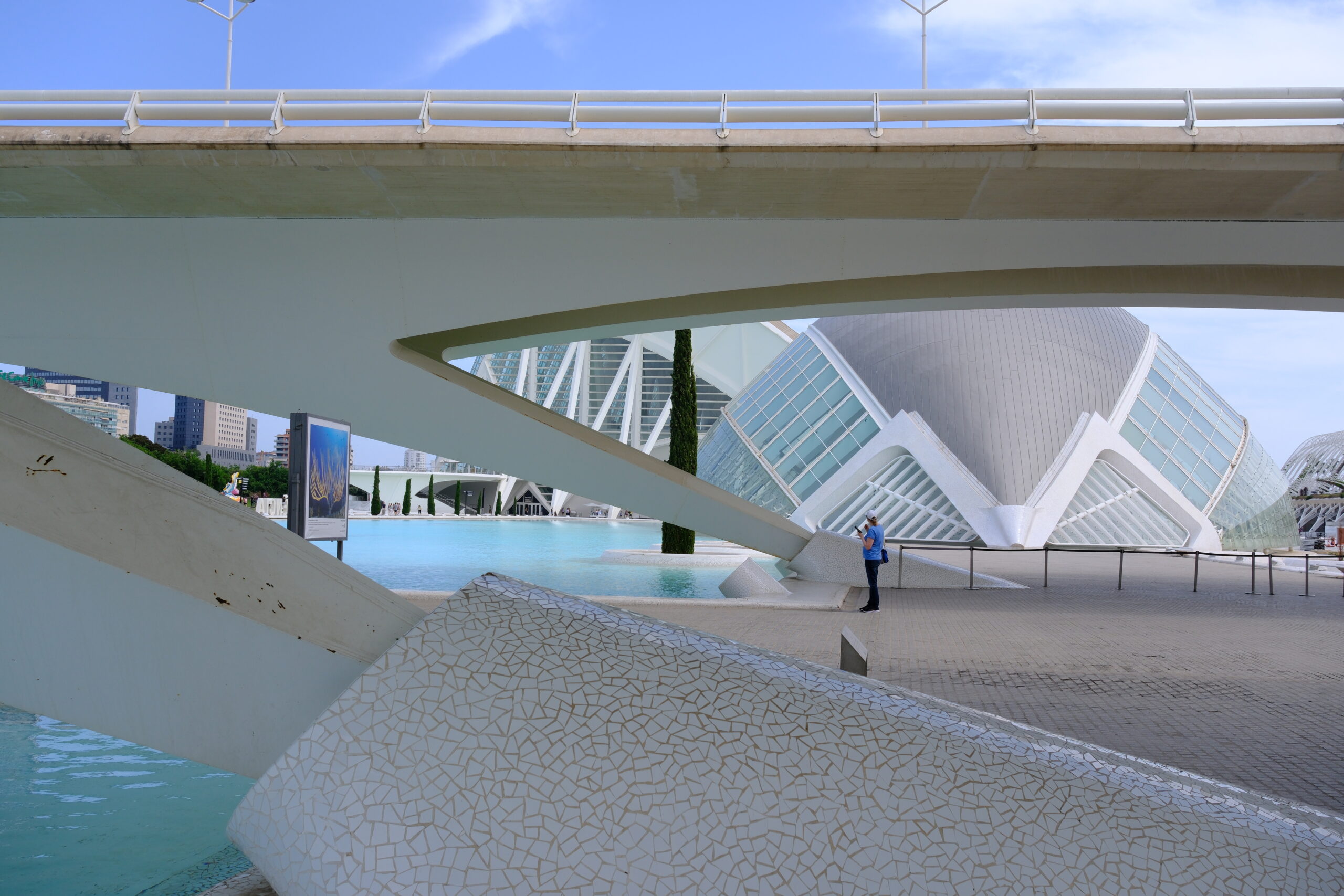
The X-E5 is a notably good-looking camera, with the same kind of sharp, clean lines as the X100VI. It feels pretty solid too, thanks to a machined aluminium top-plate. Despite the small size it doesn’t skimp on controls, with dials on the top for exposure compensation and shutter speed, which are complemented by aperture rings on most Fujifilm lenses. A small joystick on the back is used for setting the focus point. It’s a very pleasant and engaging camera to use.
Image quality is excellent, with that 40MP sensor capturing more detail than other brands’ APS-C cameras, and indeed, most full-frame models. Colour rendition is fabulous, with all the film simulations leaving you spoiled for choice.
Our Product of the Year: just perfectly formed
As always, choosing our overall product of the year wasn’t easy, as there were so many strong contenders. Often, we give it to the camera that out-specs the rest. But this year, we picked the one that, quite simply, we liked the most – and that’s the X-E5. It’s a lovely little camera that looks fantastic and delivers superb images – and what more could you want?
Read our review: Fujifilm X-E5 review: an X100 with interchangeable lenses? Sign me up!