



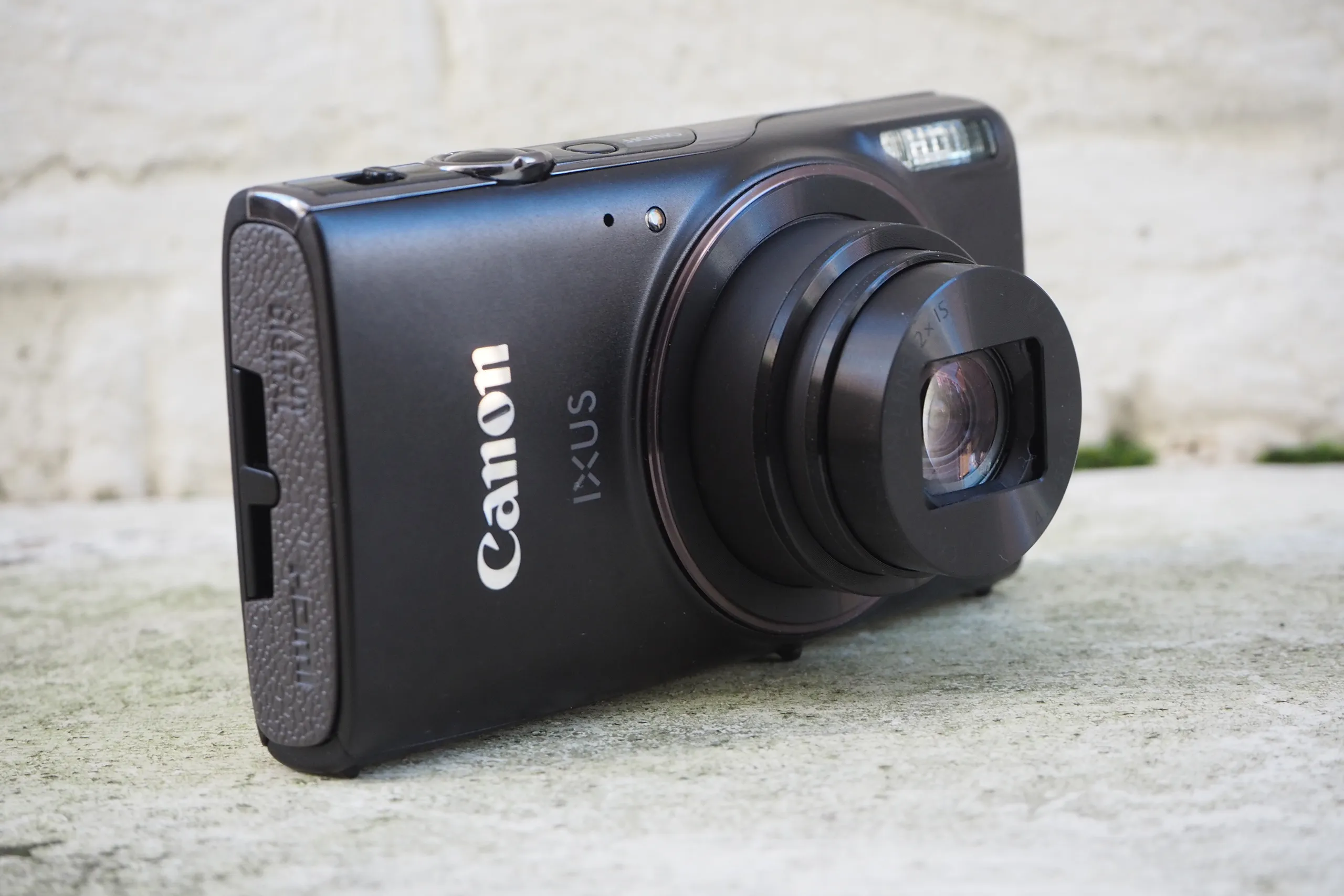

Despite the slender depth of this device at a mere 22.8mm, a screw thread for tripod attachment is provided at the camera’s base, located level with the mid-point of the lens. Offering compensation for any possible camera shake is a lens-shift type optical image stabilisation system, albeit the equivalent of a very modest 2.5 stops, the same as the previous IXUS 285 HS without the ‘A’. While better than nothing, avoiding soft looking results towards the maximum telephoto end of the zoom when hand holding could prove an issue.
As the lens on this Canon is retractable, it’s hidden behind an automatic sliding cover when not in use, helping maintain those svelte, pocket-sized proportions. Focal range is generous for a camera this diminutive, offering the equivalent of an expansive and wide angle 25-300mm – identical to its predecessor. It’s a plus point that a camera which conveniently slips into my back pocket still manages to deliver a broad selection of framing options.

In fact, with up to 7.2fps continuous shooting and Wi-Fi connectivity built in, there is a little more versatility offered here in terms of operation and handling than budget snapshot alternatives. But neither feature is particularly groundbreaking or, indeed, new, since the last model offered the exact same.
Still, its top plate control layout proves a minimalist match for its sleek, svelte form factor. Keeping things user friendly, there’s an on/off button, a larger adjacent springy shutter release button encircled by a lever for its zoom, which intuitively doubles as a means of enlarging sections of an image in playback mode, plus a separate switch for selecting shooting modes. This is presented in lieu of a more familiar bottle-top style dial.
This top plate switch affords access to program mode alongside full auto and a host of dedicated scene settings. Unsurprisingly given the potential audience here, we get pre-optimised portrait, handheld night scene, plus low light and high-speed burst options, the last two automatically restricting resolution to 5MP. The nostalgic miniature effect that blurs the top and bottom of frame for that toy-like look re-appears here too, alongside a vignette-like ‘toy camera’ setting, monochrome, super vivid and poster effects – the likes of which I haven’t used for about 15 years. Lastly and likewise selectable via a drop-down left of screen menu bar, are dedicated fireworks and long shutter/exposure modes for attempting night imagery without flash, but preferably with the aid of a tripod.

The next shooting mode along on the three-option switch is the Creative Shot option. This shoots a series of images and applies differing effects but is a very hit and miss and in my opinion largely forgettable feature, while the third option accessible via the same switch is Hybrid Auto, another very ‘old school’ compact feature that shoots a video clip alongside stills – a sort of ‘B roll’ if you like.
Canon IXUS 285 HS A / PowerShot ELPH 360 HS A – Build quality
Despite the plastic-y side elements, the build quality I’d expect from Canon is largely present and correct concerning the front, back and top plates, which display very little if any ‘give’ when tightly squeezed or manhandled. I still miss the bombproof-feel, square metal block-like build IXUS cameras possessed in the early 2000s, and the IXUS 285 HS A does feel like it’s been constructed to hit a certain affordable price point. Arguably that’s a sensible move if it’s looking to appeal to a younger crowd of non-photo traditionalists.

Given its compact proportions it’s no surprise to find the back panel LCD is resolutely fixed. At 3-inches in size, the same as the original model, at least it is larger than the 2.7 or 2.8-inch screens found on recent Kodak/Yashica rivals, while screen resolution isn’t bad for its class at 461K dots.
I found this of sufficient quality to be able to tell whether an image was under or over-exposed with a quick glance, results subsequently matching up well when downloaded to my laptop. Apart from physical connectivity options, wireless connectivity is also offered via Wi-Fi and NFC, as would be expected at this price point.
Overall build quality does feel like a reasonable match for what this camera costs. Yes, there are some elements that betray its manufacturer trying to deliver an ‘affordable’ big zoom compact but I can live with those, knowing that I haven’t spent an absolute fortune here.
Canon IXUS 285 HS A / PowerShot ELPH 360 HS A – Performance
This Canon is ambitious in offering a generous 20MP still photo resolution, again the exact same core spec as the previous iteration. Still, alternatives with similarly tiny 1/2.3-inch CMOS sensors tend to more modestly stick at 12MP or 16MP to avoid overcrowding the sensor’s surface area. If the Canon’s maximum light sensitivity setting of ISO3200 is not enough, there’s also a small flash top right.
The IXUS 285 HS A / PowerShot ELPH 360 HS A does however seem distinctly old school in sticking with a maximum Full HD video resolution; that’s what I would have expected from glancing at a camera’s specification 10-15 years ago, but not today. Still, if its audience is only going to be uploading footage to social media accounts, it’s less of a potential deal breaker that 4K isn’t offered – and nearly a decade after the original’s release.
In terms of JPEG-only stills, default image aspect ratio is the standard 4:3, the other selectable options being 3:2, 16:9 and 1:1, with resolution dropping incrementally through that range as the result of cropping.

Images are swiftly committed to memory, operation powered by Canon’s proprietary DIGIC 4+ image processor. Power up is quick too, the rear screen bursting into life while the lens emerges from flush to the body to arrive at its widest setting, ready for the first snap. The lens action is accompanied by a low mechanical buzz indiscernible when outdoors but sounding like a nearby gnat if in a room on your own.
In terms of speed, performance is acceptable, in that it takes just over three seconds to glide from maximum wide-angle to telephoto setting, or the reverse. Alternatively, for more precise framing, I could make small, incremental framing adjustments by quickly nudging the zoom lever with my forefinger. Operation in this manner feels intuitive, while a closest focusing distance of 1cm in macro mode is decent if photographing flowers, insects and foliage.

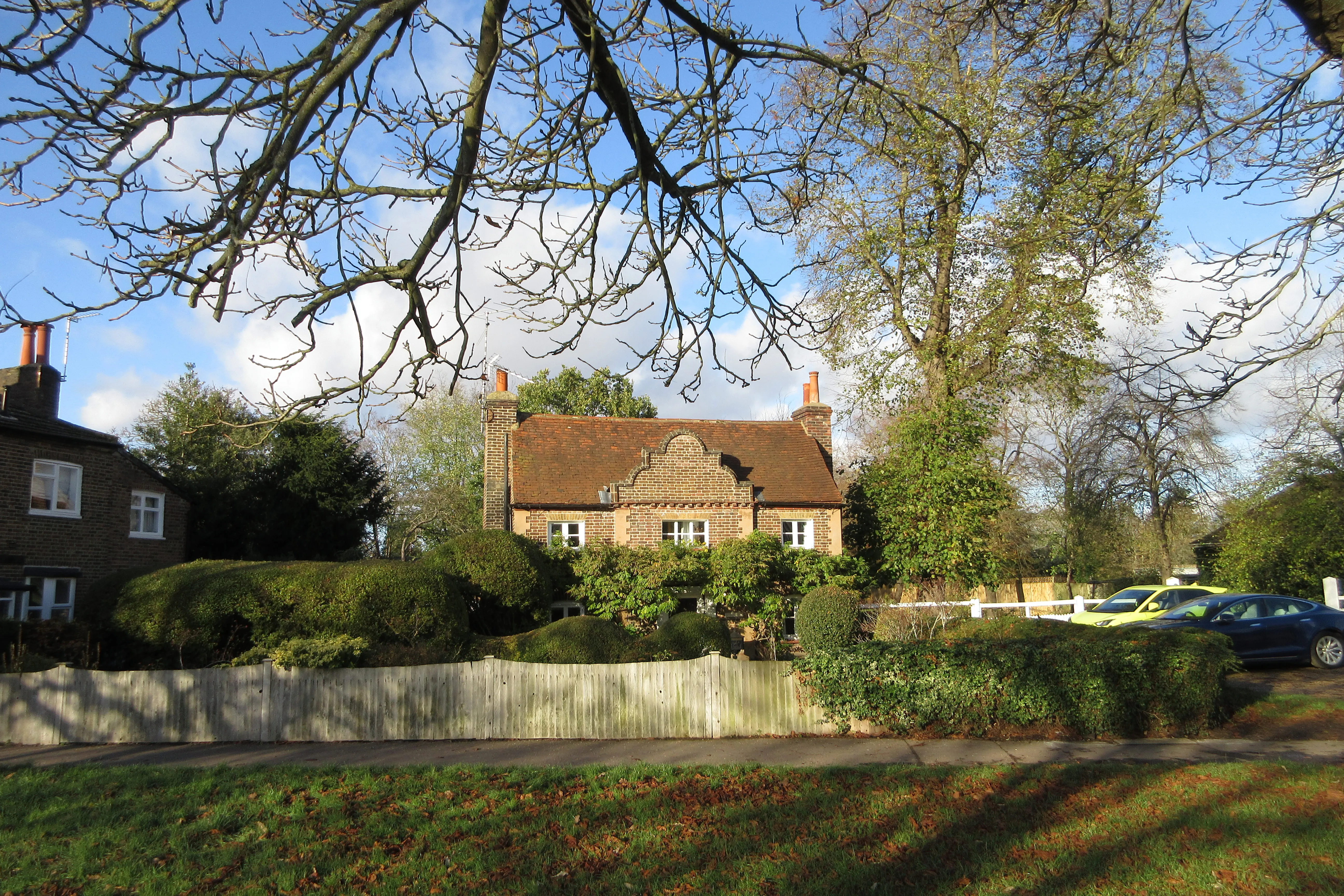
Image quality here is pretty much as I suspected it would be from Canon, in that I was rewarded with bright, colour-rich images when daylight conditions were in my favour, with a reasonable amount of detail displayed given the tiny size of the sensor. I did find that the camera would slightly err in favour of over exposing scenes if left to its own point-and-shoot devices, and landscape settings often displayed blown highlights – such as feature-less skies – unless I manually took charge and dialed exposure down by up to a stop. In this way I was able to maintain detail in the skies and foreground alike. At full equivalent 300mm telephoto setting, results can occasionally look a little soft, but not always. Again, it helps if there is a lot of available light to help deliver pleasing results, so shoot on bright sunny days and you’ll get the best results.
Canon IXUS 285 HS A / PowerShot ELPH 360 HS A – Verdict
Whilst the Canon IXUS 285 HS A has the same core features of the previous version, with a 20MP sensor, 12x optical zoom, plus 3-inch LCD screen, the change of memory card slot, and effective re-release should make this camera more readily available.
Still, in the current climate the pricing here feels fair, the JPEG-only results are perfectly adequate if I’m prepared to occasionally adjust exposure and contrast, and the build quality, despite some plastic elements, is reasonably solid.

Typically for Canon’s IXUS line-up, the design is rather gorgeous. In other words, there is not a lot to take issue with, beyond the fact that for all its glossy appeal I’m just – to state the bleeding obvious – getting snapshot camera-like image quality.
Still, while to my mind this is not quite Canon on its ‘A game’ no matter what its nomenclature may suggest, this is one of the better snapshot examples currently out there – and that’s central to its appeal. There aren’t many new, decent and affordable compact snapshots being marketed by most of photography’s biggest names, even a minor re-hash of a nearly decade-old example is sure to be a hit with those seeking a fresh alternative to their smartphone. Or those who’ve been longing for a return to a nostalgic process of shooting photos with a dedicated device.