




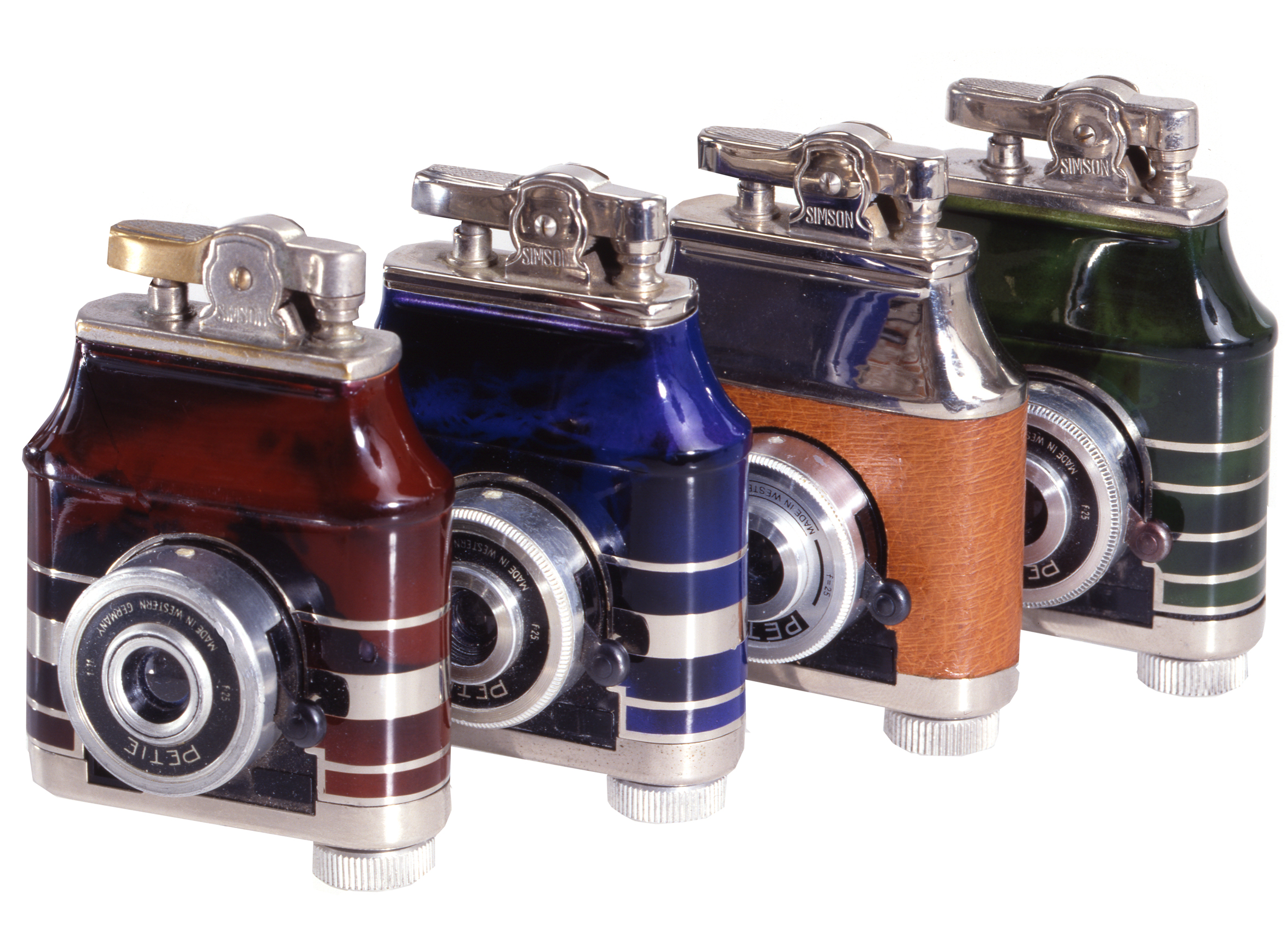

In the 1950s, when it looked like Art Deco was finished, a German camera manufacturer named Walter Kunik revived it and then pushed it to extremes. In 1956, the company launched a subminiature camera called the Petie. It had a fixed focus lens, fixed aperture, and shutter speed, and used 16mm film.
Basically, it was a low-quality snapshot camera with nothing remarkable about it, until Kunik introduced a series of unusual versions of the Petie integrated into other Art Deco objects, aimed at the female market.
One saw the camera incorporated into a working cigarette lighter housed on the base so that, when in use, the camera was upside down. The lighters were produced in colours that included red, blue, orange and green with an Art Deco enamel finish.
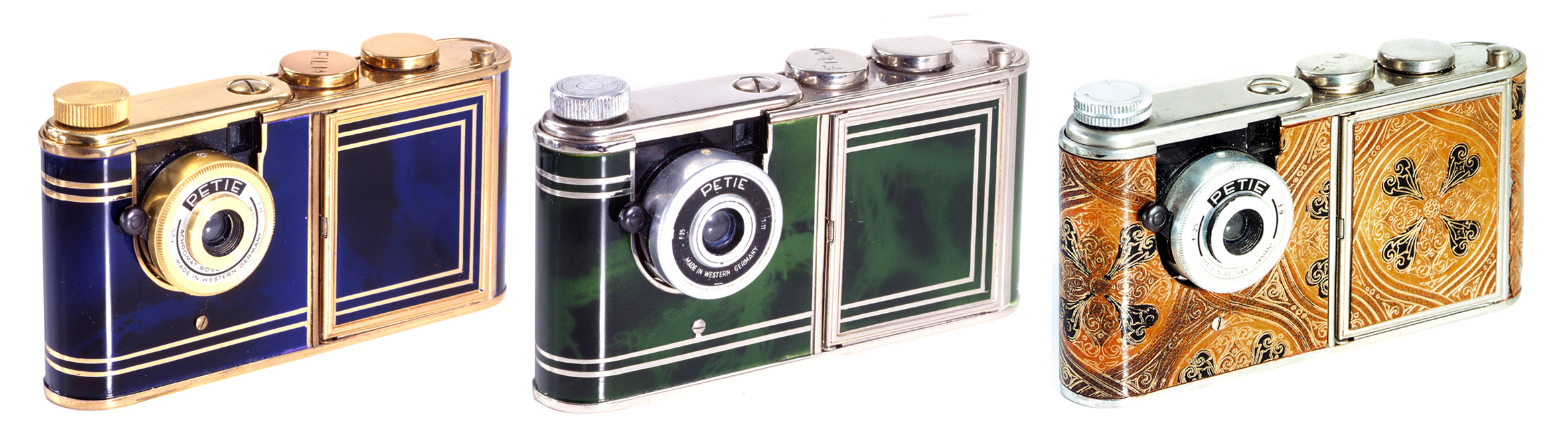
Another design saw Petie cameras incorporated into clockwork musical boxes. But the desire to feminise camera design went right over the top when Kunik introduced the Petie Vanities. For this, the cameras were held in an unashamedly ornate Art Deco series of ladies’ make-up compacts in which pressing a small button flipped up a flap to reveal a place for face powder, a powder puff and a small mirror. Two tubular compartments on the top of the casing were withdrawn to reveal a lipstick holder and a place for spare films.
All the Vanities were beautifully finished in plain or patterned styles and colours, etched with silver or gold Deco lines.
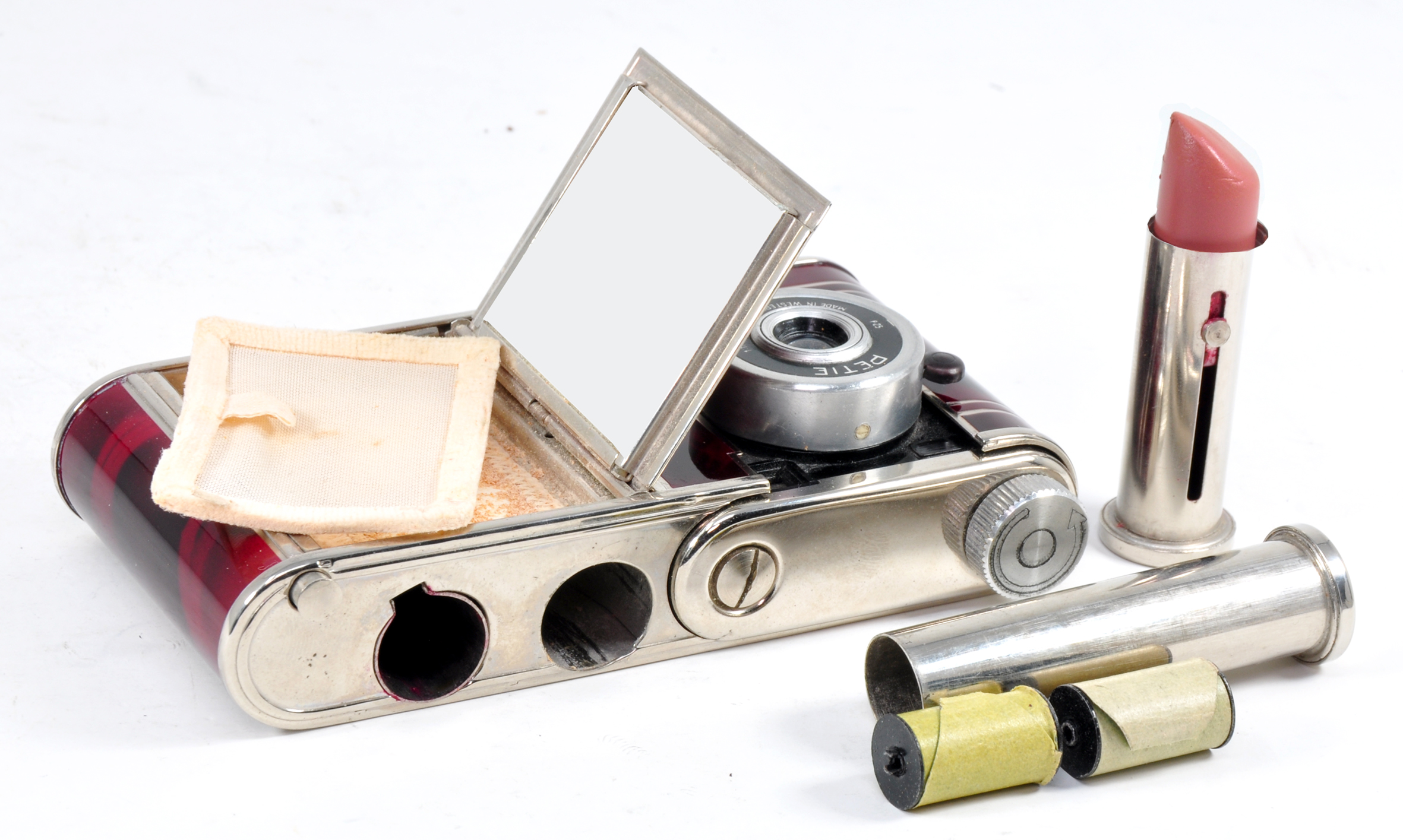
It’s doubtful that many male photographers bought the Petie Vanity, and so Art Deco cameras ended much in the way they began, as a way of enticing the fairer sex into camera buying.
Related reading
- Best 35mm film cameras
- Like a Leica – copies, replicas, and fakes of the World’s most famous camera
- The great Mickey Mouse Camera Mystery you’ve never heard of
Follow AP on Facebook, Instagram, YouTube and TikTok.