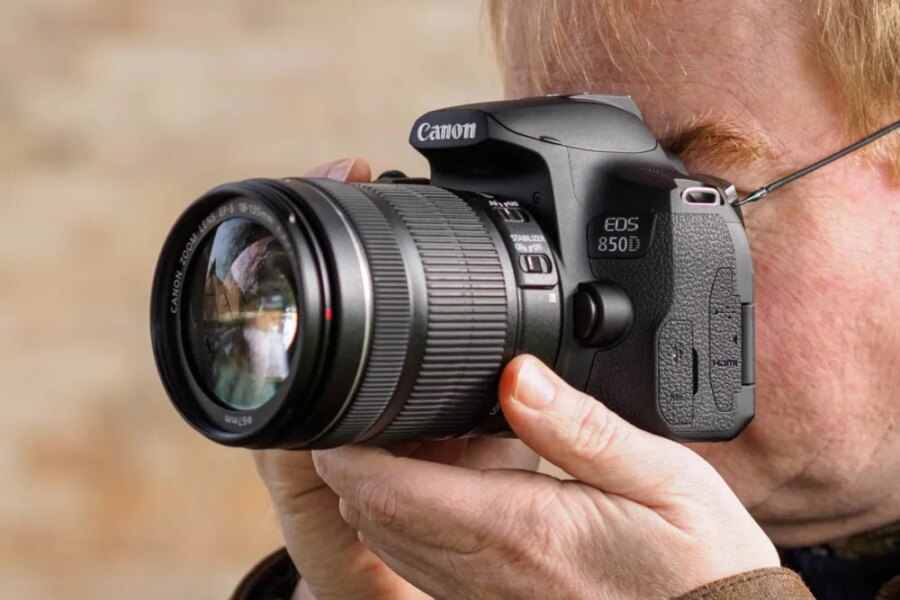
Compared with mirrorless cameras, DSLRs are bigger, slower and noisy, but they also have character, are fun to use and there’s a huge choice when it comes to lenses. They are also great value and with a thriving used camera market, now is a good time to buy.
The camera market has been a battleground for years with DSLRs and mirrorless slugging it out for supremacy. With DSLRs based on a design concept from the 1950s, it was inevitable that the young mirrorless upstart would emerge victorious, and this camera type now outsells DSLRs in new and used markets. But is it too early to consign DSLRs to the history books, as there is still life in this camera type? Or is it better to invest in mirrorless now with a view to a long-term relationship?
DSLR or mirrorless: the back story
Unless you’ve been stranded on a desert island without Wi-Fi for the past few years, you will know that the photography world is dominated by mirrorless and the manufacturers (with one exception) are fully focused on making this camera type better and better.
Churchill, Canada. Sub-zero temperatures were no problem for the D850 and battery capacity held up well. This polar bear was captured using the Nikon 500mm f/5.6E PF ED VR AF-S, a compact telephoto that can be had secondhand for £1999 / $1999.
Nikon D850 f/5.6 1/1000s 500mm ISO 800 Image credit: Will Cheung
While we’ve seen precious few new models, dealers still have new products in stock and for would-be DSLR buyers, the good news is that prices have come down in real terms. In the US, the Canon EOS 5D Mark IV costs $2199 body only, while in the UK you can pick one up for £2489. However, its 2016 launch price was $3499 / £3599 so in effect its price has dropped by around one-third and that’s before accounting for inflation over the intervening nine years.
Taking the used route with the EOS 5D Mark IV and excellent condition bodies are available at $1179 / £1099 from renowned global used retailer MPB, so that is a huge saving on the new price. In these challenging times that is tremendous value.
It’s a similar money-saving situation with the Nikon D850, which currently sells new for $2397 / £2399 body only but launched in 2017 at £3299 / £3500. Buying a new D850 would save around one-third of its launch price and again like the EOS 5D Mark IV, you can get a lot more bang for your buck by buying used. MPB has used samples of the D850 around $1229-1559 / £879-1069.
Brighton’s West Pier is gradually falling apart but it still makes a great subject, here as a backdrop to open water swimmers. This was taken using a superzoom, the Z 24-200mm f/4-6.3, which is a compact and very versatile companion for Nikon Z cameras. Nikon Z7 II f/11 1/100s 165mm ISO 200. Image credit: Will Cheung
Invest in a used sample of this full-frame DSLR, a camera many experts acknowledge as one of very best DSLRs we’ve ever seen, and you’ll be rewarded with a truly excellent 45-megapixel camera with a 153-point AF system, 5fps shooting capability and great handling. Plus it wears a lens mount that has been around since 1959 so it’s backed up by a huge number of new and legacy own-brand and third-party lenses.
Taking in the view
Regarding the Nikon D850 you can enjoy the benefits of mirrorless with a similar camera from the same stable. Announced in late 2020, the Nikon Z7 II has a BSI 45.7 megapixel sensor and while there are rumours circulating of a Z7 II replacement, it’s currently available new at £2499 / $2200, and for used models in good to excellent condition expect to pay £1259-1499 / $1529-1839. In that respect the D850 is much better value but that is probably no surprise with mirrorless being all the rage.
Lómagnúpur, Iceland. No reflex mirror means a shorter lens flange to sensor distance and that is a huge plus when it comes to wide-angle lens design on mirrorless because there’s no need for complex retrofocus designs. Nikon Z7 f/14 1/125s 18mm ISO100. Image credit: Will Cheung
The D850 and Z7 II share many features but with no reflex mirror mechanism the latter is smaller and lighter. Central to the Nikon Z system is the Z lens mount which has a 55mm diameter and a 16mm flange distance making it the shortest of current lens mounts. It’s even possible to fit Sony E-mount lenses via an adaptor and have autofocus.
That highlights another plus point of mirrorless, if you enjoy the feel and rendering of legacy lenses, you can use them with a suitable adaptor and there’s all sorts of adaptors available. You can enjoy manual focus and softer images one minute and a lens swap later you’re right up to date shooting critically sharp shots with the latest glass.
For Nikon, you can use an FTZ adapter and pair your mirrorless camera with a wide range of Nikon F-mount lenses
Camera matters
We’ve majored on the EOS 5D Mark IV and the D850 because they are still available new and they are fabulous cameras, but there’s a vast range of models to consider if buying used appeals, and there’s great value to be had. Looking at a few digital DSLR classics, the Nikon D700 can be had for £369 /$399, the Canon EOS 5D is just £149 / $224 or how about the Nikon D300 at just £96 / $164. All body only prices are quoted from MPB.
This ground to air shot of a Spitfire was shot with a Nikon DSLR with a 70-300mm telezoom with the Raw denoised and processed in Adobe Lightroom Classic. Nikon D850 f/16 1/125s 270mm ISO 100. Image credit: Will Cheung
One word of caution, if buying a ‘vintage’ DSLR appeals, check the shutter count, which many dealers will mention, and make the sure the sensor is in good condition with no scratches. There is also the matter of the reflex mirror which is prone to wear and tear so needs careful scrutiny. It be risky buying through an auction site but a reputable used retailer will usually only take in products with unscratched sensors, fully working reflex mirrors and offer a guarantee or money back scheme. As always, buyer beware.
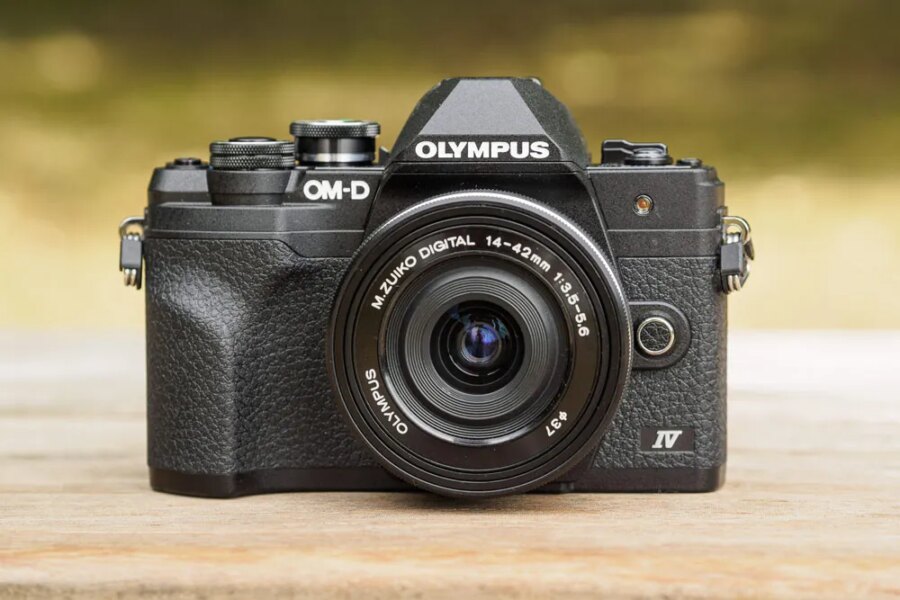
Given their relative youth, buying used mirrorless is probably less risky and just like DSLRs there is an extensive range of many excellent products to call on. The first full-frame mirrorless cameras came from Sony, and the Sony A7 and Sony A7R can be had for around £399 / $614 and £444 / $689 respectively. If your taste is for a smaller format, check out the Fujifilm X-T2 for around £474 / $724 and the Olympus OM-D E-M5 at £254 / $324.
Pros and cons
Much is made by DSLR diehards of the joy of using an optical viewfinder and rightly so, plus there is the reassuring click-clack of a reflex mirror but with mirrorless you can see the effect of exposure and white-balance adjustments in real time. If you have -3 stops of compensation dialled in from a previous shot – and have exposure preview active – the very dark viewing image tells you that so it’s easy to avoid any mishaps. You don’t get that feedback with an DSLR and while there are visual warnings, it’s easy to overlook them in the heat of the moment.
White-tailed eagle captured in flight with a Canon EOS R5 and RF70-200mm f/2.8 lens. The camera’s electronic shutter was used with the 20fps continuous shooting rate. Canon EOS R5 f/3.5 1/1250s 200mm ISO 1600. Image credit: Will Cheung
The thing is, it matters not a jot whether you use a DSLR or mirrorless, new or used, so long as you enjoy the experience and the kit delivers the pictures you want. DSLRs certainly won’t hold you back but recent mirrorless cameras have more potential in some key areas.
A major one is the incredible advances we’ve seen in mirrorless autofocus. Unlike DSLRs where the AF focus points are located around the central area of the frame, mirrorless cameras can have AF sensors almost filling the frame and this is often combined with subject/eye-detect and tracking. For people and wildlife photography this is big news for stills and video, and mirrorless AF can help photographers achieve sharp images which they would find difficult or even impossible to achieve with a DSLR. To be clear, this is not to say that DSLR users can’t shoot sharp photographs, but mirrorless gives users, especially the inexperienced and those with less good hand-eye co-ordination, a much greater chance of success with challenging subjects such as sporting action and birds in flight.
Feel the speed
Speaking of success mirrorless cameras can shoot a great many pictures very quickly. A pro-level DSLR such as the Canon EOS-1D X Mark III gives 16fps burst shooting through the optical finder while the Nikon D850 can manage 7fps. By comparison the Canon EOS R5 Mark II and Sony Alpha A1 II can blaze along shooting Raws at 30fps, but even that is modest compared with the OM System OM-1 Mark II which manages 50fps with autofocus and many more without.
Low light, rain, no problem. High ISO performance has continued to progress with mirrorless models but it could be pretty good on DSLRs too, especially when processed with the latest denoising software. Adobe Lightroom Classic’s Denoise was used here. Nikon D850 f/1.8 1/45s 85mm ISO 12,800 Image credit: Will Cheung
It was Olympus (now OM System) that brought us one feature never seen on DSLRs and that’s Pro Capture – also called pre-shot, pre-release capture and pre-capture – which help you capture moments that even DSLR shooters with lightning-quick reactions would not manage. Initially, pre-capture was considered by many to be a gimmick but that is not the case now and it’s a feature we will undoubtedly see more of on the future mirrorless cameras and its implementation will only get better.
Continuous shooting speed is blazingly quick on mirrorless cameras. The Canon EOS 5D Mark IV (left) can manage 7fps or 4.5fps with AE/AF tracking while the mirrorless EOS R5 can blaze away at 20fps and with a fast CFexpress card that rate can be upheld for quite a while. Image credit: Will Cheung
Finally, while it’s not a factor for everyone, mirrorless and video go together very nicely giving more options in terms of resolution, frame rates, subject detect/tracking AF and image stabilisation for awesome results. If video is something you want to exploit, you’re definitely better off consigning the DSLR to history and heading to mirrorless.
Summing up
Ultimately, the camera is a tool and a means to an end so it really doesn’t matter whether you prefer DSLR or mirrorless. That said, especially for enthusiast photographers, emotion, personal preference and the haptic experience are important.
Given the success of mirrorless, it’s clear that many photographers are happy with this camera type and have already switched from DSLRs or bought straight into the new technology.
The future is mirrorless and the camera makers will continue to forge ahead with exciting products and innovation. The only downside of innovation is that it comes with a price and high-end mirrorless are expensive, and the new technology takes a while to cascade down to more affordable models. In the meantime, the DSLR will be around for a while yet and, if you don’t need the features of mirrorless, there’s great value to be had, especially in the used market.
Will Cheung FRPS is a very experienced photographic journalist and in his long career on imaging magazines has edited Practical Photography, Digital Photo and Photography Monthly. He is also a very capable photographer and achieved the Fellow of the Royal Photographic Society distinction with a submission of black & white photographs.