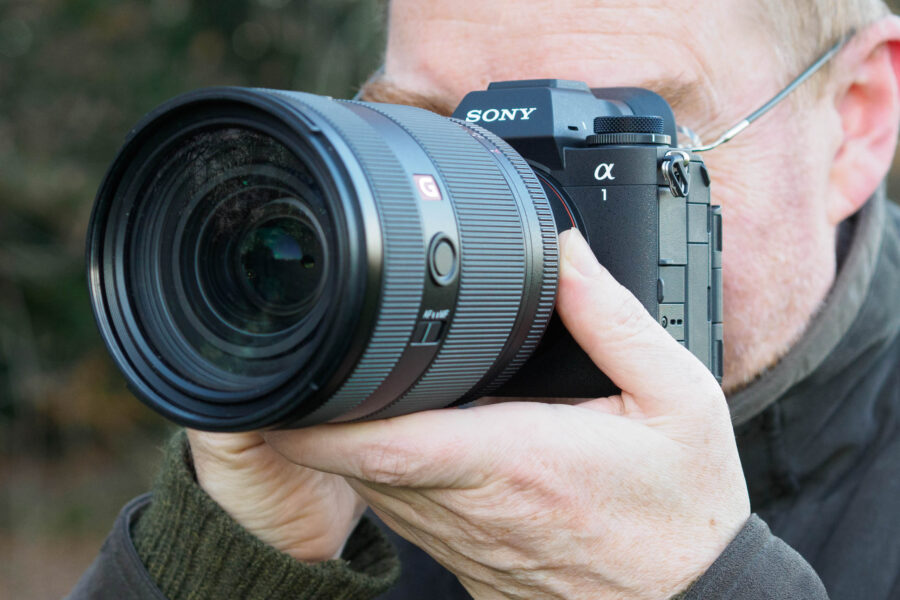
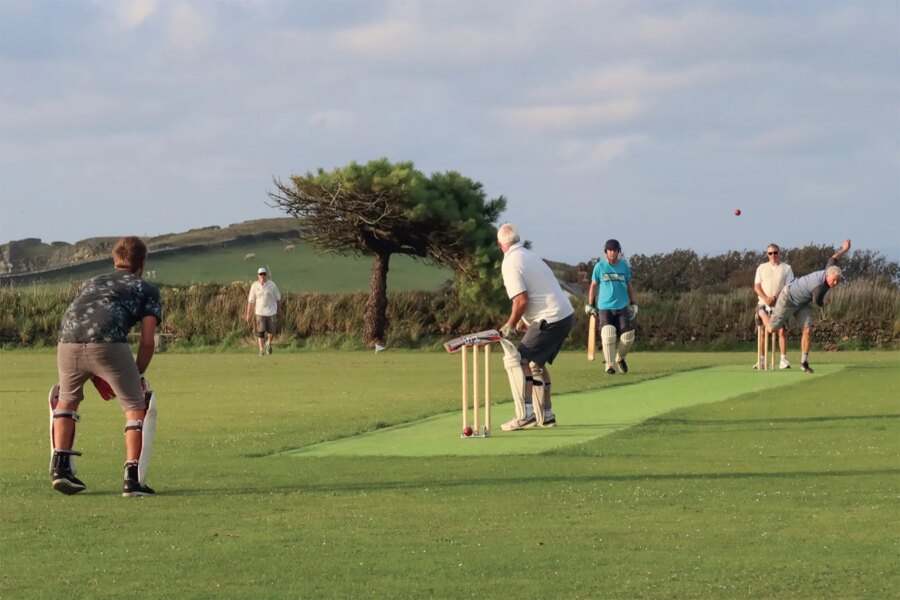
For capturing perfect people pictures, the best lenses for portrait photography are essential. Andy Westlake picks the finest for each system.
If you’re out to shoot portraits, picking the right lens is arguably more important than having the best camera. After all, you’re dealing with human subjects. A tree doesn’t mind if you take an unflattering picture of it; a wild animal won’t refuse to hire you again if you make it look silly. People, on the other hand… well, let’s just say it pays to get the shoot right first time.
With so many lenses out there, and so many different camera systems to use them with, narrowing down the best lenses for portrait photography has been a tough beat. This list is well populated – we’ve tried to stick to sensibly priced lenses that most people will realistically be able to buy and use, though a few premium options are included for those blessed with cash…
How to choose the best lenses for portrait photography
Before we get into our selections, let’s take a quick look at what makes for a good portrait lens, and how to go about choosing one that’s right for you. When people talk about portrait lenses, two topics generally come up – focal length and depth of field. Let’s deal with each one in turn…
Generally a short telephoto lens between 85mm and 135mm is considered a portrait lens, but for group shots or environmental portraits you’ll need to go wider. Sony Alpha 7R III, 135mm f/1.8, 1/400 sec at f/1.8, ISO100.
Focal length
Conventional wisdom dictates that the best lens for portraiture is a short telephoto, with a focal length around 85mm, and not exceeding 135mm. A large maximum aperture is also generally deemed a must, to the point where lenses that fulfil all these criteria are often referred to as ‘portrait lenses’. For producing well-balanced, head-and-shoulders shots with a nice blurred background, this is indeed the correct setup. No one is going to argue if you show up to a portrait shoot with an 85mm f/1.4.
However, portrait photography is not as simple as this, and it’s worth thinking creatively about your options. For instance, you can use a wider perspective to capture images of couples or groups, or just introduce a bit of environmental context to an image. For this, consider a 50mm lens or even a 35mm; you could opt to go wider still with a 24mm.
While this is not the conventional way to flatter a subject, it can result in striking images that really stand out from the crowd. Once you understand how different optics will affect your images, an exciting world of portraiture opens up before you.
Wide-angle lenses are great for adding context to your portraits. Sony Alpha 7R III, 24mm f/1.4, 1/2000sec at f/1.4, ISO 100.
Depth of field
Once again, conventional wisdom teaches us that most lenses are not at their sharpest when used wide open (i.e. at their maximum aperture). However, for portraiture this tends not to be a problem.
Introducing a little softness into an image can be quite flattering. For this, you need to be able to throw the background out of focus to put all the viewer’s attention on the main subject. This is not too difficult. All you need is a large aperture, which generally means a prime lens, not a zoom. Zooms aren’t much use to us in portraiture anyway since your subject will be following your directions (hopefully), so you can simply move closer if you need to.
It’s also worth nothing that using too wide an aperture can result in a depth of field that’s overly razor-thin. After all, you don’t want one eye in focus and the other one not. This is where those longer focal-length lenses mentioned earlier can come in handy; as well as providing a more flattering view of a subject, they also make it easier to separate away the background with a smaller aperture.
Bokeh
Another important quality is the actual appearance of the background blur. In this guide, you’ll see a lot of references to the concept of ‘bokeh’. It broadly refers to how the aesthetic quality of blur differs between lenses; though the meaning itself has become a little blurred over the years. Ideally, you want it silky smooth.
Using out-of-focus foreground elements can add interest to an image. Sony Alpha 7R III, 135mm f/1.8, 1/400 sec at f/1.8, ISO100.
Some specialised lenses are constructed to create bokeh with a distinctive look, often referred to as ‘swirly’ or ‘soap-bubble’ bokeh. While these aren’t the most technically sophisticated lenses, they do create images with a real identity to them. Lomography and Lensbaby are some of the most well-known names in this field.
For many photographers, the first step towards better portraits is likely to be an inexpensive 50mm f/1.8. Once your ambitions and budget expand further, though, there’s a whole host of lenses to try.
The best lenses for portrait photography: our quick list
Looking for the best deal on portrait lenses? Not only will you find the best lenses for portrait photography, but also some of the best deals, as our ‘Buy now’ buttons are set up to automatically take you to the best prices from trusted retailers. There is also a list of other retailers below each camera, so you can find the right deal for you.
We spend many hours testing every product we recommend, in detail, in a variety of situations and shooting scenarios, and only use experts for our reviews, so you can be sure that you’re getting the best products. Find out more about our expert writers.
The best telephoto lenses for portraits
While we have been encouraging readers to think differently about their approach to portraiture, there is a reason that short telephoto lenses around the 85-100mm focal length will invariably be recommended for portrait shooting. For one, a short telephoto focal length will compress your subject’s features without distorting them, resulting in a flattering image of a well-proportioned face. You can get quite close to your subject without worrying about distorting their features. For two, a telephoto lens is ideal for throwing out the background of your images, meaning you can get that buttery-smooth bokeh effect that is so popular in portraiture.
As such, this is the first category we’re going to focus on in our guide. Here are our favourite telephoto portrait lenses for a range of camera systems.
Canon EF 85mm f/1.4L IS USM
Canon EF 85mm f/1.4L IS USM.
Amateur Photographer verdict
With image stabilisation, speedy focusing and a super-fast aperture the Canon EF 85mm f/1.4L IS USM is a perfect choice for wedding and portrait photographers
Pros
Better than the pricier f/1.2
Superb autofocus
Built-in stabilisation
Cons
Cheaper options out there
At a glance:
Canon EF-mount
New price: $1,599 / £1,719
Used price: from $1,075 /£975
Canon users who want the very best need look no further, because this image-stabilised fast prime is an absolute masterpiece. Indeed we think it’s one of the finest EF-mount primes the firm has ever made, with its accurate autofocus, great handling and built-in optical image stabilisation counting as compelling reasons to choose it ahead of the pricier EF 85mm f/1.2L II USM.
Meanwhile, its gorgeous rendition of blurred backgrounds and very low levels of chromatic aberration mark it out from cheaper options. For DSLR users on a tighter budget, the EF 85mm f/1.8 USM is still a worthy alternative at $499/£489.
Sigma 56mm f/1.4 DC DN Contemporary mounted to an X-S10. Photo credit: Michael Topham.
Amateur Photographer verdict
Those who are after a fast prime that’s neither too heavy or too cumbersome will enjoy the handling and overall experience of using it
Pros
Lots of mount options
Lightweight and compact
Affordable too
Cons
No stabilisation
No AF/MF switch
At a glance:
Canon EF-M, Micro Four Thirds, Sony E, Fujifilm X and L-mounts
New price: $479 / £419
Users of APS-C mirrorless models could be forgiven for feeling ignored by third-party makers, who are falling over themselves to make full-frame lenses instead. But at least Sigma has been paying attention, with a trio of affordable f/1.4 primes that are available in Canon EF-M, Micro Four Thirds, Sony E and L mounts, and now X-Mount.
While the 16mm and 30mm certainly have their uses for people pictures, it’s the 56mm f/1.4 DC DN that we like the most. Offering an 85mm equivalent view on APS-C cameras, and 112mm on MFT, it’s a nicely compact optic that focuses rapidly and delivers excellent images.
The Sigma 85mm f/1.4 DG DN Art mid-test by our reviewer. Photo credit: Michael Topham.
Amateur Photographer verdict
It’s currently the best value for money premium 85mm f/1.4 lens you can buy under £1000.
Pros
Snappy focusing
Weather-sealed
Excellent performance at f/1.4
Cons
Some pincushion distortion
No focus distance marks on barrel
At a glance:
Sony FE, L-Mount
New price: $935 / £979
Used price: $850-1020 / £690-850
Sigma has built up a strong reputation for the excellence of its Art line of lenses, with perhaps the biggest criticism that could be levelled against its DSLR designs being that they became excessively large and heavy. But the firm appears to have re-aligned its priorities with its burgeoning DG DN line for E and L-mount full-frame mirrorless, producing equally superb optics while drastically reducing the size and weight.
This fabulous lens is a case in point, with a combination of remarkable optical performance even at f/1.4 and excellent usability. Highlights include quick autofocus, weather-sealed construction and an aperture ring that can be de-clicked for video.
Wide open, the lens is really sharp and free from any worrying optical flaws, while the bokeh and out-of-focus areas are delightful for portraits.
Pros
Great value for money
Beautiful background blur
Subjects really pop
Cons
135mm equivalent is a little tight
At a glance:
Fujifilm X-Mount
New price: $949 / £949
Used price: $455-545 / £410-600
Fujifilm is arguably the only company that’s treated the APS-C format as being entirely worthwhile in its own right, rather than just a stepping-stone to full frame. It’s made several fine portrait lenses for its X system, including the budget XF 50mm f/2 R WR (new $449/£429, used $365/£289) and the fine XF 56mm f/1.2 R (new $999/£849, used $550-570/£470-480).
However, the one that really blew us away was the XF 90mm f2 R LM WR, which does the job of a 135mm lens on full frame. Photographers will love its ability to create distinct separation between subjects and background, while the rendition of out-of-focus areas is delightful for portraits.
The Sigma 135mm f/1.8 DG HSM Art is hefty, but impressive. Photo credit: Michael Topham.
Amateur Photographer verdict
a specialist optic that’s mainly aimed at portrait and wedding photographers. It delivers wonderful sharpness and dreamy background blur, while providing a look that few other lenses can match.
Pros
Outstanding sharpness
Lovely bokeh quality
Cons
A big, chunky boy
At a glance:
Canon EF, Nikon F, L, Sony FE-Mount
New price: $1,399 / £1,149
Used price: $600-1,080 / £865-890
While many photographers immediately think in terms of using 85mm lenses for portraits, it’s important not to overlook the charms of longer focal lengths. Switch to 135mm and you can shoot from slightly further back for an even more flattering perspective, which can be particularly useful when working outdoors.
Sigma’s 135mm f/1.8 was originally made for Canon, Nikon and Sigma DSLRs, but is also available for the mirrorless L and Sony E mounts. This monster of a lens offers outrageous sharpness coupled with dreamy bokeh, and is almost immune to chromatic aberration. It’s a fabulous optic that provides a look few other lenses can match.
Nikkor Z 85mm f1.8 S. Photo credit: Michael Topham.
Amateur Photographer verdict
A practical prime lens, capable of producing very attractive images paired with Nikon Z series cameras
Pros
Lightweight
Fast, effective focusing
Good optical quality
Cons
Pricey for an f/1.8
At a glance:
Nikon Z-Mount
New price: $697 / £689
Used price: $530-660 / £520-680
Like most of Nikon’s other S-series primes for its full-frame mirrorless cameras, this 85mm short telephoto employs an f/1.8 aperture to make it lighter and more affordable than an f/1.4 lens of the same focal length could be. But this doesn’t mean it compromises on the build quality or optics.
Detail rendition is impressive, even on the demanding high-resolution Z7 and Z7 II, and the bokeh is very pleasing on the eye. Focusing is brisk and particularly effective for portraiture when used with Eye Detection AF. The lens is also fully sealed against dust and moisture ingress, making it a great all-around package.
If you want the best of the best, Nikon does have an upmarket Z-mount option in the form of the Nikkor Z 85mm f/1.2 S, an utterly superb lens that earned the full five stars in our review. However, with a price tag of $2,597 / £2,599, it’s likely going to be out of reach for most users.
A well designed mid range telephoto prime, a great choice for both APS-C and full frame users
Pros
Good image quality
Relatively lightweight
Cons
Samyang options are cheaper
At a glance:
Sony FE-Mount
New price: $548 / £499
Used price: $440-495 / £309-430
Sony users have a lot of choice when it comes to portrait lenses, ranging from the £299 Samyang AF 75mm f/1.8 FE through to the practically flawless but pricey FE 135mm f/1.8 GM. But one of our favourites lies towards the affordable end of the scale.
The firm’s FE 85mm f/1.8 is a relatively compact lens that’s arguably a much better match to Sony’s small Alpha 7 series cameras than its FE 85mm f/1.4 ZA stablemate, being less than half the weight. Crucially, it also delivers extremely pleasing images. It’s a great choice for both full-frame and APS-C users.
The attraction of this lens is the extreme shallow depth of field. It can pick out an eye from a face and a head from a background, creating an atmosphere like no other aperture can achieve.
Pros
Superb Leica sharpness
Minimal aberrations
Great in low light
Cons
Expensive for MFT
At a glance:0
Micro Four Thirds mount
New price: $1,598 / £1,149
Used price: $665-795 / £620-720
A standout gem of the Micro Four Thirds system, this is one of the fastest lenses to feature optical image stabilisation. With such a large aperture this may sound redundant, but it helps with getting sharp images in low light and is great for video shooting, too.
Image quality is everything we’d expect given the Leica badge, with superb sharpness across the frame even at f/1.2, and minimal chromatic aberration. If this optic is too pricey, the OM System M.Zuiko Digital 45mm f/1.8 $400/£299) is a lovely little lens that provides a great combination of sharpness and background blur.
The Sony FE 135mm f/1.8 G Master is an exceptional performer. Photo credit: Andy Westlake.
Amateur Photographer verdict
If you want the very best short-telephoto portrait lens available for Sony full-frame mirrorless, this is surely it.
Pros
Absolutely outstanding image quality
Superb autofocus
Beautiful bokeh
Cons
135mm will be too tight for some
At a glance:
Sony FE-Mount
New price: $2,098 / £1,599
Used price: $1,700 – 1,775 / £1,149 -1,200
Over the past decade, Sony has revolutionised the camera market, jumping from a bit-part player to one of the leading high-end brands in the process. But if anything, its progress as a lens maker over this time has been even more striking, with its premium G Master lenses being at least a match for the finest produced by any of its rivals. In January 2023, Sony confirmed development of the highly-anticipated FE 300mm f/2.8 GM OSS telephoto lens.
Indeed, if you’re after a short-telephoto prime, they simply don’t come much better than the FE 135mm f/1.8 GM. With its combination of reliable autofocus, supreme sharpness and gorgeous bokeh, it’s likely to appeal strongly to portrait and wedding photographers.
It has little vignetting or distortion compared to its contemporaries, and is well constructed with a quiet Sonic Drive Motor.
Pros
Lovely construction
Mechanical aperture ring
Image quality suits portraiture
Cons
Expensive when new
At a glance:
Pentax K-Mount
Used price: from $120 / £333
While neither Canon nor Nikon have ever shown much enthusiasm for making APS-C-specific primes, there’s a decent range available for Pentax users. This one is designed to be used as a portrait lens on APS-C DSLRs, offering a classic 85mm equivalent view. Its large aperture, weather-sealed construction and silent focusing go some way to explaining its relatively high retail price.
Optically, it’s well-suited to its job, with a flattering slight softness wide open and gorgeous bokeh. Full-frame Pentax users, meanwhile, have the unique smc FA 77mm f/1.8 Limited to play with. It was pricey at launch and available now used at around $543/£549, but it’s a beautifully-built lens and includes an old-fashioned mechanical aperture ring.
It’s beautifully built, autofocuses silently and accurately, and has very effective image stabilisation. And most importantly image quality is outstanding
Pros
Weather sealed
Class-leading Zeiss optical quality
Lovely background blur
Cons
Expensive for f/2.8
At a glance:
Sony FE-Mount
New price: $1,749 / £1,252
Used price $830-990 / from £700
At first sight, this lens may look perplexing, given that it only offers an f/2.8 aperture for almost the same price as Sony’s superb FE 135mm f/1.8 GM. But typically for Zeiss, it’s the sheer optical quality that stands out, with sensational sharpness and no hint of colour fringing thanks to its apochromatic design. Out-of-focus backgrounds are blurred-away beautifully, too.
In terms of specification it ticks all the boxes, with weather-sealed construction and optical image stabilisation, while photographers who like to pack light will appreciate its relatively low weight. Overall, I can’t imagine anybody being disappointed by this lens: it’s absolutely outstanding.
A small selection of specialist lenses use a principle known as apodisation to deliver particularly smooth background blur. Essentially, this places a radially graduated neutral density filter within the lens to smooth away the edges of out-of-focus blur circles. While often fairly subtle, it’s an effect that some portrait photographers prize greatly. The catch is that such specialised lenses tend to be pricey.
Sony FE 100mm f/2.8 STF G Master OSS
Sony FE 100mm f/2.8 STF G Master OSS mounted to a Sony A7R camera.
Amateur Photographer verdict
The Sony 100mm mid-range telephoto prime offers impressive resolution, smooth auto focus and splendid bokeh.
Pros
Built-in stabilisation
Weather sealing
Strong apodisation effect
Cons
Reduced light transmission
At a glance:
Sony FE-Mount
Price: $1,498 / £1,259
Sony’s specialist portrait lens is the spiritual successor to the legendary Minolta-designed, Alpha-mount 135mm f/2.8 STF. The initials STF stand for Smooth Trans Focus, and unusually, there’s no conventional version of this lens. Sony has implemented a uniquely strong apodisation effect that delivers lovely bokeh at large apertures, but this comes at the cost of light transmission, which is just T5.6 at f/2.8.
A switch around the barrel engages a close-up mode which offers one-quarter life-size magnification, and optical stabilisation is built in. As usual for a G Master lens, high-end features include a de-clickable aperture ring and weather-sealed construction.
Canon RF 85mm f/1.2L USM DS
Canon RF 85mm F1.2L USM DS
Amateur Photographer verdict
An exquisite portrait lens, with smooth bokeh, superb sharpness and fast autofocus system, but this comes at a premium price point too.
Pros
Absolutely stunning images
Buttery-smooth bokeh
Defocus Smoothing improves bokeh further
Cons
Obviously very expensive
At a glance:
Canon RF mount
Used price: $2,899 / £3,499
Used $2,550 / £2,190
Even the conventional version of Canon’s super-fast RF-mount 85mm is an expensive, statement optic that will set you back $2,599/£3,059. But the DS option, for Defocus Smoothing, goes a step further. It employs the same 13-element, 9-group design and 9-bladed circular aperture, but employs a special coating on two internal elements to fade the edges of blur circles.
The result is an outstanding portrait lens that delivers beautifully smooth bokeh. While many readers will find the price to be prohibitive, it’s possible to hire one for a special occasion at a reasonable cost.
Fujifilm XF 56mm f/1.2 R APD
Fujifilm XF 56mm F1.2 R APD mounted to Fujifilm X-H2. Photo credit: Joshua Waller
Amateur Photographer verdict
Capable of producing stunning, sharp imagery with beautiful bokeh, however be mindful of slightly slow focusing
Pros
Built-in apodisation filter
Useful T-stop markings
Satisfying aperture ring
Cons
Reduced light transmission
At a glance:
Fujifilm X-Mount
New price: $999 / £1,099
Used price $849-875 / £660-716
Fujifilm’s XF 56mm f/1.2 R ($999/£849) is much-loved by X-system owners, with this lens providing the same angle of view and ability to blur backgrounds as an 85mm f/1.8 on full frame. As its name suggests, the APD version adds an apodisation filter within the optics to smooth the bokeh when shooting at large apertures.
As this inevitably reduces the light transmission, the aperture ring has both f-stop and t-stop markings, with the difference between the two indicating the effect of the filter at each setting. This varies from a stop wide open to half a stop at f/2, and no effect at f/5.6.
While wideangle isn’t most people’s first thought when it comes to portraiture, exploring this perspective is a great way to capture images that feel a little different to the norm. Rather than focusing on making a subject as attractive as possible, wide-angle portraits tend to be all about character and humour. Here are the lenses we recommend if you want to give wideangle portraiture a try.
Panasonic Leica DG Summilux 12mm f/1.4 Asph
Panasonic Leica DG Summilux 12mm f/1.4 Asph.
Amateur Photographer verdict
Optical performance is first rate as is its robust construction that is sealed to be dust- and splash-proof. Its fast maximum aperture also makes the lens a viable option for astro photography.
Pros
Excellent sharpness and overall quality
Leica optics
Weather sealing
Cons
Aperture ring doesn’t work with OM System/Olympus cameras
Pricey
At a glance:
Micro Four Thirds mount
New price: $1,198 / £1,099
Used price: $780-820/£750-780
Micro Four Thirds users interested in shooting wideangle portraits with shallow depth of field should consider this compact, lightweight optic. It provides the angle of view and depth of field control equivalent to a full-frame 24mm f/2.8, so won’t deliver especially blurred backgrounds, but as we’d expect from a Leica-badged lens, there’s very little to complain about in terms of image quality.
The weather-sealed barrel also includes an aperture ring, but this only works on Panasonic cameras, and not OM System/Olympus. If the price is too steep, OM System makes the lovely little M.Zuiko Digital ED 12mm f/2 that costs around $800/£700 new and $388-440 / £289-304 used.
The Fujinon XF 16mm f/1.4 R W is weather sealed to match the X-T series
Amateur Photographer verdict
Optically, it’s excellent. It has fast, accurate and quiet autofocus and superb build quality. What’s more, it is weather sealed. It’s not a particularly small lens, but a perfectly reasonable size.
Pros
Very sharp, even wide open
Weather resistance
Finely adjustable aperture ring
Cons
Autofocus sometimes sluggish
At a glance:
Fujifilm X-Mount
New price: $999 / £929
Used price: $625-688 / £400-590
Fujifilm offers the most complete lens range of any APS-C sensor system, and this weather-sealed large-aperture prime is a case in point. It provides an angle of view equivalent to 24mm on full frame, while delivering a similar degree of out-of-focus blur to an f/2 optic.
Users needn’t worry about shooting it wide open, thanks to its excellent sharpness at large apertures, which is complemented by smooth and attractive bokeh. It boasts weather-resistant construction for outdoor use and employs an aperture ring that clicks at one-third stop intervals. The only slight drawback is that autofocus isn’t the quickest.
It’s not just the sharpness that’s impressive, but the overall look of the images, including the smooth, attractive rendition of out-of-focus regions. Quite simply, it produces lovely pictures
Pros
Very sharp for the price
Much cheaper than Canon/Nikon equivalents
9-bladed aperture
Cons
No weather sealing
At a glance:
Canon EF, Nikon F-Mount
New price: $649 / £699
Used price: $525-579 / £430-470
For full-frame DSLR users, this stunning optic in Sigma’s Art lineup provides a vastly more affordable alternative to Canon and Nikon’s own large-aperture 24mm lenses. Yet it does so while giving up very little in terms of optical quality, with the main downside being that it isn’t weather-sealed.
Its desirable features include an ultrasonic-type motor for fast, silent autofocus and a nine-bladed aperture for attractive bokeh. It’s not just the sharpness that’s impressive, but the overall look of the images, including the smooth, attractive rendition of out-of-focus regions. Quite simply, it produces lovely pictures with the minimum of fuss.
An image from our Nikkor Z 24mm f/1.8 S review. Photo credit: Angela Nicholson.
Amateur Photographer verdict
With a wide angle of view, it gives context that is ideal for environmental portraits.
Pros
Stellar image quality
Customisable focus ring
Reasonably affordable
Cons
On the bulky side for a f/1.8 lens
At a glance:
Nikon Z-mount
New price: $997 / £929
Used price: $700-760 / £700-775
The advent of full-frame mirrorless systems has allowed camera manufacturers to re-evaluate their lens lineups, and Nikon has unusually created a set of f/1.8 primes that provide the premium image quality more usually associated with f/1.4 optics. The Nikkor Z 24mm f/1.8 S is an exemplar of this approach.
While it’s surprisingly large for a f/1.8 lens – Sony’s 24mm f/1.4 is smaller and lighter – it still delivers superb images, while being notably more affordable than larger-aperture designs. It provides smooth, silent autofocus and its large manual focus ring can be customised via the camera menu to adjust aperture, exposure compensation or sensitivity.
Smaller and lighter than it’s SLR equivalents, a joy to use, with a traditional aperture ring and silent, decisive autofocus. Optically it’s absolutely phenomenal, giving superbly sharp images.
Pros
Superb sharpness
Well weatherproofed
Size complements Alpha bodies
Cons
On the expensive side (though it’s worth it)
At a glance:
Sony FE-Mount
New price: $1,298 / £1,259
Used price: $1,019-1,109 / £829-929
Sony has been making full-frame mirrorless cameras for longer than anybody else, and this means that it can offer a significantly more extensive lens lineup, including a strong selection of premium fast primes.
While some of its early designs were disproportionately large for its small Alpha 7 bodies, its recent G Master optics provide a wonderfully balanced package of impressive sharpness and lovely bokeh in a compact design.
This lens is arguably the finest 24mm prime you can buy, with superb image quality combined with excellent usability, including an aperture ring that’s switchable between clicked and clickless operation and extensive weather-sealing.
Standard lenses (meaning lenses around the 50mm focal length, with some wiggle room either side) are an excellent choice for creating environmental portraits that give a little context to your subject. As a 50mm lens provides a similar field of view to the human eye, images taken around this focal length tend to look quite naturalistic. Plus, while there are plenty of expensive standard primes, there are also quite a few cheap ones, so this is a good place to start if you’re looking to shoot portraits on a budget.
OM System M.Zuiko Digital ED 25mm f/1.2 Pro
The OM System M.Zuiko Digital ED 25mm f/1.2 PRO. Photo credit: Andy Westlake.
Amateur Photographer verdict
While Micro Four Thirds isn’t the most logical choice for shooting with shallow depth of field, there’s no doubt the Olympus 25mm F1.2 is the best option for users interested in this work.
Pros
Beautiful feathered bokeh
Focusing is rapid
Good build quality
Cons
Pricey for an MFT lens
And bulky
At a glance:
Micro Four Thirds mount
New price: $1,400 / £1,199
Used price: $700-850 / £490-650
While Micro Four Thirds isn’t the most logical choice of system for shooting with shallow depth of field, this weather-sealed large-aperture prime is the best option for users looking for a 50mm equivalent lens that can isolate subjects from their backgrounds. Like Olympus’s 17mm and 45mm f/1.2 Pro-series optics, it’s designed to deliver ‘feathered’ bokeh by slight under-correction of spherical aberration.
In practice it produces lovely-looking images, with backgrounds dissolving away into a beautiful blur. MFT shooters looking for a smaller, more affordable, option should consider the weather-sealed Panasonic Leica DG Summilux 24mm f/1.4 ASPH Mark II version ($648/£569).
The 58mm Nikkor 1.4G is designed to perform best at maximum aperture. It produces remarkably smooth bokeh with no rough edges.
Pros
Gorgeous image quality
Excellent bokeh and defocused area
Cons
Unusual focal length won’t suit everyone
At a glance:
Nikon F-Mount
New price: $1,597 / £1,699
Used price: $769-899 / £545-800
This is a rare example of an optic that has all the hallmarks of a classic portrait lens, including a flattering softness wide open and gorgeous bokeh, but with a longer-than-usual standard focal length. This design approach makes it something of a niche lens, but so does the price. If you understand exactly what it’s for, though, this lens will reward you with really stunning images.
It’s well-suited to shooting couples, or portraits that include more of the subject’s surroundings. Naturally Nikon also offers more mainstream alternatives: for more conventional head-and-shoulders shots like the AF-S Nikkor 85mm f/1.8G which sells for $477/£489 new or used $264-314/£244-269.
Samyang AF 50mm f/1.4 FE II
The Samyang AF 50mm f/1.4 FE II is an impressive step forward. Photo credit: Andy Westlake.
Amateur Photographer verdict
For Sony users looking for a fast standard prime but are put off by the size, weight and price of its rivals, it’s an excellent choice.
Pros
Improved autofocus
Excellent sharpness
Weather-resistant
Cons
Some visible aberration
AF still playing catch-up with rivals
At a glance:
Sony FE-mount
New price: $549 / £599
Used price: $429-574 / £414-520
Samyang was the first third-party maker to produce lenses for Sony’s full-frame mirrorless E-Mount cameras, and the AF 50mm f/1.4 FE was the first with autofocus, and as a result it wasn’t the quickest for AF. Luckily Samyang has improved on this with the second generation released five years later, the Samyang AF 50mm f/1.4 FE II.
The new lens is a completely new design, with additional features, impressive levels of sharpness, silent and accurate autofocus, and a weather resistant build. It’s also smaller and lighter than many rival lenses, and delivers smooth background blur. Plus it delivers high levels of sharpness even when shooting with the aperture wide open.
The images display a staggering amount of detail across the frame, with impressive edge-to-edge sharpness. The lens looks lovely and handles just as well, while delivering exceptional image quality
Pros
Superb technical image quality
Works great at large apertures
Good price on second-hand market
Cons
Big and heavy
DSLR mounts only
At a glance:
Canon EF, Nikon F, Sony A, Sigma mount
New price: $939 / £649
Used price: $560-580 / £434-454
If any lens counts as a modern classic, this is it. Building on the foundations laid by the earlier 35mm f/1.4, it cemented Sigma’s status as a top-tier lens maker and established its Art lineup as a true premium brand.
Compared to traditional DSLR 50mm f/1.4 designs, it’s large, heavy and expensive, but this allowed the firm to use a more complex optical design that does a far better job of suppressing spherical and chromatic aberrations. Indeed, its ability to produce sharp, clean images at large apertures won it our product of the year award in 2015.
The Sony FE 50mm f/1.2 G Master impressed in our review. Photo credit: Andy Westlake.
Amateur Photographer verdict
The FE 50mm f/1.2 GM is extraordinarily good. With impressive sharpness and lovely bokeh, backed up by rapid, reliable, and silent autofocus it’s a pleasure to shoot with.
Pros
Smaller than comparable f/1.2 rivals
Amazing sharpness and bokeh
Well-designed physical controls
Cons
Some vignetting when wide open
At a glance:
Sony FE-mount
New price: $1,898 / £2,099
Used price: $1,719-1,889 / £1,699-1,889
One of the great advantages of mirrorless cameras is the way they make ultra-large-aperture lenses entirely practical to use. The increased freedom in optical design allows much sharper lenses to be constructed, while on-sensor phase detection delivers vastly more reliable autofocus.
Canon, Nikon and Sony have all recently produced 50mm f/1.2 optics, but Sony’s manages to be the smallest, lightest and least expensive. It delivers a giddying combination of impressive sharpness and lovely bokeh, backed up by rapid, reliable and silent autofocus. It’s a pleasure to shoot with too, thanks to its comprehensive control set.
The best specialist lenses for bokeh in portrait photography
In this guide, naturally we’ve concentrated on conventional autofocus lenses. But some photographers like to experiment with alternatives that eschew the usual approach of minimising optical aberrations in favour of delivering a more characterful result.
Two names in particular stand out here: Lensbaby and Lomography. Both make delightfully quirky manual-focus designs that you’ll either love or hate.
Lensbaby Velvet 56mm f/1.6
Lensbaby Velvet 56mm f/1.6.
Amateur Photographer verdict
The Lensbaby Velvet produces extremely shallow depth of field effect when wide open. If you are after creating a special painterly look, this could be the lens for you.
Pros
Large mount selection
Large aperture
Distinctive ‘glowy’ look
Cons
Highly specialised
Lags in sharpness stakes
At a glance:
Available in Canon RF, Canon EF, Fujfilm X, L-Mount, Micro Four Thirds, Nikon Z, Nikon F, Pentax K and Sony E mounts
New prices: $450 /£450
Special edition $650, Nikon F, Canon EF
This portrait lens for APS-C cameras offers an aperture of f/1.6 for shallow depth of field and defocused backgrounds. It employs a 4-element, 3-group optical formula which the firm says delivers ‘tack-sharp detail layered underneath edge-to-edge velvety glow’ (technically a textbook description of under-corrected spherical aberration).
A minimum focus distance of just 12cm allows it to do double-duty for close-ups, with half life-size magnification. The lens is available in all DSLR and mirrorless mounts, and there’s an 85mm f/1.8 version for full-frame cameras, too.
Lomography Petzval 80.5mm f/1.9 Mark II
The Lomography Petzval 80.5mm f1.9 Mark II comes in black and brass finishes. Photo credit: Lomography
Amateur Photographer verdict
A stylish short telephoto lens with a unique bokeh.
Pros
Beautiful vintage design
More practical to use than previous Petzvals
Distinctive swirly bokeh
Cons
DSLRs only
A bit niche
At a glance:
Canon EF, Nikon F mounts
New price: $499 /£599
Taking its inspiration from a 19th-century optical design, this short telephoto portrait lens is defined by its relatively small region of central sharpness and characteristic ‘swirly bokeh’. The original version employed a rack-and-pinion focusing system and drop-in aperture stops, but this MkII design boasts a conventional focusing helicoid and aperture diaphragm, making it much more practical to use.
It’s available finished in black aluminium, black brass or retro satin brass, and in Canon EF or Nikon F mount. The Bokeh Control Art version of this lens, again in Canon EF and Nikon F, costs from $469/£549. You can get this lens from Lomography direct: USA store and UK store.
Andy has been Amateur Photographer's Technical Editor since 2014, responsible for reviewing everything from cameras and lenses to accessories and software. Prior to that, he was DPReview's Technical Editor, and introduced lens reviews to that website in 2008. Along the way, he's shot extensively with cameras and lenses of almost every imaginable type, brand and format.