


Advertisement
Subscribe to your favourite magazines
i Ads by Google

Best cameras for wildlife photography in 2026

Home / Buying advice / Best cameras for wildlife photography in 2026

Best cameras for wildlife photography in 2026

Take your photos of wildlife to the next level with the best cameras for wildlife photography.


Andy Westlake


Andy Westlake

SQUIRREL_ANCHOR_LIST

Photograph of young seagull mid-flight taken on Nikon Z6 III mirrorless camera

Image credit: Andy Westlake

With a great camera for wildlife photography, you can capture pin-sharp, glorious, frame-filling images of wild animals. A smartphone generally won’t cut it in this field of photography: you need the speed, telephoto power and raw image resolution of a proper camera with a high-quality lens.

This guide contains the absolute best mirrorless cameras that have impressed our reviewers with their speed, quality and accuracy, earning them a hard-won spot on this list. The cameras here come at a range of prices, especially if you shop second-hand; wildlife photography can be done fairly cheaply for those with a limited budget.

What you need in a wildlife camera is reliable autofocus, a decent enough burst rate to keep up with fast movement, and a long lens, or the ability to field one. We go into more detail on this in our section on how to choose at the bottom of the page, so head there first if you need a primer.

Acquiring the right camera is an important first step for those who want to photograph wildlife. We expand on using autofocus, burst rates and long lenses in our complete guide to wildlife photography

Remember when you pick an interchangeable-lens camera (such as a mirrorless camera), you’ll need to factor in the cost of a suitable lens: see our guide to the best lenses for wildlife for suggestions. For now, here are the best cameras to use for wildlife photography.


Best cameras for wildlife photography: quick list

  • Best Micro Four Thirds camera for wildlife: Panasonic Lumix G9 II – buy now
  • Best Sony mirrorless for wildlife: Sony Alpha 1 II – buy now
  • Best Nikon mirrorless for wildlife: Nikon Z8 – buy now
  • Best cheap Canon mirrorless for wildlife: Canon EOS R7 – buy now
  • Best Canon mirrorless for wildlife: Canon EOS R3 – buy now
  • Best mid-range Fujifilm camera for wildlife photography: Fujifilm X-T50 – buy now
  • Best Fujifilm camera for wildlife: Fujifilm X-H2S – buy now
  • Best Olympus/OM System camera for wildlife photography: OM System OM-1 Mark II – buy now

Looking for the best deal on a camera for wildlife photography? Not only will you find the best wildlife cameras, but also the best cheap wildlife camera deals, as our ‘Buy now’ buttons are setup to automatically take you to the best prices, from trusted retailers, plus you’ll also find a list of other retailers below each camera, so you can find the right deal for you.

Read on to find out how we rated and reviewed each of these cameras – and why we believe they are the best cameras for wildlife photography right now. For further reading, we have a dedicated guide to the best cameras for bird photography.

Why you can trust Amateur Photographer…

We spend many hours testing every product we recommend, in detail, in a variety of situations and shooting scenarios, and only use experts for our reviews, so you can be sure that you’re getting the best products. Find out more about our expert writers.


Best Micro Four Thirds camera for wildlife

Panasonic Lumix G9 II

The G9 II is Panasonic’s best Micro Four Thirds camera yet. Credit: Andy Westlake

Amateur Photographer verdict

Panasonic’s flagship Micro Four Thirds camera offers a lightweight, portable setup that in many situations will deliver image quality you’ll probably struggle to distinguish from full-frame models

Pros

  • Fast, effective, AI-powered autofocus system
  • Huge range of lightweight lenses
  • Class-leading stabilisation
  • Controls are sensibly laid out
Cons

  • Price jump from previous G9
  • Default colour output is a little bland

At a glance:

  • Mirrorless
  • 25.2MP Four Thirds sensor
  • Micro Four Thirds lens mount
  • 779-point autofocus system
  • 75fps continuous shooting (fixed focus); 60fps with continuous AF
  • Price: $1,698 / £1,699 (body only)

Panasonic shows there’s life yet in its Micro Four Thirds offering with this spectacularly speedy shooter. The Lumix G9 II takes design cues from Panasonic’s full-frame S cameras, in particular the Lumix S5 II, and brings it to the smaller-sensor system. It also gains that camera’s most significant upgrade – phase-detection autofocus, something that Lumix G cameras had previously lacked. By itself, this super-fast system makes the Lumix G9 II one of the best Micro Four Thirds cameras for wildlife.

Like most new camera that have come out over the past couple of years, the Lumix G9 II also benefits from AI-powered subject detection. The animal mode on the G9 II is capable of recognising both mammals and birds – some systems require you to toggle between them – which is great for working in the wild where you’re never sure what you might see next.

The Micro Four Thirds ecosystem offers tons of terrific long lenses, the majority of which are both cheaper and lighter than their equivalents in APS-C or full-frame systems – such is the advantage of opting for a smaller sensor format. Also to be commended on the G9 II is the in-body stabilisation, which is one of the most effective such systems we’ve seen on recent cameras.

Read our Panasonic Lumix G9 II review


Best Sony mirrorless for wildlife

Sony Alpha A1 II
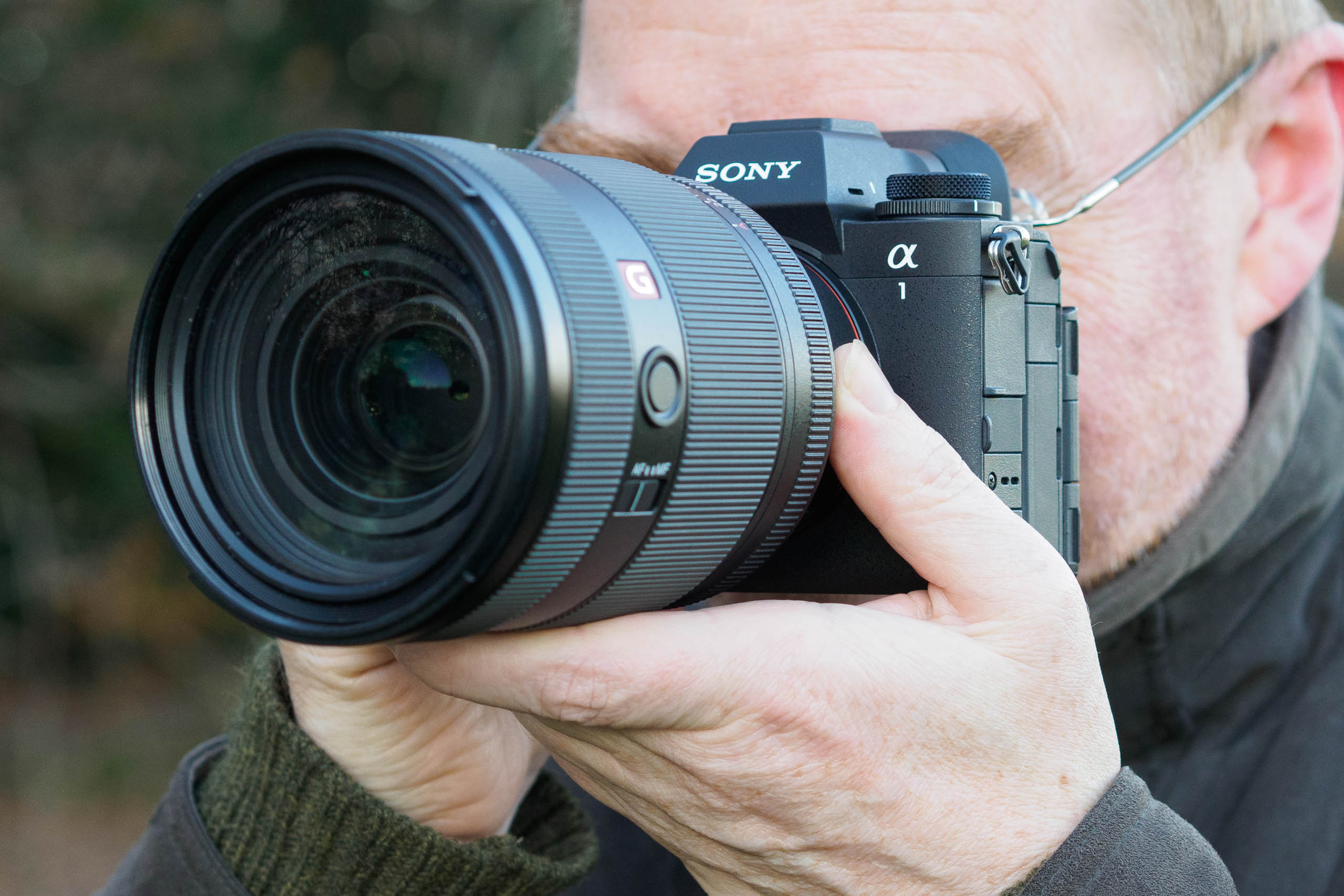
Sony has made a camera that can do pretty much anything you might ask of it. Credit: Andy Westlake

Amateur Photographer verdict

It offers higher resolution than almost anything else, combined with astonishing shooting speeds and an extraordinary subject detection autofocus system, and pre-capture.

Pros

  • Exceptional image quality
  • Best-ever autofocus system
  • Enormous, high-res viewfinder
Cons

  • Very, very expensive
  • Probably overkill for most people

At a glance:

  • Mirrorless
  • 50.1MP full-frame stacked-CMOS sensor
  • Sony E lens mount
  • 759-point AF with subject detection (Auto mode added)
  • 30fps continuous shooting
  • Price: $6,998 / £6,300 (body only)

The Sony Alpha 1 II blends high resolution with super-fast continuous shooting to the tune of 30fps, complete with AF tracking. Wildlife photographers will also be pleased to hear that it gains Real-time Eye AF for birds, as well as animals and humans. In addition, there’s AI-based Real-time Tracking, with a subject detection algorithm that looks at colour, pattern, and subject distance data to keep up with fast-moving situations.

A pixel count of just over 50 million means the A1 II can capture a huge amount of detail, giving plenty of scope for cropping with distant subjects. Noise is still controlled very well up to around ISO 12,800, which is good news if you’re shooting early in the morning or late into the evening. Hybrid shooters are well served too, with 8K video available at 30fps, or 4K at up to 30fps.

The compact body handles well, and the huge, detailed viewfinder combines 9.4m-dot resolution with 0.9x magnification. Overall, the A1 II is a phenomenal camera that can handle almost any type of photography with aplomb. It’s no longer Sony’s fastest gun in the west, since the release of the astonishing Sony A9 III with its global shutter technology – a highly specialised camera for sports photographers, offering lower resolution than the A1 II and costing $6,000 / £5,200 body-only. We’ll stick with the Sony A1 II as a more balanced recommendation.

Read the full Sony Alpha 1 II review


Best Nikon mirrorless for wildlife

Nikon Z8
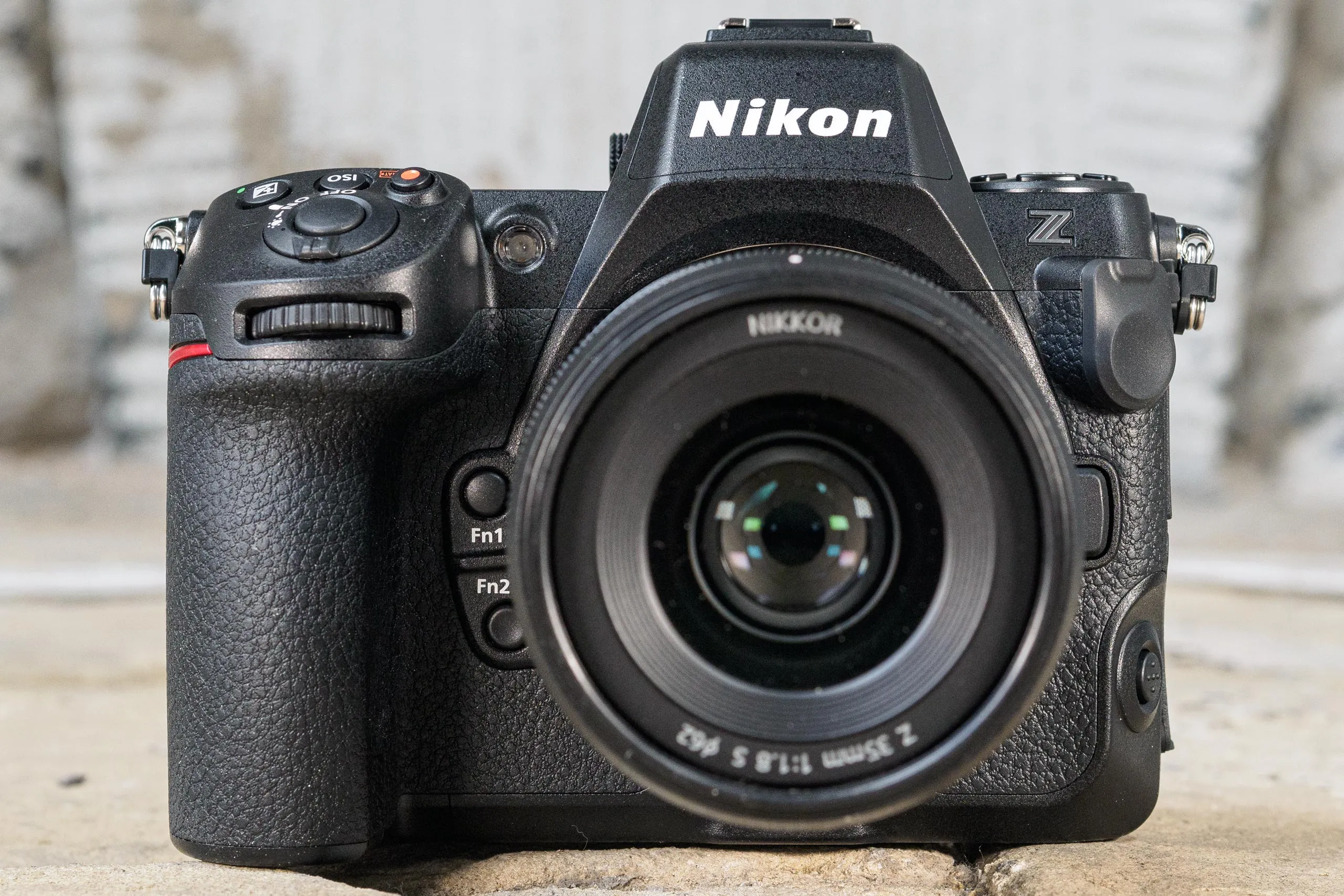
Nikon Z8 front view with 35mm f/1.8 lens. Photo credit: Andy Westlake

Amateur Photographer verdict

The Z8 is by all accounts a pro powerhouse ready to tackle any photographic task with ease.

Pros

  • Exceptional subject-detection autofocus
  • Smaller than most pro cameras
  • Excellent raw image quality
Cons

  • Shorter battery life than Z9
  • Still not what you’d call cheap

At a glance:

  • Mirrorless
  • 45.7MP full-frame stacked-CMOS sensor
  • Nikon Z lens mount
  • 493-point AF with subject detection
  • 20fps continuous shooting
  • Price: $3,700 / £3,790

The Nikon Z8 is arguably a spiritual successor to two cameras at the same time. In form and function, it’s very similar to Nikon’s mirrorless flagship, the Nikon Z9, with essentially the same specifications in a smaller, cheaper body. However, Nikon likes to think of it as a ‘true successor’ to the Nikon D850, a DSLR that was (and still is) much loved by enthusiast and professional wildlife photographers for its ability to nail tough shots in tougher conditions.

Big shoes to fill, but the Nikon Z8 is up for the challenge. Just like the Z9, this is a camera that’s good at basically everything, with a whip-fast autofocus system that can pick out and lock onto specific subjects with its AI-powered algorithms – including wildlife. As we found in our review, your hit rate just goes through the roof with this thing. Image quality is of course first-rate, and the super-fast burst modes means you’ll never miss the moment.

Of course, you don’t get a smaller camera body without cutting something. The Nikon Z8 has a shorter-lasting battery than the Z9, its EN-EL15C battery rated for 340 shots per charge, as opposed to the 740 on the Z9. You’ll definitely want to pack spares for a day’s shoot on a wildlife location, but also remember the camera can be powered via USB-C.

Read our in-depth Nikon Z8 review


Best cheap Canon mirrorless for wildlife

Canon EOS R7

Canon EOS R7 with 18-150mm lens in hand. Photo credit: Joshua Waller

Amateur Photographer verdict

Lightweight camera with high speed shooting and advanced AF tracking, and good battery life, a great all rounder as long as you don’t mind the limited lens choices

Pros

  • Subject-recognition AF
  • High-resolution APS-C sensor
  • Up to 30fps burst
Cons

  • Very few RF-S lenses
  • And they aren’t weather sealed

At a glance:

  • Mirrorless
  • 32.5MP APS-C CMOS sensor
  • Canon RF lens mount
  • 5,915-point AF with subject detection
  • 30 fps shooting
  • Price: $1,399 / £1,349 (body only)

Canon’s latest APS-C model uses a similar 32.5MP sensor to the EOS 90D but places it behind the mirrorless RF mount. This enables faster shooting and more sophisticated autofocus in a smaller and lighter body. Notably, the EOS R7 inherits the subject recognition AF from the high-end full-frame EOS R3, which works with animals as well as humans or vehicles.

The EOS R7 also offers speedy shooting, at 15fps with the mechanical shutter, or 30fps with the silent electronic shutter. Its high-resolution sensor and 1.6x crop factor help record plenty of detail with distant subjects. Canon DSLR users should find its handling and operation generally familiar, although the combined rear dial/joystick takes some getting used to.

Our biggest reservation lies with the lack of APS-C format RF-S lenses, with just a couple of uninspiring standard zooms initially available. However, wildlife shooters are well-served by telephoto options such as the lightweight RF 100-400mm F5.6-8. The EOS R7 also works very well with EF-mount DSLR lenses via a mount adapter.

Canon EOS R7 full review


Best Canon mirrorless for wildlife

Canon EOS R3

Canon EOS R3. Photo credit: Andy Westlake

Amateur Photographer verdict

It boasts one of the most sophisticated autofocus systems around, but makes it remarkably easy to use, allowing you to change settings quickly to suit the situation.

Pros

  • Eye-detect AF
  • Eye-control focusing really works
  • Robust, weather-sealed design
Cons

  • Very expensive
  • No third-party lens options

At a glance:

  • Mirrorless
  • 24.1MP full-frame stacked-CMOS sensor
  • Canon RF lens mount
  • 1,053-point AF with subject detection
  • 30fps continuous shooting
  • Price: $3,999 / £4,699 (body only)

Canon’s flagship mirrorless camera sits just below the EOS-1D X Mark III DSLR in the company’s line-up. It uses a similar robust, weather-sealed design, with an integrated vertical grip that includes a duplicate set of controls for portrait-format shooting and houses a chunky high-capacity battery for extended shooting. It’s capable of shooting at a pacey 30fps when the electronic shutter is in use, or 12fps with the mechanical shutter. Both rates are with full autofocus and metering capability.

Even better news for wildlife photographers is that the subject detection system can spot animal eyes, faces and bodies – in hierarchical order – so if the eyes are visible, it will focus on those. What’s more, this is combined with Canon’s eye control focus technology, which means that if there are several possible subjects in the frame, you can select one simply by looking at it in the viewfinder. It works brilliantly, leaving you free to concentrate on the composition and timing of your shots. For well-heeled Canon wildlife shooters, it’s an excellent choice. It’s not quite the top of the range for speed – that title belongs to the pro-spec EOS R1.

Read why we gave the Canon EOS R3 top marks


Best mid-range Fujifilm camera for wildlife photography: Fujifilm X-T50

Fujifilm X-T50 with new 16-50mm lens. Photo: Nigel Atherton

Amateur Photographer verdict

Lightweight and loaded with features, the Fujifilm X-T50 is an ideal mid-range camera for wildlife photography, benefiting from a 40MP sensor and subject-detection autofocus.

Pros

  • Excellent image quality and resolution
  • Subject-detection autofocus
  • Aesthetic Film Simulations
Cons

  • AF subject-detection needs manual selection
  • On the expensive side for APS-C
  • X-mount doesn’t have loads of telephotos

At a glance:

A somewhat slimmed-down version of the hugely well-received Fujifilm X-T5, the X-T50 boasts a huge number of features that work in favour of wildlife photographers. Its APS-C X-Trans sensor is the same as that of the X-T5, with a high 40MP resolution to play with. Not only is this great for printing, but it also gives you good latitude for cropping into images – handy if you haven’t been able to get as close to your subject as you would have liked (giving good telephoto reach).

The X-T50 is a relatively recent camera, and as such, it inherits the must-have feature of the 2020s – AI-powered subject-detection autofocus. This intelligent system is capable of recognising specific subjects, including animals and birds. It isn’t automated – requiring the subject in question to be manually selected through the menus – yet works well. In our testing, we found the X-T50 could reliably identify and lock onto animal subjects. The X-T50’s maximum burst rate of 20fps with the electronic shutter comes with a 1.25x crop – but as we’ve discussed already, this isn’t necessarily a problem when you’re dealing with distant subjects.

Image quality is, of course, gorgeous, with all of Fujifilm’s luscious colours on display. A dedicated dial for Film Simulations allows you to quickly cycle between Fujifilm’s popular colour modes to give images a distinctive look. The lens range for X-mount includes some fantastic optics, with the APS-C crop factor giving a boost to effective focal length.

Full review of the Fujifilm X-T50


Best Fujifilm camera for wildlife

Fujifilm X-H2S

Fujifilm X-H2S. Photo credit: Andy Westlake

Amateur Photographer verdict

A high-performance, pro-spec model that’s especially suitable for wildlife, and is backed up by a wide-range of top-notch lenses

Pros

  • Subject-recognition autofocus
  • Up to 40fps silent burst
  • Extensively weather sealed
Cons

  • Pricey for APS-C

At a glance:

Fujifilm’s X-system flagship model is an enticing option for serious wildlife photographers who’d like a more affordable alternative to full frame. It combines high performance with portability, with its 26.2MP APS-C stacked CMOS sensor supporting silent shooting at fully 40 frames per second for up to 140 frames. Dial down to 15fps, and the camera can keep shooting almost indefinitely (when using a CFexpress card). The X-H2S also gains the firm’s first subject-recognition autofocus system for animals and birds, along with most types of vehicle.

Fujifilm has also eschewed its signature analogue dials in favour of a highly customisable electronic interface. This allows users to configure up to six custom shooting setups for different scenarios and recall them using the mode dial. Naturally, the body is extensively weather sealed for outdoor shooting, as are most of the firm’s XF lenses. For more options have a look at the best Fujifilm X-mount lenses.

Thanks to the 1.5x ‘crop factor’ of the APS-C sensor, it’s possible to get impressive telephoto reach in reasonably portable lenses. This makes it a great choice for shooting distant wildlife.

Fujifilm X-H2S Review


Best Olympus / OM System camera for wildlife

OM System OM-1 Mark II

OM System OM-1 Mark II. Photo Andy Westlake

Amateur Photographer verdict

Absolutely stacked with wildlife-friendly features, this is a veritable toolbox of a camera. It’s super-fast, it’s comprehensively weather-sealed, and it boasts a tonne of lenses to choose from.

Pros

  • IP53 weather-sealing
  • Brilliant image quality
  • MFT sensor extends effective focal length
Cons

  • Some may want more resolution

At a glance:

The latest flagship from OM System (the brand formerly known as Olympus), the OM-1 Mark II cements the new OM range as being some of the best cameras coming out for Micro Four Thirds right now. This camera sports an absolutely formidable array of features as far as wildlife photographers are concerned: it’s IP53 weather-sealed, so more than capable of enduring long shoots outdoors; it’s capable of shooting at up to 120fps with fixed AF or 50fps with continuous AF; and it boasts the latest generation of AI-powered subject-detection autofocus, with improved tracking.

We were blown away by how well this camera performs when we subjected it to our full testing procedure. Like the previous OM-1, it particularly excels at bird photography, but really, it’s going to handle any wildlife just fine. Image quality is brilliant, and the smaller Micro Four Thirds sensor incurs a crop factor that effectively doubles the focal length of your lenses, giving you huge telephoto reach without the bulk and expense of other systems. Also, thanks to AI algorithms, noise is very effectively controlled at most ISO sensitivities

True, the resolution of 20MP is lower than that of competing cameras, and this may impact those who want to make big prints. However, the OM-1 Mark II comes with so many of its own advantages that it’s an entirely unique proposition for wildlife photographers.

OM System OM-1 Mark II full review


Choose the best camera for wildlife photography

When choosing your wildlife camera, you’re looking at a few key specs. Speed is a priority, as wild animals move quickly, unexpectedly and erratically. This means you need a fast burst mode and a capable autofocus system to keep up.

A good wildlife camera should also have some weather sealing, as you’re going to be outdoors for long periods. Good battery life is a plus as you won’t be able to stop and charge. Also, it isn’t often talked about with regard to wildlife, but a good amount of resolution (i.e. megapixels) can be really useful to capture the details of feathers and fur. Of course, if you do get a high-resolution camera, you’ll need fast-enough memory cards to keep up.

Sensor size is worth thinking about, too. Larger full-frame sensors will capture richer images with better detail and dynamic range, but smaller APS-C sensors will extend the effective focal length of your lens. See our guide to APS-C versus Full-frame for a thorough look at how this works.

On that subject, you’ll need a long telephoto lens, as wild subjects generally won’t allow you to get close. What type of lens you choose will depend on your budget and how much weight you’re willing to carry. A bridge camera is lighter on both your back and wallet, but will use a smaller sensor.

DSLRs and mirrorless cameras both have their own advantages and disadvantages – see our breakdown of DSLR vs Mirrorless for more – but the main reason to choose mirrorless over DSLR is in advances made in continuous shooting, focus points, and subject detection auto-focus. Mirrorless cameras often offer 20 or 30fps (or faster) continuous shooting, as well as pre-burst, something DSLRs simply can’t offer.

How do you get started with wildlife photography?

If you’re looking to start photographing wildlife for the first time, you’re already in the right place, as acquiring the right camera is a critical first step to take. Your smartphone simply isn’t going to cut it for detailed, sharp, frame-filling wildlife images. You need a camera with a larger sensor and a powerful telephoto lens.

Beyond that, a lot of wildlife photography is about research, planning and preparation. You aren’t going to have a lot of success just by wandering the countryside and hoping for the best – you’ll want to research the best times and locations to see the kinds of animals you want to photograph. For some more help on the practicalities of getting started, check out our complete guide to wildlife photography.

How we test cameras

We test cameras primarily by using them to take photographs and video in a wide range of real-world situations. We evaluate their control layouts and handling, and the usability of their viewfinders and screens. We assess their autofocus across a range of different subjects and shooting scenarios and check their continuous shooting capabilities.

We also examine the effectiveness of their image stabilisation systems. Last but by no means least, we critically evaluate the image quality, in both JPEG and raw, including resolution, high-ISO noise, and dynamic range. We then take all these factors into account, along with such things as portability and lens systems, when giving our final conclusion and score. You’ll find the full breakdown of how each camera has performed in our full reviews.

Recent updates:


Written by Andy Westlake with contributions from Angela Nicholson and Jon Stapley.


Read more:


Follow AP on Facebook, Instagram, YouTube and TikTok.


google preferred source


Apple News

Share on Pinterest

Share on LinkedIn
Profile image of Andy Westlake
Andy Westlake

About

Andy has been Amateur Photographer's Technical Editor since 2014, responsible for reviewing everything from cameras and lenses to accessories and software. Prior to that, he was DPReview's Technical Editor, and introduced lens reviews to that website in 2008. Along the way, he's shot extensively with cameras and lenses of almost every imaginable type, brand and format.


Andy Westlake

Andy Westlake

Stay Updated

Get the latest camera news, reviews and buying guides straight to your inbox.

Adobe - Design Without Limits