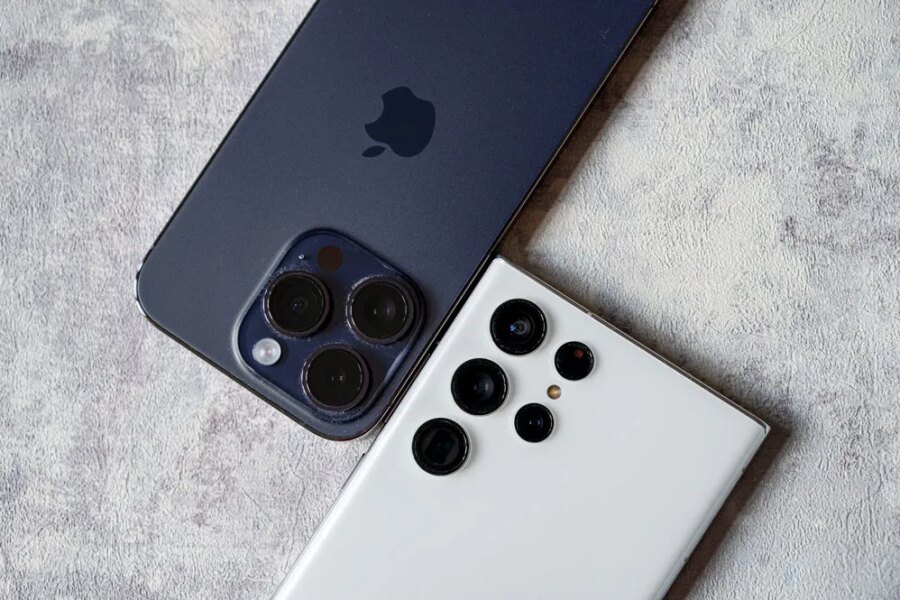
The camera units of the Samsung Galaxy A56 (left) and the Google Pixel 9a (right). Image: Amy Davies
With the best budget camera phones, you can ensure that the camera you always have with you is an imaging powerhouse – without spending a fortune. While it is indeed possible to spend large amounts of money on a new flagship phone, there are also tons of brilliant affordable options out there. You just have to know where to look – and I’ve put together this guide to help you do just that!
Every phone on this list has been reviewed and rated by our technical team. We only recommend products that we can personally vouch for, and you can click through each entry to read our full review of every camera phone on this list. I’ve also included sample shots from each phone throughout, to help give you a clearer picture of what each one can do. A good option when budgets are tight is to look at older models from bigger manufacturers, as these can often be picked up for bargain prices, so I have included some previous-gen phones on this list.
Expect to see budget-friendly phones from Samsung, Apple, Google, Honor, Xiaomi, Motorola and more. If you’re not sure what the technical details on a phone’s camera means, you can scroll to the bottom of this page where I’ve put together an explainer on how to choose the best budget camera phone. If you’re looking for something more high-end (and expensive), see our main guide to the best flagship camera phones.
The best budget camera phones: our quick list
Here’s our quick run-down of the best budget and mid-range camera phones:
Best budget phone overall: Samsung Galaxy S24 FE – Buy now
Best budget Google phone: Google Pixel 9a – Buy now
Looking for the best deal on budget camera phones? Not only will you find the best budget camera phones, but you’ll also find some of the best cheap camera phone deals, as our ‘Buy now’ buttons are setup to automatically take you to the best prices, from trusted retailers, plus you’ll also find a list of other retailers below each camera, so you can find the right deal for you.
Continue reading to find out more, along with sample photos from all the phones featured…
Why you can trust Amateur Photographer
We spend many hours testing every product we recommend, in detail, in a variety of situations and shooting scenarios, and only use experts for our reviews, so you can be sure that you’re getting the best products. Find out more about our expert writers.
The best budget and mid-range camera phones to buy
Best budget phone overall
Best budget phone overall: Samsung Galaxy S24 FE
Samsung Galaxy S24 FE. Photo JW/AP
Amateur Photographer verdict
The Samsung Galaxy S24 FE isn’t up to the same level as the full-fat S24 series, but if you can get it at a reduced price, it’s a very good phone with a triple camera system.
Pros
Great value – cheaper than the S24/S25
Larger screen than S24 (normal version)
IP68 rating (water/dustproof rating)
Cons
Telephoto and selfie cameras downgraded (compared to S24)
A mid-range phone for budget prices – normally you’d have to look to other brands for something with these specifications, which is why it makes this Samsung Galaxy S24 FE such a good deal, as you can find it for under $500/£500 (sometimes even less). It has a triple camera setup on the rear, and lots of premium features that you find in much more expensive S series phones, that are all pricier than this model.
For photography (and video) you’ve got a 50MP main camera with optical image stabilisation (OIS), a 12MP ultra-wide angle camera, and an 8MP telephoto camera with 3x telephoto zoom. A pretty generous setup, and one that gives you good images, as well as good versatility. There’s a 10MP selfie camera, but with fixed-focus it’s a little bit behind the flasgship S24/S25 phones. There’s also 8K video recording, which is rare for a mid-range phone.
The Samsung S24 FE telephoto camera upscales to 12MP giving great results. Photo JW.
Galaxy S24 FE · f/2.4 · 1/988s · 7mm · ISO32
There’s a good sized 6.7inch screen, a 4700mAh battery with wireless charging, and you get 7 years of updates, matching other flagship phones, along with IP68 waterproof rating. With 128GB/256GB/512GB storage options you also get to choose how much you need.
Google has introduced the Pixel 9a with a new design, larger screen, and updated camera system. There’s a brighter main camera lens with f/1.7 aperture, as well as an updated ultra-wide-angle camera that now has auto-focus, which allows for close-up macro shots. You still have Best Take, Magic Editor, and Audio Magic Eraser to play with, in addition to the more conventional photographic modes that have appeared on previous generations, such as Night Sight and long exposure.
The cameras may sound like fairly standard stuff, but as we found in our review, it results in images of high quality, with a pleasing level of detail and punchy but natural colours. The various shooting modes on the camera app work well, and if you have access to a decent smartphone support like a mini-tripod, you can take advantage of specialised modes like the long-exposure astrophotography function.
A close-up image taken with the Google Pixel 9A. Photo Amy Davies
Pixel 9a · f/1.7 · 1/256s · 4.53mm · ISO38
The main rival to the Google Pixel 9a is likely to be another Google phone – if you don’t care about the AI features then the Pixel 8a/7a is going to deliver much the same results for a cheaper price. However, with its price still temptingly low, we can safely say that the Google Pixel 9a is the best budget Google phone on the market, and you will not be disappointed with the results it produces.
This is also the best budget phone for astrophotography as well, thanks to the advanced night modes, and astrophotography mode, which increases your slow shutter speed photography performance, with extra long exposures possible when used on a tripod. Google’s latest phones also come with 7 years of updates, so you know it’ll still be secure as time passes.
You have to pay the Apple premium, but the iPhone 17 is the most affordable of the current generation, and unlike some of the ultra-cheap iPhones, is actually worth buying, thanks to the dual cameras.
Pros
Good value for an iPhone
Two high-resolution sensors
Upgraded selfie camera
Cons
Pricier than Android alternatives
Only two lenses (no telephoto)
Scroll to see more →
Specifications
Apple iPhone 17
Main camera
48MP f/1.6, OIS
Ultrawide camera
48MP f/2.2
Selfie camera
18MP f/1.9 selfie camera
Video
4K 60p
Screen
6.3-inch Super Retina XDR OLED screen
Battery
3,692 mAh battery
Dimensions
149.6 x 71.5 x 7.95 mm, 177g
If you’re looking for a cheap camera phone, you’re generally best-off going with an Android, as you’ll just get more value for money that way. With that said, if using an iPhone is non-negotiable for you, the iPhone 17 is the most reasonably priced member of the current generation, and it offers a smooth and polished shooting experience for a fairly reasonable outlay. Prices start at $799/£799 for the 256GB version. You can pay a lot more for a phone, though as this list demonstrates, you can also pay a lot less.
So, what do you get for your money? The iPhone 17 sports a dual-lens setup, with a pair of 48MP cameras consisting of a 26mm equivalent, f/1.6 main wideangle camera with optical stabilisation, and a 13mm equivalent, f/2.2 ultrawide. The latter is a considerable upgrade from the iPhone 16’s 12MP ultra-wide – and something else that’s upgraded is the selfie camera, which uses an 18MP square-format sensor to allow you to capture horizontal or vertical selfies without needing to rotate the handset.
It lacks the telephoto lens of the superior but much more expensive iPhone 17 Pro (which is in part more expensive because it doesn’t offer a 256GB version at all). The good news, though, is that it still takes excellent pictures, with both lenses performing well to produce pleasing shots with punchy colours, accurate exposures and a wide dynamic range. The extra resolution on both cameras gives you access to digital crop modes, essentially functioning as zoom lenses, and the sophisticated, AI-powered Portrait Mode can even be used to convert images to portraits post-capture. In short, it’s difficult to imagine many people being unsatisfied with the images produced by the iPhone 17 in the vast majority of situations.
The higher-resolution ultra-wide lens also enables an improved macro mode – though in truth, unless you’re pixel-peeping, the differences are going to be subtle at best. The low-light Night mode is also very good, consistently producing detailed shots even in very dark conditions indeed – and we also found that this detail held up well when we experimented with the different lenses.
Image quality from the iPhone 17 is excellent, proving you don’t need to necessarily spend a huge amount to get good results. Image credit: Amy Davies
There are definitely Android models that give you more photographic bang for your buck. However, the iPhone 17 is as smooth to use as iPhones have ever been, and with a better battery and screen than previous generations, it’s a very compelling all-around package. Sure, the iPhone 17 Pro gives you luxuries like a telephoto lens and raw shooting. But if you can live without those – and, let’s be honest, most users can – you’ll find that the humble iPhone 17 is a perfectly capable all-rounder camera phone.
What about the iPhone 16e/17e? Apple’s cheapest phone is the iPhone 16e and iPhone 17e, but is limited in terms of cameras, with just one main camera, no telephoto, and no ultra-wide-angle. Our reviewer Amy Davies was not particularly impressed, and unless you are absolutely desperate for an iPhone, and have a strictly limited budget, it is best avoided.
A closer look at the triple camera setup of the Samsung Galaxy A56. Image: Amy Davies
Amateur Photographer verdict
It feels like using one of Samsung’s premium ‘S’ phones, but comes at nowhere near the cost. The Samsung Galaxy A56 is a solid mid-range camera phone that has some nice improvements.
Pros
Robust build quality
Main camera impresses
Ultra-wide also good
Excellent value for money
Now available in the US
Cons
5MP macro isn’t great
No wireless charging
Scroll to see more →
Specifications
Samsung Galaxy A56
Main camera
50MP, f/1.8, 23mm equivalent, PDAF, OIS
Ultrawide camera
12MP, f/2.2, 13mm equivalent, fixed focus
Macro camera
5MP, f/2.4, fixed focus
Selfie camera
12MP selfie camera, f/2.2, fixed focus
Video
4K from all cameras (excluding macro)
Screen
6.7inch Super AMOLED, 120Hz screen, 1900nits peak brightness, Victus+
Battery
5000mAh battery
Dimensions
162.2×77.5×7.4mm, 198g (IP67)
The latest and best in Samsung’s Galaxy A line of budget-friendly smartphones, the Samsung Galaxy A56 has made a number of improvements to the A55, with improved screen, faster (45W) charging, and the addition of AI features. The RRP of the phone is $499 / £499 ($549 for 256GB) and it comes with 256GB as standard in the UK, with regular offers and discounts meaning it’s often cheaper than that. And the good news is that you still get a highly capable camera phone for the money.
The triple-camera setup on the Galaxy A56 is fairly standard for a phone of this type, and isn’t changed much from the previous model. The main camera is the 50MP f/1.8 wide-angle main camera with optical stabilisation; this camera outputs images at 12MP with pixel binning, and the level of quality is consistently good, with pleasing detail. There’s also a 12MP ultra-wide camera, which does a commendable job of matching it for detail and colour reproduction. Then there’s also the 5MP macro camera with fixed focus, which is not great, especially as you get better results from the main camera. We would have preferred a telephoto module; though of course, this would have added to the cost.
The phone is great to use – it’s got that Samsung smoothness in its operation and interface. The photo app is intuitive and comes with packed with fun shooting modes, as well as manual mode to give you full settings control. We appreciate the generous battery with 5000mAh capacity, though a wireless charging option would have been nice.
The A56 is capable of creating some lovely imagery. Image: Amy Davies
The Samsung Galaxy A56 is not any kind of reinvention from the previous model in the series, but it’s another solid mid-range camera phone that does a consistently good job of capturing quality images and videos. Plus, the aforementioned frequent discounts mean you stand a decent chance of picking it up for a bargain price. The A56 gets six major updates to the operating system. You could also look at the A55 if your budget is tight.
With an impressive set of rear cameras, and a selfie unit with autofocus the S24 is a solid all rounder, if you can look past the absence of dedicated macro mode, thanks to great video performance.
Pros
Price has tumbled
Not too large, but feels premium
Excellent, consistent image quality
Cons
No dedicated Macro mode
Battery life not as good as others
Scroll to see more →
Specifications
Samsung Galaxy S24
Main camera
50MP, f/1.8, OIS, 24mm equivalent
Ultrawide camera
12MP, f/2.2, 14mm equivalent
Telephoto camera
10MP, f/2.4, 3x, 67mm equivalent, OIS
Selfie camera
12MP selfie camera with PDAF, 25mm equivalent (and 4K video)
Video
8K30p main camera, 4K60p from all cameras
Screen
6.2inch screen, AMOLED, 120Hz, Gorilla Glass Victus 2
Battery
4000mAh battery, plus wireless charging
Dimensions
147 x 70.6 x 7.6mm, 167g
Yesterday’s flagship is this year’s bargain, and so it goes with the Samsung Galaxy S24. It was never a hugely expensive phone (by smartphone standards at least), originally retailing at $799 / £799, but given that it can now be picked up for about $450 / £375, that’s quite a substantial saving.
The Galaxy S24 was the entry-level model in the S series, not a million miles away in features from mid-range phones. So it doesn’t get the headline-grabbing 200MP main cameras of its flagship siblings like the S24 Ultra or S25 Ultra, but it still has a more-than-respectable 50MP main camera that benefits from optical stabilisation. This sits alongside a 12MP ultra-wide-angle, as well as a 10MP 3x telephoto camera that’s stabilised (and is a good deal more welcome than a low quality macro camera).
As befitting a flagship phone, the Galaxy S24 also feels premium in the hand and has all the quality-of-life features you’d expect from such a device. Wireless charging, an in-screen fingerprint reader – Samsung even chucks in IP68 waterproofing, meaning it can even survive being submerged in water (though, as ever, we’re not recommending you test this too enthusiastically).
Colours are vibrant and punchy without being over the top. Image credit: Amy Dvaies
The imaging performance of the Galaxy S24 is consistently impressive, delivering punchy colours and good consistency between the different camera modules. There’s no dedicated macro mode as the ultra-wide-angle camera is fixed focus (you’ll have to pay for an Ultra model for that kind of luxury), but telephoto performance is generally very good as long as there’s sufficient light.
This is also the best budget camera phone for vlogging, thanks to the impressive selfie camera with both auto-focus (AF) and 4K video recording. You can even record 8K video at 30p if that’s something you’re interested in; though in truth, most people will probably be just fine with the excellent 4K. If you like the look of the S24, but want something bigger, then check out the S24+ or if you’re looking for a more affordable option, check out the previous models, such as the S23, or S23+.
This capable smartphone boasts a triple camera array, and its Leica-branded optics mean it’s quite possibly the cheapest Leica camera you can buy right now.
Pros
Leica Summilux lenses
Street photography mode
Solid macro mode
8K video
Cons
No AF on selfie camera
Not available in US
Scroll to see more →
Specifications
Xiaomi 15T Pro
Main camera
50MP ƒ/1.62, OIS, PDAF, 23mm equivalent
Ultrawide camera
12MP ƒ/2.2, 15mm equivalent
Telephoto camera
50MP ƒ/3, 115mm equivalent. OIS
Selfie camera
32MP selfie-camera ƒ/2.2, 21mm equivalent
Video
Up to 8K video recording
Screen
6.83inch 144Hz AMOLED display
Battery
5500mAh battery, wireless charging
Dimensions
162.7mm x 77.9mm x 7.96mm, 210g, IP68
The release of the Xiaomi 17 Ultra has seen the price of the Xiaomi 15T Pro come down, and this makes it one of the most temptingly affordable phones on the market right now for photography enthusiasts. Not only does it come sporting a pretty meaty triple-camera array, but it also benefits from Leica engineering, which is what has allowed Xiaomi to splash the iconic red dot all over the marketing materials for the phone.
What this means in practice is that you get a set of Leica Summilux backed lenses and a choice of picture styles – Leica Vibrant and Leica Authentic. with also a well featured portrait mode and a dedicated Leica Street Photography Mode. Predictably, the best results come from the 50MP wide-angle main camera with its 23mm equivalent lens. If you need more distance, you can use the 5x telephoto camera, which puts in a great performance, when venturing to the 10x digital realm results remain detailed without looking overly processed. There’s also an ultra-wide camera for those times you need to get a bit more in the frame, and a 32MP selfie camera on the front.
Photo taken with the Fastshot/Leica Street Photography Mode. Image credit: Aliz Kovacs-Zoldi
Xiaomi 15T Pro · f/1.6 · 1/120s · 6.45mm · ISO50
The Xiaomi 15T Pro is a pretty reliable phone for getting the job done photographically, and extra features like the IP68 weatherproof rating only sweeten what already seems like a pretty good deal. It’s a good choice for video too, with effective stabilisation for footage captured while walking. This phone was already good value when it came out, and with the price already having come down, it’s only looking better and better.
A remarkably slim phone with very capable 50MP cameras, dedicated Macro mode for hundreds less than flagships that won’t compete with its battery life and screen specs.
Pros
Good low light and portrait capabilities
Great value for money
Cons
No telephoto camera
No selfie autofocus
Scroll to see more →
Specifications
Motorola Edge 70
Main camera
50MP (24mm) f/1.8, 2.0µm OIS, PDAF
Ultrawide camera
50MP (12mm) f/2.0, 1.28µm, AF, macro,
Selfie camera
50MP (21mm) f/2.0, 1.28µm Quad Pixel
Video
4K UHD 30p, FHD 240/120/60/30p
Screen
6.67” 120Hz pOLED, 4500nits, 1.5K
Battery
4800mAh battery
Dimensions
159 x 74 x 5.99mm, IP69/IP68
The Edge 70 is Motorola’s slim entry to the upper budget category. It has a well-featured triple 50MP camera set-up. A capable performer in most scenarios and reliable when shooting portraits, with 24mm 35mm, and 50mm options available. The ultra-wide camera isn’t as strong in low light, but still delivers very usable results. The 50MP selfie camera does a good job, despite not featuring autofocus with results looking natural and detailed.
You can record video up to 4K 30 and use slow motion 240 with Full HD. With the highest IP68/69 water and dust proof rating, it is as durable as slim and stylish.
The sharpest and most detailed result comes from the 1x main lens. Image credit: Aliz Kovacs-Zoldi
The Motorola Edge 70 offers a capable imaging package in a super slim 6mm format and a range of stylish colours. Having taken it for a test drive, we can definitely recommend the phone for budget-conscious smartphone shooters.
One of Samsung’s most affordable phones, the Galaxy A35 can also be found on offer quite frequently, with prices slashed down to around the $300 / £300 mark. That’s a seriously cheap price for a smartphone with a triple-camera setup, and particularly one that bears the Samsung name. It’s got a 50MP f/1.8 wide-angle main camera, an 8MP ultra-wide camera, a fixed-focus 5MP macro camera, and of course, a front-facing selfie camera, which offers 13MP of resolution and an f/2.2 aperture.
For the most part, these modules deliver credible results. In our review, we found that the Galaxy A35 was capable of producing punchy images with great colours and detail, just as we’ve come to expect from Samsung. It does best in sunny conditions, and unsurprisingly, you’ll get the best results from the 50MP main camera, which bins pixels to produce 12MP images.
The ultra-wide camera performs well too, producing images which are almost on par with those of the main camera. The 5MP macro camera is fairly run-of-the-mill – we generally prefer the telephoto modules that commonly appear in newer phones nowadays, though the cuts had to come somewhere. The Galaxy A35 isn’t particularly strong in low light, even with the dedicated Night Mode, so if this is a priority for you, it might be worth looking elsewhere.
Close-up photo taken with the main camera. Photo Joshua Waller
Galaxy A35 5G · f/1.8 · 1/413s · 4.69mm · ISO25
The Samsung Galaxy A35 isn’t a showy phone, and it’s unlikely to wow you. But with a solid camera setup, a generally sized screen, an intuitive camera app and generous battery life, it ticks all the boxes you’re likely to want from a budget phone, and it’s hard to ask for more than that.
A smaller bodied option to the flagship version, it has a very capable main sensor, and bright OLED display. It strikes a healthy balance between price and overall image quality.
Pros
Main camera consistently impresses
Harcourt portrait modes
AI superzoom
Cons
No telephoto module
No autofocus on selfie camera
Not available in US
Scroll to see more →
Specifications
Honor 400
Main camera
200MP, f/1.9 aperture, PDAF, OIS
Ultrawide and macro camera
12MP, f/2.2 aperture, AF
Selfie camera
50MP f/2.0 (fixed focus)
Video
4K 30p
Screen
6.55-inch AMOLED display, 120Hz
Battery
5300mAh battery (6000 outside Europe)
Dimensions
156.5 x 74.6 x 7.3mm, 184g
Even though this is a budget priced phone, the Honor 400 still manages to pack in a 200MP main camera, with a 1/1.4 inch sensor. Elsewhere on the phone, you’ve got an ultra-wide 12MP module with a 16mm equivalent lens with auto-focus. All this adds up to a pretty impressive package for a smartphone at this price – which varies depending on storage size.
In our full review, we found the Honor 400 to be a pleasant and capable camera phone that was able to cope with a wide variety of shooting situations. It can’t shoot 8K video and 4K tops out at 30fps, but it’s only a small percentage of users who are going to be bothered about that. Realistically, the bigger omission for most people is going to be the lack of a telephoto camera, reducing your options when shooting at a distance. Most of the specialist modes are decent enough, though we found the close-up Super Macro mode to be fairly lacklustre, and found we could simply crop in with the main camera without risking shadows in the image.
Shot using the 1x lens. Image: Aliz Kovacs-Zoldi
The display on the Honor 400 is gorgeous, and very bright when needed, and we came away pretty impressed by how long the battery was capable of holding up. It produces consistently attractive images too, especially when you stick with the main camera module. For this price, it’s an excellent phone all-around, the only main problem being that it’s not available in the US.
The Tecno Camon series of phones is a range of smartphones designed for photography. The Tecno Camon 40 Pro is the second-to-top model (the Camon 40 Premier sits above it with an added telephoto camera), and offers a dual camera setup on the rear, and a 50MP selfie camera with auto-focus. However, it’s only available in certain markets, so if you find yourself in that market, count yourself one of the lucky ones.
A portrait taken with the Tecno Camon 40 Pro. Image: Amy Davies
TECNO CM7 · f/1.8 · 1/748s · 5.56mm · ISO50
Whilst not as fully stacked as the 40 Premier, there’s still a good 50MP main camera with optical image stabilisation (OIS), an 8MP ultra-wide angle camera, and on the front you’ll find a 50MP f/2.4 selfie camera with auto-focus! The phone can also record 4K video at 60fps, has a generous 5200mAh battery, with fast charging, but unfortunately wireless charging isn’t included.
Make sure to look out for our full review for the recently announced Tecno Camon 50 series.
These days, every budget camera phone comes with more than one camera (outside of Apple!), each with its own sensor, usually a main wide-angle lens with the highest resolution and brightest aperture values and a second ultra-wide one. Some will feature a third telephoto camera, the key here is to have a higher optical zoom as digital or “optical quality zoom” only crops. Autofocus is standard for the main camera, so the real value lies in finding it on the ultra-wide and front-facing sensors. If you want to shoot close-up macro photos, then pay attention to whether the phone offers a dedicated macro mode, but if it’s only a 5MP macro camera, then chances are you’ll get better results using the main camera.
Once you’ve worked out your budget, and your needs in terms of the cameras on offer, you can then look out for general features like the size of the screen, whether the phone uses toughened ‘Gorilla Glass’, and how much memory and/or storage it comes with. Plus, pay attention to how many years of updates you’ll get, the longer you can use your phone securly, the better the value for money. Lastly, camera phones will often come with an IP rating that tells you how resistant they are to dust and moisture. IP64, for example, means the phone is resistant to splashes, while IP68 means the phone can withstand full immersion in water for a limited time.
Don’t be too swayed by the camera resolution. The best budget camera phones may have ‘resolutions’ of 50MP, 108MP or 200MP, but this doesn’t mean the same as it would in a regular camera. These resolutions are ‘pixel-binned’ down to around 12 megapixels for actual shooting, and while there are modes that use the full resolution, the quality can be quite disappointing. Look out for a larger actual sensor size, as it’ll be capable of capturing more light.
What kind of camera array do cheap camera phones have?
Typically, the main camera will have the best sensor and brightest aperture lens, so this will be your most reliable option. But you can also expect to get an ultra-wide or an ultrawide and macro camera too. These typically have lower resolution and don’t match the main camera’s quality, though they are fine for most users. If you’re keen on close-ups, take a look at our top macro photography tips and best phones for macro photography.
What should I be looking for on a selfie camera?
It’s worth checking out the front ‘selfie’ camera. The specs vary, and if you photograph or video yourself a lot, a front camera with a good sensor and autofocus (not all have autofocus or AF) is definitely worth having, as this will ensure you’re properly in focus at all times.
Do budget phones have telephoto cameras?
What you don’t tend to get even in the best budget and mid-range camera phones is a telephoto camera, except for some models. Without the telephoto camera, you have to rely on a digital zoom, which will be effective but won’t provide the same quality.
What is optical image stabilisation and do I need it?
Optical Image Stabilisation(OIS) is a technology that is built-in to cameras, and moves either the lens element(s) or sensor to help steady your photos in low light and at night, and aid in creating smooth videos.
Should I buy a new budget phone or an older flagship?
This is a classic debate, and it will depend on what you are looking for in a smartphone. An older flagship that’s now come down in price might feature a better telephoto camera with longer optical zoom and stabilisation. However, with a new budget device you get longer software support and better battery efficiency.
Is a budget phone good for photography?
Absolutely! All the main brands spend a lot of time trying to give the right balance between cameras, features, quality and price. This means you can still find a great budget camera phone, as they all put a big emphasis on making the cameras really really good, even on budget and mid-range phones.
Which cheap phone has the best camera quality?
This, as expected, is usually the one that is the most expensive, and from the phones listed in this guide, you’ve got some great choices, with the Samsung Galaxy S24 being particularly strong, as well as the Xiaomi 15T Pro.
We have tested and reviewed every single phone in this guide, thoroughly, using them extensively for at least 2 weeks, and often longer, so you can trust our recommendations when deciding which budget phone to buy.
We review budget smartphones from the perspective of choosing a smartphone for its photography and camera performance, so we test every phone by looking at what it offers in terms of the cameras and included features for photography and video, and how it performs in real world use in a variety of different shooting situations.
We test each camera on the phone, whether that’s the ultra-wide angle, the main camera, and telephoto camera(s) if available, as well as the digital hybrid zoom options. Often on budget phones, the selfie camera can perform poorly, so we pay particular attention to testing the selfie camera.
We use the phone for photography in a range of lighting conditions, including low-light, where camera phones can struggle, particularly budget models where the camera sensor is often smaller than more premium models.
We test in harsh lighting, where lens-flare can be an issue, and also look at how the camera copes with scenes with high dynamic range (HDR) as this stresses the sensor as well as the image processing.
We also look at specialist shooting modes on offer, whether that’s the portrait modes (looking at skin tones, background blur, and subject outlines, particularly around hair lines) or AI features for both shooting and editing.
Another aspect we pay close attention to is how good the overall phone is, in terms of battery life (and charging options), screen quality and brightness (testing outdoors in bright sunny conditions), plus overall build quality and value for money.
Recent updates
March 2026: The Samsung Galaxy S23 was replaced by the S24, which is now under £450 second-hand. The Xiaomi 13T Pro was updated to the Xiaomi 15T Pro as it offers solid performance from its Leica-backed cameras. The Motorola Edge 70 replaced the Motorola Edge 50 Neo as the best budget Motorola.
January 2026:iPhone 12 removed due to limited availability and no longer receiving support from Apple. Replaced by iPhone 17, the most affordable of the current generation, and a much better proposition than the iPhone 16E.
December 2025: OnePlus Nord CE4 Lite removed due to limited availability. Read our full OnePlus Nord CE4 Lite review.
November 2025: Honor 400 added, and replaces Honor 90 in the list. Google Pixel 8a removed from list, as very difficult to buy new, and other phones a better option.
October 2025: Samsung Galaxy S24 FE added as now under $500/£500, and offers great value and features. Oppo Reno 10 removed as difficult to buy from most retailers. How we test section thoroughly expanded to add clarity and additional information.
Article: Joshua Waller, with contributions from Rod Lawton, and Jon Stapley. *Prices correct at time of publication but may change without notice.
Joshua Waller has been reviewing cameras since 2004, originally setting up an online review site DigiCamReview. Following this he joined ePHOTOzine in 2011 as Technical Editor where he was in charge of reviews, and setting up a detailed test system. Josh joined Amateur Photographer in 2021, and as Online Editor, is responsible for bringing great content to the site, as well as reviewing cameras, lenses, smartphones and more.