





Leipzig Spring Fair, March 1925: an annual trade exposition to showcase all that was great and good in the latest German technical achievements. The exhibits that year included a new type of camera, maybe not considered particularly important at the time, indeed already shunned by some who had seen it, yet destined to change the face of photography. It was of course the Leica, and although 1925 might have been the year of its birth, its conception lay more than a decade in the past.
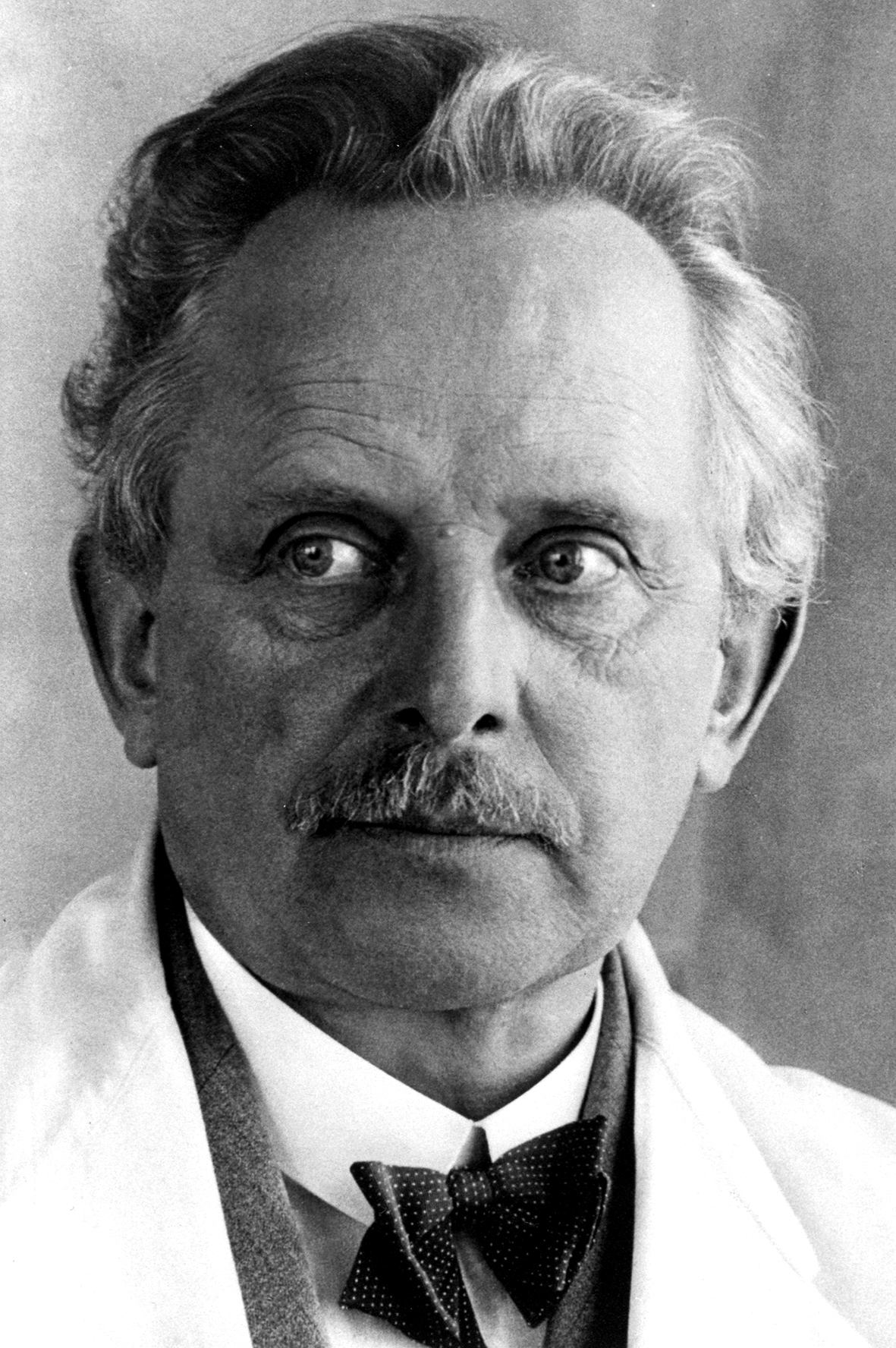
The story begins with an engineer, inventor and photographer named Oskar Barnack who, aged 32 in 1911, left Zeiss, the renowned lens manufacturer, to join the firm of E. Leitz as Director of Research. Leitz was known for precision optical engineering and microscope production, but one of Barnack’s first projects was to work on a high quality cine camera, for which the standard film gauge was 35mm. One problem he faced concerned film emulsion speeds that varied from batch to batch, making accurate metering difficult. So Barnack designed a small device for testing a short strip of film cut from a much longer length before committing the full length for use in a cine camera.
The M875 film tester
This exposure testing device has become known as the M875, for no reason other than this being the way it was tagged as an exhibit number in the Leica Museum where it was discovered. The device consisted of a metal body that included a mechanism for winding short lengths of film with a rotating knob, a guillotine shutter timed at 1/40sec to approximate the frames-per-second speed of a cine camera’s shutter and a metal tube into which a lens could be inserted.
It’s thought, but not substantiated, that the lens used was possibly a 5cm f/3.5 Tessar borrowed from Barnack’s cine camera. A time traveller from the future would have looked at this device and seen, in its shape, the genesis of the Leica, except for a mysterious circular hole under a flap on the back of the body. This might have enabled the apparatus to double as a viewer for examining developed film, the hole allowing light to illuminate negatives from behind as they were viewed by opening the shutter and holding the lens to the eye.
Much speculation surrounds the M875, including its specific use and how many examples were actually made. What is pretty much certain is that the device was one of the steps which led Barnack, an enthusiastic photographer tired of carrying around large and cumbersome cameras, towards a prototype for a much smaller camera made to use 35mm cine film. He has been quoted as saying, ‘I allowed myself to be utterly unconcerned by time-honoured conventions; that is how this new type of camera came into being.’
The Ur-Leica
The name ‘Leica’ had not yet been coined, but Barnack’s 1913 prototype has now become known as the Ur-Leica (or Original Leica). It is thought that two were built, and rumour has it that there might have been three. Whatever the truth, the fact is that the location of the only one known today is preserved at Leica HQ in Wetzlar.
The Ur-Leica had a metal body with a lens that extended on a telescopic mount and a focal plane shutter tensioned by the film wind knob. Film needed to be loaded in a darkroom and the lens covered whilst winding, since the slit in the shutter curtains remained open as it was wound across the film plane. So a lens cap was permanently attached to swing in place during film winding. A large, metal-framed viewfinder could be attached via an accessory shoe. The shutter release was in the centre of the film wind knob.
Cine film was made to run through cameras and projectors vertically with a frame size of 18x24mm. Barnack ran film through his camera horizontally, doubling up on one of the dimensions to initially produce a format of 24x38mm, soon to be adjusted to 24x36mm. So was born the negative size that became the standard for 35mm still photography and remains today in full-frame digital camera sensors. What was possibly the first picture taken with the Ur-Leica was shot by Barnack in 1913, showing shoppers at the Eisenmarkt in Wetzlar. He also later used the prototype camera on walking expeditions in the Black Forest. And then World War I broke out.
The 0-Series cameras
When the war ended, Barnack returned to his project and, in 1923, he persuaded Ernst Leitz, head of the optical company, to have between twenty and thirty newly-designed cameras hand-made to test reaction from factory employees, professional photographers and scientists. Known today as the 0-Series, these cameras used either a fold-up or an optical Galilean viewfinder and early models still needed the lens to be capped before film winding. On the top plate, the shutter release was moved to what would become the traditional Leica position next to the speed setting dial. Shutter speeds were designated as the width of the slit in the focal plane shutter, from 2 for approximately 1/500sec up to 50 for 1/25sec. The camera used a Leitz 50mm Anastigmat lens. Only a small number of these cameras are now known to have survived, and they fetch high prices at auction.
Of these, Oskar Barnack has been named as the owner of serial number 105, which he used until 1930. His name – spelt ‘Oscar’ not ‘Oskar’ – was engraved on the top of the optical viewfinder. When this camera came up for auction in Germany in June 2022, the auctioneer’s estimate was €2-3 million. There had been a few doubts expressed about the authenticity of the camera, especially since Barnack’s first name in the engraving is not written as the usual German version. However, the anonymous buyer who won the auction bid was obviously convinced by the provenance expounded in a file of information that was part of the lot. Including the buyer’s premium (commission an auction house adds to the hammer price), the camera sold for €14.4 million.
Back in 1923, the 0-Series models were regarded with less enthusiasm. An opinion expressed by some was that the small format negatives could never deliver the quality from larger roll films and plates. In June 1924, a board meeting, chaired by Ernst Leitz, discussed whether or not to proceed with production. After three hours, no agreement had been reached, the majority being against the idea. At which point, despite the fact that his company had never before made a still camera, and with the time for lunch rapidly approaching, Ernst Leitz is said to have concluded the meeting with the words (in German of course), ‘I have decided, the risk will be taken.’
The first Leicas
The earliest name for the new camera was the Leitz Kleinfilmkamera (small film camera). A little later the name Leitz Barnack Camera was considered. Then, using the first two letters from the words ‘Leitz Camera’, came the Leica. Finally, an ‘I’ was added from the word ‘Leitz’ to make the Leica.
Shutter speeds, from the cloth focal plane shutter that was now self-capping, covered 1/25-1/500sec. The lens pulled out from the body on a small metal tube and pushed back almost flat with the body when not in use. An optical viewfinder was mounted separately on the top plate, and the metal body was covered with vulcanite, often mistaken for leather. The very earliest production cameras were equipped with 50mm f/3.5 Anastigmat lenses designed by Max Berek for the 0-Series cameras, followed by a short run with f/3.5 Elmax lenses before, in 1926, cameras were fitted with f/3.5 Elmar lenses that remained the norm from then on.
That first camera became known as the Model A when, also in 1926, the Model B was launched alongside the Model A. It was made without a shutter in the body but with the Elmar lens mounted in a Compur shutter. This gave the advantage of adding the previously lacking slow speeds. The Compur B models didn’t last long and so today are relatively scarce.
Clearly, the use of 35mm film in a still camera was something of a novelty for those who first encountered it. The British Journal Photographic Almanac, reviewing the camera in 1926, referred to it as the Leica Cine Film Camera, and had this to say…
‘Quite an innovation in pocket cameras is one just issued by the well-known firm of Leitz, designed to take about five feet of ordinary standard perforated cinematographe film, which is mounted in a special spool, allowing of daylight loading and unloading. Thirty-six exposures may be made without recharging the camera. The latter of high-class metal construction, measures about 5¼x2¾x1¾ inches and is fitted with a Leitz Elmax lens of 2 inches focal length and f/3.5 aperture, arranged on a focusing mount. In design and workmanship, the camera is of the highest description. The price, inclusive of three film spool carriers, brown leather bag and carrying strap is £22.’
Until 1930, lenses were fixed, but that year, the Model C introduced interchangeable lenses with a 39mm screw-fit mount. At first these lenses were made to match specific bodies with matching number strings engraved on the lenses which could not be interchanged with other bodies. Soon, however, the lens mount was standardised so that all lenses and bodies became interchangeable. The two types of camera were differentiated by a small ‘0’ engraved on the lens and body mount of the standardised cameras.
In 1925, Leica cameras commanded just 5% of Leitz company sales. By 1933, the figure had risen to 60%. That day in March 1925 when the Leica was introduced, few could have envisaged how camera design was about to change for ever, and just how much of a legend had just been born.
Acknowledgements
My thanks to friend, fellow collector and Leica Society International Vice President William Fagan for access to his knowledge on all things Leica and for allowing me to use many of his personal pictures of rarely seen items from the Leica archives.
Thanks also to Andreas Schweiger, who handles auction management at Leitz Auction in Vienna, for permission to use pictures from his auction house’s past and present catalogues.
Related reading
Follow AP on Facebook, Instagram, YouTube and TikTok.