


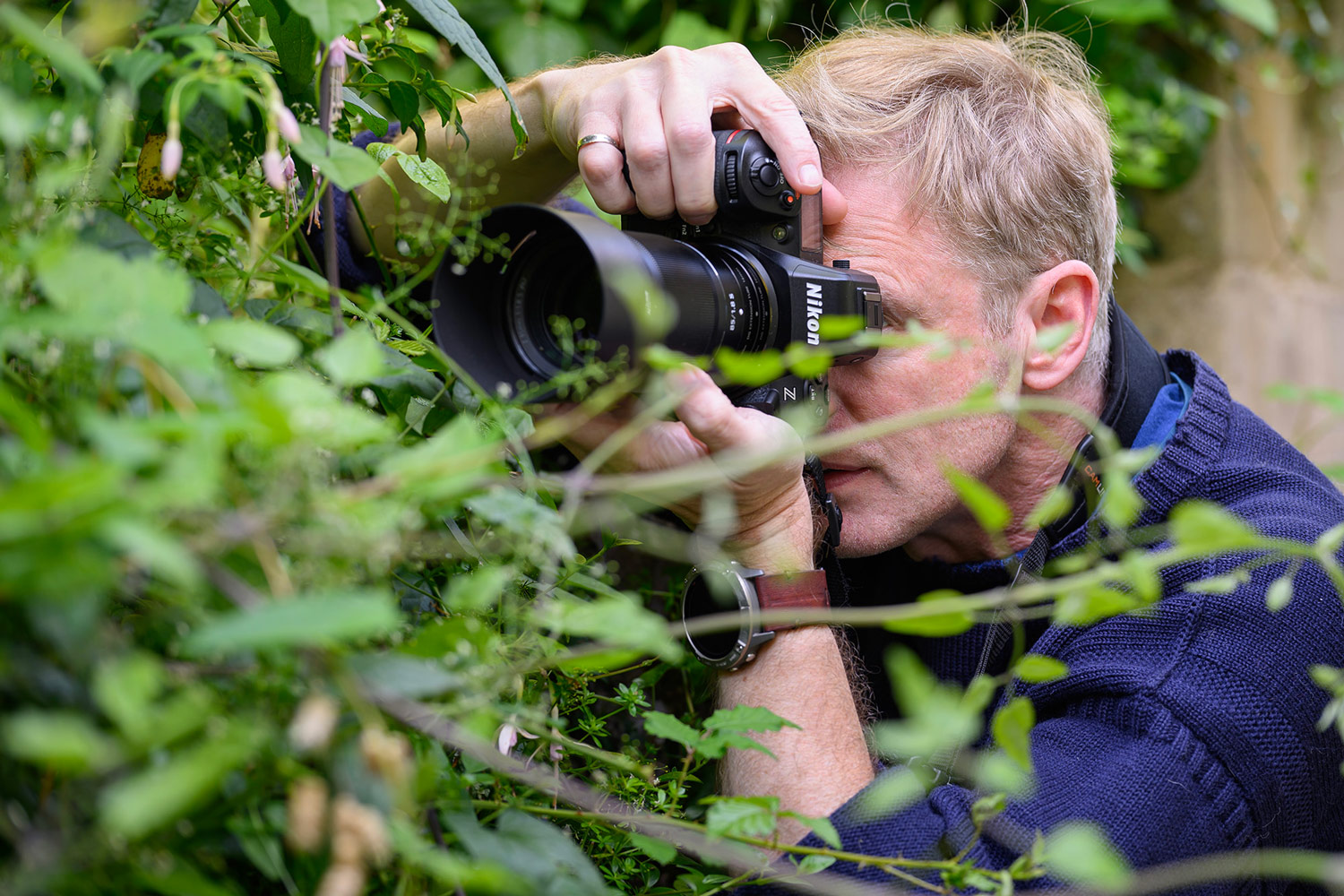
Compared to some companies, Nikon was a slow adopter of mirrorless technology. Like Canon, it flirted with smaller interchangeable lens systems like the Nikon 1 series, but left its reflex cameras to rule the roost. Meanwhile, it’s fair to say that the likes of Sony stole a march, making mirrorless tech their prime focus.
Despite wanting to stick with Nikon during the upheaval of moving from DSLR to mirrorless, I was a slow adopter, too. I owned the excellent Nikon D850 DSLR and didn’t buy a Nikon Z series camera until the company had squeezed an extra processor and other improvements into the Nikon Z7 II. All the while, what I was really waiting for was a true pro version, something more similar to the Sony A9 with its incredible autofocus, blistering speeds and black-out free electronic viewfinder.
The wait went on a bit. But finally, the Nikon Z9 and Nikon Z8 arrived with all the features and performance I’d hoped for. The question is, was all the waiting and the expense really worth it? Or is there still something to be said for Nikon DSLRs? For this examination I’m going to compare the Z8 with the D850, its most similar cousin in many ways.
The AF revolution
Good photographers have always managed to get sharp shots – or make great images that weren’t completely sharp – but there’s no doubting the superiority of autofocus on models like the Z8. The combination of 493 on-sensor phase detection points, automatic acquisition and 3D tracking for a variety of subject types, and low-light performance down to -7EV, means you can get close to 100% of your images sharp. Plus, without a mirror to flip out of the way before the picture can be taken, there are fewer errors caused by intervening subject movement. AF points can also be placed closer to the frame edges.
The D850 is no slouch, to be fair. It has 153 focus points, including 99 cross-type sensors, the latter of which are sensitive down to -4EV, along with a dedicated AF processor. It’s a clear win for mirrorless here.
Image stabilisation
Although Pentax managed to incorporate in-body image stabilisation (IBIS) in some of its DSLRs, Nikon never bothered. By the time it could have been introduced, the company had already bet on another horse. So with Nikon DSLRs you’re reliant its optical Vibration Reduction (VR), which makes the lenses larger and arguably more expensive. On Nikon mirrorless models like the Z8, you can slap any lens on the body and immediately get a stabilised view because VR is part of the architecture around the sensor. Ultimately it means sharper handheld shots and improved micro-resolution which is important for cameras with hi-res sensors like the Z8, where even small movements can compromise sharpness. Another win for Nikon’s mirrorless models.
Image quality and dynamic range
The image quality performance of the sensor in the Z8 and the D850 is pretty similar. Both cameras have a 45.7MP resolution, but the many tests show a slightly increased dynamic range for the D850, possibly due to the physical design of the sensor being less complex. Practically I’ve noticed no difference whatsoever. ISO ranges and noise performance are comparable, too. No clear winner here, so results are very much down to the wetware (you and me).
Viewfinders
I remember thinking how wonderful the D850’s 0.75x optical viewfinder was with its 100% frame coverage, and wondering if I’d ever get used to an EVF. But it’s been at least five years since I switched and I don’t really think about it anymore. The benefits of an EVF are numerous – what-you-see-is-what-you-get shooting, multiple modes to assist exposure and focus, the ability to review images in the finder, so it doesn’t look like you’re chimping or need to put on your reading glasses…
Certainly the Z8’s OLED viewfinder is excellent, even if at 3.69M-dot and 120fps it lacks some resolution and refresh-rate compared to rivals. All that said, I still love the sensation of using an optical finder, the same way I prefer to play an LP rather than listen to internet streamed music. It’s just more real. It’s another win for Nikon’s mirrorless cameras, but a heavy hearted one.
Size and weight
A lot is made about the size-reduction advantages of ditching the mirror box, but in comparing Nikon’s Z8 and D850, there’s not a massive difference at first glance. The Nikon Z8 is lighter than the D850, at 910g compared to 1005g, both with their battery and cards. That’s less than a 100g saving. There’s slightly more improvement in dimension, with the Z8 some 15% smaller overall.
So, while some Nikon mirrorless bodies are a lot smaller, here it’s nothing much to get excited about, unless the heft of a couple of Mars bars is a problem for you – which, to be fair, it could be if you’re climbing Mount Everest. In practice, shooting events with a couple of Z8s and Nikkor Z 24-70mm f/2.8 S and Nikkor Z 70-200mm f/2.8 S lenses is still a fairly arduous day, but then I am getting on a bit.
Shooting speed
Yep, again it’s a mirrorless win. The Z8 can hit 120 frames per second (fps), and while that’s limited to 11Mp JPEGs, there’s a more practical full-res 30fps option, too. In Raw, it tops out at 20fps, which is awesome. And of course there’s absolutely no blacking out of the frame thanks to the stacked CMOS sensor. The D850 meanwhile is limited to 7fps. ‘Limited’ sounds harsh, actually. 7fps is more than most people will ever need, but the numbers don’t lie.
Video
Yes, video, we had to go there, didn’t we? In fairness, Nikon’s mirrorless bodies are superior filmmaking tools in every way, so it’s not something we need to dwell on. But that’s as much to do with the march of technology as it is any deficiency with a DSLR as soon as the mirror is locked up. If you do get roped into moving pictures, the Z8 offers 8K/60p, 4K/120p and various internal recording formats like N-Raw, ProRes Raw and H.265/H.264. It can shoot 8K/30p for up to 90 minutes without overheating.
The Nikon D850’s video specs aren’t bad, mind. 4K/30p and 1080/120p along, plus a few features like electronic stabilisation can turn in some fine footage.
Battery life
Finally, a win for the DSLRs! Although they use the same EN-EL15c battery, there’s so much power-hungry tech at play in mirrorless cameras that the Z8 logs a pretty uninspiring CIPA rating of 340 shots per charge. The D850, meanwhile, rates 1,840 shots because you can shoot with it without turning on any small TVs. Of course, CIPA ratings aren’t real-world reliable, but they do suggest you’ll need a spare battery or two for an all day shoot with the Z8. I have five, which, when you think about it, kind of swings the whole size and weight argument a bit…
Lenses
For ages, this would have been no contest. The Nikon F mount, as used by its DSLRs, has been running for over 60 years, and produced over 400 models, the vast majority of which could be plonked onto your camera, albeit with varying states of utility. Plus all the thousands of third-party options.
When the Z mount launched, there were, what, three lenses? Understandably it’s taken Nikon a while to catch up but the range of first-party glass now tops 50. And they’re brilliant, thanks in part to the larger diameter of the mount improving edge-to-edge sharpness. They don’t come cheap, mind. Look, it’s kind of a draw.
Conclusion
Obviously, Nikon’s mirrorless Z system wipes the floor with its DSLR forebears in many ways. Would I go back? Could I even? I’m not sure if I would use a DSLR for professional jobs now, but they still have their place in terms of pure enjoyment. That’s not to say a D850 can’t do a better job than a Z8 in the right hands, and almost certainly do it cheaper! It’s just that I’ve grown so used to many of the upgrades – principally the subject detection AF, speed of shooting and silent shutter – that I’d find it hard to return.
Related reading:
Follow AP on Facebook, Instagram, YouTube and TikTok