

With film photography, it’s often said that you should buy the best lenses you can afford. That’s sensible advice because, assuming the focus and exposure are good, the image quality is determined by the quality of the lens and the choice of film emulsion. Put the same roll of Portra or Tri X into anything from a bargain basement SLR to a pro level body and the character of the final image is still largely defined by the film and the optics in front of it. The camera itself matters for reliability and handling, but not so much for the look of the negative.
Digital technology has changed all of that
Sensors and image processors are not interchangeable like film. They vary in resolution, noise control, dynamic range and colour. Lenses are still vital, but the camera matters more than it ever does with film photography. So when your budget will not stretch to both a top-end body and a top-end lens, where should the money go? To explore that, we’ll compare two realistic approaches.
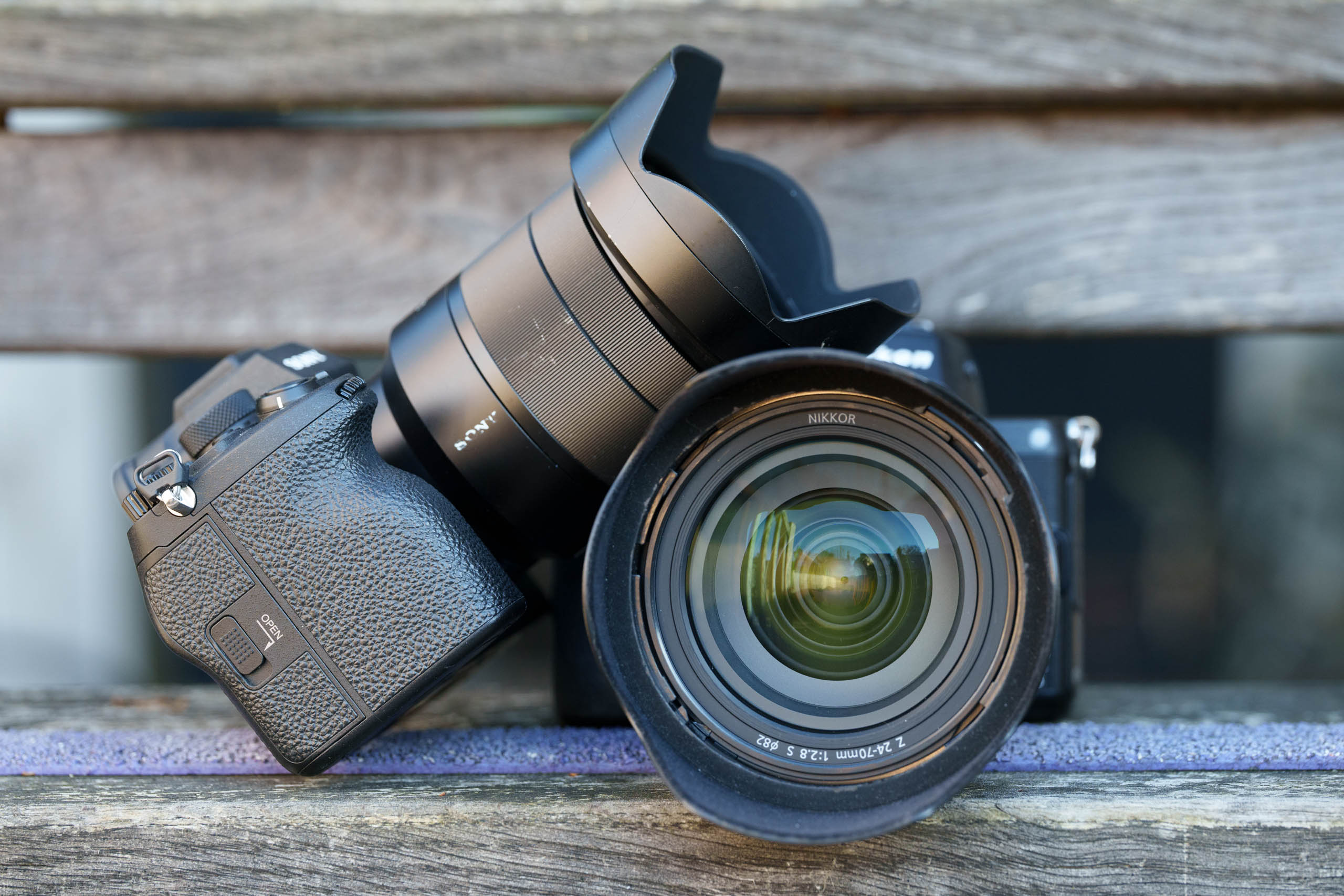
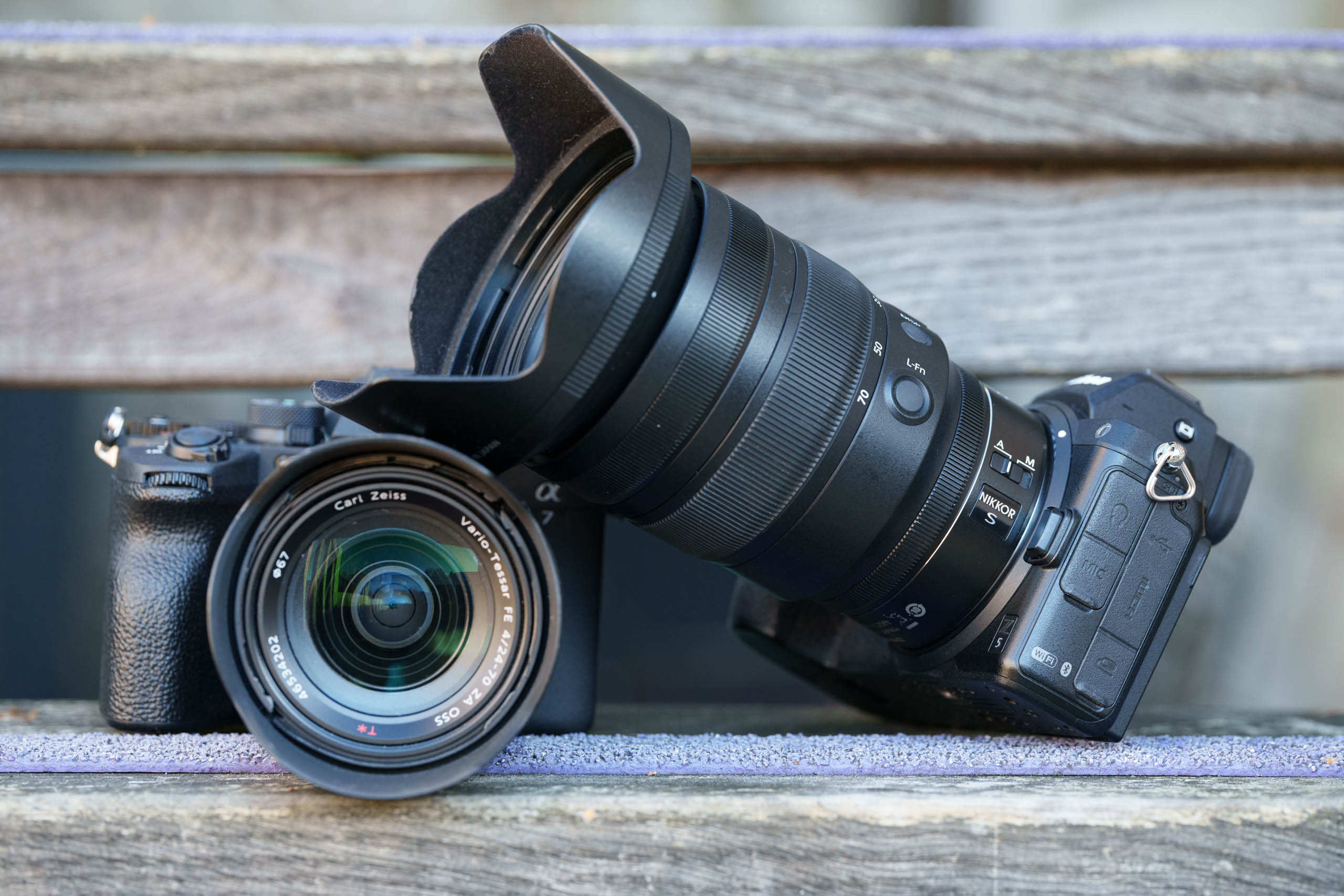
- Option one: an affordable camera body with premium glass, represented here by the Nikon Z5 ($999/£1249) paired with the Nikon Z 24-70mm f/2.8 S ($1999/£1999). Total price: $2998/£3248.
- Option two: a higher spec body with a more modest lens, represented by the Sony A7 IV ($2999/£2149) with the Sony FE 24-70mm f/4 ZA OSS Vario Tessar Carl Zeiss T star ($614/£699). Total price: $3613/£2848.
Both kits are full frame and include a standard zoom, but they offer different balances of body performance and optical quality.
Nikon Z5 with Nikon Z 24-70mm f/2.8 S
Now superseded by the Nikon Z5II, the Z5 is still available to buy new as Nikon’s entry into full frame mirrorless photography. It has the solid ergonomics and ease of use that Nikon owners love with a 24 megapixel sensor, five axis in body stabilisation, dual SD card slots and a good electronic viewfinder paired with a tilting rear screen. Its shooting speed tops out at 4.5 frames per second and its autofocus is competent rather than cutting edge, but the image quality at the base ISO is excellent with plenty of dynamic range.
On its own the Z5 feels reliable, straightforward and good value. Mount the Z 24-70mm f/2.8 S and the whole character of the kit changes, it seems much beefier. Nikon’s f/2.8 S line is known for outstanding optical performance and this lens is no exception. It is sharp throughout the zoom range, handles backlighting cleanly and produces high contrast images.
The bright aperture helps both autofocus and low light performance, and it gives a level of depth of field control that makes the kit feel like a more expensive setup.
For more options, see our list of the best lenses for Nikon Z-mount.
Sony A7 IV with Sony FE 24-70mm f/4 ZA OSS
Sony’s A7 IV has a 33 megapixel back illuminated sensor, fast and intelligent autofocus with subject recognition and tracking, ten frames per second shooting and deep buffers with the right cards. The updated menus and deeper grip improve usability in comparison to older Sony cameras and the vari angle screen makes it more flexible when shooting from awkward angles.
The Sony FE 24-70mm f/4 ZA is a neatly sized lens, much smaller than the Nikon Z 24-70mm f2.8 S, and it’s perfectly acceptable for everyday photography. Its sharpness is very good, but it drops towards the corners and the f/4 maximum aperture limits low light flexibility and subject separation.
Handling
Size-wise, there’s not a huge difference between the Z5 and A7 IV, but the Sony camera is a fraction smaller at 131.3 x 96.4 x 79.8 mm (W x H x D) compared to 134 x 100.5 x 69.5 mm for the Nikon camera. And with a battery and memory card installed the Sony camera (658g) is only 17 g lighter than the Nikon Z5 (675g). However, the Z 24-70mm f2.8 S weighs 805 g, which means the kit comes up at 1.48 Kg. That’s 396 g more than the Sony A7 IV weighs with the FE 24 to 70mm f/4 ZA mounted, and it’s immediately apparent when you’re using the cameras. So if you’re looking for a relatively compact and lightweight set-up, the Sony kit is a clear winner.
Image Size and Detail
Thanks to its 33MP sensor, the A7 IV produces images that are 7008 x 4672 pixels in size. At 300ppi, these images create prints that measure 59.99 x 39.56 cm, which is almost A2 size. Meanwhile, the more modest 24MP Nikon Z5 creates 6016 x 4016 pixel images, resulting in prints that measure 50.94 x 34 cm, still larger than A3 size, but not quite so impressively-large as those from the A7 IV. However, it’s worth asking yourself how often do you print images larger than A3 size? For many of us 24MP is an ample pixel count and it means the camera doesn’t eat through storage capacity quite so quickly. I compared the file size of some of my raw images from the two cameras when photographing an identical scene at the highest quality and while the Nikon Z5’s files are over 30 MB in size, the Sony A7 IV’s are over 70 MB, more than double the size.
The crucial question is, do those extra pixels and that extra size mean the Sony A7 IV captures more detail with the FE 24 to 70mm f/4 ZA mounted compared to the Nikon Z5 with the Z 24-70mm f2.8 S? The answer is sometimes, but it’s very close and the main advantage is that the detail is visible at a larger size so there’s more scope to crop or create bigger prints.
The smaller maximum aperture available with the Sony lens naturally impacts upon the depth of field the A7 IV captures. The fall-off in focus is a little more rapid with the Nikon f/2.8 lens and the the distant background looks much softer than with the f/4 lens.
Low Light Autofocus Capability
For my first comparison test, I took the two cameras with their respective lenses to a gig at a local pub knowing that the lighting would be poor. Sony’s autofocus systems are some of, if not the best around, but I wanted to see if the difference in the maximum apertures of the lenses would give the Nikon Z5 an advantage over the Sony A7 IV. Within a few minutes it was apparent that even though the Sony camera only had an f/4 lens, its focusing and subject recognition is streets ahead of the Nikon Z5’s. There were a few times when both cameras failed to spot the eyes of the performers, but generally, the Sony A7 IV had the upper hand and focused more confidently in the gloomy conditions.
High ISO Noise Control
I set the cameras to Auto ISO control when I was photographing the band and shot in aperture priority mode with the aperture at the maximum available setting. Because the subjects were moving and the lighting on them changed with their movement, it’s not possible to make precise direct comparisons, but as we might expect with the smaller maximum aperture available to the Sony A7 IV, it generally used higher ISO settings than the Nikon Z5. Consequently, some of my images from the Nikon Z5 have less noise and a little more fine detail visible than those from the Sony A7 IV.
However, when I compare images shot at the same high ISO setting, ISO 51,200, the Sony camera comes out on top with less colour noise visible in the raw files than in the Nikon files. Things improve dramatically when Adobe Camera Raw’s Denoise technology is applied, with both sets of images looking much cleaner, but the images from the Sony A7 IV still have the upper hand.
Cost and Thinking Ahead
The Nikon kit is the more expensive option by roughly £400, but most of that difference is in the lens. Invest in the 24-70mm f2.8 S now and you are investing in a piece of kit that will stay relevant for a long time and happily serve on future Nikon bodies.
The Sony kit is cheaper upfront, but the lens is the part you are likely to replace. If you later add a Sony 24-70mm f2.8 GM or similar, your total outlay rises quickly and ends up above the Nikon route.
So going for the cheaper lens on a more expensive body spreads the spend over time, while going for an expensive lens with a more affordable body front loads the overall spend.
Which option is better overall?
The answer to this really depends on your budget, the type of photography that you do and your ambitions. If your subjects are generally still or slow-moving, and you care most about outright image quality in the longe term (particularly in low light), the Nikon route makes sense – especially if you plan to upgrade the camera in the future. The Z 24-70mm f/2.8 S opens up creative opportunities for the Z5 and helps maintain image quality in low light. It gives great results and the lens will outlast several future camera upgrades.
However, if you photograph anything that moves quickly, or you simply want the reassurance that your camera will grab focus quickly and stay with a subject, the Sony kit is the safer choice. Even with the f/4 lens, the A7 IV’s autofocus performance and higher resolution give you more flexibility and a higher keeper rate. You are compromising a little on optical quality in the short term, but you are buying into a body that has plenty of room to grow once you add better glass.
In other words, neither approach is universally “correct”. One prioritises the best lens today, the other prioritises the best camera. The right answer is the one that fits the way you shoot. If you value optical excellence above all else, start with the lens. If you value speed, accuracy and versatility, start with the body.
Related reading:
- Best lenses for Nikon Z-mount
- Best lenses for Sony E-mount
- Best Sony mirrorless cameras
- Best Nikon mirrorless cameras