


If you’re daunted by the prospect of buying your first camera for photography, don’t be – I’m here to help! We all had to start somewhere, after all, and I’ve reviewed enough cameras during my time at AP to have a solid grounding on which models are worth the money for beginner photographers, and which ones aren’t. The six models on this list are my top picks, and I think they all offer fantastic value.
A beginner camera needs to be user-friendly, while also taking significantly better images than the camera that everyone has in their pocket – a smartphone. It should also offer room to grow, for those who are looking to improve their photography and potentially upgrade to a more sophisticated camera once they’ve got the hang of it.
So, I’ve chosen a selection of up-to-date mirrorless models, all of which will give you significantly upgraded image quality and shooting versatility compared to your phone. I’ve left out fixed-lens compacts and DSLRs as I think mirrorless cameras are a better bet for beginners – but if you feel you would prefer one of those types of camera, check out the linked guides for plenty of options.
Best cameras for beginners: our quick list
- Best camera for beginners overall: Canon EOS R50 – Buy now
- Best Fujifilm camera for beginners: Fujifilm X-T30 III – Buy now
- Best Olympus for beginners: Olympus OM-D E-M10 Mark IV – Buy now
- Best vlogging camera for beginners: Sony ZV-E10 – Buy now
- Best Nikon camera for beginners: Nikon Z50 ll – Buy now
- Best Sony camera for beginners: Sony A6400 – Buy now
Looking for the best deal on beginners’ cameras? Not only will you find the best cameras for novices/rookies, but also some of the best camera deals, as our ‘Buy now’ buttons are setup to automatically take you to the best prices from trusted retailers. There is also a list of other retailers below each camera, so you can find the right deal for you.
We also have guides to the best DSLRs and the best mirrorless cameras if you already know which type you want.
Why you can trust Amateur Photographer
We spend many hours testing every product we recommend, in detail, in a variety of situations and shooting scenarios, and only use experts for our reviews, so you can be sure that you’re getting the best products. Find out more about our expert writers.
Best overall
Best camera for beginners overall: Canon EOS R50

Amateur Photographer verdict
A really good option for budding photographers: small and light, yet comfortable in the hand, with excellent touchscreen interface, it produces consistently fine JPEG files direct from the camera.
- Very compact and lightweight
- Extremely capable autofocus
- Rapid continuous shooting for its class
- Limited physical controls
- Small, dim viewfinder
- Very limited RF-S lens range
| Specifications | Canon EOS R50 |
|---|---|
| Type | Mirrorless camera |
| Sensor | 24.2MP APS-C |
| Viewfinder | 2.36m-dot unit with 0.59x magnification |
| Lens mount | Canon RF / RF-S |
| Video | 4K |
| Price | $729 / £749 body only, $849 / £859 with 18-45mm lens |
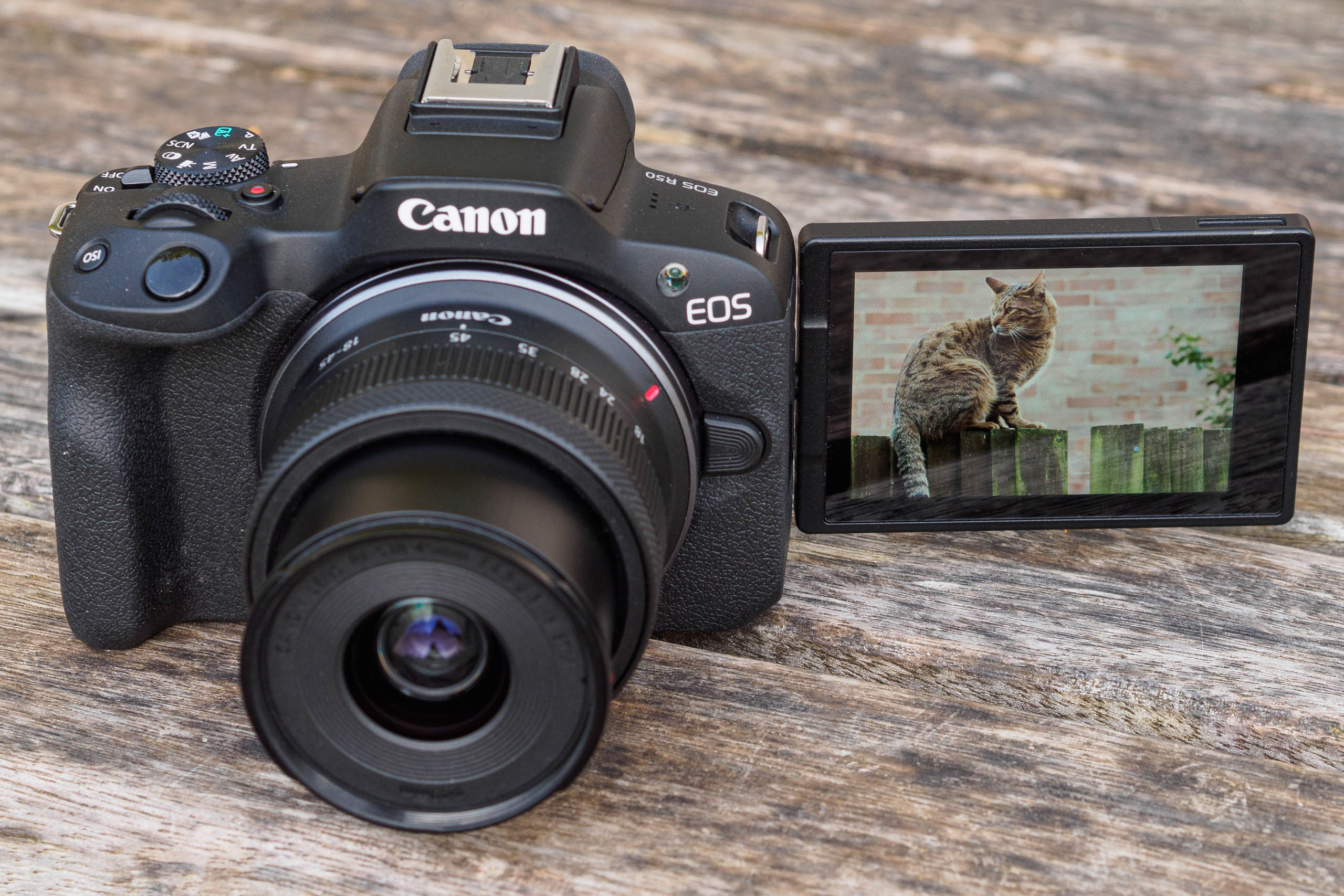
Of all the cameras I’ve used and tested, I think the Canon EOS R50 is currently the best bet for beginners. It’s not Canon’s cheapest mirrorless camera – that’s the EOS R100 – but for my money, it’s the cheapest worth buying. It benefits from Canon’s advanced autofocus technology, the Dual Pixel CMOS AF system that can accurately and quickly acquire a subject anywhere in the frame, and it also boasts automatic subject recognition. This means it can intelligently recognise discrete subjects like humans, animals and vehicles, and lock focus onto them.
Its image quality is also pretty superb, with a 24.2MP APS-C sensor delivering the goods. Automatic metering and white balance are always well-judged, and continuous shooting performance is really impressive – in my colleague Andy Westlake’s full testing, the EOS R50 managed up to 12fps. Not all that long ago, that would have been considered good enough for a professional sports camera!
Lens-wise, the EOS R50 can make use of Canon’s extensive RF lens range, and can also be adapated to take old EF DSLR lenses if you happen to have any lying around. Ideally, for balance you want specifically APS-C RF-S lenses – Canon was initially slow to bring out lenses in this format but, happily, that is changing, with the best Canon mirrorless lenses including more RF-S options. By the time most beginners have reached the limitations of the standard 18-55mm kit lens, there should be a decent range of lenses.
For its price, the EOS R50 is an immensely appealing camera. I have no hesitation recommending it when beginners ask me what camera to start with – it really is very good indeed.
Read our Canon EOS R50 review.
Best Fujifilm
Best Fujifilm camera for beginners: Fujifilm X-T30 III

Amateur Photographer verdict
While it’s a little more expensive than other beginner options, I think the X-T30 III is one of the most charming starter cameras out there, with fantastic JPEG output and retro looks.
- Gorgeous JPEGs straight from camera
- Small size and light weight make it easy to carry everywhere
- Stylish, retro design
- Excellent lens range available
- A little pricier than other entry-level cameras
- Small viewfinder, and screen only tilts up and down
| Specifications | Fujifilm X-T30 III |
|---|---|
| Type | Mirrorless |
| Sensor | 26.1MP APS-C X-Trans CMOS |
| Viewfinder | 2.36m-dot, 0.63x |
| Lens mount | Fujifilm X |
| Video | 4K |
| Price | $1149 / £999 with XC 13-33mm F3.5-6.3 lens |
Sure, it’ll cost you more than the Canon EOS R50. With that said, I think the Fujifilm X-T30 III is an utterly sublime little camera for beginners, and it could tick enough boxes for you that it’s worth the extra outlay.
For starters, it looks cool. It just does. Fujifilm, in my view, has absolutely perfected its formula of stylish retro cameras, with dial-led controls that hearken back to the days of manual film SLRs. And this isn’t just about looks – having more physical controls can be a much more tactile way to learn than constantly messing around with a touchscreen, which many learners will prefer.
Also, it just produces great images! Fujifilm is the king of JPEGs, and its cameras benefit from a range of fantastic Film Simulation modes – built-in colour profiles that emulate the looks of classic film stocks like Provia, Velvia and monochrome Acros. This makes them ideal for those who’d much rather be out shooting than sitting behind the computer fiddling with Photoshop. Fujifilm has even added a dedicated control dial just for the Film Simulation modes, making it easy for you to quickly switch between your favourite looks.
There’s also 4K video recording on board, and the range of Fujifilm X-Mount lenses it absolutely superb. Again, a little pricier than others, but beautifully sharp, consisting of lots of fast-aperture primes to help you create images with a beautifully shallow depth of field. The X-T30 III also benefits from the latest advancements in autofocus, including automatic subject-recognition, and even its built-in flash – normally something to be left well alone – is surprisingly good, producing a nice little pop of fill-light without overwhelming an image. All in all, this is a triumph of a beginner’s camera, and if your budget meets it, you won’t be disappointed.
Read our Fujifilm X-T30 III review.
Best Micro Four Thirds
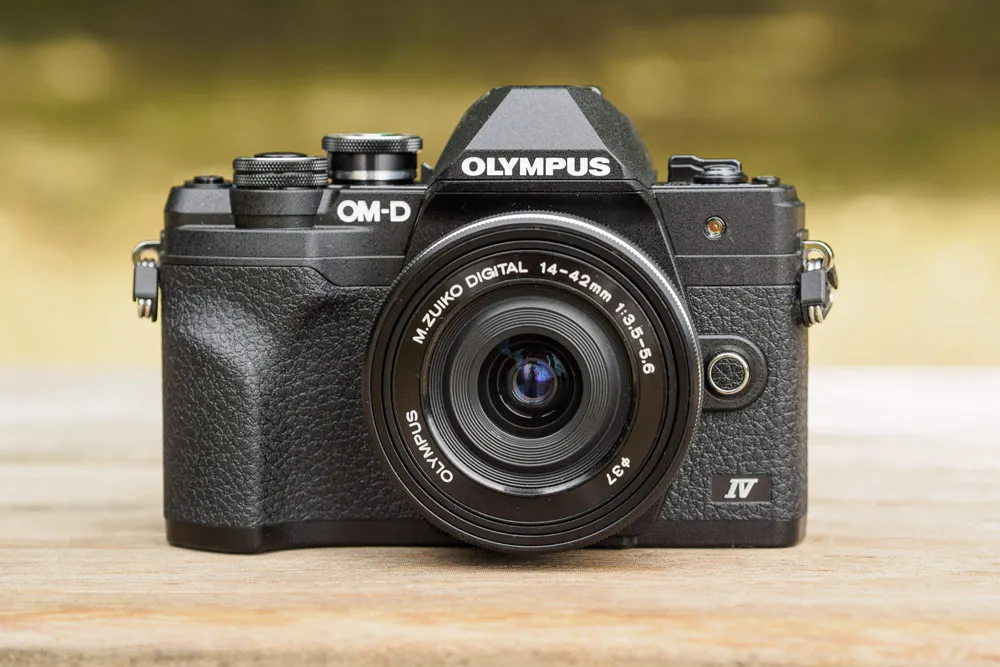
Best Micro Four Thirds camera for beginners: Olympus OM-D E-M10 Mark IV
Amateur Photographer verdict
Attractive design and most pleasant to use. Twin-dial design gives scope to take more control. Access to small, affordable lenses its IBIS works well with
- Bright, punchy images full of character
- Small and enjoyable to use
- Has advanced features too
- No mic socket for video
- Smaller sensor impacts raw image quality
| Specifications | Olympus OM-D E-M10 Mark IV |
|---|---|
| Type | Mirrorless |
| Sensor | 20MP Four Thirds |
| Viewfinder | 2.36m-dot, 0.62x magnification |
| Lens mount | Micro Four Thirds |
| Video | 4K |
| Price | $730 / £779 body only |
It’s an older camera now, but I still think the Olympus OM-D E-M10 Mark IV offers a lot to the beginner photographer. Based around a 20MP sensor, the Olympus OM-D E-M10 Mark IV mirrorless camera offers excellent JPEG image quality with extremely attractive colours. The design is stylish and the ergonomics are well laid-out, while extremely effective in-body stabilisation keeps pictures sharp. You also get a good set of useful advanced features and the camera is supported by a fine set of small, affordable Micro Four Thirds lenses.
Micro Four Thirds is one of the oldest mirrorless systems. It uses a smaller sensor size, which does have an impact on image quality, but allows for sophisticated camera bodies and long lenses to be much smaller than they are in other systems. This makes it brilliant for travel in particular – and the longevity of the system means you have absolutely loads of lenses to choose from.
You’ll also find the camera offers Wi-Fi and Bluetooth connectivity, as well as 4K video recording. It boasts in-body image stabilisation, something that isn’t super-common among cameras at this level, and will help you get sharper shots in low light by allowing you to use slower shutter speeds while hand-holding the camera. All in all, the E-M10 Mark IV still offers great value for money.
Read our Olympus OM-D E-M10 Mark IV review.
Best for vlogging
Best vlogging camera for beginners: Sony ZV-E10

Amateur Photographer verdict
With its extensive feature set, great autofocus and an 11fps shooting rate, this punches above its light weight. Plenty of creative scope for content creators; photographers too with a decent lens.
- Great value entry point to Sony’s E-mount system
- Excellent features for vloggers and casual video users
- Terrific autofocus for its price
- Fully articulated 3inch touchscreen
- Basic button control for photography use
- Older, lower capacity NP-FW50 Battery
- No electronic viewfinder
| Specifications | Sony ZV-E10 |
|---|---|
| Type | Mirrorless |
| Sensor | 24MP APS-C |
| Viewfinder | N/A |
| Lens mount | Sony E |
| Video | 4K |
| Price | $798 / £549 |
The Sony ZV-E10 was the second of Sony’s ZV-series ‘vlogging’ cameras. It can be used for stills photography too, but the lack of a viewfinder and limited external controls are restrictive. It also uses technologies from Sony’s older A6000-series cameras, so while its autofocus system is right up to date, the sensor is a little prone to ‘rolling shutter’ effects.
There are two very appealing things about the ZV-E10 for beginners, however. One is that there is a wide range of E-mount lenses for this camera, including lenses designed specifically for its APS-C sensor format. The ZV-E10 has a clear advantage over its Canon and Nikon mirrorless rivals in this respect. The other advantage is the price, as this is the cheapest route into Sony’s E-mount camera system.
Other features included a full-articulating rear screen and a clip on wind shield to reduce buffeting in outdoor shots. It’s usually sold with a very compact 16-50mm power zoom kit lens which, while not the best optically, is perfect for newbie filmmakers.
Sony has since released an updated version of this camera – the Sony ZV-E10 II. However, I would stick with the original ZV-E10 – it’s much cheaper since the arrival of the update, and the ZV-E10 II didn’t add as many of Sony’s new features as I was expecting. There’s no AI-powered autofocus, no internal stabilisation, so you’re not getting a radically different proposition.
Read our Sony ZV-E10 review
Best Nikon
Best Nikon camera for beginners: Nikon Z50 ll

Amateur Photographer verdict
The Nikon Z50 II is a great little camera with an impressive feature set for the price. While perhaps missing a few pieces in terms of the user experience, it undeniably delivers excellent results.
- Excellent image quality, especially in raw
- Unusually good viewfinder for its class
- Fully articulated rear screen
- Very capable autofocus system
- No AF-area joystick (d-pad instead)
- No in-body image stabilisation
- Limited range of native DX Z-mount lenses, especially zooms
- Mode dial is easily knocked out of position
| Specifications | Nikon Z50 ll |
|---|---|
| Type | Mirrorless |
| Sensor | 20MP DX-format (APS-C) CMOS |
| Viewfinder | 2.36m-dot EVF, 0.68x magnification |
| Lens mount | Nikon Z (DX) |
| Video | 4K |
| Price | $1,007 / £849 body-only; $1,147 / £999 with 16-50mm kit zoom |
This arguably isn’t the most exciting beginner’s camera – but I think it’s quietly one of the most impressive, and is definitely your best bet if you want to go Nikon. An update to the Z50, Nikon’s first APS-C sensor (DX-format) mirrorless camera, this Z50 II sports the same 20MP DX-format sensor, yet gains plenty of enticing new features. Sophisticated autofocus (AF) options with improved subject detection and 3D tracking follow your subject and keeps it in focus, so you can avoid blurry or out of focus shots.
Its 11fps burst shooting is quite fast, letting you freeze fast-paced scenes while the hybrid autofocus system keeps up with the action in style. There is also an option to shoot 30 fps if you are happy with the lower, JPEG-only output. It’s 209 phase detection AF points cover the vast majority of the frame, and both Eye and Face Detection AF are on board, so it is also ideal for portraits.
With a fully articulated touch screen that can face completely forward, it is well suited to vlogging and video use as well as taking self-portraits. Nikon also added a ‘product review’ mode that focuses on a product held up to the camera (instead of the presenter’s face). This makes the Z50II a great choice for stills as well as video and content creation.
If you are a complete novice Nikon’s got you covered as well, the Intelligent Auto Mode takes care of your exposure settings, so you can focus on creating and composition without having to learn everything at once.
As with most other DX format Nikon cameras there’s no in-body image stabilisation (IBIS) on board, so the camera relies on in-lens optical stabilisation, and can be further enhanced by electronic stabilisation during video recording. This is important when shooting hand-held or in low light, but there are always tripods and gimbals to further stabilise your shots.
There aren’t many native DX-format lenses for Z-mount. The full-frame lenses will still work on the Z50 II but tend to be both bulky and expensive, which compromises the appeal of a cheaper APS-C camera.
Read our Nikon Z50 ll review
Best Sony
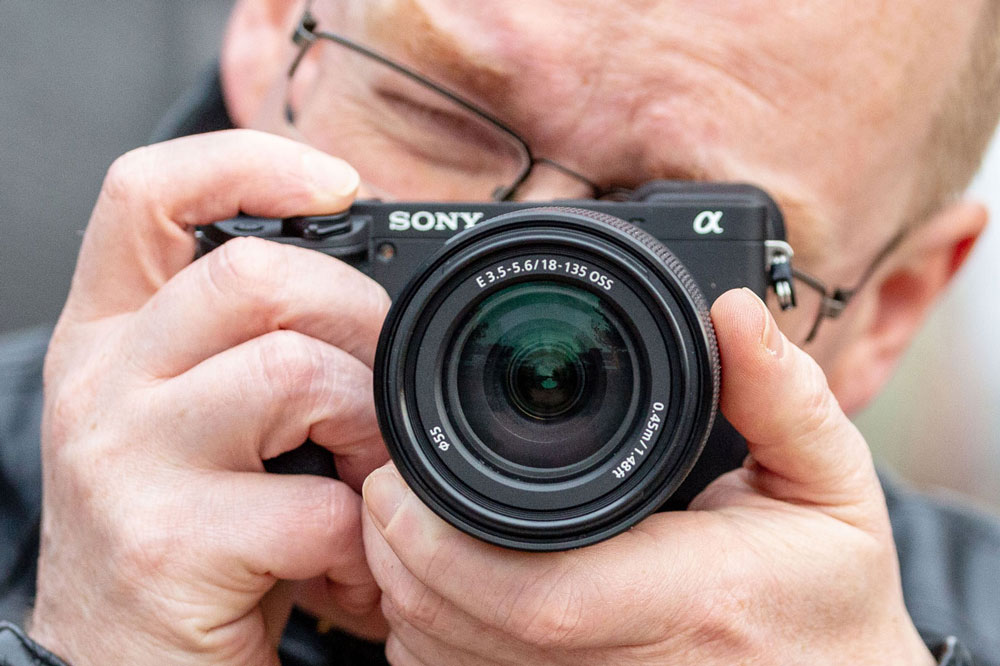
Best Sony camera for beginners: Sony A6400
Amateur Photographer verdict
At once challenging and rewarding for a first camera, the Sony A6400 produces wonderful images. It’s a great option to learn with for those who can handle it.
- Astonishing subject-tracking autofocus
- Excellent image quality in almost any shooting situation
- High level of customisable control
- Compact size
- Decent build quality
- Outdated body design less nice to use than rivals
- No in-body image stabilisation
- 16:9 LCD screen gives small display area for 3:2 stills
| Specifications | Sony A6400 |
|---|---|
| Type | Mirrorless |
| Sensor | 24MP APS-C |
| Viewfinder | 2.36m-dot panel, 0.7x magnification |
| Lens mount | Sony E |
| Video | 4K |
| Price | $748 / £749 |
The Sony A6400 has been around for some time and is a good camera for beginners who want to get serious about both photography and video. That said, if video is your main interest, the ZV-E10 is both more up to date and a good deal cheaper.
For beginner photographers, though, the Sony A6400 has a lot to offer: a compact, well-made body with a built in electronic viewfinder and features, and controls that will satisfy many enthusiasts too. Like the ZV-E10, it has access to a wide range of APS-C Sony E-mount lenses, and you can also fit full frame Sony FE lenses, (though these could prove quite heavy and cumbersome on the A6400’s compact body).
Image quality is excellent, as is the A6400’s autofocus system. It might be one of Sony’s older models, but you wouldn’t know it. The A6400 does hold its price well, though, so is no cheap option. It’s also not without its flaws, including a rather small rear screen and indifferent handling.
Read our Sony A6400 review
How to choose the best camera for beginners
A good beginner’s camera should offer a degree of manual control, so that you can learn how the different settings affect a final image. It’s important to think about sensor size as well; in this guide, we’ve dealt with APS-C and Micro Four Thirds, as these generally suit beginners. APS-C sensors are larger, which improves image quality, but they also require larger, pricier bodies to house.
Consider video features. Do you want the option to shoot 4K video? Then there’s the autofocus system the camera uses, as well as its maximum burst speed (measured in frames per second). Both of these are important if you want to shoot fast action or wildlife. If, however, you prefer to shoot landscapes or portraits, you may want to prioritise sensor resolution, measured in megapixels.
How we test cameras
We test cameras by taking photographs and video in a wide range of real-world situations, including in low-light and in bright conditions. We evaluate the control layouts, handling, and usability of their viewfinders and screens. Autofocus is assessed across a range of different subjects and shooting scenarios, along with a camera’s continuous shooting capacity.
We also examine the effectiveness of image stabilisation systems. Last but not least, we critically evaluate the image quality in both JPEG and raw, including resolution, high-ISO noise, and dynamic range. For our final conclusion and score, we take all these factors into account, along with portability and lens systems. You’ll find the full breakdown of how each camera has performed in our full reviews.
Recent updates
- January 2026: Fujifilm X-T30 II updated to the Fujifilm X-T30 III. Cameras deemed no longer relevant removed: Pentax K-70 and Panasonic Lumix G100.
- October 2025: Prices updated and ” buy now” links checked and corrected. OM-System E-M10 III, Canon EOS 250D and EOS R10 removed in favour of the more appropriate Canon R50, likewise the Nikon Z50II replaces the Nikon Z30. Introduction and descriptive text throughout abbreviated where appropriate.
Our guide to different camera types has some great insights into the world of cameras for beginners.
Once you’ve chosen a camera, it’s worth looking at some accessories to help you get the most out of your kit. Our Top 10 Essential Camera Accessories for beginners highlights some good ones.