

The sky is no limit with the best cameras for astrophotography and night photography. Tim Coleman and the AP team pick some of their favourites.
Finding the best camera for astrophotography can be complex, as night-sky photography is a tricky discipline. It can entail standing around in cold fields late into the night, not to mention precise exposure calculation and a fair amount of post-capture editing. You’ll want to know which are the best lenses for astrophotography, too. There’s more to it than pointing and shooting, that’s for sure.
However, the rewards can be spectacular for those with patience. Using a camera to document the splendour of the night sky is incredibly rewarding, not to mention addictive. In this guide, we’ll help you find the camera with which to aim for the stars.
We have an essential guide to astrophotography and night photography which covers technique and approach – here, we focus on cameras. First up, let’s look at the key factors when choosing one for astrophotography.
How to choose the best camera for astrophotography
Ideally, your camera in hand will be weather-sealed, easy to navigate in the dark and even operate with gloved hands. Some high-end cameras feature illuminated buttons that can prove useful, but more importantly, you’ll need a way to obtain sharp focusing.
Autofocus is less helpful for astrophotography, and most well-practiced astrophotographers use manual focus with live view magnification to be sure, edging a fraction closer to infinity to get those white blobs in the sky as small (sharp) as possible. However, some cameras make this easier for you; have a look at cameras with Starry Sky AF.
You’ll want to attach a fast aperture, wide-angle lens to the camera in order to maximise image brightness and capture the night sky in its glory. Also, shoot at a relatively high ISO and, ideally, in RAW format. A full-frame camera will, in general, perform better in low light than APS-C and Micro Four Thirds cameras; plus there are more full-frame, wide-angle lenses to choose from than APS-C ones.
Otherwise, there’s a balance to strike between high-resolution for large-scale pictures and lower resolution for superior low-light image quality – a general rule of thumb for cameras of a similar age. A resolution in the region of 20-30MP is extremely popular.
DSLRs remain the most popular camera type for astrophotography, though mirrorless cameras do have a few advantageous features, which we cover in detail below. Accordingly, we’ve put together the best cameras from the big brands for astrophotography, including budget second-hand options and some with dedicated astrophotography features that you may have never heard of before.
Still trying to decide between DSLR and mirrorless? Have a look at our guide to DSLR vs Mirrorless.
Why you can trust Amateur Photographer
We spend many hours testing every product we recommend, in detail, in a variety of situations and shooting scenarios, and only use experts for our reviews, so you can be sure that you’re getting the best products. Find out more about our expert writers.
If you’re in a hurry, here’s a quick list of our picks of the best astrophotography cameras, as well as links for where to get a great price on each one:
- Best Pentax camera for astrophotography: Pentax K-1 II – buy now
- Best Olympus camera for astrophotography: OM System OM-3 Astro – buy now
- Best Canon camera for astrophotography: Canon EOS R6 III – buy now
- Best Nikon camera for astrophotography: Nikon D780 – buy now
- Best Fujifilm camera for astrophotography: Fujifilm X-T5 – buy now
- Best Sony camera for astrophotography: Sony A7 V – buy now
- Best Panasonic camera for astrophotography: Panasonic Lumix S1II – buy now
- Best camera under $1000 / £1000 for astrophotography: Pentax K-70 – buy now
- Best camera under $500 / £500 for astrophotography: Canon EOS 6D – buy now
- Best dedicated camera for astrophotography: Nikon D810A – buy now
Read on to find out more about each camera in our full list…
Our picks of the best cameras for astrophotography:
Best Pentax camera
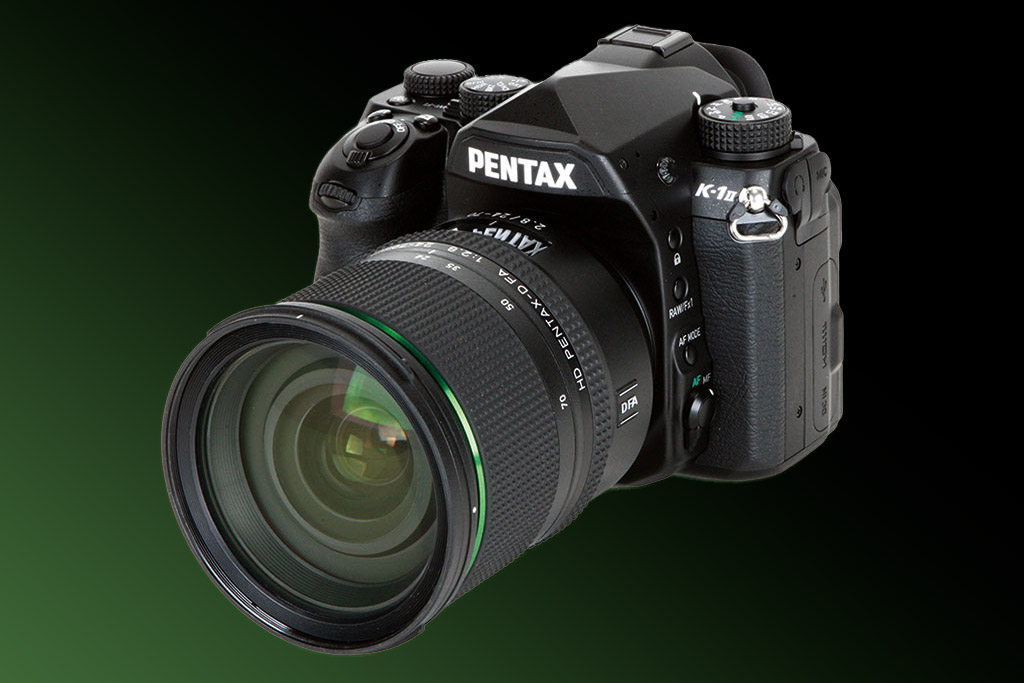
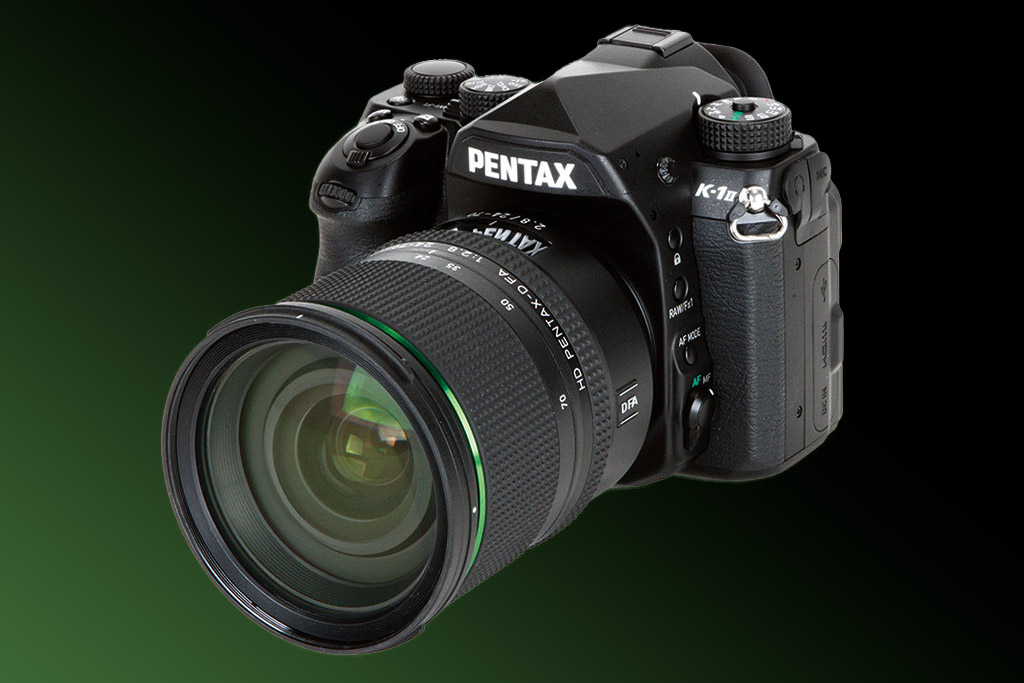
Best Pentax camera for astrophotography: Pentax K-1 II
Amateur Photographer verdict
Building on the original Pentax K-1, the K1-II has many features designed for astrophotography, making it a great option.
- Powerful Astrotracer functionality
- Rugged DSLR build
- Good price for full frame
- Cheaper K-1 offers similar proposition
- Limited wide-angle lens selection
| Sensor | 36.4MP full-frame sensor |
| ISO | ISO 100-819,200 |
| Shake reduction | 5-axis shake-reduction |
| GPS | GPS with Astrotracer |
| Buttons | Illuminated buttons |
| Price | $1,797 / £1,899 |
Everything about the Pentax K1-II is perfectly suited to low-light workings. It’s a rugged, weather-resistant DSLR with a vari-angle screen and illuminated buttons. It’s also a high-resolution 36.4MP full-frame stills-shooter boasting excellent dynamic range and low-light performance. But there’s more to the K-1 II that makes it a top choice for astrophotography.
Pentax ingeniously paired sensor-based shake reduction and GPS to create a feature it calls Astrotracer. Astrotracer utilises GPS data to match the position of the stars in the sky and shift the camera sensor to counter for the Earth’s rotation accordingly, and therefore keep those stars nice and sharp rather than trailing. Simply put, no other camera feature designed for astrophotography can maximise image brightness and clarity better than Astrotracer.
The K1-II represented a modest update from the original Pentax K-1, which will also give you everything you need for astrophotography, including Astrotracer, for half the price. If there’s one common point of weakness, it’s the limited choice of wide-angle lenses.
For more options have a look at the best Pentax DSLRs.
Best Olympus camera
Best Olympus camera for astrophotography: OM System OM-3

Amateur Photographer verdict
The OM System OM-3 is a fabulous camera that’s a joy to shoot with and gives excellent results in low light thanks to its astrophotography-specific features.
- Handsome retro design with robust, weather-sealed construction
- Astrophotography-specific in-camera tools
- Excellent battery life
- Lacks external controls compared to both the OM-1 Mark II and OM-5
| Sensor | 20MP Four Thirds stacked BSI Live MOS sensor |
| Touchscreen | 3in, 1.62m-dot fully articulated screen; 2.36m-dot, 0.68x OLED EVF |
| ISO | ISO 200-25,600 (standard) |
| Price | £1699 body-only / £1999 with 12-45mm F4 lens |
The mid-range OM System OM-3 offers photographers the best low-light image quality capability of any Micro Four Thirds camera, and some clever features that aid astrophotography to boot. Most astrophotographers go slow and steady with manual focus and tripods, but the latest and greatest tech in the OM System OM-3 Astro camera makes other methods possible, including Starry Sky AF.

Having made its debut in the E-M1 III, Starry Sky AF uses an algorithm to scan the scene for small points of light (the stars) to acquire focus. It’s night sky focusing made easy, and crucially, we’ve found the mode entirely reliable in both speed and accuracy.
Otherwise, you have all you need for night-time adventures; an IP53-rated weather-proofed body, fully articulated touchscreen and the best image stabilisation around. And let’s not forget how much smaller and lighter the Micro Four Thirds system is compared to full-frame – those excellent wide-angle lenses come in at a fraction of the heft. Pixel peep and low-light image quality won’t quite compare with full-frame cameras, though.
If you’re looking for more specific astrophotography features, make sure to check out the new OM System OM-3 Astro, based on the OM-3 but featuring an enhanced infrared cut filter for capturing deep-sky objects.
The OM System OM-5 also includes Starry Sky AF, and IP53 weather-sealing, so it’s another more-affordable option well worth looking at.
Read our OM System Olympus OM-3 review
Best Canon camera
Best Canon camera for astrophotography: Canon EOS R6 Mark III

Amateur Photographer verdict
Canon’s enthusiast all-rounder is a superb camera that can do almost anything users might need. With its 32.5MP resolution, excellent autofocus and fast shooting, it’s right at the top of its class.
- Very good low-light performance
- 33MP sensor gives increased detail and flexibility
- Excellent control layout and handling
- No third-party full-frame autofocus lenses available
- Doesn’t work with older LP-E6-type batteries
| Sensor | 32.5MP full-frame sensor |
| ISO | ISO 100-64,000 (standard) |
| Touchscreen | 3in, 1.62m-dot articulated screen, 3.69m-dot, 0.76x OLED viewfinder. |
| Price | $2799 / £2799.99 body-only |
The Mark III has been pitched as full-frame mirrorless camera that’s designed for serious enthusiast photographers. What stands out feature-wise is its larger sensor than that of its predecessor, the Mark II, which sported a 24MP sensor. However, in our review we found that there is no significant penalty for the increased resolution in terms of high-ISO performance, with very little drop in quality.
Battery life on the EOS R6 Mark III is decent, which is rated 390 frames using EVF, and 620 with the LCD. This is a valuable thing, given that at least in the UK, spare LP-E6Ps are obscenely expensive, costing about £110 apiece (they’re quite a lot cheaper in the US, at $80). Some astrophotographers may have liked a top LCD screen to better keep an eye on battery levels, but that’s a small thing really.
Lastly, Canon now has more than 45 full-frame lenses in its RF lineup, covering 10mm to 1200mm. We’d like to see Canon open the mount up to third-party manufacturers, but they’re still being draconian about this for now. Ah well.
Read our Canon EOS R6 Mark III review.
Best Nikon camera
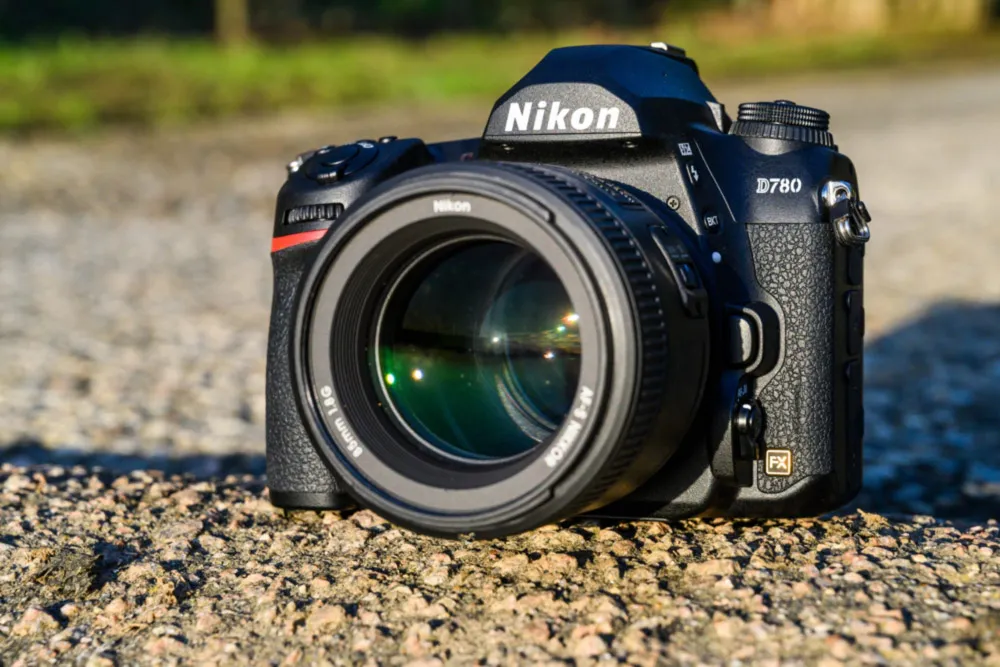
Best Nikon camera for astrophotography: Nikon D780
Amateur Photographer verdict
The Nikon D780 is Nikon’s most ‘modern’ DSLR and offers a weather-sealed body, great battery life and capabilities ideal for creating star trails.
- Does great in low light
- Expensive F-mount lens selection
- Ruggedly weather-sealed
- No illuminated buttons
| Sensor | 24.5MP full-frame sensor |
| ISO | ISO 100-51,200 |
| Screen | 2.36m-dot tilt screen |
| Autofocus sensitivity | -7EV |
| Price | $2,145 / £1,299 |
Replacing the D750, the Nikon D780 boasts an excellent low light performance thanks to its 24MP full-frame sensor and ISO 100-51,200 sensitivity. As Nikon’s most ‘modern’ DSLR, the D780 offers clear live view on its large 3.2in tilt screen with a 23x manual focus magnification, in-camera 4K time lapse, shutter speeds up to 900 seconds and a robust interval shooting experience and exposure smoothing, ideal for creating star trails.
You also get DSLR sturdiness with weather-sealed body, excellent battery life and an optical viewfinder with 100% coverage. It’s a shame that illuminated buttons are missing since you get them on the D850, but otherwise, this is a highly capable astrophotography camera benefitting from the extensive choice of Nikon F-mount lenses.
The D780 will provide high-quality results, especially for those who don’t want to switch to mirrorless and still swear by having an optical viewfinder.
With the same sensor and many common strengths, the original mirrorless Nikon Z6 is a solid alternative for a much lower price.
Best Fujifilm camera
Best Fujifilm camera for astrophotography: Fujifilm X-T5

Amateur Photographer verdict
Designed for stills photographers first, the Fujifilm X-T5 has a lot in store for astrophotographers, including access to dazzling image quality and the X-mount lens range.
- Fantastic handling
- Very good body life
- Gorgeous image quality
- Resolution on the high side for astro
- Expensive for APS-C
| Sensor | 40MP APS-C sensor |
| Screen | 1.84m-dot 3-way tilting screen, 3.69m-dot OLED EVF with 0.8x magnification |
| Stabilisation | 7EV |
| Price | $2,000 / £1,700 |
A gorgeous mirrorless camera designed for stills photographers first, the Fujifilm X-T5 offers a lot to the astrophotographer. Its on-body controls are intuitive to use, its beefy 7-stop stabilisation system impresses, and it delivers pretty impressive battery life of up to 740 shots per charge (you can of course expect this to drop a bit if you’re repeatedly shooting extra-long exposures). Image quality from the X-T5 is dazzling thanks to its 40.2MP APS-C X-Trans CMOS 5 HR sensor, which is the same model as on the more expensive Fujifilm X-H2.
Choosing a Fujifilm X body as your astrophotography camera also has a distinct advantage, namely the X-mount lens range. This is not the most expansive selection of lenses on the block, but it is absolutely stuffed with super-sharp large-aperture zooms and primes that are absolutely perfect for astro work. We recommend the XF 8-16mm f/2.8 R LM WR as a good starting point.
To read more about the finest lenses you can buy for the X-T5, check out our recently updated Best Fujifilm X-mount lenses in 2026 article.
If the X-T5 is too pricey for you, it could be worth hunting down its predecessor, the X-T4, which also has delightful on-body controls and a high-quality APS-C sensor. Its resolution and stabilisation lag behind the X-T5’s, but otherwise it’s a highly compelling alternative that could potentially be picked up at a significant discount on the used market.
Read our Fujifilm X-T5 review.
Best Sony camera
Best Sony camera for astrophotography: Sony A7 V

Amateur Photographer verdict
The fifth iteration in Sony’s all-rounder series, the A7 V gives large and clean night images, with excellent dynamic range and shadow detail recovery.
- Superb image quality, particularly in raw
- Impressively long battery life
- Versatile 4-way articulated rear screen design
- Handgrip is a little cramped, especially with gloves
- Some third-party lenses will need firmware updates
| Sensor | 33MP partially stacked full-frame sensor |
| ISO | ISO 100-51,200 (standard); ISO 50-204,800 (extended) |
| Screen | 3.2in, 2.1m-dot, 4-axis multi-angle articulated touchscreen LCD |
| Price | $2,899 / £2,799 body-only |
Sony’s all-rounder series, the original A7 is now in its fifth iteration and the A7 V represents a solid option for astrophotography. The 33MP full-frame sensor strikes an optimum resolution balance for large and clean night images, with an excellent dynamic range and shadow detail recovery – a key concern for dark sky snappers.
Handling wise, all boxes are ticked; there’s the 3.2in vari-angle screen, weather-resistance and image stabilisation. And despite its small stature, making your way around the camera in the dark is done easily enough thanks to the large controls.
If you’re priced out of the A7 V, the A7 III can be had for about 60% of the cost and is a decent alternative because its low light image quality is equally impressive.
Read our review of the Sony Alpha A7 V
Best Panasonic camera
Best Panasonic camera for astrophotography: Panasonic Lumix S1II

Amateur Photographer verdict
One for professional astrophotographers, the Panasonic Lumix S1II brings high-quality and value for the money to the table.
- Pro-spec body design
- Supports HEIF format as a higher-quality alternative to JPEG
- Pricey
| Sensor | 24MP partially stacked sensor |
| ISO | 100–51,200 (standard) |
| Screen | 3-inch, fold-out (articulating) touchscreen LCD |
| Price | £2899 body-only |
If you’re a professional astrophotographer and have no ties to other camera brands, then the Panasonic Lumix S1II, introduced as an entry in Panasonic’s professionally-oriented S1 range along with the Panasonic Lumix S1IIE, is worth considering. For still images, the S1II and S1IIE became Panasonic’s first models to support HEIF format as a higher-quality alternative to JPEG.
Astrophotographers can probably save themselves some cash by sticking with the original Lumix S5, whose big sensor and ISO range are more or less the same. There’s also the Lumix S5 IIX, which adds some serious video functionality to an already highly capable hybrid photography camera. All in all, while it’s definetely not the cheapest, it’s an amazing camera that unequivocally offers an excellent value for money.
Read more about the Panasonic Lumix S1II
Best camera under $1000
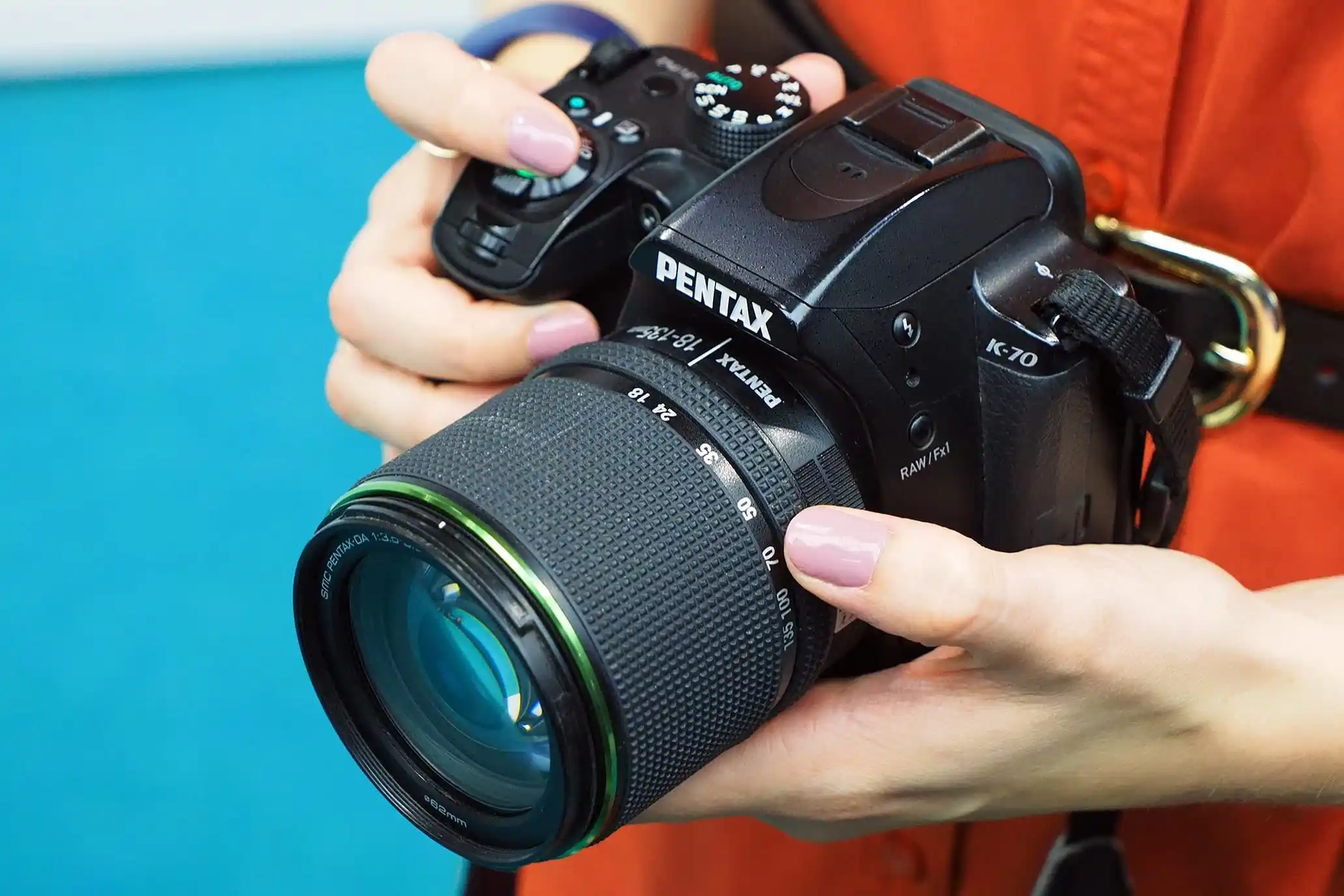
Best camera under $1000 / £1000 for astrophotography: Pentax K-70
Amateur Photographer verdict
One to consider for those on a budget, this is a camera tailor-made for the outdoors and photographing the night skies.
- Very impressive high-ISO performance
- Hardy, weather-resistance body
- Option to attach GPS Astrotracer unit
- Live View is slow and awkward
- No touchscreen
| Sensor | 24MP APS-C sensor |
| ISO | ISO 100-102,400 |
| Shake reduction | Up to 4.5EV |
In terms of bang for buck, the Pentax K-70 is undisputed for astrophotographers. It packs many pro-feeling features despite being positioned as an enthusiast camera with a modest body-only price. Headline features include a 24MP APS-C sensor with ludicrous ISO 100-102,400 sensitivity, weather-resistant body operable down to -10°C (unusual for this level of camera), optical viewfinder with 100% coverage (again, unusual), vari-angle screen, shake reduction up to 4.5EV and access to features like Astrotracer via an optional GPS unit.
There are also the little things to be found here that experienced astrophotographers will appreciate, like the comfortable grip and well-spaced controls that are easy to operate even for gloved hands. This is a camera tailor-made for the outdoors and photographing the night skies. There’s even a “night mode” LCD setting to make it easier to use in low-light.
Best camera under $500
Best camera under $500 /£500 for astrophotography: Canon EOS 6D

Amateur Photographer verdict
Another great budget option under $1,000/£1,000, the Canon EOS 6D may be twelve years old, but it remains a strong choice among astrophotographers.
- Fantastic second-hand price
- Loads of EF-mount lenses
- Very good low-light performance
- Built-in GPS
- No stabilisation
- Fixed LCD screen
| Sensor | 20.2MP full-frame sensor |
| ISO | ISO 100-25,600 |
| Autofocus | AF sensitivity -3EV |
| Price | Used price approx. $400 (renewed) / £400 (excellent condition) |
If you look into the camera of choice for Astronomy Photographer of the Year entrants, one model pops up year after year: the Canon EOS 6D. Released in 2012, it proves you don’t need the latest and greatest kit to create award-winning astrophotography pictures. What makes the EOS 6D so popular? Perhaps it’s the 20MP full-frame sensor and ISO 100-25,600 sensitivity that performs really well in low-light. Or maybe it’s the excellent choice of EF-mount wide-angle, fast aperture lenses.
Now superseded by the Canon EOS 6D II that boasts a higher 26MP resolution and modern conveniences such as a vari-angle screen, image stabilisation and 4K timelapse, you can get a second-hand EOS 6D for anything between £250-£450 depending on the condition. An absolute bargain.
Best camera overall
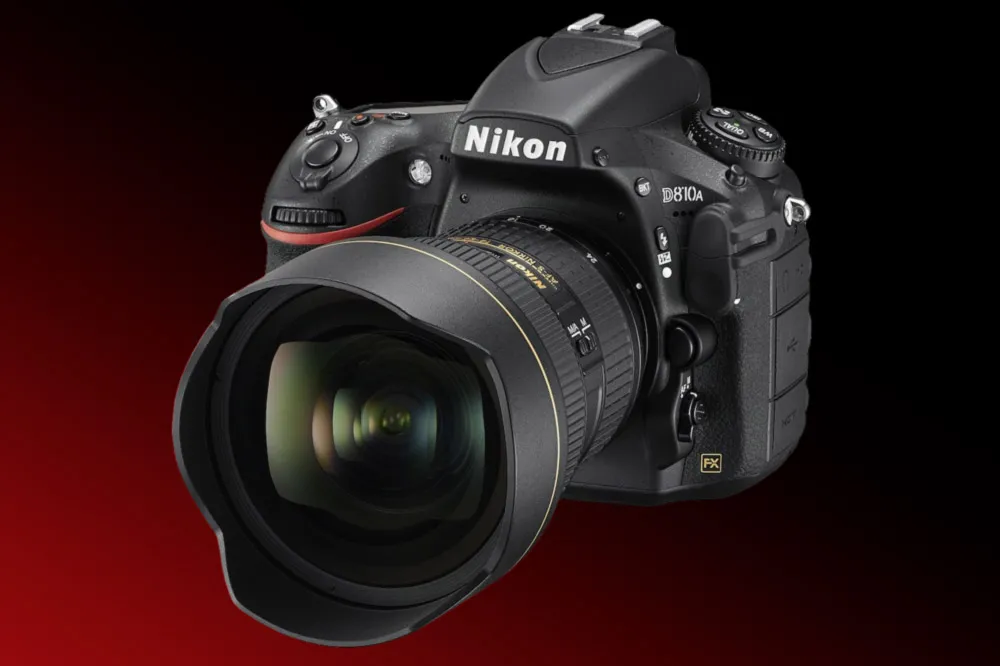
Best dedicated camera for astrophotography: Nikon D810A
Amateur Photographer verdict
The Nikon D810a is a modified D810 and stands out in this list, as it is made specifically for astrophotographers.
- Dedicated astrophotography camera
- Superb full-frame quality
- Tricky to find, and pricey when you do
| Sensor | 36.3MP full-frame sensor |
| ISO | ISO 200-12,800 |
| Price | approx. $1,250 / £510 (re-conditioned) |
| Wavelength sensitivity | Sensitive to 656nm wavelength |
The Nikon D810a is a modified version of the 36.3MP full-frame D810, made specifically with astrophotography in mind. The ‘a’ denotes astrophotography and tells us that the filter in front of the sensor allows H-alpha emissions, also known as an infrared cut filter. What you get is a camera 4x more sensitive to the hydrogen-alpha wavelength, bringing out the true clarity and colours of the night sky.
Now discontinued, you’ll need some luck finding a D810A on the second-hand market, but they do appear now and again from around $2400-2800 (with similar prices in £GBP). Canon also produced its own mirrorless astro-converted camera, the Canon EOS RA. However, it has long since been discontinued, and frankly, good luck finding one.
Find out how Goran Strand uses the Nikon D810A.
An alternative to buying a camera dedicated to astrophotography, a service like www.lifepixel.com can convert a regular camera by replacing the standard low-pass filter with one that allows H-alpha emissions. Conversion could breathe new life into a camera otherwise gathering dust, or you could pick up a second-hand DSLR specifically for modification at a much lower price than a dedicated one.
How we test cameras
We test cameras primarily by using them to take photographs and video in a wide range of real-world situations. We evaluate their control layouts and handling, and the usability of their viewfinders and screens. We assess their autofocus across a range of different subjects and shooting scenarios and check their continuous shooting capabilities.
We also examine the effectiveness of their image stabilisation systems, when included. Last but by no means least, we critically evaluate the image quality, in both JPEG and raw (when available), including resolution, high-ISO noise, and dynamic range. We then take all these factors into account, along with such things as portability, when giving our final conclusion and score. You’ll find the full breakdown of how each compact camera has performed in our full reviews.
Text by Tim Coleman, with contributions from Jon Stapley and Michael Topham.
Once you had a look at the different camera options, you’ll find some great tips in our articles on astrophotography.
Follow AP on Facebook, Instagram, YouTube and TikTok.