

Bridge cameras – also known as ultra-zoom cameras – are impressive compact cameras that can go from a wide-angle perspective to a super telephoto in an instant – without changing the lens. As such, they’re designed for travel, for day-to-day photography; and anyone who cherishes simplicity and versatility in a camera. Here is our guide to the best bridge, or best ultra-zoom cameras in our view.
While not as popular as they once were, there are some fantastic ultra-zoom cameras from Panasonic, Sony, Nikon, and Canon that still have their place. The tricky part is choosing between them – which is where we come in. For the purposes of this guide, we’ve classified ultra-zoom cameras as those with lenses that run from a very wide angle like 25mm to as long as 3000mm at the telephoto end.
For more options, we also have a useful guide to the best cameras for wildlife photography, which features a few of these ultra-zoom bridge camera beauties. For advice about how to choose the best ultra-zoom camera, see our guide at the end of this article.
The best bridge cameras: Quick list
Looking for the best deal on bridge cameras? Not only will you find the best bridge cameras, but also some of the best bridge camera deals, as our ‘Buy now’ buttons are setup to automatically take you to the best prices from trusted retailers. You’ll also find a list of other retailers below each camera, so you can find the right deal for you.
Here are our recommendations for the best ultra zoom cameras, along with links to the best prices:
- Best bridge camera: Panasonic Lumix FZ80D / FZ82D – Buy now
- Best second-hand high-end bridge camera: Sony Cyber-shot RX10 IV – Buy now
- Best cheap ultra-zoom with a constant aperture: Panasonic Lumix FZ330 / FZ300 – Buy now
- Best wide zoom: Canon PowerShot SX70 HS – Buy now
- Best Panasonic Lumix: Panasonic Lumix FZ1000 II – Buy now
- Longest optical zoom: Nikon Coolpix P1100 – Buy now
Read on to learn more about each of these cameras, with the recommendations of our review team…
Why you can trust Amateur Photographer
We spend many hours testing every product we recommend, in detail, in a variety of situations and shooting scenarios, and only use experts for our reviews, so you can be sure that you’re getting the best products. Find out more about our expert writers.
Best bridge camera
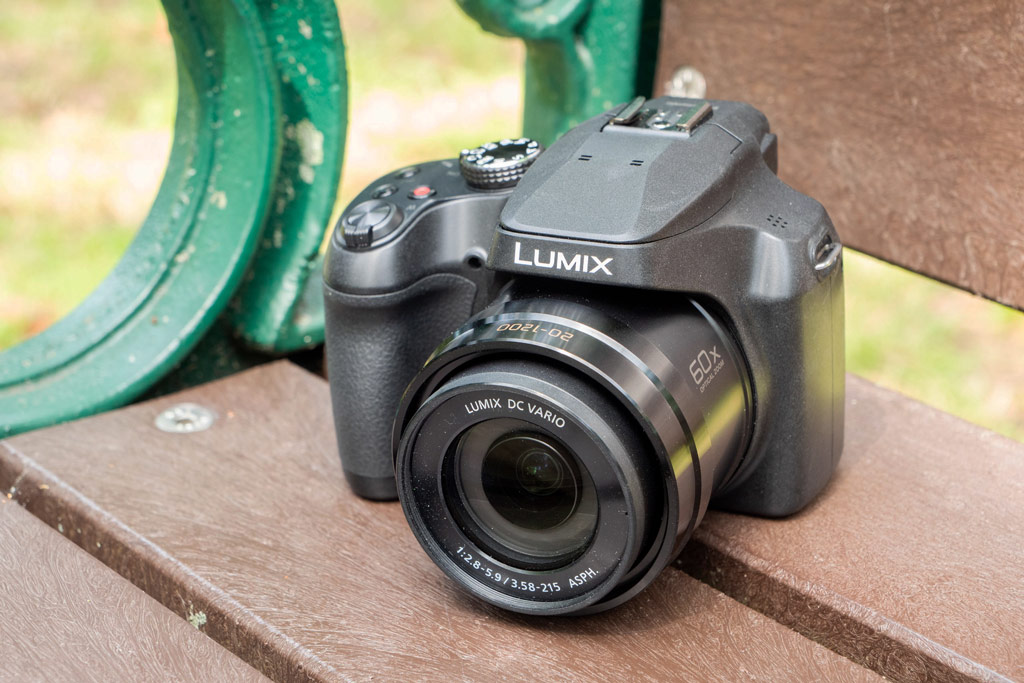
Best bridge camera: Panasonic Lumix FZ80D/ FZ82D
Amateur Photographer verdict
If you want the flexibility of a long zoom but don’t have a load of cash to spend you can get some nice shots if you work with the cameras limitations.
- 60x zoom
- Decent electronic viewfinder
- Improved screen
- No Wi-Fi
- EVF doesn’t automatically switch on/off
| Specifications | Panasonic Lumix FZ80D/ FZ82D |
|---|---|
| Sensor | 18.1MP 1/2.3-inch MOS Sensor |
| Lens | 20-1200mm equivalent f/2.8-f/5.9 lens (60x optical zoom), OIS |
| Burst | 10fps |
| Viewfinder | 0.39-inch OLED LVF 2360k-dots |
| Screen | 3-inch 1840k-dot fixed touchscreen |
| Video | 4K/30p Video |
| Weight | 640g |
The Panasonic Lumix FZ82D dominates the bridge category with its wide 20–1200mm zoom range. This allows you to jump from wide landscapes to ultra-telephoto wildlife shots. The addition of Zoom Compose Assist helps to track moving subjects at high magnification, while with 1cm macro shooting, you get stunning close-ups.
Upgrades like the high-res OLED viewfinder and USB-C charging make it the more practical choice for travelers. Combined with 4K Photo mode it offers a level of versatility and ease. The post focus feature gives you the opportunity to choose which part of the image you like to be in focus after it was taken, just touch the point and refocus.
Read our full review of the Panasonic Lumix FZ80D / FZ82D
Best second-hand high-end bridge camera
Best second-hand high-end bridge camera: Sony Cyber-shot RX10 IV
Amateur Photographer verdict
A premium bridge camera with a premium price, the Sony RX10 IV delivers high-quality long-range shooting with a 1-inch sensor and sharp, Zeiss branded lens.
- High resolution
- Impressive video functions
- Fast lens
- Expensive for a bridge camera
- Screen not fully articulating
| Specifications | Sony Cyber-shot RX10 IV |
|---|---|
| Sensor | 20.1MP 1-inch, Exmor RS CMOS sensor, aspect ratio 3:2 |
| Lens | 24-600mm equivalent lens, f/2.4-4 |
| Burst | 24fps |
| Viewfinder | 2.36m-dot EVF |
| Screen | 3.0-inch 1.44m-dot tilt screen |
| Video | 4K |
| Weight | 1,095g |
At the higher end of the price scale, the RX10 IV is the perfect example of how new technology can supercharge a bridge camera. At the heart of the RX10 IV is a 1.0inch-type sensor that delivers an impressive 20-megapixels of resolution, and up to 24fps continuous shooting. So not only do you get high-quality images, but you can capture fast moving subjects!
A 25x optical zoom results in an equivalent focal length of 24-600mm – more than enough to prove effective in the bird hide although not as long as Nikon’s P950 and P1000. That said, the fixed lens is fairly fast, with the fastest aperture on offer here, with a variable aperture of f/2.4 at the wide end and f/4 at the telephoto end.
Read our Sony Cyber-shot RX10 IV Review
Cheapest bridge camera
Best cheap ultra-zoom: Panasonic Lumix FZ330 / FZ300
Amateur Photographer verdict
It’s cheap and cheerful, but the Lumix FZ330 is still a decent shooter. Granted 12MP may sound low, but as long as you’re not printing it’s not a big loss – and you’ve got 4K Photo modes to play with.
- Lots of zoom for your money
- 4K Photo features
- 5-axis Hybrid Optical Image Stabilisation
- Low resolution
- No stabilisation when shooting 4K
| Specifications | Panasonic Lumix FZ330 / FZ300 |
|---|---|
| Sensor | 12.8MP MOS, 1/2.3inch sensor |
| Lens | 25-600mm equivalent lens, f/2.8 |
| Burst | 30fps |
| Viewfinder | 0.39-inch 1.44m-dot OLED Live View Finder |
| Screen | 3.0-inch 1.04m-dot tilting LCD touchscreen |
| Video | 4K video recording |
| Weight | 691g |
Panasonic’s Lumix FZ330 is the one of the cheapest ultra-zoom bridge cameras still widely available. This means living with a few compromises – the most significant being that the smaller 1/2.3-inch sensor carries a modest 12MP of resolution. It’s not a camera with which to to print big images in high quality; but few ultra-zoom bridge cameras are. Let’s talk about what we do get.
The Lumix FZ330, which made its debut in 2015, is equipped with 4K 25p video recording, as well as Panasonic’s famous 4K Photo modes, which allow you to extract 8MP stills from 4K footage. This effectively gives you a 25fps burst rate, and in a camera where your top resolution is 12MP anyway, going down to 8MP is hardly a big loss. Then there’s also the zoom itself – at 25-600mm equivalent, it’s bigger than some of Panasonic’s pricier bridge cameras, and it boasts a constant f/2.8 aperture throughout the zoom range.
Read our Panasonic Lumix FZ300/FZ330 review.
Best wide zoom bridge camera
Widest zoom: Canon PowerShot SX70 HS
Amateur Photographer verdict
While it doesn’t match the telezoom range of Nikon’s big bridges, Canon’s effort can zoom out wider, which can be more useful. It’s also nice and lightweight – great for travel.
- Good value for money
- Zooms out to 21mm
- Lightweight and portable
- Struggles in low light
- Out-zoomed by Nikon
| Specifications | Canon PowerShot SX70 HS |
|---|---|
| Sensor | 20.3MP, 1/2.3inch sensor |
| Lens | 21-1365mm equivalent lens, f/3.4-6.5 |
| Burst | 10fps |
| Viewfinder | 0.39-inch 2.36m-dot EVF |
| Screen | 3.0-inch 922k dots vari-angle LCD (TFT) |
| Video | 4K UHD 30p |
| Weight | 610g |
For a bridge camera that gives maximum bang for your buck, the Canon SX70 HS should definitely make your shortlist. This camera offers a decent 65x optical zoom, which results in an equivalent focal range of 21-1365mm from the f/3.4-6.5 fixed lens.
With a 20-megapixel sensor and Canon’s powerful DIGIC 8 processor, the SX70 HS is an impressive all-rounder and also features an ISO range of 100-3200 along with a fast burst rate of 10 frames per second (5.7fps with continuous AF).
What’s more, the SX70 HS is also a lot more portable than other bridge cameras, tipping the scales at just 608g and the design and shape of the SX70 HS is a lot more like a typical DSLR. Photographers can line up compositions using the 3-inch vari-angle LCD, which also comes in useful when capturing 4K video and users can quickly transfer content to smart devices thanks to the built-in Wi-Fi.
Best Panasonic bridge
Best Panasonic Lumix: Panasonic Lumix FZ1000 II
Amateur Photographer verdict
While its zoom range doesn’t match up to many of the other cameras on this list, we love the Lumix FZ1000 II for its effective stabilisation and excellent image quality.
- Advanced stabilisation
- Vari-angle LCD
- Lightweight
- On the pricey side
- Shorter zoom than others
| Specifications | Panasonic Lumix FZ1000 II |
|---|---|
| Sensor | 20.1MP MOS, 1inch sensor |
| Lens | 25-400mm equivalent lens, f/2.8-4.0 |
| Burst | 30fps |
| Viewfinder | 0.39" 2,360k dots OLED LVF |
| Screen | 3.0" 1240k dots free-angle TFT LCD touch screen |
| Video | 4K30p |
| Weight | 810g |
The Panasonic Lumix FZ1000 II was launched back in early 2019 – yet this interesting bridge camera still has a lot to offer.
The 1-inch MOS Sensor delivers 20-megapixels of resolution while a 16x optical zoom offers an equivalent focal length of 25-400mm. This is at the lower end of what you would expect from a bridge camera’s focal length, but is still enough to help capture wildlife imagery without the need to get up close to subjects.
As you’d expect from Panasonic, with their rich pedigree in stabilising technology, the FZ1000 II benefits from a 5-axis In Body Image Stabilisation (IBIS) system that helps keep shots sharp, particularly at longer focal lengths where shake can be more prevalent.
Image can be lined up via the 3-inch touch-sensitive vari-angle LCD or by using the Electronic Viewfinder (EVF), which features a 2360k-dot resolution. With 4K video specifications, the FZ1000 II is also fairly lightweight and portable, tipping the scales at only 810g.
Longest zoom bridge camera
Longest optical zoom: Nikon Coolpix P1100
Amateur Photographer verdict
The P1100 succeeds the P1000 for the telezoom crown with a whopping 24-3000mm equivalent lens. Practical? No. But it’s certainly impressive.
- Incredible focal range
- Big LCD screen
- Bluetooth and Wi-Fi
- Big and heavy
- Comparatively low resolution
| Specifications | Nikon Coolpix P1100 |
|---|---|
| Sensor | 16MP, 1/2.3inch sensor |
| Lens | 24-3000mm equivalent lens, f/2.8-8 |
| Burst | 7fps |
| Viewfinder | 0.39" 2,359k-dot OLED EVF |
| Screen | 3.2" 921k-dot vari-angle LCD screen |
| Video | 4K30p |
| Weight | 1415g |
The new Nikon Coolpix P1100 can rightly claim to be ‘king of focal lengths’, as this impressive camera offers an incredible 125x optical zoom that delivers an equivalent focal length of 24-3000mm – a remarkable feat. That said, so could its predecessor, the P1000, which we tested in the field. The main difference between the two is that the P1100 charges in camera, using the new USB-C port.
* As yet, the P1000 has not reduced greatly in price as a resultof being succeeded. Keep an eye on the second hand market for reductions to follow.
Such a zoom opens up new creative possibilities: the P1100 can be used to excellent effect when capturing the moon, along with wildlife imagery, travel photography and pretty much everything in between.
Granted, the 16-megapixel sensor isn’t as high a resolution as other cameras in this round up, but this is a camera for somebody who prefers focal length over resolution. The P1100 benefits from a big, 3.2-inch LCD that employs a vari-angle design to aid low/high compositions and there’s also an electronic viewfinder (EVF) with 2.36m-dot resolution.
Vibration Reduction to help keep shots steady while movies can be captured in 4K quality. Stills can be captured in RAW and JPEG format and, with Bluetooth and Wi-Fi, content can be quickly transferred to smart devices such as phones or tablets. It’s worth taking a look at the size and weight of this camera in person, as this camera is LARGE!
Read our review of the Nikon Coolpix P1100
How to choose the best bridge camera and ultra-zoom
Ultra-zoom cameras are not perfect of course, otherwise everyone would be using them exclusively. One way these cameras pack so much optical zoom in is by using a smaller sensor than your typical DSLR or mirrorless camera. This can mean low-light performance isn’t the best, but if this is of concern, then look out for a zoom camera with a larger 1 inch sensor, as these often produce better image quality (albeit without as much telephoto zoom).
Things to look for in a bridge camera (aka ultra-zoom camera)
Sensor – size and resolution, a smaller sensor means that the camera can often offer more zoom, but low-light performance may suffer. Most models offer between 16 and 20MP (or megapixels). A 1/2.3inch sensor is smaller than a 1inch-type sensor, and a smaller sensor often results in lower image quality in low-light conditions.
Optical zoom – How much optical zoom does the camera offer? Don’t just look at the telephoto reach on offer, which is obviously important, but also consider where the wide-angle starts, most start at 24mm equivalent, but some go even wider, which will help for vast landscape images.
Image stabilisation – When using a lot of optical zoom, image stabilisation becomes all-important. If you want a sharp shot, with a lot of zoom then a good image stabilisation system will definitely help here. Nikon’s image stabilisation system is known as VR, standing for Vibration Reduction.
Screen and viewfinder – As well as a large touch-screen, many cameras offer a screen that can be tilted up and down, with some letting you turn them to face forwards, which is great for selfies or group shots. If you prefer “DSLR” styling, then look for a model with an electronic viewfinder, as this can help get steadier shots, and help you compose shots when shooting in bright light.
Video recording – The majority of these cameras will record 4K video, but some only offer FullHD video, so this could be a deciding factor for you. You may also want to check if the screen can be turned to face forwards, particularly if you want something for vlogging.
After you’ve looked through all of this, you’ll be well informed to make a decision about what zoom camera to buy, and we’ve selected some of the best models available, featuring manual controls, DSLR-like styling, and lots of optical zoom.
The ultra zoom camera offers a whole lot of versatility in an all-in-one camera, and there should be something here to suit all budgets and shooting needs. For example, if you’re looking for a high-speed camera for shooting fast moving subjects, then look at some of the cameras here with a 1inch sensor, as some offer up to 24fps continuous shooting!
Text by Geoff Harris, with contributions from Jon Stapley.
Further reading:
Check out more of our buying guides, as well as our latest reviews. Or why not have a look at the best DSLRs and best compact cameras particularly if you want better quality images than from your smartphone.
Latest updates
- February 2025: Specifications tables have been updated for every camera including now screen and viewfinder data. The Panasonic Lumix FZ80D was added.
- December 2025: Removed Sony RX10 III, Nikon P950, Panasonic FZ1000 and FZ2000, and Leica V-Lux S as too many discontinued listed. Sony RX10 IV updated to ‘best second-hand high-end bridge camera’. Canon SX70 HS updated to ‘best wide zoom bridge camera’. Price updated for the Sony RX10 IV.