

Amateur Photographer verdict
The Akara Labs Slim Skin Case for the Fujifilm X100VI is a great option if you want useful extra grip and protection for your camera. It’s ideal if you like to carry your camera one-handed.
- Slim and unobtrusive
- Adds much-needed extra grip
- Provides good protection to baseplate
- Less convenient access to battery and card than other cases
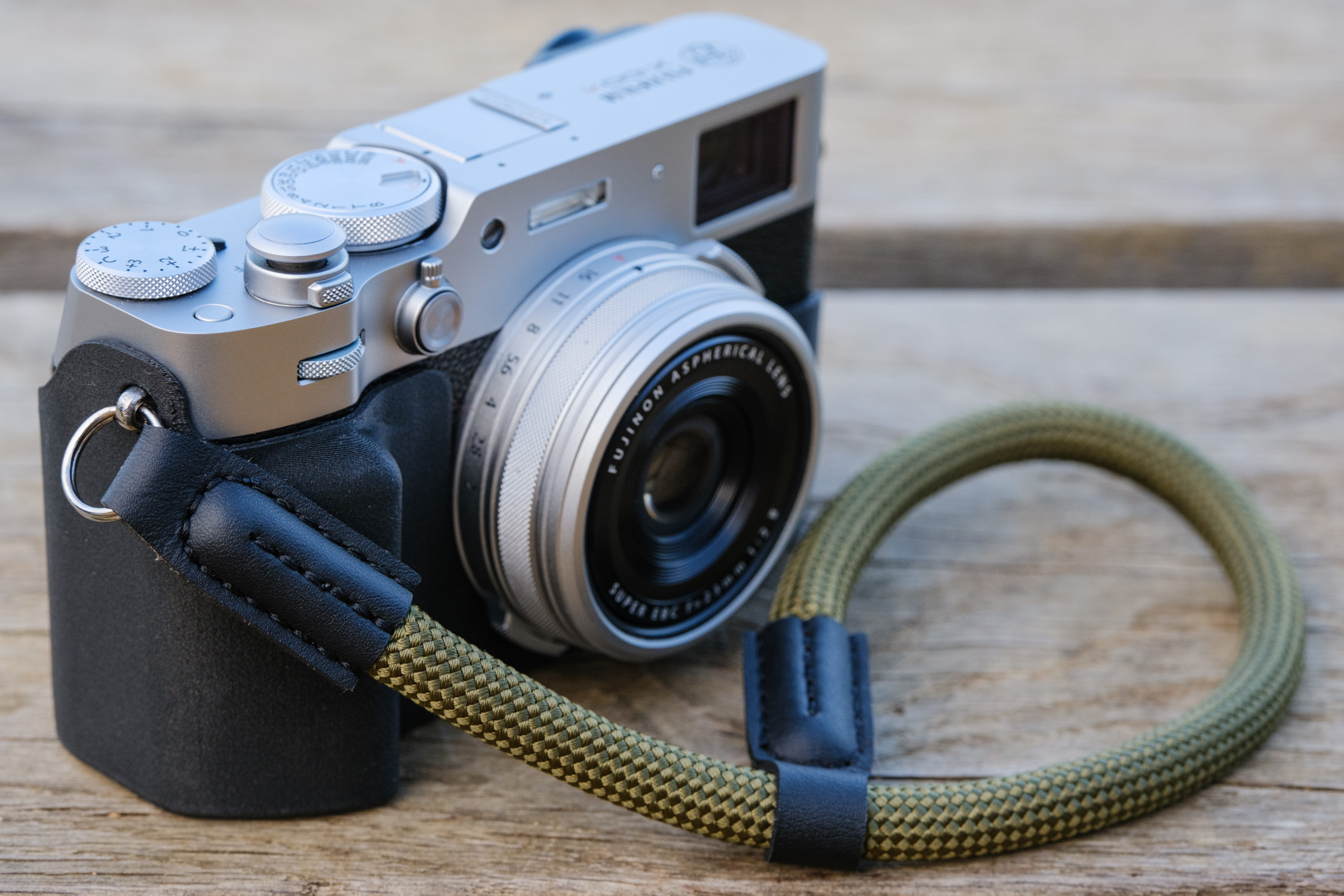
The Akara Labs Slim Skin Case for Fujifilm X100VI is, as its name implies, a minimalist protective body case that’s custom-made for Fujifilm’s popular APS-C compact. According to the maker, it’s designed to provide extra grip, along with protection to the camera’s baseplate – the part most likely to get scratched or scuffed. Unlike other fitted half-cases, it’s not traditionally made from leather, but 3D-printed from plastic.
Akara Labs Slim Skin Case at a glance:
- £28 without grip, £34 with grip. Tripod screw variant £2 extra
- 3D-printed plastic body case
- Gripped and grip-free versions
- Optional tripod screw fixing
- Available for a range of cameras
- akaralabs.com
The case comes in two variants, either with or without a moulded handgrip. It fits very snugly onto the camera, with a moulded plug that pushes into the tripod socket and holds it in place surprisingly effectively. It fits around the strap lug on the handgrip, with Akara Labs sensibly recommending that you secure it in place by attaching a strap here. Otherwise there’s a risk of the camera falling out of the case.
Alternatively, for an extra £2, you can get a variant with a hole in the bottom, which comes with a tripod screw to fix it in place. This is also designed so you can attach a camera plate underneath, either for fixing onto a tripod, or for use with a camera clip such as Peak Design Capture. But it’s worth noting that unlike the standard version, this one won’t sit flat on a table.
Akara Labs Slim Skin Case key features:
- Grip: The case comes in two distinct versions, either with or without a handgrip
- Fixing: The case fits via a ‘plug’ that pushes into your camera’s tripod socket. Alternatively for another £2, you can get a version that uses a tripod screw
- Battery and card access: There’s no cutout or hinged door, so you need to partially remove the case to access the battery and memory card
- Other camera versions: As well as the X100VI version reviewed here, Akara Labs makes similar cases for the Fujifilm X-E5, Nikon Zf and Zfc, and most Leica M and Q-series cameras
In use
I have the gripped, no-screw variant for my Fujifilm X100VI. I really like the fact that’s very simple and discreet – unlike a coloured leather case, it won’t attract a second glance when you’re shooting.
The good-sized finger-grip and the small moulded thumb hook on the back provide a surprisingly secure hold, aided by the finely textured surface. It’s perfect for when I want to carry the camera one-handed ready for use, secured by a wrist strap. I also find it an excellent option when using one of the X100VI’s screw-on lens converters – especially the larger and heavier teleconverter.
The only slight caveat with the design is that you can’t directly access the battery and SD card compartment when the case is in place. Instead, you have to pull the case off the base of the camera. The good news is that this is very easy to do, even with the case fixed on via a strap, thanks to the flexibility of the plastic.
Akara Labs Slim Skin Case: Our Verdict
I really like the Akara Labs Slim Skin Case for the Fujifilm X100VI. It’s simple, lightweight and discreet, and does a good job of protecting the base of the camera. I’d definitely recommend getting the gripped version, too, as it improves the camera’s handling significantly for only a nominal extra cost.
Akara Labs Slim Skin Case: Product image gallery
Related reading:
- Best Accessories for the Fujifilm X100VI: compact greatness made better
- SmallRig Leather Case Kit for Fujifilm X-E5 review – vintage style meets practical protection
- TP real leather camera cases review